
Contents:

Learn: Profession Methodist from scratch to PRO
Learn moreDigital technologies have radically transformed approaches to learning. Mastering the school curriculum or learning a new profession no longer requires physical presence at the educational institution. Teachers and students can interact exclusively online, opening up new horizons for the educational process. These changes make learning more accessible and convenient, allowing everyone to study at their own pace and in a comfortable environment.
Digitalization is radically changing approaches to learning. This leads to the transformation of traditional didactics and the introduction of digital methods. However, the question is whether the fundamental principles of learning have changed or only individual methods. It is important to understand that while traditional approaches remain relevant, digitalization opens up new possibilities, allowing the learning process to adapt to the needs of modern society. Technology makes learning more interactive, accessible, and personalized, which facilitates more effective knowledge acquisition. However, the essence of the educational process, based on interaction between teacher and student, remains relevant.
At the fourth international conference "Modern Digital Didactics - 2022," held at Moscow City Pedagogical University, participants actively discussed key aspects of modern approaches to digital learning. This article presents the main expert opinions expressed at the conference plenary sessions. Recordings of the presentations are available on the Moscow City Pedagogical University channel, providing an opportunity to become familiar with their ideas and recommendations for the implementation of digital technologies in the educational process.
How and why the principles of didactics have been shaken
At the opening discussion "Digital Didactics: Reality or Hype?", participants unanimously noted that technology is having a significant impact on didactics. Modern digital tools and teaching methods are transforming approaches to teaching and learning, offering new opportunities for interaction between teachers and students. Participants discussed how the digitalization of education contributes to improved academic outcomes and increased student engagement. Igor Remorenko, Rector of Moscow State Pedagogical University, emphasizes that even the classical principles of pedagogy proposed by Jan Amos Komensky in his 17th-century work "The Great Didactics," are beginning to lose their relevance. One such principle is the principle of visualization, which states that students should be able to directly see, hear, and touch the material being studied. However, the question arises: how to apply this principle in the context of virtual worlds, which have become an integral part of modern life? Should virtual worlds be viewed as reflections of the real world or as independent spaces for study? These questions require careful analysis and a rethinking of approaches to teaching in the modern educational context. The Rector notes that the modern realities of education make it difficult to adhere to the principles of consistency and consistency. Previously, teachers controlled the hierarchy of topics in the curriculum, but today knowledge is increasingly represented by a network of modules, allowing the same area to be studied from different perspectives. This is especially relevant for interdisciplinary educational programs at universities, where a coherent system of knowledge on similar topics is developed differently depending on the chosen specialization. Therefore, it is important to adapt teaching approaches to ensure students gain a deep understanding and the ability to integrate knowledge from various fields.
Most participants supported Igor Remorenko's opinion that a new didactics is currently being developed. However, at the moment it has not yet received a clear description and no analogue of the "new Comenius" has appeared.
If you want additional recommendations or advice, check out our articles. We offer useful materials that will help you better understand the topics that interest you. Our content is designed to meet your information needs and offer relevant solutions. We strive to provide high-quality and valuable resources for our readers.
The formation of the Digital Didactics Consortium has been announced. It will unite the efforts of experts in the field of digital education and technology. The goal of the consortium is to develop and implement modern methods and tools to improve the quality of education using digital resources. Project participants will work to create innovative educational solutions that promote more effective acquisition of knowledge and skills. The Digital Didactics Consortium will be an important step towards transforming the educational process and training specialists ready for the challenges of the digital age.
"The concept of 'digital didactics' will become obsolete before it is born"
The question of the first discussion was formulated as follows: "Is digital didactics reality or hype?" Mikhail Myagkov, CEO and founder of Maximum Education, gave a clear answer: "Hype." He believes that although digital technologies provide teachers with new tools, they do not fundamentally change the learning process itself. Natalya Kiseleva, Deputy Head of the Moscow Department of Education and Science, expressed her skepticism. The speed of technological development and the rapid changes in the surrounding world may raise concerns that the concept of "digital didactics" may become obsolete even before it is fully formed. However, it is precisely the dynamics of technological processes that opens new horizons for educational methods. Digital didactics, as an approach that integrates modern technologies into the educational process, is becoming an important tool for adapting to rapidly changing conditions. It can not only remain relevant but also evolve, reflecting the modern needs of students and teachers. Thus, it is important to actively research and develop digital didactics so that it can effectively respond to the challenges of the times. She believes the division of didactics and teaching methods into digital and "non-digital" is artificial and unnecessary. The emergence of digital educational technologies does pose many new questions for educators. However, the answers must be sought not in the technologies themselves, but, as before, in understanding the role of the teacher in the educational process. It is important to understand that technologies are merely tools, and their effectiveness depends on how they are used in teaching. The teacher remains a key element in shaping the educational environment, and their methods must adapt to modern requirements while preserving the core principles of pedagogical interaction. Natalia Kiseleva emphasized the importance of rethinking didactics from its fundamental positions and objectives. It is crucial to determine what exactly should be taught and how to do it. Teachers must be supported in choosing effective methods and techniques that promote more targeted and high-quality learning for each child. The choice of teaching methods is possible only if the teacher understands how modern technologies can enrich the educational process. The speaker emphasizes the importance of studying teaching methods using various tools in pedagogical universities. This is necessary so that graduates can clearly understand which students should use video lessons and when, when it's appropriate to use presentations, and which situations require the use of virtual labs. In some cases, traditional methods, such as chalk and a blackboard, may prove more effective. Natalya Kiseleva emphasizes that understanding current developments in the educational system can lead to a rethinking of didactic approaches. Previously, students were required to memorize mathematical formulas to avoid wasting time searching for the necessary information when solving problems. As a result, mathematics classrooms were filled with posters with formulas and tables. However, in the modern world, access to information has become instantaneous, and finding the right formula or raising a number to a power can be done in seconds. This raises the question of the need to change the emphasis in education: instead of memorization, we should teach how to find reliable sources of information and use them effectively. The boundaries between digital and traditional teaching methods are blurring, and modern didactics must expand its scope beyond digital tools.
"Without digital skills, we lose understanding of each other."
At the final discussion of the conference, "Digital Didactics: Research Frontiers," participants focused on the use of digital technologies not only in the educational process but also in strengthening ties between generations. The discussion was moderated by Alexander Asmolov, Head of the Department of Personality Psychology at the Faculty of Psychology at Lomonosov Moscow State University and Academician of the Russian Academy of Education. He emphasized the importance of digital platforms in fostering intergenerational dialogue and knowledge exchange, which contributes to a deeper understanding and integration of various cultural and educational traditions. Participants discussed how modern technologies can serve as a tool for developing social connections, sharing experiences, and creating a unified educational space where everyone can contribute. School is a space where knowledge and experience are exchanged between generations. It is important for parents to have digital skills and understand the basics of digital didactics. Without this, they may lose their children's interest, leading to significant communication gaps. Without digital skills, we risk losing mutual understanding and connection with the younger generation. Therefore, parents should actively develop their knowledge and skills in this area to remain engaging and meaningful to their children.
At the conference, the most vocal support for this position came from EdTech company executives. Yuriy Grebenyuk, Director of Production and Methodology at InternetUrok, noted that digitalization requires adaptation not only from teachers but also from parents. Future teachers at pedagogical universities need courses that teach teaching methods using digital tools. Parents, in turn, need support in choosing truly useful children's apps and online games. This need isn't recognized by all families, but it is becoming increasingly pressing every year, as today's children are exposed to digital technologies at an early age.
Also read about the benefits of reading. Reading develops thinking, expands vocabulary, and improves concentration. It helps immerse oneself in new worlds, introducing one to different cultures and ideas. Reading also helps improve memory and analytical skills. Remember that regular reading has a positive effect on emotional well-being, reducing stress and improving overall quality of life.
Parents note that their children lack educational and entertaining films and cartoons. In today's media landscape, it is important to provide children with high-quality content that not only entertains but also educates. Educational cartoons and films can be an excellent tool for developing skills, broadening horizons, and fostering an interest in learning. Parents are increasingly looking for works that can simultaneously entertain and educate their children, emphasizing the importance of creating and distributing high-quality educational content for children.
At the final discussion, Ivan Gruzdev, Director of Internal Research and Student Academic Development at the Higher School of Economics, noted that university professors are actively implementing digital methods. This is done to keep up with current educational trends and stay in touch with students. The use of modern technologies in teaching promotes more effective learning and creates an interactive educational environment. The introduction of digital tools helps teachers better interact with students and adapt the learning process to their needs.
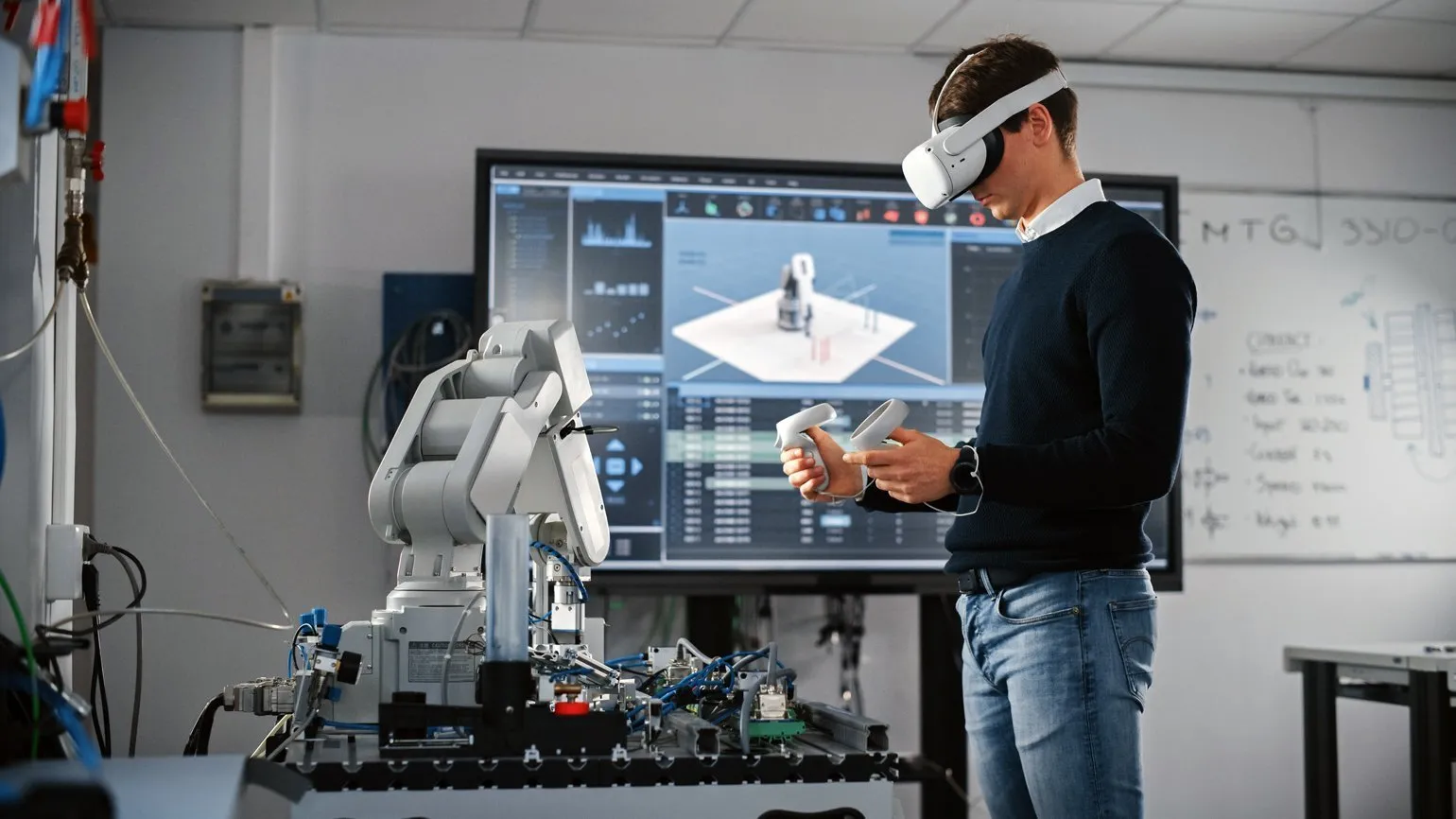
Digitalization in According to Gruzdev, the educational sector is developing from the bottom up, based on the actual needs of teachers, not administrative directives. During the pandemic, this has manifested itself in a change in teaching strategies. Teachers have noticed that 80-90-minute Zoom classes are ineffective, so they have begun breaking up lessons into shorter segments and introducing various formats, such as short videos, to increase student engagement. Outside of distance learning, they also actively use memes related to their courses and maintain contact with study groups via messengers, which contributes to a more dynamic and interactive educational environment. Asmolov noted that the usefulness of digital technologies in communication does not mean that they can completely replace traditional methods. He emphasized that the idolization of digital technologies leads to the loss of value of traditional approaches. The future of education lies in the synergy of digital and traditional didactics, where digital tools will serve as an important tool for personal development. To achieve this goal, it is necessary to prepare teachers who are able to effectively use digital resources without attaching undue importance to them.
What is holding back digitalization
During the morning and final discussions of the conference, many factors limiting the development of digital didactics were discussed. Participants emphasized the importance of removing barriers that hinder the effective implementation of digital technologies in the educational process. The problems of a lack of technical infrastructure, a lack of teacher training, and limited access to resources were discussed. These aspects require attention for the successful development and integration of digital teaching methods.
Ivan Gruzdev highlighted the problem of differences in approaches to digitalization in educational institutions. Digitalization initiated from below, focused on the needs of teachers, contributes to the development of new teaching strategies. At the same time, for university administrations, digitalization is often reduced to the implementation of specific learning management systems (LMS). However, in the face of such mandatory digitalization, teachers often fail to perceive its real benefits for their work and the educational process. This highlights the need for a more balanced and mutually beneficial approach to digitalization that takes into account the interests of both teachers and administrators.
One of the key problems in education is the neglect of the actual level of technology accessibility and digital literacy of both teachers and students. This often occurs due to an over-emphasis on digitalization. In fact, the problem lies not only in the reluctance of teachers to master new technologies but also in the difficulties students face. Many lack the necessary conditions for distance learning using digital technologies, and their self-regulation skills are also insufficiently developed, which makes it difficult to organize the educational process outside the university.

Find out more:
Yandex has published a comprehensive report on issues in education and possible solutions. The document examines the key challenges facing educational institutions and students and proposes innovative approaches to improving the educational process. The report emphasizes the importance of integrating technology into teaching and improving the quality of educational programs.
There is also an opposing point of view: some higher education instructors still view digital technology as a threat. If they had the power, they would ban students from using even smartphones. This extreme position ignores the potential of modern technology in the educational process and its ability to enrich students' learning experiences. It is important to find a balance between traditional teaching methods and the introduction of digital tools that can facilitate a deeper understanding of the material and the development of essential skills.
Ivan Gruzdev believes that the solution to these contradictions lies in supporting initiatives emanating from Yandex. This approach allows for the consideration of community opinion and needs, creating sustainable solutions and promoting development. Supporting grassroots initiatives helps shape more effective and adaptive strategies that can lead to harmonious interactions between different groups. This model can become the foundation for achieving long-term goals and improving the quality of life in society.
The key challenge lies in governance. It is important to develop institutions and a system of incentives that will help people understand the significance of digitalization. It is necessary to create conditions in which every employee can see the benefits of integrating digital technologies into their work. This will increase the efficiency of processes and improve results.
Rector of Moscow State Pedagogical Univ., Igor Remorenko, emphasizes that current regulatory requirements for the education system currently hinder progress in the field of new didactics. These restrictions hinder the implementation of modern teaching methods and the adaptation of educational processes to student needs. It is important to revise existing regulations to ensure flexibility and innovation in the educational environment, which will allow for more effective development of curricula and teaching approaches.
Discussions about the free design of educational programs raise many questions in the context of existing institutional traditions. It's important to understand how these new approaches relate to existing unified curricula and traditional high-stakes exams. Adapting educational programs to modern requirements requires careful analysis and alignment with established traditions within the education system.
The Unified State Exam (USE) in Russia is a key test that determines students' progression to the next level of education. The rector of Moscow State Pedagogical University emphasizes that the modern school system is forced to adapt to the USE's requirements. Ideally, the educational process should be aimed at developing students' skills and incorporating a variety of programs from the best sources. However, several months before the exam, the emphasis shifts to intensive preparation, leading to all previously accumulated knowledge and skills being relegated to secondary importance, giving way exclusively to pre-exam practice.
Is it possible to implement alternative approaches to assessment? Currently, no country in the world has a "golden key" for student assessment. Despite the emergence of new assessment methods, they have not yet been applied to high-stakes exams. This means that curriculum completion is still assessed using traditional methods. Igor Remorenko emphasizes that this represents a serious challenge for the education system, as the ideas and values that educators strive to instill in the curriculum are inconsistent with current institutional norms. Educational challenges extend beyond quantitative indicators. There are numerous systemic aspects that require attention and solutions. Education quality, access to resources, teacher training, and the adaptation of curricula to modern requirements are all key elements that influence the educational process and its effectiveness. A comprehensive solution to these issues is necessary to achieve significant changes in the education system.
See also:
- What is digitalization of education and why is it needed?
- How the experience of online learning has changed traditional offline classes?
- How distance learning has affected the quality of education in universities?
The Profession of Methodologist from Scratch to PRO
You will improve your skills in developing curricula for online and offline courses. Master modern teaching practices, structure your experience, and become a more sought-after specialist.
Find out more