Contents:
Learn: Profession Methodist from scratch to PRO
Find out moreThe Institute for Statistical Studies and Economics of Knowledge (ISSEK) at the National Research University Higher School of Economics has released a new newsletter based on data from the Monitoring of Education Markets and Organizations. This large-scale survey, conducted annually by university researchers, provides up-to-date information on the state and trends in education. The results of the study provide valuable information for educational institutions, policymakers, and researchers, contributing to the development of educational policy and improving the quality of education in the country.
A new edition of the study "Population Expenditures on the Education of Children and Young People: Analysis of Statistical and Sociological Data" has been released. Nikolai Shugal, Director of the Center for Statistics and Monitoring of Education at the ISSEK, and Natalia Bondarenko, Head of Department, prepared the report. This report presents the results of the monitoring for 2022, demonstrating how much Russian families spend on their children's education. The study covers key expense items and analyzes the financial burden on families in the context of educational services.
How much do Russians spend on their children's education?
When assessing education expenditure, the focus is traditionally on the cost of educational services, such as courses, tutoring, and paid tuition at universities, colleges, as well as private schools and kindergartens. However, Monitoring the Economy and Economics of Education uses a different approach: respondents are asked about all expenses related to the educational process. This includes not only direct costs of educational services, but also additional expenses, such as the purchase of educational materials, travel expenses, and extra classes. This approach allows for a more complete picture of financial investments in education and reveals the real burden that families bear on the path to receiving a quality education.
In 2022, the study surveyed 9,000 people representing families with children aged 1.5 to 24. The survey focused on education-related spending, as well as spending on related goods and services. Researchers studied the specific financial obligations that families bear to provide their children with a quality education.
- fees for basic education (at school, college, or university);
- fees for additional educational programs and classes (it does not matter where they take place - in the same organizations where children receive basic education, or in others, or with private tutors);
- fees for the needs of educational organizations: for example, the purchase of textbooks, payment for repairs or equipment, payment for food, for the use of equipment, even buying gifts for teachers;
- associated expenses - the purchase of educational literature (not for the educational organization, but personally for the child), stationery, school and sports uniforms, digital devices for study, as well as transportation and accommodation costs, for example, in a dormitory.
The authors of the bulletin used the survey results to estimate the total costs of Russians on their children's education. First, the average cost of educating one child was calculated for various family groups: those with preschoolers, schoolchildren, and college and university students. Then, rough estimates were made showing how much Russians spend overall on their children's education. This was done using previously obtained average per-child expenditures, as well as data on the number of students at the relevant educational levels in the country and the proportion of respondents incurring certain expenses. It is worth noting that not all families pay for higher education for their children, which was also taken into account in the analysis.
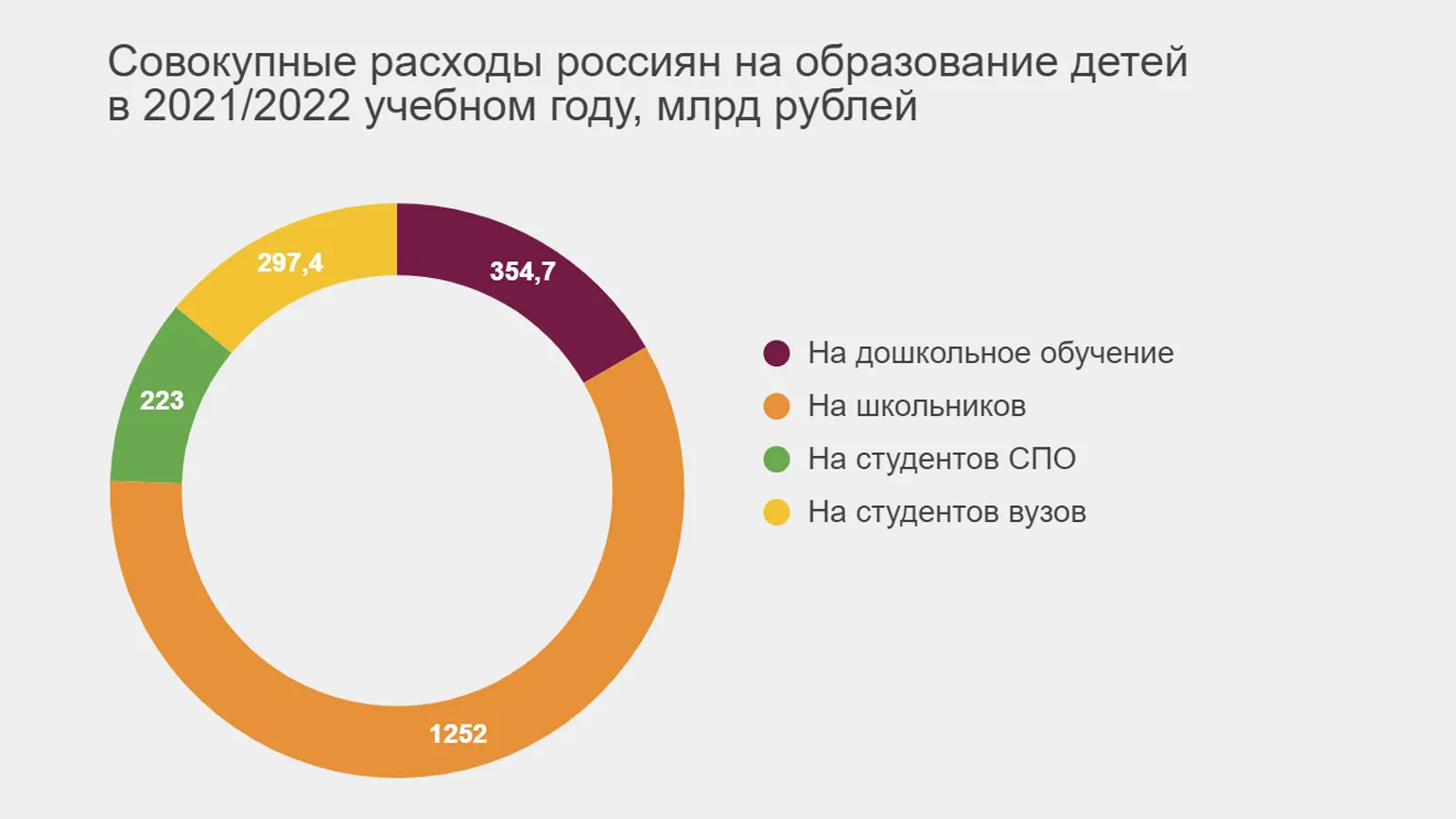
Russians' expenditure on children's education, including associated costs, has reached approximately 2 trillion 127 billion rubles. According to researchers, this amount is 46% of the total budget funds allocated by the state for education in 2021.
What is the most money spent on?
There is a clear trend: with each new stage of a child's education, the cost of their education increases significantly. This increase occurs sharply and requires careful budgeting from parents.
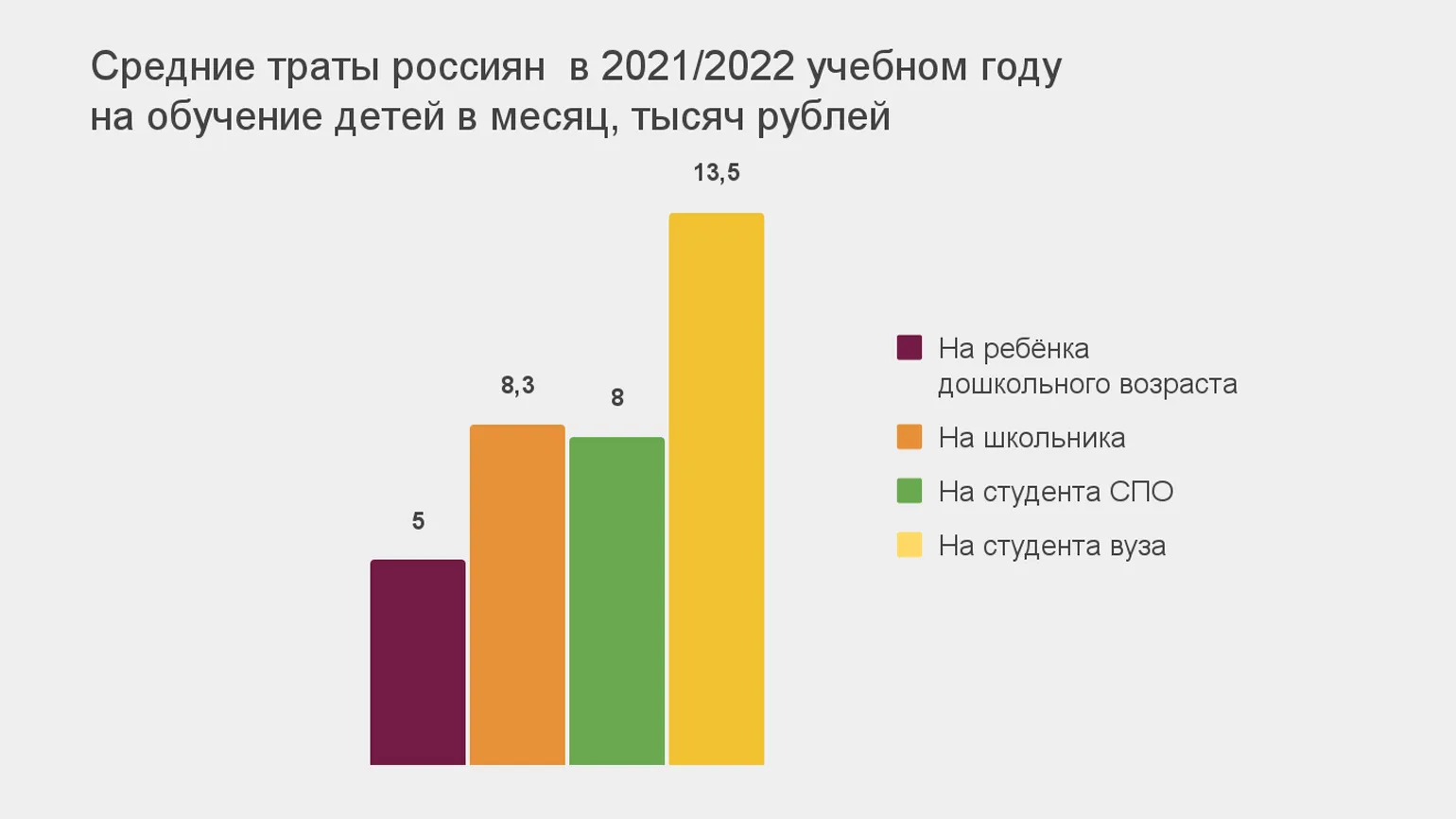
The average monthly family expenditure on a schoolchild's education is almost one and a half times higher than the cost of educating a preschooler, if kindergarten attendance is taken into account. Expenses also increase during schooling. According to calculations, educating an elementary school student averages approximately 6,200 rubles per month, while for a high school student it is 10,000 rubles. This indicates a significant increase in financial costs on education as we move from one level to the next.
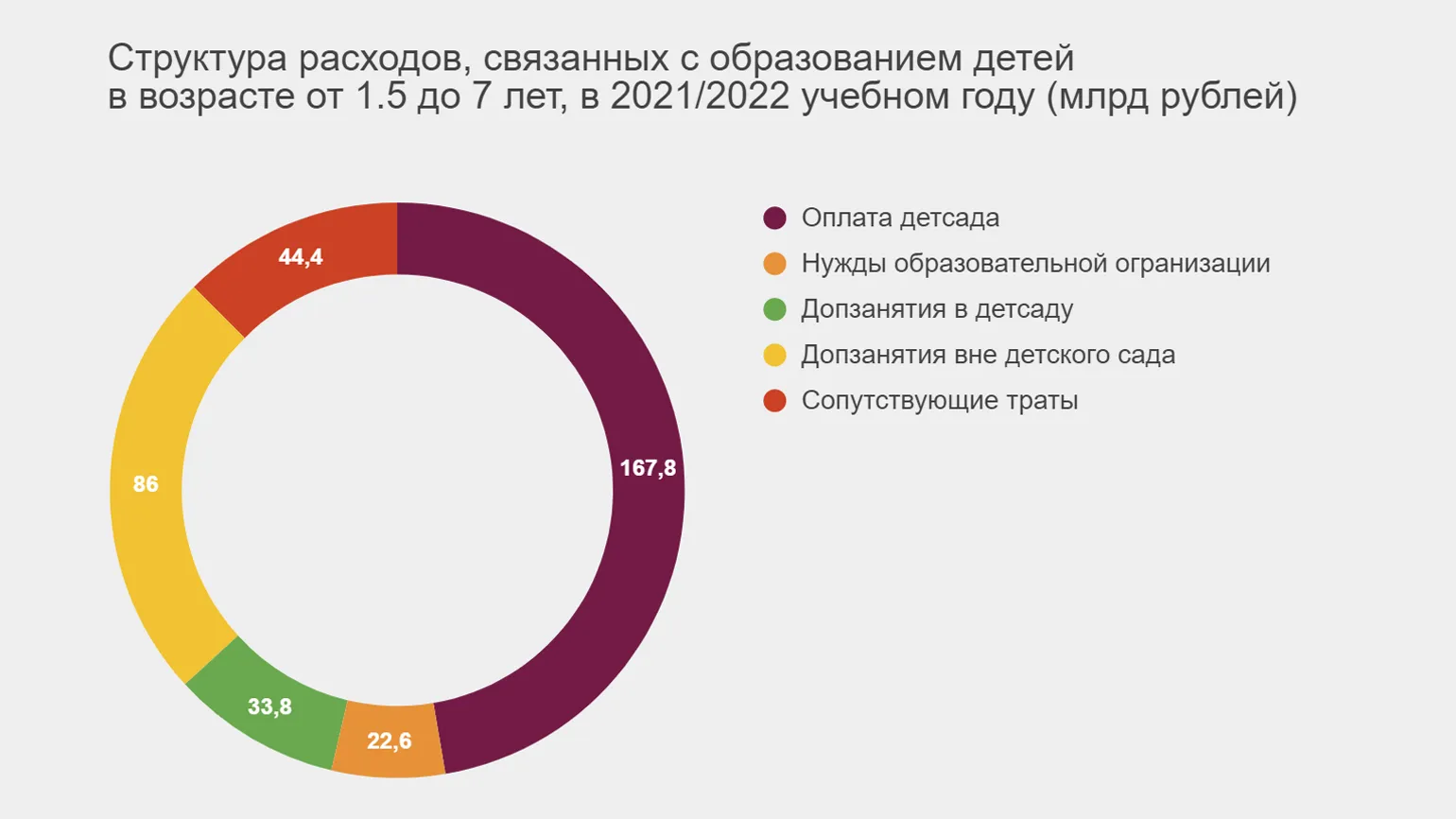
Each level of education has its own key expenses. For families with children attending kindergarten, the most significant expense is parental fees, which average 24,200 rubles per year. 94% of parents whose children attend kindergarten incur such expenses. In the structure of total expenses of parents of preschool children, these expenses make up almost 47%, which is equivalent to about 168 billion rubles per academic year across the country.
In the context of school education, tuition fees affect only a small proportion of respondents, as no more than 1% of children from Russian families attend private schools. Although the average cost of tuition at private schools is 225,600 rubles per year, this expense is virtually insignificant in the overall financial structure of families. Thus, school fees do not have a significant impact on the budget of most Russian families.
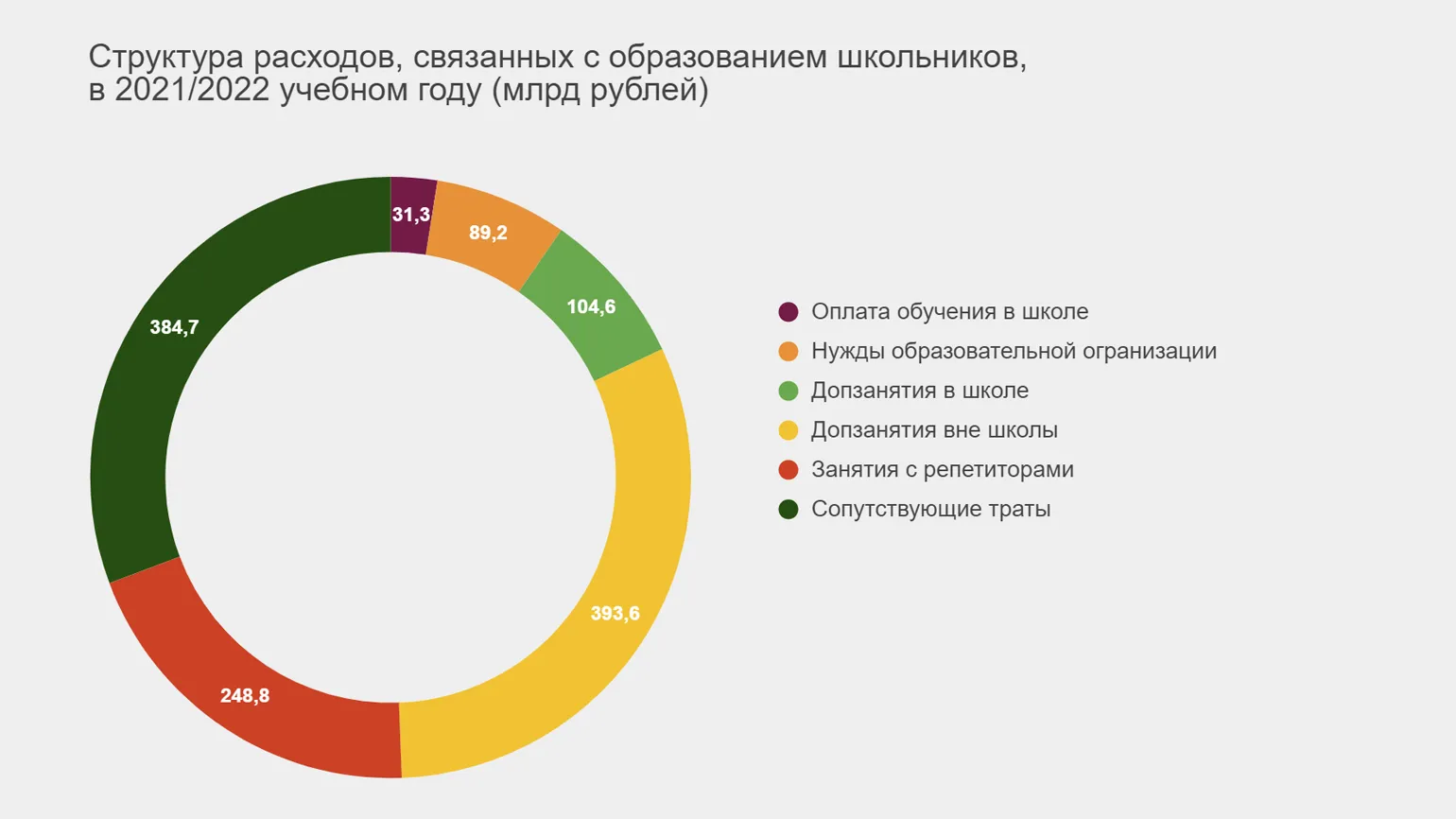
The most significant item of educational expenses for families with schoolchildren is the cost of additional activities held outside the school curriculum. Clubs, creative educational institutions, and sports sections occupy a key place in the educational process. About 35% of the surveyed families invested in such activities, the average amount of expenses for one child per academic year was 66.5 thousand rubles. If we take into account not only clubs, but also tutors, as well as paid classes at school, which are paid for less often, then we can conclude that approximately 60% of all expenses on the education of schoolchildren in Russian families are made up of additional activities. These data emphasize the relevance and importance of additional education for the development of children.
Ancillary expenses for educational literature, stationery, transportation, school and sports uniforms have become the most common among parents. 98.8% of respondents reported this. At the same time, the average cost of these items was lower than that of extracurricular activities, amounting to 23,300 rubles per year per child, for a total of 384.7 billion rubles nationwide.
Among the expenses for educational institutions, parents of schoolchildren most often highlight the purchase of gifts. According to a recent survey conducted by the Skysmart platform, 58% of respondents mentioned such expenses. Furthermore, 38% of parents reported spending on gifts for teachers, and 20% of respondents mentioned donations for classroom repairs. These data demonstrate parents' significant attention to the financial support of the educational process and the support of school staff.
Families whose children attended colleges or technical schools in secondary vocational education programs faced significant additional expenses. These associated expenses can significantly affect the overall family budget and require careful planning.
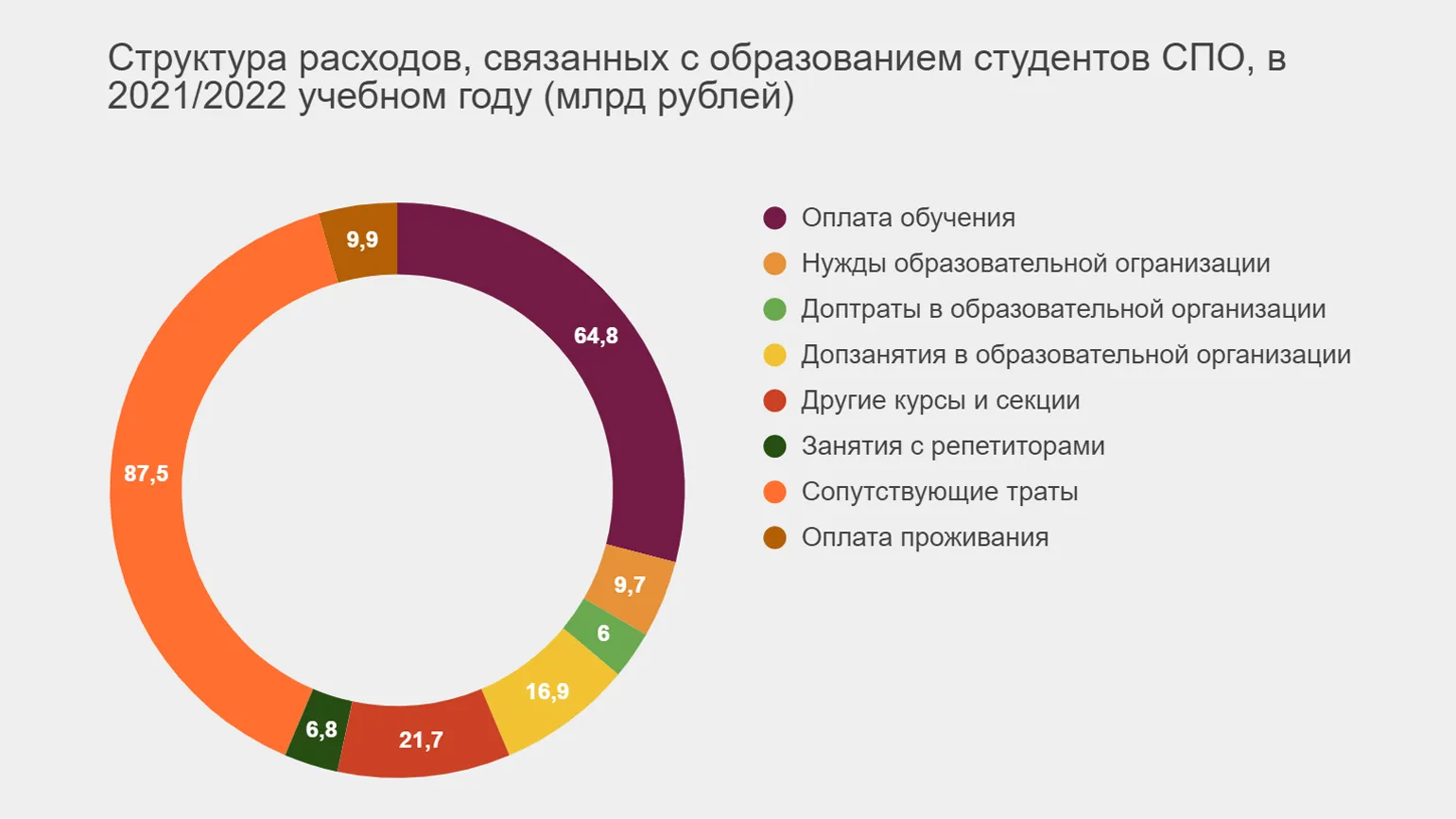
Families of students in secondary vocational education (SVE) spend an average of 30,200 rubles annually on clothing, transportation, and educational materials. However, at the SVE level, some families incur additional expenses, such as dormitory fees or rent. On average, student parents spend approximately 44,000 rubles per year on housing, indicating significant variation in these expenses. The total associated costs are estimated at 97.4 billion rubles per year, accounting for 44% of the total expenditure by Russians on educating their children in SVE institutions. Furthermore, tuition fees for non-budget-funded students constitute a significant portion of these expenses, averaging 74,000 rubles per year per student. In total, this amounts to 64.8 billion rubles, or approximately 30% of all secondary vocational education expenses nationwide. Parents of secondary vocational students spend less on educational institutions than parents of schoolchildren. According to surveys, only 38% of parents of secondary vocational students report such expenses, compared to 81% of schoolchildren's parents. Furthermore, researchers have identified a new category of expenses—additional expenses for educational needs. These include fees for textbooks, equipment, and printing and copying documents and materials. On average, 42% of parents of secondary vocational students spend approximately 4,800 rubles per year on these expenses.
For families whose children attend universities, the bulk of their educational expenses are related to tuition fees. Students who pay tuition fees represent a larger proportion than those studying at vocational schools, and university tuition is generally higher. On average, families spend approximately 148,200 rubles per year per student at a higher education institution. This figure is average, and at some universities, tuition can be significantly higher. Official data shows that 37% of surveyed families mention tuition fees, which amounts to 136.4 billion rubles nationwide. Thus, tuition fees account for 46% of all educational costs associated with the education of students at universities.
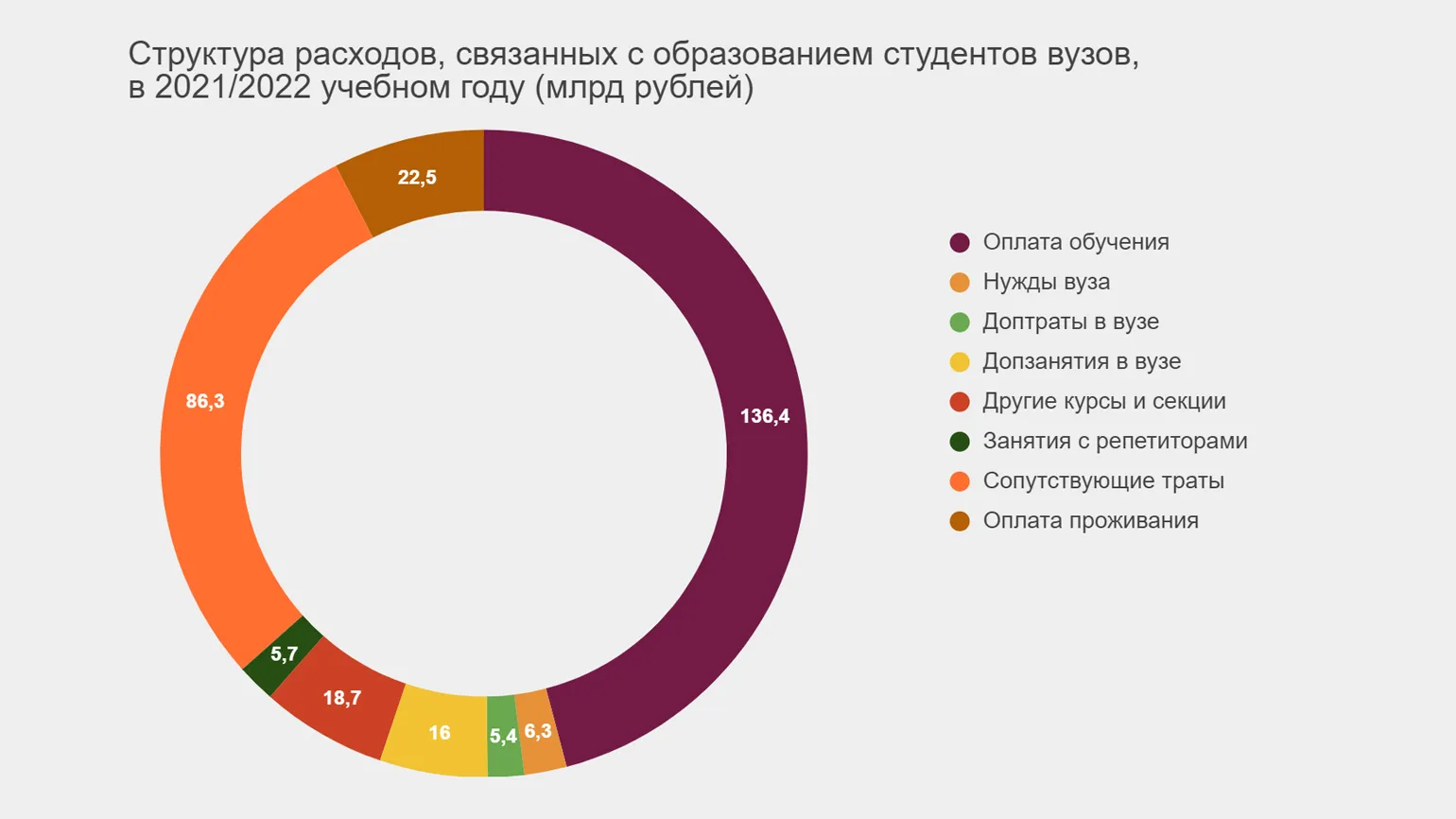
Ancillary expenses on education account for 37%. According to surveys, 95% of respondents report spending on transportation, textbooks, stationery, and computers. On average, these expenses amount to about 36,500 rubles per year per person, which amounts to 86.3 billion rubles nationwide.
How the Expenditures of the Least and Most Wealthy Families Difference
The authors of the newsletter not only presented average values, but also analyzed the structure of expenses in families with different income levels. As a result of the study, four main categories of families were identified.
- the least affluent (these are the respondents who, when asked about their situation, answered “not enough money even for food”, “enough money for food, but not enough for clothes”);
- low-income (“enough money for food and clothing, buying more expensive things causes problems”);
- middle-income (noted that they can buy some expensive things, but not a car);
- wealthy (those who noted that they can buy a car).
The difference in expenses among families with different income levels increases with increasing education level. More affluent families, as a rule, more often turn to paid services and give preference to more expensive options. This indicates that financial situation directly affects the choice of educational opportunities and access to quality services.
The average monthly expenses on children's education vary depending on the level of education and the financial situation of the family. These expenses may include payment for textbooks, extracurricular activities, school supplies, and other education-related costs. It is important to consider that families with different income levels may have different abilities to finance their children's education, which in turn affects the quality of educational services received. Therefore, analyzing these expenses is important for understanding the economic burden on the family budget and planning future investments in education. Data on the population's educational expenditures on children and youth represent an important aspect of analyzing family budgets and social status. The fact sheet "Population Expenditures on the Education of Children and Youth: Analysis of Statistical and Sociological Data" presents current figures and trends that help understand how families allocate funds for education. Education is a priority for most parents, and understanding education costs can help develop effective strategies for improving the quality of the educational process. The newsletter also examines the sociological aspects influencing family financial decisions and identifies key trends in education.
Analysis of statistical data allows us to assess how education costs vary depending on various factors, such as income level, place of residence, and type of educational institution. This study can serve as a basis for further research and the development of recommendations to support educational initiatives and improve access to quality education.
The difference in expenses for extracurricular activities for kindergarteners and schoolchildren outside of educational institutions is significant. Wealthy parents spend twice as much on clubs and sections compared to less affluent families. This difference persists at the level of secondary vocational education, where an increase in associated costs is also observed. For wealthy parents, these expenses exceed similar amounts for the least affluent by more than one and a half times.
Families with children studying at universities demonstrate a significant gap in the costs of higher education. Research shows that 80% of wealthy families prefer to provide their children with not just a higher education, but a prestigious one, which leads them to choose leading universities and expensive educational programs. Meanwhile, among low-income families, almost half of respondents are ready to accept any higher education institution, focusing primarily on affordability. Thus, the choice of universities and educational programs largely depends on the family's financial situation, which creates differences in the quality of education and opportunities for students.
Revised text:
See also:
Higher education in Russia is widespread, but remains inaccessible for many citizens. Despite a significant number of educational institutions and programs, financial and social barriers continue to limit educational opportunities. This means that many young people cannot take advantage of the opportunity to receive a quality higher education, which in turn affects their employment and career prospects. Improving the accessibility of higher education in Russia is an important task for the state and educational institutions.
How expenses have changed in the year before the survey
In the 2021/2022 academic year, expenses of families with preschoolers increased for half of them compared to previous years. For 41% of families with schoolchildren, expenses remained at the same level, while almost half observed an increase, and for 22% the increase was significant. In particular, 62% of parents noted an increase in related expenses, including the rise in the price of clothing, school uniforms, and transportation services.
The dynamics of expenses of families with college and university students shows similar trends. About half of these families increased their education expenses last year. Most often, respondents noted an increase in expenses for transportation, housing, and computers necessary for study. This indicates a significant impact of educational needs on family financial planning.
In some cases, a decrease in expenses or their abandonment was observed. This primarily concerned parents of college students—15% of them reduced their spending on preparation for university entrance. At the same time, only 7% of respondents reduced or completely eliminated expenses on other items. Interestingly, even with a hypothetical decrease in family income by 20%, the majority of respondents do not plan to cut spending on their children's education.
Why Families Maintain Optional Expenses
Expenses on extracurricular activities, such as clubs and tutors, are optional, unlike parental fees at kindergarten and the purchase of school uniforms. The decision whether to pay for such activities is at the discretion of the family. However, many parents choose to invest in additional educational services for their children. What motivates them to make this choice? The Ministry of Economic Development conducted a survey among parents whose children attend school to learn their opinions and motivations. Parents have varying perceptions of the benefits of in-school extracurricular activities, after-school enrichment programs, and tutoring. For them, these types of education serve different functions and offer their own unique advantages. Some believe that in-school activities help children better absorb material and prepare for exams, while after-school programs develop creativity and communication skills. Tutoring, on the other hand, allows for in-depth study of subjects and a personalized approach to learning. Thus, each of these types of education plays an important role in the formation of a child’s well-rounded personality.
Parents identified the main effects of extracurricular activities at school, among which the greatest number of responses concerned the following aspects:
- children learned to communicate with other people, became more sociable and made friends — 50%;
- children were busy and under supervision (47%).
Respondents highlight the key effects of extracurricular supplementary education programs, including:
- children found an activity they enjoy, a hobby (64%);
- children were able to demonstrate and develop their talents (63%).
Parents note several key results from working with tutors. Firstly, there is a significant improvement in the child’s academic performance. Tutors help deepen the understanding of subjects, which contributes to higher grades. Secondly, individual lessons help develop students’ confidence. Thanks to a personalized approach, children become more motivated and interested in the learning process. Thirdly, tutors help fill knowledge gaps, which is especially important before exams or moving to a new level of study. Furthermore, it is important for parents to note that tutoring develops independent work and time management skills, which positively impacts the child's overall development. These results make learning more effective and focused, contributing to student success.
- subject knowledge and grades improved (68%);
- children acquired important knowledge and skills for life that are not taught in school (38%).
Learn more about education by subscribing to our Telegram channel. We share current news, useful tips, and interesting materials in the field of education. Join us to stay up-to-date on all the latest news and trends.
Revised text:
Don't miss the opportunity to read additional materials. Also read our articles and research on the topic to deepen your knowledge and gain useful information. Diverse sources will help you better understand the issues and broaden your horizons. Remember, high-quality materials facilitate deeper understanding and help you make informed decisions. Read also to stay up to date with current trends and news in this area.
- Is academic failure caused by educational inequality and educational poverty?
- Maternity capital for children's education: instructions for use
- It has become known how prices for a number of educational services have changed in Russia over 22 years
- 25% of parents are going to increase spending on their children's education in the new academic year
Profession Methodologist from scratch to PRO
You will improve your skills in developing curricula for online and offline courses. Master modern teaching practices, structure your experience, and become a more sought-after specialist.
Find out more