
Contents:

Learn: The Profession of a Methodologist from Scratch to PRO
Learn MoreIt is important to note that giftedness is not limited solely to high results on intelligence tests. Gifted students typically have higher IQ scores than their peers, but this is far from their only characteristic. They demonstrate outstanding achievements in a variety of areas, such as mathematics, science, and language learning. Mathematical giftedness is the most studied to date, and most of the examples in this article will focus on it. Gifted children are capable of deeply understanding complex concepts and applying them in practice, making them unique and adept at solving unconventional problems. Gifted students exhibit a high degree of creativity, which allows them not only to effectively solve complex problems but also to find innovative approaches to solving them. They are able to independently create problems with unexpected nuances, which highlights their unique thinking and originality. The creativity of such students plays an important role in their learning and development, opening up new horizons for exploration and self-expression. Talented students have unique personality traits that distinguish them from their peers. They often exhibit perfectionist tendencies, striving to achieve high standards in their studies and creativity. Such students are sensitive to contradictions and critically evaluate information, which allows them to develop analytical thinking. They are also distinguished by autonomy and independence in their intellectual pursuits, unafraid to explore new ideas and approaches. Moreover, talented students strive to integrate knowledge from various fields, which contributes to their comprehensive development and a deeper understanding of the topics being studied. Gifted students are distinguished by a high level of motivation for learning, which in foreign literature is referred to as the "need for cognition." While a complex task might cause stress and a refusal to solve it for an ordinary student, a gifted student will work on it for hours, finding joy in the very process of finding a solution. This desire for knowledge and a deep understanding of the world around them makes gifted children unique in their approach to learning.

Why Study Giftedness?The existing abilities, motivation, and personality characteristics of gifted children raise questions about the usefulness of studying them. Instead, neuroscientists, psychologists, educators, and geneticists should focus their attention on children who face learning difficulties. Researching these children can help identify the causes of their problems and develop effective support methods. Thus, focusing on those who need help will help create a more inclusive educational environment and develop strategies that help every child achieve their potential.
The study of gifted children has many rationales. First, these children face unique challenges. We still lack clear methods for creating an optimal educational environment conducive to their development. In traditional educational settings, they may become bored because the curriculum is not tailored to their level of knowledge. Special schools for gifted children are also not without their challenges: among peers with similar abilities, a child may begin to doubt their abilities and lose motivation to learn. Therefore, it is important to develop adapted approaches and programs that take into account the individual needs and characteristics of these children to ensure their successful development and support.
The study of gifted children provides key insights for developing the potential of all schoolchildren. In today's world, where creative solutions are needed, innovation is needed, and adapting to rapidly changing circumstances is essential, gifted children are becoming role models for successfully implementing these skills. Understanding their learning methods and approaches to problem solving can significantly impact educational strategies aimed at developing creativity and critical thinking in all students.
Researching giftedness can be an interesting activity not only for specialists but also for the curious. Understanding talents and abilities helps us gain a deeper understanding of both our own strengths and the potential of others. Giftedness can manifest itself in a variety of areas, such as art, science, sports, and much more. By studying giftedness, you can not only satisfy your curiosity but also gain valuable information on how to develop and support talents. This knowledge can be useful in both your personal and professional lives.
What is unique about the brain of a "genius" (gifted child)
In the scientific literature, there are three main areas of research devoted to the characteristics of the brain of gifted children. These areas cover neurobiological, psychological, and educational aspects. Neuroscience research focuses on the structural and functional characteristics of the brain, identifying differences in neural connections and brain activity in gifted children compared to their peers. Psychological research analyzes the cognitive and emotional characteristics that may contribute to the development of giftedness, including creativity, motivation, and learning ability. Educational research aims to develop effective teaching methods that address the unique needs of gifted children to maximize their potential. These areas of research contribute to a deeper understanding of the nature of giftedness and ways to support it in the educational environment.
- Brain morphology—everything related to the size and shape of both the brain as a whole and its individual parts.
- Anatomical connectivity—the characteristics of the axonal network. These are long extensions of neurons that connect different parts of the brain.
- Functional connectivity is the activity of different parts of the brain during the performance of a task or at rest.
The difference between anatomical and functional connectivity can be understood through an analogy: anatomical connectivity represents the presence of wires, while functional connectivity reflects whether an electric current is flowing through these wires at a given moment. This analogy helps us better understand that anatomical connectivity points to structure and physical connections, while functional connectivity focuses on activity and interaction in the present moment.
Let's study all three areas sequentially.

Children with high mathematical ability have a larger volume of intracranial space and an increased surface area of the cerebral cortex, although their cortex is thinner. Furthermore, these children have a larger volume of white matter, which may indicate developed neural connections and more efficient information processing. These anatomical features may play an important role in their ability to solve complex mathematical problems.
The white matter of children with mathematical abilities has unique structural characteristics. Its microfibers are arranged more codirectionally, meaning they are oriented parallel to each other. This feature is important because white matter is made up of axons, or the extensions of neurons, covered in myelin. Myelin facilitates the faster transmission of signals from one neuron to another along the axon, which, in turn, improves the efficiency of cognitive processes. Thus, the structure of white matter may play a key role in the development of mathematical skills in children.
The complex and intertwined network of axons in gifted children plays a key role in their cognitive abilities. This structure is analogous to a subway: many intersecting lines and transfer hubs facilitate movement between stations. Similarly, when an electrical signal travels along a network of axons, the presence of many hubs and hubs helps it reach its destination more quickly. Thus, a complex neural network, like myelin, significantly accelerates thought processes, making gifted children more effective at solving problems and absorbing information. Gifted children activate more areas of the brain when performing tasks compared to their peers. This phenomenon may be due to both more efficient signal transmission in the brain and the fact that gifted students exhibit greater diligence and concentration when solving problems. Such characteristics in brain function may indicate a high level of cognitive ability and a deeper approach to learning, which in turn can influence their academic achievement and creative development. Research confirms that gifted children have unique cognitive mechanisms that differ from their peers. In one study, scientists studied the brain activity of mathematically gifted children and children without such abilities while performing various tasks. The results showed that gifted children exhibit higher activity at the initial stages of solving a problem, while their activity decreases when forming a conclusion. In contrast, children without mathematical abilities exhibit high activity during the final stages. These differences in cognitive activity highlight the unique approach of gifted children to problem solving.
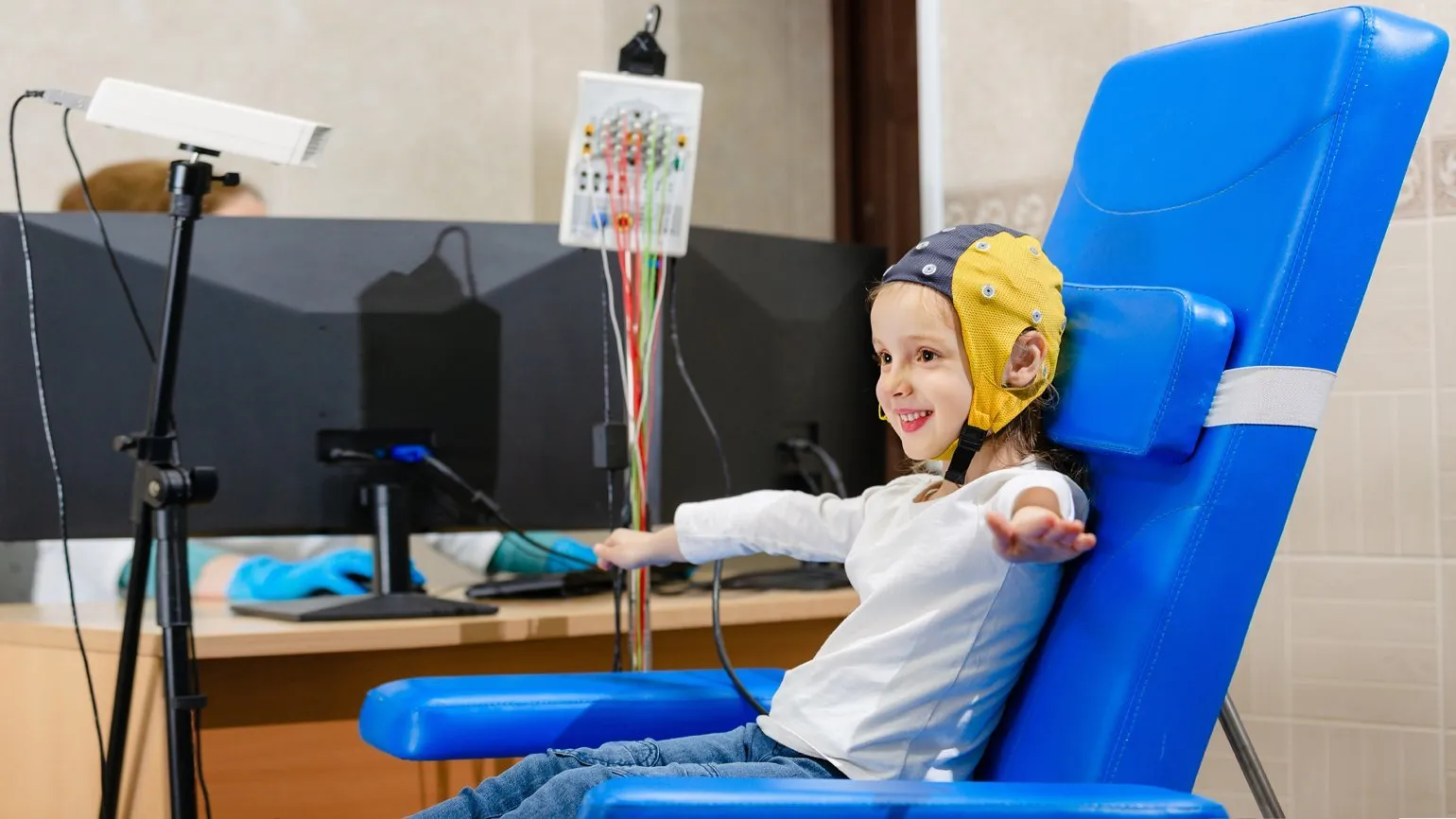
A recent study using electroencephalography (EEG) confirmed that gifted children have the ability to more effectively switch between the activation of different neural networks when solving problems. Each neural network is associated with specific cognitive mechanisms, allowing gifted children to demonstrate greater flexibility of thought. While working on the same problem, their brains function more adaptively compared to the brains of their less gifted peers. This discovery highlights the importance of developing and supporting such abilities in children to enhance their academic achievement.
Unfortunately, we do not have any information on this issue.
In order to find out, Longitudinal studies are needed to determine whether gifted schoolchildren are born with unique brain characteristics or whether these characteristics are shaped by an enriched educational environment. Without dynamic observation, it is impossible to provide a definitive answer to the question of the origin of these differences. Research in this area will help better understand how environmental factors and educational methods influence the development of giftedness in children, which is important for the further improvement of educational programs.
Research in the field of behavioral genetics indicates that heredity plays a significant role in shaping the characteristics of brain function. This means that individual differences in brain structure and function can be inherited. Some children are born with a higher predisposition to intellectual activity, which can influence their ability to learn and develop skills. Thus, genetic factors may explain why some children demonstrate higher mental abilities than their peers.
Environment plays a key role in the development of giftedness, as supported by numerous studies examining the effects of cognitive training on the structure and functional connectivity of the brain. Intellectual pursuits can significantly alter the brain, including increasing the volume of gray and white matter and altering activation patterns. One recent study found that math training not only improves children's problem-solving abilities but also affects resting brain function. These changes highlight the importance of mental activity for optimizing cognitive function and overall development.
What Neuroscience Research Tells You About Education
Current studies of brain function use relatively simple tasks, which limits our understanding of how gifted students work. For example, how children's brains function when they engage in independent research or develop complex mathematical algorithms remains unknown. This is because such tasks are difficult to analyze using electroencephalography (EEG) or functional magnetic resonance imaging (fMRI). Furthermore, current studies do not model specific cognitive functions, such as working memory or cognitive flexibility. Importantly, we also lack data on how brain function differs in children with different abilities, such as those gifted in mathematics versus linguistically gifted children. These aspects require further study to understand individual differences in cognitive processes. Neurobiological research on gifted children has significant implications for the educational system, despite its limitations. This research helps us understand how the brains of gifted children function, which can lead to the development of more effective teaching methods. Understanding the unique cognitive processes and emotional characteristics of these children allows educators to tailor educational programs to meet their needs. Integrating neuroscience research findings into educational practices can significantly improve the quality of education and facilitate the development of gifted students' potential. Neuroscience research confirms the multidimensional nature of giftedness. Gifted children differ not only in their brain morphology but also in their use of diverse cognitive strategies. Giftedness encompasses not only innate abilities but also a desire to think and solve complex problems. Education plays a key role in shaping this desire, helping children develop self-confidence and a willingness to overcome challenges. Thus, high-quality education contributes to the unlocking of the potential of gifted children and their successful development. Research on gifted children confirms the high plasticity of the brain, which changes under the influence of cognitive loads. This discovery underscores the possibility and necessity of developing abilities in every student. Students experiencing learning difficulties are not hopeless. Knowledge about the neurobiological foundations of giftedness once again confirms that talents can successfully develop in the right educational environment.
Revised text:
Study additional materials:
- How can achievements in neuroscience influence education?
- Neuroscience in education: why do teachers need it?
- "The brain only works at 10%" and seven more unscientific neuromyths
- 10 principles of learning and teaching from a brain researcher
The Methodologist profession from scratch to PRO
You will improve your skills in developing curricula for online and offline courses. You will master modern pedagogical practices, structure your experience and become a more sought-after specialist.
Find out more