
Contents:

Learn: Profession Methodist from scratch to PRO
Find out moreAn independent screenwriter and e-course developer working in the education field since 2012. During this time, he has created over 200 courses from scratch, covering various topics and formats. He is also the author of the Nova Academy Telegram channel, where he shares his experience and the latest developments in online learning. He specializes in developing high-quality content that helps learners achieve their goals and improve their skills. A methodologist can work either full-time or freelance, creating educational products. Freelancing offers many advantages, but it has its own peculiarities that you should be prepared for before switching to this format of work. In this article, I will tell you how to start earning money as a freelancer, where to look for clients, and the common mistakes methodologists make at the beginning of their careers in this field.
Characteristics of a Freelance Methodologist
Freelancers, regardless of their professional field, face the same or similar challenges. These problems can be overcome, but it is important to prepare for them in advance. Preparation and understanding of potential obstacles will help freelancers successfully navigate challenges and achieve their goals.
When you work for an employee, you become accustomed to regular income. However, when you transition to freelancing, you face a loss of this stability. In my first freelancing experience, I wasn't prepared for the change. A lack of orders and rapidly depleting funds forced me to return to full-time work. Freelancing requires careful preparation and financial planning to avoid such difficulties.
For those aspiring to become self-employed, I strongly recommend thorough preparation. First and foremost, you should create a financial safety net of at least three months' worth of expenses. This is essential because it takes time to build a client base and establish a steady flow of orders. Also, when freelancing, it's important to continue saving by regularly setting aside a portion of your earnings. This is a fundamental rule of financial literacy that applies to everyone, but it takes on particular significance for freelancers. A solid financial foundation will help you confidently develop in the freelance world and cope with unforeseen circumstances.
Large clients are often reluctant to hire freelancers, especially newcomers. Early in your career, you may need to take on smaller projects, such as working on individual sections of courses, or find corporate clients through intermediaries such as training providers. If you previously handled large and complex projects at an online school, you may need to lower your project requirements as a freelancer. This will allow you to gradually gain experience and build a reputation, which will open the door to larger and more challenging assignments in the future.
The freelance market is noticeably improving, and large companies are increasingly turning to freelancers. For example, I have the opportunity to work directly with organizations such as NLMK, LokoTech, VKontakte, Rostelecom, and others. These companies trust me with not only individual tasks but also with complete turnkey course development from scratch. It's important to understand that the level of orders you receive is largely determined by the quality of your portfolio, the presence of large projects and well-known clients, as well as your visibility in the freelance market. The more visible you become, the more opportunities for cooperation with leading companies open up.

Read also:
Designing corporate training programs requires a careful approach and analysis of the company's needs. First of all, it is necessary to define the training goals and key competencies that need to be developed in employees. To achieve this, you can use assessment methods such as surveys, interviews, and analysis of current skills.
The next step is to develop the program content. It is important to ensure a balance between theory and practical assignments so that employees can apply the acquired knowledge in real-world situations. It is also worth considering different learning styles by offering a variety of formats, such as online courses, seminars, and workshops.
An equally important aspect is the selection of qualified trainers and experts who can effectively convey the material to participants. Evaluation of learning outcomes also plays a key role. Regular feedback and testing will help determine how successfully the program has achieved its objectives.
Ultimately, successful design of corporate training programs requires a systematic approach and constant adaptation to changes in the business environment and employee needs. This will help not only improve employee skills but also improve the overall performance of the company.
Working for a large online school often involves teamwork, where everyone is responsible for their own part of the project. However, as a freelancer, you will have to become a generalist. For example, when developing a course script, it's important to provide it to the client in a fully completed form to avoid the need for revisions by an editor or proofreader. Having a diverse skill set significantly increases your chances of winning commissions for complex projects. This, in turn, is more profitable than performing highly specialized tasks. By developing your competencies, you not only improve the quality of your work but also expand your opportunities for a successful freelance career. A successful freelance career requires sales and marketing skills. The ability to promote and develop a personal brand, as well as effectively market your services, are key aspects of freelancing. Internal skills such as self-organization, self-care, and emotional management also play a vital role. Furthermore, freelancers often face fears, including instability and impostor syndrome, which can make it difficult to adequately assess their competence and set a fair price for their services. Developing these skills and addressing internal barriers significantly increases the chances of successful freelancing.
A freelancer is not only a contractor but also manages their own financial and legal aspects. It's important to understand that successful freelancing is impossible without proper reporting. It's essential to understand contractual relationships with clients, choose the appropriate business structure, whether sole proprietorship or self-employment, and understand tax obligations and payment systems. Competent bookkeeping and an understanding of legal nuances will help freelancers avoid problems and optimize their work.
When you start working for yourself, assignments may not be the most profitable. You often encounter clients who are not always pleasant to work with, but are difficult to turn down due to the lack of other sources of income. In such situations, it's important to learn to manage your time and resources to gradually attract more profitable projects and improve your financial stability.
Over time, as a freelancer builds a reputation in the professional community, they gain the ability to select the most interesting and profitable projects. At this stage, a freelancer can already refuse clients who try to manipulate prices and undervalue their work. This is an important step toward building a successful freelance career, allowing you to focus on high-quality and profitable tasks.
Transitioning to freelancing can be a complex process, and it's not as easy as it seems at first glance. Early in my freelance career, I encountered difficulties organizing my work time. The situation was exacerbated by the fact that I was traveling extensively at the time, which made it difficult to concentrate on work and increased my stress levels. This played a significant role in the fact that my first attempt at becoming a freelancer was unsuccessful.

I have identified two key aspects that contribute to self-organization. The first aspect is that I always work in a specially designated place. Even when traveling, when rented accommodations may be limited in space, I try to create a small work area. This shouldn't be a place where I relax, for example, not in front of the TV, not at the dining table, not in bed. This approach helps me switch to the work process and focus on tasks. Creating a separate workspace significantly increases productivity and promotes better time management.
I never work in pajamas. To increase productivity, I always dress in jeans and a T-shirt or shirt. This approach helps me focus on tasks and create an atmosphere conducive to work. The right choice of clothing plays a significant role in setting the working mood and increasing efficiency.
How a Methodologist Can Start Freelancing
If you're considering freelancing, don't rush to quit your day job. Start by fulfilling orders in parallel with your current activities. This approach will allow you to better understand how prepared you are to find clients and negotiate with them. You'll be able to evaluate whether freelancing is right for you as a way to earn money. While combining two careers can be challenging and require significant effort, it's the safest and most sensible step toward freelancing.
To fully transition to freelancing, you need to prepare not only financially but also organizationally. I did this for the second time, and this attempt was much more successful. I've been freelancing for four years now, collaborating with both Russian and international clients. During this time, I've assembled a team of course developers and launched a Telegram channel. Thanks to freelancing, I was able to realize my dream of traveling. Freelancing has opened up new horizons and opportunities for me, allowing me to combine work with my favorite hobbies.
I'll describe the key steps that contributed to my success.
Defining your target audience is key. Understanding the needs of potential clients will allow you to effectively promote your services. By focusing on your audience's interests and preferences, you can create more relevant offers and improve customer engagement. This will lead to increased conversions and a stronger market position for your business. Your clients could include online schools in the EdTech segment, which, in addition to in-house methodologists, are actively seeking freelance services. These organizations place particular emphasis on course development methodology, making them interested in high-quality content and a professional approach. Recently, demand for methodologists has also increased among information businesses. Previously, this sector focused on promotion, while course quality was not a primary concern. However, many infobusinessmen now realize the importance of a sound methodological approach to training, which opens up new opportunities for collaboration and professional growth in this field.

Read also:
Infobusiness is an effective tool for significantly increasing the level of education and knowledge among a wide audience. It offers a variety of educational materials and courses available online, allowing anyone to study at a convenient time and in a comfortable environment. With the rapid development of technology, infobusiness is becoming a key factor in disseminating the information and skills necessary for successful life and work in modern society. Thus, infobusiness plays an important role in shaping an educated society, promoting self-development and professional growth. Freelancers have the opportunity to collaborate with corporate training providers who create courses tailored to the needs of various companies. It's also worth considering offering your services directly to companies interested in training their employees. This opens the door to creating unique educational programs and professional development. Once you've identified your target audience, it's important to identify your strengths and advantages that differentiate you from your competitors. In marketing, this is called a unique selling proposition (USP). A USP is what makes your product or service unique in the market. You need to formulate your USP, highlighting the skills and qualities you excel at. Consider additional skills that can help your clients save time and resources by using one specialist instead of several. For example, one of my key advantages is my design skills, which allows me to offer comprehensive solutions to clients. Setting a low price as a primary competitive advantage is an ineffective strategy. In the long term, this can negatively impact your growth and development. Instead of focusing on lower prices, it is better to invest in the quality of the product or service, improving customer service, and creating unique offerings that will set you apart from the competition. This approach promotes sustainable business development and strengthens its position in the market. A portfolio differs from a resume in that it presents real examples of completed work, not just information about education and experience. Clients are interested not so much in your place of study or previous jobs, but in the specific skills and results you can offer. It is important to demonstrate your abilities through high-quality examples to demonstrate how you can meet client needs. A well-compiled portfolio can be a key factor when choosing a professional, as it clearly demonstrates your professionalism and skill level. Your portfolio should include examples of your work, such as video courses, longreads, slide courses, and individual scripts. It's important to showcase all the projects you've completed as a methodologist. To visually present your portfolio, you can create a personal page on the Tilda platform or prepare a PDF document. This will help potential employers or clients assess your skills and experience, as well as form an impression of your approach to work. Proper structure and design of content also play a key role in the perception of your portfolio.
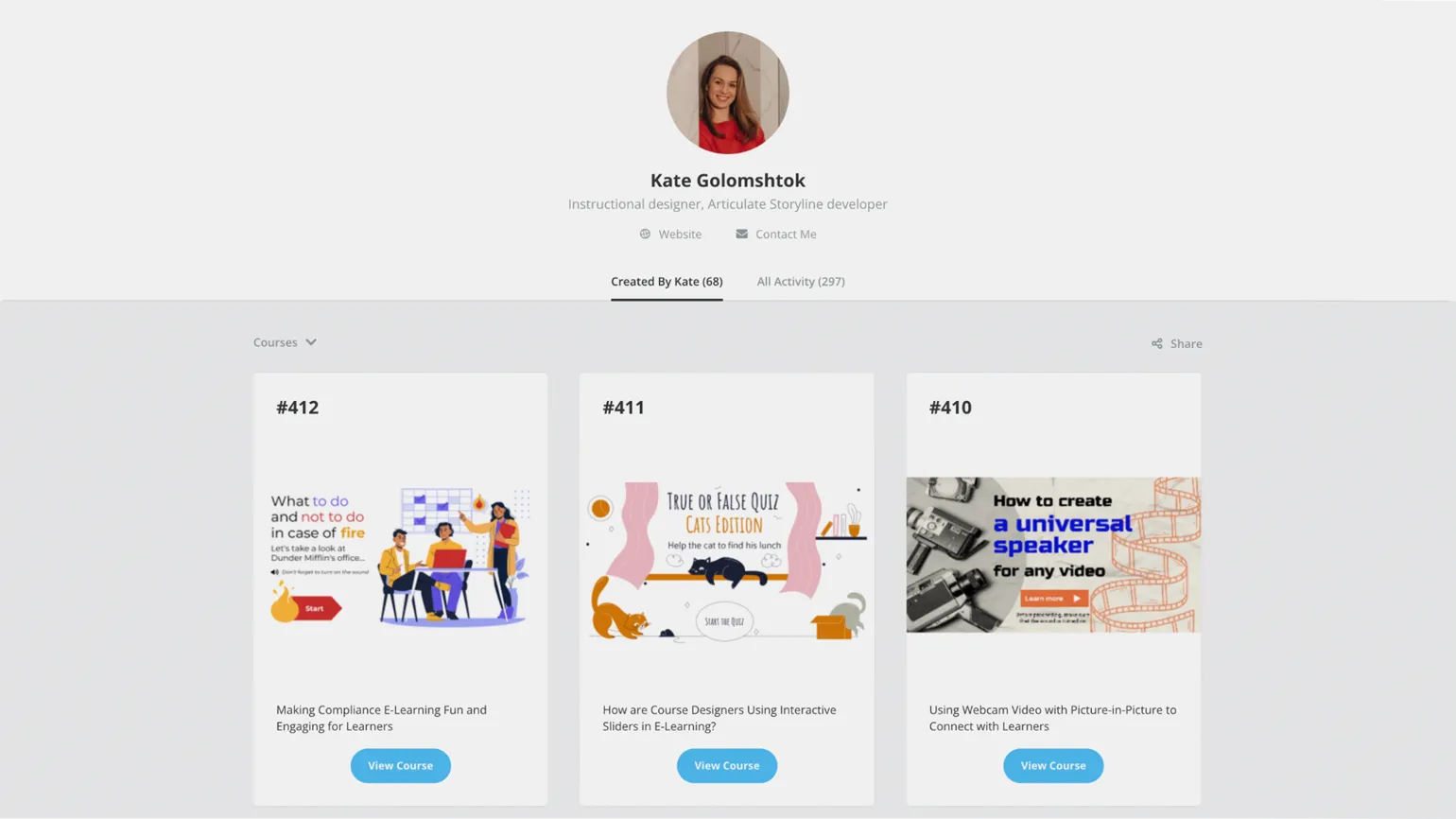
Your portfolio must include a detailed description of all the services you provide. The more specific and detailed you describe your offerings, the greater your chances of attracting clients. List the types of courses you develop, the tools you use, and the platforms and builders you work with. Don't forget to mention the learning management systems (LMS) you confidently use. This will help potential clients better understand your capabilities and choose you for their projects.
Including client testimonials in your portfolio is an important step to increasing its appeal. Don't be afraid to collect feedback after completing each project. Client feedback not only lends credibility to your portfolio but also helps you identify both the strengths and weaknesses of your work. This will allow you to understand which skills need improvement and which of your strengths you can confidently build on. Objective self-assessment isn't always possible, so client feedback plays a key role in your professional development.
Determining the price of services or products is an important and often difficult step. The desire to set a competitive price creates a fear of underpricing or, conversely, setting a price that's too high. Inappropriate pricing can lead to customer loss and decreased demand. The optimal approach is to carefully analyze market rates and understand the value of the services or products offered. Setting an appropriate price will not only help attract customers but also strengthen your reputation in the marketplace.
I'll share my approach to calculating the cost of an order. First, you need to determine how much you want to earn per month. This amount should not only meet your financial needs but also cover all work-related expenses, such as professional training, internet access, and subcontractor services (for example, programmers or illustrators, if you engage them for your projects). Let's take 100,000 rubles as an example.
The second question concerns the number of hours you are willing to dedicate to work. A standard workweek is usually 40 hours. However, if you are a freelancer and plan to work less, for example, 25 hours per week or 100 hours per month, then you have the opportunity to adapt your schedule. To determine the hourly rate, divide your desired monthly income by the number of hours worked. For example, if you want to earn 1,000 rubles per hour, be sure to factor in an additional 30% for unforeseen expenses. This will allow you to set your hourly rate correctly and guarantee a stable income.
To successfully formulate a pricing policy, it's important to compare your prices with market offers for similar services. For example, if you plan to charge 1,000 rubles per hour for online course development, but competitors offer the same service for 500 rubles, your price may be uncompetitive. However, this isn't a reason to immediately lower your price. First, it's important to clearly justify why your work is priced this way and convey this information to potential clients. Perhaps you can deliver results twice as fast and with higher quality than most providers, or you take on additional responsibilities that allow the client to receive multiple services in a single offer, saving money. This approach will help you stand out from the competition and attract more clients.
The situation can also be the opposite: for example, if your calculations show that you want to earn 1,300 rubles per hour, and the average market rate is 2,000 rubles per hour, then you have every reason to increase your price to match the market rate. This will allow you not only to meet industry standards but also to increase your competitiveness.
Hourly pricing is rarely profitable, except in cases where the client doesn't fully understand their requirements and you have to make frequent changes. In most cases, it's better to set a fixed project price. To do this, multiply your hourly rate by the estimated number of hours required to complete a specific project. It's important to learn to estimate the time each stage of the work will take in advance—from developing the course structure to communicating with experts and writing the script. For more accurate estimates, you can use task trackers with a timer function, such as Monitask or Shtab. Don't forget to allow extra time—approximately 20–30% of the total estimate—for making edits based on client feedback, as they will almost always arise.

Consider providing Additional services are available for a fee. If your primary specialization is as a course methodologist who develops the structure and script of a course, you can expand your offerings. As a complement to your core services, you might consider offering in-depth marketing analysis of your target audience or creating a promotional video to promote the course. This depends on your skills and desires. Don't forget to also set prices for these services so potential clients know what they can get for their money.
At this stage, it's important to choose whether to register as a sole proprietor or self-employed. It's recommended to start with self-employment, as tax reporting is significantly simpler than with sole proprietorship. Self-employment allows you to focus on business development without unnecessary administrative hassle, which is especially important for beginners.
If you're focused on working with corporate clients, being a sole proprietor can be a significant advantage. Large companies typically prefer sole proprietorships, which simplifies interactions with their accounting and legal departments.
Clients often request a standard contract, which is an important tool for protecting your rights. Having such a contract will help prevent situations where a client stops communicating or refuses to pay after completing the work. It's important to specify the number of iterations in the contract to avoid endless revisions and misunderstandings during the process. It's also a good idea to include a clause allowing you to use excerpts from the course to demonstrate examples of your work to other clients and for other purposes. For example, if you plan to present at a specialized conference and share your methodological experience, having real-world examples of various techniques used in course creation will be extremely helpful. This will not only demonstrate your expertise but also attract new clients interested in your services.
Developing a personal brand is important for freelancers, as it can lead to opportunities to work on significant projects with major clients. Creating and promoting a personal brand will help you stand out from the competition, build trust, and attract the attention of potential clients. An effective personal brand helps establish a professional reputation, which in turn opens new horizons for collaboration and expands freelancing opportunities. Creating a social media profile is an important step for attracting clients and expanding your professional networks. It's recommended to open a Telegram channel where you can regularly publish expert content, showcasing your knowledge and skills. If your goal is to attract international clients, be sure to create a LinkedIn page; this will help increase your visibility and strengthen your professional image. Don't forget to subscribe to relevant communities where you can find potential clients. These can include chats for HR and T&D specialists, job posting groups, and themed public pages. Actively participating in discussions, commenting on posts, and contributing your own content will help you stand out from the crowd. Networking on these platforms not only helps you find clients but also opens up opportunities for collaboration with subcontractors, such as designers or programmers, who may be needed to implement your projects.
Analyzing the training market is key to the success of any educational project. It's important to identify potential client needs, study competitors' offerings, and determine which target audience needs remain unmet. It's also worth considering new methods and approaches to course development that can help attract and satisfy learners. Understanding these aspects will allow us to create relevant and in-demand educational programs.

Learning and development is a continuous process that covers not only the professional sphere, but also related areas. A methodologist would benefit from studying copywriting to be able to explain complex concepts in simple and accessible language without the need for editors. Effective communication skills are also essential, as they help confidently negotiate with clients and productively collaborate with subject matter experts when developing courses. Furthermore, it is worth paying attention to areas such as storytelling and game design, which can significantly enrich methodological approaches and improve the quality of educational content.
Where a methodologist can look for clients
When it comes to finding clients, the story of Rembrandt, one of the most famous artists of the 17th century, comes to mind. He often depicted himself in his paintings, which allowed potential clients familiar with his work to easily identify him. This emphasizes the importance of a personal brand and recognition in attracting clients. Creating a unique image and using your own work to promote your services can significantly improve the chances of successful cooperation.
This method remains effective, so it's important to share information about your activities, skills, and potential needs. First and foremost, let your friends and acquaintances know you're starting freelance work through social media and in-person meetings. Don't forget to also promote yourself in specialized communities related to your field. It's important to note that in our field, word of mouth is the best way to attract work. The more people know you as a qualified specialist, the more likely they are to seek your services. Maintain active communication and interaction with your audience to increase visibility and grow your freelance business.
Here are some effective ways to attract new clients. Use social media to promote your services by posting samples of your work and interacting with potential clients. Participate in specialized forums and online events where you can meet interested parties. Develop your own website, optimized for search engines, to increase the visibility of your services. Don't forget about recommendations: ask satisfied customers to leave positive reviews and recommend you to their friends. Network marketing can also help attract new clients: connect with professionals in your field and expand your network.
- Professional training. Taking various courses can be a good opportunity for networking, which means finding clients. Moreover, entire teams often emerge from joint training – people get to know each other and communicate during the course, and then collaborate to work on common projects.
- Professional competitions. Competitions for methodologists and online course developers are held by, for example, EdCrunch, iSpring, and Digital Learning. It's worth studying the terms and submitting applications. In my experience, winning prizes in such competitions really does attract new clients.
- Professional conferences. Participating in conferences, firstly, helps you follow trends and develop with the market. Secondly, it's useful for boosting your personal brand and finding clients. The more you "show up" wherever possible, the more likely you are to receive new orders.
- A LinkedIn profile. Again, it's important if you want to work in the international market, but clients from Russian companies also often have accounts on this platform.
- "Cold" marketing. The essence of this method is that you directly contact the company or expert you want to work with. This is how I got my first major contract in 2018—I wrote to a company I liked, and they offered me a large order for course development. We later collaborated with this company on several more projects.
- Former clients. Sales professionals are well aware of the phenomenon of upselling—upselling a client who has already purchased one product. A freelancer can use the same principle and regularly remind past clients of their presence. At the beginning of the year, I reviewed my client base, selected ten who might be interested in my offer, and sent out a mailing list. I ended up receiving three orders, even though it had been a while since I last worked with these clients.
What Mistakes Most Often Lead to a Bad Freelancing Experience
There are two most common mistakes freelancers face, and I'll share ways to avoid them. The first mistake is poor time management. Freelancers often underestimate the time needed to complete tasks, which leads to delays and stress. To avoid this, it's important to set realistic deadlines and regularly review your plans. The second mistake is a lack of clear communication with clients. Unclear expectations can lead to misunderstandings and dissatisfaction. To prevent such situations, it's recommended to maintain an open dialogue, clarify project details, and regularly update clients on the progress. By avoiding these mistakes, freelancers can significantly improve their efficiency and client satisfaction.
Corporate clients often avoid working with freelancers due to the risk of late completion and lack of notification of delays. At the same time, responsible freelancers face another challenge: they meet deadlines, but they do so while working without breaks and experiencing high levels of stress, which can ultimately lead to burnout.

Procrastination and misestimating the time required to complete a project can be the main causes of problems. To avoid these difficulties, it is important to create your own planning system and establish clear rules. It is recommended to add an additional time buffer, for example, 20%, when estimating deadlines to account for possible unforeseen delays. This will help you more accurately predict task completion and improve overall project efficiency.
Simplifying your work is an important aspect of increasing efficiency. Script templates can be an excellent solution. By creating a basic course structure, you can adapt it to various similar requests, which will significantly save you time. Optimizing communication with clients also plays a key role. For example, having a presentation with a ready-made commercial proposal allows you to quickly make necessary changes and calculate the cost of a specific project. This approach not only speeds up the work process but also improves the quality of interactions with clients.
Clearly defining working hours and informing clients about them is an important aspect of business organization. For example, you can establish a rule that messages are not responded to on weekends or after 6 p.m. on weekdays. This practice helps you manage your time effectively, clearly separating work and personal time, which in turn reduces the risk of missing deadlines. Proper time management contributes to improved customer service and overall productivity.
When a freelancer simply acts as a contractor, strictly following the technical specifications and without analyzing the client's problem, the result is often poor. In such cases, the likelihood that the client will return to this freelancer for new services is extremely low. To achieve high-quality results, it is important to understand the client's needs and actively participate in solving their problems. A professional freelancer should strive to deeply understand the problems the client faces, which will allow them to create more effective and in-demand products.
Recently, I faced a problem as a client. I needed a website for a new project, so I contacted a developer. I immediately explained that I had no experience in website creation and sought help in developing the correct layout. As a result, the developer designed the website without following the provided layout, and only after the work was completed did he claim I had provided an incorrect layout. This experience demonstrated the importance of clearly communicating expectations and monitoring the development process at every stage.
To avoid similar situations in your professional work, it is necessary to take a strategic approach. It is important not only to follow the client's instructions but also to understand why they need the course and what problems it should solve. This will help create a more effective and compliant product, which, in turn, will increase client satisfaction and ensure the success of the project.
Learn more about education by subscribing to our Telegram channel. We share relevant news, useful tips, and interesting materials to help you stay up-to-date on the latest trends in education. Join our community and expand your knowledge.
- 10 myths about the work of an online course methodologist
- 10 modern professions in the field of education
- “The knowledge of a methodologist is not so important, he looks at the topic from different angles”
- “There is no Groundhog Day for methodologists: there are always new challenges and room for growth”
Methodologist Profession from Beginner to Advanced
You will develop skills in developing curricula for online and offline courses. Master modern teaching practices, structure your experience, and become a more sought-after specialist.
Find out more