Contents:

Learn: Profession Methodist from scratch to PRO
Find out moreThe duration of schooling in Russia is determined by the Federal State Educational Standards (FSES) of general education and is up to 11 years. This time includes both primary and secondary general education, which develops basic knowledge and skills in students. FSES provides uniform requirements for educational programs, guaranteeing the quality of the educational process and compliance with modern educational standards.
Education standards establish the duration of education at various levels. Primary general education, covering grades 1–4, should last no more than four years. Basic general education, including grades 5–9, is designed for five years. Secondary general education, which covers grades 10–11, lasts two years. According to the Constitution of the Russian Federation, basic general education, which covers nine grades, is compulsory.
In this article, you'll learn how to finish school faster, how many years students study in different countries, and what the length of schooling was for our great-grandfathers and great-grandmothers. We'll look at different educational systems, accelerated learning methods, and the historical aspects of schooling.
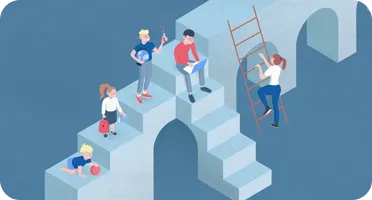
Learn more about different forms of education, including general and specialized, in our in-depth review. We have examined in detail the features and benefits of each type of education.
Education comes in various types, each designed to achieve specific goals and meet the needs of students. The main types of education include general, vocational, higher, and additional. General education covers the basic knowledge and skills necessary for life in society. Vocational education is aimed at training specialists in specific fields, providing practical skills and theoretical knowledge. Higher education provides in-depth study of the chosen specialty and opens up opportunities for career advancement. Additional education helps people develop their skills, improve their qualifications, or master new professions. The variety of types of education allows everyone to choose the most suitable path for personal and professional development.
What are the ways to shorten schooling?
Federal State Educational Standards (FSES) define the maximum duration of primary and basic general education as four and five years, respectively. This means that students can complete the school curriculum in a shorter period of time, if possible. Accelerated learning allows for tailoring the educational process to the individual needs and abilities of each student. Homeschooling or self-study offers unique opportunities for students. In this case, students can be assigned to the school exclusively for midterm and final assessments, such as the Basic State Exam (OGE) and Unified State Exam (USE), acting as external students. The law does not set strict deadlines for midterm assessments, allowing them to be taken more frequently than once a year. This means that if a child learns material more quickly, they can complete the school curriculum in less than eleven years, covering the curriculum of two or more grades in a single school year. Thus, homeschooling opens the door to accelerated learning and an individualized approach to each student. In Russia, a striking example of accelerated learning is the Teplyakov family, where children master the school curriculum in just three to four years. They begin their studies significantly earlier than is typical. For example, my eldest daughter, Alisa Teplyakova, learned to read and count confidently by the age of four, and at eight, she successfully passed the Unified State Exam, confirming her knowledge at the secondary level. This case highlights the effectiveness of accelerated learning and early development methods, which can significantly impact the educational process.

Read also:
10 child prodigies with unique records that are hard to beat
There are many talented children in the world whose achievements are impressive and inspiring. These young prodigies have set records that inspire admiration and fascination. Their unique skills and abilities allow them to stand out among their peers and even adults. Let's take a look at ten outstanding child prodigies whose achievements are difficult to replicate. These children have demonstrated incredible dedication and hard work, making their records virtually unattainable. Their success in various fields, such as science, art, sports, and technology, serve as a shining example of how talent and perseverance can lead to outstanding results.
How long do people study in schools in other countries?
Education in different countries typically lasts from 11 to 13 years, with the 12-year system being the most common. As in Russia, not all years of schooling are compulsory, and different countries may have different approaches to educational standards and programs.
In many developed countries, the duration of primary education is longer than in the Russian system. However, secondary general education, which in Russia covers grades 5-9, takes less time. It is important to note that primary school in these countries often includes elements typical of kindergartens in Russia, allowing education to begin before the age of seven.
In the United Kingdom, Ireland, and Commonwealth countries, including Australia, New Zealand, and Canada, primary education typically begins at the age of five. In Canada, education begins at the age of six, but before this stage, children are required to attend kindergarten. The duration of primary education in these countries ranges from six to seven years. The exception is Ireland, where primary school lasts eight years, including two preparatory classes for children aged four and five. This educational path provides a quality start to the educational journey and promotes the all-round development of children. Children continue their education at the lower secondary level, which typically lasts three years, although in Australia and New Zealand this period is four years. Education at the next level of secondary general education is not compulsory in all countries. In some cases, it is replaced by various forms of secondary vocational education, similar to colleges and technical schools, with a duration of study from two to four years. The United States has a twelve-year educational system. Primary education typically lasts six years, after which students move on to secondary education, which may be divided into two stages of three years each. However, the educational structure may vary by state, as each sets its own educational standards and curriculum requirements. However, the general rule remains unchanged: all levels of education, from primary to high school, last 12 years.
Similar educational systems with long initial stages and short secondary stages are used in the Scandinavian countries, Spain, Japan, and South Korea. In France, school education lasts twelve years and includes a five-year primary stage, as well as various options in high school. These approaches allow for the educational process to be adapted to the needs of students and ensure a deeper assimilation of material.
In 2020, India implemented a national education plan, which sets the duration of schooling as follows: primary school for five years, middle school for three years, and high school for four years. Thus, the total time of schooling is 12 years. A similar twelve-year education system is implemented in China, where primary school lasts six years, and secondary education is divided into two stages, each of which also lasts six years.
In Germany, primary school is shorter. Here, as in our country, there are four grades of primary school, but secondary school lasts six years, while in our country it is five. Completion of general school education in Germany takes three years, which is a total of 13 years of study. However, it is worth noting that there are many options for educational trajectories, and many students choose shorter vocational paths already at the first stage of secondary education.
What was the duration of schooling in Russia before?
The system of nine-year and eleven-year education in Russia was formed gradually and has undergone changes depending on the historical context. In different eras, approaches to education and the duration of schooling varied, reflecting the social, economic and cultural transformations of society.
Pre-revolutionary Russia lacked a unified school system with standardized requirements, which led to significant differences in the length of schooling across various types of educational institutions. Compulsory primary education did not exist, and no minimum length of schooling was established. This created a diversity of educational approaches and student levels, which in turn affected the quality of education in the country.
Secondary education, which allowed entry into university, could be obtained in gymnasiums in seven to eight years. This time does not include the "preparatory" class, which accepted children aged 8-10. Many students acquired basic knowledge at home before entering gymnasium. Pre-revolutionary gymnasiums practiced repeating a year for students with poor grades, which could increase the total length of study to ten years or more.
Long-term education for children, especially in fee-paying institutions, was only available to wealthy families. Children from less privileged backgrounds attended simpler schools, where schooling lasted seven to eight years, including primary education. For most peasant children, if they had the opportunity to attend, the school period typically did not exceed two to three years. The main goal of such education was to teach children to read and write, which was considered sufficient for their future life. After the revolution, the Soviet government established mandatory attendance at the first and second levels of school for all school-age children. The first level of education covers children aged 8 to 13 and comprises a five-year curriculum. The second level is intended for adolescents aged 13 to 17 and lasts four years. Compulsory education has become an important step in ensuring equal access to knowledge and development of young people in the country.
Please note the following recommendations:
1. Make sure your content matches user queries and contains the keywords they use to search. This will help improve your site's visibility in search engines.
2. Use headings and subheadings to structure your text. This not only improves readability but also helps search engines better understand the content of the page.
3. Don't forget about internal and external linking. Linking to other pages on your site and to authoritative sources can increase the trustworthiness of your content and improve its SEO ranking.
4. Optimize images by adding alt attributes with descriptions. This not only helps search engines index images but also improves the accessibility of your site.
5. Update content regularly to keep the information relevant and attract new users.
By following these recommendations, you can significantly increase the effectiveness of your content and improve its ranking in search engines.
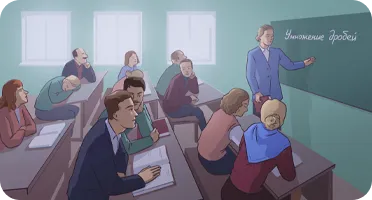
The Bolsheviks radically changed the education system, introducing many reforms in school education. These changes were aimed at creating a new socialist school that would reflect the ideals of the revolution. New teaching methods were introduced, curricula were revised, and increased attention was paid to nurturing youth in the spirit of collectivism and socialist values. However, over time, the Bolsheviks began to tire of constant experimentation in education. Difficulties in implementing reforms and a lack of resources necessitated stabilization of the system. This led to many innovations being revised or abandoned. Ultimately, despite initial enthusiasm, subsequent years demonstrated that radical educational reforms require not only bold decisions but also careful implementation, taking into account real-world conditions. Seven-year schools were more popular than nine-year schools. After graduating, students could enroll in a technical school, a nine-year school, or immediately begin working. Over time, the length of compulsory schooling and the length of study at various levels, such as elementary, middle, and high school, underwent several changes.
- In 1934, middle school became a ten-year program, and seven-year schools began to be called incomplete secondary schools.
- In 1958, eight-year schooling became compulsory, meaning that incomplete secondary school now ended with the eighth grade, not the seventh. To obtain a complete secondary education, it was necessary to study for an additional three years at a labor polytechnic or evening school—that is, 11 years in total. However, this approach did not catch on, and in 1964 the length of study was reduced again—in general, complete secondary education took ten years.
- This length of schooling remained until the 1980s, although in 1970, primary school was made three years long—the fourth grade was now considered secondary education. As before, with an incomplete secondary education, it was possible to continue education in a secondary specialized educational institution (vocational school, technical school).
- In 1984, the 11th grade was introduced, and the fourth grade was returned to primary school. According to the reform, the terms of education became as follows: four years of primary school, five years of junior high school, and an additional two years to obtain a full secondary education.
Revised text:
Learn also:
Big Break on Zarechnaya Street: How Adults Learned in Soviet Schools
In Soviet schools, adult education became an important part of the educational system. On Zarechnaya Street, as in other districts, courses and classes were held that allowed people of all ages to acquire new knowledge and skills. This process was part of a state program aimed at raising the level of education and qualifications of the population.
Adult students came to classes to master a variety of subjects, such as mathematics, history, foreign languages, and technical sciences. Learning took place in an atmosphere of collaboration and support, where experienced teachers helped everyone develop their abilities. The big break, a symbol of learning and new opportunities, became an integral part of school life.
Soviet schools on Zarechnaya Street offered not only traditional classes but also a variety of clubs where adults could engage in creativity, sports, and self-development. This contributed to the creation of a friendly atmosphere and an active exchange of experiences among students. Adult education in Soviet times played a key role in the formation of a skilled and educated society, which was reflected in all spheres of life.
How the fourth grade disappeared from schools in the 1980s
The introduction of eleven-year education in the 1980s was carried out in stages. Initially, it was planned to complete the implementation of all innovations by 1990. However, during this period, significant changes occurred not only in the educational system, but also in the country as a whole as part of perestroika. As a result, the school structure did not acquire the expected unified format, as envisaged in the 1984 decree.
Why did the fourth grade disappear? The reason lies in the fact that the new 11-year school was supposed to admit children at the age of six. However, not all schools and parents were ready for such changes. Moreover, many believed that a four-year primary education was excessive, as they had previously successfully completed the curriculum in three years. As a result, various practices and approaches to teaching emerged, leading to a complex situation in the education system.
- Some schools accepted children as young as seven, and, as before, taught elementary school only through third grade. But since middle school now generally began at fifth grade, such schools simply did not have a fourth grade.
- In other places, for example in Leningrad, "zero" classes were opened: they accepted children as young as six, but taught them in a simplified format, with shortened lessons. Such classes could be located in schools or kindergartens. It turned out that in total, children studied for 11 years, but the first year was preparatory, "zero", and from the third grade they also immediately "jumped" to the fifth.
- In other schools, there were no such leaps, and primary school occupied four grades in a row - from the first to the fourth.
In the 1990s, the Russian education system featured many different approaches to education. However, in 2001, the Government established a single standard period of study in primary school equal to four years. From that moment on, all children entering Russian schools are taught according to programs designed for nine and eleven years of study. This innovation made the educational process more structured and predictable for students and their parents.
The three-year primary school continues to exist, although not in full. According to the Federal State Educational Standards (FSES) of primary general education, the period of study in primary school may be shortened. The "Efficient Primary School" project is being implemented in Moscow and has been successfully operating for several years. Under this project, students in their first year of school master the curriculum of both first and second grades. Thus, the total duration of study in primary school is three years.
Read also:
- How they teach in modern high schools abroad: three cases
- A country where nurseries are more expensive than universities: how education is organized in Switzerland
- An expert told what is changing in schools in the 2023/2024 academic year
- 13 books about the history of education in Russia: how our ancestors studied and taught
The Profession of Methodologist from Scratch to PRO
You will improve your skills in developing curricula for online and offline courses. You will master modern pedagogical practices, structure your experience and become a more sought-after specialist.
Find out more