

Learn: Game Designer Profession from Scratch to PRO
Learn MoreDespite the careful development of the game by the developers, the result may be unsuccessful. A weak storyline and inconvenient gameplay can disappoint players, even if the initial concept looked promising. It's important to remember that a game's quality depends not only on graphics or marketing, but also on the ability to create engaging gameplay and a memorable story.
A game requires time to explore to understand whether you like it or not. However, once you've completed the first version of your game, your perception may change. You'll be familiar with all the mechanics, and they may seem too simple and obvious to you. This is a normal occurrence for developers, and it's important to remember that players will experience the game from a different perspective. Therefore, it's important to test the game at different stages of development to gain a fresh perspective and improve the gameplay.
Your players will be encountering the game for the first time, and it can be a daunting task for them, especially if you've chosen an unconventional way to open the inventory by triple-clicking on a character. This decision can cause confusion and difficulty in mastering the game mechanics. It's better to consider more intuitive controls to ensure a comfortable experience for new players.
During the development of the game, you can identify flaws through playtesting. To do this, you need to gather a group of people who weren't involved in the project's creation and invite them to playtest the game. This will allow you to obtain objective feedback and understand which aspects need improvement. Playtests help identify issues with gameplay, mechanics, and the user interface, which ultimately improves the quality of the product and increases player satisfaction.
Monitoring player actions and their comments about their experiences will help you evaluate the usability and understandability of your game's gameplay. This will allow you to identify the strengths and weaknesses of the gameplay, which, in turn, will contribute to improving the user experience. Analyzing user feedback will also allow you to adapt the game's controls and mechanics to make it more appealing to the target audience.
Once the game has already been released, collecting statistics is an important step. In this article, we will cover in detail the process of working with data at various stages – from analyzing which statistics may be useful to making the necessary changes to the game. Effective data collection and interpretation can improve gameplay and increase user satisfaction.
What Statistics Should You Collect?
Games collect statistics based on their genre, platform, and other factors. In this context, we will focus on mobile runners, which are a popular genre of games where the player's primary goal is to overcome obstacles and collect items while simultaneously increasing speed. Analyzing statistics in mobile runners helps developers optimize gameplay, improve user experience, and increase player engagement. Correctly interpreting user behavior data, such as playtime, completion rate, and number of items collected, allows for the creation of more engaging and effective game mechanics.
We are developing a game in which the player controls a character running along a narrow path and dodging various obstacles. Our game includes the following types of obstacles:
- Abyss - you need to jump over;
- A road that has collapsed on the left, right, or center - you need to run around;
- Overhead obstacle - you need to slide under;
- Overhead obstacle - you need to jump over.
The level is generated randomly, and obstacles appear every five meters. The probability of encountering any of the obstacles is equal.
It is important to consider both isolated cases and average statistics. For example, if only one player out of a hundred consistently encounters problems, while the rest of the players experience no difficulties, this may indicate that the situation is under control. When analyzing data, it's important to pay attention to general trends and exceptions to draw informed conclusions about the game's health and stability.
To improve a game, certain statistics are essential. First and foremost, it's worth paying attention to user experience data. This may include metrics such as time spent in-game, level completion rate, and the number of attempts at each stage. Also important are metrics related to player interaction, such as the number of matches, average wait time, and user ratings and reviews. Analyzing player behavior can help identify problem areas and optimize gameplay. It's also important to consider statistics on technical glitches and errors to ensure the game's stability. All of this data can significantly improve the quality of the gaming experience and attract new users.
If a player encounters the first obstacle and can't overcome it, this isn't just a warning sign—it's a serious problem. It's important to identify such issues before your project reaches an audience. Analyze user experience early in development to avoid negative reviews and increase the chances of your product's success.
The exception is games that are initially designed to provide players with a high level of difficulty.

If If a player fails to achieve success on their first attempt but then starts showing good results, this can be considered a positive outcome. It's important that they don't lose too quickly. Success in a game depends largely on its mechanics and difficulty.
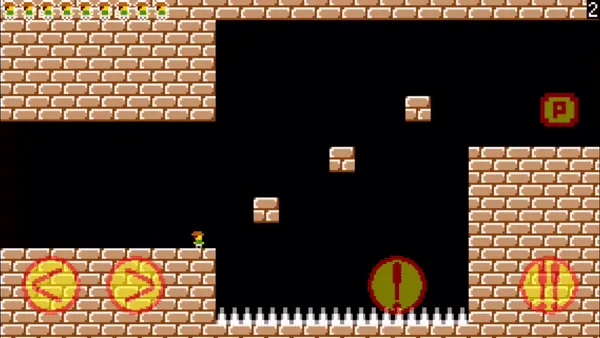
This knowledge will allow you to assess whether players are able to overcome certain obstacles. If most players encounter difficulties at the same difficulty level, this indicates the need to improve this obstacle. By analyzing player behavior, you can improve your gameplay and make it more engaging and balanced.
Each of the obstacles in the game has a 25% probability of appearing, which does not guarantee that they are evenly distributed. A player may encounter the same options or, conversely, receive all but one. This phenomenon is explained by probability theory. For example, if the previous toss was heads, this does not mean that the next toss will definitely be tails. The probability remains the same with each new toss, and the results can vary regardless of previous outcomes.
In this article, we will focus on four key variables. Although there are many other aspects to explore, analyzing them will give you a basic understanding of the topic. An in-depth study would require much more space and time.
In this section, we will take a detailed look at data analysis methods and the possible conclusions that can be drawn from the information obtained. It is important to determine the most effective ways to implement this analysis to achieve optimal results.
Statistical Visualization and Analysis
Analyzing data by the numbers can be challenging. To simplify the process, it's important to sort information and visualize it in graphs. This allows for a better understanding of trends and identification of key insights. Visual representations of data help make faster decisions and draw conclusions from analysis.
Various tools can be used for effective analytics, but a more optimal solution is to engage developers to create a custom analytics platform. This approach will provide the features and capabilities that meet your needs. A key factor in implementing this option is the availability of qualified developers.
Obstacle collision statistics can be visualized using a pie chart. This method clearly demonstrates the proportions of different collision types, simplifying analysis and interpretation of the data. A pie chart allows you to quickly assess which obstacles most frequently cause incidents and identify trends that can lead to improved safety and a reduction in collisions. Using visual tools such as pie charts plays a key role in presenting statistical data, making it more accessible and understandable to a wider audience.
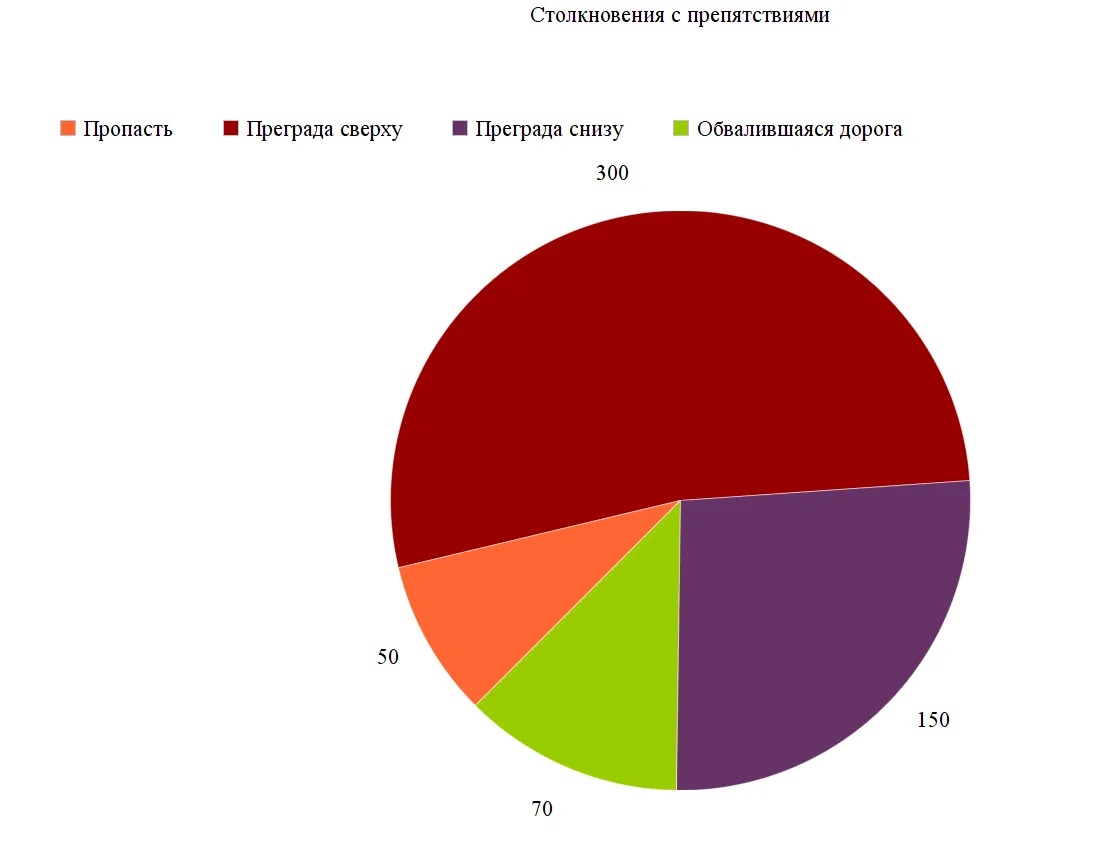
Statistics are presented for the entire period, however, for a more accurate analysis, it is recommended to make refined queries. This will allow you to identify the difficulties players face at different levels.
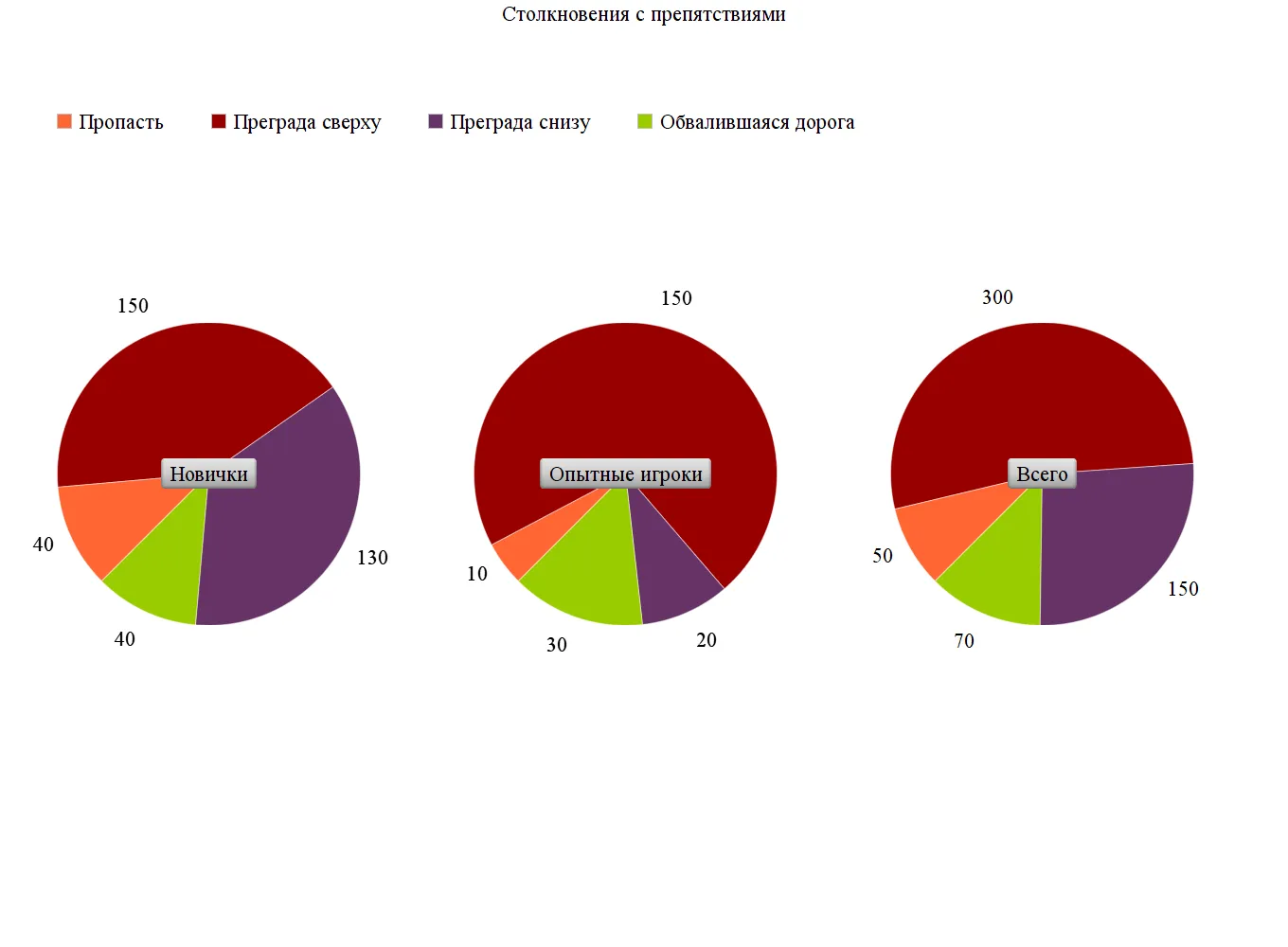
The diagrams show that both experienced players and beginners alike face problems related to the upper barriers. However, the situation is different with other obstacles: beginners often experience difficulty with the lower obstacles, but these problems become less significant over time. Analyzing this data can help develop effective training strategies for beginning players, which in turn will improve their skills and enhance their performance.
A more in-depth analysis can be conducted to examine which blocks appear during different attempts. This will reveal patterns and characteristics that may influence the outcome. Studying these blocks will help better understand the structure and dynamics of the processes, which in turn will improve the effectiveness of subsequent attempts.
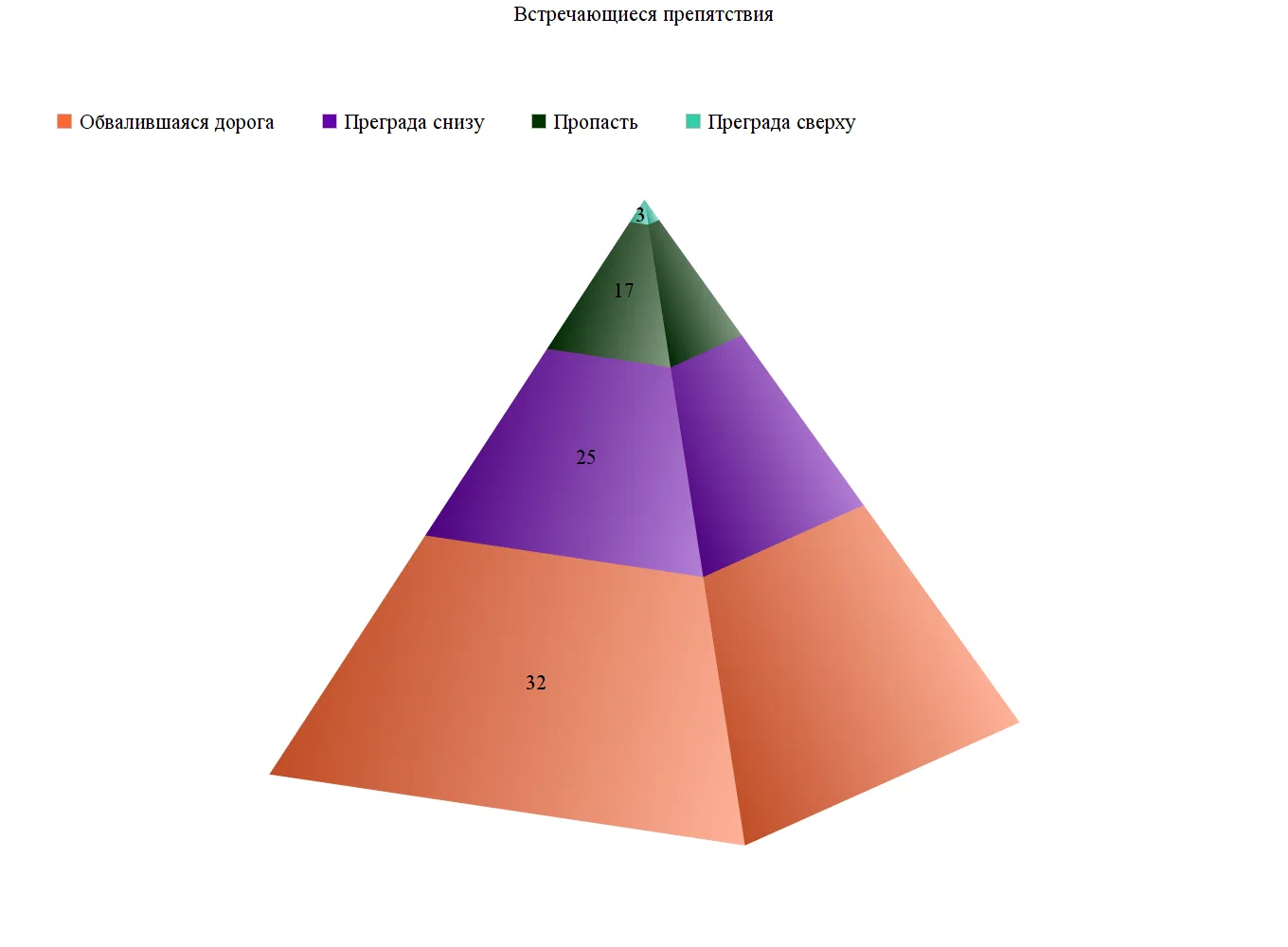
The player overcame many different obstacles, but encountered three obstacles at the top. This may indicate that the first two times he overcame these obstacles by chance, but the third time he was unable to overcome them. The player probably hasn't mastered the skills necessary to solve this problem yet.
There could be a variety of reasons.
- such blocks are very rare;
- the block can only be passed by luck;
- there's something wrong with the controls.
Based on your analysis, you can make the necessary changes.
Making Changes
Once you have ideas for the changes you need to make, create a separate version of the game for playtesting. Collect new statistics to determine whether your edits were effective or degraded the game's quality. Continue making changes and testing until you are satisfied with the result. This approach will allow you to optimize the gameplay and improve the user experience.
When moving to the final version of the game, special attention should be paid to changes in controls. Experienced players accustomed to the old control system may have difficulty adapting to the new features. To minimize inconvenience, it's important to notify users of the upcoming changes in advance. This will allow them to prepare and reduce the likelihood of negative feedback about the new controls. Proper communication with players will help maintain their interest and satisfaction with the game.
After this, you'll enter the next stage of a familiar process: collecting statistics, analyzing, and making adjustments. This cycle will allow your game to improve over time, attracting new players and retaining existing audiences. However, don't rely solely on statistics; there are other important aspects that influence the success of your project.
Game development requires a comprehensive approach to achieving high-quality results. It's important not only to master technical skills but also to constantly develop, learning new technologies and methods. Accumulating experience and practical knowledge is key to successful game creation. This is the only way to implement original ideas and satisfy player demands.
Game Designer Profession from Scratch to PRO
A game designer creates the structure of a game. They think through the idea, rules, gameplay, and decide what emotions the plot will evoke in players. You'll master game design principles from scratch and learn how to work with popular engines like Unity and Unreal Engine. You'll learn how to retain player interest and monetize your games. We'll help you launch a career in the gaming industry.
Find out more