Contents:

Learn: Profession Methodist from scratch to PRO
Learn MoreIn this article, we will cover key aspects that will help you better understand the topic. You will receive useful tips and recommendations that can improve your skills and knowledge. Read on to learn more about the chosen topic and its importance.
- Why implement hybrid learning at all (spoiler: it is not for everyone);
- Which students are suitable for hybrid learning and which are not;
- What equipment is needed for a hybrid classroom and typical mistakes when choosing it;
- How to help teachers adapt to hybrid.
Russian universities are implementing the hybrid learning format, which combines in-person and online presence of students, as well as the ability to view recorded lectures, in different ways. In some educational institutions, using a learning management system (LMS) and a teacher's laptop is sufficient to implement this format. At the same time, other universities are investing in high-tech classrooms, thereby ensuring a higher quality of educational process. Hybrid learning allows for the adaptation of educational methods to modern requirements, increasing accessibility and convenience for students.
Experts from the Graduate School of Management at St. Petersburg State University, Moscow City Pedagogical University (MCPU), and VTB Bank shared recommendations for launching the transition to hybrid education. These tips were presented at the MCPU seminar "What is Hybrid Education: International Research and Practices" and the conference "Modern Digital Didactics." When transitioning to hybrid learning, it is important to consider not only technical aspects but also pedagogical methods that will help integrate online and offline formats. Open interaction between faculty and students, as well as the use of modern technologies, plays a key role in the successful implementation of the hybrid model.
If you are still unclear about the principle of the hybrid format, don't worry, you are not alone. The concept of a hybrid format can cause confusion, especially in light of the term "blended learning." However, researchers have identified several key characteristics that help understand the essence of a hybrid approach. For a more detailed study, we recommend reviewing additional materials.
Why Implement Hybrid Learning and Where to Start
Hybrid learning involves not only purchasing equipment and setting up classrooms, but also a comprehensive approach to organizing the educational process. It is important to consider modern technologies that allow integrating online and offline learning, creating a convenient environment for students. Effective implementation of hybrid learning requires thoughtful planning, teacher training, and the development of teaching materials appropriate to new forms of learning. Thus, the successful implementation of hybrid learning depends on many factors that go beyond simply equipping classrooms.
Education experts disagree with this opinion. Hybrid learning is, first and foremost, a methodology and pedagogical approaches, and only then technological solutions. This is emphasized by Alexander Baizarov, Director of Project Management at VTB Bank, and Olga Alkanova, Head of Hybrid Learning Methodology at GSOM SPbU. Certainly, there are basic technical requirements necessary for implementing a hybrid format, but the transition to it will be ineffective if the faculty lacks a real need for this approach. Implementing hybrid learning begins with clearly defining its purpose and what problems it aims to solve. Without a clear understanding of the goals, resources can be wasted. The primary goal of hybrid learning is to empower students to independently plan their learning and choose the most convenient format. However, experts caution that this approach requires a much higher level of responsibility from faculty and a new approach to designing the educational experience. It's important to consider that successful hybrid learning not only increases student engagement but also improves their educational outcomes.
How can you monitor student participation in an online class so that they're not simply logging in with their camera turned off, but are actively and interactively engaged in the process? This is a complex task that requires a pedagogical approach. Without addressing these issues, creating new virtual classrooms is pointless, as they will remain unused. Olga emphasizes that effective learning requires developing methods that ensure genuine student participation and interaction in the learning process.
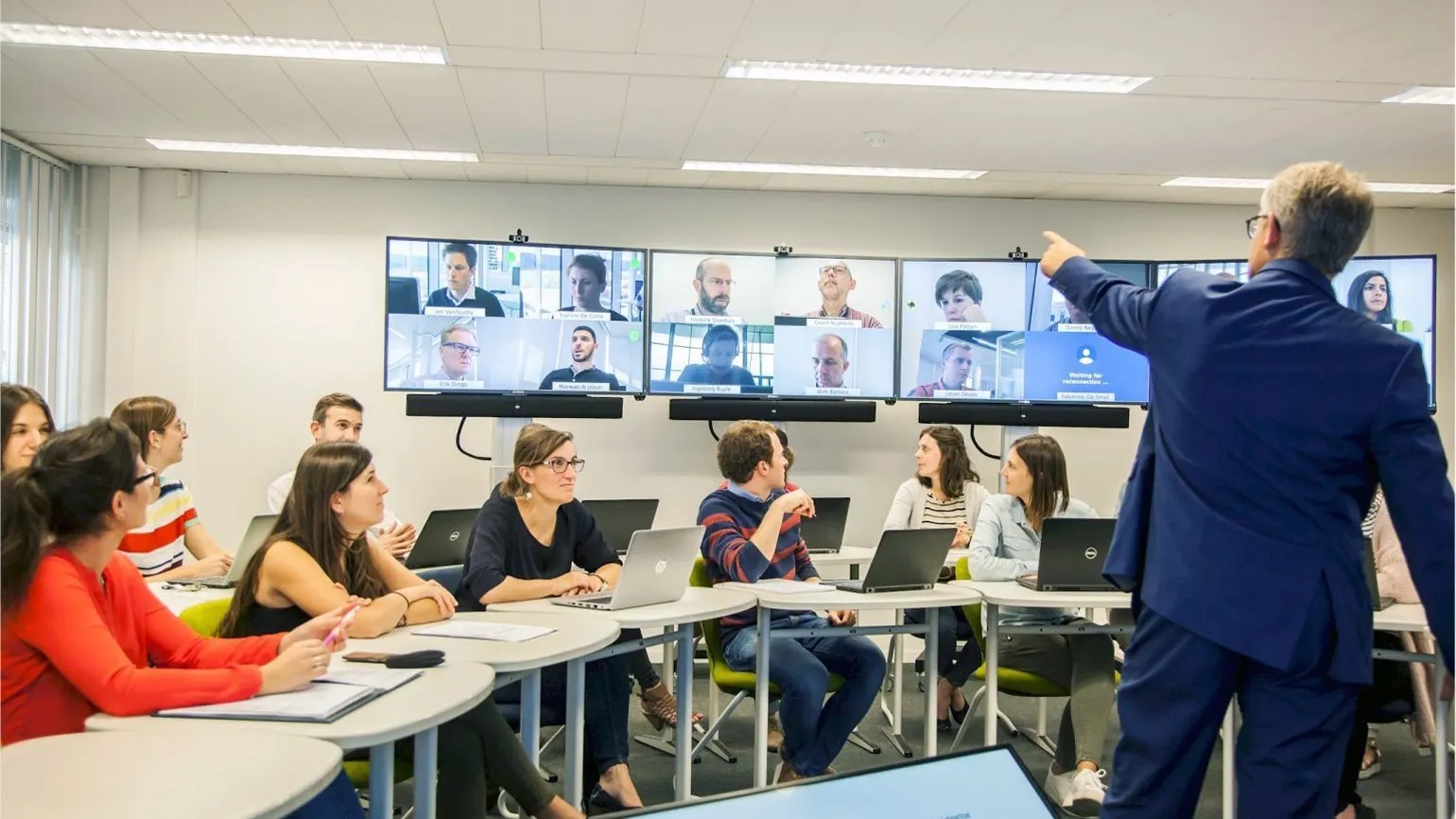
The implementation of hybrid learning should begin with a review of approaches to Designing the educational process. Experts recommend avoiding abrupt changes. The optimal option would be a gradual introduction of new methods based on individual tasks, which will allow for the accumulation of experience and the formation of a renewed view of educational practices. This approach promotes more effective integration of the hybrid format and improves the quality of education.
Which students are suitable for hybrid learning?
Experts emphasize that one of the key factors for the success of a hybrid learning format is the active position of students. This means that they must approach their learning consciously, understand their goals, and adequately assess their capabilities in order to choose the most suitable format. However, as Alexander Bayzarov notes, this does not always apply to first-year students, and the introduction of hybrid learning for them may be premature. Students at the initial stage of their education often need more traditional methods to help them adapt to new conditions.
Hybrid learning is recommended for more mature students who are able to appreciate its benefits and make the most of the opportunities provided. This approach combines traditional and online teaching methods, allowing students to adapt to the modern demands of the educational process. It is important that students understand the value of a hybrid format, as it promotes deeper engagement and academic success.
What equipment is needed for hybrid learning?
Experts analyzed the experience of domestic and international universities and identified several key components for creating physical and digital classrooms for hybrid learning. For the successful implementation of hybrid learning, it is necessary to ensure the following:
- High-quality image. This means that cameras in the classroom should be aimed not only at the teacher, but also at the students present, and it is also necessary to be able to display online participants on the screen in the classroom, since all participants will have to communicate with each other during the lesson. This requires good screens, monitors, projectors, and cameras.
- High-quality sound - this will require microphones, sound systems, and speakers. This often becomes a key challenge in organizing a hybrid space, says Alexander Baizarov. After all, if a teacher works without a lavalier microphone (only with a stationary microphone on their desk) and moves somewhere deeper into the room while continuing to speak, then online participants will not hear them or will hear them indistinctly. Furthermore, it is important that online students and those present offline also hear each other clearly. Visual information transfer – solutions must be found to replace the traditional whiteboards in the classroom on which the teacher and students take notes. Therefore, digital solutions for teamwork between online and offline participants will have to be chosen. A digital environment for those studying remotely. Such an environment could be, for example, the university's LMS and a video conferencing service. Technical management and support – these will be needed to configure the software, integrate them, and manage the equipment during the lesson. At a minimum, instructors will need to be trained in this, but ideally, it would be good to have someone assist them during the class in case of technical glitches. And if this is not possible, it's necessary to clearly plan what to do if the online audience drops out (after all, the class continues for offline participants).
Alexander Baizarov cited the example of a classroom organized for the Mikhailovskaya Dacha campus of St. Petersburg State University. This classroom serves as an excellent example of a modern approach to the educational space, providing comfortable conditions for learning and interaction between students.
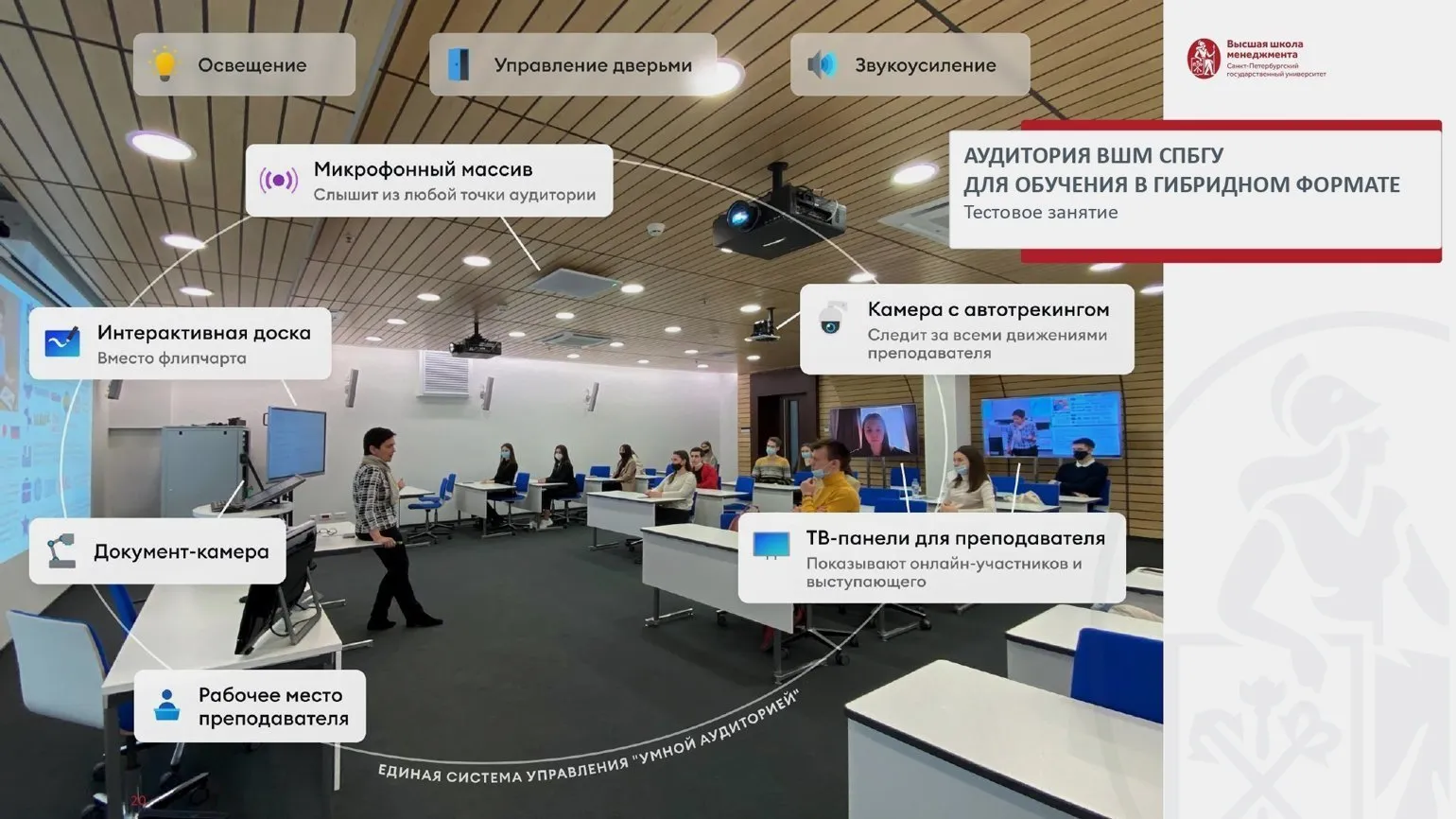
In this learning space, the teacher effectively interacts with students, both in the classroom and online. Remote students are displayed on a large screen conveniently located in front of the teacher. This allows all students, regardless of the learning format, to easily follow the lesson. The use of modern technologies, such as video conferencing and interactive whiteboards, ensures high-quality interaction and promotes better assimilation of the educational material.
- Microphone array. Instead of stationary microphones, lapel microphones or microphones that are easy to carry in the hand are used.
- Autotracking system. As the teacher moves around the room, the camera automatically follows them. This means that the teacher does not need to constantly monitor themselves and think about whether they are clearly visible to online participants.
- Interactive whiteboards. Everything the teacher writes on this board is immediately converted into digital format, meaning the notes are clearly visible to both online and offline students.
This classroom allows for a variety of lesson scenarios, ensuring comfortable and productive interaction for all participants.
Tomsk State University also offers similar classrooms with unique features. One such feature is automatic subtitle generation, allowing instructor speech to be instantly transcribed into text. Furthermore, video recordings of classes are automatically saved in the learning management system (LMS), providing students with continuous access to educational materials. These technologies enhance the learning process and make it more accessible to students.Experts identify three stages of hybrid classroom maturity, depending on the level of technical support. Each stage is characterized by specific features and requirements for the technologies used for audience interaction. Understanding these stages can lead to a more effective approach to content development and user engagement strategies, which in turn contributes to an improved user experience and increased engagement.
- The first stage of maturity is characterized by classrooms with a bare minimum of technology, that is, simply internet access, a computer connected to a video conferencing system, speakers, and a projector. The lecturer cannot move freely around the classroom without risking being lost from the online participants' field of view, and students located on opposite sides of the screen cannot see each other and interact virtually in no way.
- The second stage of maturity is characterized by classrooms with a well-established internal camera and microphone system. This means that online participants can see both the lecturer and the in-person students, a ceiling microphone provides more or less adequate sound, and interactive whiteboards are used for notes.
- The third stage is characterized by classrooms with the most advanced technology. The instructor and other in-person participants are monitored by multiple cameras transmitting high-quality images. Tables in the classroom are equipped with microphones (and the instructor has a lavalier microphone) to ensure maximum interaction among all participants. The classroom has multiple monitors for displaying online participants, interactive whiteboards are used, and the instructor also has the option to use other digital services for work.
Alexander Baizarov argues that the classification of digital maturity is more theoretical than practical. In reality, many universities use technical means of varying levels simultaneously. For example, one classroom may have excellent sound equipment, while the quality of the cameras leaves much to be desired. This highlights the lack of a unified strategy for the digital transformation of educational institutions.
Baizarov warns that the most modern technical infrastructure is not always necessary. Everything depends on the specific goals set when implementing hybrid solutions. It's important to remember that the choice of infrastructure must align with the business's objectives and needs.
We've seen universities simply provide faculty with laptops, and this isn't always a negative if it helps achieve educational goals. Some universities consciously avoid investing in expensive technologies, such as complex infrastructure, but still successfully achieve their goals. Expensive equipment doesn't always guarantee the best quality of education.
Typical Mistakes When Introducing Hybrid
Alexander Bayzarov offers important advice: focus on user experience, not technology complexity. This approach helps create more accessible and user-friendly solutions that truly meet audience needs. It's important to remember that the success of any project depends on how easy it is for users to interact with the product. Therefore, when developing technologies, it is always worth considering the user experience and striving to improve it.
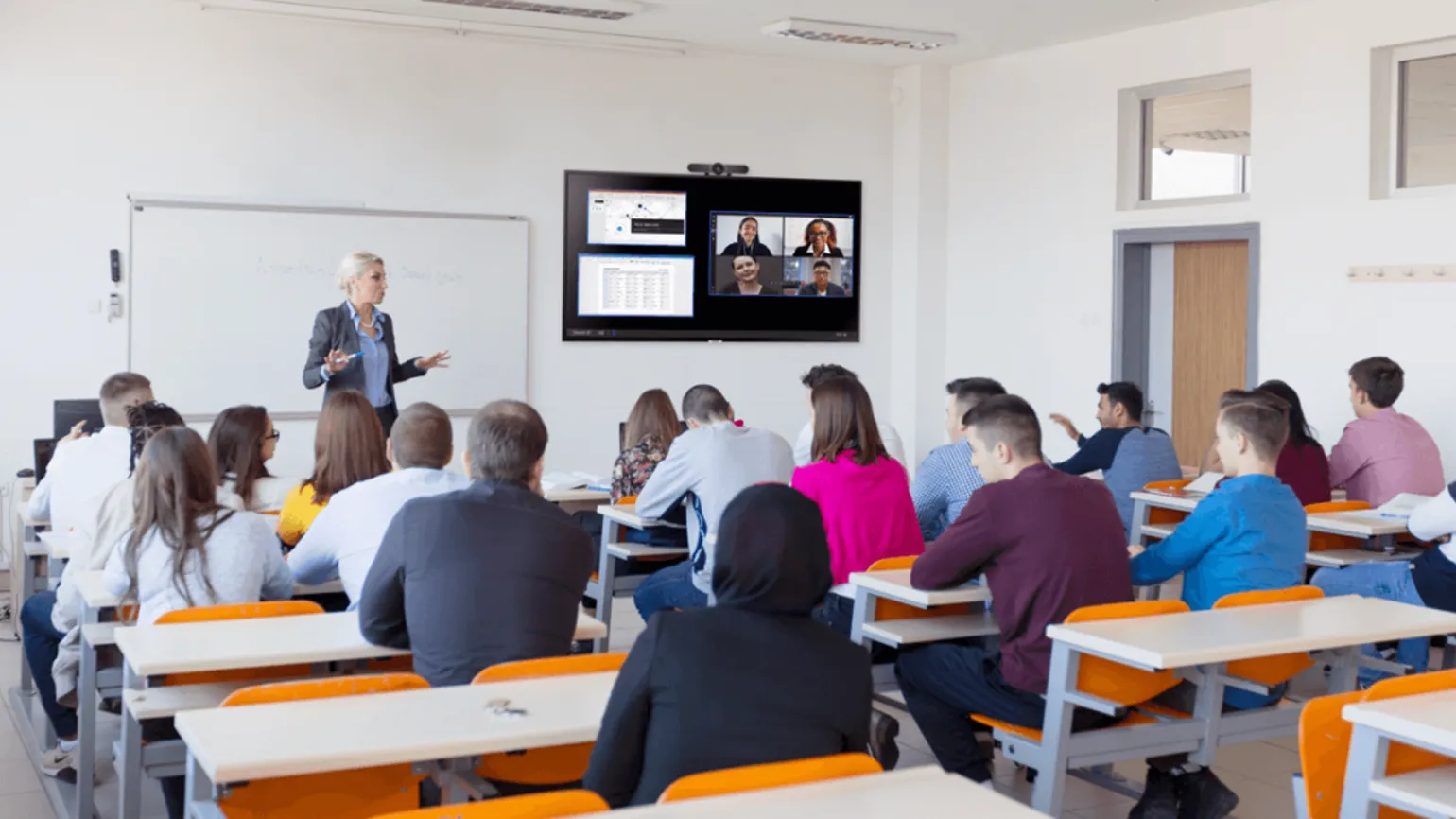
If teachers and students encounter inconvenience in use If students are too sluggish to use modern technological advances or require a lot of time to learn complex instructions, advanced technology will be unused and will remain unused. This underscores the importance of creating intuitive and accessible technologies for the educational process. Simplifying interaction with new tools is key so they are truly beneficial and contribute to the improvement of the learning process. Optimal technological solutions should be intuitive and easily adaptable. They must be consistent with existing teaching methods and traditions, without forcing educators to drastically change their approaches. Effective educational tools should fit harmoniously into existing practices, which will ensure a smooth transition to new technologies. One common mistake when designing hybrid classrooms is the lack of communication between different teams. Often, IT specialists and teachers have their own ideas about what the ideal classroom should look like and do not coordinate their ideas. It is important that the solution development process takes place through an open dialogue, which will allow all aspects to be considered and create an effective educational space. Aligning perspectives and co-creating a vision will help avoid misunderstandings and ensure the integration of technologies needed for successful learning in a hybrid classroom.
Don't expect the implementation of hybrid learning at a university to be smooth and problem-free. New approaches can cause a negative reaction that won't go away on its own. Therefore, the transition to hybrid learning should include stages similar to those used by IT companies when launching new digital products. Key stages include testing, collecting user feedback, and gradual improvements to improve usability and efficiency. This approach will help ensure the successful implementation of hybrid learning and increase student and faculty satisfaction.
It is necessary to carefully monitor the use of hybrid classrooms, collect information from faculty about any difficulties that arise, and actively work to resolve them. This will improve the effectiveness of teaching and improve the interaction between faculty and students in the hybrid education model.
How to Help Faculty Transition to Hybrid
The transition to a new learning format can be significantly stressful for many faculty. There are two effective ways to help them adapt to the changes. First, it's important to provide support and resources to facilitate the adoption of the new format. This may include training, workshops, and access to materials explaining the specifics of the new approach. Second, creating a community where faculty can share experiences and find solutions to common problems also facilitates a smoother transition. This approach will not only help reduce stress but also improve the quality of instruction. Olga Alkanova emphasizes the importance of considering faculty members' digital literacy when organizing their training on new technologies. This level can vary significantly among faculty members within a single university. If this isn't addressed, classes may be spent tinkering with interfaces rather than learning the material. Effective training should begin with an analysis of faculty members' background knowledge, which will make the adoption of new technologies more productive and focused. Olga notes that the fear and discomfort experienced by faculty members at the beginning of their work are completely normal. However, over time, they quickly adapt to the new environment and stop perceiving it as a source of problems. Gradual adaptation allows them to feel confident in new conditions and focus on the educational process.
According to experts, teachers often perceive technical innovations with skepticism, but there are always those who embrace and master new formats faster than others. It is crucial for such teachers to share their experiences with colleagues, thereby facilitating the introduction of innovative approaches into the educational process. This will not only improve the quality of teaching but also enhance the overall effectiveness of learning.
As technical solutions become more mature and complex, new opportunities open up for teachers. At this time, it is important to pay attention to innovative teachers and their ideas that arise from these new opportunities. Olga Alkanova emphasizes the importance of this process for the educational environment. Innovations in teaching contribute to the development of not only the teachers themselves but also students, ensuring a higher-quality and more modern education. It's essential to create conditions for the implementation of creative ideas, which will help improve the effectiveness of the educational process and prepare students for the challenges of the modern world.
The Graduate School of Management at St. Petersburg State University has demonstrated successful experience working in hybrid classrooms. Faculty, given the opportunity to use new technologies, have begun actively experimenting with various services and developing innovative approaches to teaching. The university's administration should closely monitor and support such initiatives, creating conditions for the exchange of ideas and the development of the educational process. This is important for improving the quality of education and adapting to modern requirements.
I am rewriting the text taking into account SEO and adding the necessary content, while staying on-topic.
Read also:
- What are Russians' digital skills?
- The University of Sydney shared a hybrid learning model.
- How to create innovations in education.
- How to create a cool program at a university.
Methodologist Profession from Beginner to Advanced
You will develop skills in developing curricula for online and offline courses. You will master modern teaching practices, structure your experience, and become a more sought-after specialist.
Find out more