Contents:

Learn: Methodologist of educational programs
Learn moreSherlock Holmes, Hercule Poirot, Nero Wolfe, Commissioner Maigret, and Erast Petrovich Fandorin—these iconic detectives continue to inspire people of all ages, enticing them to delve into a world of clues and mysteries. Interest in detective stories remains enduring, appealing to both children and adults. American educator Kevin Roughton has leveraged this interest in his history classes to engage students and make them more engaging. Combining the detective genre with the educational process creates a unique approach to teaching that fosters critical thinking and analytical skills in students.
Roughton has over 20 years of teaching experience in secondary schools. From the very beginning of his career, he has strived to make classes interactive and engaging for his students. The teacher shares that, while being a model student, he often experienced boredom in class. This inspiration became the foundation of his approach to teaching, which focuses on actively engaging students.
As a history teacher, Rowton changed his approach to teaching, abandoning the traditional method of reading chapters from a textbook and standardized tests. Instead, he encouraged students to create projects and historical newspapers, which foster a deeper understanding of history and develop creative skills. This teaching method allows students to actively participate, explore historical events, and develop critical thinking.
As a history and social studies teacher, Rowton began incorporating fun elements accessible to children. He used examples from popular culture, games, and simulations, leading to the creation of unique lessons called History Mystery Lab. These activities foster a deep understanding of historical events and make learning about history engaging and interactive.
How an Investigative Lesson Works
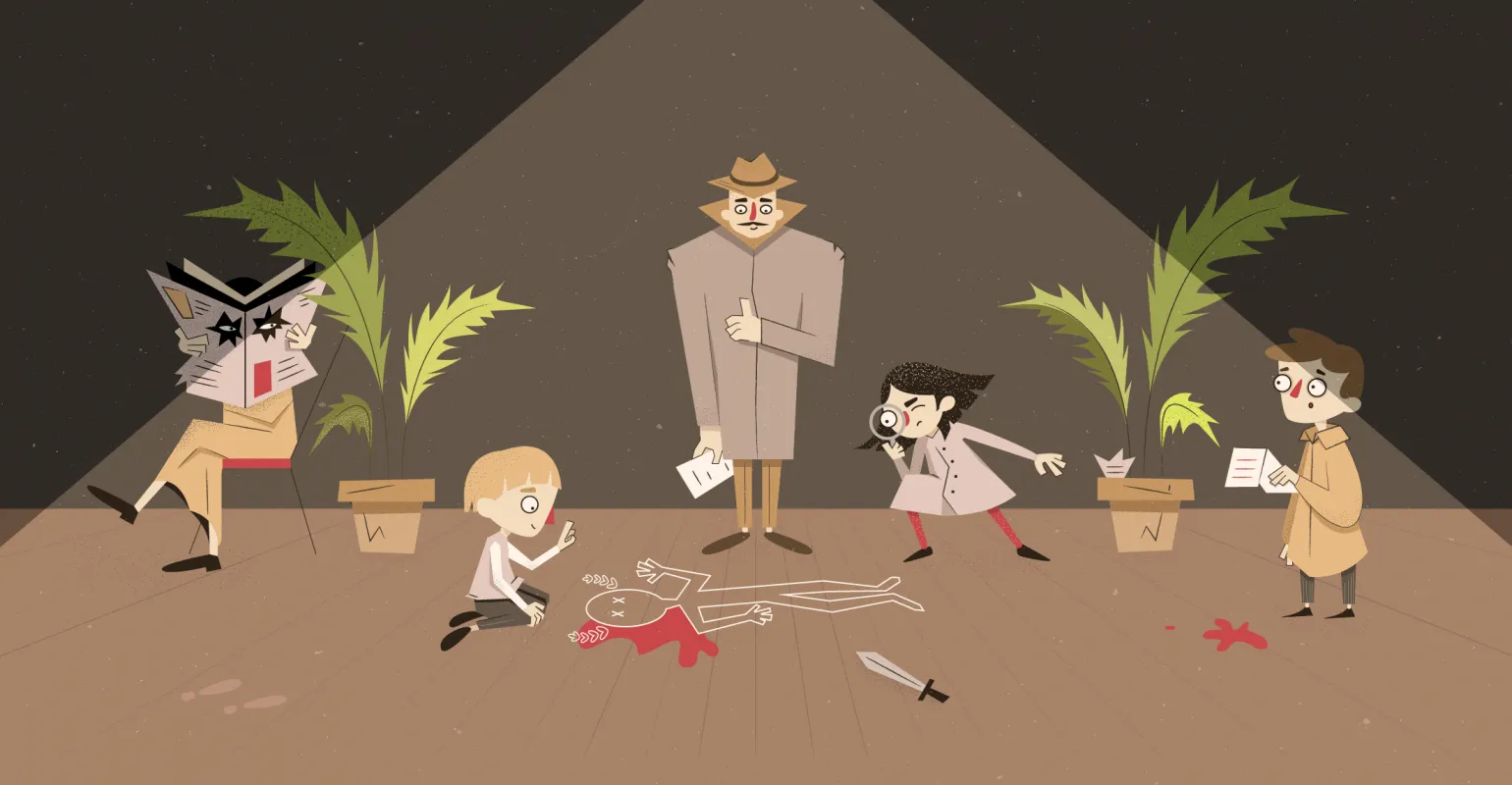
The classroom is transformed into a fascinating place for learning about history. Upon entering the room, students encounter a unique atmosphere: special tape, reminiscent of a crime scene, is placed around the perimeter, and a chalk outline is visible on the floor. This could be the "assassination site" of Julius Caesar or a member of the Medici family. Evidence is neatly laid out on the tables, helping students immerse themselves in historical events. The walls are decorated with posters that visually enrich the learning process and increase interest in the material being studied. This approach makes lessons more interactive and memorable, which promotes better comprehension of the story.
The lesson begins with a surprise twist: the lights go down, and the teacher wordlessly launches a video or presentation containing background information about the crime. Rowton emphasizes that this approach effectively captures students' attention. In this format, they receive important information that serves as a basis for further discussion of the lesson topic. This creates an interactive atmosphere in which students are actively engaged in the learning process and better absorb the material.
The students receive instructions from the teacher. After turning on the lights, the teacher distributes an "Investigation Journal" containing questions to be answered during the lesson and presents the first clue. Together with the students, the teacher discusses how to use this clue to solve the mystery, so that the students clearly understand their tasks. The "Investigation Journal" consists of extended questions, similar to those found at the end of textbook paragraphs, but more detailed. The questions are divided into blocks depending on the number of clues. This allows students to analyze information in a more structured way and develop critical thinking.
The investigation begins, during which students have 20-30 minutes to examine clues placed on tables around the classroom. Clues may include printouts, large posters, and various objects. Students are prompted with guiding questions from the teacher. They are free to move around the classroom and explore the materials either individually or in a group, depending on their preference. Some clues are prepared as videos, and after 15-20 minutes of research, the teacher gathers the class to watch them together. For a more organized approach, if the teacher is unsure whether students will be able to review all the materials, timed intervals for analyzing each clue can be set. This will help maximize time and ensure a deep understanding of the material.
At the end of the lesson, the teacher informs the students about the end of the time allotted for research. Students answer questions in their "Investigation Journals," discuss their theories with the teacher, and answer the final questions: who was guilty of the crime, who may have ordered it, and what the motives were. They then act as a jury, rendering a final verdict on the case.
Roughton recommends allocating 50 to 65 minutes for the investigation lesson. This duration allows for effective immersion in the topic, providing ample time for discussion and analysis.
This lesson develops key skills needed in history lessons. Students learn to analyze documents, critically evaluate information for its objectivity, and use a variety of sources to find the truth. This creates a fascinating atmosphere and actively involves them in the learning process, which improves their learning.
What do young detectives study?
In history lessons, schoolchildren research various "criminal cases," which become the basis for an in-depth study of the past. This allows them not only to better understand historical events but also to develop critical thinking. In the process of analyzing such cases, students are introduced to investigative methods, study documents and sources, which contributes to the development of analytical skills. Researching "criminal cases" helps schoolchildren understand the causes and consequences of historical events, as well as their impact on the present day. Such lessons make history more engaging and accessible, allowing students to become active participants in the learning process.
The assassination of Julius Caesar was one of the most significant events in the history of Ancient Rome. This event occurred on March 15, 44 BC, when Caesar, then dictator of Rome, fell victim to a conspiracy. A group of senators, dissatisfied with his power and aspirations for a monarchy, decided to end his reign. The conspirators, led by Brutus and Cassius, attacked Caesar during a Senate session.
This assassination marked a turning point in Roman history, leading to civil war and the final fall of the Roman Republic. The aftermath of the assassination was felt for many years, and it became a symbol of betrayal and power struggle. Caesar's death has also inspired numerous works of art and literature, including William Shakespeare's famous tragedy. Thus, the assassination of Julius Caesar not only changed the political structure of Rome but also left a profound mark on culture and history, continuing to fascinate historians and researchers to this day. Evidence includes clippings from a Roman newspaper, a transcript of a Senate meeting, a forensic report, notes containing Caesar's warning about the assassination attempt, and the testimony of witnesses who witnessed the assassination. These documents play a key role in the investigation and analysis of the events leading to Caesar's tragic death. They help to piece together what happened, identify motives, and uncover the conspiracy behind this historic crime. It is necessary to determine who could have benefited from his assassination and what reasons might have contributed to this. This is an important step in the investigation, which will help identify possible motives and interested parties. Analyzing the circumstances leading up to the tragic event, as well as examining the relationships between key figures, can shed light on the true causes. Establishing connections between suspects and identifying their interests is key to understanding the situation.
The Pazzi Conspiracy was a significant event in Italian history, as it was directed against the head of the Florentine Medici dynasty in 1478. This conspiracy was organized by the Pazzi family, who sought to overthrow the Medici family's influence in Florence. The main goal of the conspiracy was the assassination of Lorenzo de' Medici and his brother Giuliano.
The conspirators counted on the support of local residents and other influential families, but their plans failed. Giuliano was killed during the attack, but Lorenzo was able to escape, which allowed him to strengthen his power and reputation. This incident had a profound impact on the political situation in the region and led to increased persecution of Medici opponents.
The Pazzi Conspiracy became a symbol of the struggle for power in Italy and an example of how political intrigue could lead to violence. Historians are still researching the causes and consequences of this conspiracy, underscoring its importance in the context of Italian history.
The evidence collected includes newspaper clippings, eyewitness accounts, photographs of the weapons used by the conspirators, and images of the skull of the deceased with the marked wounds. In addition, there is a coded message and a letter addressed to the Pope. These materials may be key to the investigation and will help establish all the circumstances of the incident.
The task is to determine the causes of the conspiracy. This requires a thorough analysis of the events and factors that may have contributed to its emergence. It is important to consider all available sources of information, including documents, testimony, and expert opinions. It is also important to pay attention to possible connections between the participants in the conspiracy and their motivations. A thorough understanding of the context will help uncover the root causes and understand the interests behind this conspiracy.
The Black Death was a plague pandemic that swept across Europe in the 14th century, killing millions of people. Originating in Asia, the epidemic spread through trade routes and had catastrophic consequences for the population of the continent. The primary causative agent of this disease was the bacterium Yersinia pestis, transmitted by fleas living on rats.
Symptoms of the Black Death included fever, body aches, and the appearance of black spots on the skin, giving rise to its name. The pandemic led not only to mass deaths but also to profound social and economic changes in society. A reduced labor force contributed to higher wages for those who survived, as well as a change in attitudes toward medical and religious institutions.
The Black Death had a significant impact on the history of Europe, changing its demographic structure and stimulating the development of science and medicine. This historical episode has become an important object of study for scholars and researchers seeking to understand the impact of pandemics on civilization and society.
Evidence includes personal letters, advertisements, newspaper clippings, maps, as well as descriptions of the medieval Black Death and the bubonic plague. These materials provide valuable historical evidence that helps us better understand the epidemics that swept Europe in the past. Personal letters capture people's emotions and experiences in the face of devastating diseases, advertisements and newspaper clippings provide insight into societal responses to epidemics, and maps allow us to visualize the spread of plague. Studying these pieces of evidence enriches our understanding of how medieval societies coped with the challenges posed by epidemics and how this impacted their lives and culture.
The need to understand whether bubonic plague and the Black Death were the same disease remains a pressing issue in the history of medicine. Bubonic plague, caused by the bacterium Yersinia pestis, is often associated with epidemics that swept Europe during the Middle Ages, particularly the pandemic known as the Black Death. This epidemic, which led to the deaths of millions of people in the 14th century, was spread by fleas found on rodents. Although the term "Black Death" typically refers to the bubonic plague, historians and physicians continue to study various aspects of this disease. It is important to note that the "Black Death" could also encompass other forms of the disease, such as pneumonia and septicemic plague. Thus, bubonic plague and the "Black Death" are not always the same, but they are closely related. Research into the causes of the plague and the factors that contributed to its spread remains an important task for understanding the lessons of the past and preventing future epidemics.
Where else can this format be applied?
Detective games are also used in other educational disciplines. The Atlantic magazine described the experience of an English teacher from Portugal, Jeni Peake, who introduced the investigation format into her teaching to help her students learn the material more deeply. Using a detective approach in the educational process promotes the development of critical thinking, analytical skills, and teamwork, which makes lessons more engaging and effective.
At the beginning of the lesson, the teacher announced a murder, and all the suspects were among the students. Each student was given a card with a character description, which allowed them to create a common story about the crime. The class actively discussed motives, suspects, crime scene, and the crime weapon. Then the students began interrogating each other, which contributed to the development of communication skills in a foreign language. The use of Portuguese was strictly prohibited - if someone reverted to their native language, the teacher reminded that this creates suspicion. This approach not only engaged students in the process but also helped improve their language skills.
The advantage of this format is that students have a strong desire to find out who committed the crime. This creates motivation to actively use the language being studied.
Why Develop a Mystery
The benefits of mystery and detective stories in the educational process have been discussed for over 15 years. In the article by University of Arizona Professor Robert Cialdini, "What's the Secret Move That Helps Engage Students in Learning? The Answer Is in the Title," he shares his experience. The professor decided to write a popular science book about persuasion techniques and social influence and began researching the literature on this topic in search of interesting techniques. In the process, he noticed that the most successful books and articles began with riddles that required a solution. They captured the attention of readers, as in detective stories, arousing a desire to find the answer as soon as possible. This form of information presentation contributed to better memorization of the material. Using riddles and detective elements in teaching can significantly increase student engagement and improve knowledge acquisition. Mystery stories can captivate students and help them remember important material that might otherwise be overlooked because it's not perceived as relevant to their everyday lives. However, riddles and mysteries have their own value and significance, regardless of personal perception, according to Cialdini. These stories can serve as a powerful tool for teachers, making learning more engaging and memorable. Incorporating riddles into the educational process promotes critical thinking and stimulates interest in the subjects being studied, which in turn can improve the overall level of student achievement.

Interest in them is due to two main factors: firstly, their unique characteristics attract the attention of researchers and consumers, and secondly, they play a significant role in various fields, including science, technology, and art. These aspects contribute to increased interest and deeper study of the topic.
- Mysteries surprise and satisfy curiosity. The researcher cites the satisfaction of solving a problem, calling it an "Aha!" experience. It is made even brighter by curiosity and the question "How so?". It is these curiosity that keep a student awake reading a detective story until late at night. And details, without which it is impossible to solve the mystery, help better memorize and read the text.
- Detective stories and mysteries are a vivid example of the use of storytelling in education. "Stories have a beginning, middle, and end. It is this narrative sequence that helps make mystery stories so captivating. "The beginning pushes us toward the middle, which pushes us toward the end, which forces us back to the beginning," the professor explained.
From a pedagogical perspective, riddle stories are superior to other common classroom presentation methods, such as describing phenomena relevant to the course or asking questions about them. Descriptions demand attention, questions demand answers, and riddles demand explanations. By encouraging students to engage in the explanation process, we provide them with better opportunities for a deep and meaningful understanding of the phenomena being studied. This promotes the development of conceptual thinking and forms sustainable knowledge.
Read also:
- A tutor from Zimbabwe prepares for exams via WhatsApp
- Storytelling in education: a trendy feature or a useful thing?
- What is a branched quest and how to use it to enliven learning
- How to use emotions to motivate students to complete a course
Educational Program Methodologist
You will go through the full cycle of creating an educational product from scratch. Learn to design curricula for online and offline courses. Become a versatile specialist — you can launch your own project or get a job as a methodologist in a large company.
Find out more