Contents:
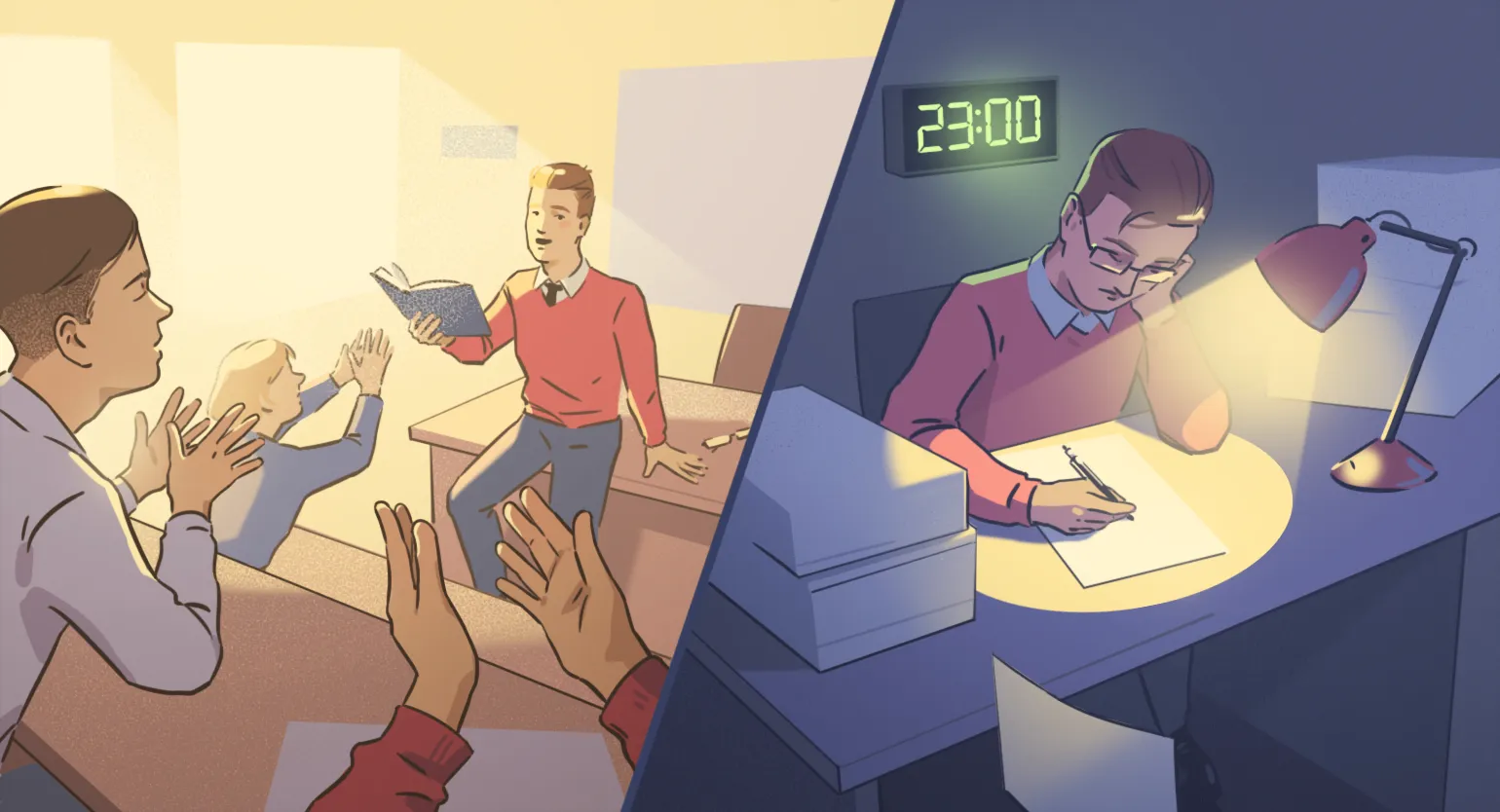
- Teachers don't work full-time or even every day
- Teaching isn't difficult - you tell the same thing year after year and give the same assignments
- Teachers are mostly theorists and have almost no connection with practice in the field they teach
- Teaching students is easier than schoolchildren - they are adults, after all, and the "weak" ones are simply expelled
- What are the advantages of the profession and what inspires teachers

Learn: The Profession of a Methodologist from Scratch to PRO
Learn MoreTeachers Don't Work Full-Time or Even Every Day
At first glance, it may seem that university teachers have a light workload. They come to the educational institution only during their class hours, conduct lectures and seminars, and then have free time for other activities, including part-time work. However, the reality is that teachers face a multitude of tasks that require a careful approach and significant effort. Preparing for classes, checking student work, participating in research, and administrative duties take a lot of time and energy. Thus, teaching is not only a process of knowledge transfer, but also continuous work on one's own professional development and maintaining the quality of education.
According to Article 333 of the Labor Code of the Russian Federation, teachers and lecturers have a reduced working time of no more than 36 hours per week, in contrast to the standard 40 hours for other employees. In addition, all teachers are granted an extended annual paid leave, which is 56 days instead of the usual 28. These measures are aimed at supporting teaching activities and creating more comfortable working conditions in educational institutions.
According to the order of the Ministry of Education and Science of the Russian Federation dated December 22, 2014, No. 1601, the teaching load of full-time teachers should not exceed 900 hours per year. This means that, taking into account extended leave, the average workload is approximately 20 hours per week. This standard is established to ensure high-quality education and maintain an optimal balance between teaching and research activities of teachers.
According to information provided by Skillbox Media readers, teachers at Russian higher education institutions have, on average, 6-12 classes per week, but the workload is distributed unevenly. On some days, classes may begin in the morning and continue until 5-6 PM, while on other days the workload is significantly reduced. Teachers working with evening (full-time and part-time) groups may teach classes until 11 PM. Even on weekdays, when there are no scheduled classes, teachers cannot consider themselves free. They often have to prepare for classes, grade student work, and perform other important administrative tasks. This underscores the complexity and multifaceted nature of the teaching profession, where working hours do not always coincide with the class schedule.
A teacher's work in the classroom represents only a small part of their professional activities. Most teachers work six days a week, and their responsibilities extend far beyond teaching. Faculty members also prepare teaching materials, assess students, interact with colleagues and parents, and participate in the development of educational programs. These additional tasks require significant time and effort, highlighting the multifaceted nature of a faculty member's work. Higher education faculty members often combine their teaching responsibilities with research. This includes conducting research, preparing scientific publications, participating in grant projects, and presenting at scientific conferences, which requires significant preparation. Faculty members also actively participate in international research projects, facilitating the exchange of experience and knowledge globally. An important part of their work is supervising the research activities of undergraduate and graduate students, including assisting with dissertation preparation. According to a study by the Higher School of Economics, 75% of faculty members engage in research in their primary position, devoting an average of 13 hours per week to this activity. This confirms the importance of integrating research and teaching in higher education, which contributes not only to the development of scientific thought, but also to improving the quality of education.

Each full-time teacher, in addition to teaching classes, is also actively involved in Teaching and methodological work that requires significant time and effort. Elena, a management professor, shared that her responsibilities include creating continuing professional education courses and online courses with lecture videos. She is also responsible for uploading and updating educational materials in the university's distance learning system, as well as developing assessment materials such as tests, assignments, and case studies for each course. This teaching and methodological work plays a crucial role in ensuring the quality of education and maintaining the relevance of the educational process. University professors often combine their primary teaching duties with administrative responsibilities, such as serving as a dean, department head, laboratory director, or program director. This creates additional workload, including participation in academic and dissertation councils, which depends on their position and academic degree. In addition, all teachers are required to attend department meetings, which also requires time and effort.
In most educational institutions, full-time teachers are faced with an abundance of "paperwork". Physics teacher Anna notes: "Many believe that a teacher can freely plan their workday, but this is only an illusion. During the day, many urgent requests and reports come in that need to be processed without delay. Bureaucracy seriously complicates the work." Similar thoughts are expressed by Oksana, a foreign language teacher with about 30 years of experience: "When I was just starting my career, it was much easier and freer. Now, however, all actions are strictly regulated, which limits the teachers' opportunities." The bureaucracy situation in education requires attention, as it impacts the quality of teaching and the teaching profession as a whole.
In 2024, a law was passed aimed at reducing the bureaucratic burden on teachers in higher education and secondary vocational education. This law significantly reduces the amount of documentation that teachers are required to submit. However, a similar law passed two years ago for teachers did not lead to significant improvements in the situation. It is important to note that effectively reducing bureaucracy in education requires a comprehensive approach and constant monitoring of its implementation.
Many teachers actively support first-year students, providing career guidance and educational work. They also supervise the writing of theses and regularly conduct consultations with students, which contributes to a deeper understanding of the course material and the successful adaptation of students to university life.
Teaching involves not only conducting classes but also thorough preparation for them, as well as checking homework. This is especially important for courses with a high proportion of practical assignments. Tatyana, a foreign language teacher at the Higher School of Economics, notes that preparing a single lesson from scratch, without using materials from the previous year, requires at least twice as much time as the lesson itself. If the course remains largely unchanged and existing materials are available, preparation can take the same amount of time as the lesson itself, or slightly less. These aspects highlight the labor-intensive nature and importance of the teacher's work, which in turn affects the quality of the educational process.
The workload often extends to a full workday from morning until evening, and in the worst case, leads to overtime, including weekends. Larisa, a former university teacher who worked part-time and taught up to 16 classes per week, shares her experience.
Preparing for classes, working with dissertations, and research often takes place at night and on weekends. Pure scientific work is carried out on holidays and vacations. We were required to publish articles in Scopus and Web of Science journals, as well as win grants from the Russian Science Foundation. However, even with the grant, the ongoing workload didn't ease. The department had to meet certain financial targets, which eventually became unachievable. We never met these requirements, as it was extremely difficult. I had many graduate students, and I tried to meet with them every week for a year. Sometimes I even had to proofread their papers on public transportation.
Teachers' work schedules negatively impact their quality of life, and few can successfully combine teaching with other work. Larisa notes that she feels like a "tired horse," constantly yearning for rest and undisturbed attention. Alexander, a psychology teacher who went from working one full-time to one and a half full-time positions in the 2024/2025 academic year and teaches an average of 16 classes per week, shares his experience: "I used to combine teaching with another job, but I was asked to leave because I couldn't devote enough time to it. Now I'm fully focused on the university." The problem of teacher overload requires attention and discussion, as it affects their professional activities and personal lives.

Combining teaching with another job is most convenient for part-time teachers. They typically work part-time, which allows them to avoid a significant portion of administrative responsibilities. Adjunct faculty typically do not supervise the preparation of theses and dissertations for practitioners without an academic degree. However, in addition to teaching, they can actively participate in research and methodological work, developing educational programs, creating courses, and creating textbooks. This allows them not only to share knowledge but also to contribute to modern education.
Anna Pavlova, a young lecturer at the Higher School of Economics, teaches master's courses on psychogenetics and neuroscience in education. Each semester, she teaches one course, three classes per week. Preparation for classes takes considerable time: Anna spends up to 10 hours on a single lecture on psychogenetics, as the course is taught in English and requires careful rehearsal. "It helps that all the slides and materials for the course were prepared in the summer. I wouldn't have had time to complete them during the semester," the instructor notes. A significant amount of time is also spent communicating with students, including providing feedback on assignments and answering their questions. Teaching at HSE is not Anna's primary role, as she also works at the Russian Academy of Education and the Ural Federal University, where she conducts research. Anastasia Stepanova, an assistant in the Department of Information Law and Digital Technologies at Kutafin Moscow State Law University (MSAL), emphasizes that part-time work conditions play an important role in her professional work. She combines teaching with work at a news agency, a balance made possible by a flexible schedule and a predominantly remote format. Although the teaching load for a part-time instructor is only four classes per week, it can be increased by substituting colleagues, which helps maintain the required level of educational quality. This approach to work not only develops professional skills but also promotes the effective training of students in the field of information law.
In addition to teaching, Anastasia is actively involved in research. She is working on her dissertation and scientific articles, participates in conferences and competitions, and also takes part in the events of the School of Young Scientists. This activity requires significant inspiration and time, which often leads to an uneven workload. According to Anastasia, combining work at a university with a position in the public sector would be much more difficult.
Teaching is not difficult - year after year you tell the same things, give the same assignments.
Many who are new to higher education believe that the curriculum is developed once and then remains unchanged for many years. However, the reality is that the development of an academic discipline is a dynamic and multifaceted process. Faculty members continually update course content to reflect new research, knowledge trends, and student needs. This ensures the relevance and high quality of education, enabling students to acquire the up-to-date knowledge and skills necessary for successful professional careers. Faculty members are required to update the course syllabus annually. This document plays a key role in the educational process, as it defines the objectives and expected outcomes of the course. The syllabus also contains information on the scope and structure of the course, the teaching materials used, the allocation of time for topics, the forms and methods of monitoring progress, and the assessment criteria. Regular updating of the program allows us to take into account changes in educational standards and requirements, which helps improve the quality of education and the effectiveness of the educational process.

The degree of change of the existing program in Much depends on the specific discipline. General university subjects include philosophy, history, and mathematics. These disciplines are studied by all students in the first and second years. The content of these courses remains virtually unchanged from year to year, with adjustments primarily affecting the distribution of hours across various topics.
Significant updates are observed in the field of specialized disciplines. These changes concern both teaching methods and the content of the curricula. New technologies and approaches to teaching allow for better adaptation to modern requirements and challenges. Updates in specialized disciplines contribute to improving the quality of education and increasing the competitiveness of graduates in the labor market.
When the list of training profiles at universities changes, the working programs of disciplines often require significant revision or complete redevelopment. This can happen annually. For example, in the 38.03.02 "Management" program, the "International Management" profile may be added. Each profile includes a main professional educational program (MPEP) with a unique set of studied disciplines. Therefore, when introducing a new profile at a university, it is necessary to create new course syllabi to ensure compliance with current educational and labor market requirements.
The core professional bachelor's degree program is a set of documents that includes a four-year curriculum, course syllabi, internship programs, and the state final assessment. Instructors are required to provide an up-to-date course syllabus that meets current requirements, with a properly organized schedule and updated literature. It is also important to upload lecture notes, assignments for practical and laboratory work, as well as materials for midterm assessment, including tests and exams, to the Moodle system, and clearly define the assessment criteria for the course. The remaining documents are the responsibility of the program director, but some responsibility for their preparation may be delegated to qualified instructors.
Instructors note that the creation and updating of syllabi is often carried out only formally, without due attention to quality. Oksana emphasizes that uploading and approving curricula into the system requires a significant amount of time and effort, and as a result, few people consider the content of these documents. Larisa shares her experience when working curricula created "for show" in the spring had to be revised in the fall, when the new academic year had already begun. This underscores the need for a serious approach to curriculum development so that they not only meet formal requirements but also truly reflect the educational goals and needs of students.
Specialized disciplines often have a strong connection to practical aspects of work, leading to their content quickly becoming outdated. For example, legal disciplines require regular program updates due to changes in the regulatory framework. In economics and management, it is important to stay current with current trends to remain competitive. Creative and digital disciplines are no less important, requiring rapid updating of knowledge and skills in response to changes in technology and the market environment. Many instructors, in addition to updating their syllabi annually, actively refine lectures and assignments throughout the course of instruction. Psychology instructor Alexander notes, "Updating a course that's been taught for a long time is necessary, as monotonous lectures and assignments become boring." Physics instructor Anna adds, "I adjust every lesson. Even if I have different groups teaching the same subject, I adapt the material based on their needs and areas of study." Thus, continuous improvement of educational material is an essential element of effective teaching and helps maintain student interest.

Foreign language teacher Tatyana also emphasizes this idea. She notes the importance of learning languages to broaden cultural horizons and increase competitiveness in the labor market. In today's world, knowledge of foreign languages is becoming essential, as it opens access to new information and opportunities for communication and collaboration with people from different countries. Tatyana believes that language learning not only develops intellectual abilities but also promotes personal growth. Therefore, she actively motivates her students to achieve high academic results. Each group is different, each with its own strengths. After analyzing the work and conducting formative assessments, I take all this data into account when preparing for lessons. I regularly update texts, audio, video, and visual materials, which quickly become outdated. Methodological science is constantly evolving, and I strive to innovate, experiment, and make changes. This allows us to create relevant and engaging content tailored to student needs.
Teachers are primarily theorists and have little practical experience in the field they teach.
There is a common belief that higher education teachers rarely have experience working in the industry, and in most cases this is true. However, this statement is not always true, as the situation can vary depending on the subject area. For example, teachers of fundamental disciplines, such as philosophy or mathematics, primarily deal with theoretical material, and in these cases, practical experience may be limited.
The situation with teachers of applied disciplines has changed significantly. Until 2020, the professional standard "Teacher of vocational training, vocational education, and additional vocational education" was in effect, which limited the ability of universities to attract highly qualified specialists without academic degrees. A candidate's or doctoral degree was required to teach in specialist and master's degree programs. This created barriers to attracting practitioners and experts from various fields, limiting the diversity of teaching methods and experiences available to students. This is now changing, and universities can consider inviting specialists with practical experience, which facilitates a more in-depth and relevant student learning. By Order No. 832n of the Ministry of Labor dated December 26, 2019, the relevant professional standard was repealed, and a new standard has not yet been introduced. This created the opportunity for universities to invite practicing specialists to teaching positions without requiring an academic degree. This measure can significantly strengthen practice-oriented student learning. Industry specialists, possessing relevant knowledge and skills, can share their experience, helping students better understand real-world professional challenges and the specifics of their future professions. Thus, interaction with practitioners helps students develop the necessary competencies and skills, which in turn increases their competitiveness in the labor market.
At O.E. Kutafin Moscow State Law University, practicing lawyers are actively involved in teaching. According to Semyon Bednenko, director of the university's press service, the university is establishing departments consisting exclusively of experienced lawyers in practice. This provides students with not only theoretical knowledge but also practical advice from professionals working in the legal field. For practicing lawyers, working at an educational institution provides the opportunity to share experiences with future colleagues and stay abreast of current trends in legal science. This approach significantly enriches the educational process and contributes to the training of highly qualified specialists.
The distribution of theoretical and practical knowledge within departments depends on their specialization. The departments of the Theory of State and Law, as well as the Department of the History of State and Law, focus on fundamental theoretical disciplines, where the main attention is given to teachers who are theoretical scholars. At the same time, core departments such as the Department of Practical Jurisprudence, the Department of Advocacy, the Department of Competition Law, and the Department of Sports Law are staffed primarily by practicing lawyers. This allows students to gain both theoretical and practical knowledge, which is an important aspect in training highly qualified legal specialists.
Andrey Rogozin, a part-time photography instructor at the HSE School of Design, shared his experience. Until 2020, he worked at various specialized schools, combining teaching with commercial photography. According to him, this work generated significant income, but organizational difficulties often created difficulties. Filming was often postponed or delayed, which led to conflicts with the class schedule.
He decided to focus exclusively on teaching, as he is attracted to solving creative Problems and individual work with students striving to find their creative path and develop their skills. The instructor notes: "I enjoy watching how students' thinking changes. At first, they can't properly adjust the focus, make the image look natural, or place the hands in the right place in a portrait, but then they master these skills. This progress is always gratifying." In most industries, including engineering and technical fields, practicing instructors remain quite rare. Despite the fact that these fields should be closely linked to real-world practice and production processes, there is a shortage of specialists with practical experience and theoretical knowledge. Professor Evgeny Bely, author of the "Science and Universities" channel, emphasizes the importance of having such instructors for preparing qualified personnel who can successfully integrate into modern production environments and solve current industry challenges. The traditional path of a teacher in higher education often includes university studies, graduate school, and subsequent teaching. As a result, many teachers, in both technical and economic disciplines, rarely have practical experience working in enterprises, with the exception of periods of industrial training. There is a category of teachers who combine university positions with part-time employment at enterprises, where they earn the bulk of their income through contract work. The presence of such experienced specialists in a department is a definite advantage, but such cases are uncommon. Evgeny Bely emphasizes that the lack of practical experience among teachers is often due not to their own shortcomings, but to difficult working conditions. The heavy workload of teachers makes it impossible to combine teaching with practical work in their profession. This creates a problem when theoretical knowledge is not always supported by relevant experience, which, in turn, impacts the quality of education and the preparation of students for the real challenges of their future careers. Evgeny Bely identifies another category of teachers: professionals with extensive industry experience who, as they approach retirement, decide to change careers and begin teaching. According to the professor, unlike theorists without practical experience, such teachers often find it difficult to develop teaching materials. Experienced practitioners may experience difficulties in creating course syllabi or organizing student assessments.
Teaching students is easier than teaching schoolchildren—they're adults, after all, and the "weak" ones are simply expelled.
At first glance, interacting with students seems easier than with schoolchildren. Students are no longer children; they have consciously chosen a university, have worked hard to get into a state-funded program, or have paid tuition to obtain a higher education. Therefore, they are expected to be responsible in their studies and value knowledge. However, despite this, some students continue to skip classes and accumulate debt during exam periods. As a result, they may end up on expulsion lists and leave the university. At first glance, everything seems simple, but in practice, interacting with students requires a deeper understanding of their motivations and needs. The situation is actually more complex. Many instructors note that students, unlike schoolchildren, are indeed more conscientious. However, they often have problems with motivation, and instructors must make an effort to engage students in the learning process. Student conscientiousness is a positive aspect, but instructors must convince them of the necessity and benefit of attending lectures. In an environment where students can turn to various sources for information, including the GII, instructors must be more competent and engaging than everyone else. This requires careful preparation and in-depth knowledge.

Motivating freshmen who have just completed their studies at school presents a special challenge. These students arrive at university with established views on education and often a negative attitude toward the learning process. Changing their attitudes and helping them develop requires significant effort from faculty. It's crucial to create a supportive learning environment that fosters a positive perception of the learning process and the development of new, more productive approaches to learning. Effective methods of motivating and engaging students can significantly improve their academic achievement and satisfaction with their studies.
During the first year, our primary goal is to change students' approach to their learning and its outcomes. This requires significant effort and ongoing engagement from faculty, as well as routine work to reframe students' perspectives. Students often experience a decline in motivation in their first year, as many dream of a different major and only chose their current one because they lack the credits to enter their desired program or because of parental pressure. In such situations, studying is perceived as a waste of time and leads to frustration. Therefore, it is important to make efforts to demonstrate the value of the subject to these students and help them find practical applications of their knowledge. Student independence is a pressing issue. As Elena notes, for the effective organization of the educational process at a university, where there is no strict control (unlike in school), students need self-organization and self-regulation skills. Unfortunately, school education does not contribute to the development of these important competencies in future graduates. Moreover, according to Tatyana's observations, the level of these skills among first-year students is steadily declining each year. This applies not only to self-organization but also to digital literacy, time management, teamwork, and logical thinking. It is important to emphasize the need to develop these skills during their school years to prepare students for the challenges of higher education and the modern world. For a teacher, the issue of expelling negligent students who show no desire to learn may seem simple. However, in practice, this proves to be a complex task. There are various aspects to consider, including educational standards, legal procedures, and the emotional impact on students. It is important for faculty to balance strict requirements with support to motivate students to study rather than simply exclude them.
In November, Vedomosti published the results of a study conducted by the Institute for Social Analysis and Forecasting at RANEPA. According to the survey, 52% of faculty members experience difficulties expelling students who are not showing adequate academic performance. Only 27% of respondents do not consider this process problematic. The question of why this situation exists requires careful analysis.
In Russia, there is a normative per capita system of university funding, under which the amount allocated to universities from the state budget directly depends on the average annual number of students studying on state-funded places. If the number of students on state-funded places decreases by more than 10% during an academic year, this may lead to a reduction in funding in subsequent years. Anna Korovko, Senior Director for Main Educational Programs at HSE University, notes in a commentary for Vedomosti that universities are striving to avoid this risk. Therefore, maintaining a stable student body is becoming an important task for universities, which directly impacts their financial sustainability and the development of educational programs. Faculty note that the practice of retaining underperforming students negatively impacts the motivation of other students. If students know that expulsion is not a threat, they may lose the incentive to put in effort in their studies. This creates an atmosphere in which the desire to succeed is reduced, and students may take the educational process less seriously. It is important to consider approaches that will both retain underperforming students and increase the motivation of all students. The number of students losing motivation to study diligently in the face of difficulties with expulsion continues to expand. Some students, who previously demonstrated diligence in their studies, are beginning to adopt the "experience" of less successful peers and stop attending classes regularly and completing exams on time. The problem of expelling students who fail their exams also negatively impacts faculty. Realizing that expelling a student is virtually impossible, many decide not to waste time on retakes and formally assign "C" grades to potential students who fail. This leads to a decline in the quality of education and the development of a negative learning environment. Such trends require attention from educational institutions to develop effective measures to increase student motivation and improve the learning process. Evgeny Bely notes that expelling students who pay for tuition is significantly more difficult than expelling those who receive state-funded tuition. This is because the expulsion of each fee-paying student results in significant financial losses for the university—hundreds of thousands, and in some cases even millions, of rubles lost over subsequent years of study. Thus, universities are trying to minimize the number of expulsions among fee-paying students, which emphasizes the importance of their financial contribution to the educational process.

In the coming years, there may be a replacement The per-capita standard system of university funding is being replaced by a different model. The Ministry of Education and Science is considering funding educational institutions based on the number of enrolled students, regardless of their subsequent studies. This was announced by the head of the ministry, Valery Falkov, at a plenary session of the Federation Council in June 2024. This initiative could significantly change the financial structure of higher education and influence approaches to attracting students.
What are the benefits of the profession and what inspires teachers?
According to teachers, their work is extremely labor-intensive, often accompanied by overtime and a significant paperwork burden. In addition, they need to find ways to motivate students who are uninterested in learning, awakening in them a love for the subject and the learning process itself. In such conditions, the question arises: what inspires teachers to remain in the profession?
According to a survey published in the 9th issue of the HSE "Monitoring the Economics of Education" bulletin, teacher salaries are indeed a source of serious criticism. Teachers themselves confirm that their income level leaves much to be desired. This underscores the need to reform the remuneration system in the education sector to ensure decent working conditions and attract qualified specialists.
Most of Skillbox Media's interviewees, both beginning teachers and seasoned professionals with over 20 years of experience, note that they enjoy the essence of their work. The opportunity to interact with students, share experiences and knowledge, and develop together become a source of inspiration and energy for them. Here are some typical comments on this topic:
- "Most of all, I loved working in an intelligent classroom; I miss that."
- "I enjoy interacting with students. Most of them are active, intelligent, and responsible. I want to give them what I can give them."
- "Students are energizing, it's a pleasure to meet with them and discuss new and interesting things."
- "Why is teaching so great? Because you follow the successes of your students, how they develop, make efforts to develop their own careers. And it's nice to know that you were there, supporting them in this direction, that something worked out for the student partly thanks to your efforts."
- "I just like to watch people grow, and, perhaps, this is the main motivator in my work."
- "It is very important for me to see the response from students, their feedback. They notice how hard I try and return it to me. It literally fills me with energy and inspires. When you write a good article, there is no such reaction. They accepted it for publication, and that's it. And here you see the real emotions that my course evoked, and you get charged with them, you begin to believe in yourself more."
The Methodologist profession from scratch to PRO
You will improve your skills in developing curricula for online and offline courses. Master modern teaching practices, structure your experience, and become a more sought-after specialist.
Find out more