
Contents:
- The ability to act independently requires the development of many skills
- Education alone does not develop independence
- Certain initiatives to develop independence exist at all levels of education
- Student entrepreneurship support programs in Russia are largely ineffective
- One of the main goals of education is to develop independent learning skills

Learn: Profession Methodist from scratch to PRO
Learn moreIn today's highly uncertain environment, researchers from the HSE strategic project "Human Success and Independence in a Changing World" emphasize the growing importance of individual initiative and independent decision-making. This is especially relevant in the area of career development, where the ability to make informed decisions and show initiative is becoming a key factor for success. Everyone should recognize the importance of actively participating in shaping their career trajectory, which allows them not only to adapt to changes but also to use them as opportunities for growth and development.
According to a recent report from the World Economic Forum, six out of ten workers will require reskilling within the next five years. Most employees seeking to develop their skills or master a new profession actively seek out training opportunities, as existing corporate training systems cannot cover all those in need. This highlights the importance of a personalized approach to career development and the need to create more flexible and accessible educational programs that will help workers adapt to the changing demands of the labor market.
Changes are observed in many areas. For a person to be able to effectively act independently, researchers emphasize the importance of "strengthening" this person, which implies expanding opportunities through knowledge and technology. Education plays a key role in this process, providing individuals with the necessary skills and information for successful activity in the modern world.
In the new volume of the report on the project "Human Success and Independence in a Changing World," we highlighted key findings regarding the concept of independence in the modern context and its development through the learning process. Modern independence includes the ability to make decisions, adapt to change, and think critically. Importantly, it is not an innate trait, but develops during the educational process. Successful learning should contribute to the development of these skills, providing students with the opportunity to practice decision-making and problem-solving. Understanding autonomy as a dynamic process thus helps to create more effective educational strategies that prepare people for the challenges of the modern world.
The ability to act independently requires the development of many skills
Autonomy is perceived as a simple and intuitive quality. However, research shows that this concept is interpreted differently in different scientific fields. In this regard, it was necessary to redevelop a holistic definition of autonomy as part of a strategic project.
Autonomy, or agency, can be defined as the possession of skills that vary in level of complexity. These skills allow an individual to make informed decisions and act effectively in various situations. The development of autonomy is associated with the acquisition of knowledge and skills necessary to achieve goals and solve everyday problems.
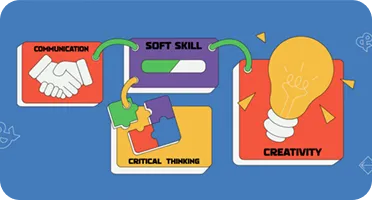
Independence includes critical and creative thinking, as well as communication skills and emotional intelligence. Important aspects include the will and motivation to change both within oneself and in the surrounding world. Furthermore, the development of metacognitive processes, that is, awareness of the mechanisms of one's thinking, and reflection play a key role in the formation of an independent personality. Education alone does not develop independence. The authors emphasize that most studies perceive humans as beings whose behavior is entirely dependent on external factors, demands, and neurobiological patterns. Education is also built on this foundation: in educational institutions, the main focus is on developing skills for performing actions in established conditions and teaching adherence to established rules. This creates a limited framework for the development of independence and critical thinking in students.

Education helps develop the skills needed to act independently, but this process is not always obvious. It is important to note that education systems, including the Russian one, lack reliable tools for monitoring soft skills, making it difficult to assess their development throughout education. Research shows that key skills such as critical thinking, communication, and teamwork do not develop automatically. Developing them requires targeted work. Therefore, to ensure the development of these skills, educational programs must include specialized activities and practices aimed at strengthening them.
The report examines a 2021 study by the "Russia – Land of Opportunity" platform. The study analyzed the level of development of key competencies sought by employers among 28,000 students of various years. The results of this study provide a better understanding of labor market needs and suggest which skills future specialists should develop for a successful career.
Research shows that the skills of planning, collaboration, achieving results, and stress resilience among senior students remain at the level of junior students, and in some cases are even significantly lower than those of first-year students. However, as students progress through the curriculum, improvements are observed in skills such as following rules and procedures, as well as analytical skills. This suggests the need for greater focus on developing key competencies throughout the entire learning process.
According to this platform's research, it can be concluded that skills that foster independence are not adequately developed in higher education. Instead, students are trained to follow established patterns, which can limit their ability to think critically and innovate.
A SuperProject study, conducted over several years and measuring the skills of engineering students from various countries, including Russia, revealed similar results. It showed that the level of critical thinking in future engineers does not improve during their university studies. This observation is relevant not only for Russia but also for countries such as China and India. These facts highlight the need to revise educational programs aimed at developing critical thinking in engineering education.
Rework the text with SEO in mind, maintaining the main topic and avoiding unnecessary details. Make sure the content remains relevant and informative. Avoid using emojis, unnecessary symbols, and structured sections.
Read also:
21st Century Skills: Mentioned in the Federal State Educational Standard, but Are They Actually Taught?
Modern educational standards, such as the Federal State Educational Standard, actively discuss 21st century skills, including critical thinking, creativity, communication, and collaboration. However, the question arises: how effectively are these skills implemented in the real educational process?
Despite the theoretical basis, many schools and institutions are not always prepared to provide students with the necessary conditions for developing these skills. Assessing teacher readiness, the availability of appropriate teaching materials, and active learning methods play a key role in this process.
It is important that educational institutions not only mention 21st century skills in their programs but also actively integrate them into everyday learning. This will help prepare students for the challenges of the modern world and increase their competitiveness in the labor market.
Therefore, greater attention to teaching 21st-century skills in the education system is needed to ensure it meets the demands of the times and the needs of society.
Individual initiatives to develop independence exist at all levels of education.
The development of soft skills and independence is actively supported in Russian education. Educational standards include relevant requirements, and special educational projects aimed at developing these skills are being implemented. This allows students not only to better adapt to change, but also to successfully solve various problems in the future.

The authors offer several examples:
- Special programs for developing independence and individualized educational programs exist both in alternative schools (for example, those that use the Montessori or Waldorf systems) and in private and public educational institutions. In Moscow, these include, for example, the "New School," "Khoroshkola," and the A.N. Tubelsky School of Self-Determination No. 734.
- Higher education is implementing many commercial initiatives aimed at developing self-organization, teaching time management, and developing public speaking skills. Individualized educational trajectories, which are becoming part of public higher education (although their implementation is slow), and entrepreneurship training are also considered an important aspect of developing student independence.
- Self-study practices also occupy an important place in corporate training. They are used in the formation of a book culture and in the mentoring system. But the desire for employee independence is primarily reflected in the choice of course topics—for example, much attention is paid to soft skills, in particular critical and creative thinking.
- State programs for the development of non-formal education (for example, "Employment Promotion") contribute to the development of independence, as they motivate people to consciously build their own educational and career trajectories.
Rework the text, but stay on topic and do not add unnecessary information. Optimize the text for SEO and expand its content if necessary. Avoid using emojis and unnecessary symbols. Do not structure the text into sections. Just provide clean text.
Read also:
Developing critical thinking and other 4K competencies in schoolchildren
Critical thinking, along with other key competencies such as creativity, communication, and collaboration, plays an important role in the education of schoolchildren. These skills help children not only study successfully but also adapt to a rapidly changing world.
To develop critical thinking, it is necessary to create an environment that promotes an analytical approach to problem solving. Teachers can use various methods, such as discussions, debates, and project-based learning. These approaches help students learn to evaluate information, formulate arguments, and make informed decisions.
Creativity is also important for developing integrated thinking. It allows students to find innovative solutions and approaches to problems. Tasks that require originality and ingenuity contribute to the development of this skill.
Communication and collaboration are equally important. The ability to effectively interact with others and work in a team is essential for success in various areas of life. Group projects and collaborative research help students develop these skills.
It is important to remember that developing 4C competencies is a process that requires time and effort. The introduction of practical approaches and active learning methods into the educational process will help schoolchildren become more confident and capable of critically analyzing information, which is essential in the modern world.
Student entrepreneurship support programs in Russia are largely ineffective
Each Russian region has business incubators, startup studios, and other forms of support for student entrepreneurship at one or more universities. For example, the "Startup as a Diploma" program covers numerous universities and promotes the development of innovative ideas among students. These initiatives help young entrepreneurs gain the necessary knowledge and resources to successfully launch their businesses, and also create an ecosystem conducive to the growth of startups in Russia.
The authors' own research shows that, when assessing the number of businesses created and the volume of investment attracted, the effect of student entrepreneurship support programs is virtually imperceptible. The study included a survey of representatives from 39 higher education institutions implementing various startup support initiatives. The results showed that 70% of participants reported creating fewer than 50 startups at their universities in the past five years. Approximately 50% of respondents noted that the total amount of investment raised for these startups did not exceed 10 million rubles over the past three years. These data highlight the low effectiveness of existing student entrepreneurship support programs and the need to revise them to achieve more significant results.
While such projects may not always produce successful entrepreneurs, they contribute to the development of student independence and prepare them for future achievements. According to a recent survey, startup studios, business incubators, and similar organizations do indeed aim to develop students' entrepreneurial thinking and independence. However, when analyzing the programs of these projects, the authors did not find clearly stated goals or well-developed tools for measuring the development of relevant skills. It's important that such initiatives include specific success criteria and evaluation methods to improve their effectiveness and efficiency in preparing students for entrepreneurship.
Read also:
The emergence of unicorn startups is closely linked to the education system. Education plays a key role in developing the skills and knowledge necessary for successful business. Many unicorns emerge from university research labs, where students and faculty develop innovative ideas and technologies. These startups are often based on current scientific research and emerging trends, allowing them to quickly adapt to market demands.
A key factor in the success of unicorn startups is an entrepreneurial mindset, which can be developed in an educational environment. Business and technology programs, as well as startup management courses, help young entrepreneurs understand the fundamentals of running a business and learn how to attract investment. Mentors and networking opportunities, often offered by educational institutions, are also important.
Furthermore, unicorn startups often form in ecosystems where universities, research centers, and venture capital firms interact. These interactions facilitate the exchange of knowledge and resources, which, in turn, facilitates the emergence of successful business ideas. Thus, education becomes not only the foundation for personal growth, but also a catalyst for the creation of innovative companies capable of changing the market.
One of the main goals of education is to develop independent learning skills
Academic independence is a complex and multifaceted phenomenon, which is no less important than independence in general. Various models describe this process, among which the self-directed and self-regulated learning models stand out. These models help to understand how learners can effectively manage their learning process by setting goals, planning actions and evaluating results. Developing educational independence contributes not only to a deep understanding of the material, but also to the formation of critical thinking skills and responsibility for one's own learning.
Success in independent learning depends on a number of key skills, such as self-monitoring, reflection and metathinking. These skills allow you to set personal goals and evaluate your learning progress. A person who is ready for independent learning demonstrates an interest in learning, strives for new experiences, and possesses creativity and curiosity. Developing these qualities is the foundation of an effective learning process, which, in turn, contributes to the achievement of goals. Developing key qualities and skills requires not only the introduction of new courses but also the application of modern pedagogical methods in familiar disciplines. The authors believe that more active learning formats, including dialogue and interaction with the teacher, as well as authentic assessment in conditions close to real life, can significantly improve the learning process. Personalization of the learning environment also plays an important role, allowing the program to be tailored to the individual needs of each student and facilitating deeper knowledge acquisition. The main conclusion is that the role of the teacher in higher and further education must evolve. The researchers emphasize that teachers should become facilitators who provide practical assistance in developing and improving study skills. Instead of traditional knowledge transfer, the emphasis should be on providing feedback and support to students in their learning process. This will create a more effective and engaged learning environment where students can develop critical thinking and independence.
Learn more about education in our Telegram channel. Subscribe to stay up-to-date with interesting materials and current news in the education sector.
Revised text:
It's important to stay current and update your knowledge regularly. Reading articles and materials on topics that interest you helps broaden your horizons and improve your professional skills. Use reliable sources for up-to-date data and recommendations. This will help you stay ahead of the curve in your field. Consider a variety of content formats, such as blogs, research, and videos, to gain a comprehensive understanding of the topic. Regular reading also helps develop critical thinking and analytical skills.
Read also:
- Metacognition Methods: How to Teach Children and Adults to Learn
- What is Proactivity and Can It Be Learned?
- What Cognitive Abilities Are Important for Successful Study and How to Develop Them
- Why is it Difficult for Students to Study Online and How to Make This Process Easier
- Hyutagogy: Principles of Self-Education Important for Teachers, Trainers, and Methodologists
- Developing Critical Thinking: What Teaching Style Helps?
The Profession of Methodologist from Scratch to PRO
You will improve your skills in developing curricula for online and offline courses. Master modern teaching practices, structure your experience, and become a more sought-after specialist.
Find out more