Contents:

Learn: The Profession of a Methodologist from Scratch to PRO
Learn MoreMany teachers believe that the use of magic is an effective way to attract students' attention and increase interest in learning. Incorporating elements of stage magic into school and university classes, such as magic tricks, illusionist stunts, and science experiments, can make learning more engaging and memorable. These techniques not only entertain but also help explain complex concepts, which promotes better learning. Using magic in education opens new horizons for teachers and students, making lessons more interactive and engaging.
Why Teachers Need Magic
Mohamed Ashiq, a physics teacher from Singapore, uses magic as a way to engage his students. He learned this unconventional approach during an internship at the National Institute of Education in Singapore. After starting his teaching career at the school, Ashiq began incorporating magic tricks into his lessons, which significantly increased his students' interest and enthusiasm for the subject. This method not only makes learning more engaging but also helps students better grasp complex physics concepts.
The teacher regularly demonstrates various tricks to students that illustrate physics concepts. These lessons help students better understand the basic laws of physics and their application to everyday life. Such practical examples make learning science more engaging and accessible, fostering interest in the subject.
Magnetism can be used to make a spinning top "levitate." The teacher usually doesn't reveal the secret of the trick until the end of the lesson and sometimes postpones its explanation until the next lesson. The teacher notes that sometimes students themselves understand how the trick works. This demonstrates that the trick has intrigued them and they begin to reflect on the science behind it. If students are correct in their assumptions, this confirms that they are actively applying the knowledge they learned in class, says Mohamed Ashiq.
The teacher avoids using magic tricks frequently in class, combining them with other methods of attracting attention. Excessive magic can distract students from learning real science. Interestingly, Ashik was awarded the Outstanding Youth in Education Award by the Singapore Ministry of Education for his creative approach to teaching.
Create unique and informative content that will attract attention and increase your site's visibility in search engines. Optimizing text for SEO involves using relevant keywords and creating high-quality content that answers user questions. Write clearly and concisely, avoiding redundant phrases. Make sure your text is easy to read and logically structured. This will help retain readers' attention and increase their likelihood of engaging with your resource. Don't forget the importance of internal links, which will help users find other useful information on your site.
"The large flying balloon aroused universal admiration." How Tsiolkovsky taught his lessons
Konstantin Eduardovich Tsiolkovsky, a prominent Russian scientist and the founder of cosmonautics, is known for his innovative approaches to teaching. His lessons weren't limited to traditional teaching methods; he used visual aids and experiments to inspire his students. For example, a large flying balloon became a symbol of his passion for aeronautics and space exploration, captivating both children and adults.
Tsiolkovsky often spoke about the importance of dreams and imagination in science. He believed that they could lead to great discoveries. Tsiolkovsky's lessons were filled not only with scientific facts but also with profound philosophical reflections on humanity's future in space. His ideas about interplanetary travel and space exploration inspired many followers and continue to influence the modern generation of scientists and engineers.
Thus, Tsiolkovsky's approach to teaching not only became the foundation of his teaching practice but also laid the foundation for the further development of cosmonautics and science education in Russia.
Ashik's ideas are supported by his colleague from the UK, teacher Adrian Allan. During his teaching, he demonstrates magic tricks and stunts to his students, allowing them to gain a deeper understanding of the fundamentals of chemistry. This approach not only makes lessons more engaging but also helps them better absorb the material by attracting students' attention to the interesting aspects of chemistry.
Allan has long been a fan of magic tricks, and after becoming a teacher, he decided to bring his hobby into the classroom. Using paper cups, coins, playing cards, and other common objects, he visually demonstrates the principles of chemistry. These simple yet effective tricks help students better understand complex scientific concepts, making learning more interesting and memorable. Magic tricks become not only entertainment but also an effective tool for explaining chemical reactions and phenomena. Thus, Allan successfully combines his passion with the educational process, inspiring students to study science.
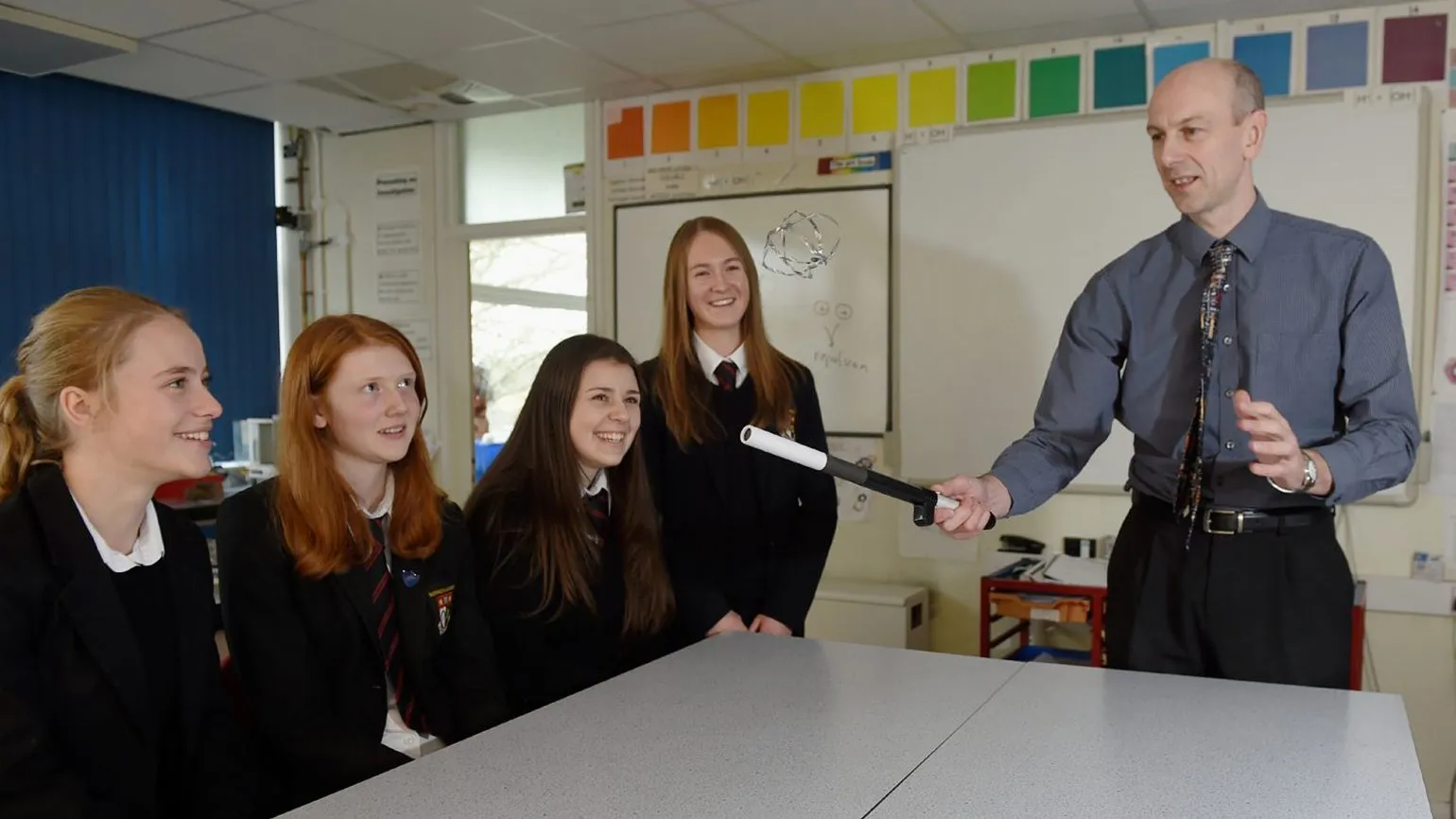
A teacher demonstrates an interesting magic trick using an opaque plastic cup and water. He pours water into the cup and then turns it upside down, but the water does not spill. The secret of this trick is the hydrogel in the cup. The hydrogel absorbs water and remains at the bottom when turned upside down, which creates the illusion. This trick, used by Adrian Allan, helps him explain complex topics such as polymers and molecules to schoolchildren, making lessons more engaging and visual.
In 2019, Adrian Allan presented his technique at the Science on Stage science festival, demonstrating how it can be used in the educational process. According to the teacher, using elements of magic in lessons not only attracts students' attention to science but also helps develop their communication skills and increase self-confidence. This technique makes learning more engaging and interactive, which ultimately improves learning and fosters a deeper understanding of scientific concepts.
British psychology professor Richard Wiseman emphasized the positive impact of magic lessons on developing students' confidence and sociability. In a study described in The Guardian, Wiseman worked with 50 primary school students in two English schools. He compared the results of a "magic lesson" with those of a standard personal, social, and health education (PSHE) lesson. The study found that magic lessons can significantly improve children's interaction skills and self-confidence, emphasizing the importance of a creative approach in educational practice.
At the beginning of the study, each child was given standardized tests to assess social skills and self-esteem. Teachers also rated the children's sociability and confidence. One school initially conducted a PSHE lesson that included emotional awareness activities, such as writing about things that bring joy. Two weeks later, this lesson was repeated, followed by a class session on magic tricks. One of the tricks involved "magically" mending a piece of rope cut in half, while another involved demonstrating mind reading. The children were asked to perform these tricks for their families and friends. Two weeks later, the researcher conducted final self-esteem and sociability measures to assess the impact of the sessions on social skill development.
In the second school, students completed the same lessons in reverse order: first, they practiced magic tricks, then studied the standard PSHE curriculum. The results showed that after the magic lessons, the children became more sociable and self-confident. The students rated the lessons as significantly more interesting and enjoyable. This demonstrates the importance of incorporating creative elements into the educational process to increase student engagement and confidence. Showing and teaching children "magic tricks" helps develop essential skills such as self-discipline and critical thinking. To become successful at magic, regular practice is essential; otherwise, failure is likely. Furthermore, learning magic helps children develop empathy, allowing them to better understand the feelings and perspectives of others. Thus, magic tricks are not only entertaining but also teach children important life skills.
How Magicians Help Schools
Magic in education is becoming increasingly popular not only among educators but also among professional illusionists. In 2009, American magician Brian Daniel launched the Teach By Magic project, aimed at primary and secondary school teachers, librarians, and anyone involved in the educational process. This project provides teachers with the opportunity to subscribe to a library of simple tricks and magic tricks that can be used in the classroom. Such methods help increase student attention and improve their academic performance, making classes more interactive and memorable. Using magic in education promotes creativity and interest in the learning process.
Daniel completed his project and joined forces with two renowned magicians, Michael Ammar and Michael Rosander, to implement the new concept. As a result of their collaboration, the Discover Magic project was launched. The official website claims that this is not just a program for learning magic, but a life skills course, masterfully hidden under magic lessons. Discover Magic offers a unique approach to learning, combining elements of entertainment and personal development, making it appealing to a wide audience.

Discover Magic is a unique project aimed at teaching children magic tricks and stunts. However, its value is not limited to this. The creators claim that through magical skills, children master important communication skills, develop social skills, overcome shyness, and become more self-confident. Participation in the program helps children not only amaze audiences but also develop the confidence necessary for successful communication in everyday life.
So, now all teachers urgently need to learn magic tricks?
To make lessons more interesting and add an element of magic, it is not necessary to master complex tricks. Creating the right ambiance can be achieved with the help of simple "props". For example, Vyacheslav Stebenkov, a chemistry teacher from Yekaterinburg, conducts his classes dressed in a magician's robe. At first glance, this may seem insignificant, but according to the teacher, this approach helps students see the magic in ordinary things. Using creative elements in teaching can significantly increase student interest and engagement, turning ordinary lessons into a fascinating and memorable journey into the world of knowledge.
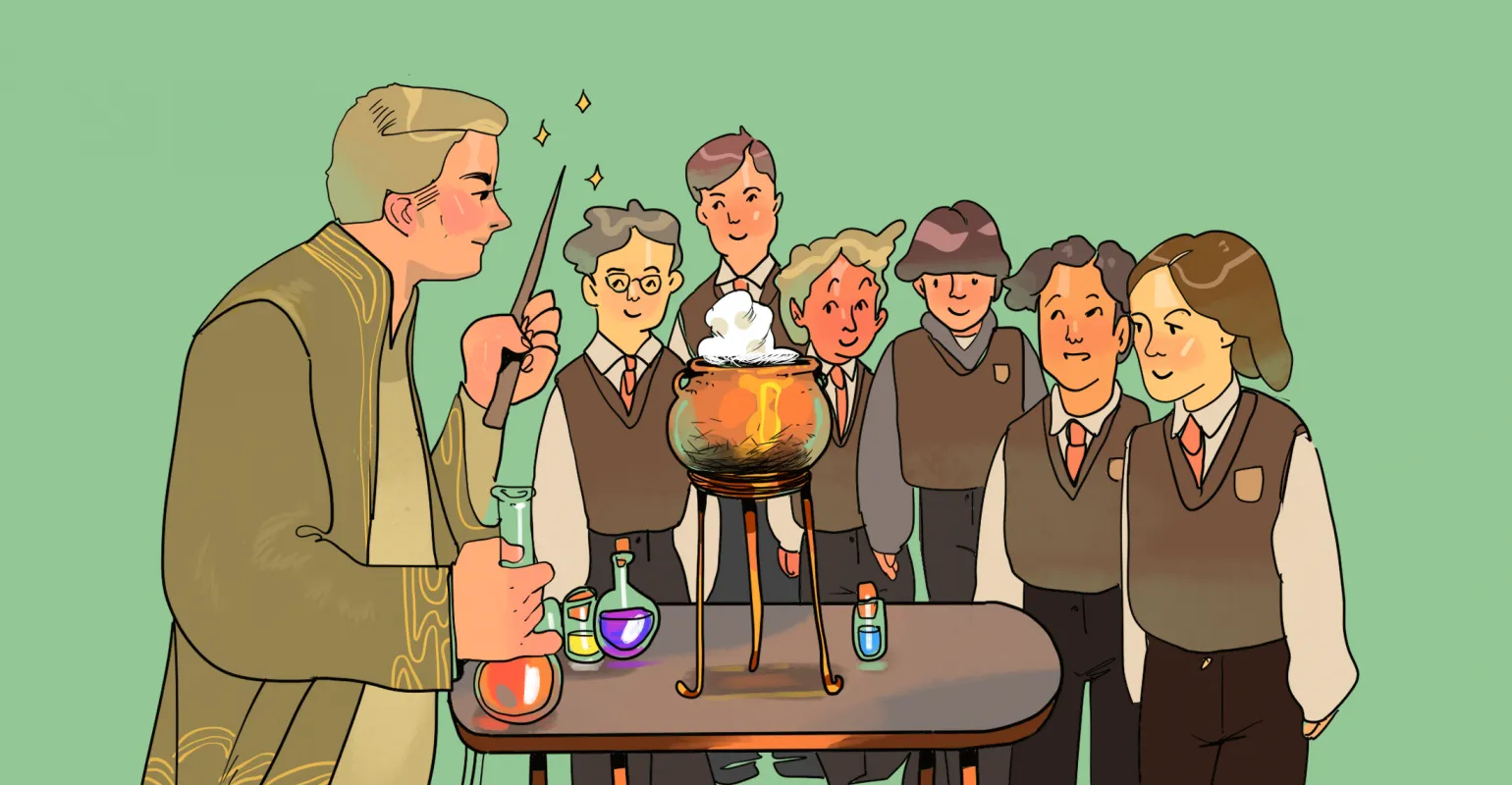
During his studies, Vyacheslav worked as an animator and participated in various shows. Having become a teacher, he decided to apply this experience to his work with schoolchildren. During his classes, he dresses in the uniform of a Slytherin student from the world of Harry Potter and turns lessons into a captivating show, demonstrating experiments with "potions" in test tubes. This approach not only makes learning more interesting but also helps develop creative thinking in students, engaging them in the process.
The teacher noted that in the modern educational process, teachers face serious competition from various information sources, which significantly distracts students. This situation threatens the effectiveness of the education system. A teacher's job isn't just to deliver content effectively, but also to maintain students' interest in the subject and its content. It's important to adapt teaching methods to make lessons more engaging and engaging. Many teachers leverage students' interest in stories about boy wizards to boost motivation in the classroom. For example, Colorado science teacher Cindy Colston created a unique genetics curriculum for seventh-grade students, inspired by the magical world described by J.K. Rowling. This approach helps students better understand complex topics by connecting them to their favorite characters and stories, making learning more engaging and effective. Colston, like many of her colleagues, faced the challenge of finding new methods to attract and retain students' attention, as traditional approaches were failing. During one lesson, she decided to use excerpts from the Harry Potter films to discuss the characters' appearances and abilities from a genetic perspective. This not only engaged the children but also connected the material with popular culture, making the lesson more engaging and informative.
The teacher noticed that the students became very engaged and inspired by the lessons and began thinking about offering such activities more often. As a result, a separate curriculum was created, significantly enriching the educational process. Colston added themed decor to the classroom by hanging posters with Hogwarts symbols and other elements from the Harry Potter world. Now, explanations of genetic principles became more visual and interesting thanks to examples from the saga, which contributed to better assimilation of the material and increased interest in science.
"Hermione is a witch, and her parents are Muggles. This raises the central question of the third lesson: "What happened to Hermione?" Cindy Colston explained.
Indiana middle school math teacher Casey Hillenbrand successfully integrates Harry Potter elements into her lessons, linking curriculum topics to the popular books. For example, during a lesson on fractions and decimals, she covers the desks with craft paper, creating an atmosphere reminiscent of Professor Snape's classroom. Students are provided with cauldrons and ingredients for creating "potions," making the lesson more interactive and engaging. As they work, students solve problems involving fractions and learn to determine the required amounts of ingredients to create a given potion. This approach not only makes lessons more engaging but also helps students better understand math concepts in the context of a compelling story.
Like Cindy Colston, Casey Hillenbrand decorated her classroom with themed posters and paraphernalia. She explains her decision: "Math often causes stress and anxiety for many students. If they can walk into a classroom and experience an environment different from school, it helps them relax, even if only for a few minutes." Hillenbrand also believes that using students' favorite books and movies in the classroom fosters a connection with them and helps them better understand them as individuals. This approach not only makes difficult material easier to grasp but also makes lessons more engaging and memorable.
Harry Potter can be a valuable resource for teachers, not only for engaging students in the subject matter but also for personal inspiration. Melissa Johnson, an educator from Virginia, analyzes the teaching methods used by Hogwarts teachers, characters from J.K. Rowling's books, in her essay. She shares her findings on which pedagogical techniques can be useful in modern educational practice. Using elements inspired by the wizarding world can help create a more engaging and effective learning atmosphere.
Johnson notes that Professors McGonagall, Lupin, Spade, and others actively use the "active learning" method. In their classes, students engage in practical activities: reading, writing, discussing, problem-solving, and practicing new spells. This fosters a deeper understanding of the material and student engagement. In contrast, Professors Umbridge and Binns structure their lessons without any practical component, focusing solely on tedious theory. The ghost teacher, Binns, is so engrossed in his lectures that he doesn't even notice his own death. His monotone voice and lack of interaction with students, including not remembering their names, create an atmosphere of boredom. As a result, students consider his History of Magic course one of the least interesting. Thus, the difference in approaches to teaching significantly affects the perception of subjects and the degree of student engagement.

Johnson analyzes the strengths and weaknesses of teachers and their impact on students. She emphasizes that she uses the active learning methods of Professors Lupin and Sprout in her classes. These methods create an atmosphere of trust and friendship in the classroom, encourage student collaboration, develop critical thinking, and utilize a problem-solving approach. Teachers believe in the potential of each student and help them realize their ability to learn.
Read also:
- Yes, it's magic: universities that teach wizards and how to fight them
- An American teacher turned history lessons into detective stories
- What is eduScrum and how is it used in education
- How a teacher turned the beginning of online classes into film parodies
Methodologist Profession from Beginner to Advanced
You will develop skills in developing curricula for online and offline courses. You will master modern teaching practices, structure your experience, and become a more sought-after specialist.
Find out more