
Contents:

Learn: Online tutor
Learn more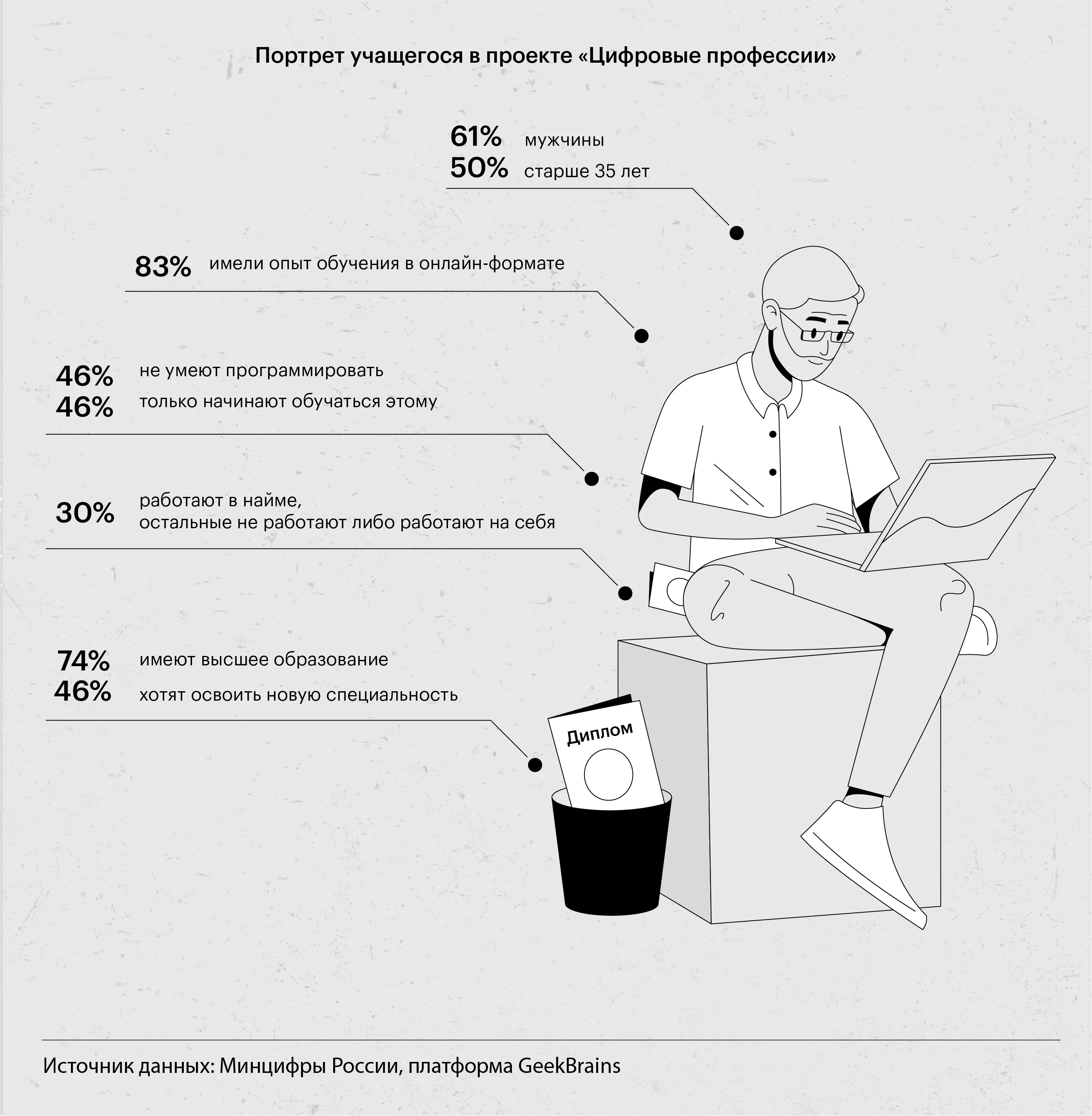
The Ministry of Digital Development of Russia, together with the educational platform GeekBrains, presented a profile of students participating in the national program "Digital Professions." According to a GeekBrains press release, 16,000 applications were received for training under this program in 2022, of which more than 5,000 Russians were accepted. The average number of applicants for the programs was three per place, highlighting the high interest in digital professions and the need to train qualified specialists in this field.
Most of the educational program participants (74%) have a higher education. Of these, almost a quarter (16%) are master's degree graduates. One in five participants also has a secondary vocational education. Most participants already have online learning experience, indicating growing interest in distance learning.
A third of the project participants (30%) are employees of private or public organizations. Of these, half independently finance 50% of their tuition. It is also worth noting that a quarter of respondents from the preferential categories are already employed, and the state covers 75% or even 100% of their educational expenses.
According to the survey, more than a third of the participants (37%) have no income, while one in five respondents indicated that their earnings range from 30,000 to 60,000 rubles. These data highlight the significant number of people experiencing financial difficulties, which may be an important factor when analyzing the economic situation among the target audience.
The study found that men showed a higher interest in educational programs, making up 61% of all participants. However, in some specialized student groups, women outnumbered women. For example, among public sector employees, women accounted for 59%, while among citizens with children under three and with incomes below the regional average, they accounted for 60%. Among students and low-income citizens, the number of men and women was equally distributed.
Half of the students enrolled in educational programs are over 35 years old. Every fifth respondent is between 31 and 40 years old. This indicates a growing interest in learning and self-development among a more mature audience, underscoring the importance of accessible educational opportunities for all ages.
As part of the Digital Professions project, training in various IT specialties is available to the following categories of citizens:
- people with disabilities;
- the unemployed;
- parents with children under three years of age;
- students;
- public sector employees;
- those with low incomes.
Training is carried out on online platforms selected according to strict criteria. This list includes both universities and EdTech companies.
The state finances training depending on the preferential category, covering from 50% to 100% of its cost. Applications for benefits can be submitted through the Gosuslugi portal.
In the fall of 2022, the program to subsidize government education expenses for Russian citizens was announced to be suspended. This measure will affect many students and parents relying on financial assistance for their education. Subsidies have played a vital role in the availability of educational services, and their suspension may impact the choice of educational institutions and specialties.
Recruitment for the remaining spots is ongoing.
Revised text:
Also explore other materials on our website. We offer a variety of articles and guides to help you gain a deeper understanding of the topics of interest. Check out our latest publications, which contain up-to-date information and helpful tips. Your opinion is important to us, and we are always happy to have you among our readers.
- It became known how many Russians took up additional education in 2022
- A survey of Russians showed how many people are ready to master a new specialty from scratch
- Experts found out whether online courses help achieve the goals for which they are taken
- Harsh Russian lifelong learning: why adult Russians study and do not study
Online Tutor
It doesn't matter what you teach—English, CrossFit, yoga, vocals, or culinary arts. Everything you previously taught in schools, studios, and offices can now be taught online. Promote your knowledge and skills and earn money from anywhere in the world.
Find out more