
Content:

Learn: The Profession of a Methodologist from Scratch to PRO
Find out moreThis week Zyuzya faced a problem: he received two A's in subjects he didn't remember. These grades were entered into his school diary by his homeroom teacher, Flerov. Zyuzya needed to show his diary to his father for a signature. However, his father, the owner of a restaurant near Vorontsov Garden, threatened him with physical punishment for his first low grade. Seeking a solution, Zyuzya, following the advice of his friend Tyuntin, decided to alter the grades in his diary by replacing both As with Bs. It was simple enough, and Kozelsky's father, not noticing the substitution, happily signed the fake Bs. Zyuzya proved an inexperienced cheat. When he needed to convert the Bs back to As for his homeroom teacher, he clumsily erased the extra marks with a penknife. As a result, two holes appeared instead of the expected result.

What if the mentor notices serious mistakes? In that case, Zyuzya should not return home. She needs to get rid of the evidence.
That evening, on Tyuntin's advice, Zyuzya decided to bury his bad grades forever in a deep grave from which they could not be resurrected. He quietly crept into the school garden, dug a small hole under an acacia tree, since the soil was hard and rocky, and buried his long-suffering diary there. Zyuzya was sure that if he reported the diary missing, he would immediately be given a new one, without the bad grades and comments. Then he could start a new life full of bright prospects and opportunities.
The only witness to this secret burial of the diary was a dog named Aeschylus, a Newfoundland. Aeschylus belonged to Six-Eyes, who walked him every Sunday along the seaside promenade, an unlit cigar in his mouth. Aeschylus's kind, human eyes gazed upon Zyuzya with genuine brotherly sympathy. This affectionate dog, who so affably wagged his kind tail, betrayed Zyuzya, proving himself to be the ultimate scoundrel. As soon as Zyuzya's work was completed, she left the place with a feeling of satisfaction. Meanwhile, the dog, revealing its true nature, dug up the grave mound and retrieved the diary buried beneath. Unaware of the gravity of its deed, it joyfully ran to Six-Eyes, its tail wagging, and laid the find at his feet. Now the diary was in Six-Eyes' hands, covered in earth, crumpled, and torn. The six-eyed man ironically waved it under Kozelsky's nose, threatening him with severe consequences, including hard labor in Siberia.In "The Silver Coat of Arms," Korney Chukovsky creates a unique atmosphere full of magic and adventure. The plot immerses the reader in a fantasy world, where the main theme concerns the power and significance of a coat of arms as a symbol. In this work, the author masterfully conveys ideas about courage, honor, and important moral values. Chukovsky uses vivid imagery and expressive metaphors to emphasize the importance of identity and belonging. "The Silver Coat of Arms" is not only a captivating read but also a profound allegory on the search for one's place in the world. This work continues to inspire readers, raising questions about personal responsibility and the pursuit of justice.
Context
Nikolai Korneichukov, who later became the renowned Soviet and Russian children's writer Korney Chukovsky, attended the Odessa gymnasium in the late 1880s and early 1890s. His education at the gymnasium was fee-paying and demanded considerable effort from his mother. She was a peasant by birth and raised two children alone, working as a laundress and dreaming of providing them with a better future. However, despite her efforts, Nikolai was unable to complete his education: he was expelled after the fifth grade. This early experience may have influenced his creativity and aspirations for literary work in the future.

An autobiographical story by Korney Chukovsky "The Silver Coat of Arms" details important events in his life. A key role is played by a character nicknamed "Six-Eyes," the headmaster of the gymnasium. He earned this nickname for his habit of wearing pince-nez glasses over his regular spectacles. The story also features Zyuzya and Tyuntin, Chukovsky's classmates, who contribute to his school memories. "The Silver Coat of Arms" not only recounts the author's childhood but also captures the atmosphere of the time, helping us understand the influence that shaped his personality and work. Zyuzya spent two consecutive four-hour days in solitary confinement for the diary incident. Tyuntin, who had persuaded Zyuzya to improve his grades, went unpunished. Meanwhile, Korneichukov-Chukovsky was expelled from the gymnasium, accused of inciting a "crime." Chukovsky claimed that the diary incident was merely a pretext, and that the true reason for his expulsion was his low social background. This story raises important questions about fairness and bias in the educational system. Zyuzya's fear of punishment for a poor grade is the root cause of the events described in this story. The action takes place in the final years of the twentieth century, when issues of school grading were being actively debated. Critics of the educational system, accusing it of formalism and scholasticism, argued that learning was reduced to a struggle for grades. Teachers and parents demanded high grades from students instead of real knowledge. Educator Vladimir Stoyunin noted: "Gymnasiums imparted too much unnecessary knowledge for life, too little for universities, and as a result, both institutions educated underdeveloped students. Gymnasium teachers engaged in a struggle with students for grades; the point industry consumed their entire activity." The term "points industry" emphasizes that the education system has become a points-producing industry and hints at corrupt practices where teachers could extort money for high grades. Thus, the problem of assessment in education requires a deeper analysis and a rethinking of approaches to teaching to avoid turning knowledge into a formal score.
Study additional materials:
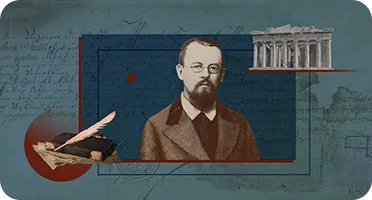
Bad grades negatively affect student development. Constructive criticism and support are more important than the grading system. Tsiolkovsky emphasized that education should promote the development of creative thinking, and not just the memorization of information. Grades can stifle initiative and motivation, which is contrary to the true purpose of education. It's important to rethink our approach to assessment and create an environment where every student can demonstrate their abilities. Ivan Mitrofanych claims that Six-Eyes is the most ruthless and daring bribe-taker, as well as the most notorious in the city. When residents want to condemn a major bribe-taker, they say, "He rips off students like a Burgmeister." According to Mitrofanych, Six-Eyes has successfully established a trading system for grades. He even has his own pricing system: a certain amount for a C, a higher price for a B, and an even higher price for an A. This scheme is especially active in the final months of the school year, when the results are tallied. Chukovsky describes this situation in his work "The Silver Emblem," emphasizing how corruption permeates the educational system.
The five-point grading system used in pre-revolutionary gymnasiums had its own peculiarities compared to the modern one. A "C" was considered a perfectly satisfactory grade, while a "D" indicated that the student had demonstrated some effort but was unable to reach the required level due to a lack of diligence or natural ability. Importantly, final "D" grades in some subjects did not prevent gymnasium graduates from receiving a certificate and entering university. A "1" was considered the lowest grade, as were "D" grades in subjects such as the Law of God, Russian literature, Latin and Greek, arithmetic, and algebra. These subjects were of particular importance, and a grade in them could significantly impact a student's future education.
Chukovsky's story presents a unique example of "point mining," devised by his classmate, the financial genius Aristide Okudzhalla. Okudzhalla developed an ingenious system of insuring his friends against bad grades. Before each important lesson, those who wished could contribute a nickel to a common fund. If the insured person wasn't called to the board, their nickel remained. In the event of failure, such as receiving a "D" or "F," they were paid "insurance compensation" in the form of several nickels from the fund. If a student received a passing grade, their coin remained in the fund, likely until the next lesson, at risk. Okudzhalla also kept a small percentage of the collected funds. His business flourished, as physical punishment for poor grades was commonplace, and the money he won helped at least slightly mitigate the consequences of academic failure.
Chukovsky claimed that the school director, in excluding several innocent children, was guided by the so-called "circular on cooks' children." This document, issued in 1887 by the Minister of Education, Count Delyanov, recommended that children of such social categories as coachmen, footmen, cooks, laundresses, and small shopkeepers not be admitted to schools, with the exception of those who demonstrated exceptional abilities. Chukovsky and his expelled friends were of humble origins, while the protagonist of this story, Zyuzya, was the son of a restaurant director, and Tyuntin was the son of a lieutenant colonel. This situation raises important questions about social justice and access to education in Russia at the time.
The expulsion of Korney Chukovsky from the gymnasium undoubtedly raises questions about its fairness, and the interpretation of the events of that era is also not without its share of doubts. Delyanov's circular, which drew sharp criticism from contemporaries, was not implemented in all educational institutions. After 1897, although the document was not officially repealed, its effect was effectively terminated, as noted by historian I.V. Zubkov. Considering that Chukovsky, born in 1882, entered the gymnasium during the period the circular was in effect, one can conclude that the ban on the admission of "commoners" was not strictly enforced. This suggests that the need to expel such students was not obvious. Chukovsky's expulsion likely stemmed not only from the circular but also from his own misdeeds, which he mentions in his story, adding depth to our understanding of his personality and the circumstances of the time.
"The Silver Coat of Arms" was first published in 1938, during a period of widespread repression, which lends particular significance to the context of its publication. At that time, Kornei Chukovsky likely sought to highlight the class discrimination that existed in his pre-revolutionary life. Creating a correct biography in those conditions became a matter of survival and preserving one's own name in history.
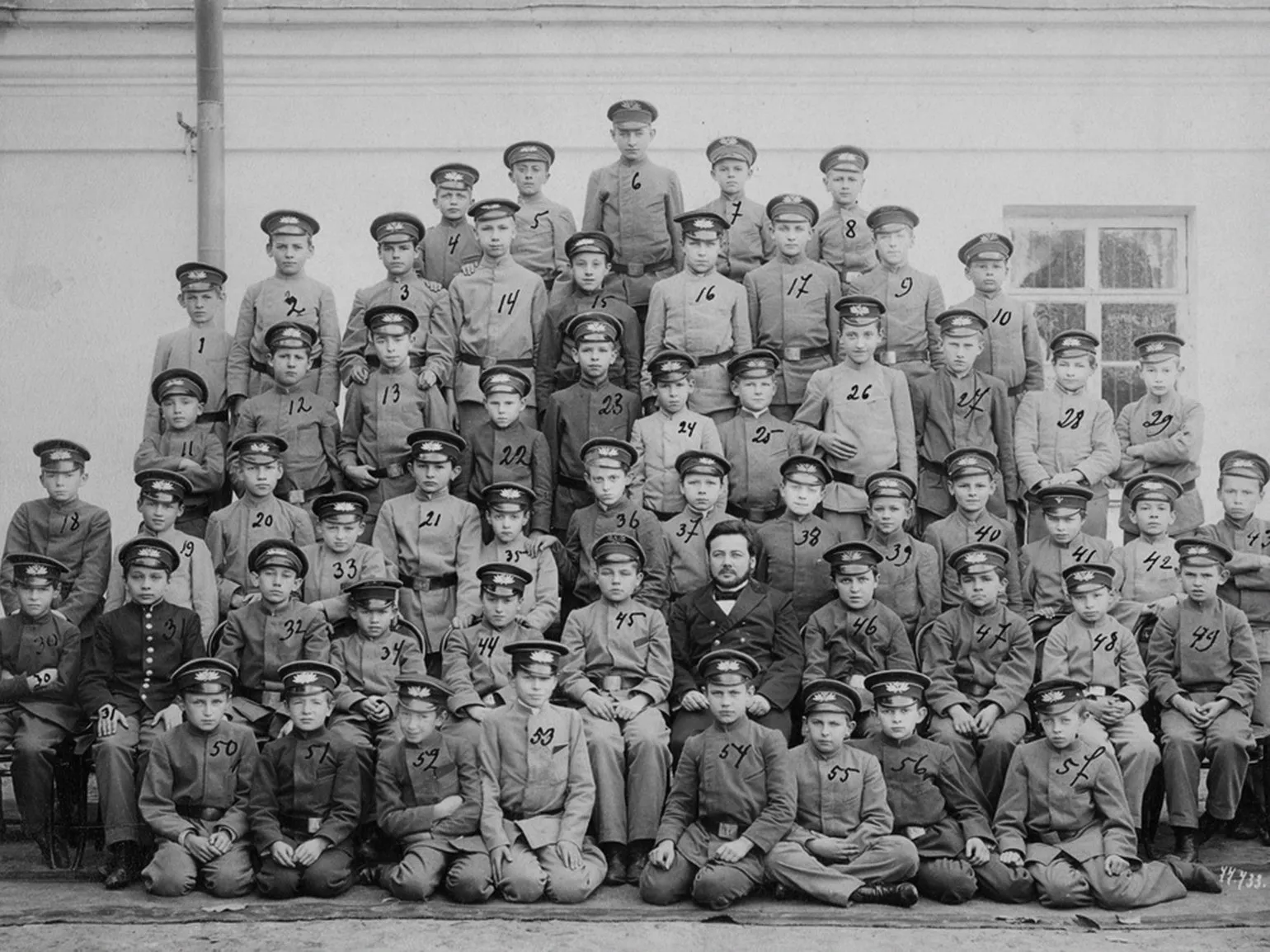
Expulsion from high school did not negatively impact Chukovsky's biography; on the contrary, it contributed to the formation of his unique personality. Left without education, he became a painter's assistant. However, before starting work, every morning he would draw English words on the roofs with chalk, studying them from a self-study book he bought for a small fee. This pursuit of knowledge and self-improvement became an important part of his path to success and development as a writer and person.
A passion for the English language opened the door to the world of literature for Korney Chukovsky. At the age of 23, he became the London correspondent for the newspaper "Odessa News," which marked the starting point for his career as a translator and writer. In 1907, he published his first translations of Walt Whitman's works, which attracted attention to his talent and ensured his recognition in literary circles.
Visit our section with additional information.
- The story of a little schoolboy's first bad grade
- Leo Tolstoy on the wrong school
- How Chekhov passed his final exams at the gymnasium
- 10 facts about pre-revolutionary schools
Methodologist Profession from Beginner to Advanced
You will develop skills in developing curricula for online and offline courses. You will master modern teaching practices, structure your experience, and become a more sought-after specialist.
Find out more