Content:

Learn: The Profession of a Methodologist from Scratch to PRO
Learn MoreEducation was entirely in the hands of class teachers, who were our main mentors and guides in learning. These professionals not only imparted knowledge but also shaped the personal qualities of their students, helping to develop their potential.
After completing her studies at the institute, the daughter of poor parents sought work as a governess, which at the time was one of the few ways for women to earn a living. An alternative was a position as a teacher at a boarding school, but the number of such educational institutions was extremely limited and they could not accommodate everyone.
The institute rarely accepted young girls, which forced them to begin their careers as governesses after completing their studies. Possessing limited intellectual and moral skills, their education was limited to rote memorization and copying of materials. Lacking practical experience and pedagogical tact, these girls were unable to interest children in their studies and were unable to cope with the challenges posed by the spoiled children of landowners. Thus, they faced difficulties in their professional work, which emphasizes the need for a more in-depth and comprehensive education for future governesses.
The position of a governess during the serfdom period was extremely difficult, especially for those who worked at institutes, who often found themselves unprepared for life. Moving from one place to another and experiencing numerous grievances and humiliations, such girls strove to achieve the status of class mistress after several years of work. However, to achieve this, they had to prove themselves to their superiors during their studies at the institute.
During their governessship, young women did not update their knowledge; on the contrary, they often became embittered and nervous, which complicated their future lives. Surrounded by young students, they felt envious, observing their youth and beauty. At this age, each of them dreamed of mutual love, hoping to marry rich and noble men who would adore them. However, many of these dreams never came true, and in their place came harsh dependencies and bondage.
The new class matrons, entering into official relationships with their students, increasingly became picky and strict. Governess did not give them the necessary teaching experience, and even if they had acquired it, they would not have been able to use it in an educational institution, which had its own strict rules and traditions, completely different from family life.
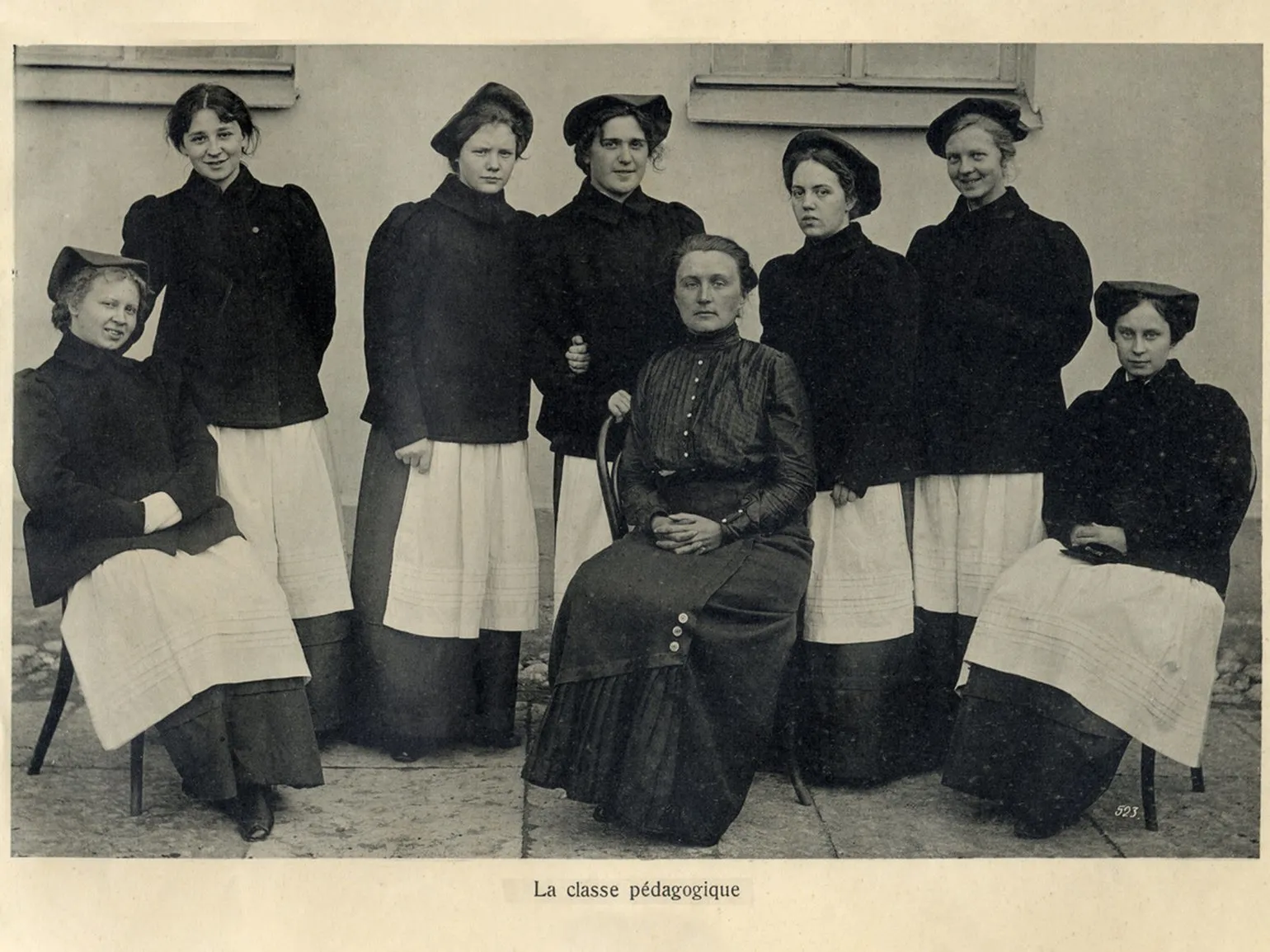
The class ladies continued to lead their sad lives, devoid of true affection for the students under their care. After several years of service, they began to be associated with the image of "old maids" and came to the realization that life had deceived their hopes. Disappointment overwhelmed them, and they began to think only of their own peace and quiet. This is why the class ladies so strictly guarded peace and quiet, not allowing noise even during games. Many of them, ignorant and petty, were picky, becoming real "furies" and "witches," as they were sometimes called. In small classes, they roughly pushed the girls, imposing strict rules on them. They treated older students differently, punishing them for the slightest infractions: a curtsy that wasn't deep enough, laughing, a torn dress hook, a drooping sleeve, or an improper hairstyle. These petty quibbles could continue indefinitely, reflecting their discontent and severity. In her memoirs, "At the Dawn of Life," E.N. Vodovozova shares unique memories and life experiences. This two-volume book immerses the reader in a world filled with vivid events and meaningful encounters. The author recounts her experiences, key moments, and the influence of reality on her personality. These memoirs are not only a personal testimony but also a valuable source for studying the historical context in which the author lived. The publication is of a high standard and will be of interest to both lovers of memoir literature and researchers seeking to understand the intricacies of human destiny.
Context
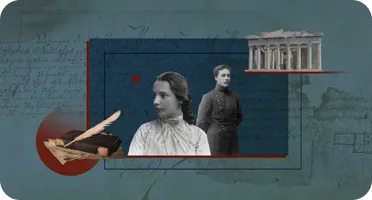
Elizaveta Vodovozova (1844–1923) left a merciless characterization of the class ladies she knew firsthand. In her memoirs, she describes several completely unbalanced women she encountered at the Smolny Institute for Noble Maidens, where she studied as a child and adolescent. Vodovozova's memoirs cover the period from the 1850s to the early 1860s, as she graduated from the institute in 1862. Her older sister, Alexandra, possessing outstanding intellectual abilities and a passion for science, was educated at a private boarding school and worked as a governess in the families of landowners. This experience was difficult for her, as she faced humiliation and harassment.
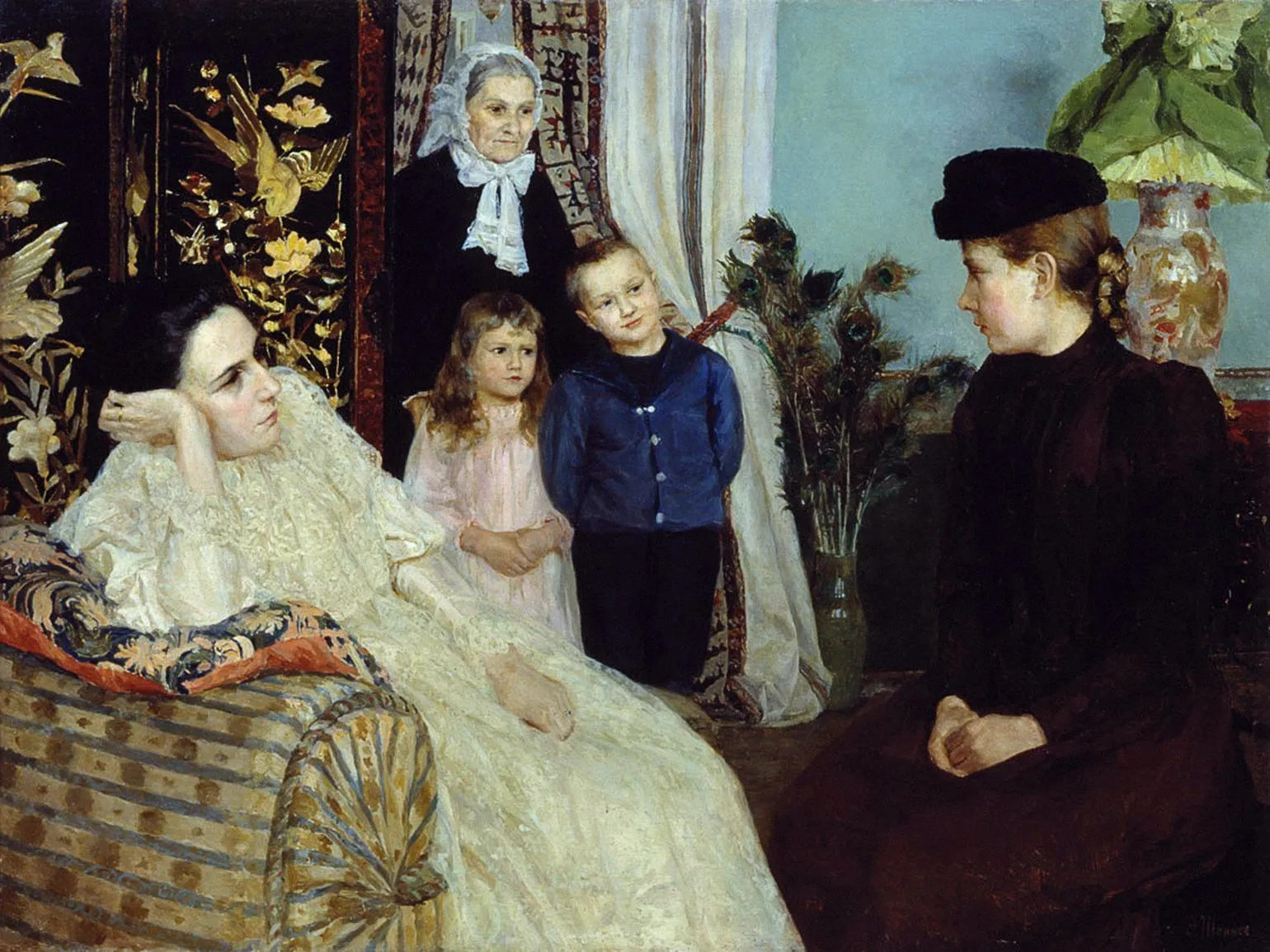
The Vodovozov sisters came from a noble family, but by noble standards, their family was considered poor. This was common among the upper class, as not all nobles owned profitable estates and serfs. All of their parents' modest income was earmarked for their only son, while their mother prepared their daughters from childhood for the need to earn their own living if a successful marriage did not work out. At that time, the only respected profession for women was teaching. As Vodovozova notes in her memoirs, the choice of this profession was not always based on vocation, but most often determined by the lack of other opportunities. It was difficult to truly love teaching, given the harsh education system and the humiliating position in which female teachers and educators often found themselves. Thus, this choice can be seen as a forced marriage that was unfulfilling.
Until the end of the 19th century, opportunities for women in the teaching profession were limited. Their primary roles remained governesses for children from wealthy families and as class matrons at institutes for noblewomen and private boarding schools for girls. Women were not allowed to teach even in the lower grades of boys' gymnasiums, and gymnasiums for girls only began to open in the mid-19th century. However, even there, women could not apply for subject teacher positions due to a lack of education. The variety of subjects and the quality of instruction in educational institutions for boys and girls differed significantly, making the dream of attending university unattainable for girls. For a long time, subject teaching remained the prerogative of men, and women could only teach basic reading and writing skills, as well as French, although many families preferred to hire French governesses for a more prestigious education.
Read also:
"She'll get married—and science aside": How women in the Russian Empire sought education and fought for a diploma
In the Russian Empire, women faced numerous obstacles to obtaining an education. Society at the time believed that a woman's primary goal should be marriage, not scientific work or professional development. Nevertheless, many women, despite social prejudices, strove to obtain a diploma and realize their ambitions.
Women's educational initiatives began to develop in the late 19th century. The emergence of the first women's gymnasiums and the opportunity to enroll in higher education institutions were significant steps toward equality in education. Public organizations and movements supported women fighting for their right to education, which contributed to a change in public opinion.
Among the first female doctors, engineers, and scientists were those who overcame the difficulties associated with obtaining a diploma and proved that women could successfully pursue science and professional careers. Their successes inspired future generations, demonstrating that education was an important aspect of any woman's life.
Thus, women's struggle for a diploma in the Russian Empire became an important part of the history of feminism and educational reform, emphasizing the importance of equal opportunity for all.
Governesses at boarding schools were often perceived as servants. Their work was difficult and subject to the strict rules of boarding schools. These governesses rarely left the premises and were subject to the whims of their headmistresses. Interestingly, the "real" teachers at these boarding schools for girls were exclusively men, and the role of women was limited to education and supervision. The governesses had to closely monitor the behavior of their charges both during the day and at night, as the governess' bedroom was located next to the girls' boudoir. However, establishing warm and trusting relationships with the students was prohibited. As Vodovozova noted in her memoirs, such closeness was considered overfamiliarity, and girls could only approach their formmists with formal requests reminiscent of military commands: "Allow me to go to the music room to practice the piano."
Despite all its drawbacks, this employment option was considered preferable to a position as a governess in other families, where one had to deal with the whims and rudeness of children and their parents. Furthermore, working as a hanger-on in wealthy families also did not ensure the necessary respect and rights. However, boarding schools and institutes were insufficient, and the number of places for those willing to work in these institutions did not meet the demand.
From the second half of the 19th century, there was a significant increase in the number of zemstvo schools for the poor. This offered women a new employment opportunity—to become teachers in such institutions. However, in practice, this meant moving to the village and teaching peasant children for extremely low wages. The unpopularity of this profession among men is confirmed by the fact that they were attracted to such work by offering exemption from military service.
Study also:
"They could not get married, since both earned only "15 rubles a month."
A similar situation with career opportunities existed not only in Russia, but throughout Europe. An example is Charlotte Brontë's novel "Jane Eyre," in which the author describes the gloomy atmosphere of a girls' boarding school. Charlotte knew what she was writing about, since she herself and her sisters studied at such an institution and then was forced to work at a small private boarding school for girls. Although this school had a warm and relaxed atmosphere, Charlotte admitted in her letters to a friend that she hated her job. She accepted this position as the lesser of two evils, preferring school to working as a governess. The reason was simple - she had no other way to earn a living.
Charlotte felt irritated by her students, although they sympathized with her. She wondered: would the best years of her life be spent in this hateful slavery, where she had to suppress the anger caused by the laziness, apathy, and truly asinine stupidity of these people? Or would she have to force herself to portray boundless patience, compliance, and diligence? These thoughts reflected her internal struggle and rejection of the situation she found herself in.
"If these girls knew how much I hated them, they would not seek my company so persistently. Stupidity, routine, textbooks and lessons—what do this nonsense have in common with the magical, silent world of fiction?" she mused bitterly, referring by "fictional world" to her writing. This internal conflict between the mundane and creative underscores the importance of literature as a means of self-expression and escapism. In her writing, she sought solace and inspiration she couldn't find in everyday life. Charlotte Brontë was among the few successful writers whose novels won acclaim and brought her financial independence, freeing her from an unloved job. However, her story is a rare exception. Most women who found themselves in the teaching profession were forced to remain in the profession for life unless they married. Under such circumstances, it's not surprising that some teachers were cruel to their students. The educational system of that time not only limited women's opportunities but also created a tense atmosphere, which often affected their behavior.
Read also:
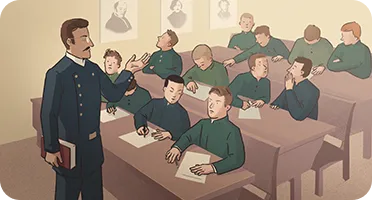
Schools in pre-revolutionary Russia represented a unique aspect of the country's educational system. Several types of educational institutions existed during this period, including primary schools, gymnasiums, and universities, reflecting social and cultural changes. Education was not accessible to all segments of the population, and its quality varied depending on the region and the status of the educational institution.
Pre-revolutionary Russia faced numerous challenges in education, including a shortage of qualified teachers and insufficient funding. At the same time, the country was undergoing significant reforms aimed at improving the educational system. Emphasis was placed on the study of classical languages, mathematics, and the natural sciences, which contributed to the development of the intelligentsia.
Schools also played an important role in instilling civic responsibility and patriotism in young people. Despite these limitations, many students achieved success and held significant positions in society. Pre-revolutionary educational institutions laid the foundations for Russia's future educational system, leaving an indelible mark on the country's history.
Elizaveta Vodovozova, known for her critical view of women in her memoirs, became a teacher herself. This is a story of calling and dedication. During her final year at the Smolny Institute, Konstantin Ushinsky was appointed inspector. During his short tenure, he significantly improved the organization of the educational process at the institute. Ushinsky was able to awaken students' interest in serious study and introduced additional senior pedagogical classes for graduates. These classes provided the opportunity to become primary school teachers, opening new horizons for young women and contributing to the development of education in Russia.
Elizaveta Vodovozova completed her studies at the institution and became interested in Ushinsky's pedagogical views, which were quite unusual for his time. She learned from her renowned mentor the concept that the teaching and upbringing process can be made more humane by taking into account the natural laws of child development. Vodovozova actively shared her ideas, publishing educational books dedicated to new approaches in pedagogy. Her works contributed to the dissemination of more modern and humane teaching methods. Unlike the fates of many governesses and class matrons, Elizaveta Vodovozova's personal life turned out well. She married Vasily Vodovozov, who was also a teacher and a like-minded person of Ushinsky. Their union became an example of harmony and shared inspiration in teaching. Reading is an important part of self-development and acquiring new knowledge. It allows you to broaden your horizons, improve your vocabulary, and develop critical thinking. Regardless of genre, books can inspire and motivate you to new achievements. It is important to choose high-quality content that matches your interests and needs. Regular reading also helps improve concentration and memory. Research shows that immersing yourself in text helps activate your brain and increases empathy. If you want to improve your reading skills, try setting a specific time to read each day.
In today's world, access to information has become easier than ever. Use different formats, such as ebooks, audiobooks, and online articles, to enrich your experience. Don't forget to share your reading experiences with others; this will help solidify your knowledge and gain new perspectives.
Reading is not only entertaining but also enriching, making you a more educated and knowledgeable person. Choose books that are truly interesting and enjoy the process.
- How much did teachers earn and how did they live in the Russian Empire?
- Elizaveta Vodovozova talks about studying and passing exams at the Smolny Institute.
- The past: “Reading at the institute was not encouraged.”
- When the first female teachers appeared in Russian universities.
- Maria Montessori: a brief overview of her pedagogical approach, fate, and fame.
The Profession of Methodologist from Scratch to PRO
You will improve your skills in developing curricula for online and offline courses. Master modern teaching practices, structure your experience, and become a more sought-after specialist.
Find out more