Content:

Learn: Soft Skills for Hard Times
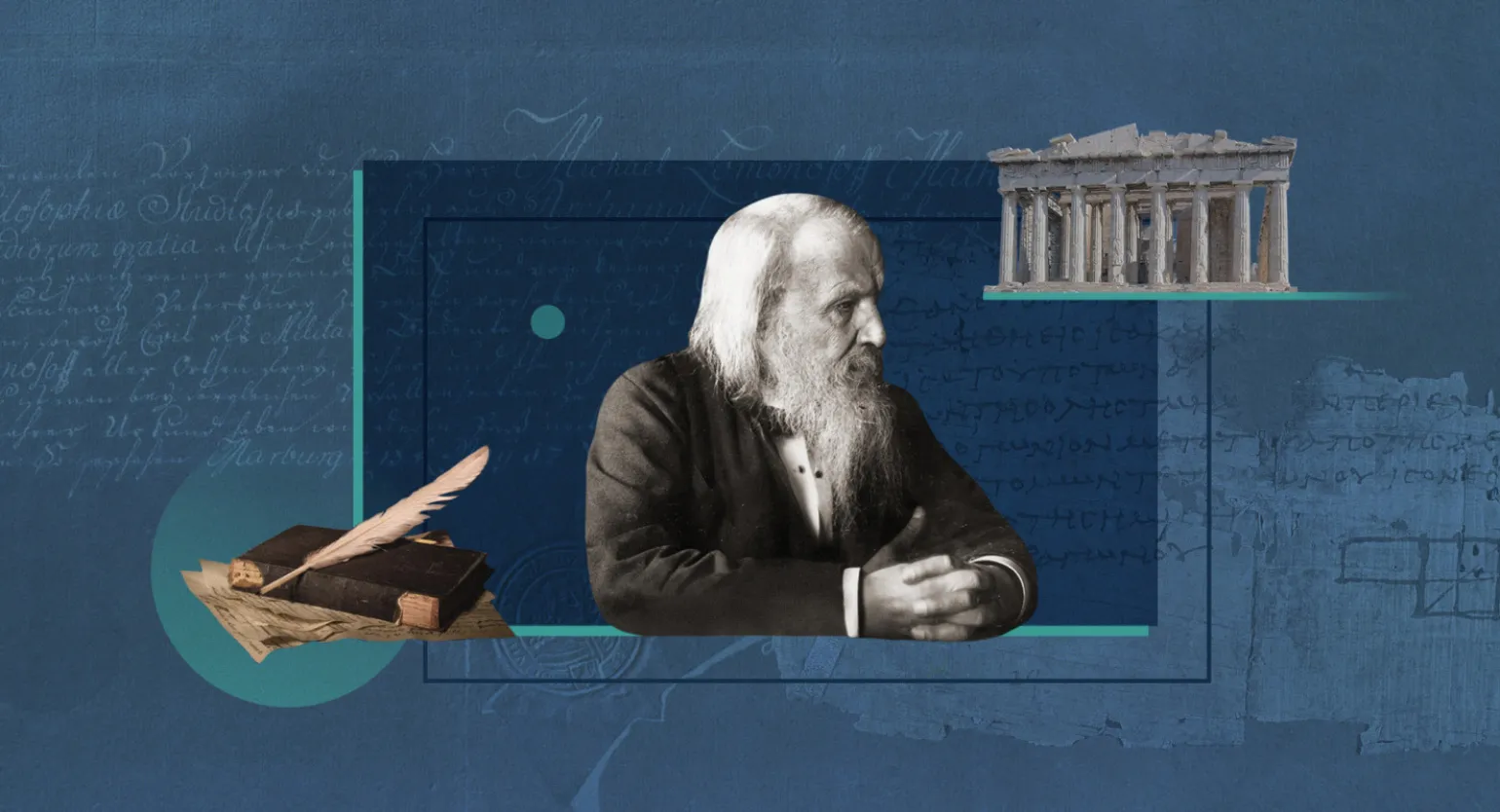
Learn moreMendeleev, an outstanding scientist with a worldwide reputation, was also famous as a talented lecturer. Traditionally, he annually opened his lecture series with a discussion of current issues of education and science. These two-hour lectures attracted students from all years and departments. The year I entered university, his lecture focused on a critique of classical education. One can only imagine the profound impact this lecture made on us, fresh from classical schools and resentful of low grades for difficult written translations from Russian into ancient languages. Mendeleev's lecture not only inspired reflection on the educational system but also marked an important step in our understanding of science and knowledge. Introductory lectures were unusual for Dmitri Mendeleev. His outstanding talent as a lecturer was fully evident in every regular lecture. He was unconvincing, and each word he spoke sounded labored, as if he were laboring to deliver them. Mendeleev often struggled to find the right expressions, sometimes growling or mooing, displacing subjects and predicates, objects, and modifiers from their usual places in the literary language, creating unusual combinations. Nevertheless, each of his lectures was perceived as the poetry of science, captivating the audience. I remember how, during one lecture on hydrogen or nitrogen, my friend Krasussky, who later became a professor of chemistry, was moved to tears by inspiration.
Mendeleev, unlike many other chemistry teachers, didn't show interest in detailed explanations of chemical reactions and the design of various instruments. He often said, "Here's a tube, a screw, a tap (he always called a tap a tap), here it flows, there it overflows, and so on. You can read about this in the textbook. The main thing is this..." After that, he would go on to explain the fundamentals and theory of the reactions taking place, emphasizing the key aspects essential to understanding chemical processes. This approach allowed students to focus on the essence of chemistry, rather than on mechanical details.
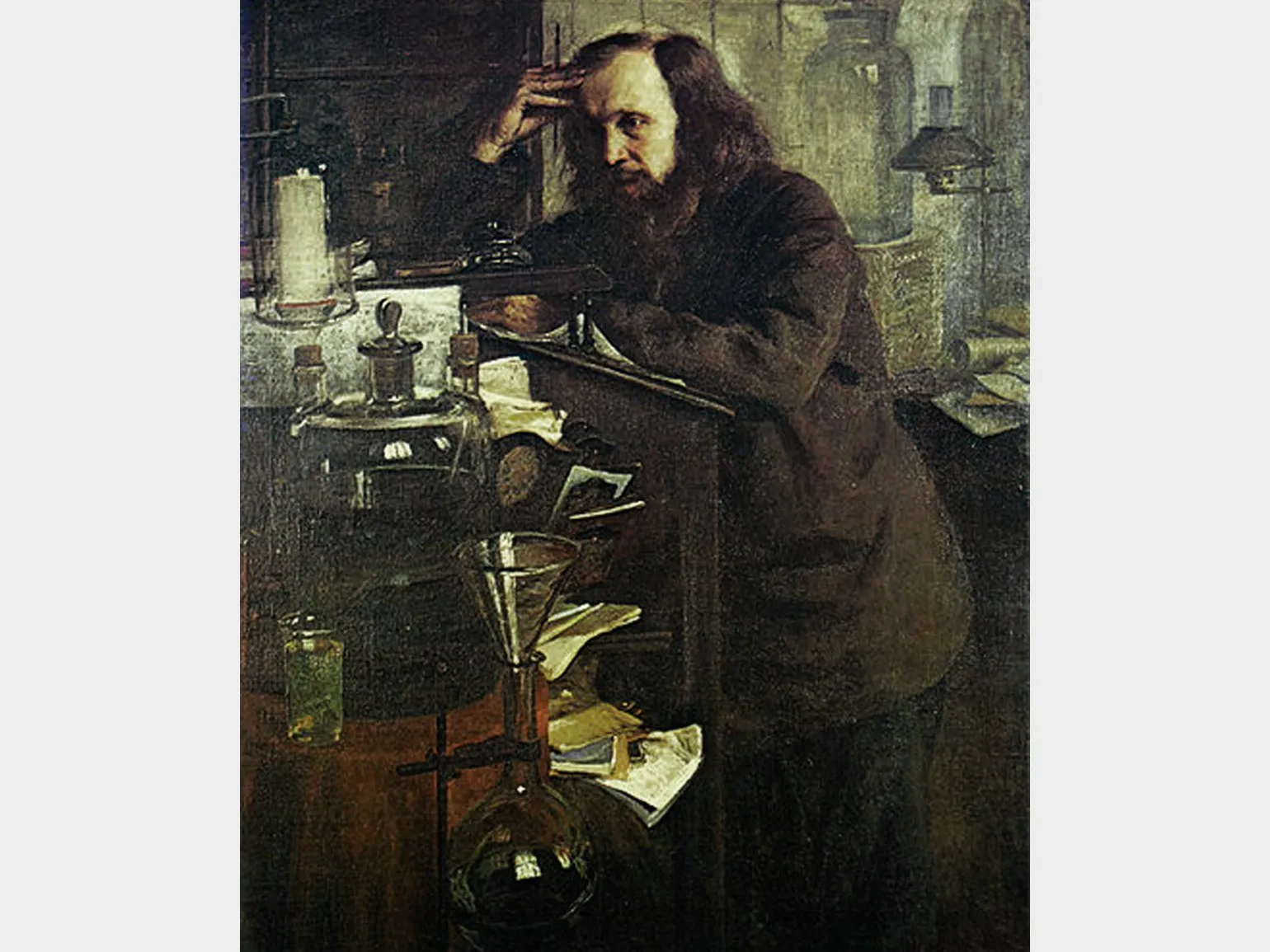
We especially appreciated the lectures during which, having completed the presentation of a theory, he would begin to open up to us the prospects for future scientific achievements. With a characteristic Siberian accent, he would say: "And perhaps someday science will show humanity..." and share his fascinating scientific fantasies. These ideas inspired us, and often after the lecture we continued to discuss and develop them in a circle of like-minded people. None of the professors I have ever heard could maintain the same level of passion for science as D. I. Mendeleev. Exams with him became a real pleasure, since he did not so much demand knowledge as strive for an understanding of the subject. With this understanding, the exam turned into a lively scientific conversation, which made the learning process deeper and more interesting.
In his memoirs, "My Life and My Contemporaries," V. A. Obolensky describes the events and personalities that left a significant mark on his life and on the history of Russia from 1869 to 1920. In two volumes of the book, the author shares personal observations and impressions of the key moments of his time, including cultural, political, and social changes. These memoirs not only reflect individual experience but also serve as a valuable historical source for a better understanding of the atmosphere and events of that period. The book was published in 2017 and is available from Kuchkovo Pole and Retrospective, making it an important contribution to Russian literature and historical science.
Context
Memories of the great Dmitri Ivanovich Mendeleev's classes at the St. Petersburg Imperial University were left by his student, Prince Vladimir Andreevich Obolensky (1869–1950). From 1887 to 1891, he studied at the Faculty of Natural Sciences, which was then called the Natural Sciences Department. These memoirs allowed us to better understand Mendeleev's teaching methods and his influence on students, shaping their scientific approach and love of the natural sciences.
Dmitri Mendeleev was an outstanding scientist and educator who left a significant mark on the history of science. He not only taught at the university, but also had experience working at a gymnasium, where he taught the younger generation. After completing his studies at the Main Pedagogical Institute, Mendeleev worked as a teacher for two years, which testifies to his deep interest in education. He viewed teaching as an important aspect of his life, not simply a concomitant of his scientific career, but as an independent and significant direction. Mendeleev believed that the transmission of knowledge and the development of thinking in students and high school students were an integral part of his mission as a scientist.
Dmitry Mendeleev thought extensively about the ideal education system and the shortcomings of the existing education system in Russia at the end of the 19th century. Obolensky's memoirs indicate that Professor Mendeleev emphasized this important topic during his inaugural lecture in 1887. Continuing his reflections, in 1899 he wrote a series of essays in which he proposed ideas for improving the educational system, both in schools and universities. Mendeleev noted that many aspects of life had changed, while forms of education remained outdated. He emphasized that the time had come to rethink and update approaches to education to meet modern requirements.
In one of his articles, Dmitry Ivanovich expressed the opinion that traditional exams are ineffective for assessing knowledge and can even be harmful in both school and university education. He argued that knowledge should be assessed through practical experiences—laboratory work and project work. This approach was certainly ahead of the times in which he lived. In his opinion, oral exams should also be organized differently: instead of formal answers to questions from exam papers, a more productive dialogue between teacher and student would reveal a true understanding of the material. The professor emphasized that the main goal of university and specialized education is to stimulate and guide students' first steps toward independent work.
Obolensky's memoirs mention that Mendeleev didn't limit himself to theoretical research alone, but actively applied his ideas in practice during his teaching.
Reading is an important part of our lives, contributing to the development of thinking and broadening our horizons. It not only helps improve vocabulary but also deepen our understanding of various topics. Books, articles, and other sources of information enrich our inner world and contribute to personal growth. It's important to find time for reading to get the most out of it. Reading develops critical thinking and allows us to analyze information, which is especially important in today's world, where a wealth of new information is emerging every day. Don't forget to pay attention to a variety of genres and topics to make the reading process more engaging and useful.
- Mendeleev: "The true work of a teacher is done exclusively by nerves"
- Prince Obolensky - about the easiest department of the universities of Tsarist Russia
- Byloe: "The work of the university is to arouse questions, to teach how to ask"
- "The large flying ball created excitement." How Tsiolkovsky taught lessons
Soft Skills for Hard Times
You will learn to manage teams, recognize colleagues' emotions, and speak in public. You will learn how to maintain productivity in stressful situations, cope better with work, and feel more confident.
Find out more