
Content:

Learn: Educational Programs Methodologist
Learn moreTrue knowledge does not arise simply from memorizing facts, images, or rules. It cannot be assumed that mental assimilation of information will lead to deep understanding. Just as a person does not become an athlete just from an abundance of food, so knowledge does not turn into wisdom just from the accumulation of information. A person can become a carrier of a large amount of information, but this does not mean they are developing critical thinking or shaping their personality. True knowledge requires active participation and practice. Only through regular practice and meaningful application of information can theoretical knowledge be transformed into practical skills and deep understanding.
We achieve true understanding of a subject through deep analysis, breaking it down into its component parts and then integrating them into a coherent picture. The mental and memory strain required to accurately and clearly convey what has been read or heard is an excellent exercise that helps develop the skills of clear perception and expression. Gradually, the student or listener learns to formulate their ideas, enriching them with their own understanding and interpretation. This active, self-directed activity makes the learning process more engaging and inspiring. Mental abilities develop, deepen, and improve, which contributes to the formation of taste, which will guide the choice of literature, the development of mental activity, and further mental practice.
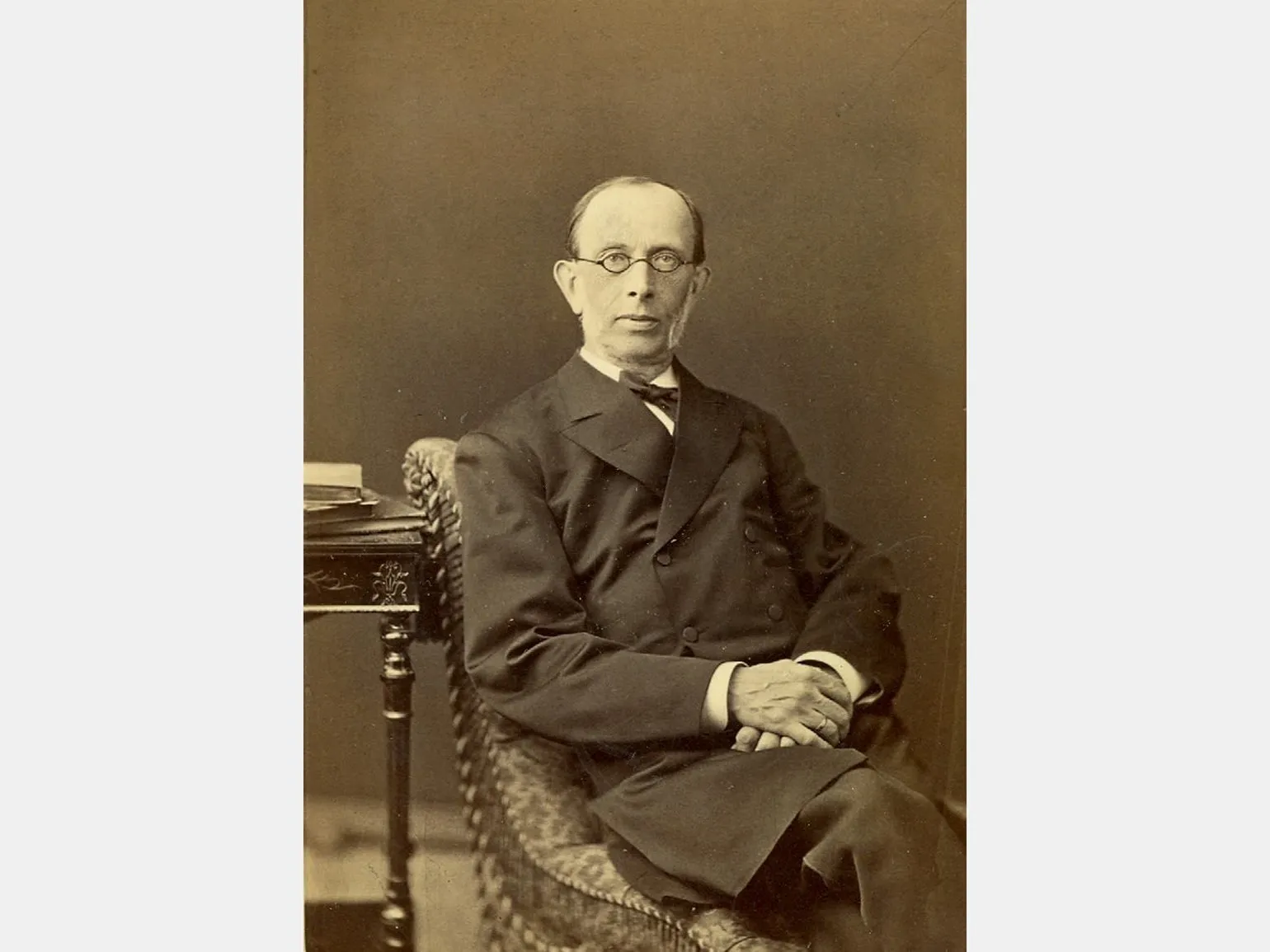
The teacher plays a key role in the educational process, monitoring the progress of students, guiding them, and assessing the development of their thinking abilities. This activity creates a lively interest and gives deep meaning to the teacher's work, establishing an intellectual and spiritual connection with each student. This approach is necessary for effective learning, since the goal of teaching is to impart genuine knowledge to young minds.
The text presented in K. P. Pobedonostsev's source on university teaching raises important questions about the quality of education and teaching methods. The article focuses on the need for high teaching standards at universities, which directly affects the formation of qualified specialists. Pobedonostsev emphasizes the importance of not only academic knowledge but also the development of critical thinking and the ability to independently analyze in students.
Effective university teaching should take into account the individual abilities and interests of students, which helps create a more productive educational environment. An important aspect is the interaction between teachers and students, which contributes to the development of scientific thinking.
Modern universities must borrow best practices from the past to adapt them to the new requirements and challenges of 21st-century education. This includes the introduction of innovative teaching methods and the active use of technology, which makes the process more interactive and accessible.
K. P. Pobedonostsev emphasizes that university education is not simply the transfer of knowledge, but also the formation of an individual capable of critically understanding reality and active participation in public life. Therefore, the priority for modern educational institutions should be the creation of conditions for the comprehensive development of students.
Context
Konstantin Petrovich Pobedonostsev (1827-1907) is a controversial figure in Russian history. On the one hand, he was an outstanding legal scholar and a classic of Russian jurisprudence. Until 1865, he held the position of professor in the Faculty of Law at the Imperial Moscow University and authored a three-volume work on civil law, based on his lectures. This work became a reference for lawyers of the late 19th and early 20th centuries. On the other hand, Pobedonostsev was a radical conservative and staunch monarchist who viewed democracy and parliamentarism as a "great lie." His views made him a symbol of extreme reaction among liberal circles, leading to assassination attempts on his life, which he narrowly escaped. Thus, Konstantin Petrovich Pobedonostsev remains a key figure in the history of Russian jurisprudence and political thought, personifying the conflict between the conservative and liberal currents of his time.
He served as a member of the State Council and, for over 20 years, advised two Russian emperors: first Alexander III and then Nicholas II. In 1880, he also became Chief Prosecutor, which effectively meant he represented the Emperor in the Holy Synod. Pobedonostsev significantly influenced state policy in various areas, including public education. He sought to introduce conservative ideology and suppress liberal ideas, exerting a significant influence on the social and cultural processes of the time.
As a teacher, Konstantin Petrovich, a hereditary academician with the legacy of his father, a professor at Moscow University, demonstrated a non-authoritarian approach, striving to develop the thinking of his students. He opposed rote memorization, emphasizing the importance of meaningful acquisition of knowledge. Pobedonostsev actively discussed methods that facilitate the effective transmission and comprehension of information. His deep interest in pedagogical issues persisted even during his period as a government official, attesting to his unique concept of education.
The quote above comes from an article written by Pobedonostsev under the pseudonym K. P. His authorship was only revealed after his death.
In this article, the author sharply criticizes the existing approach of Russian professors, which boils down to simply delivering lectures. Pobedonostsev notes that science lost its significance when professors lost their living spiritual connection with young people. He argues that a professor should not limit himself to simply arriving at a certain time to deliver a lecture to a group of students gathered in a classroom. This approach deprives the educational process of depth and interaction, which negatively affects the development of science and the intellectual growth of students.

Revised text:
Study additional materials.
Leo Tolstoy viewed university lectures as more than just an educational process. He described them as a "funny rite," emphasizing that the traditional lecture format does not always promote deep understanding of the material. Tolstoy argued that the information conveyed in such classes often remains superficial and fails to spark genuine interest in students. He called for more interactive teaching methods that could awaken curiosity and a desire to learn. This approach, according to Tolstoy, would facilitate deeper learning and develop critical thinking in young people. It is important to remember that education should not only be formal but also inspiring, so that students can become active participants in their own learning.
The teaching of the best teachers of the mid-19th century, whom the author had the privilege of meeting in his youth, inspired him to shape the educational process. These teachers provided students with a list of important readings and required clear and competent exposition of what they had read, which essentially formed the basis for writing term papers and essays. As an example, the author also cites the methodology of American professors who taught students a course in descriptive sociology, which was required for all departments. Each student was required to draw a detailed plan of their hometown or a locality they knew well. This plan had to cover various aspects of life: the status of the rich, middle, and poor classes, their economic, artistic, religious, and moral status, as well as social ties, traditions, industries, and trade. Students were required to describe the presence of factories and plants, transportation infrastructure, and compile a historical sketch of the area, taking into account its population. This approach to teaching fosters a deep understanding of social structure and economic conditions, which is an essential element of the modern educational process.
Pobedonostsev argued that writing is an important tool for developing thinking. A person first learns to accurately express the facts and concepts they have learned, and then to formulate their own views. This habit should be instilled from early childhood: “In this way, the child develops the ability to express their thoughts and ideas, and where this ability is, interest will arise, which ultimately leads to the acquisition of knowledge.”
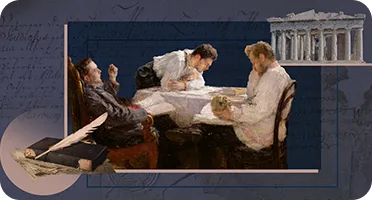
Reading is an important part of our lives. It not only develops thinking but also enriches vocabulary and helps you better understand the world around you. Regularly reading books, articles, and other materials improves concentration and memory. Moreover, reading allows you to immerse yourself in different cultures and ideas, expanding your horizons of perception.
Modern technology offers a variety of reading options: e-books, audiobooks, and specialized apps. The choice of reading material can be varied, from fiction to scientific publications. It is important to find time for reading in your daily life to get the most out of this engaging activity.
In addition to personal development, reading helps improve writing and communication skills. People who read regularly are more likely to become more confident and successful in their professional lives. So don't miss the opportunity to immerse yourself in the world of books and articles, because it is not only enjoyable but also extremely useful.
The history of education: how students studied and took exams 130 years ago
130 years ago, the education system was significantly different from today's. The educational process was strictly regulated, and the methods of teaching and assessing student knowledge had their own characteristics. The main focus was on classical subjects such as mathematics, literature, and history. Teachers used traditional methods, including lectures and oral exams, which contributed to the development of memorization and oral communication skills in students.
Exams were conducted in the form of oral questions, which allowed teachers to assess not only knowledge but also the ability to argue their point of view. Students often prepared for exams individually, which developed their independence and responsibility. Written exams also existed at that time, but they were less common and were more often used to test the assimilation of material in disciplines requiring in-depth analysis.
Thus, the educational system 130 years ago emphasized in-depth study of subjects and the development of critical thinking. These aspects remain relevant today, emphasizing the importance of quality education for the development of future specialists.
Pobedonostsev emphasized that the simple transfer of knowledge without a methodical approach and skill development is ineffective. He criticized the open lectures popular in the late 19th century, which were modeled on English ones. In his opinion, such "free readings" cannot replace a quality education, since true scientists systematically develop their ideas and understand the importance of cultivating critical thinking. He noted that even the best lectures will not yield results without proper guidance and the development of thought processes. Thus, for the successful assimilation of information, it is necessary not only to provide it but also to create conditions for deep understanding and analysis.
Reading is an important aspect of every person's life. It not only broadens horizons but also promotes the development of critical thinking. The importance of reading cannot be overstated, as it improves communication skills and enriches vocabulary. Moreover, reading books, articles, and other materials helps deepen knowledge in various fields, be it science, history, or culture. In today's world, where information is available in all formats, reading remains one of the most effective ways to gain information and develop yourself. Maintain a reading habit and discover new horizons of knowledge and inspiration.
- "Teaching was fun for me." How Tsiolkovsky became a teacher
- How populist students opened secret schools 150 years ago
- What rules were students of the Russian Empire required to follow
- How much did teachers at imperial universities earn?
Methodologist of educational programs
You with From scratch, you'll experience the full cycle of creating an educational product. Learn to design curricula for online and offline courses. You'll become a versatile specialist—able to launch your own project or find a job as a methodologist at a large company.
Find out more