Contents:
- What life was like at a prestigious school: lice and fights over sweets
- How the history teacher haunted Harry
- How Princess Diana's death affected Harry's studies
- Why Harry called the Eton dress code a "kick in the balls"
- Why the prince doesn't like reading Shakespeare
- How Harry was accused of cheating on an exam

Learn: The Profession of a Methodologist from Scratch to Pro
Learn MoreThe book by British Prince Harry, Duke of Sussex, entitled "Spare" was published on January 10 and quickly attracted the attention of readers, setting sales records in the non-fiction category. The media focused on his relationship with his family, his experiences with the death of his mother, and the reasons for moving to the United States with his wife. However, Harry also shared many fascinating stories about his studies and life at prestigious British colleges. We present the most interesting excerpts from this book.
What life was like at a prestigious school: lice and fights over sweets
During his early years, Prince Harry attended Ludgrove, a private boarding school founded to prepare boys for entrance to Eton College. Ludgrove provided a high-quality education and developed the skills necessary for further study at prestigious educational institutions.
The prince's life at school may seem ideal, but in reality, everything is quite different. The school had strict rules, and students could receive a hefty punishment for running in the corridors after lights out – a hardback Bible from the teachers. Control over the boys was exercised not only by teachers, but also by governesses, who effectively replaced their mothers and kept order. According to the Duke of Sussex, there was at least one case of head lice among the school's 100 pupils almost every week. Therefore, teachers washed the hair of the younger pupils (under 13) three times a week to prevent the spread of the disease. Such a strict regime and concern for hygiene underscore the seriousness with which health and discipline were taken in the educational process.
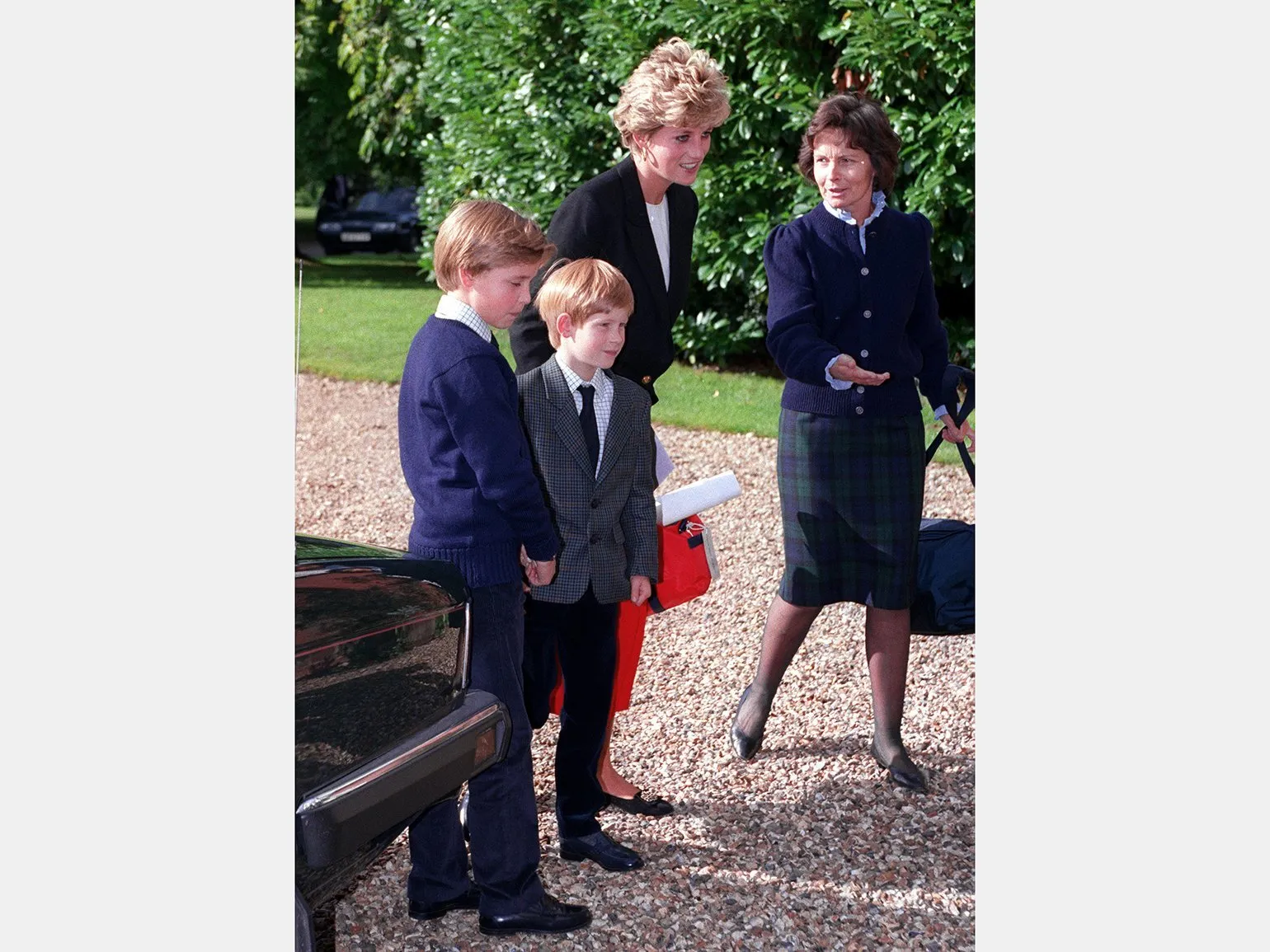
Strictness and control did not stop at the mischief of the students. For example, they often ran away to neighboring farmers' gardens to steal strawberries. This is explained by the fact that children were allowed to eat sweets only three times a week, and on other days - only on birthdays. Everyone tried to be close to the birthday boy to get the biggest piece of cake.
An interesting element gave the educational institution a unique atmosphere - there was a real psychiatric hospital next to the school.
How the history teacher did not give Harry peace
One of the most fascinating moments in Harry's story is his relationship with the history teacher, Mr. Hughes-Games. Ludgrove's students perceived this teacher as an unusual person, and he, in turn, was surprised that the British prince wasn't an excellent student in British history. This contradiction between the teacher's expectations and Harry's reality creates an interesting context for understanding their interaction.
"I don't understand, Wales. We're talking about your blood relatives—does that mean nothing to you?" "Less than nothing, sir," is one of the Duke of Sussex's typical exchanges. He admits that, despite the theoretical appeal of history, delving into the complex twists and turns of historical events was not at all interesting to him.
The standoff between the teacher and the prince continued for quite some time. At one point, Hughes-Games asked the students a question from the textbook about Charles III, referring to the 18th-century scion of the House of Stuart, not the current king. However, none of the students had prepared or read the relevant chapter. As a result, the teacher turned to Prince Harry, emphasizing his connection to the royal dynasty. Harry, who was protected at school by police officers and bodyguards, took the teacher's remark painfully, as it again reminded him of his destiny-ordained role, which caused him internal conflict and resentment. After the lesson, the prince asked his teacher to stop "embarrassing" him in front of his classmates. After all, they weren't asked about their distant ancestors and historical events with such persistence, even though many of them came from famous aristocratic families. The teacher took this request into account, but at the same time decided to give the prince a gift—a wooden ruler engraved on both sides with the names of every monarch, from Harold II Godwinson (1066) to Harry's grandmother, Queen Elizabeth II. "He said I could keep this ruler on my desk and refer to it whenever I needed to." "Thank you," Harry wrote in his memoir.
Reworked text:
Also explore:
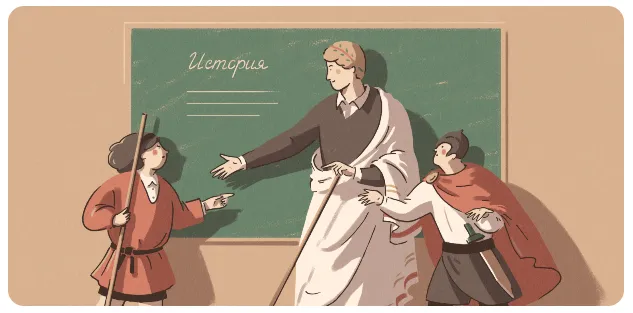
History teachers use unique methods to develop empathy in their students. Understanding historical events and the personal stories of people from the past allows students to more deeply understand the emotions and experiences of their predecessors. This fosters greater empathy and social responsibility.
Through biographical analysis, role-playing, and discussion of moral dilemmas, teachers foster empathy skills. These practices help students see the world through the eyes of others, making them more open-minded and receptive to diverse perspectives.
Integrating historical events with contemporary issues allows students to recognize the significance of history in their lives, making learning more relevant and memorable. Thus, history lessons not only inform, but also develop important life skills in students, such as empathy and critical thinking.
How Princess Diana's Death Affected Harry's Studies
At the age of 14, Harry completed his education at Ludgrove and entered a new boarding school, Eton. This educational institution is considered one of the most prestigious not only in the UK, but also in the entire world. At the time of his entry into Eton, his brother William, who currently holds the title of Prince of Wales and is heir to the throne, was already studying.
Harry realized that studying at Eton was not for him. He describes the institution as a paradise for gifted students and a purgatory for those who lack exceptional abilities, meaning himself.
Harry felt like he had made a mistake: "I told the teacher and my classmates several times that I was in the wrong class and the wrong place. In a way, I had overstepped my bounds." Promises that everything would work out and that his older brother would help were meaningless, as William didn't even pay attention to him.
Harry's studies were hampered not only by the school's low standard, but also by a number of other factors. One of the most significant factors was the psychological trauma caused by his mother's death. For a long time, Harry convinced himself that she was alive and in hiding, but he tried to avoid memories of saying goodbye to her. This, according to the prince, negatively affected his ability to remember and absorb information.
At some point, I came to understand that the basis of education is memory. A list of names, a set of numbers, mathematical formulas, beautiful poems—to absorb them, you need to download the information into the part of the brain where it is stored. However, it was this part of the brain that resisted this process. My memory had been filled with blanks since the loss of my mother, and I did not seek to change it, since memory was associated with grief. The absence of memory became a kind of consolation.
Why Harry called the Eton dress code a "kick in the balls"
The memory of his mother's funeral continued to haunt the prince, especially in the atmosphere of Eton College. Eton, according to the prince, was designed for shocking experiences. Founded in the 16th century by King Henry VI, Harry perceived the college as a temple inhabited by pilgrims and monks, a sentiment echoed by the fact that a fragment of Jesus Christ's crown of thorns was recovered for the institution. Harry's perspective is spot on: the college's traditions have long been similar to those of monks. While the rules changed over time, the commitment to formality remained. Students wore black tailcoats, waistcoats, white collared shirts, ties, striped trousers, and heavy black shoes. For Harry, this strict dress code felt not only formal but also mournful, symbolizing the eternal grief for its founder, Henry VI, whom the prince calls his great-great-great-great-great-grandfather in his memoirs.
Harry shares his feelings about the loss in his book. He admits that while he regrets the loss of the man and the suffering this loss has brought to his loved ones, he does not want to wallow in grief for days to come. For any boy, attending endless funerals is a difficult experience, and for a boy who has recently lost his mother, it is especially painful.
Why the Prince Doesn't Like to Read Shakespeare
Prince Harry's father, Prince Charles, now King Charles III, was concerned that his son showed no interest in reading. Unlike his son, Prince Charles is a devoted fan of Shakespeare. Harry notes: "I realized how much it upset my father that I didn't appreciate classical literature, and I tried to fix that. I picked up Hamlet and, after reading about a lonely prince possessed by his father's ghost and witnessing his mother's affection for the usurper, I realized it wasn't for me. I closed the book and refused to continue reading."
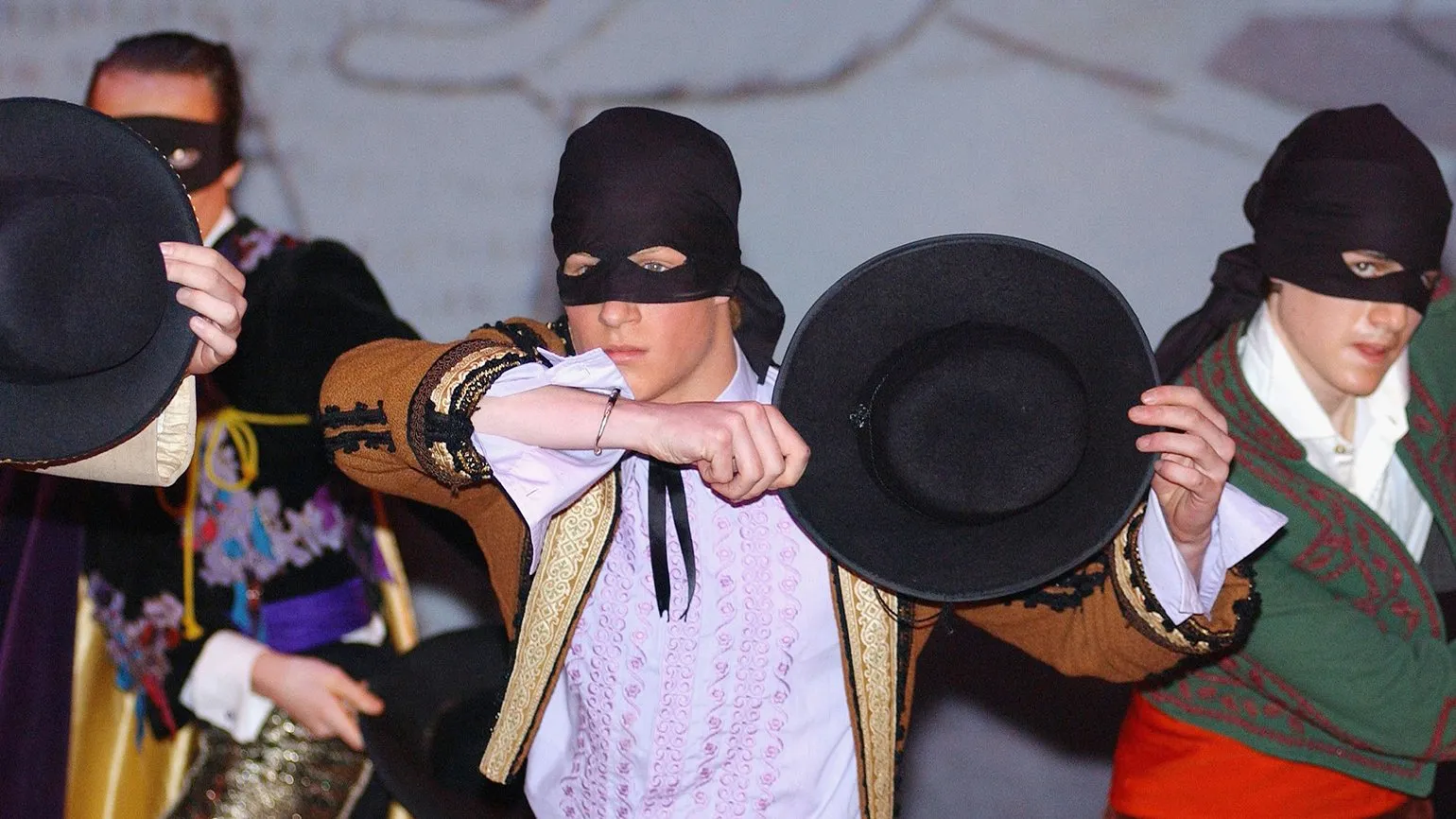
Shakespeare occupies an important place in Prince Harry's biography. This is due to the fact that he was not allowed to leave college until he took part in a theatrical production. In the play "Much Ado About Nothing," Harry played the role of Conrad. He quickly found a common language with his character, because as a public figure, he is constantly forced to play certain roles. However, during the premiere, an interesting incident occurred: when the audience laughed, Harry's father remained quiet, but during serious moments, he laughed. Surprisingly, Prince Charles's father, the Duke of Edinburgh, exhibited similar behavior during a performance in which his son was participating. This incident highlights not only the significant role theatre played in Harry's life, but also the connection between generations in their appreciation of art.
How Harry Was Accused of Cheating an Exam
Although Harry's school years are often associated with difficulties, in reality he managed to find moments filled with joy and typical teenage experiences. He could relax at school, as paparazzi were not allowed onto the premises, despite their attempts to capture the lives of the princes. Harry shares a memory of an incident at the Royal Military Academy, when a journalist attempted to enter the grounds with a fake bomb. This event highlights how serious the security was to ensure the safety of the royal grandson.
From time to time, news about Harry's school life appeared in the media, albeit without photographs. While at Eton, his classmates gave him a short haircut, which, to put it mildly, was not a success. This became public knowledge, and soon the tabloid The Mirror published the headline "Skinhead Harry" on its front page. Since journalists did not have real photos, they used computer graphics, creating a fake image in which the prince appeared completely bald. A similar incident occurred a few weeks later, when Harry injured his finger during a sports activity. The same tabloid reported on this with the frightening headline "Harry's Accident." Such events highlight how the press exploits even minor incidents in the lives of royals to create sensational news.
Harry claims that before the tragic death of his mother, there was an unspoken agreement between the royal family and the press that allowed the children to receive an education in peace. However, according to the prince, after the Paris tragedy this agreement lost its force. From that moment on, journalists began to actively interfere in the lives of the royal heirs, taking an interest in every aspect of their existence.
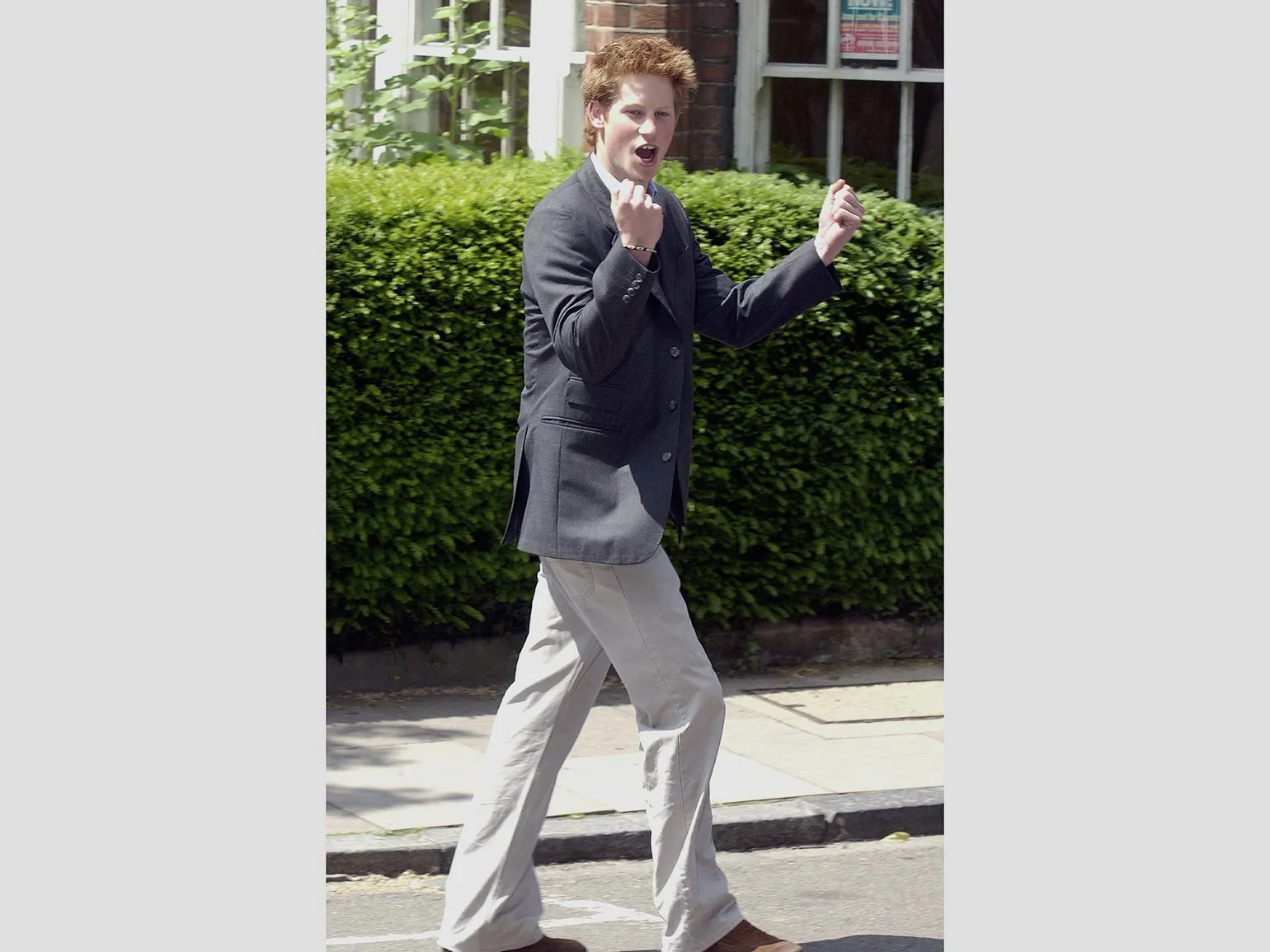
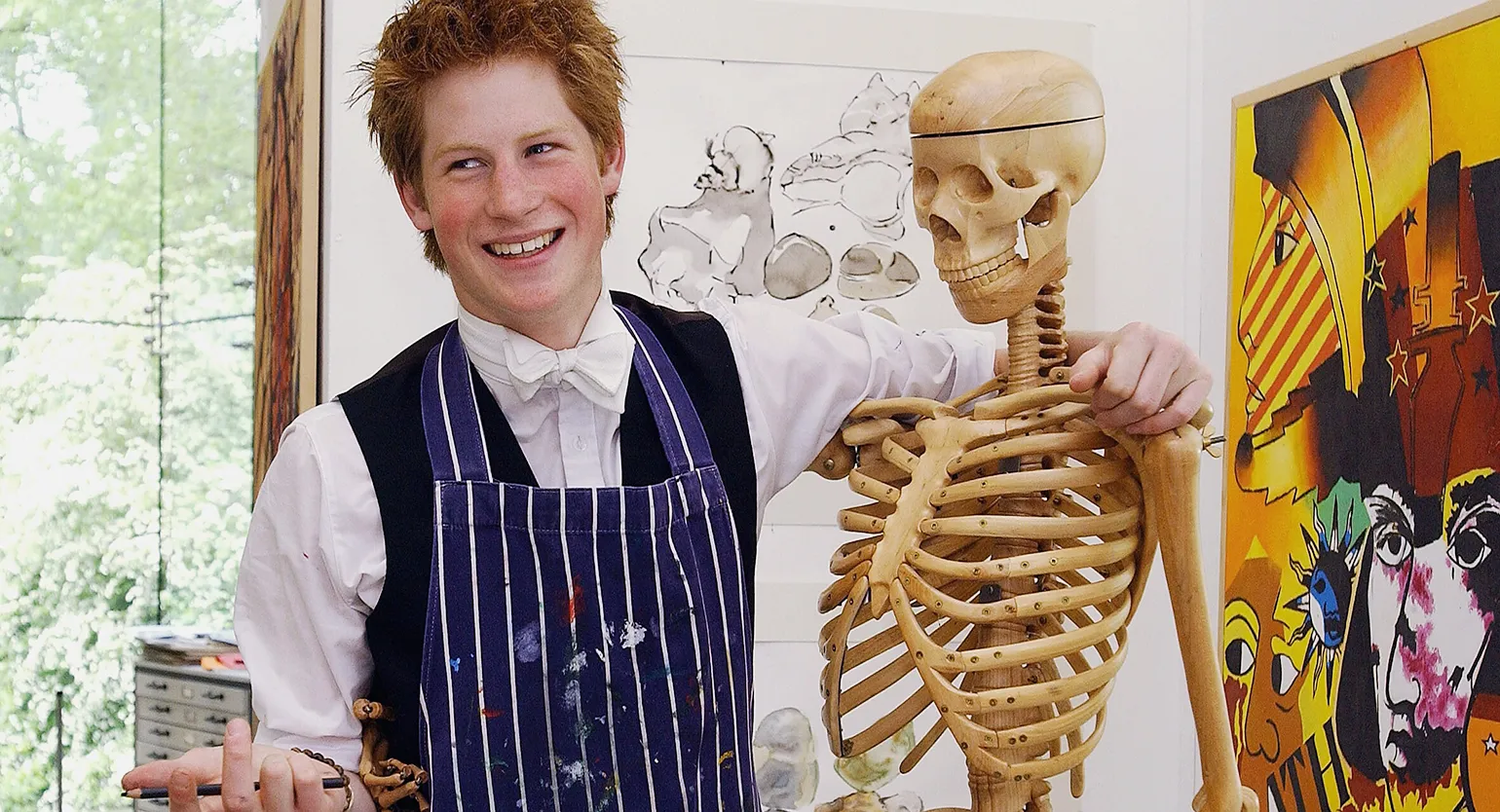
Graduation from Eton, seemingly a joyous occasion, turned into scandal. In 2004, a year after Harry's graduation, his art teacher sued the school, claiming she had been fired without cause. She claimed the head of the department had helped the prince complete a drawing for an exam and asked her to write an accompanying text for it. Students were required to relate their projects to works by famous artists. The teacher also claimed to have a recording of a conversation with Harry in which he thanked her for her help. Furthermore, she claimed that Harry was one of the weakest students at Eton, and teachers often had to "stretch" his grades. The incident became a topic of discussion and attracted public attention, raising questions about the fairness of assessment and the role of support in the educational process.
It all ended in a truce: the teacher received compensation for her dismissal, the recording of the conversation with the student was deemed unethical, and the examination board dropped the charges of cheating against Harry. In his memoirs, the prince expresses bewilderment: how could someone cheat on a drawing exam? However, according to him, the palace press office did not allow him to present his version of events. It reminds one of the joke: "We later found the spoons, but the bad taste remained." After this incident, Harry seems to have forever been branded as a dim-witted and unsuccessful student. If he only had to play a role in a Shakespearean play for three days, the stigma of an unlucky prince will stay with him for the rest of his life.
Read also:
- "I want to see character in handwriting": how and where Queen Elizabeth II studied
- Prince Obolensky on exams: "It was a lottery with a minimal chance of winning"
- The past: how Herzen took his final exams at university
- How tutors appeared in English universities in the Middle Ages
The Methodologist profession from scratch to PRO
You will improve your skills in developing curricula for online and offline courses. You will master modern pedagogical practices, structure your experience and become a more sought-after specialist.
Find out more