
Contents:
- Types of Methodologists: Why Are They So Different?
- Methodologist in Kindergarten
- Methodologist in School and the School System
- Methodologist in College
- Methodologist in University
- Methodologist in Organizations for Advanced Training and Retraining of Personnel
- Methodologist in EdTech (Online Schools)
- Methodologist in Corporate Training

Learn: The Profession of a Methodologist from Scratch to Advanced
Learn MoreA post containing a link to an interview with an EdTech methodologist was published on a now-banned social network, in which we discussed the essence of the profession. In the comments, one reader representing an academic environment sharply responded to our discussion, declaring, "These are not methodologists!" At first glance, such a remark might seem insignificant, but it raises an important issue about the differences in methodological work in various educational sectors. Methodologists are often unaware of the specific work of their colleagues in other fields, which highlights the need for deeper interaction and exchange of experience between specialists. Understanding these differences and characteristics is important for improving the quality of education and the effectiveness of methodological work.
We decided to examine the characteristics of various methodologists to avoid misunderstandings, such as when someone claims, "These aren't real methodologists! We're the right kind, and everyone else isn't!" To this end, we interviewed representatives of various branches of this profession to understand the essence of their work and professional approaches.
This article will provide information on the most important aspects of this topic. We will cover key points that will help you gain a deeper understanding of the subject matter. You will be able to familiarize yourself with the basic principles, as well as practical recommendations and examples. This will help you better navigate the issue and apply the acquired knowledge in practice.
- What do "classical" methodologists do in kindergartens, schools, colleges and universities;
- What is the work of "new" methodologists - from the world of EdTech and corporate training.
Types of methodologists: why are they so different?
There are two main categories of methodologists: traditional and modern. Traditional methodologists operate in the fields of pre-school, school and formal vocational education, including universities, colleges and centers for continuing education. Their main task is to organize the educational process in accordance with the legislation of the Russian Federation, including the Law "On Education in the Russian Federation" and other regulatory acts, such as federal state educational standards (FSES). They ensure that educational programs comply with established requirements, which is the foundation for high-quality and effective learning.
Working with documents in an educational organization has important legal consequences. Incorrectly completed or missing required documents can lead to the loss of a license or accreditation, as well as penalties following inspections by Rosobrnadzor. Ensuring the accuracy and completeness of documents is key to complying with the law and maintaining the reputation of an educational institution. It is important to keep documents up-to-date and promptly respond to changes in legislation to avoid negative consequences.
This position requires a higher pedagogical education and at least two years of relevant experience. The specialist's responsibilities are clearly defined in the "Qualification Characteristics of Education Worker Positions" section of the Unified Qualification Handbook of Managerial, Specialist, and Employee Positions. Experience and qualifications play a key role in successfully completing tasks related to the educational process and student development.
With the advent of e-learning and the active development of online schools, new methodologists have emerged in the EdTech sector. These specialists are responsible for designing training courses and corporate programs that help companies equip employees with essential skills. In a modern business environment, organizations are faced with the need to regularly update the knowledge of their teams, making the role of methodologists especially crucial. They develop effective educational solutions that take into account the specifics of distance learning and the needs of employers.
Online platforms and corporate training departments primarily focus on informal education, which, from a legal perspective, is considered supplementary. As a result, the development and design of curricula in these institutions are significantly less stringent than in traditional educational institutions such as schools, colleges, and universities. However, this area of education faces unique challenges. First, it is necessary to engage learners and, second, to ensure the high effectiveness of the educational process. The success of online platforms depends on their financial performance, while in corporate training, it depends on employee development, which directly impacts business results. Therefore, the importance of high-quality content and interactive learning methods in these formats cannot be underestimated. In this area, there is significant freedom in curriculum development, opening up new opportunities for educators. However, achieving real results and ensuring an engaging learning process requires significant effort. This task is addressed by methodologists who apply the principles of instructional design—a relatively new and dynamically developing field. It is important to note that using ready-made solutions from formal education in this context is inappropriate. This is because learning objectives, as well as conditions and timelines, can vary significantly, and the topics of educational programs often touch on new areas not yet covered by traditional education. Therefore, it is becoming increasingly important to develop adaptive and innovative approaches to teaching to effectively meet the needs of students and ensure their engagement.

Reading is an important aspect of human development. It helps to broaden horizons, improve vocabulary, and increase the level of knowledge. Books, articles, and blogs are sources of information that can enrich our inner world and help us solve life's problems. Reading also promotes critical thinking and analytical skills. Regular reading also has a positive effect on emotional well-being, helping us cope with stress and improve our overall well-being. Don't miss the opportunity to immerse yourself in the world of literature and discover new horizons.
Course Design Models: How to Choose the Best One for Your Learning
Choosing the right course design model is key to successful learning. There are many models, each with its own characteristics and advantages. Assessing the needs of your audience, learning objectives, and content will help you determine the most effective approach. Let's look at the main course design models to simplify the selection process.
The first model worth considering is the ADDIE model, which includes the stages of analysis, design, development, implementation, and evaluation. It provides a systematic approach to creating effective learning programs. The second model is the SAM model, which emphasizes an iterative development process and allows for changes as needed.
Also popular is the Rapid Prototyping model, which allows for the rapid creation of course prototypes and testing them with the target audience. This allows for prompt changes and improvements. The Dick and Carey model focuses on the connection between objectives, learning activities, and assessment, making it useful for a structured design approach.
Finally, the 4C/ID (Four-Component Instructional Design) model helps develop problem-oriented courses that promote deeper learning.
The choice of a course design model depends on many factors, including the specific content, characteristics of the target audience, and available resources. Choosing the right model will help create effective and engaging learning programs that meet student needs and achieve their objectives.
For educational methodologists, especially in EdTech, it is helpful to have a teaching background, but in reality, people with a variety of professional experiences can work in this role. A key factor is the ability to achieve educational results. Educational programs in EdTech and the corporate sector are viewed as products, so product-based approaches are used in their development. Since this field is still in its infancy, universal standards for methodologists have not yet been developed. Depending on the specific project and team composition, a methodologist may also serve as a producer, marketer, copywriter, and UX designer. This makes the EdTech methodologist profession multifunctional and dynamic, which is essential for the successful development of educational technologies. Different categories of methodologists have their own specific characteristics. For example, experience as a methodologist in a kindergarten may not be sufficiently relevant for a similar position at a university. To move into EdTech, it is necessary to study its principles and approaches. At the same time, new methodologists are gradually being introduced into formal education. Universities are actively developing online programs, including not only short courses but also full-fledged educational programs. To successfully compete with EdTech, it's important for them to be familiar with modern methods and technological innovations. A methodologist plays a key role in the educational sector, providing methodological support and developing the educational process. In preschool education, methodologists develop and implement educational programs, as well as train teachers in modern approaches and methods of working with children. In school education, their task is to create conditions for effective learning, develop curricula and programs, and support teachers in their professional development. In higher education, methodologists oversee the development of educational materials, program accreditation, and the implementation of innovative technologies in teaching. In the corporate sector, methodologists organize and conduct trainings, develop curricula aimed at improving employee skills, and analyze their effectiveness. Thus, the methodologist serves as a link between educational institutions and modern requirements for the quality of education in various segments.
Methodologist in a kindergarten
Methodologists are not present in all kindergartens, since this depends on whether the institution carries out educational activities or simply supervises children in the absence of parents. However, all state and licensed private kindergartens carry out educational work aimed at the development of preschoolers and their preparation for entering first grade. This implies the presence of methodological tasks that cover a wide range of areas, including the development of cognitive, social, and emotional skills in children. It is important that such institutions employ qualified methodologists capable of implementing effective educational programs and providing an individual approach to each child.
Methodologists of preschool educational institutions (PEI) play a key role in organizing the educational process. They develop programs and methodological recommendations that help create a comfortable and nurturing environment for children. Methodologists support educators by training them in modern approaches and methods of working with children. Their task is to adapt educational programs to the needs of children, taking into account their age and psychological characteristics. They also monitor and analyze learning outcomes, which helps improve the quality of education in preschools. An important part of the work of methodologists is interaction with parents, which helps to create a unified space for the child's development.
- together with teachers, they develop an educational program;
- maintain methodological documentation and monitor before scheduled inspections that all paperwork is correctly completed (including the educational program of the preschool educational institution, the academic calendar, and the work programs of teachers);
- organize training for teaching staff - improving their qualifications;
- draw up a schedule of classes and various events;
- provide methodological support to teachers - attend classes and give feedback, help resolve educational and educational issues;
- ensure that the kindergarten has the necessary teaching aids, technical means, educational toys, etc.
Once a week we hold working meetings with teachers, where we discuss plans for the upcoming week. At these meetings, we identify the challenges the staff faces, identify their needs, and discuss how they want to organize their work, as well as what activities they plan to hold with children. Ksenia Terekhova, a methodologist at State Budgetary Preschool Educational Institution No. 30 in the Petrogradsky District of St. Petersburg, emphasizes that she also organizes the teaching staff's participation in professional competitions and other significant events. She actively manages the kindergarten's social media, posting about the school's activities. In addition, Ksenia, like the teachers, devotes a lot of time to communicating with parents, which helps create trusting relationships and improve interaction between the family and the kindergarten.



In small kindergartens, there may be no separate position for a methodologist, and in this case, methodological tasks are assigned to educators. However, even in institutions where there is a dedicated staff member responsible for methodological work, their position is not always designated as a methodologist. In some cases, these functions are performed by a senior teacher or deputy head of educational and training work.
Large kindergartens with around ten groups typically employ an expanded staff. Such an institution may employ a deputy director for educational and upbringing work, a senior teacher, and a methodologist. These specialists typically share administrative and managerial responsibilities and also provide methodological support for the educational process. This helps effectively organize the kindergarten's work and improve the quality of children's education and training.
A Methodologist in School and the School System
A methodologist position in a comprehensive school is rare. Methodologists typically work in private schools and gymnasiums, where their role is more pronounced. In public educational institutions, methodological functions are most often performed by the deputy director for educational and upbringing work or educational and methodological work. This is due to the fact that in public schools, the emphasis is on an integrated approach to managing the educational process, and methodological tasks are integrated into the responsibilities of the administrative staff. It is important to note that the role of a methodologist, despite its rarity in public schools, remains significant for improving the quality of education and implementing modern teaching technologies.
The specialist's functions may vary depending on the educational institution. However, the main areas of his work usually remain unchanged.
- ensure that the entire educational system of the school complies with the requirements of the Federal State Educational Standard (and make changes when updating standards);
- develop the main educational program, curricula and schedule, assist teachers in drawing up work programs for subjects;
- monitor the correct preparation of reporting documents;
- organize advanced training and certification of teachers;
- attend lessons and give feedback to teachers;
- summarize and transfer best pedagogical experience to teachers;
- organize and support the final certification of graduates.



The deputy director of a school often coordinates the work of methodological associations, where teachers of the same subject exchange experiences and share effective teaching methods. To strengthen this process, various internal school structures can be created, such as professional teaching communities, problem-solving groups, and mentoring systems. These associations contribute to improving the quality of education and developing teaching excellence. Lyudmila Lyalina, Director of Batyrevskaya Secondary School No. 2 in the Chuvash Republic, shared her experience. Our school has organized a professional learning community, where each member of the staff actively works to improve their competencies. Each teacher is responsible for the results of their work. We have developed an internal training program, within which, throughout the school year, teachers study and implement two key pedagogical strategies: formative assessment and meaningful reading. This allows us not only to improve the quality of education but also to adapt to modern requirements, which undoubtedly has a positive impact on student learning outcomes. Methodological work in the school system is not limited to methodologists in the schools themselves. As part of the national "Education" project, Centers for Continuous Professional Development of Teachers (CPPDTS) have been established in 85 regions of Russia, staffed by regional methodologists. According to Tatyana Shcherbakova, an expert at the Federal Methodological Center of the Academy of the Ministry of Education of Russia, the main objectives of these centers can be classified into three areas. This emphasizes the importance of a systematic approach to improving teacher qualifications and implementing advanced methods in the educational process, which, in turn, contributes to improving the quality of education in the country. Organizational and preparatory activities. Regional methodologists analyze educational and methodological work in schools and develop proposals for improving its effectiveness, providing in-person and remote consultations for teachers. Information support. The staff of the Center for Scientific and Practical Education (CPE) organize professional conferences, seminars, and webinars (for example, on the introduction of new Federal State Educational Standards), and compile various informational and methodological materials for teachers.
Regional methodologists actively collaborate with those responsible for methodological work in schools, as noted by Tatyana Shcherbakova. This collaboration is aimed at effectively addressing challenges in the educational process and improving the quality of learning.
In school education, methodologists play a crucial role, performing specific tasks. For example, staff at the Federal Institute for Pedagogical Measurements are developing assessment materials (AMM) for state final certification, including the Unified State Exam (USE) and the Basic State Exam (BSE). Moscow City Pedagogical University houses the Institute of Content, Methods, and Technologies of Education, where methodologists oversee the Moscow Electronic School (MES) system. They are responsible for populating this platform with content, developing methodological recommendations for digital didactics, and organizing courses and events for teachers. These efforts are aimed at improving the quality of education and implementing modern teaching methods, which in turn facilitates more effective exam preparation for students.
A new qualification category for teachers—teacher-methodologist—was recently introduced. In this article, we will examine in detail what this category includes and how it impacts the educational process. A methodologist plays a key role in the development and implementation of effective teaching methods, as well as in improving the quality of educational standards.
Methodologist in College
Unlike a school, a college has a dedicated methodologist, and sometimes several. This is because a school typically develops only one educational program for each level of education: primary, basic general, and secondary general. In a college, the number of programs directly depends on the areas of professional training, and if the college is general rather than highly specialized, the amount of work for methodologists becomes significant. This makes the presence of several methodologists necessary for the effective organization of the educational process and the development of high-quality educational content.
In secondary vocational education organizations (SVO), disciplines are often taught by specialists without a pedagogical education. These may be experts from various industries or graduates of specialized universities, such as technical or medical ones. Therefore, they require significant methodological support, which underscores the importance of developing effective educational programs and resources to improve the quality of teaching in secondary vocational education. Providing pedagogical training and methodological support for such teachers is key to student success and increasing their competitiveness in the labor market. Educational programs in colleges, like those in universities, are developed with an emphasis on the professional preparation of future graduates. When developing these programs, it is necessary to consider not only the requirements of Federal State Educational Standards (FSES), but also professional standards and qualification reference books for relevant specialties and professions. It is also important to consider the actual needs of the labor market and the competencies that employers expect from their employees. Currently, the state is faced with the task of maximally integrating the sphere of secondary vocational education (SVE) with practical activities in order to provide graduates with relevant knowledge and skills that meet the requirements of the modern market.

To increase visibility in search engines and improve perception text, I will rework it, preserving the main topic and adding the necessary keywords.
—
Read carefully:
The importance of quality content in modern online resources cannot be overestimated. Each element of the text must be carefully thought out and structured to attract user attention and improve search engine rankings. Don't forget that the uniqueness and informativeness of materials play a key role in SEO. Text optimization includes the use of relevant keywords that match the queries of your target audience. This will help not only improve your position in search results but also increase reader engagement. Closely monitor the relevance of information and update the content to keep it fresh and interesting for users.
Secondary vocational education in Russia: 5 key facts
Secondary vocational education (SVE) in Russia plays an important role in the training of qualified specialists. This level of education provides students with the practical skills and theoretical knowledge necessary for a successful career. Let's consider five important facts about secondary vocational education in Russia.
First, secondary vocational education covers a wide range of specialties, from technical to creative, allowing students to choose a direction that matches their interests and abilities. Educational institutions offering secondary vocational education include technical schools, colleges, and vocational schools.
Second, the employment rate of secondary vocational education graduates is quite high. Many employers prefer specialists with secondary vocational education who possess practical skills and experience. This makes secondary vocational education an attractive choice for young people seeking rapid integration into the labor market.
Third, secondary vocational education in Russia is accessible to various categories of citizens. There is the opportunity to receive a free education on a competitive basis, as well as programs for training at the expense of employers.
Fourth, secondary vocational education is actively adapting to the demands of the labor market. Curricula and programs are updated in line with modern trends and business needs, providing graduates with relevant knowledge and skills.
Finally, secondary vocational education in Russia opens the door to further education. Graduates of secondary vocational education can continue their studies at higher education institutions, which allows them to obtain bachelor's and master's degrees in their chosen field.
Thus, secondary vocational education in Russia represents an important stage in education and careers, providing young people with the necessary knowledge and skills for a successful professional life.
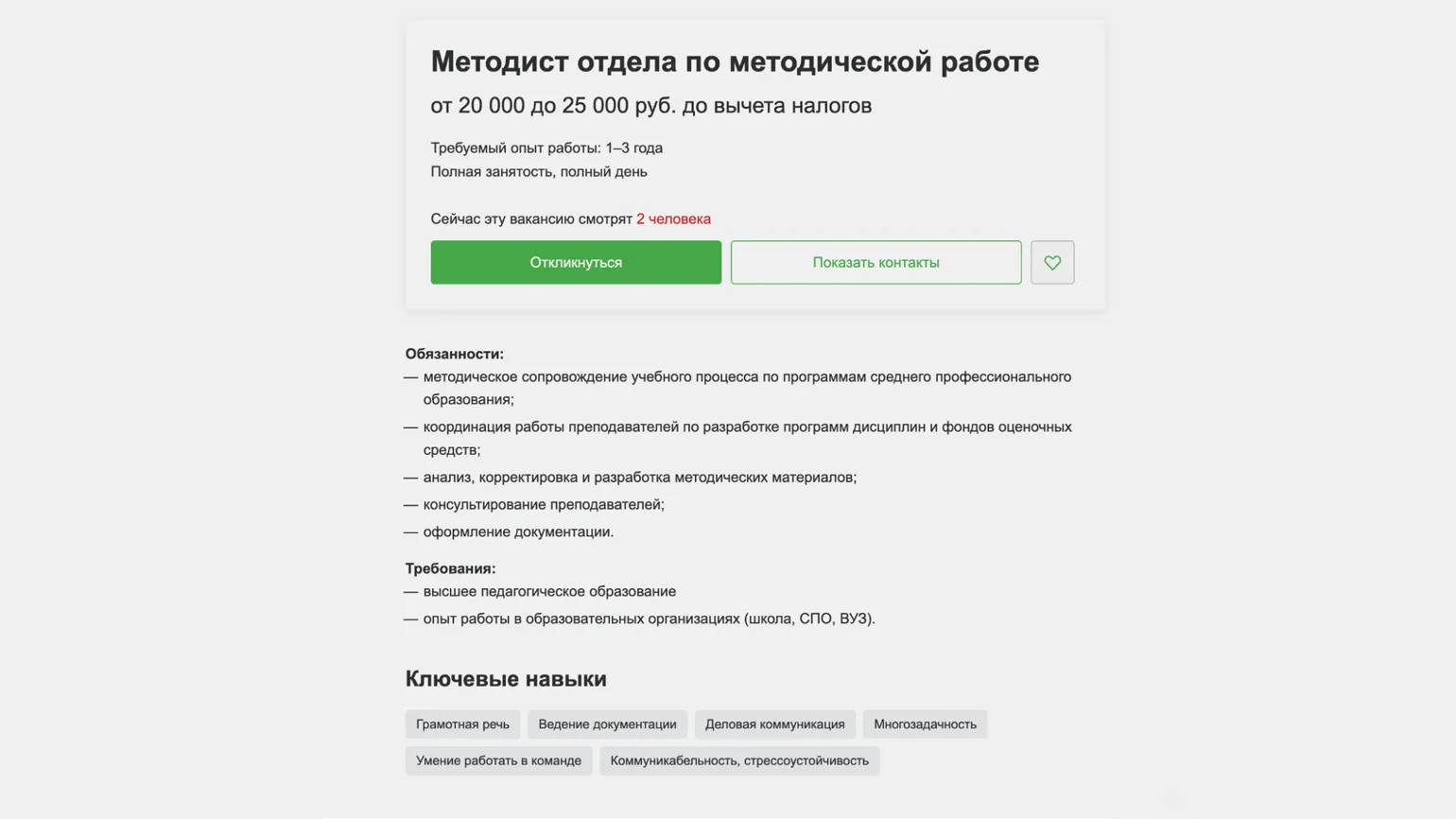
Methodological work in the secondary vocational education (SVE) system plays a key role in ensuring the quality of education. Olga Kurbanova, senior methodologist at the Tomsk Industrial and Humanitarian College, shares her experience organizing this work. Most colleges have a specialized unit, often called an information and methodological center (IMC), although other names may also be encountered, such as a department of educational projects. This unit is headed by a director who manages a team of methodologists and a senior methodologist. Effective methodological work contributes to the improvement of the educational process and the improvement of teachers' qualifications, which in turn has a positive effect on the preparation of students for professional work.


Olga explained that if there are several methodologists, there are two approaches to organizing their work. The first option is that each methodologist is assigned a comprehensive group of specialties (UGS) that encompasses related areas of training. For example, the UGS for "Clinical Medicine" could include such specialties as "General Medicine," "Laboratory Diagnostics," "Medical Optics," and others. This approach allows for more focused and effective methodological work within related disciplines, thereby improving the quality of training for medical specialists.
The second approach involves dividing responsibilities between methodologists in different areas of work. One methodologist can assume responsibility for preparing the curriculum, developing mock-ups of work programs, and assessment materials. They also advise faculty on the development of work programs for disciplines and modules, check them for compliance with federal state educational standards (FSES), and develop the core professional educational program, ensuring complete documentation. Meanwhile, another methodologist focuses on methodological support: they develop teaching materials for students, assist faculty in choosing teaching methods and formats, and organize professional development courses for faculty. This approach allows for more efficient workload distribution and improves the quality of the educational process.
College methodologists play a key role in the educational process. They organize seminars for teachers, which facilitates professional development and the exchange of experience. Methodologists oversee the work of cyclical methodological commissions, which unite teachers of the same field, which helps improve the quality of teaching and implement new methods. In addition, they attend and analyze classes, which helps identify the strengths and weaknesses of teaching. Methodologists also prepare teachers and vocational training instructors for participation in professional skills competitions, which stimulates their professional growth and development. Thus, the work of methodologists contributes not only to improving the quality of education but also to the development of the pedagogical potential of the college.
Methodologist at the University
In higher education, methodological work is organized differently than in schools and colleges. University methodology emphasizes scientific research, innovative approaches to teaching, and the professional development of teachers. This allows for the creation of more in-depth and specialized educational programs that meet the modern demands of the labor market. Unlike school and college education, higher education requires active student participation in the learning process, which promotes critical thinking and independence. University faculty more often use modern technologies and methods, making learning more interactive and effective. At the federal level, a system of Educational and Methodological Associations (EMA) operates in higher education. These organizations are under the supervision of the Ministry of Education and Science and are responsible for specific broad groups of specialties and areas. EMAs include representatives of leading universities and specialized associations that actively participate in the development of federal state educational standards (FSES) for undergraduate, specialist, and master's degree programs. EMAs also formulate proposals for optimizing the lists of specialties and areas of training in higher education, and conducts reviews of educational literature and assessment tools used for midterm and final student assessments. These activities contribute to improving the quality of education and ensuring that curricula are aligned with modern labor market requirements.
Each university has an educational and methodological department (EMD) or its equivalent. The EMD's primary function is to provide organizational and document management support for the educational process. The EMD is responsible for preparing documentation for licensing and accreditation of educational programs, as well as for monitoring the quality of education against state requirements. Furthermore, the EMD is responsible for scheduling and distributing workload among faculty members, and overseeing examination sessions and final assessments. In some universities, these responsibilities can be distributed among several departments, which allows for a more efficient organization of the educational process and maintaining its high standards.


At universities, the person responsible for educational and methodological The assistant dean for academic affairs, as well as the deputy dean for academic affairs, perform a key function in departments and faculties. They organize the creation and distribution of methodological materials and teaching aids and coordinate the implementation of best pedagogical practices among faculty. These specialists oversee the availability of educational documentation, including course syllabi, calculation of the academic year's teaching load, lists of diploma project topics, and much more. This is a leadership position, and educational institutions may also employ methodological specialists. These employees are classified as educational support personnel (ESP) and perform routine tasks, as well as provide advice to students on specific issues, such as passing lab work and tests.

Also read useful materials that will help you deeper Understand the topic and expand your knowledge. Our articles contain up-to-date information, tips, and practical recommendations that will be useful for both beginners and experienced professionals. Don't miss the opportunity to learn about new ideas and trends in your field.
Designing higher education based on the ADDIE model requires a thorough approach that takes into account the Federal State Educational Standards (FSES). The ADDIE model includes five key stages: analysis, design, development, implementation, and evaluation. During the analysis stage, it is necessary to determine student needs and labor market requirements to ensure that the educational program meets current demands.
The design stage should consider the goals and learning outcomes that correspond to the FSES. During the development stage, educational materials and resources are created that meet established standards. Implementation includes the program implementation, and evaluation allows you to determine the effectiveness of the training and make any necessary adjustments.
Thus, using the ADDIE model in higher education design ensures a systematic approach to creating high-quality educational programs that meet modern requirements and standards.
Higher education institutions traditionally lack dedicated methodologists responsible for developing educational programs. This was reported by Sergey Zhdanov, head of the higher education methodologists team at Skillbox and former head of the Educational Program Design Center at Far Eastern Federal University. In his opinion, these tasks are performed by faculty members who create working programs for their academic disciplines, as well as by educational program directors who develop curricula for individual areas of study. Additionally, department heads, deans, and institute directors are responsible for program portfolios in their departments, faculties, and institutes. This approach to educational program development can lead to a lack of specialized attention to the quality and relevance of curricula, which in turn affects the quality of education and the competitiveness of graduates in the labor market.
Of course, I will help you with editing the text. Please provide the text you wish to change.
Advisory bodies and councils are active within the university community, playing a vital role in the development and updating of curricula. At some institutions, course syllabi are discussed at departmental meetings, while at other institutes, directors gather leading faculty to exchange views on new courses and course content updates. This approach contributes to improving the quality of education and increasing the relevance of the educational process, which is an important aspect for the successful preparation of students.
Some universities are creating specialized units to address methodological issues. These units can launch new educational programs, update existing courses, provide advanced training for faculty, and organize project sessions for staff from different departments working on the same training program. They can also introduce online courses into curricula and develop continuing professional education programs.
Some universities have begun to create new positions for methodologists, including instructional designers and consultants. These specialists are involved in the design and content of educational programs and courses. It is important to note that such positions do not always require a traditional pedagogical education. As Sergey emphasizes, specialists with technical, natural science, and humanities education successfully work in this field. The development of such roles promotes the introduction of innovative approaches to the educational process, which makes training more effective and adapted to modern requirements.
Methodologist in organizations for advanced training and retraining of personnel
Methodological work in the field of continuing professional education (CPE) involves a significant amount of paperwork, which makes it one of the most "paper-intensive" professions. As part of this activity, training centers aimed at advanced training and professional retraining operate. These organizations can be both public and private. The main purpose of employees applying to such centers is to obtain a certificate of completion of training, which is important for employee certification and may entail other legally significant consequences. Thus, formal additional vocational education plays a key role in the professional development of specialists and ensuring their compliance with modern labor market requirements.
All employees of enterprises, including entrepreneurs and their employees, are required to undergo regular occupational safety training. Advanced training is an essential requirement for employees working in two key categories. This not only helps ensure safe working conditions but also contributes to improving overall work efficiency and reducing the number of workplace injuries. Regular occupational safety training allows employees to stay informed about current standards and regulations, which is the key to their safety and health in the workplace.
- working in certain industries (e.g., education, medicine, construction);
- responsible for fire, economic, environmental safety, and so on.
The content of educational programs, the procedure for their implementation, forms of certification, and other important aspects of this area are regulated by numerous regulatory documents. In particular, there is a list of standard professional programs that are approved by federal bodies such as the Ministry of Emergency Situations, the Ministry of Health, and Rostekhnadzor. These documents ensure that educational standards comply with modern requirements and regulate the quality of specialist training. It is important to take into account that compliance with these standards contributes to the effective training and professional development of employees in various fields.


A methodologist plays a key role in the field of additional professional education, similar to a lawyer. They must take into account professional standards and Federal State Educational Standards (FSES) for professional retraining programs. They must also monitor qualification requirements for educational programs and teaching materials, as well as stay abreast of changes in industry legislation. At continuing professional education centers, the methodologist performs the following functions: develops curricula, ensures that educational processes comply with current requirements and standards, coordinates the work of teachers, and monitors the quality of instruction. Thus, the methodologist is the link between educational institutions and legislative norms, ensuring high standards of education and professional growth.
- checks the documents of potential students - whether they have the right to receive additional professional education in accordance with the Law "On Education in the Russian Federation";
- maintains personal files of students and registers of issued documents on qualifications, issues certificates of advanced training and diplomas of professional retraining and issues them;
- works with the federal information system "Federal Register of Information on Educational Documents" (FIS FRDO), where data on students' qualifications are entered;
- brings educational programs into compliance with standards;
- creates a curriculum and distributes the workload of teachers.
Methodologist in EdTech (online schools)
We have approached the role of methodologists involved in the development Online courses in various areas of knowledge, skills, and competencies. In this field, methodologists may be called by various names: methodologist, instructional designer, learning architect, curriculum designer, online course developer, or scriptwriter. Their job is to create effective and engaging content that helps learners acquire new knowledge and skills. Methodologists consider the needs of the target audience and utilize modern technologies to enhance the educational process. In this field, creativity plays a more significant role than formal education, and paperwork is virtually absent. This is due to the fact that the content of educational programs is not yet regulated by the state, although such plans exist in the future. However, the creativity of methodologists is not completely free and is subject to certain rules and algorithms. Currently, these rules are not controlled by either the state or market standards, although the market is already showing a desire to standardize working methods.


The main task of a methodologist in the field EdTech involves the complete design of an educational course. The course development process can be divided into several key stages. First, it's necessary to analyze the target audience's needs and define learning objectives. Then, the course structure is developed, including the selection of topics, formats, and teaching methods. The next stage involves creating learning materials and resources to help students master the material. After this, it's important to test the course to identify any shortcomings and make adjustments. The final stage is course implementation and its continuous improvement based on participant feedback. This approach ensures the creation of a high-quality and effective educational product that meets modern requirements.
- research the needs of the target audience;
- define the planned learning outcomes;
- develop a plan and logical structure of the curriculum;
- select lesson formats;
- prepare educational materials and specific assignments;
- analyze student feedback to improve the course, and work on these improvements.
In small projects, all tasks can be performed by one methodologist, who collaborates with an expert - a bearer of the necessary knowledge and experience to convey to students. In large online schools, a team works on each course, consisting not only of a methodologist, but also of a producer, designer, camera operators/editors, and technical support staff. This cooperation allows us to create a higher quality educational product, ensuring a high level of training and support for students.

Read also:
There are many myths about the work of online course methodologists, which often mislead both potential employees, and students. Let's address the main misconceptions.
The first myth is that a methodologist only develops educational materials. In fact, their work also includes analyzing the educational process, interacting with teachers and students, and continuously improving courses.
The second myth claims that a methodologist has no teaching experience. In fact, many methodologists have teaching experience and understand student needs well.
The third myth suggests that a methodologist's work does not require technical skills. However, in an online learning environment, it is important to understand the platforms and tools for creating and managing courses.
The fourth myth says that a methodologist works only at the course development stage. In fact, their work continues throughout the entire educational process, including monitoring results and making changes.
The fifth myth implies that a methodologist does not interact with students. In reality, they actively collect feedback and take into account students' suggestions to improve the educational process.
The sixth myth claims that a methodologist is not involved in assessment. However, they can develop assessment criteria and participate in the student certification process.
The seventh myth says that a methodologist's work is limited to one topic. In practice, methodologists can work on several projects simultaneously, covering various areas of knowledge.
The eighth myth suggests that a methodologist's work has no career prospects. But in fact, this profession can open doors to leadership positions and the management of educational projects.
The ninth myth claims that a methodologist has no influence on course content. In fact, they play a key role in shaping educational programs and ensuring their compliance with modern requirements.
The tenth myth says that a methodologist's work is uninteresting and routine. In reality, this is a dynamic profession that requires creativity and continuous learning.
By dispelling myths about the work of online course methodologists, we can better understand their role in the educational process and appreciate the importance of their contribution to the development of online education.
The subject experts with whom methodologists collaborate often lack teaching experience and are unable to structure their practical knowledge into educational programs. The expert provides information on the topic, while the methodologist develops a course based on it. Therefore, methodologists do not necessarily need to be specialists in a specific field, but they do need to be familiar with the principles and algorithms of educational course development. This knowledge allows them to effectively transform the practical experience of experts into accessible and understandable educational content, which contributes to high-quality learning.
The methodologist plays a key role in the educational process, serving as a link between expert knowledge and people seeking to gain it. Anna Krylova, Skillbox Educational Programs Methodologist, emphasizes that a methodologist doesn't simply convey information, but transforms it into an accessible and understandable format for students. They are responsible for the quality of the content, ensuring it is digestible. This role can be compared to the baking process: the methodologist acts as an oven, helping transform the raw dough presented by the expert into a finished dish for the students—guests ready to enjoy the result. Thus, the methodologist ensures effective learning, making knowledge accessible and understandable to everyone. An online course methodologist differs significantly from a traditional methodologist in that they focus on metrics analysis. It's important to consider two aspects: the effectiveness of the training, and the success of the course as a commercial product. Therefore, for online course methodologists, data analysis is becoming a key tool for optimizing the learning process and increasing the appeal of the course to the target audience.
Corporate Training Methodologist
Modern HR departments of large companies often have specialized departments responsible for training and development. Large corporations even create corporate universities that develop training programs for both in-person training and online courses. These programs are aimed at employees and, in some cases, external participants. For example, when introducing new equipment or changing internal regulations, training is required so that employees can adapt to the new working conditions. Further training is also often needed when, for example, sales managers are not achieving the desired results. In such cases, training programs become an important tool for improving professional skills and overall team effectiveness.
According to a study by Digital Learning and Equio, 64% of the 352 companies surveyed that provide employee training develop their own courses and programs. This indicates the presence of specialized positions within organizations, such as a methodologist, instructional designer, or online learning developer. Companies may also engage freelance methodologists to create educational materials. This approach allows organizations to tailor training to their unique needs and improve employee skills more effectively.

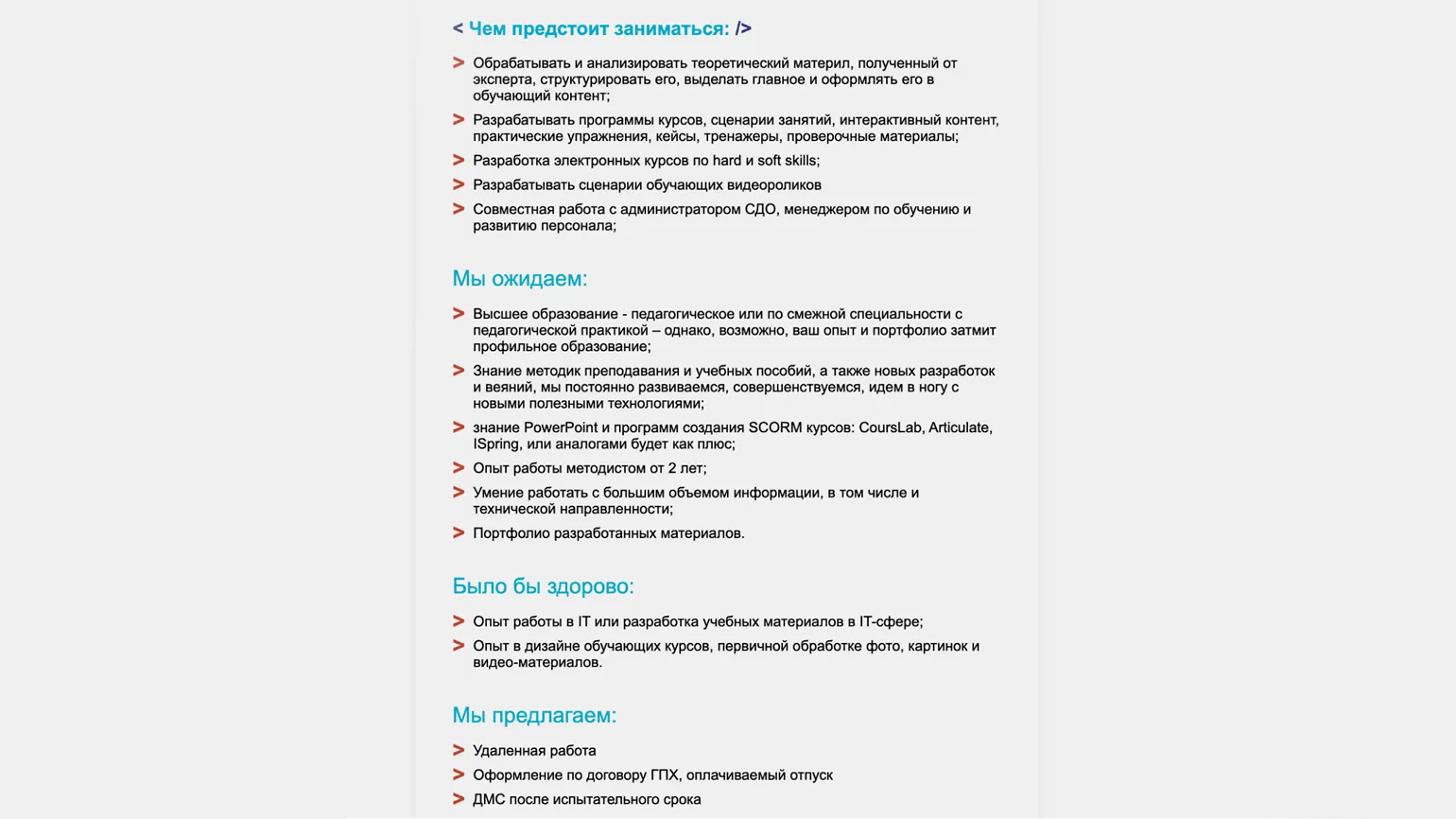

In the EdTech sphere, the roles and functions of specialists involved in employee training often overlap. Research shows that course developers often create video materials and graphics themselves, as well as administer learning platforms. Furthermore, T&D specialists—managers responsible for organizing corporate training—often serve as methodologists. In corporate training, multi-functional specialists are particularly valuable, capable of both developing a course concept and implementing it independently, as well as effectively organizing and overseeing the learning process. This highlights the importance of flexibility and multi-skills in modern employee training.

Read also:
Modern professions in the field of education are becoming increasingly diverse and in demand. With the rapid development of technology and changes in educational approaches, new roles are helping to improve the learning process and adapt to the demands of the times. These professions include:
A teacher-researcher analyzes and implements innovative teaching methods and studies the effectiveness of educational programs. A digital learning specialist develops and implements programs using modern technologies, such as online courses and multimedia resources. An educational program curator is responsible for organizing and coordinating the educational process, ensuring the quality of education and student support.
An inclusion consultant helps educational institutions create an accessible environment for all students, including those with special needs. An adult learning specialist focuses on developing programs for the training and professional development of adults, taking into account their needs and interests. A soft skills trainer teaches students the skills necessary for successful communication and teamwork.
An educational data analyst uses statistical methods to evaluate learning outcomes and optimize educational processes. An educational project management specialist is responsible for the implementation of new initiatives and programs, ensuring their successful completion. Finally, a blogger or content manager in the education sector creates and distributes educational content, popularizing knowledge and drawing attention to current issues in the field of education.
These professions not only contribute to the development of the education system but also help adapt to new challenges associated with technological changes and the needs of society.
In the field of educational program development, the methodological tasks in online schools and the corporate sector have many similarities. However, there are some differences that are worth considering. Online schools focus on individual learning and flexibility, offering a variety of content and interaction formats. The corporate sector, in turn, emphasizes increasing employee productivity and introducing specific skills necessary to achieve business goals. Effective training requires considering both the general principles and the unique needs of each of these sectors.
Corporate methodologists not only develop educational content but also independently assemble courses using specialized services such as iSpring and Articulate. These tools help create high-quality educational programs. It's important to be proficient with digital technologies and constantly master new tools. Unlike online schools, where video courses and more complex formats like asynchronous online learning are popular, most corporate training specialists prefer simpler formats, such as slide-based courses. This allows for the effective transfer of knowledge and skills, while adapting training to employee needs.
Tamara Burleva, a training specialist with experience in both EdTech and corporate training, identifies three key differences between these fields. These differences help better understand the specifics and approaches used in each. It's important to consider these aspects to optimize learning processes and increase training effectiveness.
A corporate training specialist must be fluent in corporate vocabulary. Employees often use specialized slang and terms to describe work processes and phenomena. Training materials must include these expressions, otherwise, course participants may not understand the content. The methodologist also interacts with the business client, who is an important stakeholder at all stages of course development. The client's expectations and goals may differ from and sometimes even conflict with the educational objectives. Therefore, the task of the corporate methodologist is to find the optimal balance between business interests, employee needs, and educational goals.
The third difference mentioned by Tamara Burleva concerns the specifics of working with student motivation. Corporate training should benefit the business, but employees are not always eager to learn new skills. Therefore, the corporate methodologist faces challenges related to overcoming resistance, indifference, and low motivation among participants when developing a course. Effective work in this area is key to the successful implementation of training programs and employee development.
Methodologists in online schools and corporate training developers strive to combine the accumulated practices of various companies and create uniform standards based on them. An example is the creation of the "L&D Academy" by corporate universities of companies such as Gazprom Neft, Rosatom, and SIBUR, which aims to implement best practices in training. The Digital Learning community is also significantly working to identify and disseminate new approaches. In this field, similar to the EdTech sector, standards continue to evolve, opening up opportunities for new professionals in this field. It is important to note that the adaptation and implementation of best practices in corporate training contribute to improving the efficiency and quality of education in organizations.
The Methodologist profession from scratch to PRO
You will improve your skills in developing curricula for online and offline courses. Master modern teaching practices, structure your experience, and become a more sought-after specialist.
Find out more