Contents:
Learn: Profession Drone and Robot Programmer
Learn moreIn 2027, the educational process has undergone significant changes. Children spend no more than 30% of their time in school. The learning system has changed: classes are no longer formed by age, but instead, each student has the opportunity to develop along an individual educational trajectory at their own pace. The role of teachers has also transformed, as the bulk of the educational process is now performed by robots. The artificial intelligence embedded in these robots can accurately identify each child's interests and suggest appropriate tasks. It also analyzes students' personal characteristics and adapts their communication style to each individual. Although teachers have not disappeared, their roles have changed: they focus on developing skills that are currently inaccessible to machines, such as communication, creativity, and lateral thinking. Thus, the education system of 2027 combines advanced technology and a human approach, creating optimal conditions for the comprehensive development of children.
In 2017, Sir Anthony Seldon, educator and Vice-President of the University of Buckingham, described the future of education, focusing on the impact of artificial intelligence. In his book, "The Fourth Revolution in Education: Will Artificial Intelligence Liberate or Infantilize Humanity?", he raised important questions about how technology will transform the educational process. While the full implementation of innovations such as robot assistants is still a long way off, they have already begun to appear in educational institutions. This is not limited to advanced countries like Japan. This summer, the company Promobot reported in an interview with Gazeta.ru that there are more than four thousand robot teachers worldwide, including 326 in Russia. This growth demonstrates that educational technologies are becoming an integral part of the modern school.
Let's define terminology: what are robots?
Robots should not be confused with computer programs. Artificial intelligence, although a cutting-edge technology, is not a robot in itself. Intelligent voice bots that answer service calls using the human voice and perform cold calling functions are often referred to as robots. However, this definition is not entirely accurate, since such systems are only software, not physical devices. Understanding the differences between these concepts is important for the correct interpretation of technologies and their application in the modern world.
Robots are mechanisms with a tangible shell, capable of interacting with the environment and performing specific tasks. According to the international standard ISO 8373:2012 "Robots and robotic devices," a robot is defined as an actuator that is programmable in two or more axes and has a certain degree of autonomy. These devices can move within their working environment and effectively perform their assigned functions. Robots are used in various fields, including industry, medicine, and service, making them an important element of modern technological progress.
In education, the use of digital assistants with basic social functions that interact with students makes sense in physical rather than virtual form. This is because interaction with physical robots becomes more engaging for children. Research conducted with Dutch fifth-grade students confirmed that robots are significantly more attractive to children compared to virtual assistants. Physical devices are better able to hold students' attention, which can contribute to more effective learning and engagement.
This phenomenon affects not only children. The University of St. Gallen in Switzerland operates a robot called Lexi, a chatbot that performs simple tasks. For example, you can ask Lexi to search for information online. While this function is also performed by voice assistants on smartphones, interacting with a "physical" robot is much more engaging. Such devices are not always anthropomorphic; they can look like snowmen or stuffed animals, adding an element of engagement to the interaction. Researchers identify three key qualities of social robots that distinguish them from virtual agents. First, social robots have a physical body, allowing them to interact with the world around them and people on a deeper level. Second, they are capable of learning and adapting, enabling them to improve their interaction skills and understanding of users. Third, social robots can express emotions and support social interactions, making them more closely reminiscent of human communication. These features make social robots unique and sought after in a variety of fields, including healthcare, education, and entertainment.
- They can be used for learning that requires interaction with the physical world.
- They are capable of demonstrating the social behavior necessary for learning.
- People typically learn better by interacting with physically embodied robots than with virtual agents.
Why do we need robots if we have people?
Artificial intelligence can perform certain tasks significantly more efficiently than people.
The scientific literature highlights the key benefits of using robots for educational purposes. The main advantages of robots in education are their ability to increase student engagement, provide interactive and hands-on skills, and improve understanding of complex concepts. Robots can adapt to the individual needs of students, offering personalized approaches to learning. Furthermore, the use of robotics in the educational process promotes the development of critical thinking and creativity in students. These aspects make robots indispensable assistants in modern education, helping students better master material and prepare for future careers.
Robots are capable of endlessly performing the same action without fatigue. Even the most responsive person quickly becomes tired of repetitive explanations, while a robot can continue the task without any emotional investment. This makes robots ideal assistants in situations that require constant repetition of the same information. Their use reduces the time and effort required to complete routine tasks, which in turn increases overall work efficiency.
A Finnish school has introduced a robot assistant named Elias. This innovative tool is effectively used in foreign language lessons. Elias is able to recognize the knowledge level of each student and adapt learning tasks to suit individual needs. This approach helps students master the language more effectively, improving the quality of learning and increasing motivation for learning. Incorporating a robot into the educational process opens new horizons for teaching and promotes the development of technology in educational institutions. Children have the opportunity to practice spoken language without the fear of making mistakes. The robot Elias, developed by Utelias Technologies, has a friendly character, which allows children to feel comfortable during learning. He does not laugh at mistakes, but patiently repeats words, which promotes better assimilation of the material. This approach makes learning more effective and enjoyable for children. Robots with software are not subject to character changes. They do not exhibit such human emotions as bad mood, irritation, discontent, or emotional burnout. This is especially relevant when working with children who experience learning difficulties. The use of robots in educational processes can significantly facilitate learning, providing a stable and supportive atmosphere for students.Falling asleep in class and becoming distracted from the learning process becomes more difficult if there's an interesting robot in the room, reminiscent of devices from science fiction films. Research by scientists at the University of Lincoln has shown that the presence of robots in an educational environment can significantly increase student motivation. For children, this is an exciting and unusual novelty. At the beginning of the experiment, the students were indeed distracted by the robot, but over time they adapted and focused on their studies. The introduction of robotics into the educational process opens new horizons for learning and engaging children.
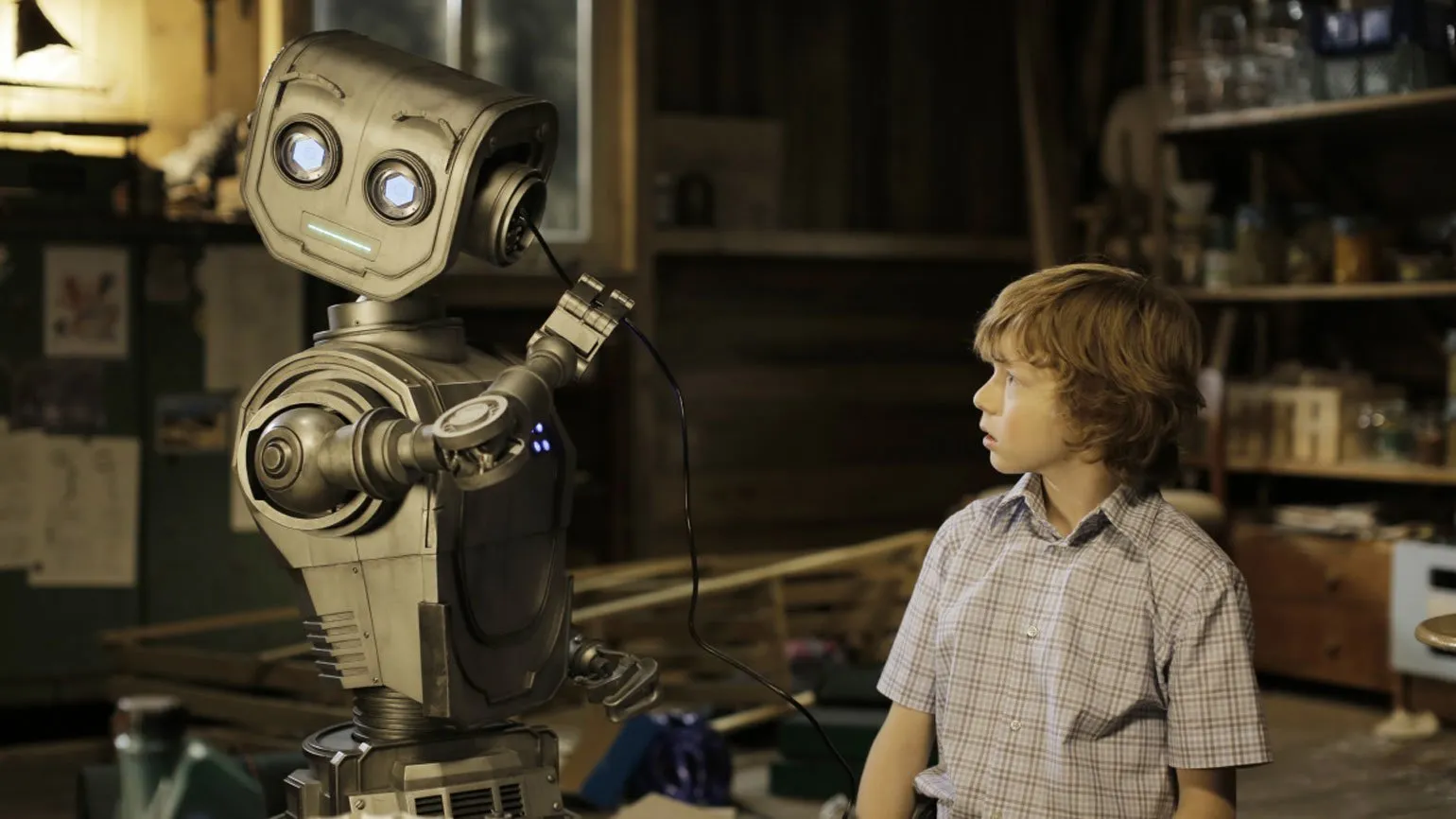
A study by scientists from the University of Plymouth has shown that robots can master pedagogical techniques in just three hours. This discovery highlights the potential of using robotics in the educational process, where such devices can effectively support teachers in their work. The introduction of robots into education can lead to improved quality of education and optimization of the learning process.
Tony Belpham, Professor in the School of Engineering, Computing, and Mathematics at the University of Plymouth in England, argues that social robots can become an important part of educational infrastructure, just like paper, a board, or a tablet. According to him, robots can free up valuable time for teachers, allowing them to focus on their strengths – providing a comprehensive, empathetic, and effective educational experience. The introduction of social robots into the educational process can significantly improve the quality of learning and enhance interactions between teachers and students.
Robots may be perceived as “toys” in countries with affordable education, but in regions where schools are a luxury, they can be a game changer. According to the World Bank, there are currently approximately 85 million educators worldwide. By 2030, an additional 68.8 million teachers will be needed for primary and secondary schools alone to ensure equal access to education for all children. Additionally, an additional 32 million specialists are needed to improve childcare. While robots cannot replace human interaction and support, they can provide children with the necessary knowledge and skills, expanding educational opportunities in regions with shortages of qualified teachers. This underscores the importance of integrating technology into educational processes, which can play a key role in the fight for accessible and high-quality education for all. Children have the opportunity to develop spoken language skills without the fear of making mistakes. The robot, created by Utelias Technologies, provides a friendly environment where mistakes are not frowned upon. It does not laugh at mistakes and is willing to repeat words repeatedly, which makes practicing more comfortable. Johanna Hemminki, the company's co-founder, noted that such support allows children to learn and improve their language skills in a relaxed environment.
What are robots?
Social robots in education can be classified into four types depending on their functionality. Each of these types performs specific tasks that help improve the educational process and interaction between students and teachers.
Robots in educational classrooms provide a unique opportunity for the practical application of knowledge and skills in programming. A striking example is the Timeo robot from Switzerland, which allows children to learn programming and immediately see the results of their efforts. These educational robots do not necessarily have an anthropomorphic or toy appearance; their main purpose is to be technical assistants. Timeo, for example, is a compact white box capable of movement. Children interact with it by formulating specific tasks, rather than perceiving it as a living being. This approach promotes the development of logical thinking and problem-solving skills, which are important aspects of modern education.
Modern educational robots are capable of delivering lectures using pre-prepared content from qualified teachers and methodologists. They can test students' knowledge through quizzes and track their progress throughout the learning process. For example, Professor Jürgen Handke of the University of Marburg in Germany used a robot assistant named Yuki in his linguistics lectures. This robot not only assigned students assignments but also monitored their completion time, allowing the teacher to focus on interacting with individual students, providing them with the necessary assistance and support. The use of such technologies in education opens new horizons for personalized learning and increased efficiency.
Previously, I had to constantly move around the classroom and manually advance slides in presentations. Now a robot performs this task, which makes my work much easier, he shared with Deutsche Welle.
Students' opinions on the usefulness of the robot Yuki were divided. For some, its presence was a stimulus for learning, while others believed that computer software alone would be sufficient, and the robot's physical presence was unnecessary. Yuki required training and had to be moved around on a cart. She could only perform simple tasks and lacked the ability to move independently.
The robot tutor plays an important role in the educational process, facilitating student engagement and maintaining motivation. This tool is especially effective in individualized learning settings, where special attention to each student's needs is required. The use of technology in education allows for a personalized approach that promotes deeper learning and increases interest in learning.
Scientists have long been developing devices that can support children with mental and physical disabilities, as well as ordinary children who experience learning difficulties. Such robot tutors can become indispensable assistants, as they possess boundless patience, a calm reaction to mistakes, and the ability to endlessly repeat educational material. To create a friendly image, many tutor robots are designed as toys, facilitating children's comfortable interaction with technology. The first robot created for this purpose appeared in Japan in 2000 and was called IROBI. These innovative technologies open up new horizons in education and support for children, allowing them to develop in a convenient and unobtrusive format. A tutor robot and a companion robot have different functions and purposes. Researcher Paul Baxter from the University of Lincoln (UK) emphasizes that the main difference is the level of error tolerance. A tutor robot must provide accurate information and avoid errors, as its purpose is to teach and assist students in mastering the material. In contrast, a companion robot can make mistakes, allowing real students to learn from these mistakes and draw conclusions. A companion robot acts as a "digital classmate" or "co-learner," facilitating a more natural learning process and interaction between students. Baxter argues that the role of co-learner is preferable for a robot. In his research, he focused on co-learners known as NAOs. These robots are manufactured in France and are used in various fields around the world. This video, in English, demonstrates the use of robots in the educational process in the United States. It illustrates how robots become part of the educational process, facilitating interactive learning and skill development in students. Using robots in the classroom opens new horizons for learning about technology and stimulates students' interest in STEM subjects.
Baxter presented the results of his study in a paper examining the role of robotic peers in elementary schools. The paper, titled "Robot Peers in a Case Study in Elementary School: Personalization Advances Children's Learning," examines how the use of technology facilitates personalized learning and enhances children's learning. The study highlights the importance of integrating innovative solutions into the educational process, which can significantly improve student outcomes.
The study focused on the interactions of 7- and 8-year-old children with two types of robots. One class used a socialized robot that took initiative in communicating, took into account the children's individual characteristics and personalities, and actively interacted with them. The second class worked with a robot that only followed given commands and did not take initiative. The purpose of the study was to evaluate the impact of different types of robots on children's social interaction and development in an educational environment.
The study demonstrated that the academic achievement of children who studied with a socialized robot was significantly higher. The experiment also found that 67% of children perceived robots as their friends. This underscores the importance of integrating technology into the educational process and its positive impact on student motivation and interaction.
Companion robots have a significant impact on homeschooling. For example, the Minnie robot helped develop students' interest in literature by reading books with them. Research conducted in the United States has shown that activities with a robot make the learning process more engaging. Over 50% of children in the experimental group noted that interaction with the robot motivated them to read more. Thus, the use of robots in the educational process can significantly increase children's interest in reading and learning in general.
Are robots really safe?
In the article "Humanoid robots as teachers and a proposed code of conduct for their use," researchers from Durham University (UK) Douglas and Lynn Newton identify three key areas of risk associated with the introduction of robots into the educational process. These risks require careful analysis to ensure the effective and safe use of humanoid robots in teaching. The study emphasizes the importance of developing a clear code that regulates the interaction between robots and students and takes into account ethical and social aspects. Understanding the potential consequences of using technology in education is a necessary step for its successful integration and maximum benefit for students.
For robots and other computer programs to effectively interact with students, they need to analyze data about each student. In the future, such technologies will be able to create complete profiles of their "human students," accumulating information about their academic performance, preferences, and behavior. This information requires secure storage and protection from unauthorized access. Unlike a human teacher, who possesses intuition and subjective perception, robot teachers may be at risk of hacking, highlighting the importance of data security. Protecting students' personal information is becoming a key aspect of the development and implementation of educational technologies aimed at fostering a personalized approach to learning.
There is an important issue that requires attention: what happens if a robot analyzes the data incorrectly? Who will be responsible for the possible consequences—the device manufacturer, the teacher, or the educational institution? This question raises numerous ethical and legal aspects related to the introduction of technology into the educational process. Clear norms and rules must be developed to define responsibility and minimize the risks associated with the use of robotic systems in education.
Robots do not always behave like people, but they invariably reflect the values of their creators. These values may vary depending on the cultural and mental characteristics of different countries. The authors of the article argue that it is impossible to completely "depersonalize" a robot, as even the most innocuous elements of one culture may be perceived as unacceptable in another. For example, in China, it is customary to hug a teacher as a sign of gratitude, while in other countries such behavior may evoke confusion or condemnation. This underscores the importance of considering cultural differences when creating and implementing robotic systems. Despite significant advances in technology, robots still cannot communicate with people as naturally as humans do. A study conducted in Australia found that children interacting with robots begin to partially imitate their communication style. Other studies by Douglas and Lynn Newton found that children perceive robots as human beings—they seek to establish friendly relationships and are even willing to trust them with their secrets. This highlights the importance of studying the impact of technology on children's psyches and interactions with artificial intelligence.
In certain situations, such as supporting children with autism spectrum disorders, the lack of pronounced emotions in robots may be beneficial. However, the authors warn that regular interaction between ordinary children and robots can pose potential problems. There is a risk that children may begin to perceive robots as a substitute for human interaction, which could negatively impact their social development and emotional intelligence. It is important to consider the balance between technological progress and the need for live communication for a child's harmonious development.
A decrease in human communication can negatively impact human behavior, as opportunities to learn the nuances of communication and solve problems that arise when it is lacking are significantly reduced. The risk of automation of the educational process for young people is particularly high, but this is unlikely in the near future due to current limitations in the development of artificial intelligence. These are the conclusions reached by researchers, emphasizing the importance of live communication for developing social skills and social adaptation.
Do Russian schools already have robots?
In 2015, Tomsk Polytechnic University announced the development of a robot teacher, created by university students. This innovative project envisioned using the robot for educational purposes in subjects such as mathematics, physics, chemistry, and computer science. The robot was controlled via a smartphone: the teacher set the lesson topic, and the robot presented theoretical material, tested students' knowledge, offered practical tasks, and sometimes acted as an object for these tasks. For example, when it was necessary to find a nighttime power source for a solar-powered Mars rover, the robot performed the functions of both the teacher and the rover itself. This project has become an important step in integrating technologies into the educational process and has opened new horizons for the use of robotics in educational institutions.
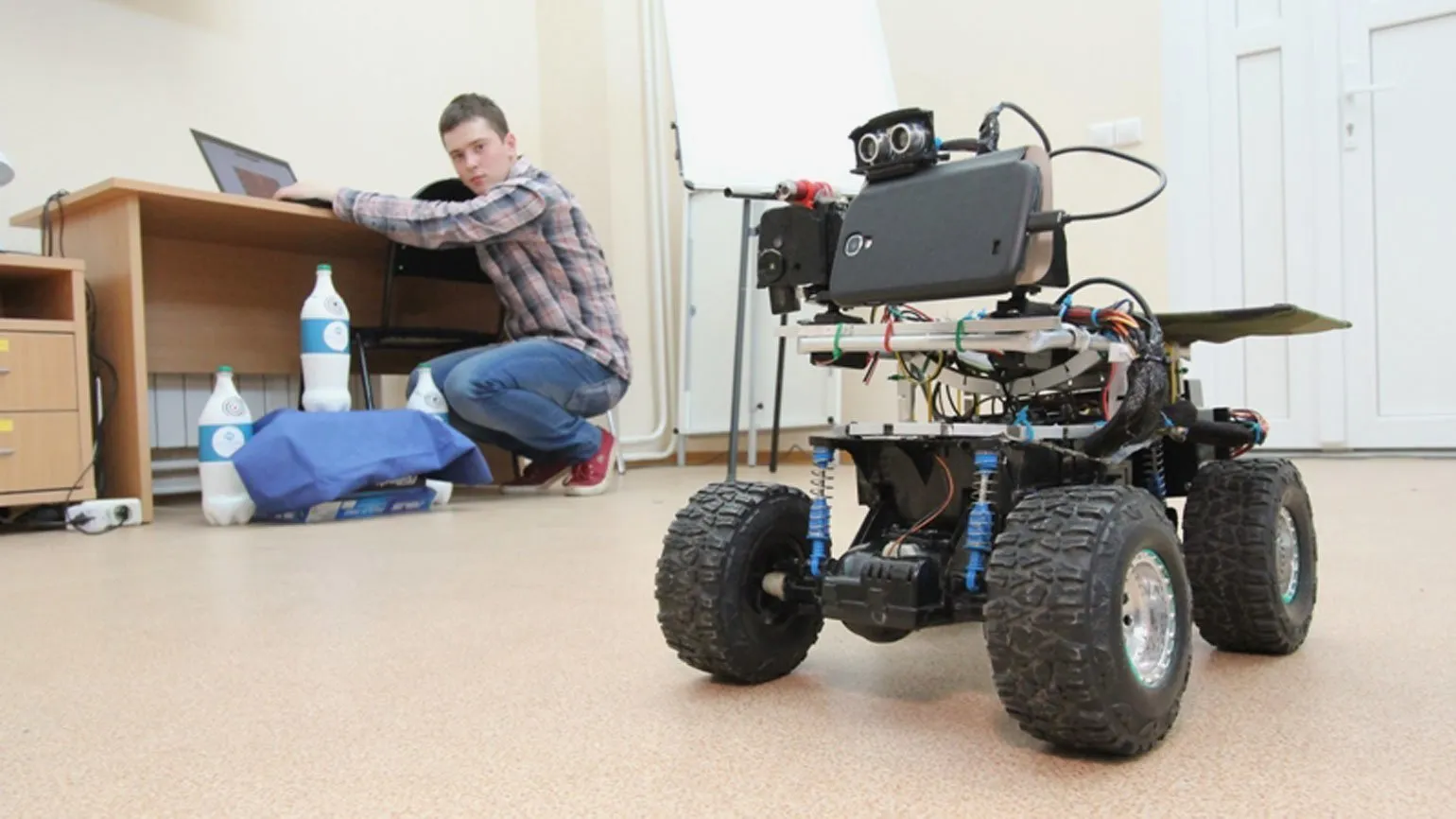
The adaptation of the robot teacher was carried out with the participation of teachers from Tomsk schools and the Lyceum at TPU. The developers aimed to create a tool accessible to users of all ages. Local teachers also prepared lessons for the robot. The first lessons with the robot took place in September 2016.
That same year, students at the Kazan Federal University IT Lyceum learned about a new robot teacher developed by the Russian company Androidnaya Tekhnika. The device was programmed by KFU specialists. The robot was named EVA, inspired by the heroine of the popular cartoon "Wall-E." This project demonstrates the integration of modern technology into the educational process and emphasizes the importance of robotics in education. EVA will help students develop their skills in interacting with high technology and increase their interest in STEM subjects.
The first lesson with EVA was led by a computer science teacher, after which it began to be used in mathematics, physics, computer science, and chemistry lessons for grades seven through nine. EVA could move freely around the classroom, interact with students, monitor them during tests to prevent cheating, and add a touch of humor to the learning process. This technology not only improves the educational process but also makes it more engaging and interactive.
In the future, the specialization of robots in education will be virtually limitless. As school director Timerbulat Samerkhanov noted, in just a few months, these devices will be able to conduct lessons independently without the need for a teacher. This opens up new horizons for the educational process and increases learning effectiveness.
Information about the future of the Tomsk and Kazan robots remains extremely limited. Kazan Federal University (KFU) did not respond to Skillbox Media's request for comment. One of the developers of the Tomsk robot reported that interest in this topic has significantly decreased.
In Russia, the development of "teachers" in the form of robots continues, despite the successes or failures of previous university projects. Private companies have taken on this task, and one of the leading ones is the Perm company "Promobot". According to the developers, their robot teacher performs several functions simultaneously, which allows it to effectively interact with students and teach various subjects. This indicates a growing interest in the robotization of the educational process and the introduction of technology into school education.
The robot is capable of interacting with people, answering their questions, providing consultations, and demonstrating a variety of materials on its display. It can effectively complement the educational process by reproducing lectures and vocalizing text phrases, freeing teachers from routine tasks. A laboratory case has been developed based on this technology, enabling robotics lab work. Thus, the robot not only entertains students but also supports teachers and serves as essential equipment for practical classes. Such innovations make learning more engaging and effective, as confirmed by Oleg Kivokurtsev, founder and development director of Promobot. Perm State Medical University uses the YURA robot, developed by Promobot, to conduct exams for medical students. This robot simulates a patient, following one of ten different scenarios, and evaluates the future doctors' answers to questions, as well as their recommendations. Upon completion of the interaction, YURA provides feedback on how the students completed the assigned task. This innovation improves the education and training of medical professionals, enhancing their practical skills and approach to diagnostics.
At Samara Polytechnic University and North Carolina College (USA), robots from Promobota help applicants navigate campuses and resolve administrative issues. At the Mining University, a robot named Granit is already giving lectures. According to media reports, it is an engineer in the department, aspires to become a teacher, participates in conferences, and is able to answer any questions students may have. Furthermore, Promobota robots are actively used in gymnasiums, quantoriums, and robotics clubs, fostering interest in STEM disciplines and improving the educational process.
Kivokurtsev notes that the robot adapts to each educational institution and the program developed by methodologists. Importantly, no specialized knowledge is required to use the robot. The expert emphasizes that any teacher can easily master this technology, making it accessible to a wide range of educational institutions. The development of adaptive solutions for the educational process using robots improves the quality of learning and enables the effective use of modern technologies in the classroom.
So will robots replace teachers or not?
Scientists, educators, and robot developers unanimously agree that technology cannot completely replace humans. Despite significant advances in automation and artificial intelligence, human experience, creativity, and emotional intelligence remain indispensable. It is important to recognize that technology can act as assistants, but cannot completely replace personal interaction and human understanding.
Robots do not tire, can store and reproduce large amounts of information, are not biased towards students, and execute given scenarios. However, they lack creativity and consciousness, which makes them incapable of acting as mentors. Robots are merely tools for delivering content, unable to bring anything unique or emotionally share information. Oleg Kivokurtsev noted that, despite all the advantages of technology, a personal approach and human interaction remain indispensable in the educational process. Douglas and Lynn Newton suggest that in the future, teachers may have to coexist with robots. Therefore, humans will need to adapt to new conditions. Similar ideas about the need for changes in the educational environment are already being actively discussed by Russian specialists, even without considering the introduction of robots. The relevance of this topic underscores the importance of preparing teachers for the new challenges and opportunities that may arise from technological innovation. Experts emphasize that with the automation of many professional fields, the emphasis in education will shift to developing soft skills in students, such as creativity and critical thinking. This change requires teachers to improve their qualifications and undergo additional training to effectively impart the necessary skills. It is important for teachers to master new methods and approaches that foster the development of these key competencies in students. Therefore, teacher training will be a crucial aspect of the successful implementation of future-oriented educational programs.
According to a June 2021 study conducted jointly by Zarplata.ru and RIA Novosti, Russian teachers are confident in their relevance and do not fear being replaced by robots. However, one in five Russians expresses concerns about the automation of their profession, and two percent of respondents fear a possible rise of machines. This indicates certain fears in society related to the development of technology and its impact on the labor market.
There is an important argument against completely replacing teachers with robots: there must be specialists who will train the machines. These experts must develop educational programs, adapt and update them, and also monitor the correct operation of the technologies. The Moscow City Pedagogical University is already actively training such specialists. This underscores the importance of the human factor in the educational process, even in the digital age.
We invite you to meet an amazing robot that not only entertains but also promotes the development of communication skills in children with special needs. This robot has a great sense of music and dances beautifully to its rhythms. It becomes a true friend for children, helping them overcome communication barriers and develop social skills. Interacting with such a cute creature becomes a fun and rewarding experience that helps children feel more confident and comfortable in society.
Rework the text, maintaining its main topic and avoiding unnecessary information. Optimize it for SEO and, if necessary, expand the content. Eliminate the use of emojis, unnecessary characters, and structural sections such as numbers or bullets. Present the text in its purest form.
Read also:
- What experts say about the real digitalization of schools
- Op-op, gangnam style, or How K-pop is changing education
- Citizen Sofia and other amazing robots by David Hanson
- It turns out that a robot's gaze can motivate students
Drone and Robot Programmer Profession
You'll understand the structure of drones and mobile robots and learn how to create software to control them. You'll create your own autonomous robot navigation system and test it in a simulator.
Find out more