
Contents:

Learn: The Profession of a Methodologist from Beginner to Advanced
Learn MoreTeachers often notice that today's youth is losing their reading and text analysis skills. Many students are unable to fully engage with text sources, fail to see their main meaning, and are unable to highlight key points. Sometimes, even a simple task—finding the necessary information in a text—proves difficult. The question is whether this is a real problem or a subjective assessment on the part of the older generation.
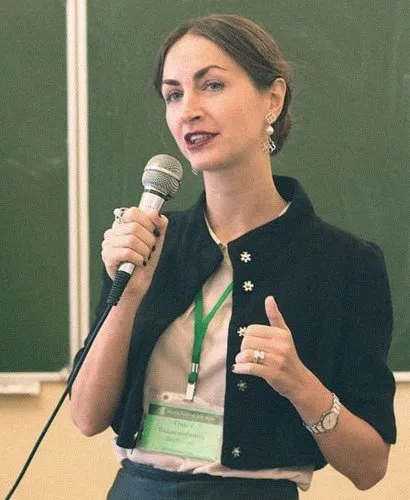
At the end of October, the XIII International Russian Conference of Higher Education Researchers (IVO), organized by the National Research University Higher School of Economics, took place. At this significant event, Olga Shcherbakova, Associate Professor of the Department of General Psychology, Faculty of Psychology, St. Petersburg State University, presented her report "Deficits in Conceptual Thinking in the Context of Modern Educational Practices." In her speech, she shared the results of several studies on students' perception and understanding of the meaning of texts. The results raise serious concerns and highlight the need to reconsider approaches to teaching and developing critical thinking in the educational environment.
What is this about?
Education plays a key role not only in the transmission of subject knowledge and skills, but also in the development of critical thinking. It develops the ability to analyze and evaluate information, as well as to identify relationships between various objects and phenomena. As a result, students learn to draw informed conclusions, which is an important aspect of their intellectual development. This approach to education helps prepare competent specialists capable of effectively solving complex problems in the modern world. Olga Shcherbakova emphasized that the highest level of thinking development is the development of conceptual thinking. This term encompasses the ability not only to reason about specific objects and processes but also to work with abstract categories and logical structures. Concepts and logical constructs are the basis for a deep understanding of the surrounding world and allow a person to effectively analyze and solve complex problems. The development of conceptual thinking plays a key role in the educational process and contributes to the development of critical thinking. An adult with developed conceptual thinking is able to recognize the differences between real objects and the words that denote them. For example, if asked to choose the odd one out from a group of concepts: "elephant, herbivore, rabbit, lion, goat," they will most likely choose "herbivore," since this is a characteristic related to diet, while the other terms denote specific animal species. On the contrary, a child is more likely to choose "lion," explaining that it is a predator, or "elephant," because it is the largest animal. This difference in understanding demonstrates how thinking and the ability to abstract develop in people at different age groups. Conceptual thinking plays an important role in the learning and information processing process. It promotes a deeper understanding of objects and phenomena, helps structure knowledge, and establish connections between different concepts. This thinking allows us to analyze and generalize information, which, in turn, improves problem-solving and decision-making abilities. Furthermore, by developing conceptual thinking, we can communicate and exchange ideas more effectively, which is important in both personal and professional life. As a result, the active use of conceptual thinking contributes to more successful learning and the development of critical thinking.
- to identify the main points in a text, statement, or situation, to grasp the essence without being distracted by external signs;
- to build a hierarchy of concepts and meanings, to operate with the categories of "general - particular", "main - secondary";
- and even to overcome egocentrism, that is, to look at oneself from the outside, to objectively evaluate the situation, one's own actions, and the behavior of others.
According to experts, conceptual thinking in people without intellectual disabilities is formed during adolescence. However, this process does not occur automatically; its successful development requires targeted work. Otherwise, the student's thinking may remain at a pre-conceptual level. This topic was studied in detail by classics of psychology and pedagogy, such as Lev Vygotsky, Jean Piaget and Lev Wecker, who emphasized the importance of an active approach to learning and the development of thinking.

Rework the text, preserving its main theme. Optimize your content for SEO by adding keywords and phrases that will improve search engine visibility. Avoid unnecessary symbols and emojis, and don't add structured sections. Focus on creating clear, informative text that's easy to read. If necessary, add a little extra information to deepen the topic.
Three types of educational content play a key role in the development of students' thinking. The first type is factual knowledge, which provides students with basic information and an understanding of the subject matter. The second type is conceptual knowledge, which helps students comprehend and apply information in various contexts. The third type is metacognition, which develops self-regulation and critical thinking skills. All three types of educational content contribute to the formation of deeper and more multifaceted thinking, which is especially important in the context of the modern educational process. Developing these skills helps students not only successfully cope with educational tasks but also adapt to a rapidly changing world, making informed decisions and solving complex problems.
What problem did the researchers raise?
In their studies on conceptual thinking, scientists focused on the aspect of understanding the meaning of the text. This line of study allows for a deeper understanding of how people interpret and comprehend information presented in written form. By analyzing various approaches to conceptual thinking, researchers are identifying key mechanisms that facilitate the perception and understanding of text content. Such research is important for developing teaching methods and improving reading skills, and can also be useful in the area of creating effective content. Olga Shcherbakova argues that by the end of primary school, children should have developed the skill of text comprehension. However, in practice, many face difficulties: even if they can read, children often cannot answer questions about the content of what they have read. This problem is observed not only among elementary school students but also among high school and university students. Deficits in text comprehension skills require attention and solutions at all levels of education. Olga noted that in primary school, the level of text comprehension is more or less stable, but in high school and after graduation, the indicators become alarming. As a specialist working with students of various years, she also notes a decline in the skills of understanding the meaning of texts, which applies not only to scientific works but also to other genres. This phenomenon requires attention and analysis, as the correct perception of information is an important aspect of the educational process.
How the experiment was conducted
To determine whether modern students truly have difficulty understanding the meaning of texts, a research team led by Olga Shcherbakova conducted a study based on Aesop's fables. The results were published in the HSE journal "Psychology." Fables are a convenient tool for analyzing conceptual thinking, as this genre is familiar to many from childhood. They are short texts that contain both literal and figurative meaning. The study provides a deeper understanding of how students perceive and interpret literary works, which is important for effective learning and the development of critical thinking.

Olga and her colleague Elizaveta Nikiforova conducted a study in which they measured the IQ of 19 students using psychometric tests. The participants were then asked to read three sets of fables, including "The Lion and the Mouse" and "The Ant and the Dove." After reading, the researchers interviewed the subjects to assess how they interpreted each of the texts. A developed scoring system was used to analyze the degree of understanding of the meaning of the fables.
- zero points - literal level of understanding, retelling of the plot events of the fable;
- one point - interpretation of the text in an everyday sense, at the level of personal relationships, or an attempt to formulate a generalization, but erroneous;
- two points - a high degree of generalization, explanation of the meaning of the fable at the level of the laws of nature or society.
The subjects were asked to combine any two fables from the given sets based on their semantic similarity. For example, texts A and B demonstrate similarity, as both condemn arrogance. At the same time, text C, although it shares external features with text A, such as the presence of a lion, does not convey a similar meaning. For each correctly matched pair based on meaning, students received one point. If they relied only on external similarity, no points were awarded.
Of the 19 participants, two had to be excluded for not completing all the tasks. As a result, the researchers calculated the total number of points scored by 17 subjects, as well as the number of "zeros," "ones," and "twos" in the first part of the experiment. In addition, the number of "zeros" and "ones" was assessed at the pairing stage.
What were the results?
From the 17 participants who presented their interpretations of nine fables, the researchers collected 153 interpretations. More than a third of these interpretations were literal, such as, "The lion didn't eat the mouse, and in gratitude, the mouse later saved his life." These results highlight that many readers perceive fables at a superficial level, ignoring their deeper meaning and moral lessons. This finding may be useful for further analysis of the reception of literary works and their impact on audiences.
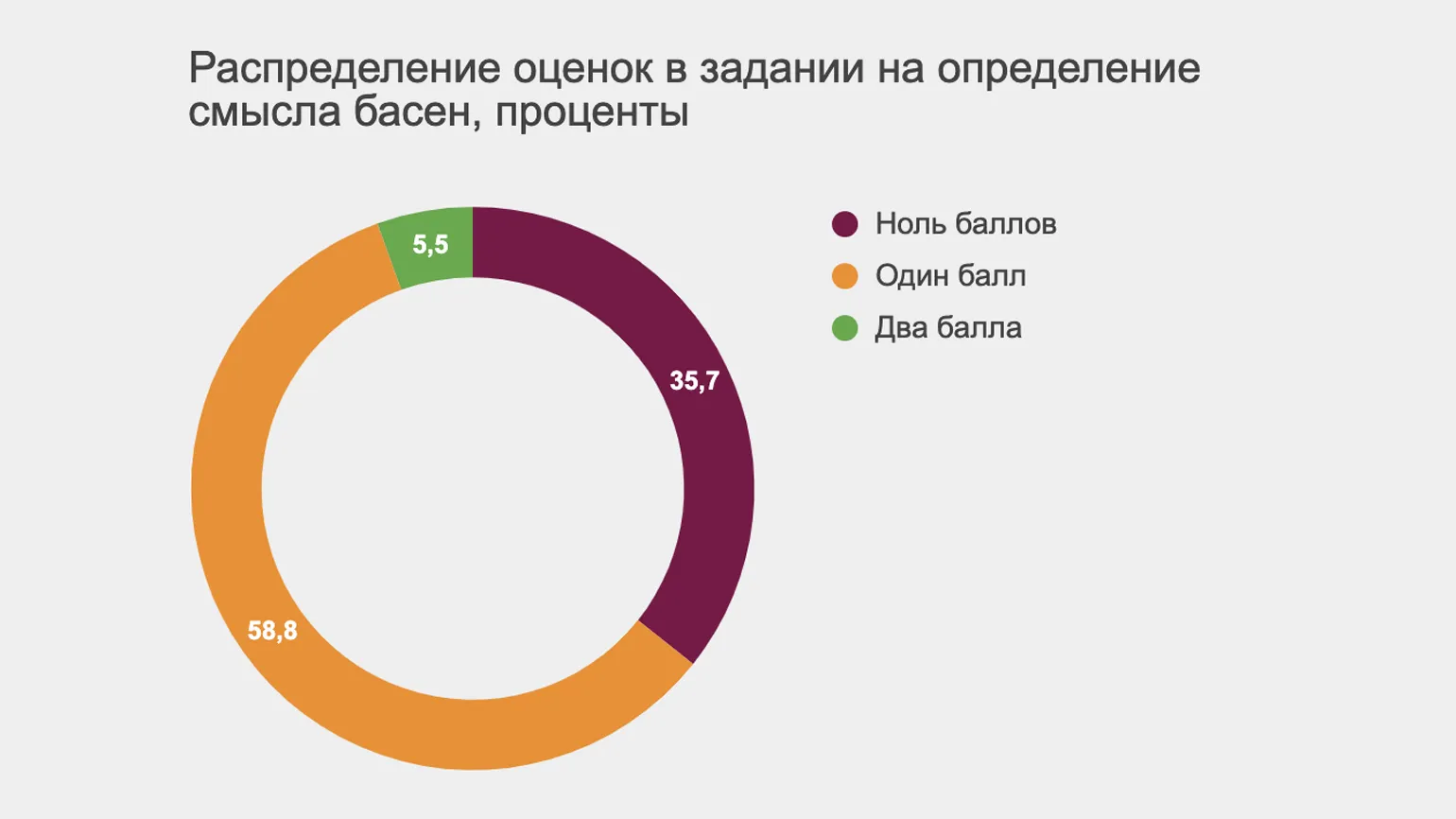
The researchers rated the majority of interpretations, 58.8%, at the minimum score. This means they were either superficial or contained erroneous generalizations. Only 5.5% of interpretations demonstrated a deep understanding of the meaning of the fable.
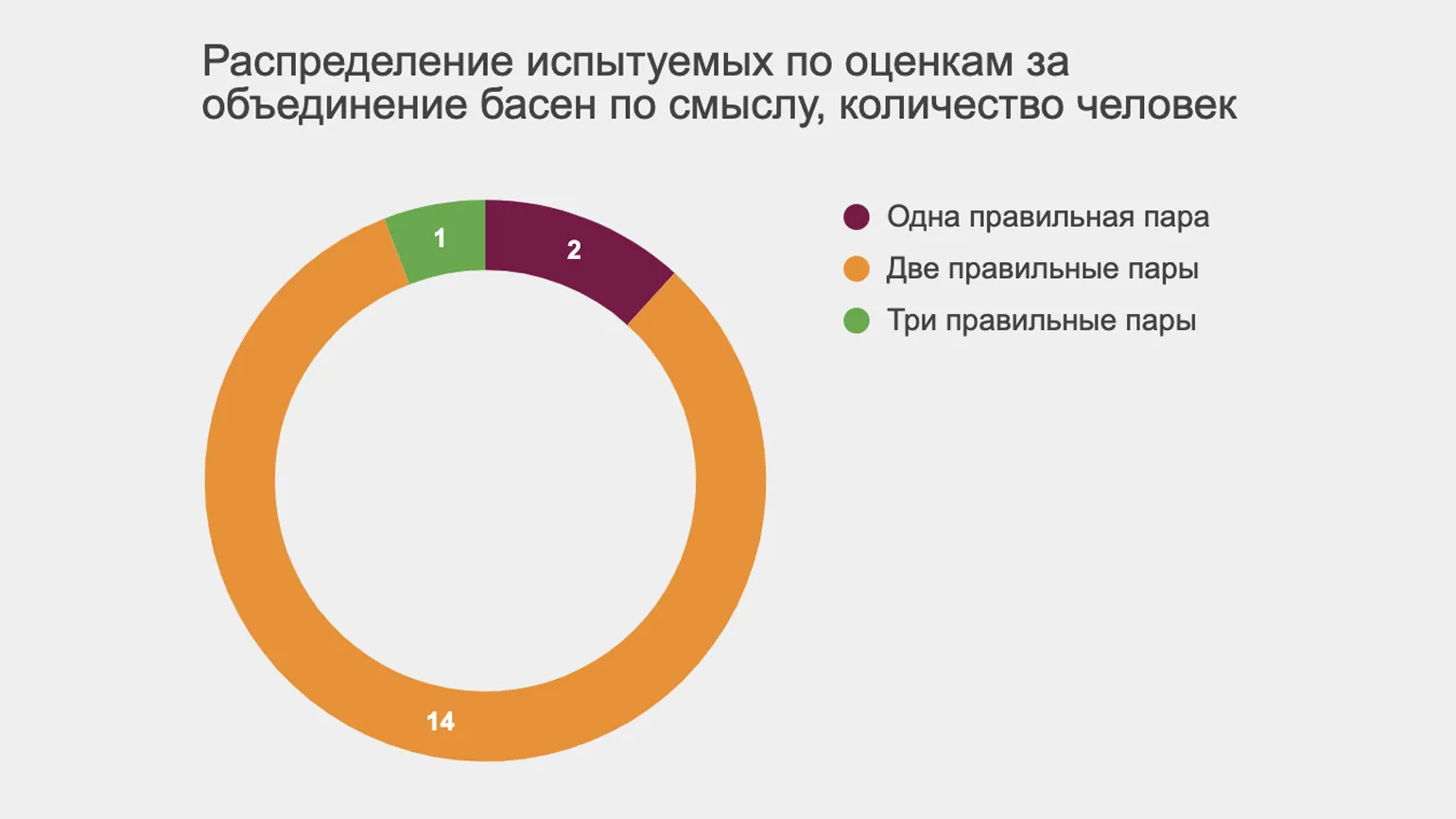
The study showed that 65% of the pairs participants made based on semantic similarity were correct. Each subject was able to correctly match at least one pair from the three sets provided. However, only one participant successfully matched fables in all three sets, while most managed only two.
The analysis showed that the number of correctly formed pairs does not depend on the number of correctly interpreted fables. This means that the same student can interpret all the texts at a high level of generalization, but at the same time cope with the pairing only partially. At the same time, a student can understand the meaning of the fables only literally, but nevertheless successfully combine them semantically. This indicates that the skills of interpretation and pairing can develop independently of each other, which is important for the educational process and assessing the level of assimilation of the material.
What conclusions did the scientists draw?
The experiment demonstrated that students have difficulty understanding the meaning of the texts. Literal interpretation, as the researchers note, is typical for children under 11 years of age. The fact that a third of the adult subjects adhered to this approach was a disturbing discovery, according to Olga Shcherbakova. This highlights the need to improve students' critical thinking and analytical skills so that they can more deeply perceive and comprehend textual information.
Research shows that fables are primarily used to assess conceptual thinking in children and adolescents. Currently, scientists lack data to establish what level of fable comprehension in adults can be considered "normal." Olga Shcherbakova and Elizaveta Nikiforova believe that their work can serve as a basis for future research in this area. This opens new perspectives for studying the perception of fables and their significance in the development of thinking in adults.
Correctly pairing fables into meaningful pairs should indicate an understanding of their content. However, the scientists were unable to explain the lack of a relationship between the number of correctly interpreted texts and the number of correctly paired pairs. This contradicts previous research, including the work of Darcia Narvaez and colleagues, titled "Comprehension of Moral Messages in Third-Grade, Fifth-Grade, and College Students." These studies highlight the importance of understanding moral themes in literature, which can contribute to deeper comprehension of texts and the development of critical thinking in readers of different ages. Recent studies have shown that there is no direct relationship between IQ level and the ability to understand texts, including fable interpretation and pairing. Scientists Shcherbakova and Nikiforova concluded that understanding figurative meaning may be a relatively independent cognitive skill that is not captured by traditional psychometric IQ tests. In this regard, researchers emphasize the need to develop new tools and approaches to more accurately assess this ability.

Olga Shcherbakova noted that she and her colleagues initially believed that the results were unlikely to be due to a limited sample size. Therefore, they repeated the experiment, increasing the number of participants to 70 students. The results of the replication confirmed the initial findings, as the distribution of results remained virtually unchanged.
What about other types of texts?
Modern students are often unfamiliar with the language of Aesop's fables, which can affect their perception of texts. However, this does not mean they have difficulty understanding literary and scientific works. A research team led by Olga Shcherbakova and her colleagues conducted an analysis that helps clarify this situation. The study's results demonstrate that students' level of text comprehension is quite adequate, despite their lack of experience with classic works. Olga and research engineer Varvara Averianova conducted a new experiment, replacing fables with the short story "The Invisible Japanese Gentlemen" by English writer Graham Greene. To assess the subjects' grasp of the work's hidden (or implicit) meaning, the researchers used a more detailed rating scale from 0 to 4. The results confirmed previous observations: only 7% of students understood the story at a literal level, while another 7% were able to interpret it at a deep level, receiving the maximum score of four. Most participants demonstrated superficial comprehension: 41% received one score, 28% two scores, and 17% three scores. These findings highlight the importance of analyzing literary texts and the need for in-depth study of literary works to develop critical thinking.
The researchers found that problems understanding the meaning of a text are not limited to literary works with subtext. Research assistant Tatyana Isaeva, together with Olga Shcherbakova, conducted an experiment on a sample of 100 people. Participants were asked to read an article about medieval stained glass from a popular science encyclopedia and answer several questions about what they had read. The question "What is this text about?" presented no difficulty, but most subjects were unable to identify the main ideas and summarize the information. However, at the beginning of the experiment, participants rated their text comprehension abilities highly. These results highlight the importance of critical thinking and information analysis skills in modern society.
Preparation for publication of the current and previous studies is currently underway. More detailed information about the methodology and results of these experiments will be available in the future.
Who is to blame?
According to Olga, the studies conducted cover various materials and samples, and the data was analyzed by different scientists, but using the same methodology. This indicates that the results are not random, but may reflect a general trend: modern students experience significant difficulties in the learning process.
- work with traditional cultural codes;
- maintain attention when reading long texts;
- highlight significant features and filter out insignificant ones;
- understand the meaning of the text in its entirety, including figurative ones;
- recognize subjective projections, that is, separate what is objectively present in the text from a personal reaction to this text.
The expert claims that this applies not only to reading, but also to conceptual thinking in general. She believes that the reason lies in the modern education system, especially in high school, where the entire educational process is focused on preparing for the Unified State Exam. This system encourages the memorization of individual facts, rather than the formation of a holistic and systemic view of the topic or subject being studied. This approach negatively impacts students' ability to think critically and deeply understand the material.
Olga Shcherbakova noted that early digitalization can negatively impact the development of conceptual thinking in children. In modern apps and web pages, interface designers direct users' attention by arranging elements and objects in a specific way. This can hinder a child's ability to manage their attention, which later negatively impacts their ability to focus on text and identify key ideas. It is important to consider these aspects in order to minimize the impact of digital technologies on children's cognitive development and promote their successful learning.

What other studies are there on this topic?
A year ago, researchers at Privolzhsky Research Medical University conducted a study among 102 students in grades 8–10 to examine reading processes. The teenagers were asked to read a short fable from a screen for two minutes, after which they answered questions regarding their comprehension of the text they had read. During reading, the researchers recorded the number, frequency, and average duration of blinks, as well as gaze fixations and saccades—quick eye movements necessary for perceiving information. The results of this study were compared with data from a similar study conducted in the 2014/2015 academic year, which made it possible to identify changes in text comprehension and adolescent reading skills over the past years.
Modern teenagers read twice as fast as participants in a similar study in 2014/2015. However, the number of errors in text comprehension has increased by 1.5–1.7 times. This indicates that they skim the text without understanding its essence. Only 58.3% of eighth-graders, 62.2% of ninth-graders, and 77.1% of tenth-graders successfully completed the tasks of understanding the implicit meaning of the text. Thus, 42%, 38%, and 23% of students from these classes were unable to grasp the main idea. These data highlight the importance of developing deep reading and critical thinking skills in young people.
Research shows that adolescents are shifting from linear to clip-based thinking. According to the authors of the study, the digital environment is the main factor contributing to this change.
The PISA study, which assesses the reading literacy of 15-year-olds, is the largest of its kind in its field. It provides valuable data on the skills of extracting meaning from text in different countries. PISA includes texts of different types and levels of difficulty, which allows for the assessment of a wide range of reading skills. The tasks offered within the study are varied and aimed at assessing the understanding, use, critical evaluation, reflection, and interaction with texts to achieve specific goals. Participants are required to distinguish between fact and opinion, and to be able to compare information from multiple sources. Thus, by analyzing and understanding text information, PISA provides relevant data on the development of adolescents' thinking skills. PISA distinguishes six levels of reading literacy. Only a small proportion of students across countries achieve the highest levels (fifth and sixth), on average about 8.7% according to the OECD. At these levels, students are able to understand longer texts, work with abstract and counterintuitive concepts, and distinguish fact from opinion based on hidden cues. At the same time, 23% of adolescents on average across OECD countries do not pass level one. This means that they can extract one or more obvious units of information from a simple text on a familiar topic, recognize the main theme and literal meaning of the text, and separate important information from irrelevant information. However, they are unable to find information that requires deeper understanding, recognize the main idea, understand the connections between parts of the text, and compare them. These skills belong to the second level, which is also quite basic. Effective text-based learning requires at least a level of four.
According to PISA 2018 data, the reading literacy level among adolescents in Russia is distributed as follows: 1% of students reached level six, 5% reached level five, and 16% reached level four. Twenty-eight percent of adolescents are at levels three and two, while 22% have level one reading literacy. These figures highlight the diversity of reading skills among the younger generation in Russia.
It should not be assumed that a lack of text processing skills is characteristic only of modern teenagers. There is an international test for adults, PIAAC, which assesses reading literacy at five levels. Only a small percentage of the population reaches level five, and level four is also accessible to few. In general, adults demonstrate a level of reading literacy corresponding to the second and third levels. This highlights the need to improve literacy in society and improve word processing skills among all age groups.
Check out additional resources:
- "One of the problems with education is that people don't pay attention to things they don't understand"
- What is functional literacy and how is it related to general intelligence?
- 9 strategies for successful digital reading
- Metacognition methods: how to teach children and adults to learn
Methodologist Profession from Beginner to Advanced
You will develop skills in developing curricula for online and offline courses. You will master modern teaching practices, structure your experience, and become a more sought-after specialist.
Find out more