Content:

Learn: The Profession of a Methodologist from Scratch to PRO
Find out moreStudying at school didn't have much meaning for me, with the exception of arithmetic, which remained interesting and new to me. I loved the logical conclusions that could be drawn from its fundamentals: apples, tap water, trains arriving at unspecified times. These problems fascinated me with their complexity and required analytical skills. However, this fascination did not indicate my predisposition to mathematics, and I would later experience significant difficulties with this subject.
The education system in our schools is often focused on memorization of information rather than the development of deep understanding and perception. This leads to students being unable to take science seriously. In my class, not a single boy continued his education during the first two years. This situation needs to change to stimulate interest in learning and the development of analytical thinking in students.
In our environment, studying at a high level was perceived as something shameful, as was discussing lessons or assignments. Ridiculing teachers was considered a sign of courage, and the ability to secretly poop in the corner behind the stove during punishment became a true art. This created an atmosphere where knowledge was not valued, but rather the ability to bend rules and make peers laugh. Thus, instead of striving for education, many preferred to look for ways to avoid responsibility and gain group approval.
The class was led by unruly teenagers, mostly street kids who had found themselves in this situation due to unfavorable home conditions. In their free time, I often saw them wandering around town with bags, and some of them were caught stealing at the market.
I had a memorable meeting with one of my classmates, known by the nickname Krivoshey. He occupied a leadership position in our school hierarchy. At that time, Krivoshey was already in his third year of first grade, and, as far as I know, this was his last year of school. With his evil and vindictive nature, as well as the penknife, sharpened and always in his pocket, he inspired fear in all the boys. If it weren't for a good-natured and strong guy named Vasin, who could protect us from Krivosheya at any moment for a piece of bread, his extortion would have been completely unbearable. Contrary to his aggressive nature, Krivosheya would certainly have created an atmosphere of fear in our class, but thanks to Vasin, we felt safe.
At the market, I stopped at a stall to make a purchase. A crowd of people gathered around me, crowding around the counter. Suddenly, a hand reached out from behind me and quickly snatched the money from the counter. I turned and saw Krivosheya, who glared angrily at me before disappearing into the crowd. This incident reminded me how important it is to be attentive to others, especially in crowded places where there is a risk of theft.
The theft went unnoticed, but now at school Krivoshey began to display his malice and constantly pick on me, as if seeking revenge for my unwitting witnessing his actions.
In his work "Khlynovsk: My Story," K. S. Petrov-Vodkin masterfully conveys the atmosphere and spirit of the times. The author describes the lives and daily life of Khlynovsk residents, revealing their inner world and unique characters. Using vivid imagery and rich language, Petrov-Vodkin creates a vibrant picture that immerses the reader in historical reality. The work covers important social and cultural aspects, showing how interactions between people shape society. "Khlynovsk: My Story" becomes not only a work of fiction but also a valuable historical document, reflecting life in Russia at that time. The theme of identity and self-awareness in the context of societal changes makes this story relevant for modern readers.
Context
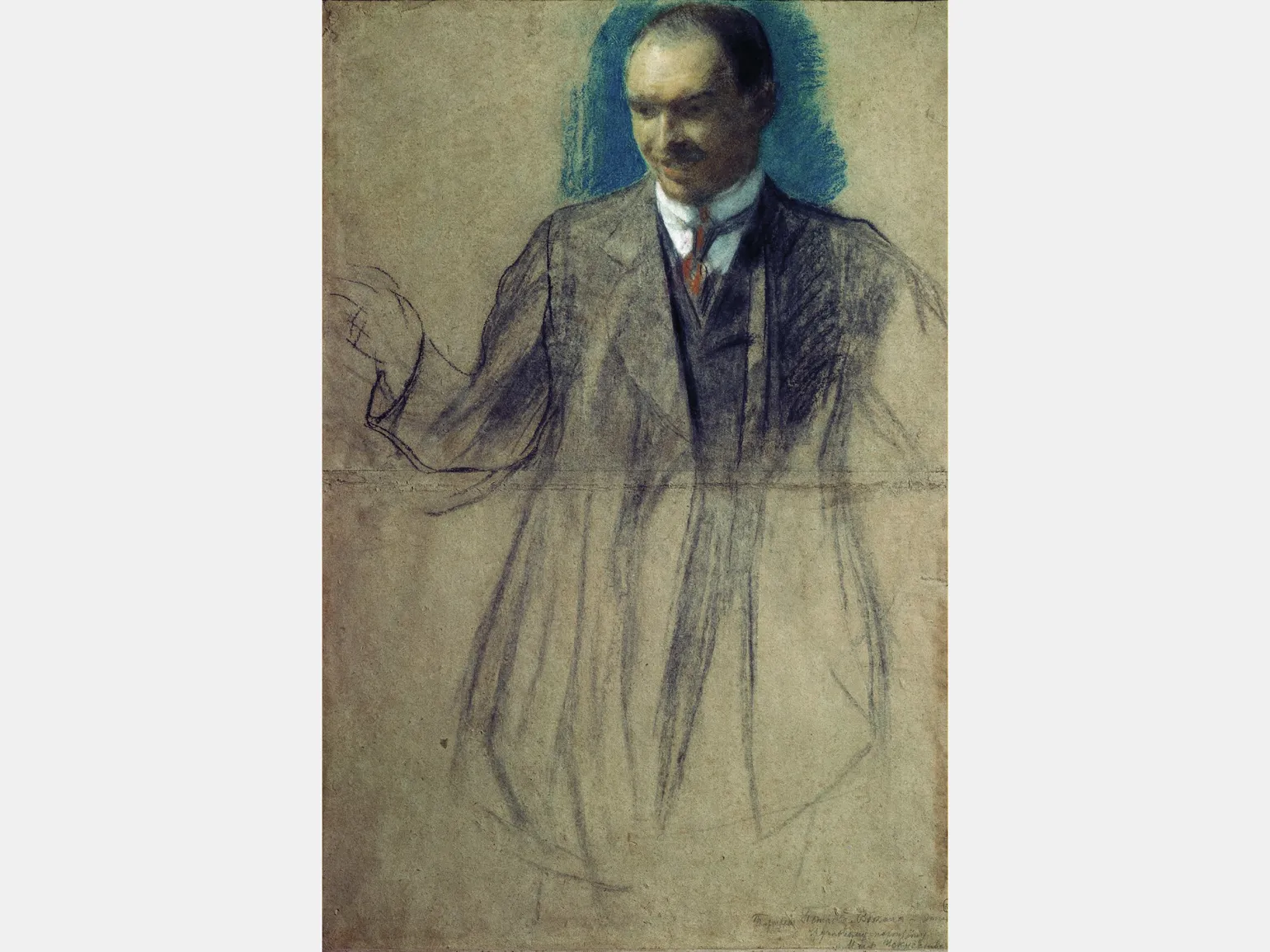
The events described in this autobiographical book unfold in Khvalynsk, a small town in the Saratov province, where the future artist Kuzma Sergeevich Petrov-Vodkin was born and spent his first 14 years. He was the son of a shoemaker who was drafted into the army. In the 1880s, Kuzma entered the parish school located in the marketplace, in the "courtyard of the town council," where classrooms, teachers' apartments, and a gatehouse formed a cozy courtyard. This period became an important stage in the artist's life, shaping his worldview and creative path.
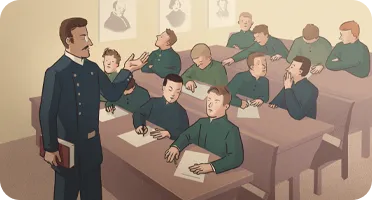
Parochial schools in the Russian Empire were one of the most common types of primary schools, primarily located in cities. They provided education for children from poor families, playing a vital role in the accessibility of primary education. These institutions promoted social mobility and literacy among the lower classes, providing the necessary knowledge and skills for life in society.
Parochial schools and parochial colleges represented different types of educational institutions. Schools typically operated within parishes, primarily in rural areas, and were under the control of the Synod and diocesan school councils. Funding for such schools came from parish funds and parishioner donations. Typically, teaching at these educational institutions was conducted by a priest or deacon. The term "parochial" was often retained for these schools only by tradition, but in reality, they were ordinary city schools under the jurisdiction of the Ministry of Public Education. They were financed partly by the treasury, as well as by zemstvos, class societies, and private benefactors. Teachers at these institutions had the status of civil servants, as in other schools under the ministry's jurisdiction. This highlights the important role that schools played in the education system, providing access to knowledge and maintaining educational standards.
Study additional materials:
Schools in Pre-Revolutionary Russia: 10 Interesting Facts
Pre-revolutionary Russia was a unique period in which education played an important role in society. The educational system of that time was diverse and had its own characteristics. This text presents 10 facts about schools in pre-revolutionary Russia that will help better understand the educational traditions and approaches of that era.
Various types of schools existed in Russia, including gymnasiums, vocational schools, and public schools. Gymnasiums provided an in-depth education, while public schools focused on teaching the basics of literacy. Education at gymnasiums often included the study of classical languages, such as Latin and Greek.
Education in pre-revolutionary Russia was not accessible to everyone. The main focus was on the education of children from noble and merchant families. Children from peasant families had limited educational opportunities, which contributed to social irregularity.
The establishment of the Ministry of Public Education in 1802 marked a significant milestone in the development of education. This agency began actively developing the education system, introducing new curricula, and improving the qualifications of teachers.
Despite existing shortcomings, pre-revolutionary Russia saw an increase in the number of educational institutions. By the end of the 19th century, thousands of schools were operating in the country, which contributed to an increase in the literacy rate of the population.
Schools in pre-revolutionary Russia also featured a specific system of examinations and certifications. Students passed exams to receive certificates, which confirmed their level of knowledge and allowed them to continue their education in higher educational institutions.
Female education in pre-revolutionary Russia also began to develop. With the emergence of girls' gymnasiums and colleges, girls had the opportunity to receive an education, which was an important step in improving the status of women in society.
Educational reforms carried out in Russia at the end of the 19th century led to the introduction of new teaching methods and the updating of curricula. These changes contributed to a wider coverage of the population and an improvement in the quality of education.
Despite the many problems faced by the education system, pre-revolutionary Russia left a significant legacy in the fields of science and culture. Scientists and educators of that time made a great contribution to the development of the Russian educational system.
Thus, schools in pre-revolutionary Russia became an important part of the historical and cultural context of the country, reflecting its desire for enlightenment and development.
Schools were divided into two types: one-class and two-class. One-class schools lasted 3-4 years, while two-class schools lasted 5-6 years. The curriculum of one-class schools was limited to the study of the Law of God, church singing, literacy, and arithmetic. In two-year schools, like the one Kuzma Petrov-Vodkin attended, the curriculum was somewhere between elementary and high school. The artist recalled preparing for a physics exam, which emphasized the importance of academic preparation in his life and career.
According to the 1828 charter, the primary goal of such schools was "the dissemination of basic knowledge necessary for everyone." These schools admitted children from the lowest strata of society. Thus, the institutions' goals were to improve the lives of children from poor families, discourage them from idleness and hooliganism, and teach them the basics of writing and arithmetic.
Schools, as this case demonstrates, were failing to educate children. The aforementioned bully and thief, Krivosheya, was sent to school against his parents' will, as he didn't know his father, and his mother was an alcoholic. He was brought to school by a police officer who somehow showed an interest in the boy's fate. Petrov-Vodkin noted: "He had never seen infancy or childhood. He was sent to school by a police assistant bailiff, who for some reason decided to help the child and brought him to class straight from the street." This episode highlights the importance of social responsibility and the role of adults in the lives of children, especially in disadvantaged families.
Kuzma faced numerous bullies from Krivosheya until he decided, overcoming his fear, to fight back. It was his first fight, and he won. After this meeting, Kuzma and Krivosheya unexpectedly developed a good relationship: Krivosheya began to show friendly feelings and trust, sharing his dubious adventures. However, this friendship was short-lived—the new acquaintance soon abandoned his studies, descending into a life of crime.
The meeting between Petrov-Vodkin and Krivosheya took place many years later. The adult Petrov-Vodkin, now a famous artist, returned to his native land and accidentally encountered a fallen vagabond, who turned out to be his former classmate Krivosheya. They spent the night talking, reminiscing about "school in the marketplace." Krivosheya shared that his years at school were his "only joy" in life. This meeting became a significant moment in their lives, emphasizing the importance of friendship and memories of carefree times.
Petrov-Vodkin noted that, despite the unfavorable atmosphere in the classroom, he approached his studies with interest, demonstrating a love of reading and a passion for arithmetic. He stood out among his classmates. Kuzma, for example, arrived at school already fluent in reading and possessing a certain erudition. This was encouraged by his mother, who, despite being descended from former serfs, was literate and had a passion for books.
Kuzma graduated from college at age 14 with honors and became the top student in drawing. He initially worked at a shipyard in a city located on the banks of the Volga. He then moved to Samara, where he enrolled in painting and drawing classes. Thanks to the support of a patron, Kuzma continued his education at the Stieglitz Central School of Technical Drawing in St. Petersburg, and then at the Moscow School of Painting, Sculpture and Architecture. These educational institutions played a key role in shaping his artistic style and professional skills.
Find out more:
- The Past: Paustovsky on the Tradition of Ruining School Caps
- How Korney Chukovsky Was Expelled from School for Someone Else's Diary
- How the Future Writer Got an F for an Essay and Became a Repeater
- Marshak: "I Was Not Accepted into School"
Profession Methodologist from scratch to PRO
You will improve your skills in developing curricula for online and offline courses. Master modern pedagogical practices, structure your experience and become a more sought-after specialist.
Find out more