
Content:

Learn: The Profession of Methodologist from Scratch to PRO
Learn More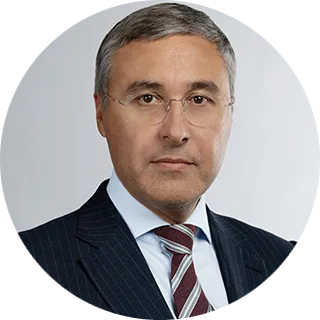
The Minister of Science and Higher Education of the Russian Federation plays a key role in the formation and implementation of state policy in the field of science and education. His tasks include the development of scientific research, support of educational institutions and the introduction of modern technologies in the educational process. An important area of the minister's work is cooperation with international scientific communities and attracting investment in scientific projects. Effective higher education management contributes to the training of highly qualified specialists, which, in turn, contributes to the development of the country's economy and increases its competitiveness in the global market.
Tomsk State University (TSU) is one of the leading educational and scientific centers in Russia. Founded in 1878, TSU offers a wide range of academic programs, including undergraduate, graduate, and doctoral programs. The university is renowned for its high level of teaching and research, making it attractive to students and scholars from both Russia and abroad.
TSU actively collaborates with foreign universities, allowing students to participate in exchange programs and gain international experience. Scientific research conducted at the university covers various fields of knowledge, including the natural sciences and humanities, which promotes innovative development and the implementation of new technologies.
The university also provides modern conditions for teaching and research, including laboratories, libraries, and research centers. TSU strives to create a comfortable and productive learning environment, making it a top choice for prospective students seeking a high-quality education and developing their professional skills.
The new national higher education system includes two main types of educational programs. The first, a mass-program program, encompasses 95-98% of universities and educational programs, aimed at training specialists in line with the current needs of the labor market. The second type includes a limited number of programs operating in a special mode, focused on training personnel for the future needs of the labor market. This structure will allow educational institutions to more effectively respond to economic changes and meet employer demands.
The Minister of Science and Higher Education of the Russian Federation plays a key role in the formation and implementation of state policy in science and education. His responsibilities include developing scientific research, supporting higher education institutions, and implementing modern educational standards. The Minister is also responsible for coordinating the work of universities and research institutes, as well as attracting investment in scientific projects. An important aspect of the Minister's work is cooperation with international educational and scientific organizations, which facilitates the integration of Russian science into the global scientific community. The higher education system and scientific research in Russia require constant updating and adaptation to modern challenges, which makes the role of the Minister particularly significant for the future of the country.
Tomsk State University (TSU) is one of the leading educational institutions in Russia. It offers a wide range of academic programs, including undergraduate, graduate, and doctoral programs. TSU is renowned for the high quality of education and scientific research, making it attractive to students and scientists from all over the world. The University actively collaborates with international educational and scientific organizations, facilitating the exchange of experience and knowledge. TSU has created all the conditions for comfortable student learning and development, including modern classrooms, laboratories, and research centers. TSU also actively participates in various social and cultural initiatives, which contributes to the development of goal-oriented and responsible professionals. Choosing TSU as a place to study is a step toward a successful career and personal development. The new national higher education system includes two types of educational programs. The first, mass, type encompasses 95-98% of universities and educational programs and is aimed at training specialists in line with the current needs of the labor market. The second type includes a small percentage of educational institutions that operate under a special regime and focus on training personnel in line with the future needs of the labor market. This approach ensures a balance between prompt response to employer requests and long-term planning in the field of education.
Context
Valery Falkov's speech at the "Transforming Education" forum, which is being held from November 16 to 18 at Tomsk State University, was an important event. In his report, the Minister of Science and Higher Education of Russia highlighted the main objectives of the new higher education system. These objectives are aimed at modernizing the educational process, improving the quality of specialist training, and integrating science and education. The forum is becoming a platform for discussing current issues and exchanging experiences among representatives of the educational sector.
Valery Falkov raised the issue of an important task of the new higher education system: adaptation to the demands of the labor market. He emphasized the need to balance fundamental knowledge and practical skills in the educational process. At a forum at Tomsk State University, the Minister of Education expanded on this concept, emphasizing that universities must become more flexible and responsive to changing labor market conditions, providing students with relevant knowledge and skills.
The Minister of Higher Education emphasizes that the primary goal of the higher education system is to prepare qualified personnel for the labor market. However, in practice, this task is divided into two components: training specialists in line with the current and future needs of the economy. The first component involves a significant amount of work, such as interacting with employers, developing educational standards based on their requirements, adapting curricula to changing conditions, and promoting graduate employment. According to Valery Falkov, this is a routine activity undertaken by virtually all universities in the country.
According to the minister, training specialists for the future labor market that will emerge in five to ten years presents a significant challenge. He noted that only leading universities can attempt to anticipate the needs of their graduates in the face of increasing productivity and changing technologies. However, as Valery Falkov acknowledged, achieving this in the current context of restrictions is extremely difficult.
The minister emphasized the importance of granting universities maximum autonomy. This will allow educational institutions, with a minimum number of standards and sufficient resources, to adapt curricula in close collaboration with industry leaders. The goal is to prepare school graduates and individuals with an existing education for the requirements of the future industry, which will emerge over the next five to seven years.
The Russian Ministry of Education and Science, according to a statement by its head, emphasizes the need to create a separate category of educational programs to address current challenges. This includes the formation of a special track to provide these programs with the necessary resources. In addition, universities implementing these programs will need to establish a special regime of interaction with leading companies in their industry. This will improve the quality of education and the relevance of curricula to modern labor market requirements.
Read also:
Scientists conducted a study assessing the level of freedom of Russian universities. The analysis examined various aspects of university autonomy, including academic independence, the ability to choose educational programs, and participation in scientific research. The study's results show that many universities face restrictions that affect their ability to act independently. These restrictions may impact the quality of education and innovation processes in Russia. The study emphasizes the need to increase the level of freedom in the educational system to create a more competitive and dynamic environment in higher education.
Valery Falkov identified the "Advanced Engineering Schools" project as the basis for a future approach to education. As part of this project, higher education institutions receive grants on a competitive basis, which allows them to develop educational and scientific areas in relevant technologies. Project participants, collaborating with leading companies and research centers, create new laboratories and launch educational programs. Measures are also envisaged to improve the qualifications of teachers and provide student internships in companies, facilitating the integration of theoretical knowledge with practical skills. One of the key objectives of the project is to promote engineering education among schoolchildren, starting in grades 6 and 7, which will help foster interest in technical specialties at an early stage.
The Minister of Higher Education outlined the key challenges facing universities, including shaping students' worldviews and achieving national technological leadership. The importance of transforming university education was emphasized by Valery Falkov, who noted that students preparing for specific jobs differ significantly from those capable of solving creative problems. He also pointed out that some universities are unable to prepare students for the development of innovative solutions, as their activities were initially focused on routine personnel training rather than technological development. The Minister did not specify what technological leadership requirements will be imposed on such universities under the new higher education system.
In Russia, the idea of granting leading universities a higher degree of autonomy compared to other educational institutions has already been partially implemented. Specifically, federal law establishes a special status for Lomonosov Moscow State University and St. Petersburg State University. Furthermore, federal and national research universities, as well as certain other educational institutions included in the list approved by presidential decree, have the opportunity to develop their own educational standards. This allows them to adapt their curricula to modern requirements and provide higher-quality education.
Special resource provision in higher education remains a pressing issue. Before the launch of the Priority 2030 program, only a limited number of leading universities received additional funding to enhance competitiveness. Systemic imbalances in higher education continue to exist: last year, analysts at the RAEX agency recorded that more than half of the top 100 Russian universities were occupied by educational institutions from Moscow and St. Petersburg. This trend continued in the 2023 ranking, highlighting the need for a more equitable distribution of resources and support for universities across regions to enhance their competitiveness.
In 2023, by decree of the Russian President, an experiment to reform higher education in the country began. Six participating universities have already begun enrolling students in new educational programs that replace the traditional bachelor's, specialist, and master's degrees. The new structure includes a basic level (the first four to six years of study) and a specialized level. All higher education institutions are planned to join this system by September 1, 2025, with the pilot project continuing in the 2025/2026 academic year.
Learn more about education by subscribing to our Telegram channel. We share current news, useful tips, and interesting materials to help you stay up-to-date on the latest trends in education. Join our community and enrich your knowledge!
Read also:
- "Only a few employers understand their needs after 6 years"
- Figures: how Russians feel about different higher education systems
- Graduates of which Russian universities earn the most
- What should be the goal of higher education?
Methodologist Profession from Beginner to Advanced
You will develop skills in developing curricula for online and offline courses. Master modern teaching practices, structure your experience, and become a more sought-after specialist.
Find out more