Contents:
Learn: The Profession of a Methodologist from Scratch to PRO
Find out moreSynchronous online learning has become a common practice over the past four years. However, there are still no clear approaches to digital didactics, and the key aspects of teaching in this format have not been defined. A key question remains: what competencies do teachers need to effectively conduct synchronous online classes? Researchers, including Maaike Grammens and her colleagues from the Department of Educational Studies at Ghent University in Belgium, are seeking to answer this question. Their work aims to identify the necessary skills and knowledge that will help teachers successfully adapt to new learning conditions and ensure high-quality educational processes in the digital environment.
The researchers conducted a meta-analysis of 30 scientific studies, the results of which were published in November 2022 in the scientific journal Educational Research Review. Through this analysis, they developed a set of skills for teachers necessary for effective synchronous teaching. These findings may be useful for both practicing teachers and online learning providers seeking to improve the quality of educational processes in the digital environment.
How the Study Was Conducted
To determine the necessary competencies of teachers in the field of synchronous online learning, Maaike Grammens and her team conducted a study, analyzing more than three thousand scientific publications on the Web of Science and Google Scholar platforms. As a result, they selected 30 works entirely devoted to this relevant topic. These studies helped identify the key skills and knowledge that educators need to successfully deliver online classes.
- 20 of them addressed online learning in the context of higher education;
- five focused on primary and secondary education;
- another five did not specify the educational level.
The list of educator roles in online education proposed in 2011 by Professor Evrim Baran and her colleagues was used as an analytical framework. Professor Baran, who holds a doctorate in curriculum, instructional technology, and human-computer interaction, developed this list to improve understanding of educator roles in digital learning. This approach allows for a more effective analysis and optimization of educational processes, as well as the identification of key factors influencing the success of learning in an online environment.
- pedagogical role;
- facilitator role;
- instructional designer role;
- social role;
- managerial role;
- technical role.
The canvas for describing and systematizing teaching skills proposed by Evrim Baran reveals two main drawbacks. Firstly, the roles presented are more closely aligned with the asynchronous learning format, which emphasizes the importance of the differences between synchronous and asynchronous learning. Secondly, some of the competencies identified by the Belgian researchers do not fully correspond to this scheme and may belong to several roles simultaneously. This limits the versatility of the canvas and requires further refinement to more accurately represent teaching skills.

Scientists have introduced a new role of teacher - Communicative role. The roles of teacher, facilitator, and instructional designer were combined into an instructional role due to the overlapping competencies required for them. This change emphasizes the importance of communication in the educational process and the need to integrate various teaching approaches. Thus, the new roles help adapt to the modern educational environment and ensure more effective learning. As a result, an updated framework was created that includes five key teacher roles in the context of synchronous online learning. These roles help optimize the learning process and increase its effectiveness by ensuring deeper interactions between teacher and students. The new approach emphasizes the importance of adapting teaching methods to the specifics of the online format, which contributes to the creation of a comfortable and productive educational environment.
- instructional role;
- managerial role;
- technical role;
- communication role;
- social role.
The researchers identified key competencies, which represent skill sets necessary for the successful completion of tasks in the context of synchronous online learning. These sets were characterized by the scientists as clusters. Skill clusters help identify the specific competencies required for effective interaction and learning in a virtual environment.
What are the roles and competencies of teachers in synchronous learning?
The study focuses on key aspects that can be useful for teachers working in a synchronous online format. Although the text does not contain specific practical recommendations, it does highlight several ideas for improving the educational process. These suggestions can form the basis for the further development of teaching strategies in a distance learning environment.
Scientists define the instructional role as mastery of core pedagogical competencies that serve as the basis for creating effective learning in various contexts, including videoconferencing. Simply put, this is the ability to design educational processes, use a variety of teaching tools and activities for students, as well as the ability to apply these skills in an online environment. Competency clusters relevant to the instructional role include designing courses, managing interactions with students, and assessing learning outcomes. These skills are essential for the successful implementation of digital educational programs. Organization of the educational process plays a key role in ensuring effective learning and achieving high results. A properly structured educational process promotes the development of skills and knowledge in students, creating optimal conditions for assimilation of the material. It is important to consider a variety of methods and approaches to adapt the educational process to the individual needs of students. The use of modern technologies and interactive teaching methods can significantly increase student engagement and improve information absorption. Effective organization of the educational process includes lesson planning, time management, and assessment of learning outcomes, which allows for the continuous improvement of educational practices and the achievement of set goals. It is important for teachers to understand how to effectively organize the learning process and select appropriate digital tools depending on the educational goals. Teachers should also take advantage of the advantages of the synchronous format that are absent in asynchronous learning. For example, during the lesson, additional materials that may be useful to students can be provided. This will help improve the quality of learning and ensure deeper assimilation of the material.
In an asynchronous learning format, it is possible to effectively prepare learning materials in advance. In contrast, in synchronous classes, teachers must actively and constructively intervene in the learning process. This includes providing students with additional information in a timely manner, which promotes deeper assimilation of the material and improves the overall educational experience. Effective interaction between the teacher and students in real time allows for tailoring lessons to student needs and increases their engagement in learning.
Fostering active learning is a key aspect of the educational process. Active learning involves students in the learning process, which promotes better assimilation of the material and the development of critical thinking. To effectively foster active learning, teachers can use a variety of methods, such as group work, discussions, project assignments, and interactive technologies. These approaches not only promote a deeper understanding of the material but also develop collaboration and communication skills. The implementation of active learning methods helps create a dynamic educational environment where students become active participants in their learning rather than simply passive listeners. Thus, encouraging active learning not only improves student outcomes but also develops the skills needed for future career success.
In synchronous online learning, teachers must pay special attention to actively engaging students in the learning process and stimulating their independent thinking. To achieve this goal, it is important to select appropriate tools that promote interaction and employ methods that help compensate for the shortcomings of the online format, such as the lack of nonverbal communication. Teachers must have a deep understanding of the principles of group work in the virtual classroom to create an effective learning space and enhance the quality of learning.
The development and revision of materials and tasks are important aspects in various fields of activity. This process includes the creation of new and updating existing learning materials, as well as the formulation of tasks that facilitate learning and skill development. Effective development of materials requires a thorough analysis of the needs of the target audience and the use of modern technologies. Reclaiming legacy materials requires attention to detail and an understanding of current requirements. The right combination of these processes enhances the quality of education and improves information retention. Teachers need to develop skills in instructional design and the creation of learning materials focused on synchronous online learning. Effective strategies include breaking tasks into small subtasks and using pauses in speech to ensure students understand the material. These approaches promote deeper knowledge acquisition and increase student engagement in the learning process. It is also important to consider different learning styles to adapt content to the needs of each student. Assessment is an important process that plays a key role in the educational system and other areas. It allows us to determine a person's level of knowledge, skills, and competencies. Effective assessment helps identify strengths and weaknesses and provides feedback for further development. It is important to use a variety of assessment methods to achieve objective results. This may include written tests, oral exams, practical assignments, and project work. It is also important to take into account the individual characteristics of each student, which will make assessment more fair and accurate. The correct use of assessment tools helps increase motivation and improve learning outcomes.
In a synchronous educational environment, assessment has its own unique characteristics, and educators need to develop strategies for monitoring student progress in real time. Researchers note quizzes and online surveys as effective tools, which allow you to collect data during the lesson and tailor learning to the individual needs of students. The use of such methods contributes to a deeper understanding of the material and increases student engagement in the learning process.
Feedback is an important element in the process of interaction with customers and users. It is a way to receive feedback, suggestions, and comments, which helps improve the quality of goods and services. Effective feedback helps companies better understand the needs of their audience and tailor their offerings.
To successfully collect feedback, it is necessary to create convenient channels for receiving it, such as questionnaires, website forms, or social media. It is also important to respond to feedback, showing customers that their opinions matter. This helps increase loyalty and strengthen customer relationships.
Optimizing the feedback process not only improves user engagement but also drives business growth. Use the data you collect to analyze and make informed decisions, ultimately leading to increased customer satisfaction.
Instructors working in a synchronous learning environment should utilize a variety of feedback methods. With available tools for collecting student data, feedback can be targeted, individualized, and, most importantly, timely. This improves the efficiency of the learning process and promotes a deeper understanding of the material by students.

Study additional materials:
Formative Feedback in an Online Course: Key Principles
Giving formative feedback in an online course is important part of the educational process. This allows students to improve their knowledge and skills, and also contributes to a more productive learning environment. To make feedback effective, several principles should be considered.
The first principle is that feedback should be specific. Instead of general comments, it is important to point out specific aspects of the student's work that need improvement or, conversely, those that were done well. This will help students understand exactly where they can develop.
The second principle is timeliness. Feedback should be provided as soon as possible after completing the task. This will allow students to promptly correct their actions and maintain motivation throughout the learning process.
The third principle is constructiveness. Feedback should not only point out mistakes, but also suggest ways to correct them. This will help students not only recognize their shortcomings, but also find ways to eliminate them.
The fourth principle is support. It is important that feedback is supportive and motivating. Positive feedback on students' progress will help them maintain their confidence.
The fifth principle is personalization. Every student is unique, so feedback should be tailored to their individual characteristics and needs. This will create a more trusting atmosphere and improve learning effectiveness.
The sixth principle is the use of technology. Online courses offer a variety of tools for providing feedback, such as video recordings, audio commentary, and interactive platforms. Using these technologies can make the process more engaging and understandable.
By following these principles, instructors will be able to effectively provide formative feedback, which will contribute to deeper understanding of the material and student success in online courses.
The Importance of Addressing Individual Student Needs
In the educational process, it is crucial to pay attention to the individual needs of students. Each student is unique, and their abilities, interests, and learning styles can vary significantly. The success of an educational program depends largely on how well teachers can adapt their methods and approaches to each student. An individualized approach to learning not only increases student motivation but also improves their academic performance. Taking into account individual characteristics helps identify each student's strengths and weaknesses, which in turn allows for the development of personalized learning strategies. It is important to create a learning environment where each student feels supported and understood. Systematic attention to students' individual needs promotes their harmonious development and builds self-confidence. This allows students not only to achieve high academic results but also to develop the skills necessary for future success. A synchronous learning format provides the opportunity to focus on the individual needs of students. This can be manifested in a variety of learning activities, where individual tasks are harmoniously combined with group tasks, and visual elements are complemented by audio ones. This approach promotes more effective learning and caters to a variety of learning styles, making the educational process more adaptable and effective. Student motivation is a key aspect of successful learning and achieving academic goals. It influences engagement, retention, and overall academic performance. It is important to understand that motivation can be both intrinsic and extrinsic. Intrinsic motivation stems from personal interests and aspirations, while extrinsic motivation is associated with external factors such as grades and rewards. Educational institutions can use a variety of strategies to enhance student motivation. Creating a supportive and inspiring atmosphere where students feel comfortable and confident is essential. Using interactive teaching methods, such as group projects and discussions, can significantly increase interest in the learning process. It is also important to consider students' individual needs and offer them appropriate resources for self-improvement. Various assessment and feedback methods also play an important role in maintaining motivation. Regularly recognizing student successes, even small ones, can significantly boost their confidence and desire to learn. It's important to focus not only on results but also on the learning process, which will help strengthen intrinsic motivation.
In conclusion, student motivation is a dynamic process that requires attention and flexibility from instructors. Creating a supportive learning environment and using a variety of teaching approaches can significantly increase motivation and, as a result, improve student academic outcomes.
Research shows that online learning can evoke negative emotions in some students. Therefore, it's important for instructors to develop skills for engaging students in the learning process and helping them adapt to the synchronous format. The authors of the study note that successful examples include a dynamic start to online classes, which creates a friendly atmosphere and promotes better comprehension of the material. Such methods can significantly increase student engagement and satisfaction, which in turn has a positive impact on their academic performance.

Read also:
Unusual practice: how a teacher transformed the start of online classes into Movie Parodies
With the transition to online learning, teachers are looking for new ways to engage students and make lessons more engaging. One such method is using parodies of popular films and TV series at the beginning of classes. This not only helps create a relaxed atmosphere but also fosters a stronger bond between teacher and students.
Parodies allow teachers to convey educational material in an original way, captivating students and creating motivation for learning. Students are more interested in information when it is presented in a format they are familiar and understandable. This approach can significantly increase engagement and reduce the stress associated with distance learning.
Using movie parodies in the educational process also promotes the development of creative thinking in students. They can not only observe the teacher's performance but also participate in creating parodies, which develops their creativity and teamwork skills.
The introduction of such practices into online learning makes lessons more lively and engaging, which ultimately has a positive impact on student achievement and motivation. Thus, a parodic approach to classes can become an effective tool in the arsenal of a modern teacher.
The authors of the study define this role as "the practical organization and administrative control of the online educational process," emphasizing its importance for a virtual and synchronous educational environment. The importance of this role is due to the need for effective management of the educational process in a distance learning environment. It includes four key skill clusters that ensure successful interaction between participants in the educational process and the optimization of educational activities.
Monitoring the delivery of a course is a key aspect of ensuring its quality and effectiveness. It includes systematically reviewing all stages of training, from planning and preparing materials to assessing student performance. Effective monitoring allows for the identification of shortcomings in the educational process, timely adjustments, and improvement of educational methods.
To achieve the best results, it is necessary to use a variety of monitoring tools, such as student surveys, performance analysis, and midterm assessments. It is also important to consider student feedback, allowing for the course to be tailored to their needs and expectations.
Therefore, monitoring the delivery of a course not only contributes to improving the quality of education but also helps create a more comfortable learning environment.
Managing the online learning process requires a high degree of multitasking. Researchers note that teachers must simultaneously address technical issues, monitor chat activity, and pay attention to both active students and those who prefer to remain in the background. Effective time management is also important, allowing for classes to start and end on time. Successfully combining all of these tasks helps create a productive learning environment and improve the quality of learning in a distance learning environment. Establishing rules and monitoring their implementation are important aspects of effective management and process organization. Rules create structure and order, ensuring clear expectations and standards of behavior. Monitoring compliance with these rules helps identify violations, prevent conflicts, and maintain discipline. Effective monitoring methods, such as regular check-ins and feedback, promote accountability and employee engagement. Implementing clear rules and systematically monitoring their implementation contributes to a safe and productive environment. Teachers should discuss not only rules for participation in the learning process, such as camera and microphone use, raising hands, and answering orders, but also ethical communication standards. This will help create a comfortable atmosphere for all participants and enhance the effectiveness of learning. Establishing clear standards of conduct will promote respect and consideration for all opinions, which is crucial in an educational environment. Effective management of equipment, teaching materials, and tools is a key aspect of the educational process. Proper organization and control of the use of these resources contribute to the improvement of the quality of learning. It is important to ensure that the necessary materials and tools are available to students and that they are maintained in good condition. Using modern technologies for recording and distributing equipment can significantly simplify the management process. This not only optimizes costs but also improves interaction between teachers and students. Systematization of teaching materials and tools, as well as regularly updating the database, contributes to more effective learning and increases student engagement in the learning process. Thus, competent management of equipment and teaching resources not only improves the organization of the educational process but also contributes to the achievement of high learning outcomes. Research equipment includes the necessary materials that must be prepared in advance. These can be physical items, such as books or visual aids that the instructor plans to use for demonstrations, or digital resources. If online services or applications are planned, it is important to ensure that each participant has access to them in advance. Preparing equipment facilitates more effective learning and group interaction.
Planning and organizing a lesson are key stages in the educational process. An effective lesson begins with clearly defining goals and objectives. It is important to consider the students' level of preparation and adapt the content to their needs.
It is important to develop a lesson structure that includes an introduction, main topic, and conclusion. This will help maintain student attention and ensure information retention. Using a variety of methods and techniques, such as group discussions and practical assignments, promotes a deeper understanding of the topic.
It is also important to consider the lesson time frame to optimally allocate time for all stages. Regularly checking students' understanding of the material, such as through questions or quizzes, will help them assess progress and make necessary adjustments to the learning process.
Lesson planning and organization involves not only creating a curriculum but also continually analyzing the effectiveness of teaching methods. This is the only way to achieve high results and ensure a high-quality education.
This cluster emphasizes technical preparation. The requirements for a synchronous format are significantly higher than for an asynchronous one. It is necessary to ensure stable network operation, test the functionality of services and tools, and verify all settings. In some situations, it will be necessary to discuss the details of interaction with a third party, such as the students' parents, in advance. Ensuring a high-quality technical base is key to the successful implementation of synchronous events.
Reworking the text for SEO requires the use of keywords and improving readability. Here is the updated version:
Reading is an important part of our development and education. Reading not only broadens your horizons but also helps improve your critical thinking skills. Regularly reading books, articles, and other materials helps you stay current on current events and trends, and deepens your understanding of various topics. It's important to choose a variety of genres and authors to gain a comprehensive understanding of the world.
Research shows that reading has a positive impact on cognitive function and enriches your vocabulary. Therefore, it's worth setting aside time for reading every day to not only develop yourself but also to enjoy the process. You can start with books that interest you and gradually move on to more complex materials.
Read also:
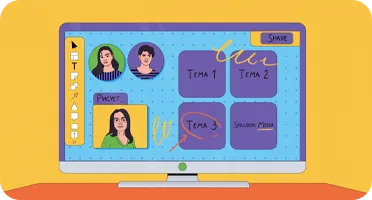
Free online whiteboards for distance learning and collaboration
In today's world, distance learning and collaboration are becoming increasingly popular. Using online whiteboards greatly simplifies this process, allowing participants to interact in real time. In this article, we'll look at the 10 best free online whiteboards that will help you effectively organize your learning process or collaborative activities.
These tools offer a wide range of features, including the ability to add text, images, drawings, and other media. You can collaborate on projects with colleagues or study online courses using intuitive interfaces and powerful collaboration tools.
Each of the online whiteboards presented has unique features, allowing you to choose the most suitable option for your needs. Whether you are a teacher, a student, or a professional, these free resources will help you optimize the learning and collaboration process.
Choose the right online whiteboard and start using it to enhance the effectiveness of your classes and projects.
Working in a synchronous format requires teachers to not only perform pedagogical functions but also technical skills. Teachers must choose the right tools and effectively manage the learning process. This multifaceted role encompasses five key competency clusters that ensure the successful delivery of lessons and interactions with students.
Technical Support for Students
Technical support for students plays a vital role in the educational process. It provides students with the necessary assistance in resolving various issues related to the use of educational resources and technology. Effective technical support includes promptly resolving issues with access to educational platforms, assistance in mastering software, and providing consultations on technical issues.
Students can seek support through various channels, including hotlines, email, and online chats. High-quality technical support contributes to increased student satisfaction and helps them focus on learning. It is important that technical support is available at all times, allowing students to receive assistance at a time convenient for them.
Providing reliable technical support is the key to successful learning and student development.
The instructor must be prepared to provide technical support to lesson participants. It's important to have a prepared plan in case of problems that can't be resolved immediately. It's also important to know who to contact for additional technical assistance if independent attempts are unsuccessful. This will ensure a smooth learning process and increase the effectiveness of classes.
Technology proficiency is an essential aspect of modern society. This includes the ability to effectively use various devices and technologies that facilitate everyday tasks. Knowledge and skill in using technology not only increases productivity but also opens up new opportunities for learning and development. In a rapidly changing world of technology, mastering such skills is becoming essential for successful professional and personal life. Improving your technical skills contributes to increased competitiveness in the labor market and a better quality of life.
Teachers conducting classes via video conferencing must be proficient in using various technical tools. Important technical skills include the ability to organize online conferences, create breakout rooms, and share documents via chat. These skills enable effective interaction with students and contribute to a high-quality educational process in a distance learning environment.
Choosing the right digital tools is a key step in achieving effective results in any project. It is important to consider functionality, usability, and compatibility with the existing infrastructure. Currently, a wide range of software and online services exists that can significantly simplify workflows. When choosing tools, it is important to pay attention to user reviews and conduct testing to ensure they meet your requirements. The right choice of digital tools can increase productivity, optimize resources, and improve teamwork.
Based on educational goals, specific tasks, student abilities, and the limitations of technical resources, teachers should select only those digital tools that best meet these criteria. This will ensure effective teaching and improve interaction with students, as well as optimize the learning process. The correct choice of digital tools contributes to the achievement of educational outcomes and meets the needs of all participants in the educational process.
A positive attitude towards educational technology is actively evident in modern educational institutions. Integrating technology into the educational process improves the quality of education by increasing student motivation and facilitating access to knowledge. The use of interactive platforms, online courses, and virtual classrooms creates a more flexible and convenient learning environment. Teachers and students actively using modern tools report significantly improved interaction, which, in turn, contributes to a deeper understanding of the educational material. A positive perception of educational technology also impacts learning outcomes, as confirmed by numerous studies. Thus, a positive attitude toward educational technology is an important factor for the successful implementation of educational processes in the modern world. It is important for teachers to set a role model for their students, demonstrating a willingness to integrate new technologies into the educational process. Researchers emphasize that confident mastery of modern learning tools contributes to more effective learning and skill development in students. Teachers who actively use innovative technologies inspire students to experiment independently and open new horizons in learning. Modeling safe and healthy online behavior is an important aspect of online interaction. With digital technology constantly expanding and the number of users online increasing, it's crucial to understand how to protect your personal data and maintain your mental health. Adhering to basic principles, such as using strong passwords, regularly updating software, and being careful with personal information, is essential. Developing critical thinking skills to recognize potential threats such as scams and cyberbullying is also essential. Developing healthy online habits will not only help you protect yourself but also create a positive digital space for other users. Educators must be knowledgeable in digital literacy and highly conscious of the information they provide to their students. It's important not only to respect intellectual property rights but also to actively foster respect for them in students. This includes not only respecting copyright but also recognizing the value of original content. Maintaining these principles will help develop students' responsible attitude to information and critical thinking in the digital world.

Revised text:
Review additional materials:
Using someone else's content in online courses requires compliance with certain rules and regulations. To legally integrate materials, it's important to consider copyright and licensing. First and foremost, you must obtain permission from the content owner. This can be done through a direct request or through a license.
An alternative is to use public domain content or materials with an open license, such as Creative Commons. It's important to carefully read the terms of use, as some licenses may impose restrictions on commercial use or require attribution.
You can also create original content inspired by the work of others. In this case, it's important to avoid plagiarism and use your own words to convey the idea. Citing sources and attributing authors will help maintain ethical standards and respect for the work of others.
Finally, using content from paid platforms or specialized libraries can also be legal, provided you acquire the appropriate licenses. Thus, respecting copyright and ethical standards will allow you to legally use other people's content in your online courses, while ensuring the high quality and originality of your material.
Real-time interaction between the teacher and students is a key aspect that distinguishes the synchronous class format from asynchronous ones. The role of the teacher in this context is to create conditions for effective and continuous interaction. This requires them to possess four core competencies that promote successful learning and student engagement.
Facilitation and encouraging communication are key aspects of effective interaction in any group or team. These methods help create an atmosphere conducive to the open exchange of opinions and ideas. Facilitation involves the use of various techniques to manage discussions, allowing participants to better understand each other and find common solutions. Encouraging communication, in turn, promotes the involvement of each team member, increasing their activity and interest. Effective facilitation and active encouragement of communication not only strengthen team spirit but also increase productivity, allowing you to achieve your goals more effectively. It is important to integrate these practices into your daily activities to create a culture of openness and collaboration.
Educators need to develop strategies to encourage students to discuss and express their opinions. Research emphasizes the importance of formulating questions correctly. For example, using closed-ended questions in surveys or chats can be a good start. Following this, it is useful to ask open-ended questions that require more detailed verbal responses. This will not only help engage students but also deepen their understanding of the topic.
Effective use of communication tools is a key aspect of successful interaction in any field. It is important to be able to choose appropriate methods and platforms for conveying information to achieve maximum communication effectiveness. Modern technology offers a variety of communication options, including email, instant messaging, social media, and video conferencing. To achieve the best results, it is necessary to consider the target audience, the context of communication, and the communication goals. Mastering various tools can significantly improve the quality of interaction and increase productivity. Teachers should consider the specifics of using microphones, webcams, chat, and other technical communication tools from a pedagogical perspective. When teaching a foreign language, for example, it's important to position the camera correctly so that participants can clearly see the teacher's lips. This is critical for understanding the pronunciation of new words. Sound quality should also be considered so that students can clearly hear explanations and correct pronunciation. Effective use of these technologies promotes deeper learning and improves interaction between teacher and students.
Choosing the optimal communication channels for various learning scenarios is a key aspect of effective teaching. The right channels not only improve interaction between participants in the educational process but also enhance the quality of material acquisition. Depending on the goals and objectives of the learning process, as well as the characteristics of the target audience, appropriate channels may vary. They can include traditional methods, such as lectures and seminars, as well as modern digital solutions, such as webinars, online forums, and collaboration platforms. Given the variety of formats and technologies, it is important to carefully analyze each scenario to select the most effective means of communication. This will create a comfortable and productive learning environment that promotes maximum engagement and comprehension of the learning material.
For teachers working in a synchronous format, it is important to have multiple strategies for effectively interacting with students in different situations. It is important to understand when each of these strategies is most appropriate. For example, in one case, feedback can be provided verbally, which allows for a more personal connection. In another, text comments can be used, which can be more detailed and understandable. In some situations, using emojis in a group chat can be appropriate to add a touch of informality and engagement. This approach can help create a more dynamic and productive learning environment and increase student engagement. Communication skills play a key role in success in both personal and professional life. Effective interaction with others helps build trust, improve teamwork, and increase productivity. Communication mastery includes not only the ability to clearly express one's thoughts but also the ability to listen, understand, and consider the opinions of others. Developing these skills requires constant practice and self-improvement. Adapting your communication style to the audience and the situation significantly increases the chances of successful interaction. In today's world, where information is transmitted instantly, mastering communication skills is especially important. This allows you not only to avoid misunderstandings but also to effectively resolve conflicts, find compromises, and achieve your goals.
By investing time in developing communication skills, you create the foundation for successful communication and mutual understanding in all areas of life.
Instructors must be able to provide clear and understandable explanations, summarize discussions, and highlight key ideas. It is also important to demonstrate a willingness to interact with each participant in an online class. Audio quality is crucial, so ensure that the instructor's speech is clear and easily understood by all students. This promotes more effective learning and creates a comfortable atmosphere for discussions.

Check out additional materials:
Research shows that in online seminars, participants are often not active in the discussion. Students attending virtual classes rarely ask questions and express their opinions. This may be due to several factors, such as a lack of face-to-face interaction, a lack of confidence in their knowledge, or a lack of motivation. The online format, although convenient, can limit communication and reduce student engagement. To improve the situation, instructors should introduce interactive elements and create a supportive atmosphere conducive to the exchange of opinions and active participation. Therefore, it is important to consider how to modify the approach to organizing online seminars so that students feel more confident and actively participate in discussions. According to the study authors, teachers in a synchronous online format should facilitate social interaction between students and foster authentic and sustainable relationships both between instructors and students, and among the students themselves. The social role of instructors includes four key competency clusters that help effectively organize the learning process and develop collaboration skills. Creating an online community for students is an important step in the modern educational process. Such communities allow students to share knowledge and experience, as well as support each other in their studies. Online platforms provide the opportunity for interaction regardless of geographic location, making learning more accessible and effective.
To successfully develop such a community, it is necessary to consider the interests and needs of students. It is important to create a space where everyone can ask questions, get help, and share their achievements. The use of specialized forums, social networks, and instant messengers promotes active participation and engagement of students.
Furthermore, an online community can be an excellent platform for organizing joint projects and events, which promotes the development of team skills and creativity. It is also important to ensure moderation and support from teachers, which will help create a safe and productive atmosphere for all participants.
Thus, the formation of an online student community plays a key role in the development of the educational process, facilitating the exchange of knowledge and strengthening connections between students.
The teacher should strive to create a psychologically safe atmosphere in which students can freely interact both with them and with each other. This space should foster well-being and mutual support, enabling the achievement of common goals through peer-to-peer learning. This approach not only enhances collaboration between students but also promotes the development of their social and emotional skills, which ultimately improves the quality of education and strengthens interpersonal connections in the classroom. Cultural differences play a significant role in interactions between people. Understanding these differences facilitates more effective communication and collaboration in an international environment. Cultural differences can influence perceptions, behavior, and even decision-making. It is important to recognize that what is accepted in one culture may be perceived differently in another. By taking cultural differences into account, misunderstandings and conflicts can be avoided, and interactions can be more harmonious and productive. Effectively managing cultural differences requires openness, respect, and a willingness to learn from others. This is especially true in business, where successful international relationships are based on the ability to adapt to different cultural contexts. Understanding and respecting cultural differences opens new opportunities for growth and development, both personally and professionally.
This cluster includes the importance of teachers' willingness to overcome their cultural biases. Educators must create an atmosphere in which students can share their cultural experiences. This contributes to an inclusive educational environment where diverse perspectives and cultural characteristics are considered. Overcoming prejudices and being open to cultural diversity help teachers not only in their professional development but also in fostering respect and understanding among students.
Forming genuine and healthy relationships with students plays a key role in the educational process. Creating an atmosphere of trust allows students to feel comfortable, which facilitates their development and learning. It is important to consider the individual characteristics of each student and to show attention and support. Authentic relationships are based on mutual understanding and respect, which helps students reach their potential. Using effective communication strategies and active participation in the classroom helps strengthen these bonds and create a positive learning environment. Ultimately, high-quality relationships with students contribute not only to their academic success but also to their overall well-being. A teacher's desire to get to know their students better is an important aspect of the educational process. The study's authors emphasize the need to allocate time for informal conversations, for example, before the start of lessons. It is also important to pay attention to students' emotions and respond appropriately. In some cases, especially in school settings, teachers may engage with students' families by inviting them to online classes. This approach helps create a warmer and more trusting atmosphere, which positively impacts the learning process and student development. Helping to Build Relationships Between Students Building healthy relationships between students is an important aspect of the educational process. Support in this area helps create a positive classroom atmosphere, improves interaction, and increases learning motivation. Effective strategies aimed at developing communication and mutual understanding help students learn to work in teams, resolve conflicts, and develop emotional intelligence. Teachers and school psychologists can offer a variety of approaches to support students in this process, including group activities, communication training, and individual consultations. Creating a friendly and safe classroom environment not only improves relationships but also enhances overall student achievement.
Teachers play a key role in shaping relationships between students. This is especially relevant in the context of synchronous online learning, where opportunities for socialization are limited compared to traditional classrooms, where students can interact in hallways and during breaks. Icebreakers—entertaining activities held at the beginning of each online lesson—can be an effective tool for creating a friendly atmosphere. It is also important to develop group assignments that encourage the exchange of opinions and ideas among students. This will not only improve interaction but also increase student engagement in the learning process.
What conclusions did the researchers draw?
Belgian scientists were able to more accurately define the roles of teachers in online learning compared to how their colleagues did it ten years ago. This became possible thanks to the implementation of new functions and approaches to distributing competencies. Modern educational methods require teachers not only to have deep knowledge but also to be able to adapt to digital technologies and new educational platforms. As a result, their roles are becoming more diverse and targeted, which contributes to improving the quality of online learning.
The scientific work of Grammens and her colleagues emphasizes that the role of the teacher in synchronous online learning goes beyond simple teaching. The study offers useful recommendations for those who have already switched to the synchronous format or are planning to do so. However, its value lies in more than this. This work clearly demonstrates to education managers how much more complex the role of teachers is becoming in the digital environment. This is important to consider both when assessing teachers' workloads and when planning their professional development. Understanding the new challenges and demands facing teachers will help create more effective learning and professional development environments.
Learn more about education in our Telegram channel. Subscribe to receive the latest news, tips, and resources. We share useful information about new teaching methods, educational trends, and opportunities for professional growth. Don't miss your chance to stay up to date with developments in education!
Explore additional resources:
- How to Teach Hybrid: 9 Tips from Experts
- The Lecturer's Voice and Speech Features: How They Affect Learning
- How to Prepare for a Public Speaking
Profession Methodologist with From zero to PRO
You will improve your skills in developing curricula for online and offline courses. Master modern teaching practices, structure your experience, and become a more sought-after specialist.
Find out more