
Contents:
- Who and why studies the results of the introduction of the Unified State Exam
- Is the Unified State Exam good or bad? Facts and Opinions
- Background of the Study: How Admission Based on Olympiad Results Creates Inequality
- Who Performs Better at University: Olympiad Winners or High-Scorers on the Unified State Exam
- Are Olympiads a Chance for the Most Gifted or for Those with Resources?
- What Else Needs to Be Researched and What Needs to Be Changed in the System

Senior Researcher at the International Laboratory for Institutional Analysis of Economic Reforms, working at the Institute for Institutional Research of the Higher School of Economics. He holds a PhD in Economics, which confirms his high qualifications and expertise in the field of economic reforms and institutional analysis.
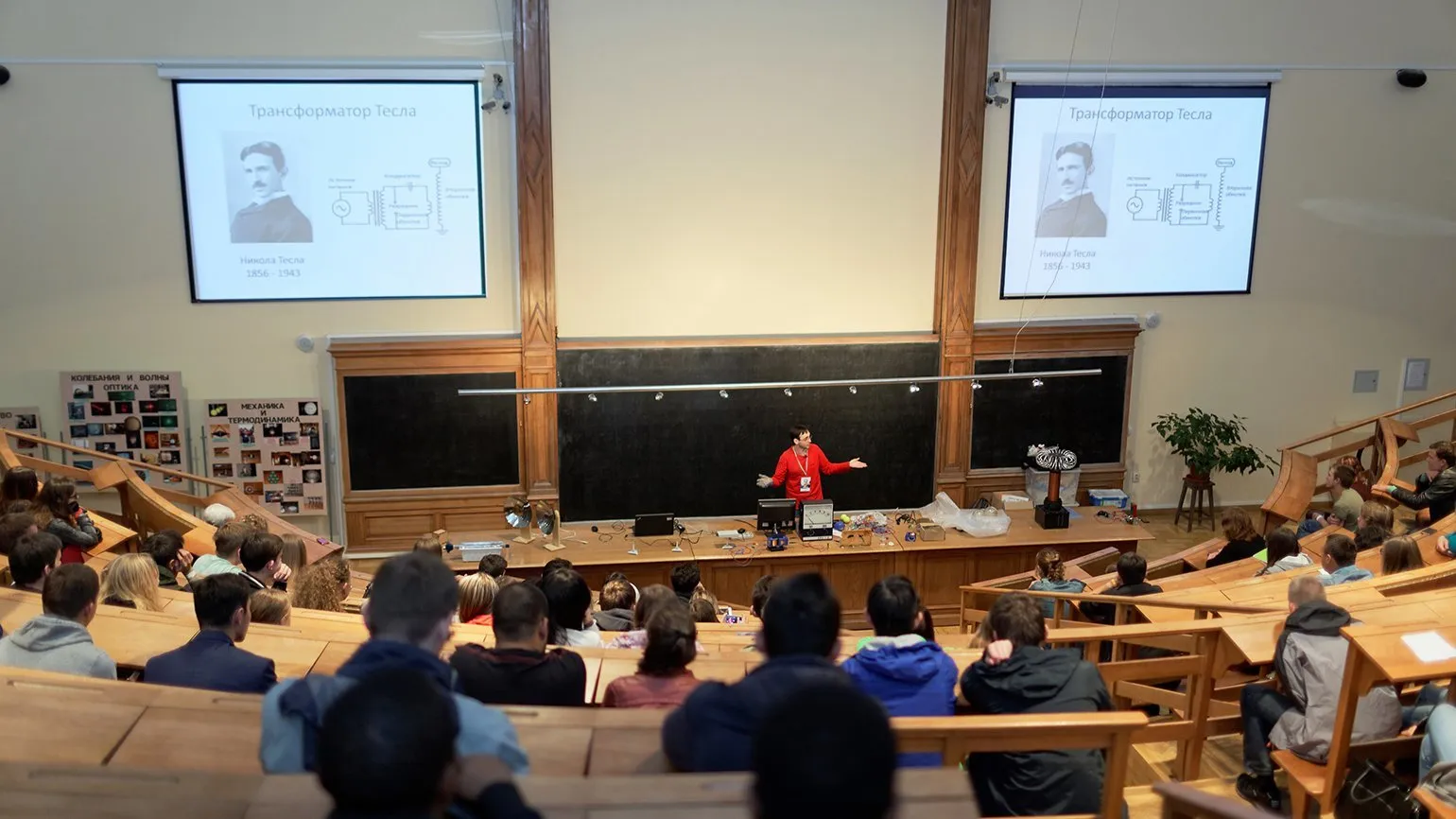
At the XII International Russian Conference of Higher Education Researchers (IVO Conference), Ilya presented an analysis of the effectiveness of two mechanisms for selecting applicants to the Higher School of Economics (HSE): based on the results of the Unified State Exam (USE) and school Olympiads. In the interview, he explained in detail the need to compare different types of admission and the results that such comparisons show. This data can help optimize selection processes, as well as improve the quality of education in universities.
Who and why studies the results of the introduction of the Unified State Exam
I am engaged in educational research, focusing on various aspects of the educational process, including teaching methods, evaluating the effectiveness of educational programs, and the impact of technology on learning. My research is aimed at identifying optimal teaching approaches that contribute to improving student achievement and developing critical thinking. I also analyze data on how social and cultural factors influence educational outcomes. The main goal of my research is to improve the quality of education and create conditions for the successful learning of each student.
I am analyzing the educational trajectories of students as part of a large-scale project dedicated to the study of the accessibility of higher education. The main focus is on the sources and channels of inequality that influence the choice of universities. This analysis identifies factors that promote or hinder equal access to quality education and helps develop recommendations for improving the situation in higher education.
The Unified State Exam (USE) has been in effect in Russia for over ten years, becoming the primary tool for selecting applicants. It is important to consider whether the USE has truly provided a level playing field for all students, as originally intended, or whether certain categories of students have an advantage or, conversely, remain at a disadvantage when receiving exam results and applying to universities.
Is this a single study or several different ones?
This is a large-scale project that included more than ten separate studies.
We conducted a study to find out how family income affects student achievement. We analyzed whether children from wealthy families choose more effective strategies for preparing for admission and whether they are admitted to more prestigious universities. The results showed that income level is indeed a factor contributing to educational inequality. We analyzed the effectiveness of additional exam preparation through courses or tutoring. When the Unified State Exam (USE) was introduced, it was assumed that it would become independent of specific universities. The underlying idea was that the USE is also a school exam, for which students can prepare at educational institutions without additional financial outlay. However, despite this, many students actively participate in courses and with tutors. Our research showed that tutors can indeed have a positive impact on exam results. Although the effect may be small, tutoring can play a significant role in admission to competitive universities. We examined inequality in access to education, focusing on educational mobility and factors influencing decisions to move. We also analyzed education accessibility across regions.
The work you presented at the Higher Education Research Conference is an important part of this project.
The study focused on the student selection mechanism at universities. Previously, we considered the Unified State Exam (USE) solely as a background element required for admission. In this study, we selected one of the most well-known selective universities—the Higher School of Economics—and its Faculty of Economic Sciences. Each year, this faculty faces a large number of applicants, including many Olympiad winners and holders of high USE scores. Our goal was to analyze whether the academic performance of these groups of students differs, and whether Olympiad winners really show better results in their studies.

As an economist, I was interested in this topic because of its importance for understanding economic processes and their impact on society. By analyzing various aspects, I strive to identify the key factors contributing to economic growth and stability. This allows me not only to gain a deeper understanding of how the economy functions but also to develop recommendations for improving the economic situation. It is important to study how various economic factors interact with each other and influence decision-making at both the business and government levels. Education is currently an interdisciplinary field actively researched by economists, sociologists, and psychologists. Our Institute for Institutional Studies employs specialists with diverse experience, which allows us to use a variety of analytical methods. This collaboration contributes to a more complete picture of what is happening in higher education. Is the Unified State Exam good or bad? Facts and Opinions
After more than ten years of practice, do you think researchers and applicants have adapted to the Unified State Exam?
Discussions on this issue are ongoing and will likely continue regardless of the chosen selection mechanism. Each of these methods has both advantages and disadvantages, making their discussion important for understanding all aspects.
Questions about the wording of tasks and methods of preparation for the Unified State Exam continue to concern the public. There is a debate about whether the exam truly assesses students' knowledge or whether they simply prepare for it using specific techniques. Concerns also arise about the fairness of the exam. Unfortunately, there are periodic reports of cheating at educational institutions that do not strictly monitor compliance with examination procedures.
Standardization of the exam and increased transparency of the university selection process are significant advantages. However, the question arises about the extent to which the exam reflects the content of the school curriculum and meets educational standards. This requires attention from exam developers and their assessment in the context of real educational needs. It is important that exams not only test knowledge but also foster the development of critical thinking and practical skills in students.
The main shortcomings of the previous selection system included a lack of transparency in processes, ineffective assessment criteria, and a lack of flexibility in approaches. The lack of clear standards led to subjectivity in decisions and an unequal playing field for participants. Furthermore, the old system failed to take into account rapidly changing market demands and employer needs, which reduced its relevance and effectiveness. As a result, many talented candidates could remain overlooked, while less suitable applicants received priority. These problems highlight the need to update selection approaches to improve the quality and fairness of the process.
The university entrance examination system that existed before the introduction of the Unified State Exam (USE) had its pros and cons. It was convenient for families with sufficient resources, who could ensure their child's chances of admission. Such families had access to tutors, who often worked at universities or served on admissions committees. They could also send their child to preparatory courses at the university, where they solved standardized exam problems. This created an unequal playing field for applicants and emphasized the need for changes to the admissions system.
For residents of other cities who did not have the opportunity to familiarize themselves with the exam syllabus, the situation was difficult. Nevertheless, the USE significantly addressed many pressing issues and undoubtedly increased accessibility to higher education by unifying admissions rules. Standardizing exams allows all applicants, regardless of region, to have equal access to educational institutions. This has become an important step towards fairness in the education system.
Modern applicants are no longer required to study the requirements and guidelines of each individual university. They can now apply to several universities simultaneously, eliminating the risk of overlapping exams on the same day. This innovation significantly reduces the stress and financial costs associated with the admissions process, allowing students to focus on their studies and choosing the most suitable educational institution.
The introduction of the Unified State Exam has had a positive impact on the higher education system, significantly reducing the level of corruption in university admissions. The admissions process has become more transparent and objective, allowing applicants to count on fair competition. This, in turn, contributes to improving the quality of education and ensuring equal opportunities for all who wish to obtain higher education.
Opponents of the Unified State Exam (USE) argue that high school students are now focusing exclusively on preparing for the exam, while other subjects are neglected. This raises the question of whether "cramming" for the Unified State Exam (USE) is truly a serious problem for the educational process. On the one hand, intensive exam preparation can limit students' comprehensive development and lead to insufficient knowledge acquisition in other subjects. On the other hand, the USE system standardizes assessment, which can encourage students to study key topics in greater depth. It is important to find a balance between exam preparation and the full educational process to ensure the high-quality and comprehensive development of students.
With the introduction of the USE, in my opinion, the gap between the school curriculum and university admission requirements has significantly narrowed. Previously, it was common for the content of entrance exams to differ from what was studied in school. The exam format could be specific, which complicated the preparation process for applicants unfamiliar with these requirements. Thus, the exams were often targeted at a narrow circle of people, which reduced the chances of passing for the majority of students.

When discussing cramming for the Unified State Exam in modern schools, it is appropriate to ask the question: wasn't there similar cramming in the past? Entrance exams? Previously, eleventh-graders preparing for university entrance exams often skipped classes, preferring to spend time and money on tutors, preparatory courses, or participating in academic competitions. Today, at least, the educational process is once again concentrated within the school walls, allowing students to receive a systematic education and fully prepare for exams.
There is a widespread belief that university selection today is often determined solely by the number of points earned: applicants enroll in those that "have enough" points. Faculty members express concern that this practice contributes to the increase in the number of unmotivated students who have no clear idea of their major before admission. This opinion largely reflects reality. Many applicants choose universities based on minimum score requirements, which can lead to insufficient preparation and interest in their future profession. It's important for young people to consciously choose an educational institution and major to minimize the risk of failure and increase the likelihood of a successful career.
This is difficult to agree with. Applicants typically prepare for specific majors and must clearly understand the exams they will need to take. In most cases, they don't just apply to different majors without thinking, but rather make an informed choice. The decision to choose a university is typically made a year before admission, during which time applicants actively prepare, both in school and through additional courses, for the exams required for admission. Modern applicants don't have the opportunity to prepare for all exams in the Unified State Exam format at once, so it's important to decide on a field or major early.
Before the introduction of the Unified State Exam, career choices weren't significantly more informed. There were alternatives, but they too were limited to narrow specialties. For example, if a student chose a mathematics major, they had to study mathematics in depth throughout the 11th grade. Thus, despite the diversity of areas, their studies were often limited to a narrow range of subjects.
The Monitoring of Education Economics surveyed students about their choice of university. Most responses were dominated by rational reasons, such as the educational institution's high reputation, qualified faculty, and employment prospects after graduation. This indicates that students are consciously choosing a university and understand their goals. However, a small proportion of students cite less well-founded reasons, such as parental pressure or the educational institution's proximity to home.
Background of the Study: How Admission Based on Olympiad Results Creates Inequality
Your study highlights that schoolchildren's participation in Olympiads has become a significant alternative to the Unified State Exam for university admission. When do you think this turning point occurred? Indeed, just ten years ago, the number of Olympiads and participants in them was significantly lower. This change in the educational environment underscores the growing interest in the Olympiad movement and its role in preparing students for future studies.
The Olympiad movement has a rich history. Before the introduction of the Unified State Exam, Olympiads were organized primarily by universities, serving as a form of initial selection for applicants. For example, in the spring, each university held its own Olympiad, where the most talented finalists were selected for admission. The Olympiad system helped identify and support gifted students, as well as improve their preparation for admission to higher education institutions.
Currently, there is a unified list of Olympiads, which is updated annually. Students who win or place in these Olympiads receive certain benefits when applying to educational institutions. There is a trend toward an increase in the number of Olympiads, as well as a growing number of schoolchildren achieving success in these competitions. This has a positive impact on the educational process and student motivation, contributing to the development of their intellectual abilities and preparation for future professional careers. Previously, state-funded places at higher education institutions were allocated to meet the needs of both Olympiad winners and applicants taking exams under the main admissions procedure. However, situations are increasingly arising where, after Olympiad winners have exercised their right to preferential admission, the number of remaining state-funded places is insufficient or non-existent. This leads to significant difficulties for all applicants seeking to receive an education at the expense of the state budget.

Does this question concern only leading universities?
Are Olympic winners really focused on Admission to prestigious universities. Olympiad winners represent a small percentage of applicants, but they tend to choose the institutions that offer the greatest return on their education. As a result of this situation, where most state-funded places are occupied by Olympiad winners, applicants taking the Unified State Exam (USE) may find themselves being accepted to state-funded places only if they achieve the highest scores. This can significantly limit opportunities for students who do not have Olympiad awards but who also achieved high exam results.
Applicants with a high GPA, such as 90, have a better chance of admission, while those with an 89 may face difficulties. However, 89 is a significant achievement, requiring effort to pass three or four subjects at this level. This raises the issue of inequality of opportunity when one candidate is admitted through an Olympiad, while another is admitted through the general admission system. Comparing these two approaches highlights the importance of equal access to education and fairness in the admissions system.
When admitting Olympiad winners, the focus is on knowledge in only one subject—the one in which the Olympiad was won. On the Unified State Exam (USE), passing scores in all other subjects are required, but this is not particularly difficult. At the same time, successful admission based on USE results requires high scores in three or four subjects. This raises the question: how fair is it for one person to focus exclusively on studying mathematics to win an Olympiad, while another prepares simultaneously for mathematics, social studies, and English to successfully pass the Unified State Exam? It is important to consider how this assessment system impacts student motivation and their future educational opportunities.
Previously, competition for state-funded places between Olympiad participants and applicants applying on a general basis was significantly less fierce. Universities independently determined the number of places allocated to Olympiad participants, which created more favorable conditions for talented students. With changes to admission rules, the situation has changed, and applicants now face increased competition for limited state-funded places. This influences the choice of admission strategy and emphasizes the importance of participation in Olympiads for educational success.
Olympiad participants were traditionally admitted before the main competition during the summer session. Universities reserved a certain number of places in advance for Olympiad winners, but could not enroll more than the established limit in the first year. This meant that Olympiad winners were also selected. However, the remaining places were sufficient for applicants applying on a general admissions basis who had passed the university entrance exams. This approach ensures a balance between talented Olympiad participants and those who passed the standard entrance exams. Currently, applicants are applying to universities en masse, which can lead to a situation where demand for higher education exceeds supply. In response to this problem, many universities are deciding to increase the number of free places at their own expense. This allows them not only to support Olympiad winners but also to accept students who have successfully passed the Unified State Exam. This approach helps make higher education accessible to a greater number of people and improves the quality of the educational process.
Who performs better at university – Olympiad winners or those with high USE scores?
Let's return to your study on the academic performance of students admitted to university through Olympiads and those admitted based on high USE scores. What are the results of this study?
The study showed that Olympiad winners achieve higher scores on average in their first year, but this advantage is not observed in all subjects. Over time, the differences in results even out. In their first year, Olympiad winners can demonstrate better achievements thanks to the subjects in which they previously participated in Olympiads. This underscores the importance of participating in Olympiads for developing students' academic skills and abilities. Olympiad participants who focus on preparing for one subject may lack knowledge in other disciplines. This may negatively impact their studies at a university, which requires a broader outlook and a holistic approach to learning. Research shows that narrow specialization can lead to difficulties in mastering related subjects, which in turn can reduce students' overall academic performance at higher education institutions. Olympiad participants demonstrate a high level of knowledge, especially in certain subjects in their first year. Their results often exceed those of students admitted based on their Unified State Exam (USE) results. However, in their second year, the differences in academic performance between these groups of students even out, and they demonstrate similar results. This suggests that Olympiads develop not only deep knowledge but also skills that may be important for successful study at a university. The question of the reasons for the smoothing out of differences in academic performance requires a more in-depth analysis. We hypothesized the influence of peer learning: students studying alongside high-achieving Olympiad winners strive to improve their level. At the same time, strong Olympiad winners may experience a relaxation effect after admission, which also affects their academic performance.
There are several ways to verify information. One of the most effective methods is to use reliable sources. You can consult scientific publications, studies, or official data that confirm or refute the stated facts. It's also helpful to compare the information with several reputable sources to ensure its veracity. You can also use specialized fact-checking tools and platforms. These methods will help you obtain accurate and verified data. Network analysis allows you to study the formation of social groups among students and identify how interactions between those admitted through the Unified State Exam and Olympiads impact their academic performance. University success depends not only on the individual abilities of students and the professionalism of their teachers, but also on the influence of their peers and their behavior. Understanding these social dynamics can help create more effective educational environments that foster student success.
Are Olympiads a chance for the most gifted or for those with resources?
You've researched the impact of Olympiads on inequality in admissions, but what about access to the Olympiads themselves? While school and municipal stages are accessible to most, participation at higher levels often requires special preparation. This creates additional barriers for students who lack access to high-quality educational resources or preparatory courses. Inequality in access to Olympiads can have a significant impact on students' subsequent educational opportunities and career prospects.
I didn't delve into the Olympiad movement, as our project focused on differences in applicants' academic performance. However, this is an interesting topic, as participation in Olympiads can contribute to inequality. If someone doesn't participate in Olympiads, they miss out on the opportunity to improve their chances of admission to competitive universities.
Various factors influence the ability to participate in Olympiads. For example, residents of small towns or rural areas may lack reliable internet access. Furthermore, travel to Olympiads requires financial resources for tickets and hotel accommodations. It is important to note that some schools offer special elective classes aimed at preparing for Olympiads, which can significantly increase students' chances of successful participation.
Olympiad questions have their own specifics, and not all schools have teachers capable of effectively preparing students for such tasks. This requires specialized skills and knowledge that often go beyond the standards and requirements of the Unified State Exam. As a result, in some cases, there may be a lack of both financial and educational resources to fully prepare for the Olympiad.
Digital technologies can play a key role in reducing inequality in education. For example, this year, the school stages of the All-Russian School Olympiad were held online, allowing more children from different regions to participate. Online formats eliminate geographic barriers and reduce travel costs, which in turn promotes more equal access to educational resources. Thus, the use of digital technologies in education can significantly reduce inequality and create a more equitable environment for all students.
There are several pressing issues with technology in conducting Olympiads, especially for universities organizing such events. Firstly, a stable internet signal is not always available, which can hinder participation in online Olympiads when it is necessary to answer questions. Secondly, I am concerned about the integrity of the online format. How can you be sure that this is the student who is answering the questions, and not someone else who might prompt them? Unfortunately, this remains a serious problem. In-person Olympiads are a more reliable method of delivery, and it is worth considering how to ensure accessibility for participants from other cities to create a level playing field for everyone.
What else needs to be researched and what needs to be changed in the system
During your research, you may encounter a number of difficulties, including limited access to data on various Olympiads. Many sources of information may be closed or incomplete, making it difficult to analyze results and trends. Furthermore, differences in data collection methods and presentation can create additional challenges. Access to reliable and up-to-date data is essential for high-quality research, which is a challenge in the field of Olympiad studies. We use a variety of data for analysis. Primarily, this is administrative information about our students. All data is processed anonymously, guaranteeing the protection of personal information. Secondly, two large-scale studies are conducted on students. The first is an annual monitoring of the economics of education, which allows us to assess the state of the education system. The second is an all-Russian study of educational and professional trajectories. This study collects data on the same participants over many years, from the end of ninth grade to their graduation from universities or colleges, as well as their first work experience. This allows us to closely track students' educational and career paths.

Questions about sample representativeness and underresponse to certain questions are common in research. Therefore, it is important to collect aggregated data on the academic performance of all students. This will allow for more accurate answers to practice-oriented questions regarding accessibility of higher education. Aggregated information makes it possible to identify common trends and problems, which contributes to a more thorough analysis of the educational situation.
The study in question focuses on a specific department of a specific university, making its results difficult to transfer to other educational institutions. However, it is possible to consider the general benefits of participating in Olympiads as a means of admission to Russian universities. Olympiads foster the development of analytical thinking and a deeper understanding of the subject, which positively impacts applicants' preparation. Furthermore, success in Olympiads can significantly increase chances of admission, as many universities take their results into account when selecting candidates. Participation in Olympiads also helps students establish connections with faculty and other talented students, which can be useful in their future studies and careers. Thus, despite the specificity of the study, it can be noted that Olympiads are generally an effective tool for preparing for admission to Russian universities.
Studies can be conducted at various universities to determine where Olympiad winners perform better than applicants admitted based on their Unified State Exam results. Organizing such a study within a university is not particularly difficult. It is necessary to obtain data from the admissions committee on the number of Olympiad winners admitted and the total number of state-funded students, collect information on the students' current academic performance, and take into account their socioeconomic and school backgrounds. However, comparing results across different universities can be challenging. How can excellent students from different universities be compared? Assessment standards can vary significantly not only between universities but also across educational programs or even courses within a single program. This creates difficulties in objectively assessing student performance.
There are not many universities that accept students who have won Olympiads. Outside of the leading educational institutions, the share of Olympiad winners is less than 30% of the total number of budget places.
In your opinion, what measures can be taken to equalize the distribution of students? Should the number of places for Olympiad winners at the most popular universities be limited?
I believe that one solution to this problem is the development of additional financial support measures for students. It is especially sad to see those who failed to achieve the required number of points for a budget place and are forced to choose less prestigious universities. It is necessary to consider improving the educational loan mechanism to make it more accessible and attractive to applicants and their parents. It is important that educational loans are not perceived as a burden, but as a real tool for obtaining a quality education.
It is worth considering the possibility of providing targeted assistance to students, both from the regions and from the universities themselves. One effective solution could be a return to the concept of educational vouchers. This will make it possible to more clearly determine which universities students are sent to and for what purposes. Currently, average Unified State Exam (USE) scores provide a general indication of the demand for universities, but some institutions struggle to recruit students for state-funded places. The introduction of vouchers would help change this situation: universities would begin to compete more actively for applicants, as their success and funding would depend on attracting students. This could incentivize higher education institutions to improve the quality of education and develop new programs, which would ultimately benefit both students and the education system as a whole.
During my research, I encountered a number of unanswered questions beyond the reasons for the narrowing of student performance gaps by the second year. One key issue is the influence of various factors, such as motivation, stress, and social environment, on academic performance. It is also worth considering how differences in teaching methods and pedagogical approaches may impact results. In the future, I plan to delve deeper into these aspects by conducting additional research and surveys among students and faculty. This will allow us to gain a more comprehensive understanding of the factors influencing academic performance and develop recommendations for improving the quality of education.
We conducted an extensive study of educational inequality and identified important trends. Our data shows that girls achieve higher results in school, including average Unified State Exam scores, and perform better in universities. However, when entering the labor market, the opposite is true: boys earn higher salaries. This makes me wonder when exactly this transformation occurs and why, despite the superiority of girls in educational achievements, boys have an advantage in salaries.

There is a relevant topic for research concerning the future of the Unified State Exam. It's important to examine how the pandemic will impact the admissions process, exam preparation, and university selection in the coming years. Currently, the effectiveness of online classes for preparing for the Unified State Exam (USE) is of particular interest. Previously, the focus was on in-person instruction at schools, courses, or with tutors. The pandemic has led to a significant increase in online learning options, and it's necessary to evaluate the extent to which these formats actually contribute to successful university admissions. Analyzing exam results data and student feedback will help understand how effective this approach is compared to traditional preparation methods. Rewrite the text, maintaining its main topic and avoiding unnecessary information. Optimize it for search engines, although you can slightly expand the content. Avoid using emojis and unnecessary symbols. Don't add sections with numbers or bullets. Simply present the text in its pure form.
Read also:
- 5 questions about the Unified State Exam for its twentieth anniversary
- There were more winners of school Olympiads than guaranteed places for them
- The Minister proposed measures to reduce the excitement during the admissions campaign
- Quote of the week: how much does it cost to prepare for the Unified State Exam
- The Ministry of Education and Science approved the list of school Olympiads for the 2021/22 academic year