Contents:
- What arguments do officials give against a master's degree in another field?
- What's wrong with the Russian master's degree in general?
- Why do people go to a master's degree in another field?
- Non-core transfers to technical master's degrees are rare.
- What is the benefit of unique programs designed for different backgrounds?
- Is it necessary to have a basic pedagogical education for a master's degree in pedagogy?
- What about a master's degree in law?
- What's in the dry remainder?

Skillbox Digital College → In-demand professions in IT and design. Diploma of secondary vocational education and employment assistance.
Learn moreChanging the study profile in a master's degree, that is, enrolling in a master's program in a specialty different from basic education, has become a common practice in Russian universities. However, this summer, in the context of Russia's withdrawal from the Bologna Process and the formation of its own higher education system, it was proposed to limit the possibility of enrolling in a master's program in a different field. This could significantly impact students seeking to expand their knowledge and skills in related fields. It is important to monitor changes in legislation and take new requirements into account when planning your educational path.
Changing the profile after a bachelor's degree often draws criticism. Why is this happening? In fact, such a decision can lead to various outcomes, and it's important to consider the nuances. Skillbox Media conducted a study to gather the opinions of university master's program directors and graduates who chose non-major programs. Their experiences will help us understand whether changing majors actually negatively impacts careers or whether there are advantages.
What arguments do officials use against master's programs in other fields?
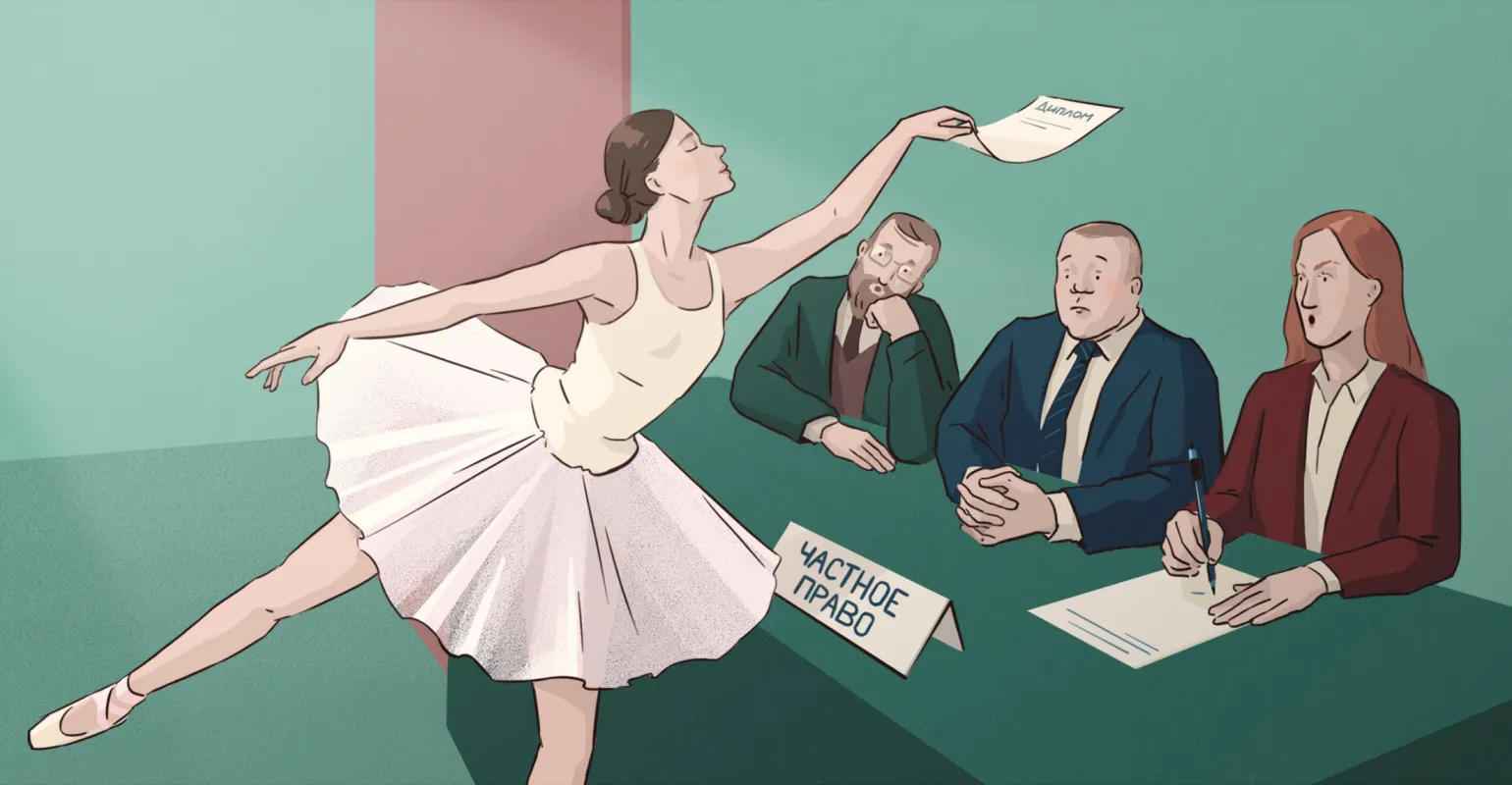
Education and Science Minister Valery Falkov emphasizes the need to reconsider the principle of absolute freedom to enroll in a master's program after receiving a bachelor's degree. He points out that universities only need two years to train qualified specialists in fields such as history, law, and pedagogy. This poses challenges, especially when students lack the necessary basic education for further study. Falkov proposes a more balanced approach to selecting candidates for master's programs to ensure quality education and the training of specialists who meet the modern demands of the labor market.
Shortcomings in the education system contribute to the debasement of master's education and lead to admission to master's programs solely for the sake of obtaining a diploma, noted Deputy Minister of Education and Science Dmitry Afanasyev. This underscores the need to reform educational programs and improve the quality of specialist training.
Training a qualified specialist without the appropriate basic education in two years is impossible. At an extended meeting of the Federation Council Committee on Science, Education, and Culture in June, one participant noted that a bachelor's degree in journalism can enroll in a master's program in law and quickly become a lawyer. This raises doubts about the appropriateness of such a practice, as it requires in-depth knowledge and skills that cannot be acquired in a short period of time. Legal education requires time and effort to develop the necessary competencies, underscoring the importance of high-quality education and professional training.
Oleg Smolin, Deputy Chairman of the State Duma Committee on Education and Science, cited examples demonstrating the discrepancy between the field of study and the choice of further specialization. For example, a bachelor's degree graduate in veterinary science enrolled in a master's degree in history, while a marketing graduate chose a master's degree in defectology. These cases highlight the need for a clearer connection between educational programs and professional activities, which could be an important step in improving the quality of education and matching it to the labor market.
In his opinion, the "bachelor's plus master's" track should focus on integrated training in one field or related areas. This will allow students to deepen their knowledge and skills, providing a more holistic approach to the educational process. The integration of these levels of education contributes to more effective training of specialists ready for modern challenges in the labor market.

The bills concerning the new higher education system provide for restrictions on admission to master's programs for graduates Non-core bachelor's or specialist's degrees. This means that students who completed a bachelor's degree in a field unrelated to their chosen master's program will not be able to continue their education in that field. This measure is aimed at improving the quality of specialist training and better aligning educational programs with labor market demands.
Some master's programs may not adhere to the general rule requiring a relevant bachelor's degree. During Russian Creative Week, dedicated to the development of creative industries, Valery Falkov noted that the creative field, including art, design, computer graphics, game development, journalism, and marketing, is an exception. He is confident that in this field, there is no requirement for a relevant education for admission to a master's program. This opens up new opportunities for talented professionals who can bring fresh ideas and approaches to creative industries.
What's wrong with Russian master's programs overall?
Skillbox Media's sources note that the idea of changing majors after a bachelor's degree is not a negative one. Universities like Cambridge and Oxford successfully implement this practice, producing future Nobel laureates and influential businessmen. However, in Russia, for many years, a different education model was in place, in which students studied one major for five years. As a result, employers often distrust candidates who changed majors during their studies, perceiving them as insufficiently competent. Thus, there is a need to change attitudes toward the diversity of educational paths and emphasize the skills and knowledge acquired during education.
I received my undergraduate degree in law and completed my master's degree in integrated communications. After graduation, when I began looking for a job, employers often asked why I decided to change my major. This question highlights the importance of career flexibility and the need to adapt to the realities of the modern labor market. Combining legal knowledge with marketing skills allows me to work effectively in communications, which is becoming increasingly in demand in a rapidly changing information environment.
A survey conducted by RBC among large employers revealed that many prefer to hire specialists who did not change their specialization during their education. Employers believe that a specialized master's degree provides a deeper immersion in the professional field. This approach allows graduates to be better prepared for the demands of the labor market and become highly qualified specialists in their field.

Attitudes towards changing a profile after receiving a bachelor's degree, as well as towards the Bologna education system in Russia, It was not formed by chance. According to Oleg Donskikh, professor and head of the Department of Philosophy and Humanities at the Novosibirsk State University of Economics and Management, the implementation of this system in our country occurred with reservations, without due consideration, and in haste. This hasty implementation led to numerous problems and misunderstandings that still affect the quality of education.
Master's programs at Russian universities are often not developed thoroughly enough. In most cases, higher education institutions simply add an additional year to the existing five years of study, expanding the specialist program. As a result, students in specialized master's programs often face repetition of material they already studied in their undergraduate program. This creates inefficiencies in the educational process and reduces interest in further education. Optimizing master's programs and eliminating duplication of information can significantly improve the quality of education and the training of specialists.
Some students, having encountered difficulties in master's programs, decide not to continue their studies and complete their education at the bachelor's level. Others began to change the direction of their master's specialization, sometimes choosing completely unrelated fields.
Preserving the old Soviet specialist degree has become necessary given the introduction of a two-tier Western-style education system. This is because some professions cannot be mastered in four years of a bachelor's degree, especially if a student decides to change their focus during a master's degree. Alexander Safonov, professor in the Department of Human Resources and Psychology and vice-rector of the Financial University under the Government of the Russian Federation, emphasizes that technical and medical specialties require in-depth fundamental training. Reducing the curriculum to four years in these fields poses significant challenges, confirming the need to maintain longer training.
Alexander Fokin, associate professor at the School of Environmental and Social Studies (Anthroposchool) at Tyumen State University, noted that universities have taken advantage of the current situation to increase revenue. As a result, there has been a growth in non-core master's programs, allowing educational institutions not only to compete but also to attract students from both their own bachelor's programs and other universities. Some universities have launched practice-oriented master's programs in fields such as management and economics, while others have introduced unique master's programs that immediately attract students, such as urban studies or bioeconomics. However, questions arise about the quality of education provided in these new programs. The creation of a non-core master's program largely depends on the university's faculty. The prestigious American technical university Massachusetts Institute of Technology (MIT) successfully runs a strong humanities master's program, founded by the renowned linguist and philosopher Noam Chomsky. However, not every Russian university has the opportunity to attract such stellar faculty to its non-core programs. This creates certain difficulties for the development of humanities programs at Russian universities. The quality of education and the level of teaching in master's programs directly depend on the competencies and reputation of the faculty, which underscores the importance of attracting highly qualified specialists. Launching a practice-oriented non-core master's program at any university is significantly easier than launching a research program. This is because creating a non-core Master's program does not require in-depth scientific knowledge in a specific field. It is sufficient to attract faculty with practical skills and applied knowledge. This allows universities to respond more quickly to labor market demands and offer relevant educational programs that meet modern requirements.
Why people pursue a Master's program in a different field
Despite the obvious shortcomings of the education system, young people continue to actively participate in the educational process. A survey conducted in 2021 by Bauman Moscow State Technical University, Moscow Aviation Institute (MAI), and Moscow Engineering Physics Institute (MEPhI) among 2,500 young people showed that more than a third (39.3%) of Russian bachelor's, master's, and university graduates prefer to study in a non-core Master's program. This demonstrates that young professionals strive to develop their skills and knowledge in various fields, even if they are not related to their original specialty.
Tatyana Klyachko, Director of the Center for Continuous Education Economics at RANEPA, emphasizes that at the age of 17, after graduating from school, many young people face the difficulty of choosing a profession they would like to master throughout their lives. Most often, the choice is based on fashion trends or parental recommendations. However, during their studies, students may come to understand their true interests and preferences, making a master's degree an important stage in their professional development. A master's degree provides the opportunity to deepen their knowledge and skills and helps form a clear vision of their future career path.
Polina Tynovskaya, a graduate of the Higher School of Economics, shares her experience choosing a profession. Since childhood, she was surrounded by lawyers and dreamed of a career in this field from an early age, so she enrolled in the Faculty of Law at the Higher School of Economics. However, during her studies, Polina was actively involved in organizing university events and parties. By her fourth year, she realized that her true passion lay in working with people and communications, particularly in the area of BLT events related to marketing. After completing her bachelor's degree in law, Polina decided to pursue a master's degree at the Higher School of Economics, choosing the Faculty of Communications, Media, and Design. This move was a logical continuation of her desire to develop in a field that brings her joy and allows her to utilize her skills in event organization and audience interaction. Education is a key element of the economy, as it reflects and adapts to economic changes in the country. Alexey Beskopylny, Vice Rector for Academic Affairs and International Affairs at the Don State Technical University, emphasizes the importance of this connection. In a dynamic economic environment, educational programs must meet the needs of the labor market and help prepare qualified specialists capable of adapting to changes in various industries. Optimizing educational processes and integrating new technologies play a crucial role in creating an effective education system that fosters economic growth and development.
Changes in the labor market are occurring rapidly, creating uncertainty and difficulties in planning for the future. Under these conditions, young people are seeking a multidisciplinary education to improve their chances of successful employment, notes Tatyana Klyachko. As a result, many choose economics and law, as these professions remain in demand. A law or economics degree significantly reduces job search risks and ensures a stable income, explains Oleg Buklemishev, Deputy Dean of the Faculty of Economics at Moscow State University and Director of the Faculty's Center for Economic Policy Research. Obtaining such qualifications helps young professionals adapt to market changes and confidently build a career in an uncertain environment.
Karina Kuzmina, a graduate of the Master's program in Applied Economics at the Higher School of Economics, chose a career in economics while pursuing a bachelor's degree in the Mechanics and Mathematics Department at Novosibirsk State University and working part-time at the Sobolev Institute of Mathematics. She began to realize that science and a career as a mathematician did not meet her ambitions. "I was earning only 9,000 rubles a month, and my professor-supervisors earned no more than 20,000," she shares. This experience helped her realize that she wanted to pursue more promising and financially attractive paths in her professional life.

After learning about the recruitment of students to the Winter Economic School organized by the Higher After completing her Master's degree in Economics at Novosibirsk University, Karina immediately applied. In 2016, she was successfully admitted to the HSE Master's program in Applied Economics. This open competitive event for applicants to Master's programs in economics and finance offers a unique opportunity to deepen their knowledge and develop skills in relevant areas of economics. Switching to a different major during a Master's program is a challenging task. You need to prepare for exams, compile a portfolio, and write essays. Even after meeting these requirements, it will take significant effort in the first few months of study to catch up with students already in the program. "In the first few months, I barely understood what the professors were saying. They made it clear to me that if I got in, I had to figure everything out on my own. "I devoted a lot of time to my studies," Karina shares her experience. Many students say their choice of master's program major was made consciously, thanks to work experience or participation in competitions and championships, and they have no regrets. Olga Budantseva, a second-year master's student at Tambov State University, shares her experience: "During my undergraduate degree at the Financial University, I actively participated in case competitions for three years, solving problems from various industries, including FMCG, pharmaceuticals, banking, and marketing. Over time, I realized that international finance wasn't my path. I decided that in my master's program, I wanted to study a specialty that would allow me to make a real difference to society. So, I chose healthcare management, which required me to change universities and move from Moscow to Tambov." This approach to choosing a specialty helps students not only better understand their interests but also prepare for a successful career. Graduates of non-core Master's programs note that their efforts and perseverance are rewarded with new knowledge and expanded horizons. They develop flexible thinking and the ability to solve complex problems. Many of them are confident that they have found their calling and mastered a profession that not only brings satisfaction but also significantly increases their income. Non-core transfers to technical Master's programs are rare. The attitude of university administrators and faculty toward changing the field of study during a Master's program depends on the university's focus. Technical universities and institutes are the most wary of non-core students. However, non-core Master's students rarely choose such educational institutions. This is due to the specifics of specialist training and the knowledge requirements necessary for successful mastery of technical disciplines. Changing majors can be difficult and require significant effort from students, which also impacts their choice. At Novosibirsk State University, according to university data, the proportion of students from a non-major field of study does not exceed 15% of those applying for master's programs. This is due to the university's master's programs primarily focusing on the natural sciences and requiring specialized knowledge. Non-major students are most common in programs with a social and humanities focus, such as law, where their share reaches 30%, and in psychology and philosophy, where this figure reaches 50%.
A similar situation is observed at MEPhI, where, according to Oksana Kruzhalova, Head of the Graduate Department, over 90% of applicants are bachelor's degree holders with specialized education. Non-major graduate students, she notes, are primarily graduates of previous years or older individuals who are making a conscious decision to retrain. Non-major candidates most often choose IT, as many seek to supplement their education with digital competencies, which is relevant in today's labor market.
The rare transfers to other specialties in master's programs in engineering and technical disciplines are due to the difficulty of entrance examinations. These exams serve as a natural filter, weeding out students who are insufficiently prepared in a technical field, notes Dmitry Sednev, Rector of Tomsk Polytechnic University. According to him, the most noticeable transfers occur among medical students from other universities who choose to study instrumentation, including medical instrumentation. There are also shifts of engineers seeking to gain knowledge in the field of management, technological entrepreneurship or quality management. Thus, transfers to other specialties in master's programs in engineering and technical disciplines remain rare, which underlines the high level of requirements for students.
A small proportion of students, usually from 5 to 15% make interdisciplinary transitions during their studies. For example, students majoring in petroleum engineering choose instrumentation engineering in their master's program at TPU, metallurgists delve into materials science, and power engineers master digital technologies. Such transitions open new horizons and allow for development in related fields, which contributes to graduates' increased competitiveness in the labor market.
Students are typically driven by two main motivations. The first is the desire to conduct interdisciplinary research, which requires acquiring new knowledge and skills. The second motivation is related to career ambitions: many students seek to change their major for vertical career growth or a horizontal transition to a new profession. This second motivation is more often observed among more mature applicants who consciously choose their field of study.
Humanities majors, as a rule, rarely transfer to technical universities. This most often happens to lawyers or economists who decide to expand their knowledge in the field of technology. This trend highlights the importance of an interdisciplinary approach in education, where the humanities can enrich technical specialties. Multidisciplinarity is becoming increasingly relevant in the modern economy, where it is impossible to limit oneself to just one science or profession. According to Alexander Safonov of the Financial University, a broad perspective on various phenomena is necessary for successful functioning in the labor market. However, he expresses doubts about students radically switching between fields. "Jacks of all trades" are in demand in immature markets that require a broad range of skills. At the same time, in more developed labor markets, the need for specialists with in-depth professional training has increased. Alexander Safonov emphasizes that it is precisely these personnel, especially in engineering professions, who will be key to the recovery and development of the Russian economy.
What are the benefits of unique programs designed for different backgrounds?
While examples of humanities majors transitioning to technical specialties are rare, cases of technical specialists choosing humanities, creative, or economic professions are much more common. Such transitions demonstrate the flexibility and versatility of skills developed in technical fields and open new horizons for career growth and self-expression.
The writing and thinking styles of specialists in the natural sciences and the humanities differ significantly. However, motivation plays a key role. Alexander Fokin notes that he has met people who successfully transitioned from technical specialties to the humanities. He mentions a mathematician who became a historian, as well as a chemist who went on to earn a master's degree in archaeology and now conducts chemical analysis of glass artifacts found during excavations. Tatyana Klyachko also emphasizes the importance of an interdisciplinary approach, citing the example of a joint master's program between RANEPA and MIPT, in which MIPT students study economics and gain valuable knowledge for their professional careers. Such examples demonstrate how a diversity of approaches and disciplines can lead to new achievements and career success. There are master's programs designed for applicants with diverse educational backgrounds. These programs open doors to students with diverse experiences and knowledge, allowing them to adapt and thrive in a new field. The creative economy is actively developing globally, which is also reflected in educational programs. It's important for students, regardless of their major, to develop innovative thinking skills and move beyond traditional disciplinary boundaries. According to Aliia Sakhareva, Deputy Director of ITMO University's Center for Art and Science, such approaches are key to developing future professionals in a rapidly changing world. Creative thinking and an interdisciplinary approach will help graduates adapt to new challenges and successfully implement their ideas in various fields.
In 2018, ITMO University launched the first master's program in Russia combining art and science. This unique program prepares interdisciplinary specialists capable of addressing pressing issues in science, society, and culture. It offers artists the development of scientific and technical knowledge and digital skills, while technical professionals and scientists are introduced to contemporary art.
The educational process includes both theoretical and practical components. Students delve into the theory and history of contemporary and scientific-technological art, as well as mastering materials, programming, and digital tools. The practical component of the program includes master classes with experienced artists and elective courses such as bioart, the application of artificial intelligence, and the use of digital technologies in art.
This program promotes the formation of a new type of specialists capable of integrating scientific and artistic approaches to create innovative solutions in various fields.

The Master's program is available to students Aliya notes that the program welcomes specialists from diverse fields, including psychology, economics, sociology, physics, chemistry, and art. Approximately half of the students pursue careers in the technology sector after graduation, while the other half pursue careers in the creative industries. A case in point is Anna Kaplan, a 2021 graduate who became a curator of educational projects at the Center for Art and Science. Anna first earned a bachelor's degree in soil science from the Faculty of Biology at St. Petersburg State University and then decided to transfer to ITMO's creative master's program, seeking to work at the intersection of natural sciences and art. It was at ITMO that she discovered a unique program in "bioart," which allowed her to realize her ambitions. Critical thinking and information processing skills are becoming increasingly relevant in the modern economy and labor market. Daria Denisova, director of ITMO's Science Communication Center and head of the eponymous master's program, emphasizes the importance of developing effective communication with the scientific community. In a context where society often ignores the opinions of scientists, it is necessary to bridge the gap between science and society. The course offered at the Center is aimed at developing these skills. Although ITMO undergraduates focused on research rarely enroll in non-core master's programs, the Center also hosts philosophers, political scientists, pharmacists, sociologists, and biophysicists from other institutions. Through their diverse professional experiences, students enrich each other's knowledge and skills, fostering a deeper understanding of interdisciplinary connections and current issues. The directors of ITMO's non-core programs emphasize the high demand for their graduates in the labor market. However, some of the graduates we spoke with noted that they remained at ITMO because they wanted to continue their careers. They also mention a shortage of suitable offers on the external labor market, which confirms the need for a more detailed analysis of the employment situation for specialists in this field.
Is a basic pedagogical education required for a pedagogical master's degree?
In June of this year, the Government approved a concept for improving pedagogical education. According to the new concept, previously announced plans to expand specialist programs do not imply a reduction in the number of master's programs. One of the key goals of this initiative is to attract students and specialists from various fields to study in pedagogical fields. This decision is aimed at eliminating the problem of teacher shortages and improving the quality of the educational process.
Amid widespread criticism of non-core master's programs, legislators have not categorically opposed the admission of bachelor's degree students with non-core education to pedagogical programs. A strong foundation in their field of study is crucial, as schools urgently need qualified teachers with interdisciplinary skills. These specialists are able to effectively combine various fields of knowledge, which is especially important in the modern conditions of the educational process.

Non-core master's degree programs in pedagogy have a right to exist, says Maria Lytaeva, head of The Master's program in "Pedagogical Education" at the Higher School of Economics emphasizes that, regardless of students' initial educational background, a Master's program in Teaching provides a foundation for research and fosters advanced competencies and practical teaching skills. This makes the program relevant and in-demand for those seeking to advance their careers in education, ensuring high-quality training for future teachers. Graduates from pedagogical universities possess a deep understanding of the fundamentals of pedagogy and already have experience working in a school, making them more successful and confident in their professional work from the outset. The training programs at these universities include a significant number of practical classes, which facilitates the rapid development of teaching skills. At the same time, graduates from classical universities often have a deeper understanding of their subject and a conscious approach to choosing a teaching profession. During their Master's studies, they develop the necessary skills for working in a school and ultimately achieve success on par with teachers who have completed specialized training. These differences highlight the importance of diverse educational pathways in preparing qualified education professionals. Co-curricular activities provide a unique opportunity for students with diverse educational backgrounds to share experiences and generate new ideas. In this process, stronger students help those with less solid knowledge develop. As Maria emphasizes, it is difficult to say whether our students with non-core education would be able to find employment in the labor market without studying in our program. In the Master's program in Teaching, they not only develop their skills but also become more competitive in the labor market thanks to their strong foundational subject education. Thus, co-curricular activities contribute not only to the professional but also to the personal growth of students, making them more in demand in the educational field. What about the Master's program in Law? The Minister of Education and Science mentioned lawyers in the context of the negative consequences of non-core Master's programs. This raises an important question about how a lack of specialized knowledge and skills can impact the quality of legal education and professional training. Non-core master's programs can leave graduates unprepared for the real challenges of legal practice, which, in turn, will negatively impact their career advancement and credibility in the legal profession. Therefore, it is crucial to review and improve educational programs to ensure they meet the demands of the modern labor market and ensure high-quality training for legal professionals. In the field of law, master's programs should be divided into two tracks. The first track is designed for individuals with experience as lawyers who recognize the need for additional skills and knowledge. This could include areas such as bankruptcy or pharmaceutical law. The second track, called "adaptive," should be created for students from other specialties seeking to gain an understanding of the fundamentals of jurisprudence. Roman Yankovsky, Deputy Dean for Development at the Faculty of Law at the National Research University Higher School of Economics, proposes introducing simplified legal disciplines for non-lawyers into the adaptive master's program, such as intellectual property law for creative professionals. A year-long course is sufficient for full-time students to master the program. However, in the evening format, students from non-core fields will need two years to fully master the curriculum. The adaptive master's program is unique in that it does not grant the right to practice law and is not equivalent to a full legal education. It is designed to train specialists with hybrid knowledge, such as auditors or financiers, who possess the legal fundamentals necessary for their professional field. However, those who aspire to become practicing lawyers will need a second degree in law. Roman emphasizes the importance of this distinction, as it allows for better adaptation of education to the modern labor market. The idea of an adaptive master's program was not a random one. For many years, he has noticed that law students entering master's programs often skip classes. Some of them transfer to the second stage of higher education solely for the sake of obtaining a diploma, since without a master's degree, a bachelor's degree graduate is perceived as an "incomplete" lawyer. The adaptive master's program aims to change this situation by offering flexible learning formats that will meet the needs of students and the modern demands of the legal profession. Roman Yankovsky points to the root of the problem in higher education: the excessive amount of theoretical knowledge students receive. Much of the educational process is focused on disciplines that arose from traditional norms, leading to their constant presence in the curricula. This creates an imbalance between theory and practice, which can negatively impact the preparation of specialists capable of successfully adapting to the demands of the modern labor market. The need to revise curricula and emphasize practical skills is becoming urgent to improve the quality of education. Master's students often do not find the courses they already took in their undergraduate programs useful. This leads to a reluctance to rehearse the same topics. By moving to a more practice-oriented approach in legal education, lawyers can be trained in three to four years at the undergraduate level. However, this requires a complete review and update of educational programs, as well as changes to educational standards. This approach will create a more effective system for training specialists that meet modern market demands.
What's the bottom line?
Discussing the pros and cons of abolishing non-core master's programs in Russian higher education, most participants in the Skillbox Media discussion concluded that such a master's program is necessary. It is in demand by the economy and the labor market. Modern higher education is not simply a set of knowledge and competencies, but includes a broad worldview, flexible thinking, and interdisciplinary skills, notes Oleg Buklemishev of Moscow State University. The abolition of non-core Master's programs could negatively impact the training of specialists capable of adapting to rapidly changing market conditions and solving complex problems. Therefore, it is important to preserve and develop such educational programs to ensure the competitiveness of graduates.
The innovative economy is driving changing approaches to work, leading many people to not work strictly in the specialty indicated on their diploma and to frequently change career paths throughout their lives. In today's labor market, diverse knowledge and the ability to quickly adapt are especially important. This opinion was expressed by Tatyana Klyachko from RANEPA, emphasizing the need for flexibility and multidisciplinary work.
Higher education cannot be assessed by a single scale. In some cases, it is necessary to retain a specialty, in others, to retain only core Master's programs, and in still others, to allow non-core Master's programs. Maria Lytaeva from the Higher School of Economics emphasizes this approach. She notes that non-core Master's programs cannot be abolished overnight. A reasonable and combined approach to reforming the educational system is needed.
Revised text:
Also study:
- How to attract students to a master's program and what it means to "package" a program
- 15 unusual master's programs for those who work or want to work in education
- Online master's program for methodologists. How does it work?
Machine learning
Master machine learning in Enroll in an online master's program with MEPhI and become a sought-after specialist with industry experience. Complete an additional track on MLOps and learn how to implement models in production. Knowledge from university experts and IT practitioners + intensive practical training.
Learn more