Contents:

Learn: Profession Methodist from scratch to PRO
Learn moreDeveloping creativity and creative thinking is becoming an important topic in modern society. Creativity, as the ability to create, is a skill that is of great importance in various areas of life. However, the question arises: is creativity an acquired skill or an innate personality trait? Many researchers believe that creativity can be developed and improved. This opens up new opportunities for personal growth and professional development. The ability to think outside the box and generate original ideas has become key in a rapidly changing world. Therefore, working on creative thinking is not only useful, but also necessary for achieving success in any field.
Let's try to delve into the essence of the issue.
- how are creative tasks different from any others, and what type of thinking is needed to solve them;
- what personality traits are closely linked to creativity;
- how is our creative abilities influenced by the structure of the brain and genes;
- are there "non-creative" people, and is it possible to improve your creative abilities.
What is a creative task?
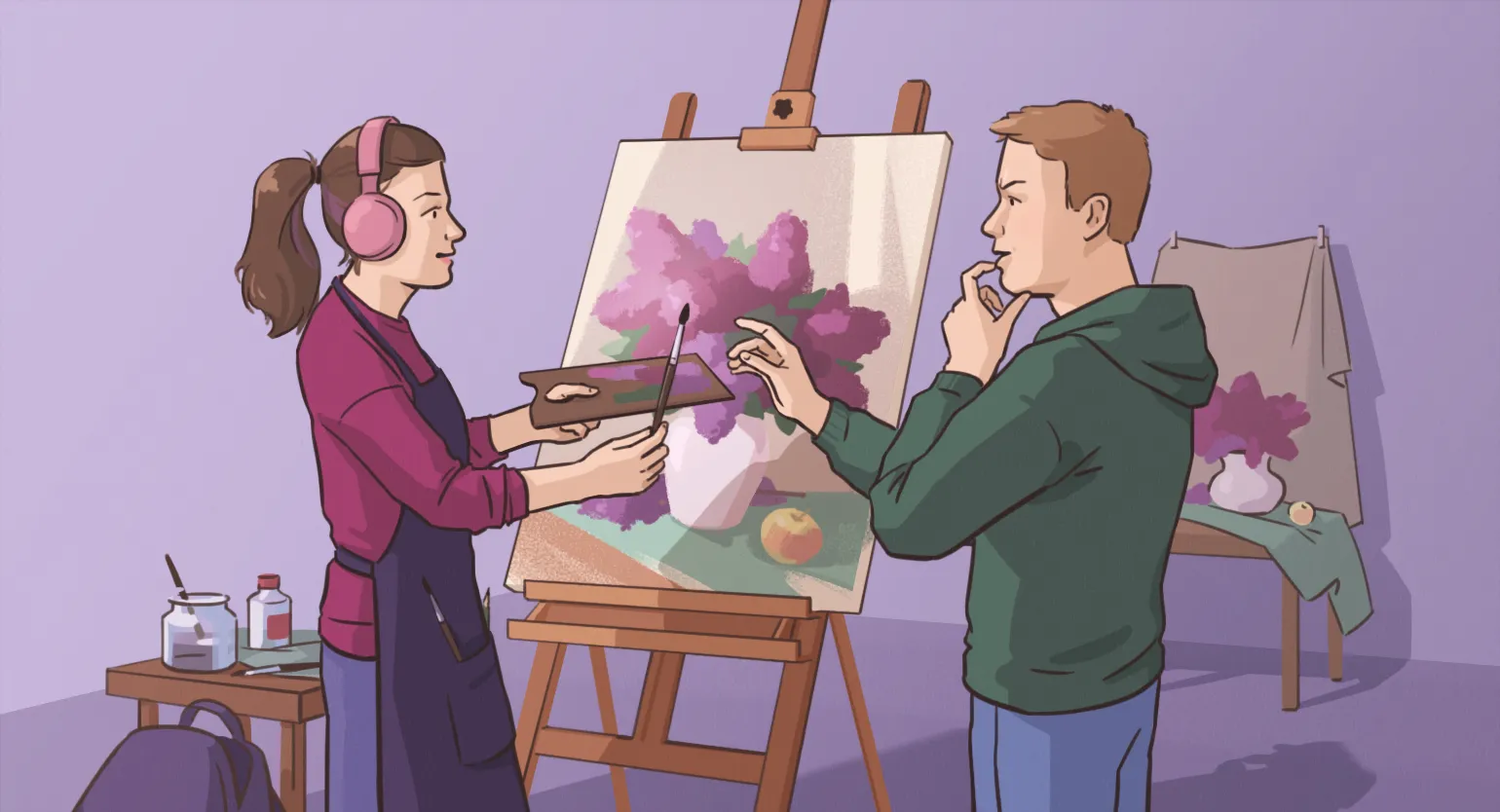
First, we need to understand what a creative task is. Not all tasks we face in life can be classified in this category. For example, solving a quadratic equation is hardly considered a creative process, whereas creating a painting certainly is. This leads to the question: are there areas of human activity that are inherently "creative," and others that are not? Creative activity spans many fields, including art, science, and business, where innovation and originality play a key role. Some Russian psychologists studying the connection between creativity and intelligence have identified key characteristics inherent in creative tasks. These features help better understand how to develop creative thinking and enhance creative abilities. Creative tasks require originality, flexible thinking, and the ability to associate, which contributes to the formation of unique ideas and solutions. Researching these aspects allows for a more in-depth study of the impact of creative tasks on the development of intelligence and creativity. Russian researchers note that, unlike standard tasks with a single correct answer, creative tasks do not have definitive solutions. Every answer in creative work can be considered correct, which often sparks lively debates about what can be considered art. Some perceive an artist's work as a bearer of deep meaning, while others see it as nothing more than a collection of colors. This subjectivity in artistic perception highlights the diversity of opinions and emotions associated with creativity.
The reason for this approach is that a creative task requires divergent thinking, which focuses on generating the maximum number of ideas in response to a given stimulus. However, to successfully solve a problem, relying solely on divergent thinking is not enough. Convergent thinking is also necessary, which helps find the only correct solution. This process allows one to select from a variety of proposed ideas those that will form the basis for a high-quality creative product. It is important to combine both types of thinking to effectively cope with creative challenges and achieve the desired results.
When writing a story, we may consider several plot development options, but ultimately choose one. This demonstrates how convergent and divergent thinking work in tandem when solving creative problems. At the same time, for most other tasks, convergent thinking alone is sufficient, allowing one to effectively find the only correct solution.
One of the key characteristics of a creative task is that it cannot be solved using a predetermined algorithm. Creativity requires the activation of intuitive thinking, when the answer arises in consciousness suddenly, and we often cannot explain how exactly we arrived at this solution. This unpredictability and uniqueness of approach make creativity an important aspect in various fields, from art to science. Intuitive processes play a central role in the generation of new ideas and concepts, emphasizing the importance of creativity in solving complex problems.
Insight, or sudden illumination, is closely related to intuition and creativity. This state is accompanied by a feeling of joy and relief when the solution suddenly becomes clear. Psychologists argue that insight plays a significant role in the process, allowing an intuitively emerging solution to reach consciousness and become noticeable to us. This phenomenon not only inspires new ideas but also contributes to a deeper understanding of the problems and challenges we face. It's important to develop your intuition and open yourself to insights to improve creativity and find effective solutions. While engaging your intuition plays a crucial role in solving creative problems, it's not enough to fully accomplish them. For example, solving an anagram requires an intuitive approach, as mechanically going through all possible letter combinations in your head is impossible. Most often, the solution comes through insight. However, this task isn't considered creative, as it has a single correct answer. Creative tasks, unlike anagrams, involve multiple possible solutions and an individual approach, making them more complex and multifaceted. The division of tasks into creative and non-creative is based on the demands each task places on the performer. Consequently, it's impossible to claim that exclusively creative or non-creative professions exist. Opportunities for creativity exist in any field of activity.
Many significant discoveries in the sciences, which at first glance might not be associated with creativity, were made through a creative approach. Research shows that innovative ideas and breakthroughs often arise from unconventional thinking and creative solutions. This underscores the importance of creativity in the scientific process, where the combination of knowledge and original ideas can lead to significant scientific advances.
Some people exhibit a predisposition to creative problem solving, while others prefer routine activities. This difference in approach to tasks is linked to the personality traits of individuals. Research shows that qualities such as openness to new experiences, creativity, and the desire for self-expression play a key role in choosing creative directions. People who are highly creative are typically more receptive to new ideas and experimentation, which allows them to successfully tackle unconventional challenges. Conversely, those who prefer routine may find comfort in structured tasks and predictable results. Understanding these differences can help in choosing a career and optimizing a workflow that matches individual inclinations.
How Personality Traits Are Related to Creativity
Research by Russian psychologists has shown that people with creative abilities share a number of characteristic personality traits. These qualities likely underlie their creative self-realization and contribute to the development of creativity. Understanding these features can help support and develop creative potential.
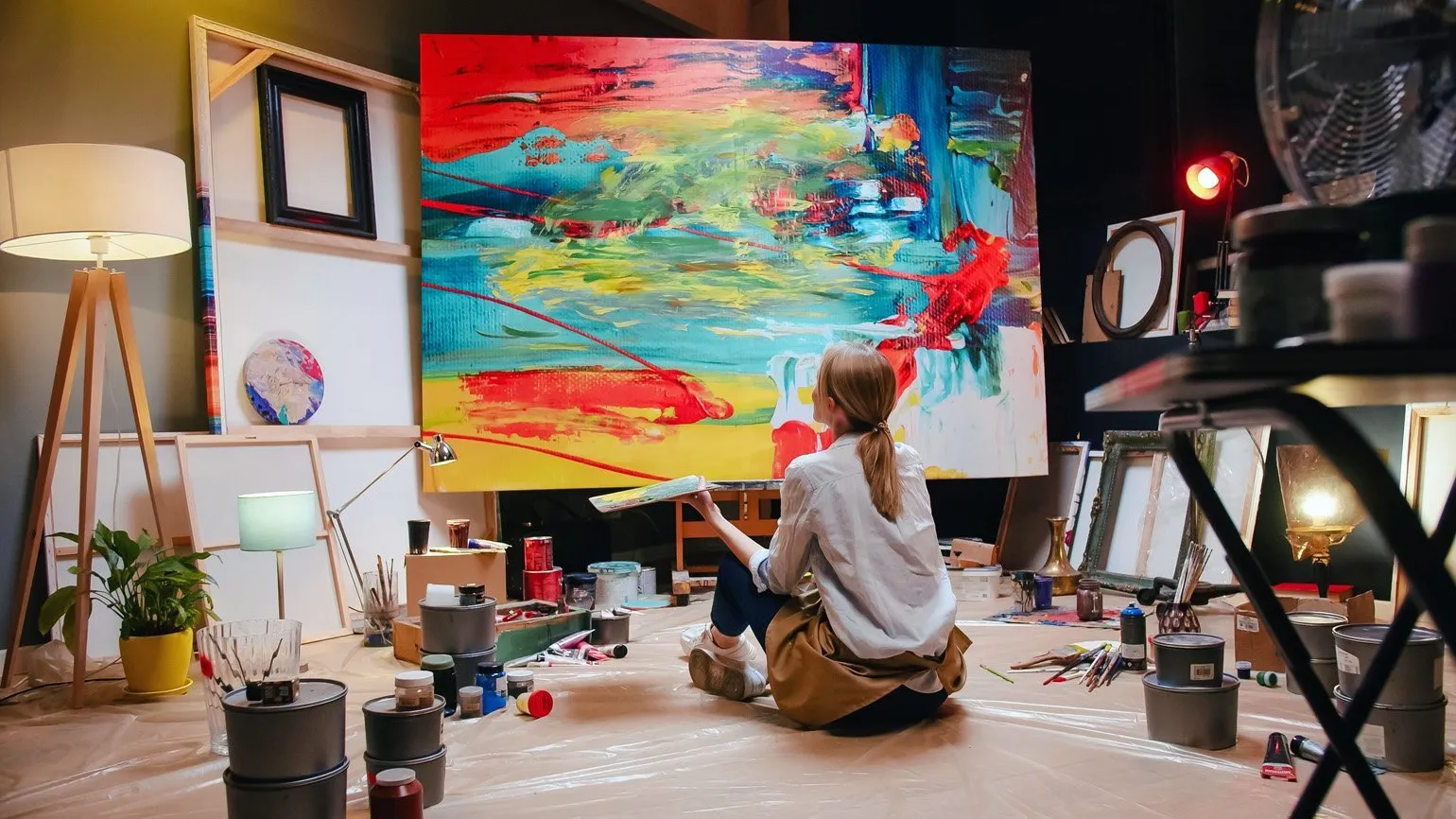
- Creative people have high intrinsic motivation.
People who are passionate about their Creative people, in fact, derive genuine enjoyment from the creative process and do not seek external rewards. They create for the sake of the act of creation itself. This assertion is supported by numerous studies, including work conducted in the 1980s, which demonstrated that college students achieved better results in writing poetry and produced more original works when inspired by intrinsic motivation. Intrinsic motivation plays a key role in the creative process and contributes to the development of creativity.
- Creative people are able to devote themselves entirely to their activities, immersing themselves in them completely.
The renowned psychologist Mihaly Csikszentmihalyi introduces the concept of "flow," describing a unique state in which a person becomes completely immersed in an activity, losing all sense of time and the surrounding world. This state is characterized by deep enjoyment and can be attributed to the highest experiences, allowing an individual to transcend their personality. Flow occurs when a person is faced with tasks that require an optimal level of skill and challenge, which promotes maximum concentration and satisfaction. Understanding this state is useful for improving work effectiveness and quality of life.
- A creative person actively engages emotions in what they do.
Intrinsic motivation and deep immersion in creative activity arise because, through the process of creating works of art, a person expresses their experiences, values, and aspirations. This reflects what is meaningful to them. A striking example is the autobiographical nature of many famous paintings and literary works, where authors convey their thoughts and feelings, creating unique and meaningful creations. Such works not only help the author understand themselves but also allow viewers and readers to touch the depth of human emotions and experiences.
The solution to a creative problem is not limited to personal qualities alone. Research in neuroscience shows that creative activity is closely linked to the characteristics of brain function. It is important to understand how these aspects are interconnected and how the functioning of different areas of the brain influences creative processes. Research confirms that certain neural networks are activated during creative activity, which opens new horizons for understanding the nature of creativity.
Read also:
Educational neuroscience is an interdisciplinary field that studies how the brain functions in the context of learning and education. This science combines knowledge from psychology, neuroscience, and pedagogy to improve educational processes. Understanding the neurobiological foundations of learning helps educators develop more effective methods and approaches adapted to the individual characteristics of students.
Neuroscience can help us understand how various factors, such as emotion, motivation, and attention, influence the process of knowledge acquisition. This knowledge allows us to create more productive and comfortable learning conditions, which, in turn, contributes to improved academic performance and the development of critical thinking in students.
Thus, educational neuroscience plays a key role for everyone involved in education, as it helps not only better understand how people learn but also how to improve educational practices to achieve maximum results.
The Neurobiology of Creativity: How the Brain Solves a Creative Problem
The creative process is complex and multifaceted, which is reflected in the functioning of our brain. Studies using neuroimaging techniques such as electroencephalography (EEG) and functional magnetic resonance imaging (fMRI) demonstrate that multiple brain regions are activated when solving creative problems. Areas responsible for creativity are primarily located in the cerebral cortex, but some studies also highlight the importance of the cerebellum, hippocampus, and basal ganglia. This multi-level approach to brain research helps us better understand the mechanisms behind creativity and reveal how different brain regions interact in the process of generating new ideas. Success in creative tasks is directly related to the anatomical features of the brain. Research shows that highly creative people have thinner cortex in certain areas of the brain, as well as increased volume of gray and white matter. These neurobiological characteristics may explain why some people are able to generate original ideas and find innovative solutions to problems. Understanding the connection between brain structure and creativity can help develop methods for developing creative abilities.
Brain function plays a key role in assessing creativity. Research conducted by Dutch scientists using EEG has shown that activation of certain brain regions can accurately predict success on creativity tests. Meanwhile, Chinese researchers have found that creative individuals have high functional connectivity between the neural network responsible for executive control and the default mode network. These results highlight the importance of interaction between different neural networks for the development of creative thinking and successful completion of creative tasks.
The default mode network is responsible for generating multiple ideas, while the executive control network selects the most appropriate ones. The coordinated work of these two networks ensures both the novelty and appropriateness of a creative product. For example, in a literary work, the plot will be not only original but also logically consistent. This balance between creativity and structure helps create quality content that will engage your audience and meet their expectations.
Rework the text to improve its SEO positioning, while maintaining the main topic and avoiding adding unnecessary information. Make sure the text is logically structured and easy to read.
Read also:
Every teacher should be aware of the processes and changes occurring in students' brains at different stages of their development. This knowledge will help organize the educational process more effectively, taking into account the age and individual characteristics of students. Understanding the neuropsychology of learning allows us to adapt teaching methods and create more comfortable conditions for information comprehension. Thus, knowledge of brain development is a key aspect in the work of every teacher.
Research reveals the presence of a specialized neural network associated with creativity, known as the creativity-oriented network. This network demonstrates high internal functional connectivity, which has a positive effect on the level of creative thinking. It is also worth noting that effective interaction between the right and left hemispheres of the brain is important for achieving high creativity. Improving the connection between these hemispheres can contribute to the development of creativity and innovative thinking.
High functional connectivity does not always bring positive results. A study conducted by Chinese scientists found that creative people exhibit reduced connectivity between the networks responsible for bottom-up thinking. This process involves focusing on details to understand the big picture. For example, by analyzing each word in a text, we can gain a deeper understanding of its meaning.
According to the study's authors, reduced functional connectivity in these networks allows creative individuals to focus on key aspects and avoid excessive attention to irrelevant details. This allows them to abstract from obvious solutions and find original approaches to their work.
Patterns of functional connectivity in the brain play an important role in predicting a person's level of creativity. Research shows that visual and verbal creativity are characterized by both common and unique patterns of activation in different brain regions. This discovery highlights the complexity and diversity of processes involved in creative thinking and provides a deeper understanding of how the brain works in the context of creativity.
Revised text:
Learning new topics and materials is an important part of the learning process. It allows you to deepen your knowledge and broaden your horizons. Regular reading not only promotes critical thinking but also helps you stay up-to-date with the latest trends in various fields. New ideas and information can inspire new projects and improve existing ones. Remember that constantly updating your knowledge is the key to success in the modern world.
Learning, the Brain, and DNA: The Impact of Learning on Human Physiology
Education and the learning process have a significant impact on the physiological aspects of our body, including the brain and even DNA. Research shows that learning not only shapes cognitive abilities but also causes changes at the cellular level.
During the learning process, neuroplastic changes occur in the brain. This means that with each new skill or knowledge, neural connections become stronger and more diverse. Such changes contribute to improved memory, increased attention, and the development of critical thinking.
Furthermore, learning can influence gene expression. Research has shown that new knowledge can activate or deactivate certain genes, which in turn affects our health and overall well-being. This opens new horizons in understanding how educational practices can be applied to improve quality of life.
Thus, learning is not only a process of knowledge accumulation, but also a powerful factor in promoting physiological changes in our bodies. It is important to recognize that ongoing self-education and skill development can lead to long-term positive effects on both the brain and overall health.
The neurobiology of creativity has attracted the attention of researchers, especially in the context of the role of neurotransmitters. These complex chemical compounds ensure communication between neurons in the brain, playing a key role in creativity processes. Dopamine, glutamate, and gamma-aminobutyric acid are the main neurotransmitters influencing creativity. Dopamine is responsible for motivation and reward, glutamate promotes neuroplasticity and learning, and gamma-aminobutyric acid helps regulate anxiety and stress. Understanding these mechanisms opens new horizons in the field of developing creativity and improving psychological well-being.
The morphological features of the brain, its functional connectivity, and its neurotransmitter balance are largely determined by our genes. Thus, creativity has a genetic predisposition. Research has identified several dozen genes associated with creativity. These genes are primarily responsible for the balance of neurotransmitters and the ability of neurons to form new connections. This is consistent with the results of neuroscience studies confirming the link between genetic factors and creative abilities.
Chinese scientists have created a model that predicts results of the Torrance Creativity Test with 78% accuracy. This model uses brain activity data and genetic information, which highlights the connection between creativity and biological factors. This success confirms that creativity is deeply rooted in our biological nature, opening new horizons for research in the fields of psychology and neuroscience.
Does this mean that some people are predestined to be creators, while others are initially deprived of the ability to create new things? Not at all. In fact, our biological makeup is highly fluid and significantly altered by our environment. This suggests that every person has the potential to develop creative abilities, and it is important to create conditions conducive to the development of this potential. Creativity can be developed through nurturing, using a variety of approaches and methods, which opens new horizons for self-expression and innovation.
Twin studies have found that genetics accounts for only 35–55% of the variance in creativity. This means that a significant portion of these differences, more than half, is due to other factors. These include education, types of leisure activities, standard of living, and social environment. Thus, for the development of creative abilities, not only hereditary factors but also environmental influences are important.
Do creative and uncreative people really exist? Modern scientific research does not support a clear division of people into these categories. They only demonstrate general trends in the population and cannot accurately assess the creative potential of each individual. Creativity is a complex and multifaceted process that depends on many factors, including personal qualities, environment, and life experiences. Thus, everyone has the potential for creativity, regardless of generally accepted stereotypes.

Low creativity at a certain period of life is not a permanent personality characteristic. This state can be modified by various factors. Psychological, genetic, and neurobiological research play an important role in understanding the mechanisms that contribute to the development of creativity in both children and adults. In the near future, this research may lead to new methods and approaches that can effectively develop creativity and realize the potential of individuals.
Is it possible to increase your creativity and develop creative abilities?
Research shows that creativity can be artificially increased through transcranial stimulation, which involves the use of a weak direct current to affect the cerebral cortex. However, the use of this method in everyday life is considered ineffective. Firstly, the result of stimulation largely depends on the individual characteristics of the nervous system. Secondly, it remains unclear which specific areas of the brain should be stimulated to solve practical creative problems, as there are too many unknown variables involved in this process.
Psychometric creativity plays an important role in assessing creative abilities, but it is not equivalent to creativity. High levels of psychometric creativity do contribute to the development of creative potential, but they are not sufficient for full-fledged creativity. Stimulating psychometric creativity can be useful, but in real life, it may not be enough to solve genuine creative problems, which are often more complex and unpredictable. Therefore, it is important to understand that psychometric creativity is only one component necessary for the successful implementation of creative ideas.
The development of creative abilities is associated with many factors. One of them is a variety of activities and new activities that can inspire and expand the horizons of thinking. Communication with creative people also plays a role, as they can share their experiences and ideas. For solving specific creative problems, brainstorming techniques can be effective, helping to generate a variety of ideas. It's also helpful to record your thoughts and ideas on paper or electronically, which helps organize them and further develop them. Creativity can be developed by incorporating these simple yet effective methods into your daily practice.
Learn more about the world of education by subscribing to our Telegram channel. Here you'll find current news, tips, and interesting facts to help you stay up-to-date on events and trends in education. Don't miss the opportunity to expand your knowledge and stay connected with the latest news.
Read also:
- What teachers want from neuroscientists, and neuroscientists want from teachers
- How can neuroscience advances influence education?
- "The brain only works at 10%" and seven more anti-scientific neuromyths
- Gifted children: what neurobiology knows about them
Profession Methodologist from scratch to PRO
You will improve your skills in developing curricula for online and offline courses. Master modern teaching practices, structure your experience, and become a more sought-after specialist.
Find out more