Contents:
Learn: Online tutor
Learn moreIn this article, you will gain information about the key aspects of the topic. We will consider important details that will help you better understand the subject, and also give recommendations for its effective use. After reading this article, you will be able to deepen your knowledge and apply the acquired data in practice.
- What is Bloom's Taxonomy and how has flipped learning changed it;
- Why is the role of the learning space changing, and the teacher is no longer the center of attention;
- How flipped learning turned a lagging school into a leading one;
- Why is this approach criticized;
- Is it difficult to organize a flipped lesson.
What is flipped learning?
Flipped learning can be described as a technique in which students complete class assignments at home and solve homework in class. To begin studying a topic, students receive materials for independent study, such as video lectures. Time spent with the instructor is used to discuss previously covered material and check for comprehension. This approach promotes a deeper understanding of the topic and active interaction between students and the instructor.
Flipped learning is an innovative pedagogical method in which students independently study theoretical material outside of class and actively interact with each other and the instructor during lessons. This learning model creates a dynamic and interactive atmosphere that allows students to apply their acquired knowledge in practice and develop critical thinking. The instructor acts as a mentor, guiding and supporting students in their learning process. This approach promotes deeper assimilation of the material and the development of collaboration and independence skills in students.
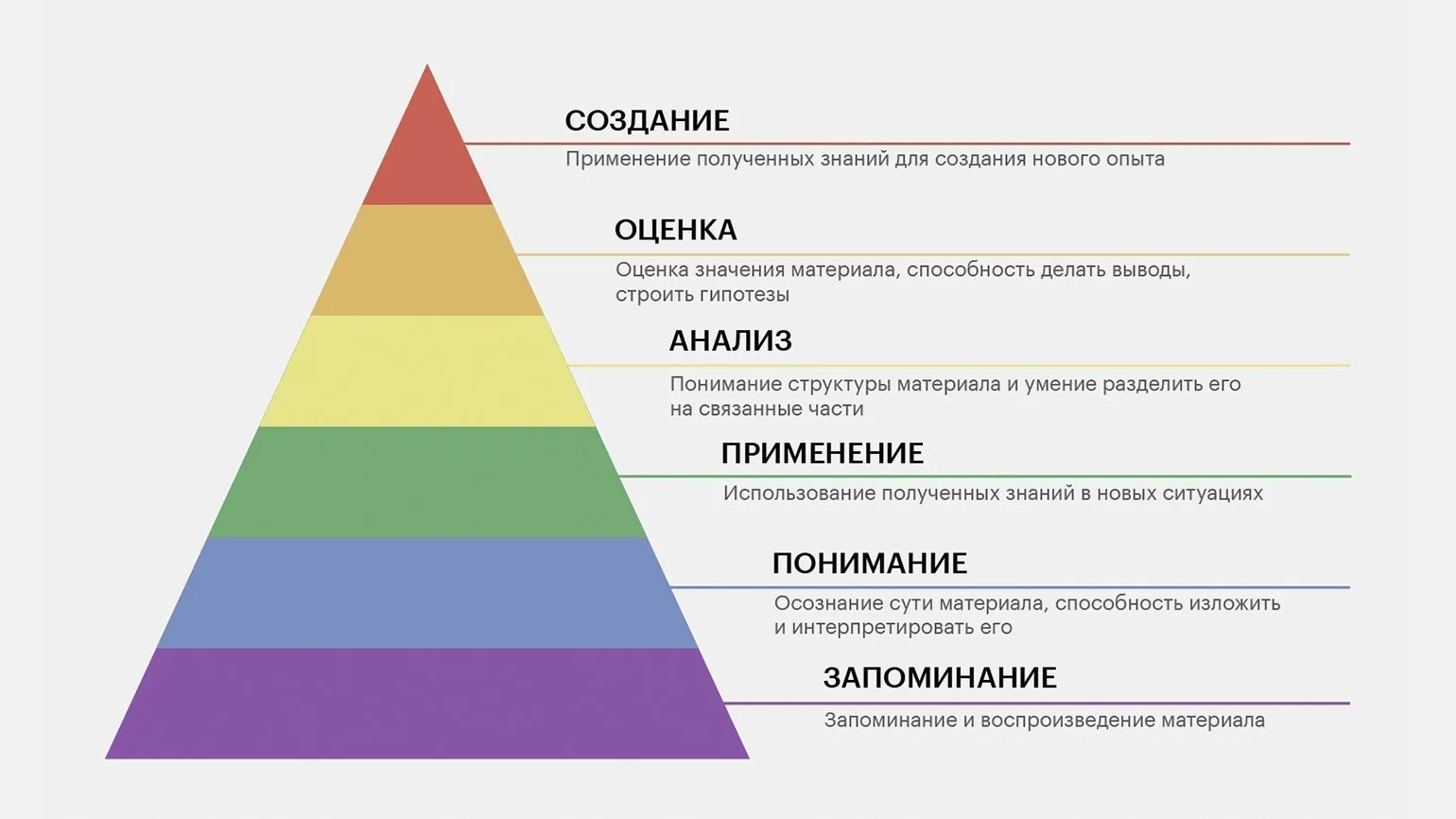
According to the well-known Bloom's Taxonomy, the basis of learning is the retention of new information and its comprehension. At higher levels of the educational process, students apply what they have learned in practice and form new ideas based on their experiences. In traditional teaching approaches, lessons often focus on the initial stages of memorization and comprehension, which limits the development of students' critical thinking and creativity. To achieve a deeper understanding of the material, it is important to integrate practical and creative tasks into the educational process. This will enable students not only to absorb information but also to use it in various contexts, thereby developing the skills necessary for a successful life and career.
Teachers often face a lack of time to explain new information. As biologist and educator John Medina points out, a teacher is given no more than ten minutes to convey an idea, after which students' attention begins to wander. The flipped learning method offers an effective solution to this problem, allowing students to independently acquire new knowledge at their own pace at home. In classes with a teacher, they can discuss, delve into the material, and apply what they have learned in practice, which significantly improves the quality of learning and promotes a deep understanding of the subject.
Explore John Medina's 10 key principles of effective learning and teaching. These recommendations will help improve the learning process and make it more productive. Understanding these principles will enable teachers and students to maximize their potential and improve the quality of the educational process.
Who invented this approach?
The pioneers of the flipped learning method are educators Jonathan Bergman and Aaron Sams from Colorado, USA. In the early 2000s, they taught chemistry at a small rural school. Due to participation in sports competitions popular in small-town America, some students often missed classes. To ensure their academic success and prevent them from falling behind, Bergman and Sams began recording their lectures on video. This approach became the basis for the development of flipped learning, which allows students to study material at their own time, and in class focus on practical assignments and discussions.
Schoolchildren were given the opportunity to study new material at home, which encouraged their independence and interest in learning. As a result, Bergman and Sams decided to videotape all of their lectures. Students could view these recordings before class, and in class, they discussed their understanding of the topics, conducted experiments to test their knowledge, and received feedback from teachers. This approach promotes deeper learning and active student engagement in the learning process.
Bergman and Sams were not the first to propose the idea of exchanging homework and classwork. In 2000, the paper "Flipped the Classroom" by University of Miami marketing professor Glenn Platt and his team was published, first presenting the concept of abandoning traditional lessons in favor of video recordings. However, it was only after Bergman and Sams' success that this approach began to rapidly gain popularity. From 2012 to 2014, the number of teachers in the Flipped Learning Network, a community dedicated to flipped learning, increased from 2,500 to 20,000. This growth indicates a significant interest in innovative teaching methods that help adapt the educational process to modern realities.

What is flipped learning based on?
Key Research and application materials on flipped learning are available on the Flipped Learning Network, a leading international community dedicated to this method. The resource offers detailed guides in English to help implement flipped learning in the educational process. In 2014, community experts identified four key principles of flipped learning, which serve as the basis for the effective use of this approach in educational practice.
Flipped learning allows for a high degree of flexibility in the educational process. This applies to both the learning space and the timing of assignments and assessment of student achievement. Teachers often adapt the physical space of classrooms to suit the needs of the lesson. For example, a teacher might rearrange the furniture to create a comfortable environment conducive to group work. This approach not only improves interaction between students but also increases their engagement in the learning process.
Flipped learning encourages students to develop a desire for self-education and actively engages them in the process of knowledge creation. Unlike traditional educational approaches, the focus here is not on the teacher, but on students as they independently explore new concepts and ideas. This teaching method enhances active student participation, develops critical thinking, and fosters a deeper understanding of the material. Students come to class already prepared, which facilitates a deeper immersion in the topics being studied. The teacher's primary role is to develop interesting and engaging activities, while also acting as an observer. Creating varied and accessible lessons is made possible by collecting student feedback and carefully analyzing the lesson. This approach not only increases student engagement but also promotes more effective learning. In flipped learning, content plays a key role in the learning process. It must be accessible and useful to students. The teacher must carefully select materials to enable students to independently acquire new knowledge. Most often, this content is presented in the form of videos, but it can also include reading lists, interactive activities, or other resources. It's important that the materials chosen promote active learning and student engagement.
In flipped learning, the teacher's role doesn't diminish; on the contrary, it becomes even more important. The teacher actively observes students during lessons, comments on their work, and provides feedback. They are always available to assist when needed and are skilled at effectively managing the lesson in a dynamic, interactive environment. The teacher strives to collaborate with colleagues, openly accepts constructive criticism and constantly works to improve their teaching practice.
What do scientists think about the benefits of this
Flipped learning has proven itself as an effective educational method. By 2017, more than 130 peer-reviewed articles had been published confirming the successful use of this approach in various educational settings, from primary school to postgraduate education. This method promotes active student engagement in the learning process, improving their understanding of the material and increasing the level of knowledge acquisition.
In this article, we will consider a case study that illustrates the application of theoretical knowledge in a real-world setting. A practical example allows for a better understanding of how various concepts work in practice and how they can be adapted to specific situations. We will analyze key aspects to consider when implementing theoretical principles, as well as potential challenges and ways to overcome them. This case study will help readers not only deepen their knowledge but also receive practical recommendations for successful application in practice.
In 2010, Clintondale High School was among the worst performing schools in Michigan. In response, teachers implemented a flipped learning approach. This approach radically transformed the educational process and led to significant improvements in student achievement. The results were impressive: students began to retain the material better, and their level of engagement in the learning process increased. Flipped learning has proven to be an effective tool for improving the quality of education at this school, as evidenced by positive feedback from both students and parents.
- In just one year, the failure rate in English decreased from 52% to 19%, in mathematics from 44% to 13%, and in science from 41% to 19%;
- The proportion of graduates entering universities increased from 63% to 80%.
In 2012, Flipped Learning Network conducted a survey of 453 teachers to evaluate the results of implementing flipped learning in their teaching practice. The survey revealed multiple aspects of the effectiveness of this educational model, including changes in student engagement and improved academic performance. Flipped learning continues to gain popularity due to its ability to accommodate a variety of learning styles and promote student engagement.
- 67% of respondents reported that students performed better on tests thanks to this method;
- 80% of teachers noticed that students' attitudes toward learning had improved;
- 99% admitted that they plan to use flipped learning in the new year.
Research into flipped learning continues today. Mathematics teacher and author of a book on flipped learning Robert Talbert noted that he received notifications of three new studies in one morning while working on an article for Educause. This underscores the relevance of and interest in the flipped learning method, which is being actively discussed in educational circles.
What are the disadvantages of flipped learning?
Representatives of the University of Idaho in Boise point out two key disadvantages of this educational approach. Firstly, the instructor will have to spend more time preparing for classes, including developing materials for student independent work and planning discussions during face-to-face meetings. Secondly, there is a risk that insufficiently motivated students may ignore independent assignments and come to class unprepared. This aspect can negatively affect the quality of learning and student engagement.
One of the main disadvantages of this type of learning is the lack of immediate feedback. Students can check whether they have correctly learned the material only during a discussion, which hinders the learning process. In addition, not all students have access to computers with fast Internet or the necessary equipment to view educational materials. This creates additional barriers to effective learning and can negatively impact the quality of education.
How to put the approach into practice
Michigan State University offers simple instructions, A six-step plan. These steps will help you effectively complete the task. By following this methodology, you can optimize the process and achieve the desired results. The instructions have been developed taking into account modern requirements and practices, making them relevant and useful for everyone.
Preparing a plan is an important step in any project. It allows you to structure ideas and goals, as well as determine the sequence of actions to achieve them. It is important to consider all aspects, including resources, deadlines, and potential risks. A well-thought-out plan will help you avoid mistakes and save time in the future. Identify key tasks and set clear deadlines for their completion. This approach will ensure the effective implementation of the project and achieve the desired results.
Determine which part of the lesson you want to adapt for independent study. Set clear objectives for the lesson and develop its structure. This will allow students to effectively absorb the material and develop independent skills. When reflecting on the lesson plan, consider key points that should be highlighted for a deeper understanding of the topic.
Create a video. This is an effective way to convey information to your audience. Videos can attract attention, increase engagement, and improve content comprehension. Make sure your video has a clear structure and a compelling plot. Use high-quality recording and editing equipment to ensure high-quality image and sound. Optimize your video title and description with keywords to increase its visibility in search engines and on video platforms. Don't forget to share your video on social media and other platforms to increase reach.
Record a lecture or lesson plan as a video. Include all the key points that would be covered in a regular lesson. Use video only when it's truly justified and can contribute to more effective learning than a traditional approach. Make sure the video content aligns with the educational goals and helps students better absorb the material.
Share the material with your audience. Sharing content helps increase reach and attract new readers. Use social media, email newsletters, and other platforms to effectively promote your material. The more people see your content, the higher the likelihood that it will be discussed and shared. Don't forget to include calls to action to motivate readers to share your content. Share your experience and knowledge to create value for your audience and solidify your position as an expert in your field.
Send the video to your students and make sure they understand that all the material presented in the video will be discussed in the next lesson. This will help prepare them for the lesson and deepen their understanding of the topic.
Discussion of the material is an important stage in the learning and analysis process. It promotes a deep understanding of the topic and allows for the identification of different points of view. During the discussion, participants can exchange ideas, ask questions, and propose alternative solutions. This not only enriches everyone's knowledge but also helps develop critical thinking. Effective discussion requires openness and respect for the opinions of others, which creates an atmosphere for constructive dialogue. It is also important to consider the relevance of the material and its connection to current trends, which makes the discussion more meaningful and useful.
In the next lesson, discuss the material they have viewed with students. This will not only strengthen their understanding of the topic but also deepen their knowledge. Discussion will help identify difficult points and answer any questions that arise, which contributes to better assimilation of the information.
Use group activities to increase the effectiveness of interactions and improve teamwork. Group activities help strengthen bonds between participants, improve communication, and create a positive atmosphere. Such events can include joint training sessions, team-building games, or projects that require joint efforts. This not only increases productivity but also motivates employees. Using group activities helps create a more harmonious work environment and promotes the achievement of shared goals.
Divide the class into groups and assign them tasks, such as writing a poem, creating a play, or filming a video on the lesson topic. This approach is one of the most effective ways to apply and discuss the material covered. This format of work promotes the development of students' creativity and deepens their understanding of the topic. In addition, group assignments promote interaction among students and the development of team spirit, which is essential for successful learning.
Regather the students.
Ask members of each team to present the results of their work to the other groups. Ask clarifying questions and delve deeper into the topics discussed together to increase the level of understanding and engagement of all participants. This approach promotes the exchange of experiences and improves the quality of collaboration.
After completing each stage, it is important to analyze what happened, make any necessary adjustments, and repeat the steps, taking into account the experience gained. Various methods can be useful in this process, such as cross-teaching, in which students explain the concepts learned to each other. It is also effective to combine flipped learning with a problem-based approach aimed at solving real-world problems. This approach not only deepens understanding of the material but also develops critical thinking and collaboration skills.
Creating your own flipped lesson is possible thanks to detailed instructions from New York University, which offer practical tips for teachers. The authors recommend motivating students to prepare for the lesson by asking open-ended questions about the topic being studied in advance. This allows students to come to class with answers already found. It is also useful to encourage them to prepare a presentation for the upcoming lesson. Finding examples that illustrate the theory being studied will help students engage more actively in independent work. This approach promotes deepening knowledge and developing critical thinking in students.
The instructions provide information on activities that will help engage students in the learning process, for which it is recommended to allocate ten minutes per lesson. This approach allows the teacher to assess how well students completed their independent work and to identify recurring questions and gaps in their knowledge. An alternative option is to conduct a quiz on topics covered at home, with or without assessment; this will help set the tone for productive work in the classroom. The guide also contains useful tips on choosing effective formats for independent study, teaching strategies, and knowledge assessment options, which contributes to improving the quality of the educational process.
Read also:
- Constructivism in Teaching: Why This Excellent Pedagogical Approach Has Not Become Widespread
- "Why is the Sea Dirty?": How Phenomenon-Based Learning Teaches How to Solve Real-World Problems
- Is it true that learning by doing is better than any theory?
- 10 Principles of Effective Learning and Teaching from John Medina
Online Tutor
It doesn't matter what you teach—English, CrossFit, yoga, vocals, or culinary arts. Everything you used to teach in schools, studios, and offices can now be taught online. Promote your knowledge and skills and earn money from anywhere in the world.
Find out more