Contents:

Learn: Profession Methodist from scratch to PRO
Find out more
Assistant Professor at Utrecht University, the Netherlands, and a PhD candidate in Psychology. In her dissertation, defended at Lomonosov Moscow State University, she examined the influence of sensory representations on the acquisition of mathematical concepts. She is the author of a mathematics course for elementary school on the Uchi.ru platform and consulted on the development of assignments for Yandex Textbook.
What is Mathematical Thinking
The term "mathematical thinking" refers to the ability to analyze, generalize, and solve problems using mathematical concepts and methods. This includes the ability to formulate and structure problems, apply logical reasoning, and use mathematical language to describe and solve various phenomena. Mathematical thinking develops critical thinking and promotes a deeper understanding of the world around us, enabling people to draw informed conclusions and make decisions based on data analysis. It is important to note that mathematical thinking is not limited to performing calculations but encompasses a wide range of skills, including abstract and spatial thinking. Developing these skills can significantly enhance academic and career success, as they are applicable across a wide range of fields, from science to economics and engineering.
There are many definitions of mathematical thinking, as this topic is studied within two main scientific fields. The first is cognitive science, which focuses on the processes of cognition and understanding. The second is the science of mathematics education, which studies methods and approaches to teaching mathematics. These two scientific communities have different approaches and ideas, which leads to a diversity of understanding of how people think in the field of mathematics.
The term can be defined as thinking in the context of the cultural practice of mathematics. Different fields of activity have developed unique cultural practices that differ in their thinking strategies. Each field has its own characteristics that influence approaches to problem solving and the development of mathematical concepts.
Thinking, including processes such as planning, reasoning, and justification, varies across disciplines. In physics, geography, and mathematics, it is built on specific methods and approaches characteristic of each of these fields. Meanwhile, in the arts, such as dance or painting, thinking is manifested through other cultural practices and creative processes. Each of these fields requires unique skills and methods of interpretation, which makes their study and practice diverse and interesting.
There is an alternative approach to understanding mathematical thinking. This approach emphasizes the process of problem solving and the development of logical strategies, not just the use of formulas and theorems. Mathematical thinking includes the abilities of analysis, synthesis, and critical thinking, which enable one to find unconventional solutions and apply mathematical ideas in various contexts. This approach promotes the development of creativity and mental flexibility, which is an important aspect in the teaching of mathematics and the subsequent use of mathematical knowledge in life.
Mathematics is a broad cultural practice and occupies a significant place in the hierarchy of human activity and the sciences. This importance can be seen, for example, in the difference in salaries between professions that require mathematical training and those that do not. Therefore, mathematics plays a significant role in the school curriculum, and the educational community actively strives to develop this area.
Mathematical thinking is considered a fundamental skill that is closely linked to logic and reasoning. This ability allows one to analyze, generalize, and solve complex problems, making it essential for the development of critical thinking. Mathematical thinking not only contributes to successful learning of mathematics but also helps in other fields, such as physics, economics, and computer science. Developing this skill opens new horizons for understanding the world around us and making informed decisions in everyday life.
There is an opinion that mathematical thinking is a separate entity that can be developed independently of the study of mathematics as a subject. This creates the expectation that the development of mathematical thinking will have a positive impact on other areas of life. In fact, mathematical thinking encompasses logical and analytical thinking, making it important not only for mathematics but also for problem solving in various fields, such as physics, economics, and computer science. Developing these skills can contribute to improved overall problem-solving abilities and informed decision-making in everyday life. It is now widely recognized in science that a diversity of approaches and interpretations plays a key role in the development of knowledge. Scientific research is becoming increasingly interdisciplinary, allowing for the integration of various theories and methods. This contributes to a deeper understanding of complex phenomena and processes. Researchers strive for more open and flexible models that take into account the diversity of opinions and data. This approach strengthens the scientific community and helps find new ways to solve pressing problems. In Russian psychology, there has long been a trend toward a broad understanding of mathematical thinking. It was viewed as the ability to generalize and reason logically, emphasizing the importance of these skills in the process of analysis and problem solving. In this context, mathematical thinking has come to be associated not only with specific computational skills but also with a general capacity for logical analysis and critical thinking, which is fundamental to the educational process and scientific activity.
Modern Western science emphasizes the integration of mathematical education with other disciplines, especially within the STEM field—a field encompassing natural science, technology, engineering, and mathematics. Educational psychologists emphasize the importance of understanding mathematical thinking as a tool for solving real-life problems. This approach promotes a deeper understanding of mathematical concepts and their practical application, making learning more meaningful and effective.
During the 20th century, the view of mathematics underwent significant changes. Mathematics began to be separated from the practical aspects of life, which affected the training of specialists in this field. In particular, the Olympiad movement emphasized the development of highly specialized skills that are often not applied in real-life situations. This separation of mathematics from its practical use raises the question of the need to integrate mathematical knowledge into everyday life and the solution of current problems.
Mathematics has long been perceived as a subject for the elite, accessible only to a few. Currently, there is an active attempt to revise approaches to teaching mathematics. This trend is reflected in large international studies such as PISA and TIMSS, which analyze the level of education of schoolchildren in different countries. Modern teaching methods are aimed at making mathematics more accessible and interesting for all students, which contributes to the improvement of the overall level of knowledge and skills in this important area.
How to Develop Mathematical Thinking
The study of mathematics in schools focuses on the mastery of clear rules, concepts, and methods for solving problems. However, this may not be enough for the full development of mathematical thinking. It is important not only to memorize algorithms and formulas, but also to understand their logic, as well as to develop analytical skills. To achieve a deep understanding of mathematics, it is necessary to integrate theory with practical problems, which helps students understand how mathematics is applied in real life. This approach fosters critical thinking and creative problem-solving, which are key aspects of mathematics education. Mathematical problems can be classified as routine or creative. Routine problems have a clearly defined set of steps that must be taken to solve them. To successfully solve such problems, it is important to first identify the type and then follow the given algorithm. Creative tasks, unlike routine ones, require an unconventional approach and original thinking.
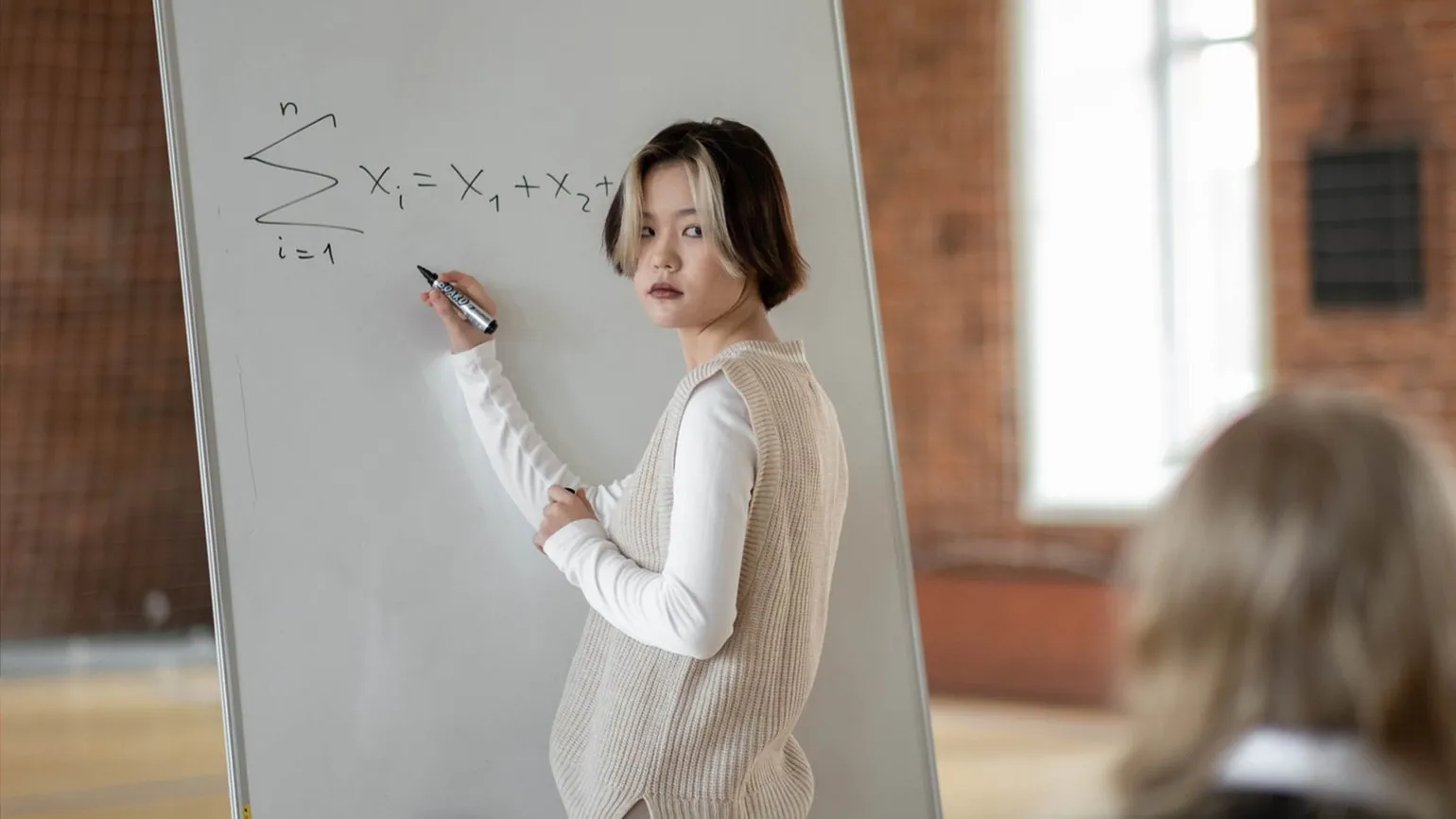
School curricula around the world are heavily focused on teaching routine tasks. However, such skills cannot be considered true thinking. Thinking is the process of finding solutions without a predetermined algorithm. Learned actions based on rules should not be considered mathematical thinking. It is important to develop students' abilities for critical analysis and creative problem-solving. This will allow them to develop a deeper understanding of mathematics and the skills necessary to solve non-standard problems. Mathematical thinking begins at an early age and actively develops throughout the learning process. It includes the ability to analyze, generalize, and solve problems, which is the foundation for successful mastery of mathematics. It is important to stimulate children's interest in mathematics through games, problems, and practical examples. This helps develop logical thinking and problem-solving skills that will be useful not only in school but also in everyday life. The development of mathematical thinking can begin as early as kindergarten and continue throughout the school curriculum and beyond.
When we talk about the application of mathematical concepts, an important question arises: what exactly do we mean by a mathematical concept? Mathematical concepts are the foundation for solving problems and understanding mathematical theories. They form the basis for learning more complex topics and are tools that help analyze and interpret various phenomena. Defining and understanding mathematical concepts play a key role in teaching mathematics and developing analytical thinking.
A trigonometric function is not just a definition, but a whole complex of different models. These include algebraic expressions, representations through triangles and unit circles, and graphical images. To deeply understand trigonometric functions and their application in mathematics, it is necessary to master complex operations with a variety of objects. This will allow you not only to understand their nature but also to effectively use them in solving mathematical problems.
Formal operations can be written as algorithms and easily learned, but mastering visual models requires a different approach. It is not just an art, but a complex practice that cannot be fully formalized. It can only be learned through experience, trial and error. An example is how children learn to use a fork and knife or learn to ride a bicycle. It is impossible to master this practice simply by reading theoretical materials.
Memorized definitions and algorithms do not, by themselves, lead to a full understanding of the subject. Simply "learning" does not mean "mastering" or "being able to apply" in practice. There is a phenomenon known as verbalism, in which a student can pronounce a definition but is unable to recognize the corresponding object. For example, a student may accurately state that a right triangle is a triangle with a right angle. However, if they see a right angle in an unusual context, they will not be able to identify this triangle. Thus, knowledge of definitions, properties, and rules does not guarantee the development of critical thinking and the ability to practically apply knowledge. It is important not only to memorize information but also to be able to apply it in various situations to achieve deep understanding. The ability to solve creative problems and think in mathematics is impossible without mastering algorithms and rules. These foundations serve as the foundation for further skill development. It is important that the school curriculum have an optimal balance of routine and non-routine tasks. Routine tasks help reinforce basic skills, while non-routine tasks develop creative thinking and the ability to solve non-standard problems. An effective program should combine both types of tasks to ensure the comprehensive development of students. To successfully master mathematics, children must have a solid knowledge base. It is important that they confidently count to 100 and freely use the multiplication table. These skills are essential prerequisites for further study of more complex mathematical concepts. A deep understanding of mathematics is impossible without a thorough mastery of basic arithmetic operations, which will help children confidently tackle more complex problems in the future.
Traditional teaching methods do not provide the necessary flexibility to solve more complex problems. For example, when learning the multiplication tables, a child may memorize that "six times eight is forty-eight." However, to successfully solve problems related to these numbers, it is important to understand that 48 can be represented not only as 6 times 8, but also as 12 times 4, and in other ways. This understanding helps develop mathematical thinking and improves problem-solving skills.
A certain "richness" and richness of numerical material is necessary, rather than simply rote memorization. The concept of dexterity can be mentioned here. Dexterity in movement is analogous to dexterity in counting. This implies that counting can be done in various ways, and it is important to be able to choose the most convenient approach in each specific situation. Basic skills should be developed not as a set of fixed algorithms, but as a flexible and adaptive skill.
Drill and repetition of simple actions are indeed necessary, but not necessarily in a traditional format. It is important to find effective methods that will help you master skills without excessive routine. Using a variety of approaches can significantly improve the effectiveness of the learning process. This will not only help you remember the information better but also make classes more interesting and productive.
Drill is indeed important, but it should be based on flexibility and problem solving, not simple memorization. An effective approach to learning includes the development of critical thinking and the ability to adapt to new conditions. Using problems and practical tasks allows you to not only reinforce knowledge but also improve your understanding of the material.
The second important aspect I would like to discuss is related to the habit of perceiving the world through the prism of mathematics. I can estimate the volume of water I use in a day, calculate the duration of a trip, or determine the optimal route for shopping, taking into account both cost and time. All of these everyday tasks are fundamentally non-standard and lack a clear algorithm for execution.
When we begin teaching children step-by-step algorithms, it is important to note that their ability to notice moments when mathematical practice can be useful often weakens or does not develop at all. As a result, a distinction arises between school mathematics and street mathematics. School mathematics focuses on formal methods and algorithms, while street mathematics refers to the practical application of mathematical knowledge in everyday life. This difference emphasizes the need to integrate practical problems into the educational process in order to develop children not only theoretical knowledge but also the skills to apply it in real-life situations.
A person with street mathematics skills may not have knowledge acquired in the school system. Street mathematics includes practical skills and abilities that are developed in everyday life and realities, rather than through traditional education. These skills can be useful in a variety of situations, such as calculating a budget, estimating distances, and solving problems based on life experiences. Thus, street math and school math can differ significantly in their content and application.
In India, many studies have been conducted on children's numeracy skills. On the streets, they actively trade and demonstrate excellent abilities in working with numbers and examples. However, when these same children end up in school, they face difficulties. They lack the connection between real-life situations and the tasks they are presented with in the educational process, such as "do A, do B, do C". This highlights the importance of adapting educational methods to the real needs of children so that they can successfully apply their knowledge in everyday life.
In the 1990s, discussions arose that the transfer of knowledge and skills does not actually exist, but is only a concept invented by psychologists. In order for a child to be able to transfer his reasoning from familiar conditions to new situations, he must first see them as similar. However, recognizing the school situation presented in the notebook and the real life situation outside the educational institution as similar seems almost impossible, since at first glance they differ significantly.

Learn more about the process of transferring knowledge and skills from one area to another. This method enables the effective application of existing competencies in new contexts, which promotes professional flexibility and increases competitiveness in the labor market. Knowledge transfer also opens up new opportunities for learning and self-improvement. Read on to gain a deeper understanding of the benefits of this approach and its practical application in various fields.
Cognitive psychology is a field of psychology that focuses on the study of mental processes such as perception, thinking, memory, and learning. It plays a key role in education because it helps understand how students perceive information, how they process it, and how they form knowledge.
Understanding cognitive processes allows us to develop effective teaching methods that match the perception and information processing characteristics of different students. For example, cognitive psychology helps us determine which learning strategies are most effective for memorizing material and solving problems.
Furthermore, knowledge in cognitive psychology contributes to the creation of adaptive educational programs that take into account the individual characteristics of students. This is especially important in the context of inclusive education, where it is necessary to take into account the diversity of approaches to learning.
Thus, cognitive psychology not only deepens our understanding of learning mechanisms but also contributes to the improvement of educational practices, which ultimately leads to higher quality education.
Some children are able to solve problems they have not encountered before. This may be due not only to their innate abilities, but also to the development of logical thinking, creativity, and the ability to analyze information. Such skills can be formed through learning and interaction with the environment. It is important to create conditions conducive to the development of these qualities so that children can successfully cope with new challenges.
Psychogenetic studies indicate the presence of certain heritability factors, but they often do not take into account the interaction of genetic and environmental factors. If so-called "math genes" exist, then the child who inherits them grows up in an environment where parents engage them in discussions related to mathematics. For example, they might ask, "Was our change calculated fairly at the store?" or "Will 100 rubles be enough for ice cream and cherries?" This highlights the close relationship between genetics and environment. Therefore, determining what is innate and what is shaped by family practices is extremely difficult. Understanding this relationship is crucial for further research in psychogenetics and education.
As an education professional, I do not believe that the issue of innate ability should be emphasized. The assertion that ability is determined solely by genetics absolves the educational community of responsibility for the development of each student, which is a misguided approach. Every child is capable of great things if provided with the necessary conditions and support for learning. Creating a supportive learning environment plays a key role in unlocking students' potential and developing their skills. Developing a child's abilities in a supportive environment during preschool can positively impact their success at school, particularly in mathematics. Play-based and interactive preschool education fosters fundamental skills such as logical thinking, spatial perception, and basic mathematical concepts. These skills facilitate the understanding of more complex mathematical topics in the school curriculum. Therefore, early development in a supportive environment can significantly improve a child's chances of academic success. Motivation is a fundamental factor in teaching children mathematics. When a young child begins to learn to count, for example, while helping to set the table, they count the number of forks and spoons needed for guests. This process brings them joy and satisfaction. The positive emotions this evokes in relatives strengthens their desire to learn and master mathematical skills. Thus, motivation plays a key role in developing a child's interest in mathematics and in their further education.
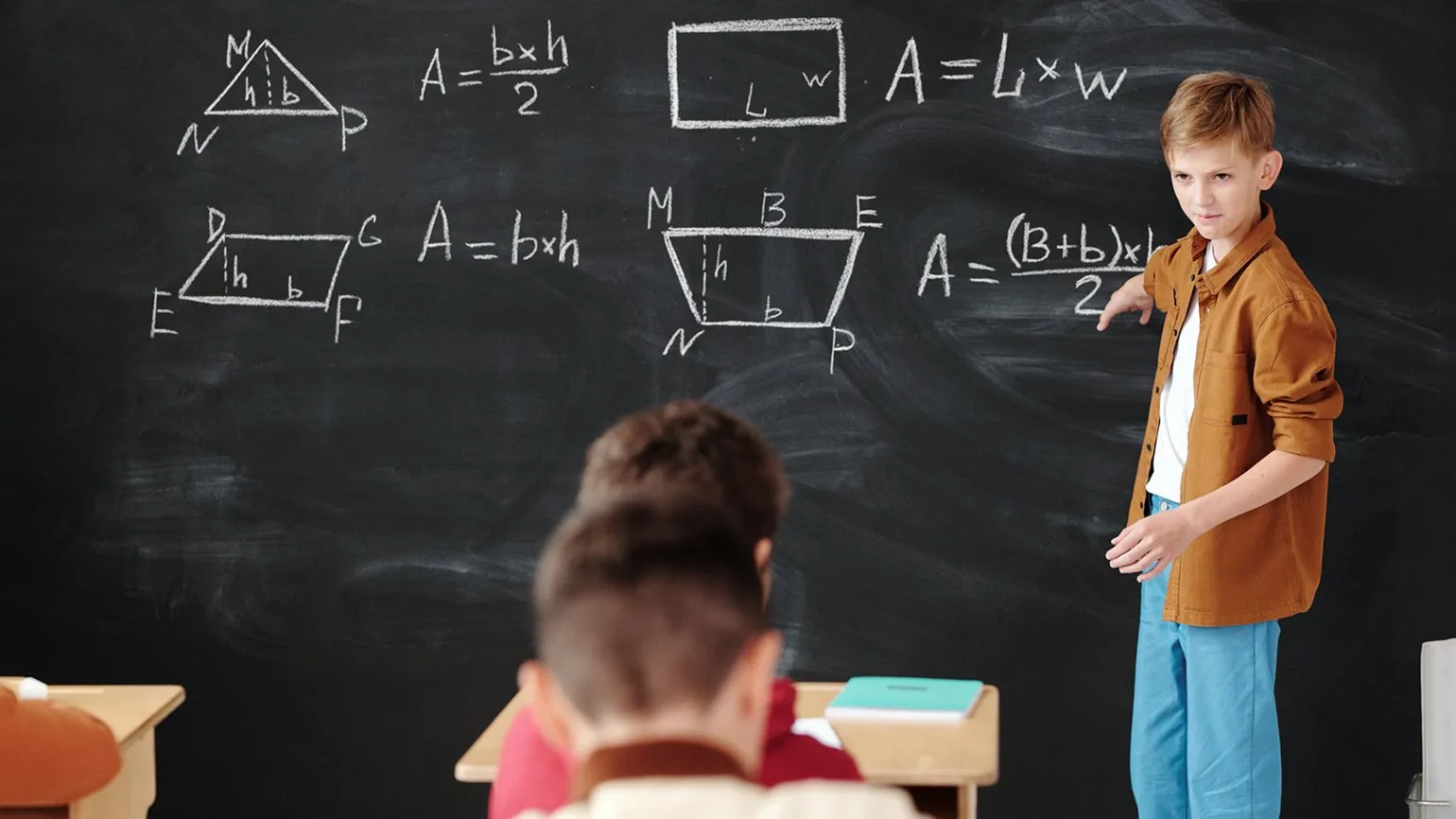
What's happening at school? At Uchi.ru, we conducted an in-depth analysis of elementary school curricula and drew important conclusions. For example, when a child who already knows how to count to ten or even twenty enters first grade, they are re-taught to count to ten. This creates a situation where students are forced to repeat familiar material, which can negatively impact their motivation and interest in learning. A more effective approach to teaching would begin by building on children's existing knowledge, allowing them to further develop their skills and deepen their understanding of numbers and arithmetic.
Many children spend six months or even a year in math classes, feeling bored and uninterested. In the second grade, more interesting problems begin to appear, but they are still fairly simple and easy to grasp. But then, in the third and fourth grades, the curriculum becomes dramatically more complex. Problems become significantly more challenging, and it is at this point that we lose a huge number of children who cannot cope with the new demands. This creates a serious problem for further mathematics instruction and the development of a positive attitude towards the subject.
Many students find it difficult to make the transition to more complex mathematical concepts. They lack the natural motivation and desire to overcome mathematical difficulties, as their previous interest has been suppressed by boring lessons from previous years. This leads to students losing confidence in their abilities and failing to successfully tackle new problems. It is important to create an environment that fosters interest in mathematics and encourages students to overcome challenges.
What to do if your relationship with mathematics has not worked out
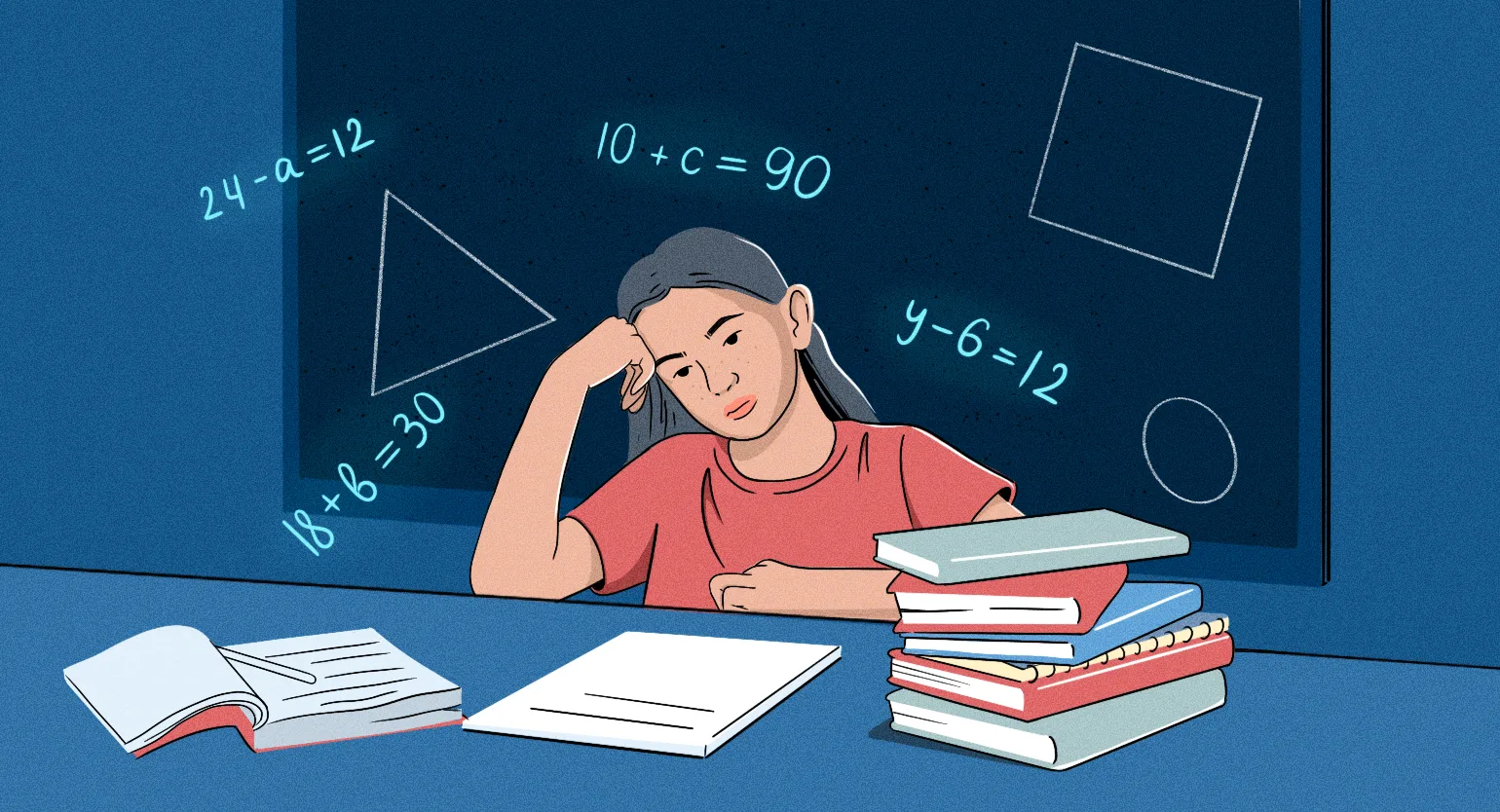
Many students face a sharp increase in the difficulty of mathematical problems, which becomes one of the reasons why they begin to doubt their abilities in mathematics. This shift to more complex concepts can make students feel insecure and lead to the belief that they are not capable of mastering the subject. Understanding the causes of this problem is important for developing effective teaching methods and supporting students in their mathematical development.
Schoolchildren's attitudes towards mathematics are one of the most polarized of all subjects. Research shows that only 20% of children show a love for the subject, while 80% experience negative feelings. This indicates that mathematics evokes strong emotions in students, and many of them are extremely critical of it. There are many factors that contribute to this perception, including the complexity of the material, teaching methods, and students' personal preferences. Mathematics occupies a special place in the educational system, and its role in shaping career prospects is difficult to overestimate. Research shows a high correlation between the level of mathematical proficiency and salary. People with strong mathematical skills tend to earn significantly higher incomes. This creates pressure on children from an early age, instilling in them the idea that mathematics is a key subject that will determine their future. This perception can lead to negative attitudes toward mathematics later in life. It is important to find a balance between the need to study this subject and maintaining interest in it in order to avoid rejection and develop a positive attitude towards mathematics and its importance in life.

To achieve optimal results in search engines, it is important to pay attention to the content of the text. Make sure your content is unique, informative, and relevant to user queries. Include topic-related keywords to improve page visibility. Internal linking to other relevant content is also helpful to create cohesive content and increase user time on site. Update information regularly to keep it relevant and useful to your audience. Optimizing titles and meta descriptions also plays an important role in SEO, so don't forget about them.
Math Anxiety: Concept and Methods for Overcoming It
Math anxiety is an emotional state characterized by fear and worry about completing mathematical tasks and studying mathematical subjects. This phenomenon can significantly impact the learning process and overall academic performance of students. Mathematical anxiety often arises from a lack of confidence in one's own mathematical abilities, negative past experiences, or a lack of support from teachers and parents.
There are several effective methods for combating math anxiety. First, it is important to develop self-confidence through regular study and practice. Solving simple problems and gradually increasing the complexity of the material will help strengthen math skills and reduce anxiety.
Secondly, creating a comfortable learning environment also plays a key role. Support from teachers and classmates, as well as a positive attitude towards mistakes, can significantly reduce stress levels.
Furthermore, it is useful to use various relaxation techniques, such as breathing exercises or meditation, which can help cope with anxiety before tests and exams.
Understanding your anxiety and working to overcome it can significantly improve not only your performance in mathematics but also your overall attitude towards the subject. Eliminating math anxiety opens up new opportunities for learning and development, allowing each student to reach their potential.
The popularity of information technology and IT professions has a significant impact on modern society. With the rapid development of technology, there is an increasing demand for qualified IT personnel. This leads to increased competition among specialists and requires them to constantly update their knowledge and skills. Furthermore, information technology is becoming an integral part of business, creating additional pressure on employees to meet the high standards and expectations of employers. As a result, changes in the IT sector not only create new skill requirements but also impact career prospects and the overall labor market.
I view this as a positive aspect, as successful training in IT professions and programming does not require a deep knowledge of mathematics. This creates additional opportunities for people of all ages, including adults, who want to learn new skills and begin a career in information technology. This approach makes IT education more accessible and attractive to a wider audience.
There are many high-quality programming courses for children that, thanks to their innovativeness, avoid the traditional, routine, and algorithmic approach to learning. These courses focus on children's curiosity and provide the opportunity to explore and discover new things. They create an engaging educational environment that fosters the development of creative and analytical skills in young programmers. Choosing such courses will help children not only master the basics of programming but also develop critical thinking and problem-solving skills. For many young people, programming becomes a means to solve life's problems, including hobbies such as gaming. For example, they may play Minecraft and strive to improve the gaming experience for themselves. This can be done with simple programming. In this way, education is organically integrated into everyday life. An interest in programming not only develops skills but also helps adults overcome the stress associated with mathematics. The question of whether it is possible to integrate mathematics into one's life as an adult is becoming increasingly relevant. Mathematics plays a key role in various aspects of our daily lives, and its application can significantly simplify the solutions to many problems. Firstly, mathematics helps develop analytical thinking and improves problem-solving skills. This is especially useful in the professional field, where logic and calculation are necessary for making informed decisions. Secondly, many aspects of financial literacy, such as budgeting, investing, and spending planning, require basic mathematical skills. Understanding percentages, fractions, and simple equations can help you manage your finances more effectively.
Furthermore, there are many resources that can help adults rekindle their interest in math. Online courses, math apps, and educational videos make learning accessible and engaging.
Thus, math is not only relevant but also essential in adult life. Integrating math knowledge into everyday tasks can lead to more informed decisions and improve quality of life.
As we age, the pressure to "know this" significantly decreases, allowing adults to more easily understand various issues. This creates the opportunity for deep understanding and analysis of information, which is especially important in today's world, where knowledge and skills are constantly being updated. Adults can devote more time to understanding and studying topics that truly interest them, which contributes to personal and professional development.
The entry barrier to mathematics is significantly higher. If you didn't study history in school and later decide to fill this gap, it's not that difficult. All you need to do is put in the effort, set aside time, listen to lectures, understand the topic, and memorize the key points. In this case, you won't need to master new skills, which makes the learning process easier. However, in mathematics, the situation is different. Here, you need not only to grasp the theory but also to develop analytical thinking, which requires more time and effort. Therefore, for successful study of mathematics, it is important to understand the difficulties in advance and prepare for them.
In mathematics, it is important to achieve a level of fluency in numerical data, algebraic formulas and visual representations. This can be compared to the skill of riding a bicycle or skating—it requires practice to master. Without regular practice, achieving a high level of mathematical proficiency for adults is quite difficult. Therefore, it is necessary to devote attention to continuous learning and practice to overcome difficulties and confidently apply mathematical knowledge in life.
With the active digitalization of knowledge, mathematics has become especially important in fields not directly related to science and technology. With the development of technology and the increase in data, the ability to analyze and process information is becoming a necessary skill. Mathematics helps people make informed decisions, use resources rationally, and optimize processes. In business, marketing, finance, and even in the humanities, mathematical models and statistical methods are becoming the basis for successful work. Thus, knowledge of mathematics is becoming not just useful, but critically important for professional activity in the modern world.
Now, in my opinion, the need for knowledge of mathematics has decreased. This is due to the fact that all processes that can be automated have already been automated. Live communication, however, cannot be automated. In today's world, mental calculations are rarely required. It's more important to either develop automated systems or work in professions that focus on interacting with people. Many mathematical skills may become less relevant in the future. As technology and automation advance, certain skills may lose their value. However, the fundamental concepts and principles of mathematics will remain important, as they form the basis for solving complex problems and understanding the world around us. Mathematics plays a key role in various fields, such as science, engineering, and economics. Therefore, despite changes in labor market needs, fundamental mathematical knowledge will remain essential for developing analytical thinking and a critical approach to problem solving.
The word "computer" originally referred to people who performed calculations. In the United States, this role was filled by Black women, as vividly depicted in the film "Hidden Figures." Over time, this profession has become a thing of the past, and modern technology has made many traditional methods, such as the slide rule, obsolete. It is interesting to consider how much other outdated mathematical knowledge and skills remain in modern curricula and how they affect our understanding of mathematics and technology. The modern educational system faces the challenge of adapting content to the needs of students, given the rapid advancement of technology and changing skill requirements.
There is a scientific discipline known as curriculum studies, which examines which new elements should be included in the school curriculum and which can be excluded, based on an analysis of the historical development of society and surveys of various experts. For example, the prolonged attention paid to column arithmetic in the Russian school curriculum raises doubts about its appropriateness.

Read also:
The content of education in modern Russian schools raises many questions and criticism. Many experts argue that the curricula are outdated and do not meet the requirements of modern society. The need to update educational methods is becoming increasingly clear, as today's schoolchildren face challenges that require new knowledge and skills.
Modern Russian schools must adapt to a rapidly changing world by introducing relevant disciplines and modern approaches to teaching. It is important to emphasize the development of critical thinking, creativity, and digital skills that will be in demand in the future labor market.
Educational standards must consider not only academic knowledge but also practical skills that will help students successfully socialize and integrate into society. The introduction of new technologies and teaching methods, such as project-based work and interactive learning, can significantly increase students' interest in the educational process and prepare them for real-life situations.
Thus, modernizing the educational content in Russian schools is a pressing task that requires a comprehensive approach and the active participation of all stakeholders.
Why Study Mathematics?
Mathematical and logical thinking represent different aspects of cognitive abilities. However, mathematics classes can significantly contribute to the development of logical thinking. Mathematics requires a person to analyze, draw conclusions, and solve problems, which is directly related to logical processes. Solving mathematical problems helps develop critical thinking skills, teaches how to build logical connections and identify patterns. Thus, regular mathematics classes not only improve mathematical skills but also contribute to the overall development of logic, which is important for successful learning and everyday life. Solving mathematical problems is an important exercise in logical thinking and the analysis of multi-step actions. Unlike other academic subjects, such training occurs most intensively in mathematics. Therefore, children who successfully cope with mathematical problems often demonstrate high results in chess and programming. These areas require the ability to calculate several steps ahead and analyze possible consequences, which becomes a key skill for success. Mathematics promotes the development of various skills, including spatial thinking. Mathematics classes improve the ability to think abstractly, reason logically, and solve problems. In addition, they help develop analytical skills, which allows for better perception and processing of information. Mathematics also helps improve concentration and attention, which in turn has a positive impact on academic achievement in other areas. All of these skills are important not only in academics but also in everyday life and professional work. The history of mathematical problem solving is quite complex. Some people, including both children and adult professional mathematicians, prefer to use visual models to understand and solve problems. Thus, visualization becomes a natural tool for them. At the same time, many people rely on definitions and algebraic formulas, rarely using visual constructs. As a result, the load on spatial thinking and its development varies depending on the approach to solving mathematical problems. This highlights the importance of diversifying teaching methods and practicing mathematical skills, which can significantly impact the effectiveness of learning.

Group studies have shown a correlation between mathematical thinking and spatial abilities. However, this does not indicate that one of these qualities contributes to the development of the other. At the individual level, it cannot be said that improving spatial abilities will lead to an increase in mathematical thinking or vice versa. It only means that among children who successfully solve mathematical problems, you can find those who also demonstrate good results in spatial orientation tasks.
Currently, there is no convincing evidence of a universal link between the study of mathematics and the development of spatial thinking. Research in this area is ongoing, and the results do not yet provide clear conclusions that mathematics classes directly contribute to the improvement of spatial perception abilities.
Evidence is lacking, and at the individual level, the situation remains complex. Visual models are most often helpful in the initial stages of learning a topic, especially for those who have difficulty with mathematics. For a person who has already mastered the subject, learning a new topic is possible without the use of visual models. However, when difficulties arise, such models can be quite useful, although this is not always the case.
For a visual model to be useful, it is necessary to be able to perceive its abstract content. "Seeing the math" in visual materials requires a certain amount of effort. This can be especially difficult for students who struggle with mathematics, as this task adds additional cognitive load. Therefore, it is important to develop visual perception and abstract thinking skills to help students more effectively master mathematical concepts.
There is an interesting phenomenon when young children, when given the task of drawing a model—for example, to show that Vasya is taller than Sasha, and Sasha is taller than Masha—start to draw characters with curly hair and clothes. Children are unable to depict only mathematical relationships, which highlights their tendency to visualize and emotionally interpret information. This phenomenon demonstrates the importance of developing children's not only mathematical skills but also creative thinking, allowing them to express their ideas through art.
Successfully perceiving abstract content in visual models requires developing certain skills. This includes understanding the structure and elements of visual representation, as well as the ability to interpret information presented in abstract form. Mastering these skills will help you better perceive and analyze data, which, in turn, will improve your overall understanding of complex concepts and ideas.
Studying mathematics truly contributes to the development of skills for quickly analyzing information and making informed decisions in various areas of life. Mathematical concepts and methods teach logical thinking, structuring data, and identifying patterns. These skills are useful not only in scientific and professional activities, but also in everyday life. The ability to assess risks, conduct analysis, and use quantitative data helps make more informed decisions. Thus, mathematics is an important tool that develops critical thinking and the analytical skills necessary for successful adaptation in a rapidly changing world.
There are many ways to reason, and each has its own value. I believe that the importance of mathematical thinking alone should not be emphasized. Each approach to problem solving and information analysis is unique and can be useful in different situations.
I strive to create a community where empathy skills, understanding of historical context, and psychosomatic self-regulation are as important as analytical thinking. Artificial intelligence is already demonstrating outstanding abilities in information analysis, and this trend will only intensify in the future. It is important to develop educational approaches that emphasize these important skills so that they are as important as mathematical thinking.
Learn more about education and current news in our Telegram channel. Subscribe to stay up-to-date with important information and helpful resources!
Please note the following recommendations for improving your content. Optimizing your text for SEO involves using keywords and phrases that are relevant to the topic and will help your resource rank higher in search engines. Don't forget the importance of creating unique and informative content that will be interesting to your readers. Aim for natural keyword integration throughout the text, avoiding overuse. It's also helpful to add internal links to other pages on your site to improve navigation and increase user time spent on the site. This will help increase your authority in the eyes of search engines.
Read also:
- Howard Gardner's Theory of Multiple Intelligences: What Science Says About This Concept
- 9 Questions About How Genetics Affects Children's Development and Learning
- An Unusual Practice: What Is Mathematical "Genealogy" and Why Is It Needed?
- Mathematics in Life: Where It Is Needed and How to Avoid It
Profession Methodologist from scratch to PRO
You will improve your skills in developing curricula for online and offline courses. Master modern teaching practices, structure your experience, and become a more sought-after specialist.
Find out more