Contents:

Learn: Methodologist Profession from Scratch to PRO
Learn MoreIn 1894, students at Moscow University booed Professor Klyuchevsky, a renowned historian, during his speech on the death of Emperor Alexander III. The professor had praised the monarch's foreign policy, which provoked a mixed reaction among the students. This incident highlights the tense relationship between the intelligentsia and the authorities in Russia at the time.
The authorities' response to this incident was quite revealing. As a result of law enforcement actions, ten students, randomly selected from the crowd, were detained. Three of them were expelled and banned from re-entering Moscow University, while the rest received reprimands and were sent to solitary confinement for a certain period. This event highlights the serious consequences for students participating in protests and raises concerns about the rights of young people in educational institutions.
The students' response was immediate: the following day, mass unrest erupted at the university. As a result, police detained another 49 people and were forced to expel them from Moscow. The situation escalated, and protest sentiments spread not only to educational institutions but to the city as a whole.
Events that occurred during certain historical periods transformed students into a social group perceived by the authorities as potentially dangerous. This was especially true during the second half of the 1850s and early 1860s, when the populist movement was actively developing. Students played a key role in this movement, creating self-organizing structures and social movements. Their activities extended beyond academic and literary initiatives and embraced political ideas, which they sought to convey to a wider audience. Student assemblies, samizdat, and protests accompanied by clashes with the police confirmed the need for special control over students. The authorities recognized that such youth activism could influence public consciousness and cause changes in the country's socio-political climate.
What rules of conduct were prescribed for students?
The country was governed by an authoritarian and conservative university charter of 1884, which established rules reminiscent of those in the army. Modern students would likely find these norms strict and at times humiliating. The charter imposed strict discipline, a rigid hierarchy, and even interference in the students' personal lives, which significantly limited their freedoms and opportunities for self-expression.
Upon entering an educational institution, a student is obliged to strictly adhere to the established rules, compliance with which is monitored by a special inspectorate. These rules are based on the general requirements for students and trainees at the Imperial Universities of Russia, approved by the Ministry of Education. Compliance with these norms is an important aspect of academic life, ensuring order and discipline in the educational process.
These rules created a sense of subordination among students, similar to that of the military, while rectors, deans, and, most importantly, inspectors found themselves in the role of leaders.
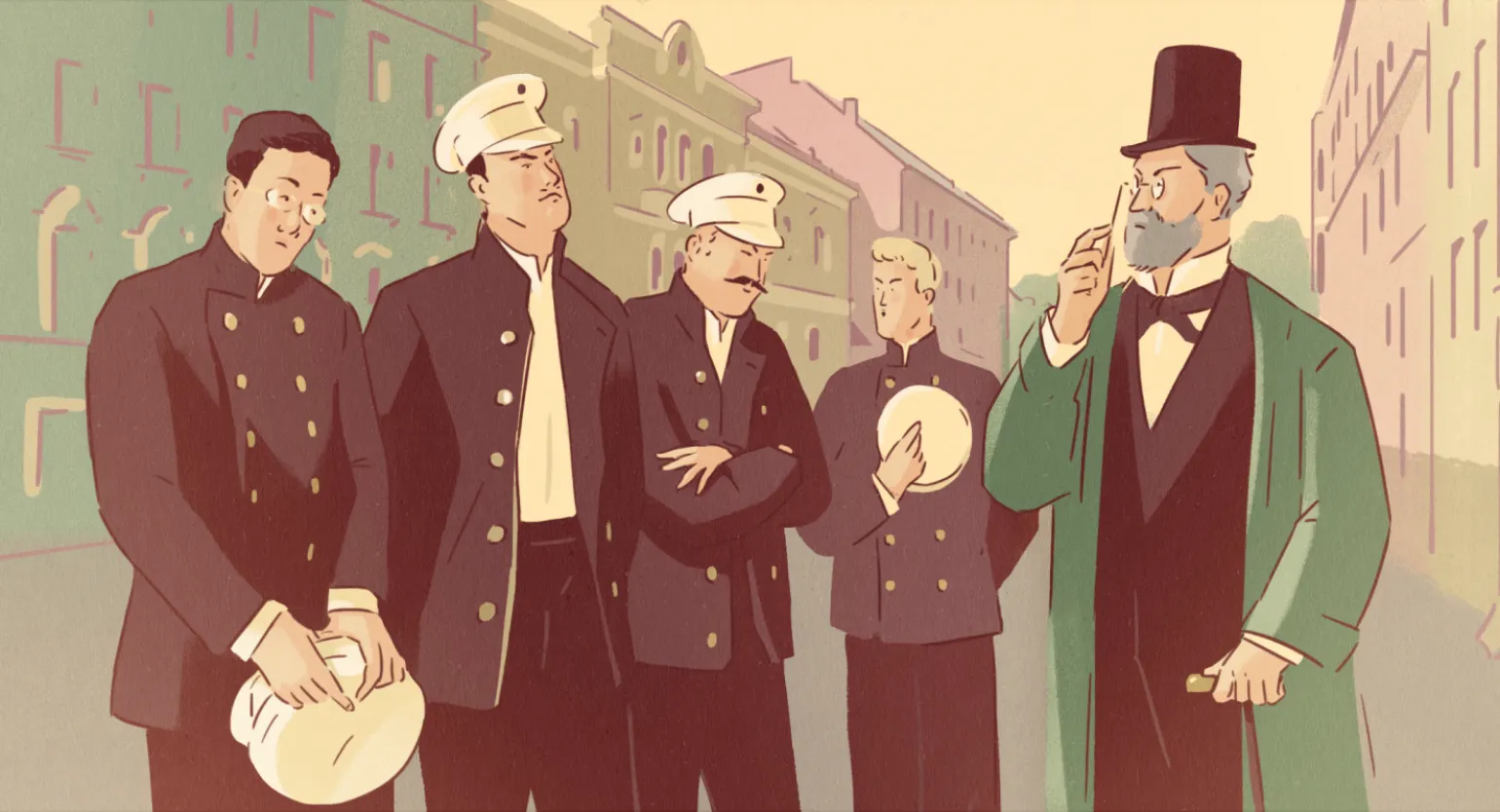
When meeting with university administration, students were required to touch the visor of their hats, bow, and, of course, give way to them. During conversation, it was necessary to remove their caps, maintain a respectful tone, and stand upright, avoiding relaxed postures. These rules emphasized the importance of respect for elders and upheld the traditions of the educational institution.
If a student failed to rise from a windowsill in a hallway or university classroom when a professor appeared, this could lead not only to a reprimand but also to more serious consequences. It is important to adhere to the rules of conduct in educational institutions, as they foster discipline and respect for teachers. Failure to adhere to these norms can impact a student's reputation and their treatment by faculty. At private educational institutions, the regime was more liberal, but this did not apply to all institutions. At closed and privileged educational institutions, such as the Tsarevich Nicholas Lyceum and the historical and philological institutes in St. Petersburg and Nizhyn, discipline was significantly stricter. These institutions operated a closed boarding school system, where students lived for the entire duration of their studies. Strict regulations and constant supervision by staff created a unique atmosphere. These institutions attracted children from noble families, which emphasized their elite status.

Students were required to wear a set uniform: a coat, a frock coat, a tunic with heraldic metal buttons, and a cap. Students had to pay for their own uniforms, which created an additional financial burden for poor young men. This clothing was not always appropriate for the weather: it was cold in winter and hot in summer, and students could receive a reprimand for an unbuttoned uniform. The rules approved by the Minister of Public Education on May 16, 1885, required students to wear a uniform both at and outside the university. Students, naturally, resisted this obligation.
A. E. Ivanov in his book "Students in Russia in the Late 19th - Early 20th Centuries. The "Socio-Historical Fate" mentions a report submitted to the trustee of the Kazan educational district in 1893, which cited 34 students for violating uniform regulations. Their offenses included wearing colored shirts, not wearing ties, not wearing uniforms neatly, refusing warm hats, and appearing in jackets at introductory lectures and the theater. Prince Vladimir Obolensky also shares in his memoirs how, on the first day of classes at St. Petersburg University in 1887, his friend was punished with three days in solitary confinement for wearing a regular coat instead of uniform. These cases illustrate the strict discipline and importance of dress codes in educational institutions of the time. The true purpose of introducing uniforms was to ensure control. They made it easier for the gendarmes, their agents, and peddlers to observe students, allowing them to more easily identify students in a crowd. This facilitated more effective surveillance and ensured order within educational institutions.
Each student received a residence certificate, which served as a class passport. This certificate was issued by the local police station and granted the right to reside exclusively in the city where the educational institution was located. Until 1907, such certificates were issued for one year, and after that, for six months. Students were effectively registered with the police. Every student was required to notify the police of their departures, even if they were traveling to visit their parents during the holidays. Upon first request, students had to present a personalized numbered ticket, which contained information about their place of residence and movements.

Also study:
History of education: how students were taught and examined 130 years ago
130 years ago, the education system was significantly different from today's. At that time, educational institutions sought to prepare students for life and professional work using traditional teaching methods. Students passed rigorous examinations that assessed their knowledge and skills. The educational process included lectures, practical classes, and independent work, which contributed to a deep understanding of the material.
Examination procedures were complex and demanded a high degree of preparation from students. They included both oral and written tests that tested not only theoretical knowledge but also practical skills. This created an atmosphere of intense competition and responsibility, which contributed to the development of professional qualities in future specialists.
Pedagogical approaches of that time were based on classical methods such as memorization and deductive reasoning. Faculty played a key role in the educational process, transmitting knowledge and shaping students' worldviews.
Thus, the educational system 130 years ago focused on the comprehensive development of the individual, which played a significant role in shaping future generations. These traditions still influence modern education, emphasizing the importance of quality teaching and assessment.
Modern university regulations often intrude excessively into students' personal lives. For example, students were generally prohibited from marrying during their studies, and women and men already married were not admitted to educational institutions. This prohibition was codified in regulations established by the Ministry of Public Education on May 16, 1885. Marriage permission for students could only be obtained in exceptional cases, highlighting the strict and limited university regulations of the time.
Cohabitation outside of marriage was perceived as morally reprehensible in the 19th century. Students who found themselves in similar situations faced serious consequences. For example, in 1893, A. N. Grigoriev, a fourth-year student at Tomsk University, was transferred to Kiev University because of his cohabitation with a widowed woman from Tomsk. This occurred despite Grigoriev's respect among the faculty and administration. This case illustrates the social norms of the time and their impact on the lives of young people seeking personal happiness. The university statutes of 1863 and 1884 strictly prohibited the creation of any student organizations. This restriction applied not only to political associations but also to any forms of joint activity, such as reading clubs, hobby groups, and amateur performances, including staging theater plays and organizing concerts. These measures significantly limited students' opportunities for self-expression and social activity within their educational institutions. Student assemblies and societies, including hobby groups, were strictly prohibited. Even participation in legitimate organizations, such as community groups, was permitted only with the approval of university administration. This restriction significantly curtailed student initiative and hindered the development of their interests and skills. Under such control, students experienced a lack of opportunities for social activity and interaction, which negatively impacted their academic performance and personal growth. Penalties for violating university regulations were severe. According to the 1884 charter, such cases were reviewed by an inspector or the rector of the university. They had the power not only to reprimand or expel a student, but also to order detention and a stay in a punishment cell. The most serious penalties were additionally approved by the trustee of the educational district. In addition, students could be penalized financially, depriving them of benefits such as scholarships, tuition waivers, and allowances. It is important to note that at that time, university education was fee-paying, which made such punishments especially noticeable for students.

Also study:
Leo Tolstoy described university lectures as more than just an educational process. He considered them a "curious rite," emphasizing that lectures often provided no real benefit to students. He believed that educational institutions should focus on a deeper understanding of knowledge rather than on formal instruction. Tolstoy called for a rethinking of the role of universities and a search for more effective methods of imparting knowledge that foster critical thinking and creativity. It is important to remember that education should not only inform but also shape individuals, helping students become active participants in society.
Responsibility for student misconduct extends not only to actions committed within the walls of the educational institution but also to those occurring outside it, except in cases where offenses are subject to police review.
Students experienced injustice from university authorities and found it difficult to find an avenue for expressing grievances. Although they could appeal to the university inspector, most students harbored resentment toward these employees, making the complaints process even more difficult. As a result, many students were left alone with their problems, not knowing how to properly defend their rights and achieve justice.
What Role Did Inspectors Play and Who Were the Pedels?
In higher education institutions, a special inspectorate, with functions similar to police, monitored compliance with discipline and regulations. At each university, the inspectorate was headed by an inspector, assisted by sub-inspectors and pedels. From 1884 to 1905, the inspectorate operated independently of the rector, as the inspectors reported directly to the trustees of the educational district. Thus, there was external supervision, organized within the university, which contributed to the maintenance of discipline and order in the educational process.
Inspectors had the authority to monitor students both in and outside of university buildings. To travel to another city, including your hometown, you had to obtain a leave of absence from the inspectorate, as well as a special document - a personal card, which was required for registration with the police at your destination. This restriction emphasized strict control over students' movements and ensured adherence to established rules.
Inspectors closely monitored students' reading. They checked library orders, and if a student showed an interest in "provocative" topics, such as the peasant question, they were subject to close scrutiny. This demonstrates control over the ideological component of the educational process and the desire to ensure that the educational material meets the established standards.

A student displaying unhealthy interests could be punished, for example, by expulsion from the dormitory, commonly known as "being kicked out."
Unlimited power created conditions for abuse, and some inspectors exploited this. In 1898, at Tomsk University, Inspector Kornilovich unexpectedly appeared in a dormitory room and fined students Speransky and Leporsky for being "in their underwear" and failing to stand upon his entry. This is comparable to being fined today for being at home in pajamas instead of a business suit. This approach demonstrates the absurdity of the situation and raises questions about the legality of the inspectors' actions. Acts of this kind emphasize the importance of protecting students' rights and the need for clearly regulated powers for education inspectors.
Students often harbored resentment toward inspectors and their assistants, known as peddlers. This hatred was particularly pronounced at large educational institutions, where such positions were common. Inspectors and peddlers were often associated with rigid control and strict rules, which only fueled student antipathy.
Peddlers served as low-level servants of university inspectorates, carrying out the inspectors' orders and supervising students. Their duties included enforcing dress codes and student behavior between classes, as well as maintaining attendance records. The peddlers were usually recruited from among retired soldiers and non-commissioned officers, which indicated their low level of education.
The teachers had the authority to reprimand students, monitor their behavior outside the university, and identify "unauthorized gatherings."
Read also:
The History of the Abolition of Grades: The Legacy of Bourgeois Society
The abolition of grades in the educational system is a significant step caused by the need to reconsider approaches to knowledge assessment. This decision was the result of a critical analysis of traditional methods dating back to bourgeois society, where grades served as an instrument of social stratification.
Within the historical context, grades served not only as an assessment of knowledge, but also as a means of forming hierarchies in educational institutions. The grading system often caused stress for students and created an atmosphere of competition, which was not conducive to a true understanding of the material.
Modern approaches to education strive for more humanistic and individualized assessment methods that focus on personal growth and skill development. The abolition of grades allows for a transition to formative assessments that promote a deeper assimilation of knowledge and the development of critical thinking.
Thus, the abandonment of the traditional grading system can be seen as a step toward a fairer and more effective educational environment, free from the influence of outdated bourgeois concepts.
Students caught drinking, even in their free time, faced severe punishments. First, they were reprimanded, then sent to solitary confinement, and in extreme cases, expelled from the educational institution. These measures were prompted by real problems: students under the influence of alcohol often caused disturbances and fights, which sometimes ended in serious consequences. Therefore, educational institutions were forced to introduce strict rules to maintain order and safety among students.
A person on duty was always on duty in the dormitory. He or she could inform the administration if strangers were in a student's room.
At events and acts of disobedience, staff members of educational institutions actively recorded the participants and instigators. To do this, they studied photographs of students, memorizing their names and faces. In some cases, tests were conducted on the knowledge of their charges, which emphasized their attention to detail and desire to control the situation.
Some inspectors created an entire system of surveillance using peddlers. For example, under A. A. Bryzgalov, who held the position of inspector of Moscow University until 1888, peddlers, in disguise, prowled the city and reported the most minor violations. One such violation was the appearance of a student in a white cap on September 1; it was allowed to be worn only until August 31. For this violation, the student could be sent to solitary confinement. The control system implemented by the inspectors demonstrated the strictness and uncompromising attitude towards discipline in educational institutions of that time.
At a concert, one of the students, dissatisfied with the order established in Bryzgalov, slapped an inspector. This incident became the pretext for mass student protests, which were dispersed by the police and Cossacks. The events drew attention to the problems existing within the educational institution and sparked a public debate about freedom of expression among students.
Insulting a teacher could result in solitary confinement or expulsion from the university. In controversial situations, a teacher's word always carried more weight than a student's. For example, if a student declared their attendance at classes, but the teacher claimed otherwise, complaining to a higher-ranking inspector was futile. Such rules emphasized the authority of teachers and created an atmosphere of strict discipline within the institution.
Of course, such power created conditions for abuse. Pedels used their position for extortion, collecting "bribes" for silence and having the power to slander anyone. This created an atmosphere of fear and mistrust, where law and justice were threatened.
The position of pedel is not a purely Russian invention. These specialists appeared in the first European universities, where their role was considered honorable. The main duties of the pedeles were to inform students of the rectors' orders, attend exams, debates, and services, and maintain order and silence on university premises, especially during assemblies and masses. The pedeles played a vital role in maintaining discipline and organizing the educational process, which underscores their importance in the educational system.
How did students feel about their situation?
The pressure exerted on students only fueled their dissatisfaction with the current order. Thus, a vicious circle emerged: the government attempted to suppress the protest movement by intensifying repression, while the students, in turn, increasingly actively opposed these measures. They demonstratively violated the rules: they refused to wear uniforms, disregarded the chain of command, and openly disrespected inspectors, declaring that they respected only those who could be useful to them. Students who exhibited such behavior were usually unable to complete their studies. However, many of them sought to avoid expulsion and, after being reprimanded, promised not to violate the rules again, although not everyone was able to keep their promises.
Some students deliberately sought to acquire the status of politically unreliable for practical reasons. This was due to the fact that receiving a state scholarship obliged graduates to work for six years at the gymnasium. If a student had other professional ambitions or plans for the future, the status of unreliable allowed them to avoid the mandatory work, as gymnasiums were not interested in teachers with such a reputation.
Some students tried to openly challenge the outdated rules. In 1893, a student at Tomsk University complained to Inspector Pyatnitsky about the formal obligation to "bow to professors" and to himself. He expressed dissatisfaction with this tradition, but neither the obligation itself nor the consequences for violating it were ever amended. This situation highlights the persistence of archaic norms and the resistance to their revision in the educational environment.
Some students collaborated with university administration by providing information about their fellow students.
Student dissatisfaction with the established order reached its peak in 1899, leading to the first all-Russian student strike. This event became one of the first and largest in the history of the student movement. The strike was attended by 30 educational institutions and about 25 thousand people, which underlines the scale of the protests and the importance of this event for the Russian educational space.

It was no coincidence that the authorities expressed concern about student movements. Students organized underground libraries where they collected banned literature, including works by Marx, Lassalle, Plekhanov, Chernyshevsky, Sechenov, and Darwin, as well as the journals Sovremennik, Otechestvennye Zapiski, and Slovo. Despite the existing bans, they held meetings, actively politicized, and played a significant role in the first Russian revolution of 1905. These actions demonstrated the growing interest of young people in social and political change in the country, which caused serious concern among the authorities.
How did professors and teachers react to all this?
The teachers' attitudes toward student discipline were formed based on their personal views, which can be roughly divided into conservative and liberal. The teaching staff included both supporters of a strict approach and those who showed empathy for students and, at times, openly defended their interests, drawing on their own experiences as students. It is important to note that interaction between teachers and students outside of educational institutions was discouraged and prohibited. Nevertheless, some progressive professors boldly invited their students to their offices, which indicated a more flexible approach to the educational process.
Liberals argued that authoritarian regimes hinder student development and suppress their desire for knowledge. They believed that free and democratic conditions foster education and self-expression, which, in turn, positively impacts knowledge and critical thinking.
Tomsk University professors N. M. Maliev, S. I. Korzhinsky, and A. S. Dogel proposed limiting the punishment to a reprimand for students observed intoxicated in the theater. Despite the inspector's objections, the matter was referred to the rector, who was to issue a reprimand to the culprits on his behalf.
Maliev and Dogel later supported a student who was involved in a conflict with a dormitory supervisor. The professors noted that the supervisor himself had caused the incident by provoking the student. Dogel also expressed regret that such positions were often filled with people with low levels of education.
Some professors with liberal views toward students sometimes completely ignored university board meetings devoted to disciplinary violations by students. This behavior could lead to the loss of their positions, as happened, for example, to Professors Korzhinsky and Dogel. Their refusal to participate in such meetings highlights the complex relationship between faculty and administration regarding discipline and academic freedom.
Vladimir Guer'e, a professor of general history at Moscow University, was critical in his memoirs of the role of the professorial board in the trials of offending students. He noted that students who violated the rules faced double persecution—both from academic authorities and from the police. Guer'e emphasized that the decisions made by the professorial "court" were often unfair, raising doubts about their objectivity and legality. He thus emphasized the need to review approaches to disciplinary action in educational institutions in order to avoid violating students' rights and ensure fairness in the process of considering their cases.
The board based its verdict on the testimony of the inspector who participated in the trial. The inspector, in turn, relied on information provided by assistants and peddlers, which casts doubt on the veracity of the data obtained. The testimony of these individuals may have been distorted due to their dependence on material rewards, making their testimony unreliable.
Vladimir Guerrier, in his work "1894 in the History of Moscow University," highlights the key events and changes that took place at this educational institution in that year. 1894 was an important stage in the development of Moscow University, as significant reforms concerning the educational process and university administration took place during this time. Guerrier describes in detail the influence of social and political factors on the educational process, as well as the role of faculty and students in shaping the university culture. Also important are changes in scientific activity and the growth of the student body, which contributed to strengthening the university's status as one of the leading educational institutions in Russia. The book is a valuable source for understanding the historical context and development of higher education in Russia in the late 19th century, as well as for studying Moscow University as an important center of science and culture. Faculty members such as Guerrier, Korzhinsky, Maliev, and Dogel became symbols of support and mentorship for students. During the unrest at Moscow University in 1894, when the famous Professor Klyuchevsky was booed, students appealed to their faculty to defend those who had been unjustly punished. These events highlight the importance of the role of faculty in the lives of students and their willingness to advocate for justice in the academic environment.

Vladimir Guerrier also joined those who supported the students. He promised that professors would intervene in their defense if the meetings ceased. Guerrier kept his promise and contacted his colleagues from the Faculty of History and Philology, resulting in 12 of his 19 colleagues agreeing to support the students. Gradually, faculty from other faculties joined them, including 42 professors. In total, 91 professors serve on the university board. Thus, student support has become widespread, underscoring the importance of unity within the academic community.
The faculty sent a petition to the Moscow Governor-General asking for a pardon for the students who were expelled. The professors also noted the importance of reforming the university court and the need to combat police abuse. These steps are aimed at improving the educational environment and protecting students' rights, a hot topic in higher education.
Of course, I'm ready to help with editing the text. Please provide the original text you want corrected and optimized for SEO.
The protest was partially successful: of the 49 students, 11 were reinstated at the university, 25 were banned from re-entering Moscow University only but can study at other educational institutions, and only 13 remain banned from entering any universities. Following this incident, the professors faced accusations from the university administration, including attempts to link them to criminal groups. A rift developed within the Moscow University faculty, affecting both students and faculty.
Conservative professors perceived student freedom as a threat to traditional political, social, and cultural values. They sought to combat the "fermentation in the minds" of both students and their colleagues. These teachers and associate professors believed that closeness between faculty and students could be harmful and took measures to prevent such relationships. Faculty could request the suspension of classes to avoid protests within the university. There were cases where politically "unreliable" colleagues were denounced. This occurred against the backdrop of the faculty themselves, like students, being under the close scrutiny of the Ministry of Public Education and the police. Professors' character references, in addition to official data, also included information obtained "privately." Outstanding scientists such as Ilya Ilyich Mechnikov, Dmitry Ivanovich Mendeleyev, Yevgeny Viktorovich Tarle, and Kliment Arkadyevich Timiryazev were expelled from their educational institutions. These events were the result of their bold views and scientific convictions. Unfortunately, a similar fate befell many lesser-known, but no less significant, colleagues, underscoring the importance of freedom of thought in academia.
Right-wing and pro-government views undoubtedly contributed to the successful careers of conservatives in Russian universities. These ideas create favorable conditions for advancement in the academic environment, which reflects a general trend in the education system.

Read also:
Teachers of the imperial universities in different historical periods received different salaries salaries, which depended on a variety of factors, including academic rank, work experience, and the location of the university. In the early 20th century, for example, full professors could expect higher incomes than associate professors and assistant professors. At that time, faculty salaries were often comparable to those in other fields, such as the civil service or the private sector. This situation allowed universities to attract qualified personnel and maintain high educational standards. It is important to note that financial conditions and state support for education had a significant impact on faculty salaries, which in turn affected the quality of student education.
Was the Tsarist Government Managed to Pacify Students and Liberal Faculty?
The government attempted to balance student demands with the need to maintain order. On the one hand, steps were taken to satisfy some student requests in order to minimize the underlying causes of discontent. On the other hand, a number of regulations were tightened, which caused a new wave of discontent among young people. This dual policy created tension and prevented a sustainable dialogue between the authorities and students.
In 1899, the Minister of Public Education, Nikolai Bogolepov, introduced significant changes to the management of educational institutions, relieving peddlers of their primary responsibilities. Now, matters concerning student uniforms, behavior, and attendance were assigned to "sub-inspectors" selected from among former teachers of gymnasiums and other secondary schools. The Ministry believed that the peddlers' main problem was their uncouthness and rudeness, but they did not disappear from the education system. On the contrary, the number of peddlers and inspectors increased under the pretext of concern for students. A new formulation was introduced, according to which peddlers were prohibited from engaging in activities "inappropriate to their development and official position." These changes in the management of educational institutions had a significant impact on the teaching process and the interaction between teachers and students.
In response to the 1899 strike, the authorities adopted a number of harsh measures. One such measure was the restriction of admission to higher education institutions. Residents of certain regions, such as Siberia, could now only apply to universities within their own academic district, such as Tomsk University, but not to more prestigious institutions such as St. Petersburg University or Moscow University. These actions highlight the government's desire to control the educational process and limit access to higher education for students from remote regions.

Learn more about our articles and news that will help you stay up to date with current events and trends. We offer a variety of content covering key topics and offering valuable insights. Stay tuned for important updates and helpful tips.
Did the generation entering universities in Tsarist Russia take exams similar to today's Unified State Exam? Entrance examinations were an important stage in the educational system of that time, distinguished by their rigor and format. Exams consisted of oral and written tests, requiring applicants to demonstrate their knowledge in various subjects, such as mathematics, literature, and history.
Preparation for exams often began long before they were actually taken. Students attended specialized courses and tutors to prepare for the complex questions and requirements. This created high competition among applicants, which, in turn, emphasized the importance of examinations for subsequent educational and career trajectories.
Entrance examinations to universities in Tsarist Russia were not only a test of knowledge but also a test of students' personal qualities, such as confidence and the ability to argue their point of view. Thus, the examination system of that time created the foundation for the formation of future specialists and citizens of the country.
Students participating in protests began to receive summonses for military service. Generally, university students were exempt from conscription, but now they were sent for periods of one to three years. This change affected many students who had not previously encountered compulsory military service and caused public unrest.
Of course, I am available to help with editing the text. Please provide the source text you wish to revise.
Students of higher education institutions who participate in mass riots both on and off campus, as well as those who incite such actions or shirk classes with prior consent, may be expelled from educational institutions. According to current regulations, they are subject to conscription into the army to fulfill their military duty. This applies even to those who have benefits due to family circumstances, education, have not reached the draft age, or were exempted from service by lot.
In 1899, Temporary Regulations Concerning the Serving of Military Service by Students of Higher Education Institutions Expelled for Participating in Mass Riots were approved. These regulations defined the procedure for conscription and service, as well as the conditions under which students could be exempted from military service. The importance of these regulations lies in their impact on the organization of the educational process and the maintenance of discipline among students.
Following the signing and promulgation of this measure in 1900, Russian universities became the scene of new student protests. As a result of these unrest, more than 200 students were sent to the army. Such events highlight the importance of social and political changes in higher education in Russia at that time. Student movements continued to influence the development of university policy and public life in the country.
The Ministry of Public Education continued to actively combat student organizations, viewing them as sources of liberalism and socialism. At the same time, it began to encourage the creation of controlled circles, reading rooms, mutual aid funds, and dormitories. The chairmen of these approved student organizations were appointed or elected from among the faculty, which allowed the state to maintain control over the educational process and the ideological situation in educational institutions.
Faculty found themselves in a situation where they were assigned some of the duties of inspectors. At the same time, inspectors retained the right to intervene without limitation in the activities of organizations established by professors. Student gatherings were strictly classified as legal, which were fully controlled by the administration, and illegal, which included all others. Participants in illegal gatherings could be subject to disciplinary and criminal liability. Attempts to suppress the wave of public discontent proved ineffective. In 1901, in response to calls to send errant students to military service, a second all-Russian strike erupted. The heightened public sentiment forced the government of Nicholas II to recall the exiled students. Subsequently, until the outbreak of World War I, students were no longer drafted into the army.

The strikes that took place between 1905 and 1907 affected not only students but also teachers, reflecting the profound social and political changes of the time. These events became an important milestone in the history of education, reflecting growing dissatisfaction with the system and demands for reform. Teachers, like students, began to actively express their protests, demanding improved working conditions and more democratic governance of educational institutions. Strikes during this period demonstrated the unity of the educational community and became a catalyst for further changes in the country's educational system.
The diary entries of N. N. Platonova, the wife of S. F. Platonov, professor and dean of the history and philology department at St. Petersburg University, and director of the Women's Pedagogical Institute, vividly reflect the events of that year. These entries serve as a valuable historical source, allowing for a deeper understanding of the social and cultural changes taking place in society. Platonova meticulously recorded not only personal experiences but also important public events, making her diaries an important record of the era. Analysis of these entries can help researchers and those interested in history better understand the context in which they were written and assess the impact of these events on the development of education and science in Russia.
The season of meetings and discussions on autonomy is currently in full swing. This topic is once again being vigorously debated at the Pedagogical Institute. Yesterday, Ekaterina Semyonovna Sultan-Shah broke the unpleasant news about a morning meeting scheduled for 11 a.m. today. S.F. feared that students and workers might attend the gathering of the Higher Women's Courses and the Medical Institute, as they had at the meeting. Leftist party leaders at the institute were known to have conducted a survey among faculty members about their desire for autonomy. However, today's gathering was rather insignificant, possibly due to the bad weather.
All higher education institutions remain under military guard, and they are preventing students from entering who wish to hold a rally. According to sources, the military did not use weapons either yesterday or today. Kholodnyak, according to Ivanovsky, reported at the Academic Council that students from the Philological Institute threw several bottles of sulfuric acid at soldiers. In response, the officer who summoned Director Latyshev warned that if similar incidents were to recur, the troops would decide to use firepower against the institute. The situation remains tense, and further actions by the students could lead to serious consequences.
On Wednesday, the 12th, Vvedensky gave his first lecture at the university. At his first lecture, the students greeted him with a standing ovation, but a serious scandal erupted during the second lecture. Students, invited by a member of the coalition council, created a commotion and whistled in Tarle's lecture hall, preventing Vvedensky from leaving for almost 45 minutes. They then escorted him to the faculty lounge with the same loud noise.
At the School of Law, Prince Oldenburg dismissed eight teachers and 18 students as a result of a strike. This incident became a significant event in the educational sphere, highlighting the conflicts between the administration of educational institutions and their participants. The strike caused a wide resonance and drew attention to issues of management and workers' rights in educational institutions.
In her diary, N. N. Platonova, covering the period from 1889 to 1921, provides a profound understanding of the historical events and personal experiences of that time. This work is an important source for the study of recent Russian history, combining the author's personal records with the context of significant changes in the country. Platonova's diary reflects not only social and political changes but also cultural aspects, making it a valuable resource for researchers and historians. The edition, published in Ryazan in 2020, continues to draw attention to Platonova's legacy and the importance of her records for understanding Russian history. Classes have been completely suspended at many educational institutions. This decision was made to ensure the safety of students and staff in the current situation. Educational institutions have adapted to the new conditions by switching to distance learning, which has enabled the educational process to be maintained and access to knowledge to be ensured amidst restrictions. Your Majesty is aware that all higher education institutions in Russia are currently closed, and resuming classes under the current circumstances is impossible. It would require the deployment of armed soldiers, not police, as was sometimes done previously, albeit unsuccessfully, but companies of armed soldiers. However, this won't solve the problem, as no professor will agree to conduct lectures under guard, and there will be no students. The situation requires a careful approach and a search for solutions to resume the educational process in the country.
Currently, unrest has also spread to secondary schools. Some have been closed, while in others, troops have been called in to suppress unrest, and shootings have been used against students. These events highlight the importance of ensuring security in educational institutions and the need for effective conflict management. The escalating situation in schools is causing serious concern among parents and society at large, raising questions about methods for preventing violence and maintaining order in educational institutions.
Violent measures and police intervention are unable to ensure peace in educational institutions or restore classes. On the contrary, such actions can lead to further chaos and conflict, forcing students to move from passive resistance to active struggle against the authorities. To restore normal life in educational institutions, a general pacification of the country is necessary.
In his note to Emperor Nicholas II dated January 31, 1905, Minister of Agriculture and State Property A. S. Ermolov raised important issues related to agrarian policy and land reform. His recommendations and conclusions became part of a discussion that touched not only on the needs of the peasants, but also on the general economic conditions of the country. This event had a significant impact on public opinion and the activism of young people, which in turn contributed to revolutionary sentiments in Russia in the period 1905-1907. An in-depth study of this issue can be found in the work of B. K. Tebiev "Student and Schoolchildren in the Revolution of 1905-1907", published in the journal "Higher Education in Russia" In 2017, the government, realizing the futility of repressive measures, approved the "Temporary Regulations on the Management of Higher Education Institutions" on August 27, 1905. These regulations granted universities limited autonomy, marking an important step in the development of higher education in the country. The introduction of autonomy contributed to the improvement of educational processes and scientific activity, and also opened up new opportunities for students and teachers, which positively affected the level of education.

The new university charter was intended to enshrine further liberalization of university life, including equal admissions conditions, granting women the right to higher education, and other important measures. However, the charter was never adopted. This creates obstacles to achieving equality and fairness in the educational system, which is relevant for many students. The need to adopt such a charter remains an important task for educational institutions.
After the wave of public discontent subsided, a new era of repression began. The circle of people eligible to enroll in educational institutions and become auditors was significantly reduced. Auditors, such as women, who previously did not have equal conditions for obtaining higher education, found themselves under threat. Police squads were introduced at educational institutions to monitor students. All student organizations created during the revolution were again declared illegal. The requirement for residence permits was also reinstated, and professorial courts became common practice. A police report on behavior became a mandatory requirement for admission. These changes significantly hindered access to education and limited student freedom, which negatively impacted the academic and cultural life of society.
The purpose of these measures was to exclude individuals with a revolutionary past from higher education. These innovations provoked discontent among both students and faculty with liberal views. This led to new unrest, which occurred in 1908 and, by 1910, acquired a nationwide scale.
In 1911, the government issued a circular prohibiting students from attending universities if they were members of any organizations or circles other than scientific ones. This measure was aimed at limiting the influence of informal associations on the educational process and maintaining academic discipline.
Students were expelled en masse at that time. Those expelled were banned from living in the city where the university was located. Information about such students was immediately passed on to the military so that they could take the necessary measures together with the police.

Moscow University faced critical changes, leading to the resignation of Rector A.A. Manuilov, both vice-rectors, and more than 130 professors and teachers. Among those who resigned were outstanding scholars such as V.I. Vernadsky, G.F. Shershenevich, G.I. Rossolimo, K.A. Timiryazev, and V.P. Serbsky. This led to a more than 25% reduction in the university's faculty. The Ministry of Education even considered sending Russian students to study abroad, underscoring the gravity of the situation and the potential consequences for higher education in the country.
The events preceding the First World War, including the Revolution, were turning points in history. These events not only changed the political map of Europe, but also led to prolonged restrictions and student strikes that continued throughout the empire’s existence. As a result, the issues surrounding these problems were never finally resolved.
Primary sources of information play a key role in building knowledge and understanding of various topics. They provide the basis for analysis and research. It is important to use reliable and verified sources to ensure the accuracy and relevance of the data obtained. Primary sources of information include scholarly articles, books, official reports, and statistics. These materials help to gain a deeper understanding of the subject and allow you to rely on facts and research. To achieve the best results in studying any topic, it is recommended to regularly refer to various sources, which contributes to a more complete and comprehensive perception of information.
- Avrus A. I. History of Russian Universities. Moscow Public Scientific Foundation. - M., 2001.
- Ivanov A. E. Students in Russia in the Late 19th - Early 20th Centuries. Social and Historical Destiny. — M., 1999.
- Ivanov A. E. Higher school in Russia in the late 19th — early 20th centuries. — M., 1991.
- Kozlova K. N., Ovchinnikov A. V. Power, society, and education of schoolchildren in Russia in the 19th — early 20th centuries. // Problems of modern education.
- Novikov M. V., Perfilova T. B. Universities of Russia at the turn of the XIX-XX centuries: an experiment with "Officials from education" (N. P. Bogolepov, G. E. Zenger) // Yaroslavl pedagogical bulletin.
- Novikov M. V., Perfilova T. B. Charter of 1884: restoration of authoritarian orders in the sphere of management of Russian universities // Yaroslavl pedagogical bulletin.
- Stepanov A. O., Fominykh S. F. Through the pages of the Penalty Book: the system of punishments and practices of student resistance to disciplinary supervision at the Imperial Tomsk University (1893-1899) // Bulletin of Tomsk State University.
- Suvorov N. The structure of medieval universities // Personal development.
- Tebiev B. K. Students and schoolchildren in the 1905–1907 revolution // Higher education in Russia.
- Fominykh S. F., Stepanov A. O. Collective portrait of professors of the Imperial Tomsk University in the mirror of their relationships with students (late 19th — early 20th centuries) // Bulletin of Tomsk State University.
- Tsygankov D. A., Guerrier V. I. Memories of professor V. I. Guerrier. 1894 in the history of Moscow University // Bulletin of the Orthodox St. Tikhon's Humanitarian University. Series 2: History. History of the Russian Orthodox Church.
The Methodologist profession from scratch to PRO
You will improve your skills in developing curricula for online and offline courses. You will master modern pedagogical practices, structure your experience and become a more sought-after specialist.
Find out more