Contents:

Learn: School with pleasure: how to teach a child to learn
Learn moreGoogle for Education, in collaboration with the consulting company Canvas8, conducted a survey of education experts and researchers, representatives of relevant government agencies, EdTech companies, school principals, and teachers from 24 countries, including regions with developing education systems. The result of this research was a global report consisting of three parts, each of which highlights several key trends in education. The report presents not only the summarized opinions of the experts surveyed but also the observations and conclusions of Google for Education representatives. This material can be useful for educational institutions and organizations seeking to introduce innovative approaches and technologies into the learning process.
The report discusses key aspects related to the concept of the school of the future. The main focus is on the necessary skills that students should acquire, as well as technologies that can improve the quality of learning. An important task is to free teachers from routine processes, allowing them to focus on an individual approach to each student. Innovative methods and tools that can form the basis of the educational process, ensuring more effective and engaging learning, are considered.
What skills should schoolchildren be taught?
The report presents an extensive list of necessary competencies for modern children. Educational organizations must provide their students with interdisciplinary skills and develop global thinking. Respondents emphasized the importance of the role of teachers in developing active members of society, capable of solving problems in a team. Effective collaboration and critical thinking are becoming key aspects that need to be developed in children for successful integration into the modern world.
Experts noted that it is important for schoolchildren to develop social and emotional competencies that support intercultural cooperation. This includes so-called soft skills, such as self-awareness, the ability to make informed decisions and take responsibility for them, empathy, teamwork, and building relationships with others. These skills are the foundation for effectively solving complex global problems and contribute to harmonious personal development. Developing these competencies in the school environment helps to develop responsible and socially oriented citizens.

Google has emphasized the importance of studying computer science for developing creativity, Analytical and critical thinking. These skills, as well as the ability to generate innovative solutions and effectively solve problems, are essential for success in today's world and in the future. Mastering computer science helps develop essential competencies that are in demand in various fields.
Read also:
Herman Gref identified five key skills that modern schoolchildren need to develop to successfully adapt to a rapidly changing world. These skills will help teenagers not only study successfully, but also interact effectively in the future, where technology and innovation play a significant role. It is important to emphasize the need for critical thinking, teamwork, adaptability, digital literacy, and creativity. Mastering these skills will provide young people with a competitive advantage in the labor market and in life, contributing to their personal and professional development.
What technologies will improve the quality of education
For a long time, attempts have been made to make learning more personalized. Advances in artificial intelligence (AI) make it possible to significantly modernize the educational process. In the future, with the development and improvement of these technologies, their use in education will become even more widespread, according to experts. The integration of AI into curricula opens up new opportunities for personalized learning, which promotes more effective learning and increases student motivation.
Digital assistants are already actively supporting students, answering their questions and helping them shape their individual learning paths. According to Canalys, a global technology market analysis expert, the global smart speaker user base will reach approximately 640 million by 2024. This means AI assistants will become even more accessible and can significantly improve the learning process.
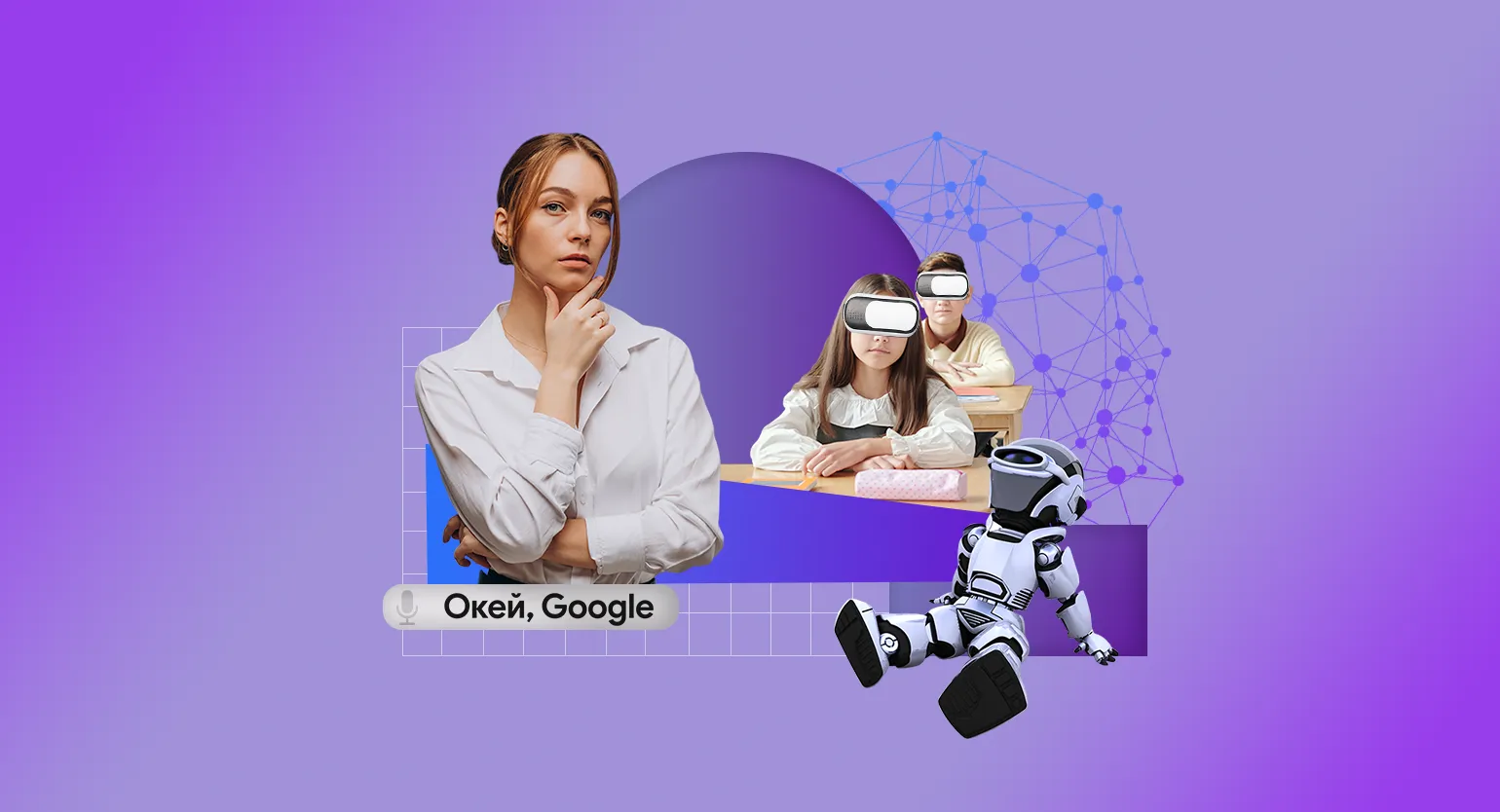
Augmented and virtual reality technologies, as well as metaverses, are playing a significant role in improving the quality of education. These innovations are already beginning to be incorporated into everyday life, opening up new learning opportunities. Experts interviewed by the report's authors note that such technologies create unique conditions that would be impossible to achieve without them. The use of virtual and augmented reality makes the learning process more interactive and engaging, which promotes better retention and skill development in students.
Augmented reality promotes hands-on learning, allowing students to acquire skills through experience. This technology creates a simulated science lab, where students can gain a deeper understanding of complex phenomena that are difficult to grasp through theoretical materials alone. Using augmented reality in the educational process makes learning more interactive and visual, significantly increasing retention and interest in the subject.
Google experts note that augmented and virtual reality technologies have enormous potential, but their success in the educational process depends on the qualifications of the teacher. Teachers play a key role in creating an engaging and effective learning environment. Therefore, the company views these technologies as useful tools that can complement and enrich the teaching methods of professionals.

Reworked text:
Be sure to check out the additional materials:
Virtual and augmented reality are becoming important tools in The educational process in schools and universities. These technologies offer new approaches to learning, allowing students to immerse themselves in their learning on a new level. Using virtual reality, students can explore historical events, conduct scientific experiments, and even travel to different parts of the world without leaving the classroom.
Augmented reality, in turn, enriches the learning process by overlaying digital information on the real world. For example, students can interact with 3D models that appear in their physical environment, significantly enhancing their understanding of complex concepts.
These technologies not only make learning more interactive and engaging but also promote better retention, as visual and hands-on elements help reinforce knowledge. Furthermore, the use of virtual and augmented reality in educational institutions prepares students for the modern labor market, where digital skills are increasingly in demand.
Thus, the integration of virtual and augmented reality into the educational process opens new horizons for educational practices, allowing for the creation of more effective and inspiring teaching methods.
How the Role of the Teacher is Changing and What is Slowing This Process
With the development of new learning formats and technologies, the role of the teacher is changing. The report describes this phenomenon as a shift from "knowledge keepers" to "learning choreographers." Teachers no longer simply convey information, but design the educational process. The situation is such that schoolchildren have access to more data than ever. Therefore, teachers should not only share knowledge but also act as guides who help to effectively use available information. This change highlights the importance of adapting educational methods to modern realities in order to maximize students' potential.

Read also:
Data analysis technologies can radically change the approach to education, turning teachers into educational engineers. Modern tools like big data analytics offer educators new insights into student needs and optimize learning. Data analysis helps identify learning patterns, track student progress, and tailor educational programs to individual needs. Teachers can use data to develop personalized recommendations, leading to more effective learning. Furthermore, data analytics technologies help evaluate the effectiveness of teaching methods. Teachers can analyze test scores, attendance, and other metrics, enabling them to make informed decisions about changes to their teaching approaches. As a result, the use of data analytics technologies makes teachers more adaptive and proactive, transforming them into true educational engineers capable of creating optimal conditions for successful learning. There are several negative factors that hinder teacher development and their transition to modern teaching methods. First and foremost, there is a teacher shortage, which is observed worldwide. The shortage of personnel is exacerbated by the low status of the profession, low salaries, and a lack of opportunities for full professional development. The growing workload also negatively impacts the quality of education. These problems became especially pressing after the pandemic, when many teachers faced emotional burnout. This phenomenon is one of the main reasons why teachers leave their jobs. According to HSE data, in Russia, young professionals are more likely to experience burnout. Therefore, to improve the quality of the educational process, it is necessary to address these key issues in the field of education.
What could help teachers and make pedagogy attractive
Solving these problems requires a comprehensive approach and significant effort. The report presents a number of proposals that can significantly improve the current situation.
The effective use of technology in education is crucial, especially for reducing the workload of teachers. According to research by the consulting firm McKinsey, 20 to 40% of teachers' tasks involve grading, lesson planning, and reporting. These functions can be effectively delegated to modern technology. The use of artificial intelligence, for example, can free up to 13 hours per week by automating routine processes. This will allow teachers to focus on more important aspects of their work, such as interacting with students and developing the learning process. The integration of technology into the educational environment not only optimizes work processes but also contributes to the improvement of the quality of teaching.
Saving time is certainly not the only solution to the staff shortage problem, but it can facilitate greater attention to professional development, including professional development. Importantly, maintaining teacher competence requires the implementation of more effective approaches to their development. These approaches should include modern teaching methods and constant updating of knowledge, which will allow teachers to adapt to changes in the educational environment and improve the quality of education.
Also check out additional materials:
The Yandex company has published an extensive report on current problems in education and possible solutions. The document thoroughly analyzes existing challenges in the education system and offers specific recommendations for improving the quality of education. The report emphasizes the importance of implementing modern technologies and innovative teaching methods, which can significantly improve the effectiveness of the educational process. Yandex strives to contribute to the development of education in Russia by providing useful insights for teachers, students, and educational institutions. Teachers often prefer to improve their qualifications through in-person courses and seminars, while online programs and membership in professional communities are less common. However, research confirms that networking with colleagues significantly contributes to the development of professional skills. Distance learning offers convenient access, allowing participants to participate in courses at any time and from anywhere. This makes online learning not only practical but also an effective tool for teacher professional development. Implementing these recommendations will make teaching a more attractive profession. This, in turn, will attract new specialists to the field. Improving working conditions and the educational process will contribute to increased interest in the teaching profession, which will have a positive impact on the level of education as a whole.
Read also:
- How AI will change education in the foreseeable future: an expert from Moscow State University
- Teachers rated the prestige of their profession as a C, and their income as a D
- Between growth and collapse. What future do experts predict for higher education?
- 7 global trends and risks in the development of EdTech technologies
School with pleasure: how to teach a child to learn
You will get acquainted with different forms of education and determine which one is right for your child. You will help him overcome his academic difficulties and stop worrying about his academic performance.
Find out more