
Contents:

Learn: Methodologist of educational programs
Learn moreHow a school can stay digital under sanctions
Alexander Gulin, Director of the Snegiri Private School, is actively involved in developing the educational process and implementing modern teaching methods. Under his leadership, the Snegiri School has established itself as an institution offering a high-quality education and an individual approach to each student. His commitment to innovation and high educational standards helps create a comfortable and productive atmosphere for students and teachers.
A channel dedicated to the architecture and design of modern schools offers unique content for anyone interested in the educational environment. Here you can find inspiration and ideas for creating comfortable and functional educational institutions. We discuss the latest trends in architecture, explore innovative solutions, and share examples of successful projects. Join our community to stay up-to-date with news and current topics in educational design.
Modern digital services are becoming commonplace among users, but there are many alternatives that offer similar features and benefits. Replacing popular platforms can be driven by various reasons, such as the need for increased privacy, a desire to support small businesses, or a desire to reduce dependence on large corporations.
When replacing traditional digital services, it's worth considering open and independent solutions. For example, instead of popular cloud storage, consider platforms like Nextcloud or ownCloud, which provide complete control over data and the ability to store it on their own servers.
Instead of social networks like Facebook, consider lesser-known but more private platforms like MeWe or Diaspora. These services emphasize the protection of personal information and provide users with more options for privacy settings.
For messaging, Signal or Telegram offer encryption and greater control over user data as alternatives to messengers like WhatsApp.
It's important to remember that switching to alternative services may take some getting used to, but in the long run, it can lead to a more secure and controlled digital experience. When considering replacing familiar digital services, it's crucial to thoroughly research each alternative and evaluate its suitability for your needs and preferences.
Snegiri School operates 16 different information systems. The infrastructure of this "smart" building is built on Cisco equipment, and Microsoft products are used for distance learning and educational management. However, there is a risk that as early as June, most of these solutions could be at risk. In an interview with EdDesign Mag, the director of Snegiri School shared information about the domestic solutions being implemented to ensure stability. The conversation also raised issues of cybersecurity, the possibility of foreign teachers continuing to work in Russia, and the prospects for private education in the new environment.
Revised text:
Be sure to read the additional materials:
The issue of the shortage of Russian analogues of educational web services is becoming increasingly relevant. With the rapid development of technology and the increasing demand for online education, it is important to create high-quality alternatives to foreign platforms. Russian educational web services can meet the needs of students and teachers by providing access to a variety of resources and innovative teaching methods. The development and support of such platforms will not only strengthen the country's educational system but also ensure its independence in the digital space.
What in modern education is a relic of the past
Head of Department, Center for Education Development Strategy, Lomonosov Moscow State University, Konstantin Ziskin.
The Teach-In online lecture podcast "Current Strength" provides a unique opportunity to delve into the world of electricity and its applications. Each episode discusses key topics related to electrical engineering, the latest advances in technology, and practical advice for professionals and amateurs. Join us to expand your knowledge and understand how electricity affects our lives. Listen to "Sila Toka" and stay up-to-date with current trends in the electric power industry.
Modern education is undergoing significant changes, adapting to the demands of the times and the needs of society. An important aspect is the introduction of technologies that open up new horizons for learning. Online courses, interactive platforms, and educational apps make knowledge more accessible and diverse. However, despite these positive changes, some elements of the educational system require revision.
Traditional teaching methods based on memorizing facts and mechanically completing assignments are becoming less relevant. Modern students need to develop critical thinking, problem-solving skills, and creativity. Therefore, it is necessary to emphasize practical learning, project-based activities, and collaboration between students.
It is also worth noting that the assessment system needs to be reformed. Tests and exams focused on quantitative indicators do not always reflect the true abilities and knowledge of students. It is important to develop assessment systems that take into account individual achievements and progress, and not just final results.
Thus, modern education must combine innovative approaches and time-tested methods. It is essential to create a flexible educational environment that will foster personal development, skills, and the ability to adapt to a rapidly changing world.
In this podcast, Konstantin Ziskin, an experienced teacher, administrator, and educational researcher, discusses the main challenges schools face and the reasons for the popularity of universities. He analyzes which elements of the educational system persist due to inertia. Ziskin predicts a future of education in a blended learning format, combining in-person and remote classes. In his opinion, only lectures should remain in the classroom, but not just any lectures.
Lectures serve primarily to inspire and motivate students. Their purpose is to spark interest and provoke questions, encouraging students to delve deeper into the topic themselves. Regular lectures in a traditional format are becoming an outdated practice, reminiscent of the assembly-line approach that was popular in the mid-20th century. In the modern educational process, it is necessary to seek more effective methods that will promote active student engagement and independent learning.
Konstantin Ziskin is the head of a department at the Center for Education Development Strategy at Lomonosov Moscow State University. His work focuses on the development and implementation of effective educational strategies that contribute to the improvement of the educational process and student academic performance. Konstantin is actively involved in research and projects aimed at modernizing educational programs and adapting them to the current requirements of the labor market.
Read also:
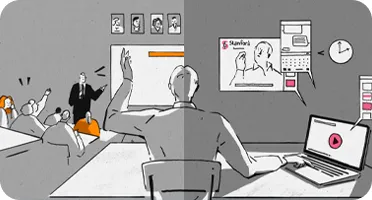
Offline lectures at universities: a necessity or a relic of the past?
The question of expediency The issue of offline lectures at universities is a matter of much debate. On the one hand, modern technologies open up new horizons for distance learning, allowing students to gain knowledge in a convenient format. On the other hand, attending lectures in person provides unique opportunities for interaction between teachers and students, which promotes deeper learning. Offline lectures create an atmosphere in which students can ask questions and exchange opinions in real time, which is impossible in an online format.
Thus, offline lectures remain an important element of the educational process, despite the development of technology. They ensure high-quality learning, support academic interaction and develop the skills necessary for future professional activity. Therefore, offline lectures should not be considered an outdated format, but rather should be seen as an important component of modern education.
Can an entertainment blog be an educational tool?
Ksenia Olefirenko — Ksenia is a blogger and author of the popular public page "Ksyunya, Explain in a Liter." Her content shares engaging opinions and analyses on current topics, attracting a wide audience. Ksenia actively engages with her subscribers, discussing various aspects of everyday life and culture. Her unique style and approach make her blog popular among readers seeking fresh ideas and innovative perspectives on everyday things. The "Learning Between Things" podcast offers a unique opportunity for listeners to immerse themselves in a world of knowledge and skills that can be applied in everyday life. Here you will find discussions on relevant topics related to personal growth, professional development, and effective learning methods. Our experts share practical tips and strategies to help you learn without distracting yourself from your daily routine. Join us to receive useful information and inspiration for development in various fields. Listen to the "Learning Between Things" podcast and discover new horizons for self-improvement.
Learning literature through memes and humorous retellings is becoming an increasingly popular approach. This method not only makes learning more engaging but also helps students better remember key points in works. Memes, as a modern way to convey information, allow students to quickly grasp the essence of literary works, using visual imagery and witty commentary to create associations.
Humorous retellings of literary works simplify the perception of complex texts, making them accessible to a wider audience. This approach not only develops a sense of humor but also deepens understanding of themes and characters by discussing them in a relaxed atmosphere. This promotes a deeper understanding of the works and their relevance in the modern context.
The use of memes and humorous retellings in teaching literature opens new horizons for interaction with texts, which is especially important in the digital age. Incorporating such methods into the educational process can help foster interest in literature and develop critical thinking in students.
At 21, Ksenia Olefirenko runs an educational blog and teaches literature to schoolchildren. In her posts and lessons, she explores books from unexpected angles, allowing each student to relate the adventures of classic authors and characters to their own lives. In her new podcast, Ksenia shares the importance of communicating with students in a language they understand, emphasizing that this doesn't necessarily require the use of sophisticated technology in every lesson. She also reveals the secrets to creating successful content about literature and discusses the challenges teachers face when students come to class expecting to see a blogger rather than to study.

Rework the text to stay on-topic. Don't add anything extra, but adjust it for search engine optimization. You can expand on the content while maintaining the core message. Eliminate emojis and unnecessary symbols. Don't use bulleted or numbered lists; simply provide the text in its purest form.
Read also:
Creating a bot-based performance based on a literature course was an interesting experiment. Using modern technology, the developers transformed literary works into an interactive format, allowing viewers to interact with the characters and plot. This approach not only draws attention to classic literature but also makes it accessible to a wider audience. The bot-based performance offers a unique experience in which viewers can ask questions, receive answers from characters, and influence the development of events. This format promotes a deeper understanding of the works and stimulates interest in reading. Thus, the bot-based performance becomes not just entertainment, but an educational tool that helps preserve and popularize literary heritage.
How Children's Career Guidance Works (or Doesn't)Dmitry Sudakov, Director of the "Atlas of New Professions" project. This project aims to study and develop new professional standards that meet the requirements of the modern labor market. Dmitry Sudakov plays a key role in implementing initiatives to adapt educational programs and improve the qualifications of specialists in various industries. Under his leadership, the project is becoming an important tool for training personnel who meet the challenges of the future.
The "IT and Children" podcast is a unique platform for discussing current topics in technology and education. In each episode, we explore how modern IT trends affect children and their development. Our goal is to help parents and teachers better understand how to effectively integrate digital technologies into everyday life, while ensuring the safety and harmonious development of the younger generation. Join us to learn about the latest developments in the IT world and get practical tips for raising children in an environment of constant technological change. Today, many parents and schools are actively working to help children choose a career. They offer a variety of programs, workshops, and consultations, as well as organize tours of companies and meetings with representatives of various professions. However, important opportunities are often missed, such as one-on-one consultations with career counselors, participation in internships, and practical classes that can give children the opportunity to experience different fields. Furthermore, attention is not always paid to the development of soft skills, such as critical thinking and teamwork, which play a key role in today's labor market. It is important to create an environment in which children can not only learn theory but also apply their knowledge in practice. Parental support in this process is also crucial: active participation in discussions about career goals and an openness to new ideas will help children approach their future career choice more consciously.
Ultimately, a combination of schooling, parental support, and practical opportunities will enable children to more confidently choose their career path.
Dmitry Sudakov notes that existing career guidance practices, despite their diversity, do not produce the expected results. Many university graduates do not find jobs in their field, and students often decide to discontinue their education. In search of effective solutions, parents resort to questionable methods such as genetic testing and consultations with astrologers, highlighting the crisis in the career guidance system.
Most career guidance tools contain useful information, with the possible exception of astrology. It is important to understand the purpose for which these tools are used. Speaker Sudakov emphasizes that the main goal is to instill in the child a desire for self-determination and the development of corresponding skills. Career guidance can manifest itself in any experience, even a simple walk in the park. Parents can help develop essential skills by expanding their child's knowledge of different professions and ways to master them, as well as through participation in professional trials. In this context, the issue presents career guidance ideas for educational institutions.

Read also:
Career guidance specialists play an important role in the process of developmental education. We help people realize their strengths and interests, guiding them on the path to professional self-determination. Our mission is to provide up-to-date information on career opportunities and assist in choosing a profession that matches individual abilities and aspirations. Developmental learning is an integral part of our work, as we strive to develop the skills and knowledge necessary for a successful professional life.
How Fundamental and Applied Education Relate to One Another
Maxim Pratusevich, Director of Physics and Mathematics Lyceum No. 239, and Maxim Spiridonov, serial technology entrepreneur and investor, are key figures in the fields of education and technology. Their experience and achievements contribute to the development of innovative approaches in education and entrepreneurship. Maxim Pratusevich actively works to improve educational standards, and Maxim Spiridonov shares his experience in creating and developing successful technology startups. The joint activities of these professionals are aimed at preparing students for the challenges of the modern world and developing their entrepreneurial skills.
The educational rave is taking place at ITMO University as part of the ITMO Open Education initiative. This event provides a unique opportunity for students and IT professionals to immerse themselves in modern educational trends and exchange experiences. Participants will be able to learn about the latest teaching methods and current topics in the IT field, which will contribute to the development of professional skills and broaden their horizons.
Learning is a multifaceted process that is not limited to the development of professional skills. An important aspect is the development of personal qualities and the ability to adapt to changing conditions. Effective learning includes the development of critical thinking, creativity, and emotional intelligence. These elements contribute not only to professional growth but also to an improvement in the overall quality of life.
Furthermore, learning creates opportunities for social integration and networking. An active learner becomes part of a community of like-minded people, which facilitates the exchange of experience and knowledge. Education also helps develop self-organization and time management skills, which are essential in today's world, where information and technology are rapidly evolving. Thus, education is a complex process that encompasses not only the acquisition of professional skills but also the development of personal qualities, social connections, and adaptive abilities. This makes education important not only for career development but also for overall personal development. At one of the final events of ITMO Open Education, representatives from various educational fields, including the classical physics and mathematics lyceum and EdTech, discussed current issues with ITMO First Vice Rector Daria Kozlova and host Anton Komolov. A recording of the event is available to hear expert opinions on important and current topics in education.
- Is it enough to master the necessary skills to be a professional?
- How to explain to a schoolchild where mathematics will be useful in life?
- Is it necessary to devote separate courses to soft skills?
- Is it possible to unlock the potential of each student?
- What determines success in entrepreneurship - innate talent or effort?

Be sure to read the additional materials:
Schoolchildren's personal qualities and soft skills play a key role in their educational process. The ability to independently organize their time helps to effectively distribute workload and complete assignments on time. Communication skills facilitate interaction with classmates and teachers, which is important for group projects and discussions.
Critical thinking allows you to analyze information, highlight the main points, and draw conclusions, which is especially important in conditions of an abundance of data. Emotional intelligence helps you control your emotions and understand the feelings of others, which contributes to a positive atmosphere in the classroom.
Responsibility and perseverance are also important qualities that influence academic success. Students who possess these qualities are more likely to achieve their goals and overcome difficulties. Developing these personal qualities and soft skills is the key to successful study and preparation for future professional activity.
What's next?
MMSE Director Maxim Kazarnovsky, Editor-in-Chief of the Pervoe Sentyabrya Publishing House Artem Soloveichik, Head of the SberObrazovanie Laboratory Pavel Sergomanov, and MMSE area curators represent key specialists in the field of education. These experts make a significant contribution to the development of educational projects and programs, ensuring the high quality and relevance of educational materials. With their help, new horizons in education are achieved, which contributes to the professional and personal growth of students and teachers.
Venue: Moscow International Education Fair. This is an important event in the field of education, which attracts specialists, teachers, and students. The Fair provides a platform for exchanging experiences and discussing the latest trends and technologies in the educational field. Participants can get acquainted with innovative teaching methods, educational programs, and tools that will help improve the quality of education. The Moscow International Education Fair is becoming a key event for anyone interested in developing the educational environment and striving to improve their skills in this field.
Working in education requires constant development and adaptation to change. It is essential to focus on current teaching methods, professional development, and the implementation of new technologies. For a successful career in education, it is essential to keep up with modern trends, such as the digitalization of the educational process, the use of interactive platforms, and distance learning methods. It is also important to develop critical thinking and emotional intelligence skills, which will help create more effective and trusting relationships with students. Participation in professional conferences and seminars will allow you to share experiences and discover new ideas for improving the educational process. It is important to remember that success in education depends not only on knowledge but also on the ability to inspire and motivate students.
The MIEF-2022 was not originally planned to hold sessions dedicated to changes in Russian education since the outbreak of hostilities in Ukraine. The topic proved difficult to discuss. However, on the final day of the exhibition, the program curators decided to hold a discussion on the future of education, entitled "What's Next?", in an open-mic format. This event provided an opportunity for participants to express their opinions and discuss current issues concerning the educational sphere in the context of current changes.
The conversation was sincere and personal. Don't expect sweeping conclusions or universal recommendations from this discussion—each participant simply shared their thoughts. As Pavel Sergomanov noted, advice in difficult situations is often based on stereotypes, as people find it difficult to admit they don't know what to do. However, all the speakers agreed that in times of crisis, when the familiar order collapses, there remains room for humanity and good deeds. Artyom Soloveychik emphasized that those who work with children always have the opportunity to teach and care. Perhaps the current circumstances are an opportunity to rethink the main purpose of their work and focus on what is truly important.
Education should be aimed at creating conditions for a child's happiness. Grades and exams like the Unified State Exam (USE) shouldn't be the top priorities. It's important to ask: does a particular decision increase or decrease a child's happiness? The idea that a child will appreciate our efforts in the future isn't always justified. The future is unpredictable, and that moment of "later" may never come. Therefore, it's necessary to focus on how to make the educational process joyful and useful for a child today.
Users are most often looking for useful information, so it's important to offer high-quality content. Optimizing your text for SEO improves your website's visibility in search engines. Use relevant keywords and phrases to attract your target audience. Focus on relevant issues and provide solutions to engage the reader. Keep the text structured to ensure it's easy to digest. Update your content regularly to keep it relevant and informative. Create unique and valuable content that meets user needs.
- May Quotes: The Most Pressing Issues
- What is Taught in Modern Russian Schools
- How a Teacher Can Overcome Anxiety
- How to Focus Students in the Lesson
