Contents:

Course with employment: "The profession of a Methodologist from scratch to PRO"
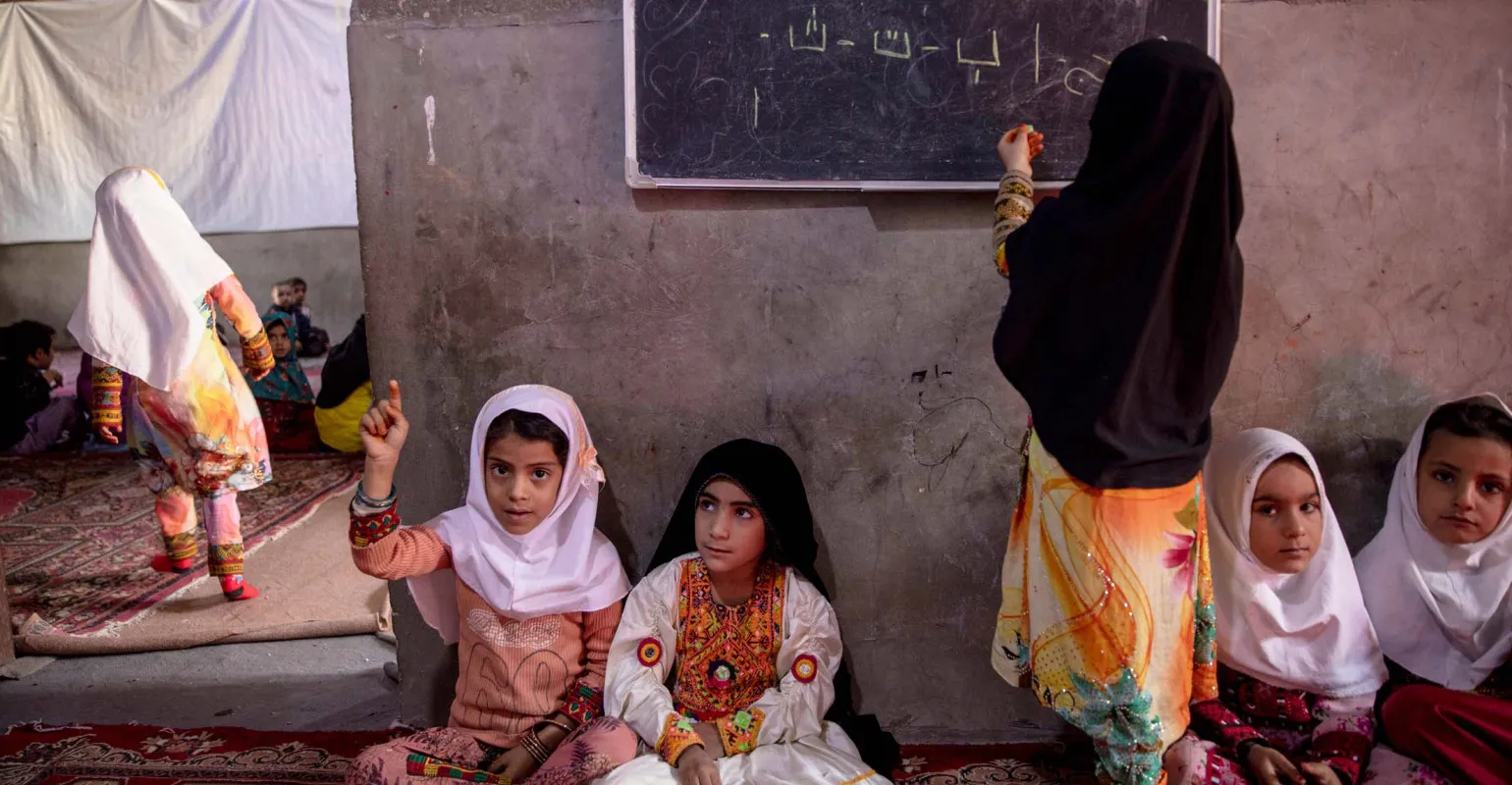
Find out moreOn May 24, 2011, a tragic event occurred in the Afghan province of Logar: the director of the local school for girls, Khan Mohmmad, was killed. This crime was premeditated, as Khan had repeatedly received threats from radical Islamists who insisted that he stop educating girls. Despite the pressure and threats, the courageous director was not going to stop working and continued to fight for girls' right to education.
In 2021, ten years later, the Taliban movement (a recognized terrorist organization in Russia) again came to power in Afghanistan. Members of this movement are against female education. In August, Shabana Basij-Rasikh, the director of a girls' school in Kabul, posted a video on Twitter showing educational materials burning. She noted that this symbolized the oppression of women's and girls' rights in the country.
In March 2002, after the fall of the Taliban regime, thousands of Afghan girls were invited to mainstream schools for testing and assignment to classes. This happened against the backdrop of the Taliban destroyed all records of female students, seeking to erase their existence from history. I was one of those girls. Nearly 20 years later, as the founder of the first boarding school for girls in Afghanistan, I am forced to destroy all information about my students to ensure their safety and protect their families. I am deeply hurt and depressed by what is happening to them.
What a war for education looks like
From 1996 to 2001, education for women in Afghanistan was banned. The Taliban government believed that educating women was contrary to Sharia law. However, with the arrival of American forces and the start of military action, the situation changed dramatically. Girls were allowed to attend school again, and several billion dollars were invested in education, including girls' education. These changes were an important step toward restoring women's rights and improving the country's educational infrastructure.
In 2001, only five thousand girls were enrolled in school in Afghanistan, but ten years later, that number had increased to more than two million. This educational project is considered one of the most successful in the history of reforms in the country. However, the situation remained difficult: for students and their teachers, going to school was often dangerous. Opponents of female education took every possible measure to hinder this process.
In 2008, the humanitarian organization CARE, the World Bank, and the Afghan Ministry of Education published a report, "Knowledge on Fire: The Attack on Education in Afghanistan." This study highlighted that from January 2006 to December 2008, there were 1,145 attacks on schools, teachers, and students in the country. These incidents included arson, murder, and threats. In 2008, 670 attacks were recorded. During the entire study period, 103 education workers were killed, including teachers, principals, and officials from the Ministry of Education. This report highlights the serious threats to the education system in Afghanistan and emphasizes the need to protect educational institutions and their staff.
Teachers and other education professionals have been subjected to serious physical attacks. The report cites cases of beatings, beheadings, and the burning of their homes. These acts of violence cause significant damage to the education system and pose a threat to the lives and safety of education workers.
Mass attacks have occurred across the country. For example, 125 Afghan teachers were kidnapped because their salaries were paid on bank cards. This left them vulnerable to radical groups who demanded money in exchange for safety. Some schools and individual staff were forced to pay money to avoid attacks.
Schoolgirls in Afghanistan have had to endure terrible hardships. In 2008, two students at one school were brutally attacked: acid was sprayed in their faces from water pistols, leaving them blind. Several other girls were also injured in the attack. Such incidents highlight the dangers girls face in the educational environment in Afghanistan and the need to protect the rights of women and children.
In 2009, mass gas poisonings occurred in several educational institutions over a two-week period, hospitalizing students and staff. The reasons why gas entered the schools, as well as those responsible for these incidents, remain unknown. In total, more than 100 people, including teachers and administrative staff, were injured. Similar situations recurred year after year in various schools. For example, in 2015, approximately 300 girls from two educational institutions fell victim to gas poisoning. These incidents highlight the need to improve security in educational institutions and identify sources of threats.
The attacks have affected not only individuals but also educational buildings. Certain groups have burned and destroyed schools, which has had the intended effect. In 2015, The Observer reported that out of the country's eight million students, 500,000 were out of school, and 10% of schools had closed due to fear of attacks. This underscores the gravity of the situation and the impact of violence on the education system, which in turn negatively affects the future of young people and the development of society as a whole.
A spokesman for the Logar Provincial Ministry of Education stated that providing education to girls is extremely difficult. More than 3,000 girls who should be in fifth grade and above are staying at home. All 30 female teachers in the region have also been forced to resign. This situation highlights the serious problems in access to education for girls in this region.
From 2017 to 2019, more than 300 attacks on schools were recorded in Afghanistan. At least 410 students, teachers, and administrative staff were injured or killed as a result of these attacks. This data is provided by the Global Coalition to Protect Education from Attack, which emphasizes the importance of protecting educational institutions in conflict situations. Protecting schools and ensuring the safety of students and teachers remains a pressing concern for the international community and local authorities.
In the summer of 2021, the Taliban regained power in Afghanistan. The new government assured the international community that girls and women would be allowed to return to schools, but under certain conditions. These conditions included complete separation of boys and girls in education and the mandatory wearing of the niqab. These measures raised concerns among human rights activists, who point to restrictions on women's access to education and their rights in society. Given the current situation, it is important to monitor developments and their implications for future generations of Afghan women and girls. Currently, only some schools have managed to resume education for girls up to sixth grade, and in several cities, high school students have also been allowed to attend. The New York Times recently published a story about one such school where girls were allowed to return to school. The mother of two students told the newspaper that one of her daughters fainted before leaving the house on the first day of school due to extreme stress. The mother appealed to the school's teachers to limit the girls' enjoyment of learning. This decision was prompted by memories of the past, when the Taliban's first takeover forced her to leave her beloved job as a literature professor at the university. She noted that this is a very vulnerable generation. She said that if her daughter couldn't go to university, it would be a real tragedy for her.
Educators both in Russia and abroad are making every effort to support their students. They strive to create a favorable educational environment, providing access to the knowledge and resources necessary for their successful learning and development.
How "underground" and online schools came to the rescue of Afghan women
In October 2021, The Times reported on the launch of a secret online school for girls over 12 in Afghanistan, where 100 students are currently studying. The school was founded by the charity Learn Afghanistan. The curriculum includes STEM subjects, as well as training in web design and programming. Girls are also provided with guidance on finding the necessary materials for independent learning.
Of course, I'm ready to help with editing the text. Please provide the source text you wish to improve.
We educate 100 girls, who will become the future of Afghanistan. Using tablets, they study materials and complete homework assignments together throughout the week. Our organization employs female teachers who are specialists in their fields. This contributes to the development of education in the country and the formation of a new generation of leaders. We believe that investing in girls' education is strategically important for the future of Afghanistan.
Nazifa Rahmati, a teacher at the school, shared her concerns about the possible consequences of her work, but she does not intend to abandon her responsibilities. She noted that all school staff are currently experiencing anxiety, especially in light of the importance of women's access to education. "This program is of great importance to us," she emphasized.
Secret schools have a long history in Afghanistan. For example, Shabana Basij-Rasikh, a well-known activist, attended one such school in the early 2000s. These schools are often created in contexts where education is restricted, and their existence highlights the importance of access to knowledge in challenging circumstances.
When the Taliban came to power, they banned women from leaving their homes, preventing girls from attending school. However, there were some brave women willing to take risks for the sake of girls' education. They opened schools in their homes to educate their children. One such secret school, where I studied, had about a hundred students. We would arrive at different times and pretend to be members of the family living in the house. The school opened at 6:00 a.m. and closed at 4:30 p.m. For many of us, the journey to school was long: I, for example, lived 45 minutes away. This experience highlights the importance of education for girls even under severe restrictions.
The students were empowered because the director was able to organize safe passage from Afghanistan to Rwanda for staff, students, and their families. This eliminated the need for them to take risks and find secret routes to reach the school. This mass escape provided security and stability, which is crucial for proper education and development.
This is not an isolated incident. An all-female robotics team from Afghanistan, comprised of teenagers, was able to leave the country thanks to international organizations. One hundred students and teachers from the Afghan National Institute of Music were also evacuated to Qatar. The institute's director, Dr. Ahmad Sarmast, shared with NPR that he experienced strong emotions when the plane carrying the evacuees finally took off. These examples highlight the importance of international aid and support in crisis situations, especially for vulnerable groups such as women and children.
Dr. Sarmast's students were in grave danger. The institute's mixed education system angered the new Afghan government. Furthermore, an all-female orchestra performing internationally also drew criticism from the authorities. Dr. Sarmast and his students understood the full extent of the threat: a terrorist attack during a concert in 2014 left the institute's director temporarily deaf, and doctors had to remove shrapnel from his head and body. This tragedy only highlights the risks musicians and teachers face in unstable political situations. Not everyone can leave their country, and in this context, educational institutions abroad are actively offering assistance. For example, the Asian University for Women in Bangladesh has provided 250 scholarships for female students from Afghanistan. Furthermore, the Yalda Hakim Foundation, founded by the renowned British television presenter, offers competitive education opportunities at leading US universities. These initiatives help young women continue their education and develop their professional skills despite difficult circumstances. The California-based nonprofit University of the People has taken a significant step forward by offering 1,000 online scholarships to girls who were denied the opportunity to study in their own countries. This initiative aims to support women who strive to gain knowledge and professional skills despite the barriers they face. The university provides access to quality education, which expands opportunities for girls and helps them realize their potential.
Our university was founded on the principle that education is an inalienable human right. In light of the tragic events in Afghanistan and growing concerns about women's rights, particularly in education, we are committed to ensuring Afghan women's continued access to higher education. University President Shai Reshef emphasizes the importance of this issue for the future of the country and its women.
The university received twice as many applications as expected and has already secured funding for all applicants. Reshef, in a comment to Time magazine, emphasized that students will be able to study from home while maintaining their privacy. This opens new possibilities for distance education and the accessibility of academic programs.
Students who began their online program on November 1 shared their concerns with the publication. They recognize that they will face significant challenges, including internet connection issues and high service provider fees. Nevertheless, they are serious about their studies and intend to complete their studies. One student, Farah, said she would study at night after putting her children to bed. "I'm committed to realizing my dream. I've carefully planned my future and am now ready to take all the necessary steps to achieve it," she said. src="https://www.instagram.com/p/CVkAoXesfjI/embed/?cr=1&v=14&wp=540&rd=https%3A%2F%2Fskillbox.by&rp=%2Fmedia%2Feducation%2Fkak-i zmenilos-zhenskoe-obrazovanie-v-afganistane%2F#%7B%22ci%22%3A1%2C%22os%22% 3A1949.1000000238419%2C%22ls%22%3A453.5%2C%22le%22%3A1937.8999999761581%7D" width="854" height="480" scrolling="no" frameborder="0" allow="autoplay; fullscreen; encrypted-media; picture-in-picture;" allowfullscreen="true">
What Teachers Face
The situation of Afghan female teachers remains extremely difficult. Although some female teachers have been able to return to their duties, a significant number of them continue to face difficulties and restrictions in accessing education and employment opportunities. The situation requires attention and support from the international community to improve the working and living conditions of women in the education sector in Afghanistan.
In October 2021, the human rights organization Amnesty International published testimonies of teachers who remain in Afghanistan. A teacher reported receiving a threatening letter from Taliban representatives warning her of serious consequences for teaching sports in mixed-sex classes. As a result, she was forced into hiding, and even her family believes she has fled the country. The situation with human rights and educational freedom in Afghanistan remains critical, raising concerns among the international community.
A young teacher described how she and her 16-year-old brother were attacked by members of the group in August. The incident occurred during an English lesson, when one of the attackers insulted the language as the "language of infidels." Another teacher reported receiving threats in response to comments she made in the media, in which she complained about low salaries and women's limited access to education. She and her colleagues were threatened with eviction from housing provided by the previous government.
Teachers continue to persevere in the face of adversity. As Pashtana Durrani stated, "I too will create an army like the Taliban, but mine will be made up of educated and determined women." This statement, published in the Guardian newspaper, highlights the determination and desire for education among women in difficult circumstances. Educational initiatives aimed at supporting women are becoming especially important in modern society, promoting their empowerment and ensuring equal opportunities for future generations.
In 2020, the Global Coalition to Protect Education from Attack reported more than 11,000 attacks on schools, students, and teachers in 37 countries between 2015 and 2019. Among the countries with high levels of violence are Turkey, Syria, Palestine, Sudan, Yemen, Cameroon, Congo, the Philippines, India, Pakistan, and, of course, Afghanistan. At least 22,000 people were injured or killed in these attacks, underscoring the need to protect educational institutions and ensure the safety of students and teachers around the world.
Read more:
- How a Zimbabwean tutor prepares for exams via WhatsApp
- Moving to the countryside to teach children: romance or a conscious choice?