
Free test: which digital profession is right for you? Find out the answer in 15 minutes and try your hand at a new specialty.
Find out moreHow scammers steal money
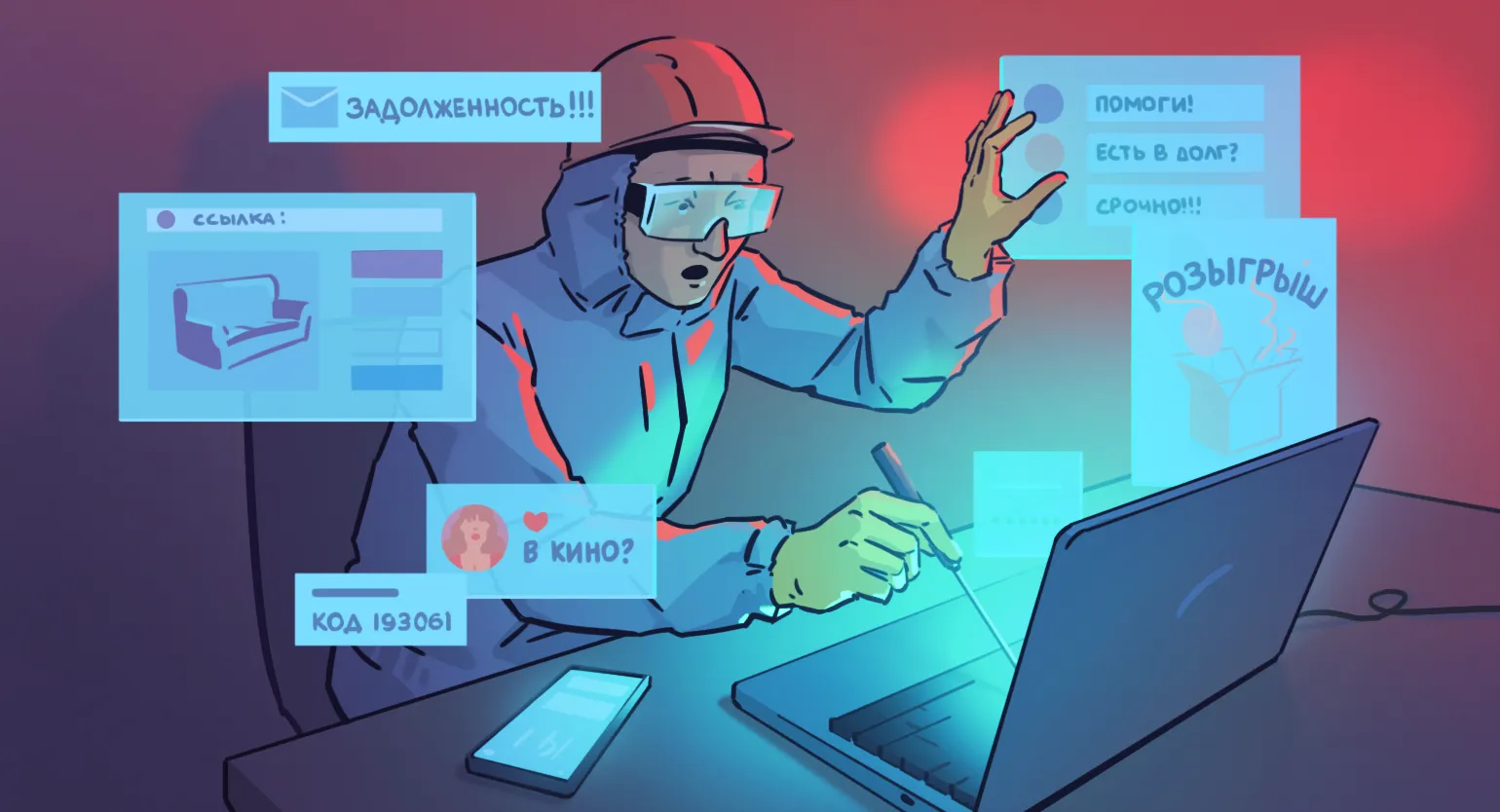
Online scammers use a variety of tools to manipulate people, but two stand out especially often. In this article, we'll look at these tools and provide examples of popular scams that often deceive gullible individuals. Understanding these methods will help you protect yourself from scams and avoid unpleasant situations.
Tip #1 includes effective methods that will help improve your productivity. It's important to focus on key aspects, such as task planning and time management. Use workflow tools to minimize distractions. Taking regular breaks helps maintain high concentration and prevent fatigue. Optimizing these processes will allow you to achieve better results and improve your overall work efficiency.
"Dad, I was robbed and my phone was taken. Please transfer money to this number so I can call a taxi to get home."
Scam messages can be especially dangerous for vulnerable individuals. For example, an anxious single father stressed by lack of sleep and work can easily fall victim to this type of text message. As a result, scammers can reap significant profits if there are many such fathers. This highlights the importance of being aware and cautious about suspicious messages to prevent financial losses.

Read also:
Trust is a basic feeling that plays a key role in interpersonal relationships and social interactions. It is formed on the basis of previous experience, reputation, and transparency of actions. Trust is best when there is evidence of a person or organization's reliability, and when there is open and honest communication. However, it's important to remember that trust isn't always justified: in situations where there is a risk of deception or manipulation, it's best to exercise caution and verify information. Finding a balance between trust and common sense helps avoid disappointment and strengthens relationships. It's important to develop critical thinking and analyze situations before deciding to trust.
Social engineering is the manipulation of others' feelings and fears, which is used in fraudulent schemes. In 2022, more than 50% of all scams were based on this method. Fraudsters use psychological pressure to coerce victims into voluntarily transferring money. It's important to understand the risks and protect yourself from such manipulation to avoid becoming a victim of scammers.
Social engineering is one of the main tools used by telephone scammers. They may pose as representatives of various organizations, such as the "bank security service," "the Ministry of Internal Affairs," "the prosecutor's office," "the military registration and enlistment office," or "the tax office." Fraudsters exploit fear and uncertainty to intimidate people into action. They often use trigger phrases such as "You have a tax debt," "You are being called as a witness in a case," or "We have detected suspicious activity on your account." These manipulations are aimed at getting victims to transfer money or provide personal information. Ignoring calls from unknown numbers does not guarantee safety. Social engineering is also actively used on social media. Fraudsters can deceive people by posing as philanthropists raising funds for the treatment of homeless animals or sick children. Scammers can easily provide fake medical documents and detailed medical histories to convince victims of their scams. Be vigilant and verify information before making a donation.
It's very difficult to spot scammers using pity-based manipulation. However, it's important to pay attention to the methods of transferring funds. If you're asked to donate exclusively to a bank account or e-wallet, this may be a sign of a scam. Genuine charitable fundraisers usually offer multiple ways to help and provide information about the recipient, including their first and last name. Many charities have official websites or pages with contact information and fundraising details, allowing you to verify their legitimacy. Please be careful and verify the information before making a donation.

Explore also:
Charity is not only an opportunity to help those in need, but also a way to make a positive change in society. To properly organize your charitable activities, it is important to consider several key aspects.
The first thing you should do is define the goals of your charitable activities. Clearly defined goals will help you focus on specific tasks and choose the most effective methods of assistance.
It's also important to choose reputable organizations or projects that align with your values. Research charities, their reputations, and areas of work. This will help you ensure that your assistance truly reaches those in need.
Don't forget about transparency. Accountability and openness about funding are important aspects of charity. Make sure the organization you choose provides access to reports on expenses and the results of its work.
Besides financial support, charity can take other forms, such as volunteering or organizing events. By participating in volunteer projects, you not only help others but also gain unique experience and the opportunity to expand your social circle.
Remember that charity is not only a financial investment, but also time, attention, and care for those in need. The right approach to philanthropy can change lives and make the world a better place.
Technique #2
In this method, we'll explore effective techniques that will help you improve your skills and achieve your goals. This technique is based on the principles of self-development and can be applied in various areas of life. Using this approach, you can not only increase your productivity but also significantly improve the quality of your work.
Remember that regular practice is the key to success. By integrating these techniques into your daily life, you can gradually achieve your goals, develop new skills, and build self-confidence. This will help you become more successful in both your personal and professional lives.
Use technique #2 as one of the tools on your path to self-improvement and reaching new heights.
Phishing sites and apps mimic the design of legitimate services to deceive users. In 2023, scammers created more than 200,000 of these "online mousetraps," using various methods to attract attention and collect personal information. Be careful and check website addresses to avoid traps and protect your data.
One common type of phishing is sites offering prize draws. To attract victims' attention, scammers use stolen celebrity and influencer accounts. These platforms are created with the purpose of deceiving users and stealing their personal information.
Your favorite blogger announces a giveaway in which one of their subscribers can win a cash certificate, a blender, or even a car. The post is accompanied by photos and videos of your favorite celebrity. Bloggers often include voice messages with detailed terms of participation in the charity marathon. Such promotions attract attention and allow you to not only win valuable prizes but also support important initiatives.
The blogger shares a link to an attractive website where users can randomly select one of several boxes. With bated breath, you choose the wrong box and... lo and behold! Inside is the coveted prize. However, to receive it, you need to pay a small fee, which can vary depending on the greed of the scammer. Be careful and check such offers to avoid being scammed.
You are redirected to a payment site with a familiar interface, enter the code from the message, and attempt to transfer the money. You receive an error notification and try again. However, the number of possible errors can be extremely high. In the transaction history in the banking application, you discover that there were no problems with the write-off, and your funds were successfully transferred.

Read also:
Impulsive shopping - how to deal with it?
Impulsive shopping is becoming an increasingly common problem among consumers. People often make purchases based on their emotions, which can lead to unnecessary spending and financial difficulties. To avoid impulse buying, it's important to be mindful of your spending and develop strategies for controlling it.
The first step to preventing impulse buying is to become aware of your habits. Write down all your purchases and analyze what prompts you to make them. This will help you identify the triggers that lead to unplanned spending.
It's also helpful to set a budget and stick to it. Determine the amount you're willing to spend on entertainment or shopping, and don't exceed it. This will allow you to better control your finances and avoid spontaneous decisions.
Also, before making a purchase, it's worth asking yourself a few questions: Do you really need this item? How does it fit into your budget? Perhaps you should postpone the purchase for a few days to determine how important it is to you.
Don't forget about the influence of the environment. Avoid places and situations that trigger impulse buying, such as sales or stores where you often make unplanned purchases.
Following these recommendations will help you reduce impulse purchases and improve your financial situation.
Identifying such scams is extremely difficult. Neural networks can create celebrity voices that are virtually indistinguishable from the original. Photoshop can also easily create images of bloggers in the desired settings for fraud. Phishing sites often completely replicate the interface of well-known platforms, which makes them even more convincing. It is important to be attentive and critically evaluate information to avoid fraudulent schemes.
Fraud on the Avito platform has become common. Fraudsters find less popular ads, for example, for a prom dress, and begin to act according to a pre-prepared scenario. They write emotional messages to the seller, using phrases like: "My daughter dreamed of this very thing! "We can't afford it at the regular price; we're on a budget. Can you lower the price a little?" The seller, feeling benevolent, agrees to lower the price, for example, by 500 rubles. At this point, the scammer begins to profusely thank the seller and asks for the item to be shipped. This is a classic example of how scammers exploit human emotions and kindness to deceive gullible users. To avoid such situations, it's important to be attentive and verify buyer information before making a transaction.
Users who have already used Avito's delivery services are usually satisfied. However, those who are sending something for the first time, perhaps to help a girl dreaming of a dress, may encounter a scam. Fraudsters send links to fake instructions on how to use the delivery service. These pages look like the genuine Avito website and have a URL similar to avito/del1very/instructiOn, which can be misleading. Be careful and check links before providing your information or taking any actions.
The situation follows a similar pattern to the blogger's prank. The seller is asked to pay a delivery fee or top up their account with the amount of the item "for insurance." The initial attempt to deposit funds is unsuccessful, and the fairy godmother persistently tries, while the scammer encourages her, claiming: "That's weird, I've ordered with delivery so many times, and I've never had such problems." Try again».

Reworked text:
Pay attention to additional materials:
The influence of the Internet on children: the opinion of psychologists
The Internet has a significant impact on the development of children. Psychologists note that access to information and communication on the network can have both positive and negative effects on the psyche and behavior of children.
On the one hand, the internet provides opportunities for learning and development. Children can gain knowledge from a variety of sources, participate in online courses, and find like-minded people. This helps broaden their horizons and develop critical thinking.
On the other hand, spending too much time online can lead to negative consequences. Psychologists warn of the risks associated with gadget addiction, cyberbullying, and exposure to inappropriate content. It is important to monitor the time children spend online and provide them with a safe online space.
For children's harmonious development, it is necessary to find a balance between internet use and other activities. Parents are encouraged to actively participate in their children's lives, discuss internet-related issues with them, and help them develop critical analysis skills.
How to Recognize Online Scammers
We present a set of rules and recommendations that will help you save your nerves and money. By following these simple steps and paying attention to key signals, you can minimize stress and avoid unnecessary expenses. These tips will be useful both in everyday life and in difficult situations, contributing to a more comfortable and prudent management of resources.
If you received a letter from the tax authorities about a fine for non-payment, do not rush to open it. First, check the "My Tax" app, your personal account on the FTS website, and notifications on "Gosuslugi." Important messages usually appear there or in your inbox. This will help you avoid potential fraud and ensure your safety.
It is important to remember that the Federal Tax Service (FTS) does not send emails to taxpayers. The only exceptions are cases where the taxpayer initiated a request to the tax service and provided their email address for a response. Be vigilant and avoid scams that may use fake messages from the Federal Tax Service. Verify the source of any information before taking any action.
If in doubt, pay attention to the form of address in the letter: official authorities address citizens using their first and middle names. It is also important to verify the sender's email address. Letters from the Federal Tax Service (FTS) must end in the domain @tax.gov.ru. Pay attention to detail to avoid fraud.
If you believe information about cyber fraud is obvious, be sure to share it with friends and family. According to an MTS Red survey, more than half of Russians fell victim to cyber fraud in 2023. Notably, 12% of survey participants received "warnings" about unpaid fines, taxes, or violations of the law. Fraudsters posing as Federal Tax Service employees are especially active during the property tax payment period, which is due by December 1st. Be vigilant and beware of such scams.
If you have the opportunity to sell an old, non-working tape recorder on Avito, don't rush into it. Before proceeding, check the potential buyer's profile. Check the account registration date and purchase history. If the account is new or has no reviews, be cautious. Avoid switching from Avito chat to third-party messengers, and don't click on any links the buyer may send. The security of your transactions should be a priority.

Read also:
Greed is an excessive desire to possess something, mainly material goods, often to the detriment of others. This is a condition when a person seeks to accumulate more than he really needs, ignoring the needs of others. Greed can manifest itself not only in relation to money, but also in other areas of life, such as time, attention, and resources. This vice can lead to conflicts, the destruction of relationships, and even physical and psychological problems. Understanding greed and its consequences helps us appreciate the importance of balancing personal interests with the public good.
Be cautious on marketplaces. Always check the seller's rating before making a purchase. If the seller is new and their products are suspiciously inexpensive, this may raise doubts. One common scam involves finding an attractive product at a low price, placing an order, and making payment. However, the seller cancels the order, refunds your money, and simultaneously contacts you, informing you that the product is sold out but a new shipment is expected. They may offer to switch to a messenger for further communication and to receive "personalized offers." Be vigilant and avoid such scams to protect your finances and avoid unpleasant situations.
Safety flag: do not leave the marketplace chat, despite the seller's promises. Don't share your phone number or send codes via SMS. This can lead to account theft and unauthorized card payments. Be vigilant and protect your data.
To avoid unpleasant situations with marketplaces, it is recommended to use a separate card for online purchases, which should be loaded with a limited amount of funds. This will help control spending and reduce the risk of fraud. Using a dedicated card will also simplify transaction tracking and budget management, which is an important aspect of safe online shopping.
Many bloggers manage multiple social networks simultaneously. If a giveaway is announced on one of them that seems overly generous, be sure to check whether your idol has announced the same contest on other platforms. You may find information about the account being hacked and that the giveaway never actually took place. Be careful and don't fall for scammers' tricks.
It's important to remember that any sweepstakes that require a cash deposit rather than a subscription should be avoided. Such offers are often fraudulent and don't produce the expected results. Be careful and choose only proven and free ways to participate in competitions and promotions.

Reworked text:
Also study:
Searching for information is an important skill that can significantly simplify your life. To find the information you need, you should use a variety of sources and methods. Start with Internet resources: search engines, specialized sites, and online libraries. Don't forget about academic databases and scientific journals, which can provide reliable information.
It's also helpful to use social media and forums, where you can ask questions to experts or get advice from other users. However, it's important to critically evaluate the information you receive and verify its accuracy.
Don't neglect traditional sources such as books, magazines, and newspapers. Libraries can be a great place to find reliable information. Knowing how and where to search for data will help you effectively find the information you need and use it for your own purposes.
If you receive a message on Telegram, another messenger, or a private message on a social network offering to make big money easily, be cautious. There are several warning signs to look out for.
- You are being offered to invest in a project with a guaranteed profit. No one can guarantee a return on any investment (except for bank deposits).
- You are being asked to pay a commission or top up an insurance account to get a job. Real employers do not ask job seekers to pay for employment.
- You are being aggressively rushed and threatened with a limited offer. This is psychological pressure that should be responded to by ending communication.
- You are being offered a large salary with zero experience. The free cheese rule rarely misfires in a mousetrap.
- You are being offered a job without a contract. Real companies (especially large ones) pay taxes, and payments to employees without a contract raise questions with the tax authorities (few people like to take risks when dealing with them).
- You are being asked to transfer money to an individual. It's especially suspicious if such an offer comes from a large, well-known company or marketplace.
Currently, schemes are widespread in which people are encouraged to purchase goods from specific sellers on marketplaces and leave positive reviews. This is said to boost ratings, improve statistics, and attract real buyers. Potential "employees" are promised reimbursement of purchase costs, and the goods themselves are allegedly planned to be taken for subsequent resale.

Read also:
In 2024, there are many skills that can significantly increase your income. It is important to pay attention to those areas that are in demand in the labor market. The first skill is programming, particularly languages such as Python and JavaScript, which are actively used in web application development and process automation. The second important skill is data management. The ability to analyze and interpret data allows for informed business decisions. The third skill is project management. Knowledge in this area will help effectively organize teams and achieve goals. The fourth skill is digital marketing. The ability to promote products and services online is becoming critical for businesses of any size. Finally, the fifth skill is cybersecurity. With the growth of digitalization, the need for information security specialists continues to grow. Learning these skills in 2024 will help you improve your competitiveness in the job market and expand your financial opportunities. Online commerce fraud is becoming increasingly common. Fraudsters often offer to purchase goods from a valid user account linked to a bank card. They may also ask you to enter a verification code from the marketplace app during registration on a "special platform." As a result, the user risks losing their account, and the scammers gain access to their funds. In some cases, victims purchase fictitious goods, effectively transferring money to the scammers. To avoid such situations, it is important to carefully check information about sellers and use only trusted platforms for purchases.
Social engineering masters regularly hijack Telegram accounts, and although this may seem obvious, many users remain vulnerable. Most often, these attacks target not users' personal data, but their channels. Fraudsters use various tricks, often under the guise of advertising, to fraudulently gain access to audiences and resources. Users should be more vigilant and protect their accounts to avoid losing valuable information and subscribers.
Channel owners often fall victim to scams when "advertisers" offer them to test products, such as sneakers or cosmetics. They then ask them to register on an "affiliate program" website or download delivery apps for outdated products. To complete registration, victims must enter a confirmation code received via Telegram. As a result, instead of the expected bonuses, they face a loss of subscribers, stolen photos, and other unpleasant consequences. Furthermore, downloaded apps may contain malicious Android Trojans capable of stealing users' personal data. It's important to be vigilant and not fall for such tricks to avoid serious consequences.
Humans are social creatures by nature, and the desire to connect with others is ingrained in us. The idea of finding a perfect partner and the fear of loneliness drive many to pursue relationships at any cost. However, it's important to recognize that each of us is a complete individual, and many people successfully live without romantic relationships. It is these independent individuals who become a difficult target for scammers, while those who strongly desire to find love are easily deceived.

Read also:
Unrequited love: how to cope with feelings and what to do if your friend has sympathy for you
Unrequited love is a complex and painful feeling that many people face. When you're in love with someone who doesn't reciprocate your feelings, it can cause deep sadness and emotional pain. It's important to understand that experiencing unrequited love is a normal part of the human experience. To cope with this situation, there are a few key points to consider.
First and foremost, allow yourself to feel. Don't suppress your emotions; give yourself time to grieve. This will help you acknowledge and accept your feelings. It's also important to focus on yourself and your emotional well-being. Engaging in hobbies, spending time with friends, and physical activity can help distract you and improve your mood.
If your friend has a crush on you and you don't reciprocate their feelings, it's important to be respectful and honest. Explain your feelings openly to avoid misunderstandings. Clear communication can help preserve the friendship and prevent further hurt.
Remember that unrequited love isn't the end of the world. Over time, feelings may subside, and you can open your heart to a new relationship. Support from friends and family is also crucial during this period. Don't be afraid to ask for help and share your experiences. Your emotional stability is important, and with time, you will overcome this difficult situation. There are many scams based on online dating. One of the most common is catfishing. Victims may be lured to dinner at a fictitious establishment, where they are forced to pay inflated bills. Scammers may also send links to phishing movie theater sites, asking to purchase tickets. More sophisticated scammers use romantic ploys to lure victims into dubious investments: "I love you very much, but I can't come: my business is losing money. If only a new investor could find me, it would quickly solve all my problems, and I could be on the first flight to you!" While this may seem plausible, such messages often lead not to happiness but to reports to law enforcement. Be careful and do not let emotions cloud your judgment to avoid financial losses and unpleasant consequences.