
Contents:
- What types of coins are there?
- What influences the value of a coin?
- How to determine the value of a coin?
- What rare and expensive Russian coins are there?
- Which coins are best to save?
- How to find a valuable coin?
- Where to buy coins to start your collection?
- How to spot a fake?
- How to store coins?
- How to sell an expensive one? coin
- Where to study information about coins
- The main thing about coins in 3 points

Learn: Personal Investing
Learn MoreWhat Kinds of Coins Are There?
In Russia, the Central Bank of the Russian Federation (CBRF) is responsible for issuing all coins. Coins are divided into regular, commemorative, and investment coins. In addition, there are defective and antique coins, which may also be of interest to collectors and numismatists. Regular coins are intended for everyday use, while commemorative and investment coins have special value and are often made in limited editions. Defective coins can be unique specimens, while antique coins can be valuable artifacts reflecting a country's history and culture.
Regular coins, known as circulars or "walking" coins, represent the standard rubles and kopecks that are in circulation. These coins are made from various metals, including copper, nickel, aluminum, and zinc, as well as their alloys. The mintage of regular coins is in the millions, which ensures their wide availability to the public.
Currently, eight denominations of regular coins are in circulation: 1, 5, 10, and 50 kopecks, and 1, 2, 5, and 10 rubles. Starting in 2023, the Central Bank of Russia will stop issuing coins with denominations below 1 ruble. Although coins of smaller denominations are no longer minted, they remain legal tender. This decision is aimed at simplifying monetary circulation and optimizing coin production costs.
New regular coins are put into circulation every year. Rubles and kopecks typically have the year of issue indicated at the bottom of the obverse. Coin mintages can vary significantly: sometimes the Central Bank does not issue certain denominations for several years, making these coins rarer and more valuable to collectors. However, exact information on the number of coins issued is not disclosed, making it difficult to obtain reliable data.
Jubilee and commemorative coins are made of both base and precious metals. Only coins made of base metals are found in everyday circulation. Precious coins are generally not used as a means of payment and are created to attract collectors. They have high value, making them attractive for investment and collecting.
Commemorative coins are issued to commemorate significant historical events and personalities. Entire series exist dedicated to important dates, such as the 200th anniversary of A.S. Pushkin's birth or the 300th anniversary of the Russian Navy. Mintages of commemorative coins may vary, making some particularly valuable to collectors and numismatists. Such coins not only offer investment value but also serve as commemorative tokens reflecting the country's cultural heritage and history.
Coins, especially commemorative ones, are often made of high quality, making them more attractive to collectors. The surface of such coins may have a mirror finish, emphasizing their uniqueness and value. High-quality craftsmanship and attention to detail make commemorative coins particularly desirable among collectors and investors.
Bullion coins are typically made from precious metals such as gold, silver, and platinum. These coins are not intended for everyday circulation and are typically sold through banks, specialty stores, or collectors. Bullion coins are a reliable investment option, as they retain their value and can serve as a hedge against inflation. Purchasing such coins can be a profitable long-term investment for those seeking to diversify their assets and preserve capital.
Defective coins are an interesting segment for collectors, as they can significantly increase the value of a collection. Minting errors, such as missing mintmarks, cracks, or incomplete minting, make these specimens unique and rare. Such coins often achieve high prices on the market, as collectors are willing to pay premiums for them due to their unusual characteristics and historical significance. Investing in minted coins can be a profitable investment, especially considering their potential appreciation over time.
In 2002, sets containing non-standard-sized five-ruble coins were issued in St. Petersburg. These coins are made not of plated copper, as is typical, but of nickel silver—a material primarily used for minting two-ruble coins. This approach to production has resulted in unique specimens that are of interest to collectors and numismatists. Not only do these coins vary in size, but they can also be a valuable addition to any collection, highlighting the diversity and innovation of Russian numismatic art.
Antique numismatic coins are valuable collectibles that are most often sought after by collectors. Prices for such coins vary widely and depend on a number of factors, including rarity, condition, and historical significance. Auctions are becoming the primary venue for determining and valuing these unique pieces, allowing collectors to evaluate and acquire coins according to their interests and budget. Numismatics as a hobby continues to attract interest due to the opportunity to delve into history and culture through ancient coins. Coins can be classified by origin, particularly by the mint that issued them. There are two main mints in Russia: the Moscow Mint, designated as MMD or M, and the St. Petersburg Mint, known as SPMD or SP (formerly LMD until 1996). On ruble coins, the mint symbol is typically located under the eagle's paw, while on kopeck coins, it is located under the hoof of St. George's horse. The volume of coins produced varies, resulting in varying degrees of rarity from year to year. This information is important for collectors and investors interested in numismatics and coin value.
What Affects a Coin's Value
There are several key factors that influence a coin's valuation: demand among collectors, rarity, condition, and the alloy composition from which it is made. Let's consider each of these aspects in more detail.
Rare coins are items issued in limited quantities. Such items include, for example, the 1, 2, and 5 ruble coins issued in 2001. These coins can have a high value, reaching tens of thousands of rubles, which makes them attractive to collectors and investors. The rarity of coins is often determined not only by their mintage but also by their demand within the collecting community. Coins found in old piggy banks collected 10-15 years ago or received as change in modern stores are particularly valuable to collectors. These specimens generate the greatest market interest, making them easier to sell. Collectors are always on the lookout for unique and rare coins, so finding such finds can significantly increase their value. Rare coins include those with defects. The greater the difference from the standard sample, the higher their value. Coins with significant side turns exceeding 90 degrees, as well as complete die breaks, are especially valuable. Coins with a design repeated on both sides can be of significant value, but only if they were issued in certain years. These features make them unique and attractive to collectors, which increases their market value.
Some collectors specialize in collecting defective pieces. This collecting trend attracts attention because such items can be uniquely valuable. Defective pieces often possess interesting features that distinguish them from standard items. Assembling such collections requires a deep knowledge and understanding of the pieces, as well as the ability to recognize rare manufacturing errors. For collectors, defective copies can become not only a hobby, but also a profitable investment.
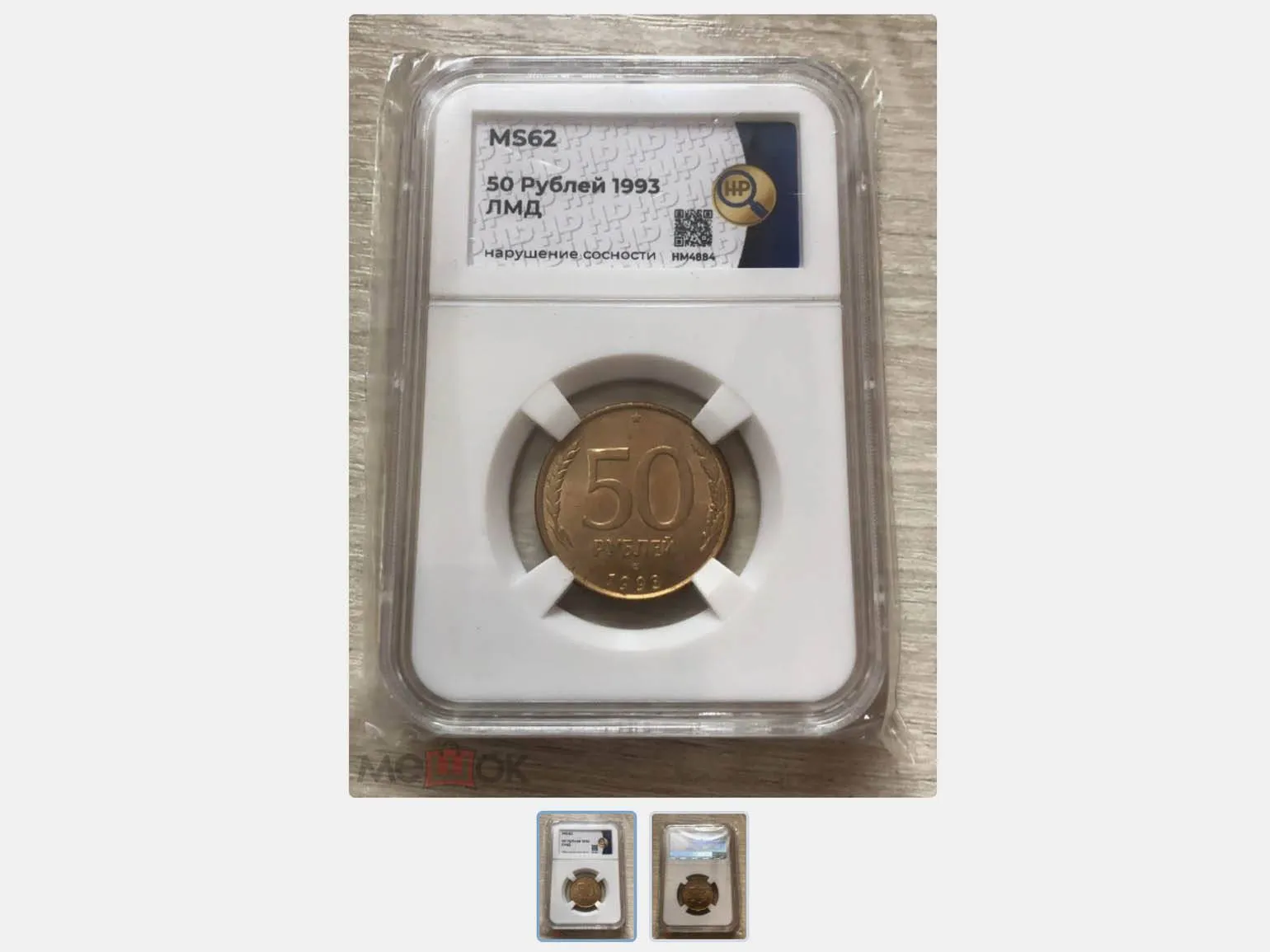
The condition of a coin plays a key role in its value. High-quality coins tend to increase in value over time because their number in circulation does not increase. This makes such specimens attractive to collectors and investors, which in turn contributes to their value on the market.
Coin alloy plays an important role in their value. The material from which a coin is made significantly affects its value. Gold and platinum coins are generally more expensive due to the high cost of these metals. However, it is worth noting that silver coins can also have significant value, especially if they are rare or have historical significance. Therefore, when assessing the value of coins, it is important to consider not only the material, but also other factors, such as the rarity and condition of the specimen.
The popularity of commemorative coins plays a key role in determining their value. The price of coins like the commemorative silver coin dedicated to the 155th anniversary of the Bank of Russia significantly exceeds the price of precious metal of the same weight. This is because collectors value the uniqueness and theme of the coins, which directly influences their demand. The more interesting and relevant the theme of the coin, the higher its market value.
Interest in coins and collecting can fluctuate, which in turn affects their market value. Changes in the popularity of certain collecting themes, such as historical coins, rare issues, or coins with unique characteristics, can lead to price fluctuations. It is important to consider that factors influencing collector interest can include economic conditions, cultural trends, and news events. Therefore, successful coin investing requires monitoring these changes and analyzing the market.
How to Determine the Value of a Coin
The value of coins varies and does not have a fixed value, as it is determined by supply and demand in the numismatic market. Actual coin prices may change depending on the rarity, condition, and historical value of each piece. Therefore, to accurately assess the value of a coin, it is important to consider current market trends and collector interest.
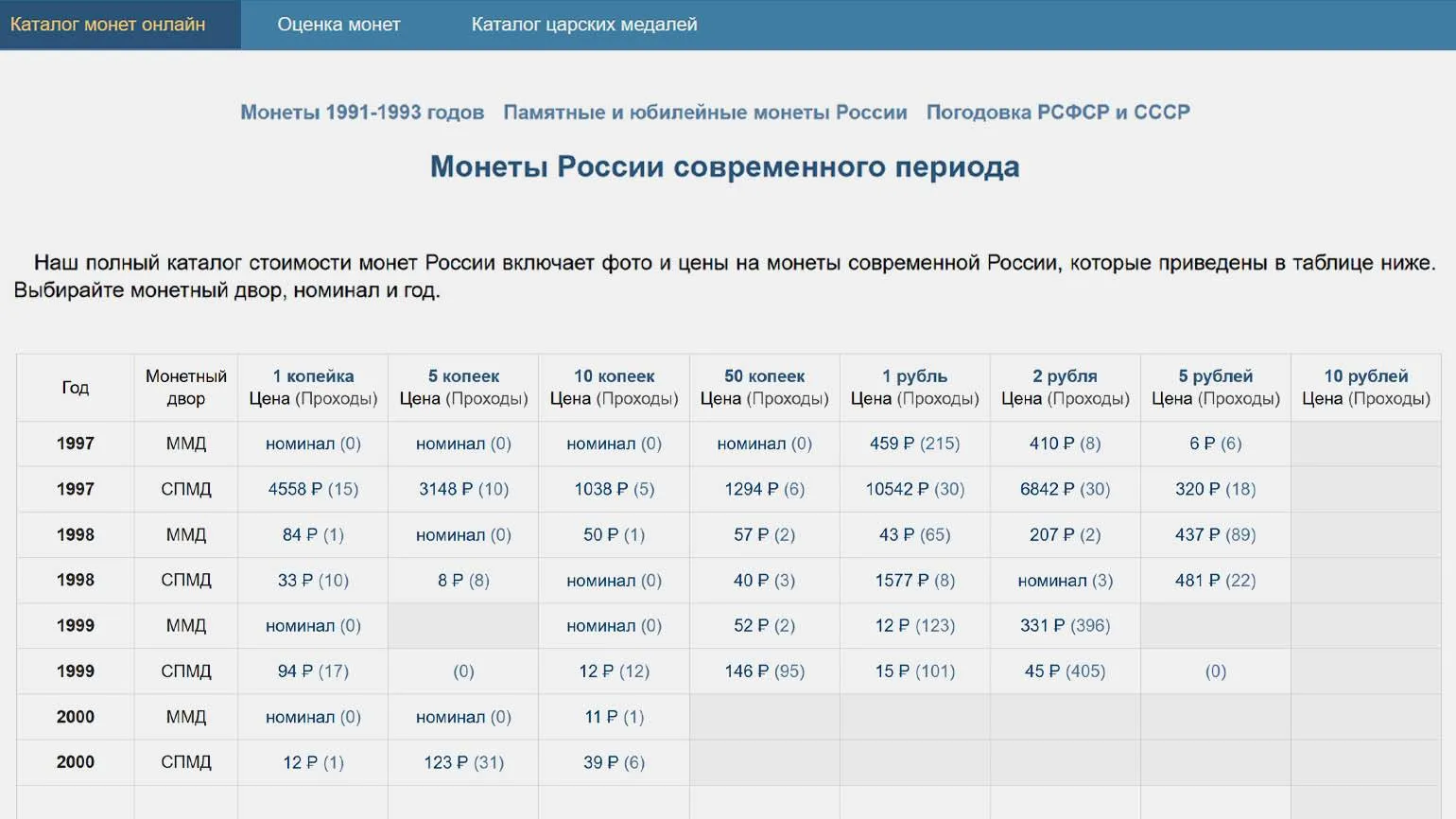
To study price ranges, it is recommended to use specialized auction sites such as FindCoins, Volmar, and Konros. These platforms provide information on the approximate value of coins, which will help you determine the market price of your item. Based on the data received, you can set your price and put the coin up for sale.
What are rare and expensive Russian coins?
Selling coins above their face value is possible for various types: rare annual issues, trial samples, commemorative coins made of base and precious metals, as well as defective and stamped versions. Let's look at examples for each of these categories.
Rare minted coins minted every year in Russia. Currently, there are significantly fewer rare minted coins minted every year in Russia than during the Russian Empire and the USSR. Only four coins that are of interest to collectors and numismatists can be classified in this category. Rare weather-beaten coins not only have historical value, but can also command high market prices. Information about such coins is important for understanding the numismatic market and forming collections.
- 20 rubles of 1993, LMD;
- 1 ruble, 2 rubles and 5 rubles of 2003, SPMD.
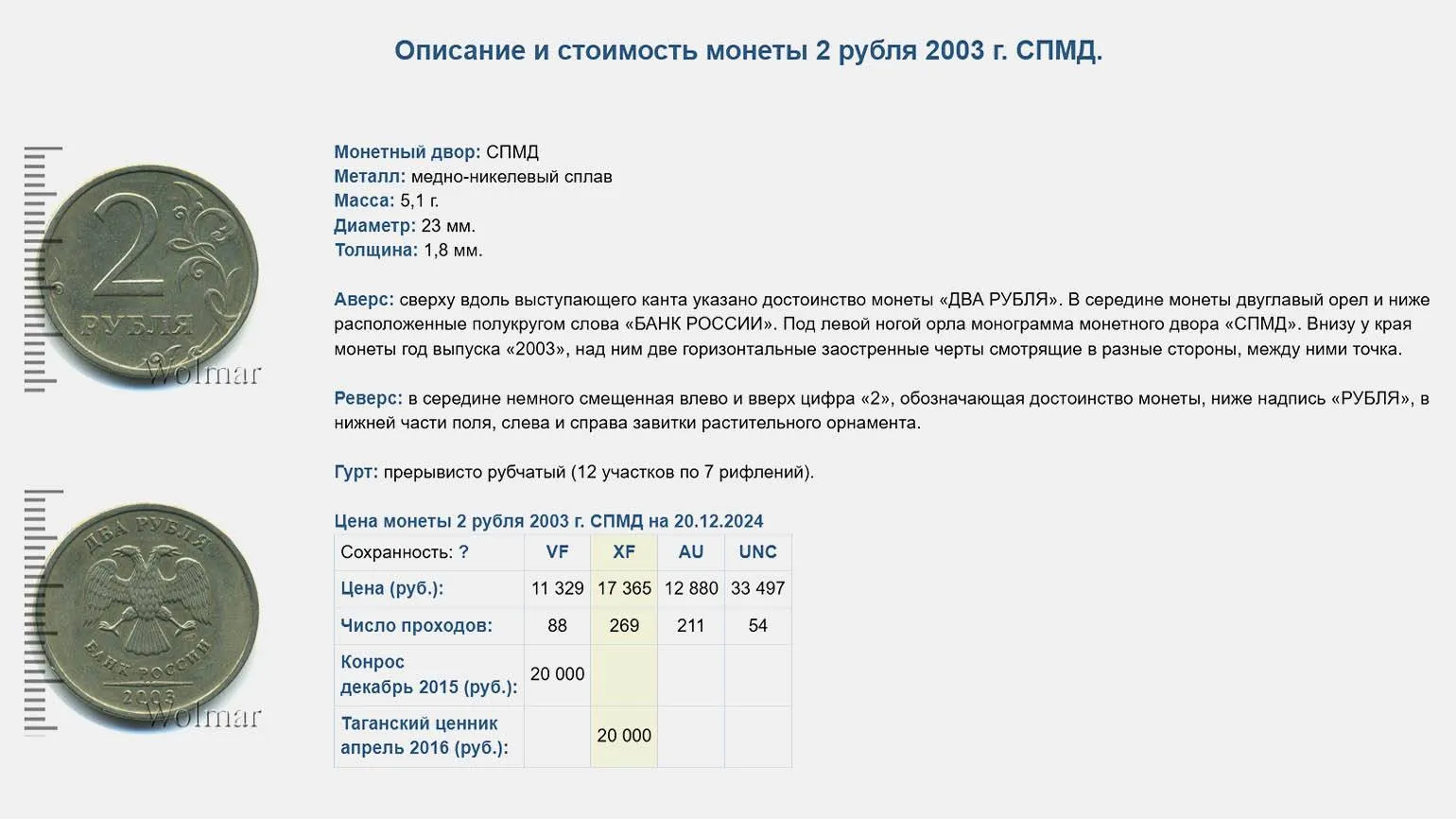
Rare coins include those with mixed metal finishes, including the 10 and 20 rubles minted in 1992 and 1993. Coins with production errors are also considered rare, such as the 5 kopecks from 2002 and 2003, which lack the mint mark. This category also includes trial samples and coins that have not been officially put into circulation.
In addition to individual coins, it is worth noting the annual sets issued by the Bank of Russia and Goznak. These sets are presented in booklets, soft packaging, and plastic cases. Many official sets, even those that don't contain rare coins, can sell for over 1,000 rubles. This makes them particularly attractive to collectors looking to expand their collection and invest in coins.
Proof and uncirculated coins can be identified by their denomination, year of issue, and mint. These coins are found in limited quantities and often come to the numismatic market by chance. Their mintage is typically so low that the likelihood of finding one among ordinary coins is virtually zero, making finding one akin to winning the lottery. Numismatists value such specimens for their rarity and uniqueness, making them particularly attractive to collectors.
The price of rare specimens can reach hundreds of thousands of rubles, and it is set anew at each new auction. For example, trial bimetallic 1,000-ruble coins issued in 1995 were sold at the "Coins and Medals" auction in 2013 for 400,000 rubles. Such sales highlight the high value of collector coins and their importance to numismatists. Each auction sale influences the market price, making participation particularly attractive for collectors and investors. The full list of trial coins remains unknown, as new specimens previously undocumented in catalogs regularly appear. In this context, it's worth noting the most well-known denominations of trial coins, which are of interest to collectors and numismatists. Constantly updating information on trial coins allows us to deepen our knowledge of their varieties and historical value.
- 1992: 1 and 5 kopecks issued by the Moscow Mint;
- 1993: 50 rubles LMD, bimetallic;
- 1995: 1, 2, 5 rubles without mint mark, 100, 500 and 1000 rubles LMD;
- 1998: 2, 5, 10 and 50 kopecks without mint mark (with original design);
- 1999: 5 kopecks and 5 rubles SPMD;
- 2000: 1, 2 and 5 rubles SPMD;
- 2001: 50 kopecks, 1, 2 and 5 rubles MM;
- 2003: 1, 2 and 5 rubles MM;
- 2006: 5 rubles SPMD;
- 2011: 1, 5, 10, 50 kopecks and 1, 2, 5 and 10 rubles SPMD;
- 2012: 10, 50 kopecks and 1, 2, 5 and 10 rubles SPMD;
- 2016: 1, 2, 5 and 10 rubles SPMD;
- 2017: 1 and 5 kopecks MM.
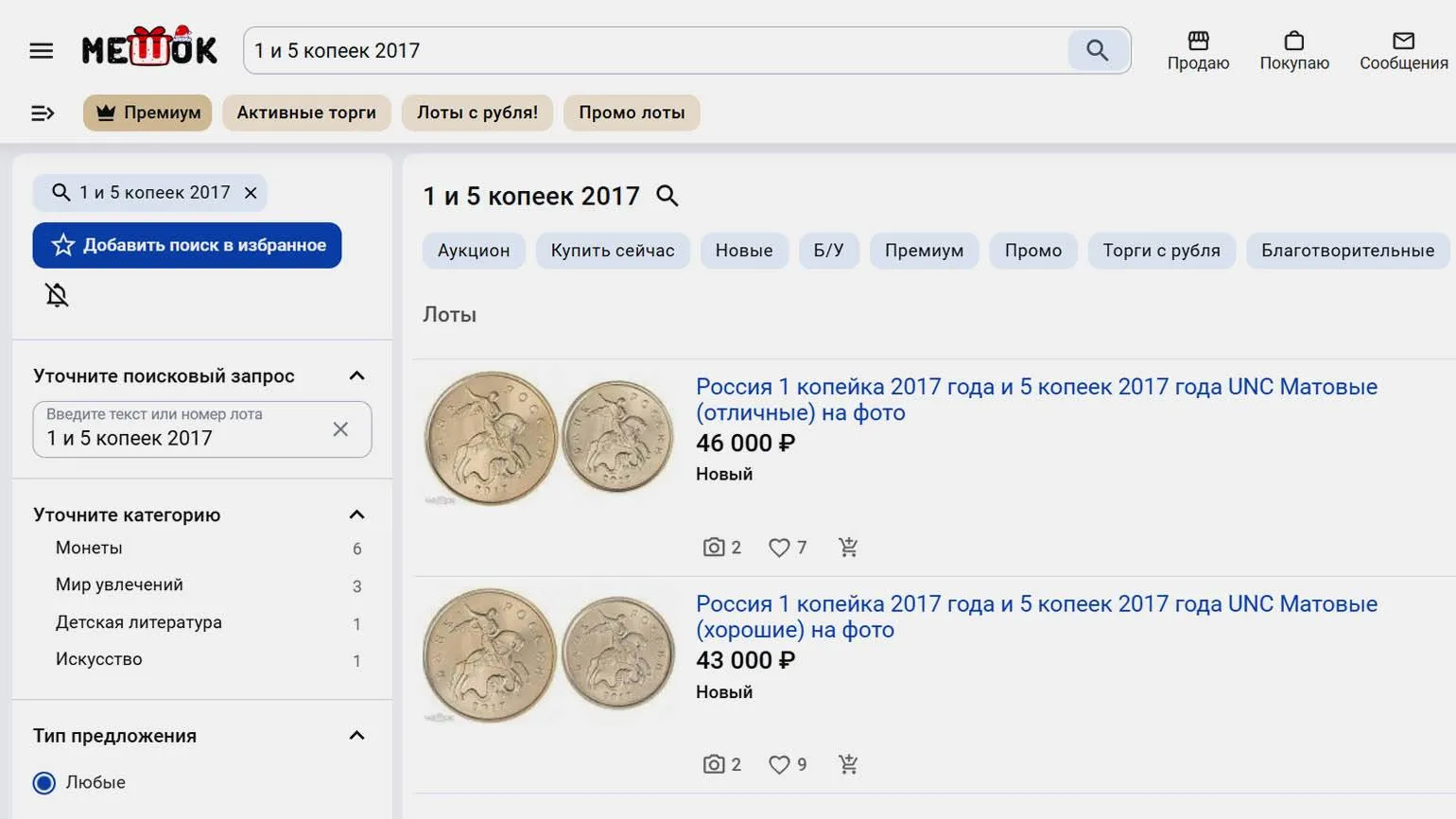
The existence of trial 50 kopecks of 2000 SPMD is of interest to collectors and numismatists. Experts are confident that such coins were issued, but to date, there are no images or evidence of their existence. This list may be expanded as new data and discoveries emerge, making the topic of trial coins even more relevant for study. The mintage of trial 1- and 5-kopeck coins from 2017 significantly exceeded normal volumes. Although the Bank of Russia has not issued these coins for circulation, they are still present on the market. This creates interest for collectors and numismatists seeking rare specimens. These coins can be a valuable addition to collections thanks to their limited circulation and unique design.
It is interesting to note that the 1999 5 kopeck and 5 ruble coins issued by the Saint Petersburg Mint (SPMD) were not put into general circulation. However, there are some that bear clear signs of circulation. They were most likely discovered while counting change in household piggy banks. At auctions, the price for a 1999 5 ruble coin can reach 250,000 rubles. The only known 1999 5 kopeck coin was sold privately, but the price of this transaction was not disclosed. These rare coins are of interest to collectors and numismatists, making them valuable items in the collecting world.
Jubilee and commemorative coins made of base metals. Russia has issued many commemorative and jubilee coins made of base metals, including cupronickel and steel. However, only a small number of them can be sold for more than a thousand rubles, as mintages were often large. As a result, demand for such coins does not always exceed supply, which affects their market value. Collectors and investors should consider these factors when choosing coins to purchase.
Coins issued between 1992 and 1995 according to Soviet standards are interesting collector's items. One such coin is the 1993 5-ruble coin, issued in honor of the architectural heritage of the city of Merv in Turkmenistan. Coins dedicated to the 50th anniversary of victory in the Great Patriotic War also date back to this period. These coins not only have historical value but can also be valuable to collectors due to their design and limited mintage.
Bimetallic 10-ruble coins, issued since 2000, include a valuable collection of three pieces from the 2010 "Russian Federation" series. These coins: "Chechen Republic", "Yamalo-Nenets Autonomous Okrug" and "Perm Krai" are popular among collectors and are known under the acronym "ЧЯП". Collectible coins in this series have a unique design and historical significance, making them coveted by collectors across the country.
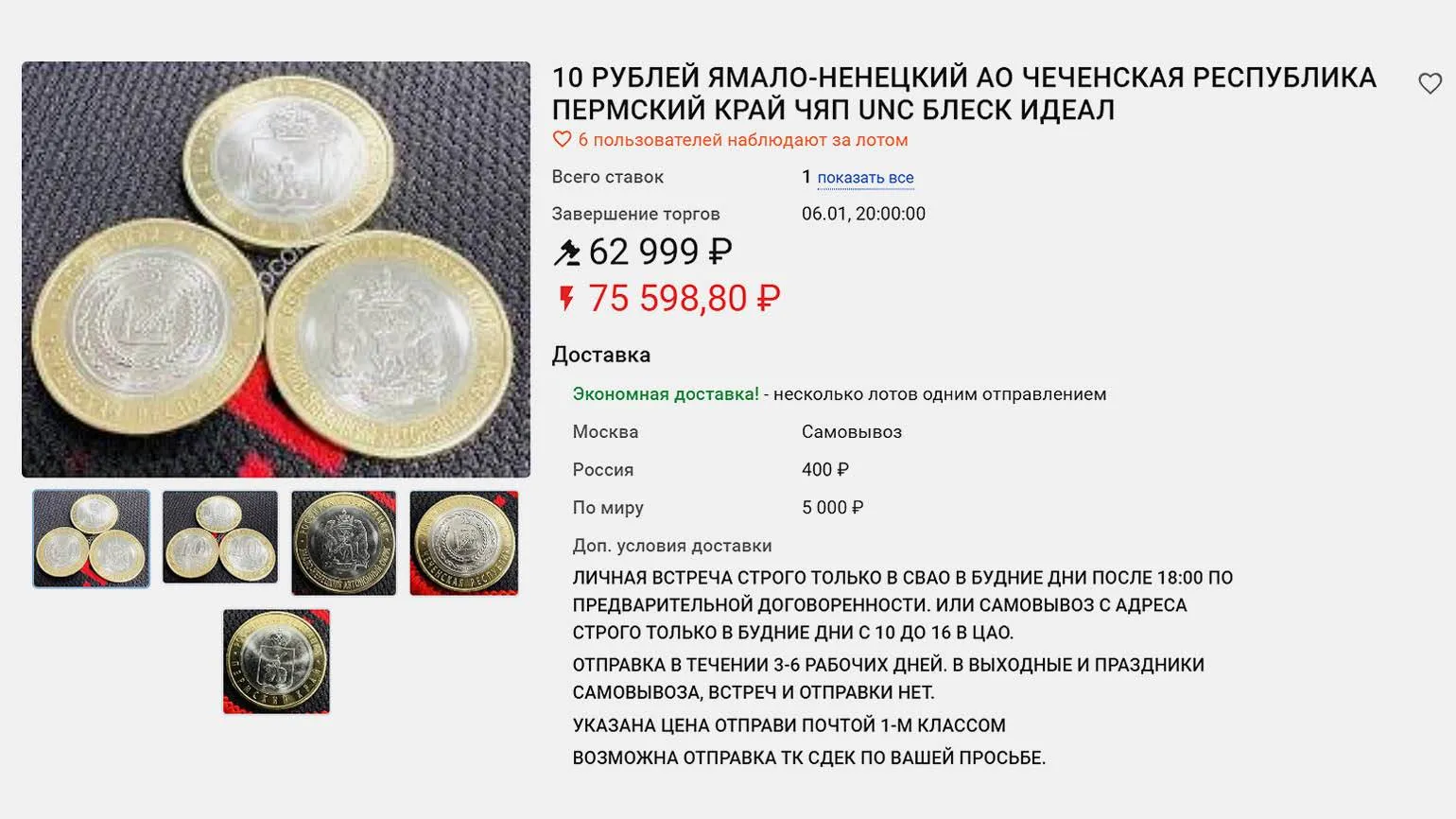
Official sets of commemorative coins made of base metals, such as the 1996 set dedicated to the 300th anniversary of the Russian Navy, can be sold profitably. These coins have collectible value and may interest both collectors and investors, opening up opportunities for successful sale at a high price.
Jubilee and commemorative coins made of precious metals are unique collector's items. They are typically priced above 1,000 rubles, due to the high cost of the metals used, such as gold, silver, platinum, and palladium. Mintages of these coins are determined by demand from collectors interested in acquiring them. Typically, the more valuable the metal, the lower the mintage, making such coins especially desirable for collecting and investment.
In some cases, the supply of coins on the market is significantly lower than demand. Such coins are easier to sell, and their value can significantly exceed the price of the metal from which they are made. This creates unique opportunities for collectors and investors seeking to acquire rare pieces. High demand for certain coins can drive up their prices, making them attractive investments.
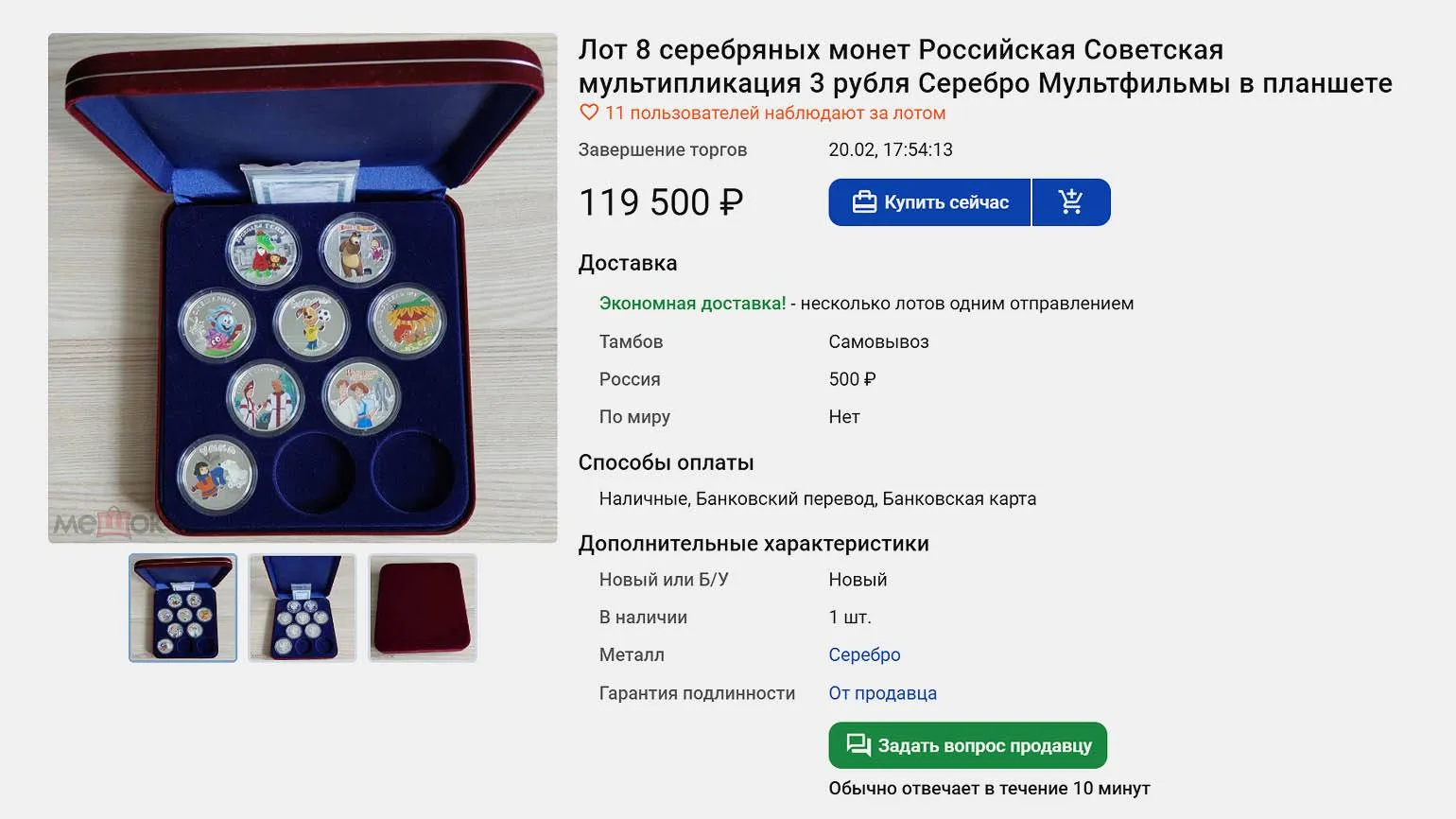
One notable example is the 2018 3-ruble coin from the "Russian (Soviet) Animation" series, dedicated to the famous cartoon "Well, Just You Wait!" Despite a mintage of 3,000 pieces, like other coins in this series, collector interest in it significantly exceeds the available supply. This coin has become a real find for numismatic connoisseurs and fans of Soviet animation, confirming its high market value.
There are precious coins that are almost never offered for sale. An example is the kilogram silver 100-ruble coins issued in 2018 in honor of the 100th anniversary of the All-Russian Church Council of 1917-1918. These coins had an extremely limited mintage of only 50 pieces. They are most likely in the collections of the leaders of the Russian Orthodox Church. Such coins are of great interest to collectors, but their uniqueness and rarity make it virtually impossible to determine their value.
Coins with errors are unique pieces resulting from manufacturing defects. One striking example is the 50- and 100-ruble coins issued in 1992, which may have different denominations on both sides. Such errors make these coins valuable to collectors and numismatists due to their historical significance and rarity. Interest in coins with errors continues to grow, making them sought after in the collectibles market.
The error associated with the 5 kopecks issued in 2002 without the Moscow Mint mark (M) is of interest to collectors. These coins are extremely rare in circulation, but can often be seen at auctions. Also worth noting are the 2003 5 kopecks, which also do not have the letter M. These coins are somewhat more common in circulation, making them less rare, but still interesting to collectors and numismatists.
One of the significant errors in numismatics is the absence of a mint mark on the Gagarin 2-ruble commemorative coin, issued in 2001. This coin has become one of the most valuable in collections, as the lack of a mint mark makes it especially valuable to collectors. Commemorative coins like the "Gagarin" coin attract attention not only for their historical significance but also for their rarity, which in turn affects their market value.
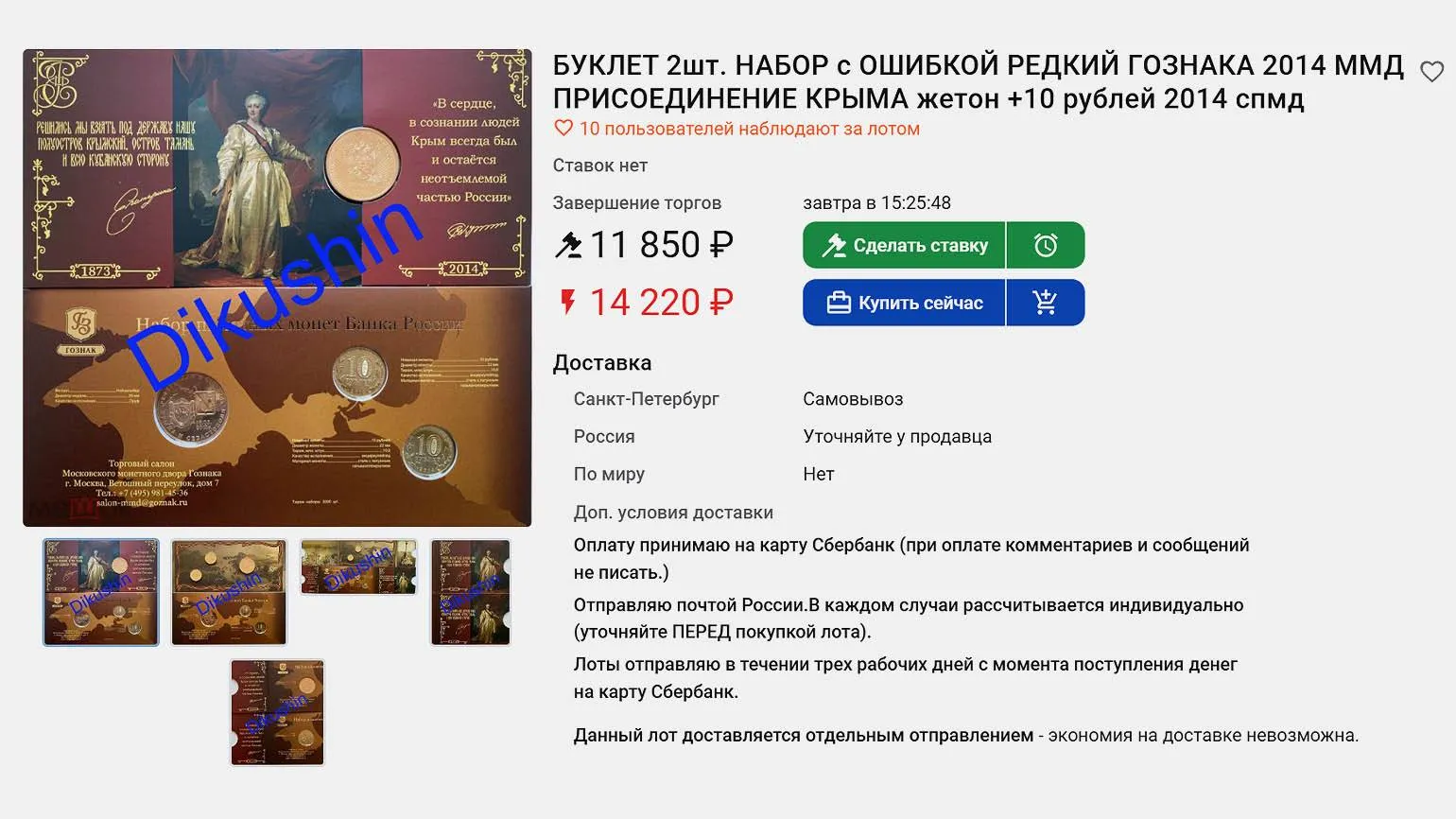
The 2014 "Annexation of Crimea" coin set has generated significant interest among collectors. Due to two design errors, the mintage was stopped, and the existing pieces were withdrawn from sale. These factors make the coins particularly valuable, attracting the attention of both novice and experienced collectors. Information about the set and its rarity can be useful for those interested in numismatics and looking to expand their collection with unique pieces.
The coins were reissued with corrections, but a certain number of sets ended up in the hands of collectors. The exact number of these sets remains unknown.
Stamped varieties of coins are interesting specimens for collectors. These include the 1997 and 1998 ruble coins, which are distinguished by their wide rim. Also worth noting are the 2001 10 kopeck coins, which feature noticeable vertical folds on the rider's cloak. These features make stamped varieties valuable and sought after in the numismatic market.
Which coins are best to set aside?
Unusual coins always attract the attention of collectors, so it is important to store them in a separate place, such as a bank or box. This will help you create a unique collection and protect rare pieces from damage. Keeping unusual coins in a safe place will also make it easier to evaluate them and sell them if you decide to do so in the future.
It's important to pay attention to the following cryptocurrencies:
- Commemorative coins. These always have a small mintage, and their market value is initially higher than their face value. Commemorative coins are easy to distinguish from ordinary change.
- 1 and 5 kopeck coins issued in 2014. These coins are no longer produced, and people rarely use them, which will make them more valuable in the future.
- Coins with defects. Collecting defective coins is a profitable activity. If you notice something unusual in the design, shape, or color of the metal, it is worth putting such a coin aside. If it later turns out to be genuine, no problem—just return it to use.
- 1, 2, and 5 ruble coins, issued in 1999, 2001, 2002, and 2003. These coins are rarer than the regular coins, especially those issued in 2001. They have the highest value among regular coins.
Predicting cryptocurrency price fluctuations is extremely difficult. Some coins can generate significant profits, others will provide income comparable to a bank deposit, and the value of others will remain unchanged. To adequately assess the potential profitability of cryptocurrency, you need to wait at least five, and preferably ten, years. This long-term approach will allow for a more accurate assessment of market development and the identification of the most promising assets.
The "Commander Blue Fox" 1-ruble coin, issued in a mintage of 10,000 pieces, increased in value from 2,100 to 4,500 rubles over 10 years, representing a 114% increase, or approximately 11% per year. However, such consistent growth is not always observed. For example, the "Andrei Rublev" 50-ruble gold coin, issued in 2008, increased in value by only 20% over the same period. This is due to its initial inflated price. Investors should consider these factors when choosing coins for collecting or investing to avoid losses and make profitable investments.
How to Find a Valuable Coin
To successfully search for valuable coins, it is necessary to regularly inspect all the small change that comes into your possession. The likelihood of finding a rare or valuable coin increases significantly by following a few simple guidelines. A thorough approach to examining your change and paying close attention to detail will help you identify unexpected finds in your wallet or piggy bank.
- Create a list of valuable coins and keep it with you. For example, save the lists from this article as notes on your phone. Periodically checking your change will not take much time, but you may be in for some pleasant finds. Over time, having learned the main differences, you will be able to do without constantly reviewing the list.
- Carry a magnifying glass with you. The fine details of rare coins can be difficult to see without a magnifying glass.
- Pay attention to places where small change is frequently used. These can be small shops, markets, or kiosks—places where the likelihood of encountering unique specimens increases significantly. Periodically visit places where you can exchange large bills for small change.
When searching for rare coins, it's important to start with a thorough check of your pockets. Don't forget to also ask older relatives who may have old stashes of change. They may have a jar of long-forgotten coins in their homes. Carefully examine these coins—they may contain something truly valuable that could attract the interest of collectors and numismatists. Don't miss the opportunity to appraise your finds, as rare coins can significantly enhance your collection and be a good investment.
If you notice commemorative coins at the cashier, don't hesitate to ask for them as change or for exchange. Sellers are often willing to accommodate such requests. Anniversary coins can be an interesting addition to your collection or a great way to give a unique gift. Don't miss the opportunity to acquire rare specimens that could become valuable in the future.
Where to buy coins to build your collection
There is no single platform that meets all user needs, so it is necessary to use various resources when searching for cryptocurrencies.
Online auctions are an excellent way to acquire coins thanks to their wide selection. However, it is worth noting that many foreign platforms limit delivery of lots to Russia. Among Russian auction sites, TopLot and "Monetny Dvor" stand out, offering high-quality services and a variety of offers. These platforms allow collectors to easily find coins they're interested in and participate in bidding, making the purchasing process convenient and accessible. Numismatic forums such as "Old Coin," "Samara," and CFN are popular venues for exchanging information and trading collectible coins. These forums operate under auction rules determined by the forum's authors. At the start of the auction, participants can place any bid on the coins they're interested in. After this, a minimum acceptable price (MAP) is set, at which point active bidding begins. Participating in these forums allows collectors to discover rare items and connect with like-minded individuals, making the collecting process more engaging and effective. Online stores in Russia offer a wide selection of products, with two main platforms: "Meshok" and Auction.ru. On these platforms, users can choose between auctions and fixed-price items. However, one of the main drawbacks of online stores is the lack of high-quality product photography. This often prompts buyers to request additional photos from sellers for a more accurate assessment.
Offline stores are an important resource for collectors interested in numismatics, coins, and antiques. When searching for such stores, it's worth using the keywords "numismatics," "coins," and "antiques." However, these stores often feature non-unique items and inflated prices. Furthermore, sellers may not be knowledgeable about the items they offer, which can negatively impact the quality of service and selection. Therefore, it is recommended to thoroughly check information and ask questions before purchasing to ensure the authenticity and value of the items you are purchasing.
Rare coins can be purchased at flea markets and through classifieds sites. However, it is important to be alert to counterfeits. Transactions can also be conducted at collector fairs and conventions. With experience, you will be able to establish connections with other numismatists who will inform you of interesting lots. Up-to-date information about numismatists' meetings is easily found online on specialized resources.
How to spot a counterfeit
Even large auction houses and professional coin grading companies are not immune to counterfeits. It is important to thoroughly check coins for authenticity using available methods and technologies. This will help you avoid purchasing counterfeits and protect your investment. Always pay attention to details such as the quality of manufacture, weight, and characteristics of the coin to ensure its true value.
Checking coins in person is a method that requires significant experience, which is gained with practice. The more coins you handle, the better you will be at recognizing their authenticity. The basic rule for beginning collectors: if you have even the slightest doubt about the authenticity of a coin, it is better to avoid buying it. Coins can be assessed based on various characteristics, such as weight, size, texture, and image details. Regular practice and studying the signs of counterfeits will help you increase your confidence in your assessments.
Analyzing photographs of coins is an important step in the process of assessing their authenticity. To minimize errors, it is recommended to compare your coin with high-quality images of originals. Specialized databases of counterfeits exist that will help you match your find with known fakes. One such resource is the database of the Center for Research of Cultural Properties. Using these tools, you can increase confidence in the authenticity of your coin and avoid potential losses.
Checking the coin's alloy. Counterfeits may differ from genuine coins in their metal composition. To independently test a coin's alloy, you can weigh and measure it, and then compare the results with the data presented in catalogs such as uCoin. This will help identify inconsistencies and determine the coin's authenticity.
More advanced coin testing methods exist, such as X-ray fluorescence analysis and technological analysis. However, for hobby collectors, such methods are most likely not necessary.
If you have doubts about the authenticity of a coin, it is recommended to show its photos to experienced numismatists on specialized forums. Experts in this field will be able to evaluate the coin and provide an informed verdict.
How to Store Coins
Coins can be stored in a bank safe deposit box or at home. When choosing home storage, it is important to ensure optimal conditions for the safety of your collection. There are various methods that can help protect coins from damage and external factors.
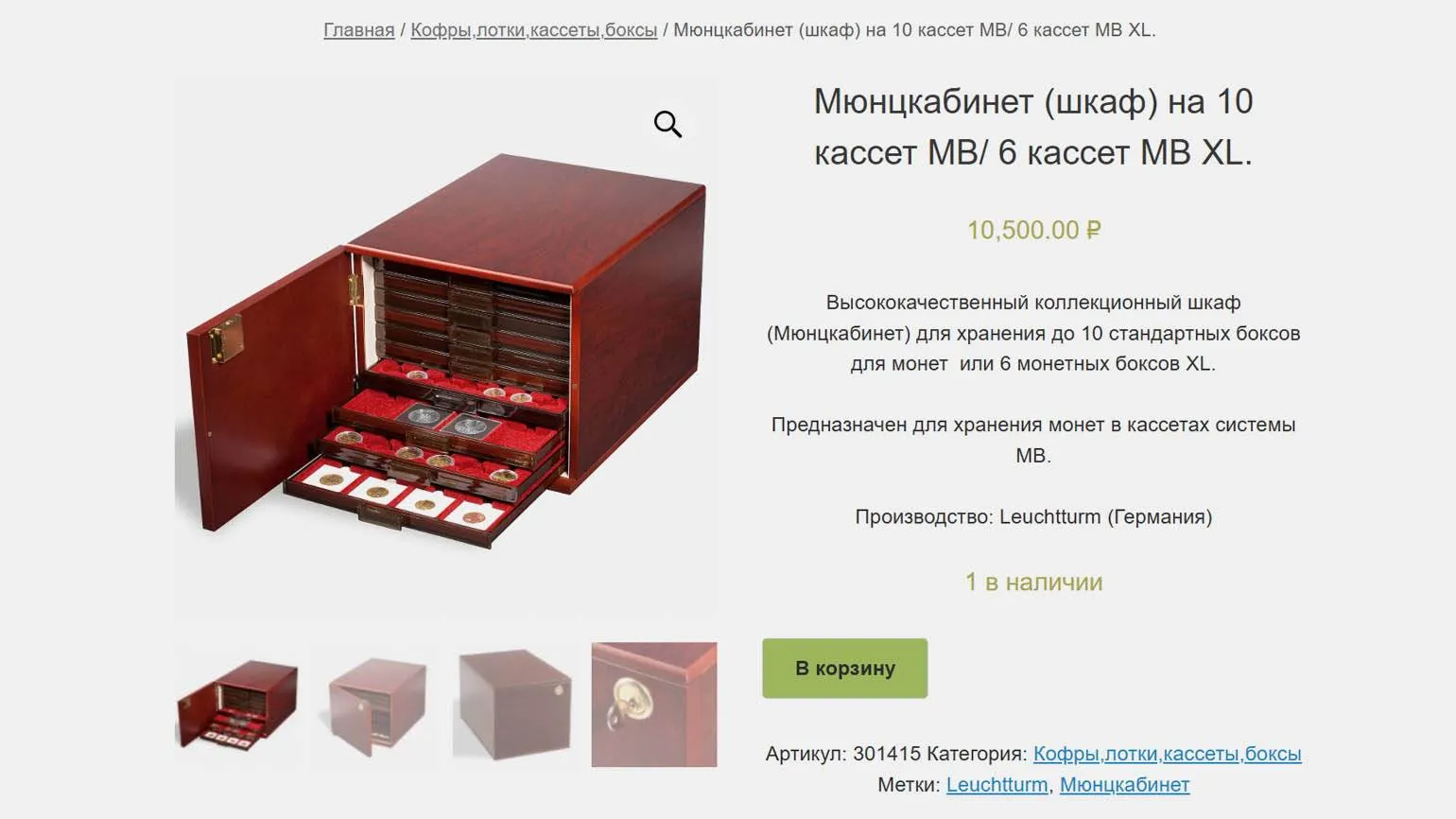
A Münzkabinet is a specialized cabinet for storing coin collections, suitable for a wide range of collections—from 100 coins or more. The main drawback of a Münzkabinet is its high cost. Even plastic models start at 10,000 rubles, while custom-made pieces can cost up to 30,000 rubles or more. It should also be taken into account that such cabinets require significant space for placement.
Caskets, boxes, and cases are an excellent alternative to a munzkabinet. These items are compact and easy to transport. They can be made from a variety of materials, which directly affects their cost. The choice of material also allows you to find the best option based on your preferences and budget. Caskets and boxes are ideal for storing collectibles, jewelry, and other small items, ensuring their safety and protection from damage.
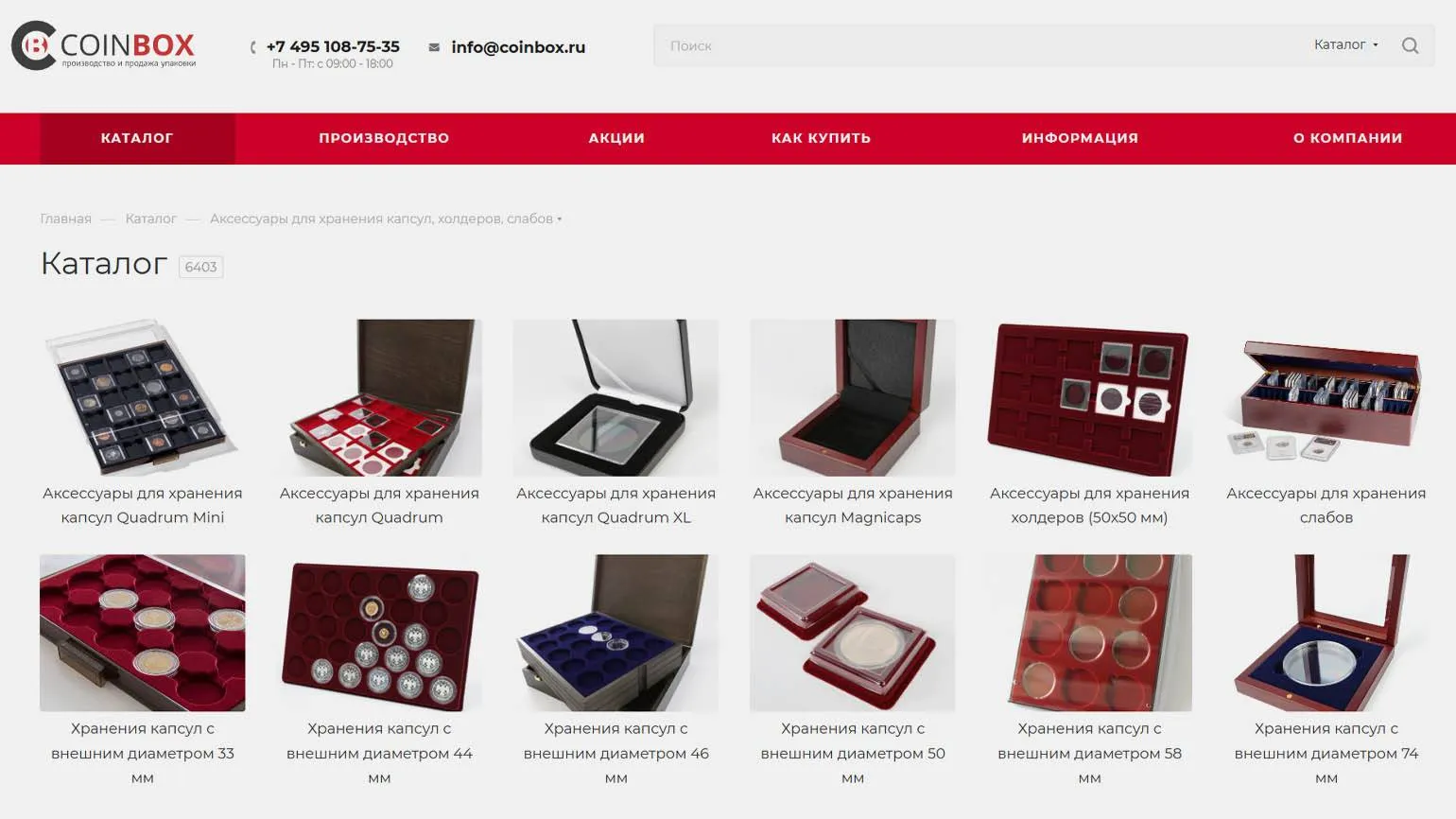
Slabs are a method of storing coins in plastic containers that provides convenience and protection. However, it is worth noting that this method is quite expensive. The slab process can cost more than the coin itself, making it not the most economical choice for collectors.
Coin storage capsules are an ideal solution for protecting valuables. The cost of one capsule ranges from 5 to 20 rubles, making them affordable for any collector. These capsules provide reliable protection for coins from mechanical damage and moisture, which is especially important for the safety of a collection. The ease of use of capsules makes them an excellent choice not only for storage but also for sending coins by mail. By choosing capsules, you ensure your collection has a long lifespan and will remain in perfect condition.
Coin albums are an affordable storage option, with prices ranging from 300 to 500 rubles. However, they do have their drawbacks. The plastic pockets used in albums can be damaging to metal coins, especially when frequently removed. Additionally, coins can come into contact with each other, increasing the risk of damage. Therefore, it's important to consider these factors when choosing an album for your collection.
Coin holders are compact envelopes with a clear window designed to securely store coins. They are ideal for protecting coins that don't require close attention and allow for easy tracking thanks to the ability to write on the paper portion of the holder. Holders provide security and convenience when organizing your collection, and also make it easy to access coins for further study or display.
How to Sell an Expensive Coin
Coins can be sold where they are bought. A successful sale requires following a few simple steps. First, make sure you have accurate information about the coins you want to sell, including their condition and market value. Next, choose a platform to sell your coins on, whether it's an online marketplace, an auction site, or a specialty store. Don't forget to provide high-quality photos and detailed descriptions to attract potential buyers. Set a reasonable price and be prepared to negotiate. Following these guidelines will help you successfully sell your coins.
- Determine a reasonable price. Research different sources, compare prices at auctions and specialized sites.
- Choose a selling method: classifieds, auctions, or online stores.
- Send photos of the coins for appraisal and clarify with the buyer how much they are willing to pay.
- Discuss the shipping method and determine who will bear the shipping costs.
- Pack the coin in accordance with the buyer's recommendations and ship it.
- Keep receipts and a copy of the inventory of the contents.
- Receive payment.
The sale of investment coins is not subject to VAT and may be exempt from personal income tax if they were purchased more than three years ago. This makes investment coins an attractive asset for long-term investments. Investors can count on significant tax advantages, which also contributes to the growing popularity of this type of investment in the market. With the right approach to buying and selling investment coins, you can not only preserve your capital but also significantly increase it.
Where to Learn About Coins
Information about investment coins can be found in a specialized section on the website of the Central Bank of the Russian Federation. Additional information about other types of coins is collected by enthusiasts, and their materials are also available online.
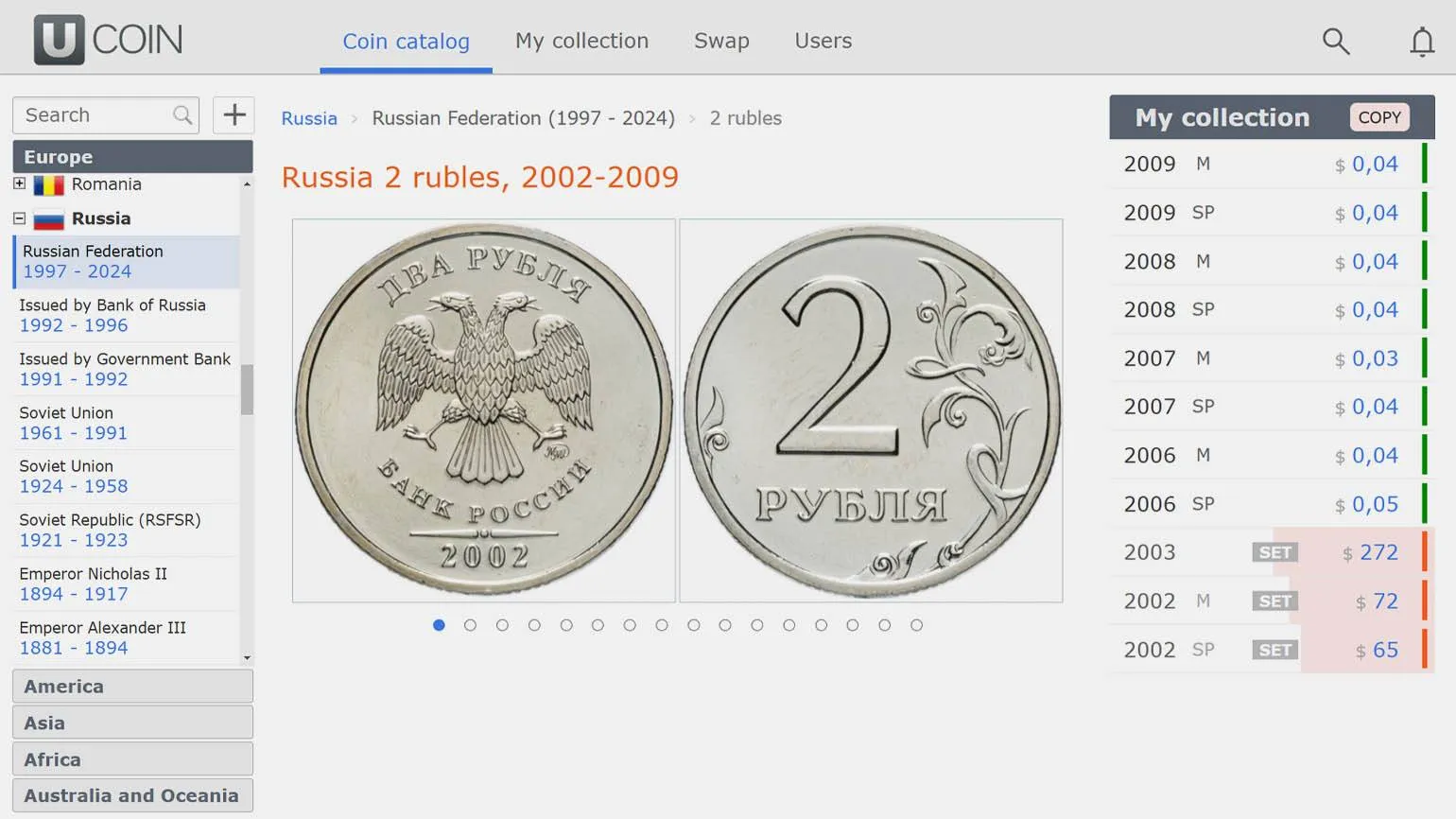
Coin databases are an important resource for collectors and numismatists. One of the most popular sites in this area is uCoin. On this portal, users can find information about coin mintages, their approximate prices, and technical characteristics, including weight, size, and composition. Additionally, uCoin offers the ability to manage your own collection, allowing you to add coins as you acquire them. This functionality makes the site a useful tool for anyone interested in coin collecting.
The "Coins of Russia, the USSR, and the World" app is designed to determine the value of coins and assess their rarity. Users can easily find information about various coins, making the app a useful tool for both collectors and those just beginning their numismatic journey. While a paid annual subscription is available, the free version of the app fully meets the needs of most users, providing all the necessary features for everyday use.
Forums such as "Old Coin" and the "Central Forum of USSR Numismatists" are valuable resources for numismatic enthusiasts. On these platforms, enthusiasts share experiences and knowledge, creating a comprehensive information base. Beginners have the opportunity to independently find answers to their questions or seek assistance from more experienced community members. These forums promote interest in coin collecting and help deepen knowledge of numismatics.
The Main Thing About Coins in 3 Points
- Most coins in circulation are worth their face value. But there are some that can sell for more—rare coins. For example, commemorative and defective coins.
- Rare coins don't have a set price; you can find an approximate price at auctions and on websites dedicated to numismatics. Price is affected by rarity, condition, and alloy; but most of all, by demand. The more sought-after a coin is among collectors, the higher its price can be sold for.
- To avoid missing out on a rare coin, check all the change you come across. To make this easier, make a list of rare coins and carry a magnifying glass with you so you can examine them closely.
Personal Investments
You will learn how to invest money wisely. Learn how to create an investment portfolio from scratch. You will understand how to make money by investing in securities.
Find out more