Contents:
Learn: Financial Literacy: Learning to Manage a Budget, Save, and Invest
Learn MoreWhat is Stagflation in Economics
Stagflation is an economic condition characterized by high unemployment, significant price increases, and low gross domestic product (GDP) growth. Simply put, under stagflation, citizens face difficulty finding work while prices for goods and services increase faster than incomes. This leads to wages becoming insufficient to provide a decent standard of living. Stagflation can have a long-term negative impact on the economy, hindering both consumption and investment.
Stagflation is an economic term that combines two key concepts: "inflation" and "stagnation." Stagflation is characterized by a simultaneous increase in the general price level and low economic growth. This economic condition raises concerns, as traditional methods of combating inflation can worsen economic stagnation, while measures to stimulate growth can lead to a further increase in inflation. Stagflation presents a complex challenge for economists and policymakers, requiring a comprehensive approach to address the problem.
Inflation is the process of devaluation of money, expressed as rising prices for goods and services. At high inflation, the cost of goods increases significantly over a short period. For example, in December 2024, the inflation rate in Russia reached 8.8%, significantly exceeding the Central Bank's planned target of 4%. This indicates that inflation was higher than expected and was characterized as high. High inflation can negatively impact the economy by reducing purchasing power and creating market uncertainty. Stagnation is a prolonged period during which the economy exhibits little or no growth. During this period, production slows and unemployment rises. Economic growth of less than 3% per year is considered stagnation. This phenomenon can negatively impact investment and consumer activity, which in turn leads to a decline in the overall standard of living. Understanding the causes of stagnation and its consequences is an important aspect for developing effective economic strategies.

Reading is an important part of our lives, contributing to the development of thinking and enriching the inner world. It not only helps improve vocabulary but also broadens horizons, allowing you to immerse yourself in different cultures and ideas. Regularly reading books, articles, and other materials helps improve concentration and memory. Therefore, it's worth devoting time to reading, choosing high-quality and interesting works that will inspire and develop you. Don't forget to share what you've read with others, discussing the ideas and thoughts that have touched you. Reading is the key to knowledge and new opportunities.
Economic stagnation is a period characterized by slow or absent growth in economic activity. This phenomenon can occur for various reasons, including declining consumer demand, declining investment, and high unemployment.
Stagnation can be recognized by certain economic indicators. Key signs include a persistent decline in gross domestic product (GDP), rising unemployment, and a decline in manufacturing activity. Under such conditions, a slowdown in inflation or even deflation is observed, which may indicate insufficient demand in the economy.
The causes of stagnation can be both internal and external. Internal factors include ineffective economic policies, structural problems in production, and high tax rates. External factors can include global economic crises, trade wars, and changes in the international economic environment.
It is important to note that stagnation can have long-term consequences for the economy, including a decline in living standards and a deterioration in social conditions. To eliminate stagnation, comprehensive measures are needed to stimulate demand, support investment, and create jobs.
Stagnation and stagflation are economic concepts that differ in the level of inflation. Stagnation is characterized by low inflation, indicating a stagnation in economic growth. In contrast, stagflation is characterized by high inflation combined with economic stagnation, which creates additional difficulties for the economy. Understanding these differences is important for analyzing the economic situation and developing effective measures to improve it.
What are the causes of stagflation?
The scientific literature on economics identifies various causes of stagflation. Let's consider the three most frequently cited factors contributing to this economic phenomenon.
Shock supply. When the supply of a product important to the state decreases, prices for it rise. This leads to increased costs for companies and a decrease in production volumes.
When the price of oil rises sharply, it leads to higher production costs for goods that depend on oil. As a result, businesses face increased costs, making the production of these goods unprofitable. In response, companies begin to reduce production volumes and lay off workers. This leads to increased unemployment and a slowdown in economic growth, which negatively impacts the entire economy. Changes in oil prices have a significant impact on production processes and employment levels, highlighting the importance of monitoring the oil market to maintain economic stability.
Ineffective economic policy can lead to stagflation, which occurs due to inappropriate government decisions. One example of such a decision is freezing the indexation of the minimum wage. As a result, citizens have reduced purchasing power, which limits their ability to purchase and reduces overall consumer demand. This can lead to a slowdown in economic growth and, simultaneously, to inflation, creating difficult economic conditions. A sound economic policy must take into account the needs of the population and ensure a balance between income growth and prices.
If control over the economy is weakened, this will lead to higher prices and a decrease in purchasing power. With a decrease in demand for goods, production will begin to slow, which will force companies to lay off jobs. As a result, unemployment will increase.
Economic transformation is a complex process during which various economic phenomena, such as stagflation, can occur. Stagflation can occur during the transition from a planned to a market economy. In a planned economy, the state regulates prices of goods, and imports are usually limited. This creates a closed economic environment. In contrast, in a market economy, prices are set depending on supply and demand, which opens the country to the import of foreign goods. As a result, local production faces new challenges, as it is not prepared for competition. This can lead to a decrease in production volumes and a deterioration in the economic situation in the country.
Local companies face problems of stagnation or close down, which leads to increased unemployment and rising inflation. These economic difficulties are impacting the lives of the population and contributing to a decrease in purchasing power. It is important to pay attention to measures that can help support local businesses and restore economic activity in the region.

Why mood changes and how to learn to feel good regardless of its state. Mood fluctuates for various reasons: stress, fatigue, changes in the environment, and even physical condition. These factors can influence emotional state, sometimes leading to feelings of discomfort. To maintain well-being, it is important to develop self-regulation and emotional resilience skills. Practices such as meditation, exercise, and journaling can help manage mood. Surrounding yourself with positive people and engaging in activities you enjoy are also helpful. Learning to adapt to mood swings can significantly improve your quality of life and ensure emotional stability.
What examples of stagflation are there in the history of states?
Stagflation is a complex economic phenomenon in which high inflation and stagnation (economic stagnation) are observed simultaneously. Let's consider two examples of stagflation: in the US economy and in the Russian economy.
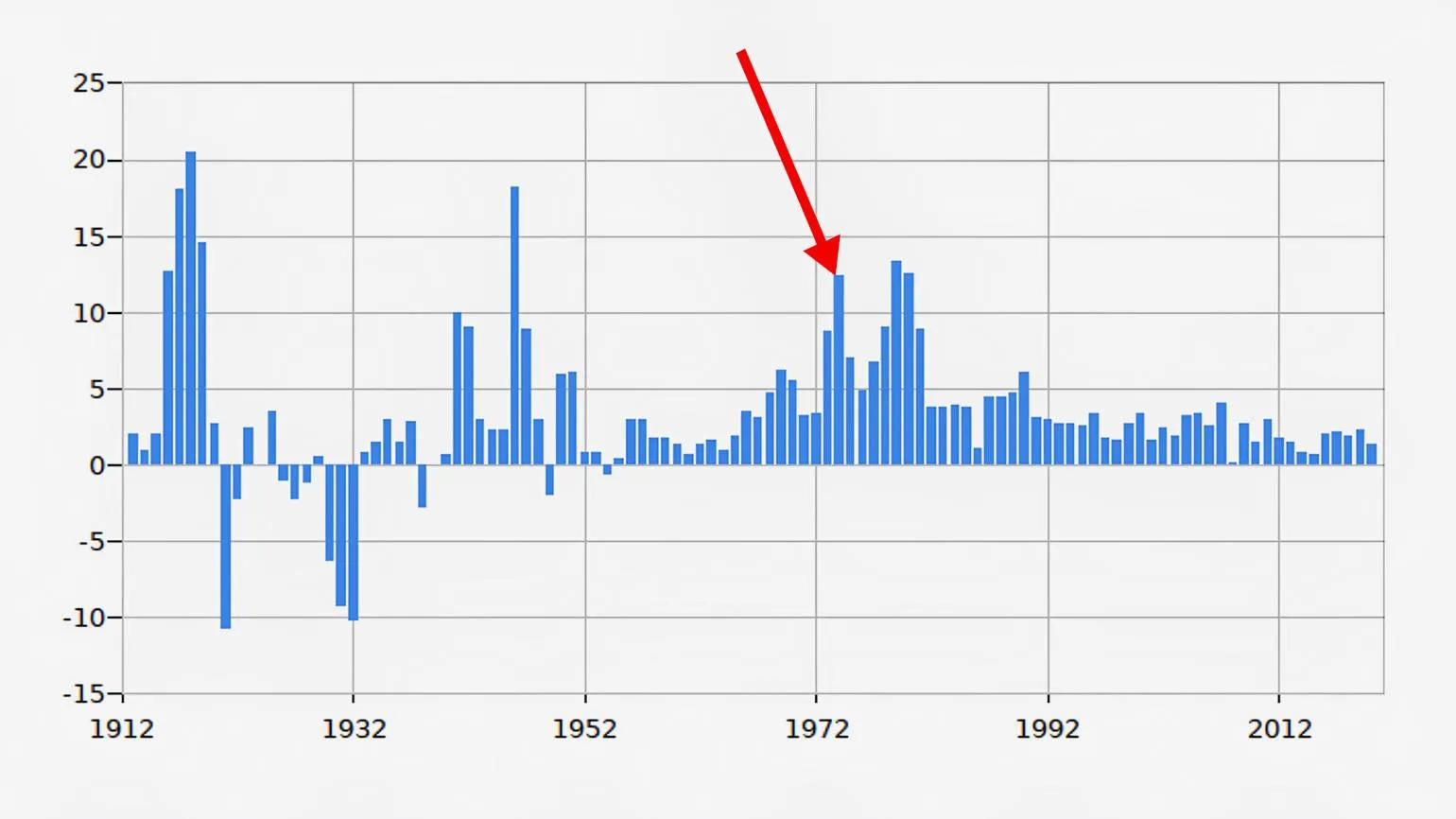
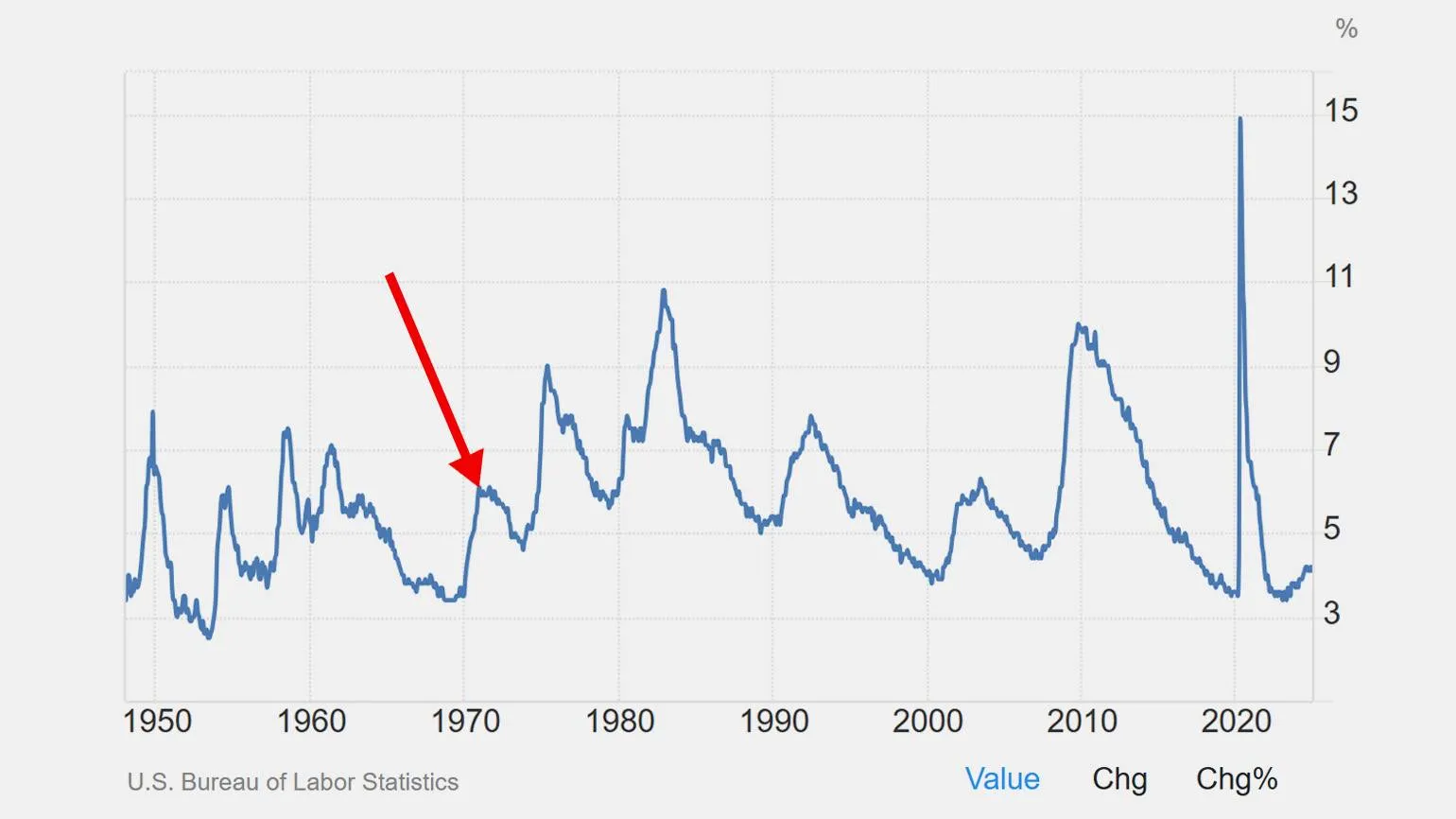
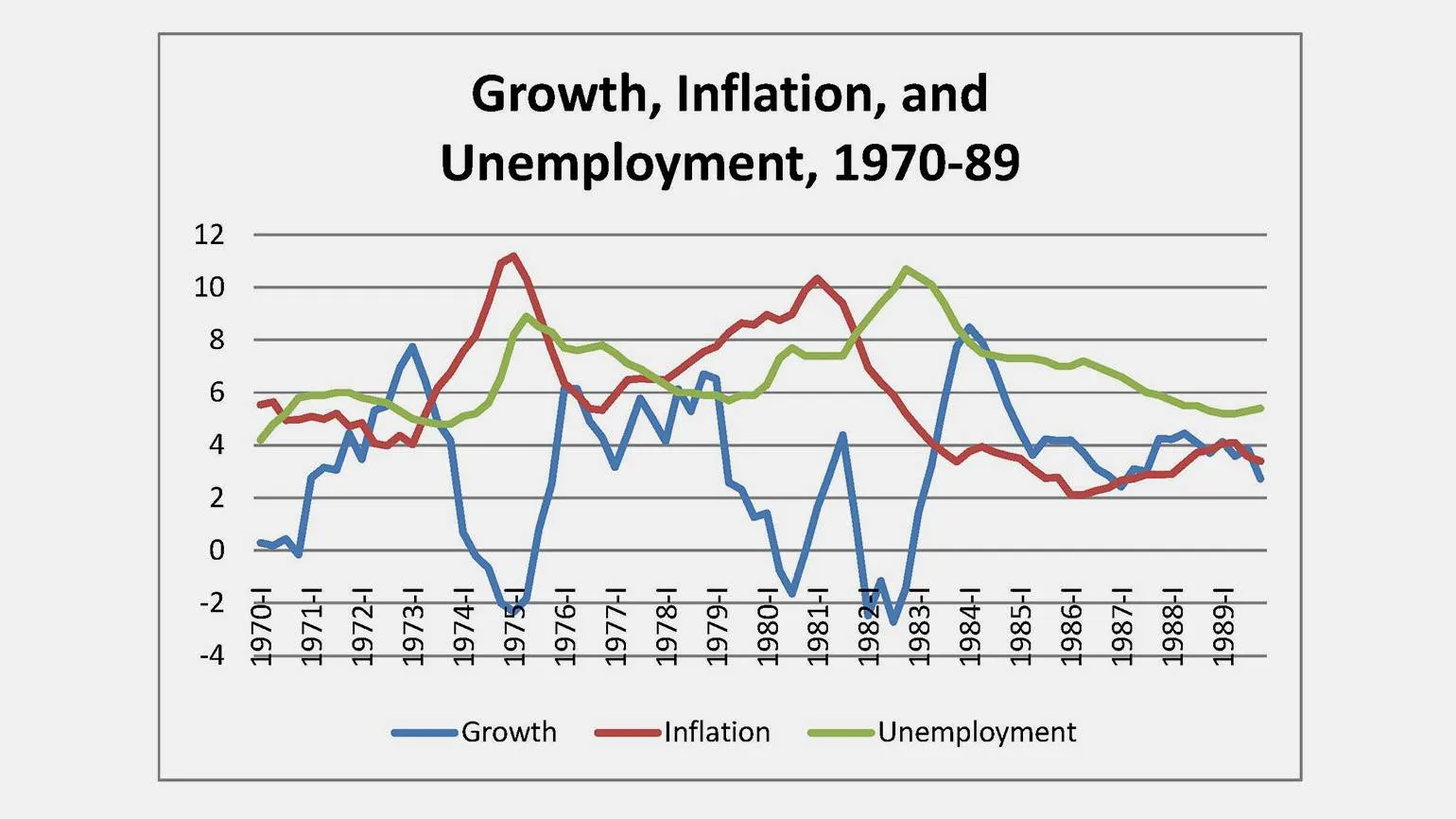
In the case of the US, stagflation emerged in the 1970s, when the country faced a sharp rise in oil prices and a decline in economic growth. This led to rising unemployment and a deterioration in living standards. Federal Reserve policy during that period failed to effectively address the inflationary consequences, which exacerbated the situation.
In Russia, stagflation was prevalent in the early 1990s during the transition to a market economy. Economic reforms, accompanied by high inflation and declining production, created the conditions for economic stagnation. High prices for goods and services, coupled with rising unemployment, led to a deterioration in the social situation and instability in the country.
Both examples illustrate the complexity of stagflation as a phenomenon requiring a comprehensive approach to addressing the problems associated with inflation and economic growth.
In the 1970s, the United States experienced a significant economic crisis caused by a sharp rise in oil prices. This fuel crisis resulted from a supply shock, which led to higher commodity prices worldwide. In response to this situation, the Federal Reserve implemented a loose monetary policy. However, this failed to prevent a decline in production and employment at American enterprises, which, in turn, led to an increase in unemployment. These events had a profound impact on the country's economic situation and shaped new approaches to energy policy and economic regulation.
The US government sought to reduce unemployment and inflation by implementing measures such as freezing consumer prices and devaluing the dollar. However, these actions only exacerbated existing problems. High demand and rising prices forced companies to increase their workforce to boost production. In order to attract workers, businesses began to raise wages, which contributed to an increase in consumer spending. As a result, inflation again rose.
In 1974, stagflation occurred in the United States, which was a significant economic event. Stagflation combines stagnation and inflation; that is, stagnation is economic stagnation, and inflation is inflation. This situation was characterized by high inflation against a backdrop of stagnation and rising unemployment. This created numerous problems for the country's economy and consumers, as prices for goods and services continued to rise while economic growth slowed. Stagflation in the United States in the 1970s provided an important lesson for economists and policymakers, highlighting the need for a comprehensive approach to economic policy and inflation management.
In the 1990s, Russia faced the transition from a planned to a market economy, which led to serious economic consequences, including stagflation. During this period, from 1992 to 1996, there were significant fluctuations in inflation, unemployment, and gross domestic product (GDP). These economic difficulties were the result of the failed reforms implemented by the new government and had a long-term impact on the economic situation in the country. Inflation reached record levels, unemployment rose, and GDP showed negative growth, which created serious problems for the population and businesses.
How to Fight Stagflation
Stagflation is a complex economic phenomenon for which there is no universal solution. Trying to solve one problem may worsen another. For example, measures to combat inflation can lead to an increase in unemployment, while a decrease in unemployment is often accompanied by an increase in inflation. This creates difficulties for economists and policymakers who are trying to achieve a balance between price stability and employment. An effective strategy for combating stagflation requires a comprehensive approach that takes into account the relationship between various economic indicators.
Governments usually apply a range of different measures to solve their problems. Let's consider the main ones.
Free market stagflation requires that the state provide the ability to independently regulate supply and demand. This will help balance inflation and unemployment. However, achieving effective self-sufficiency in the economy may take a significant amount of time, possibly from several years to decades. It is important to create conditions under which the market can adapt, which will ultimately lead to stability and growth in economic indicators.
Controlling inflation is one of the key objectives of the state's monetary policy. Using tools such as changing interest rates and managing the money supply, the state can reduce the amount of money in the economy. This, in turn, leads to a decrease in consumer spending, cools demand, and helps slow price growth. However, it is important to note that this approach does not stimulate economic growth, which is its main drawback.
The state can stimulate production growth by providing energy subsidies to businesses. This will lead to a decrease in corporate costs, an increase in the supply of goods and services, and lower prices. As a result of such measures, unemployment may decrease and the economic situation in the country may improve. State support in the form of subsidies is becoming an important tool for creating a competitive economy and increasing the well-being of citizens.
Will there be stagflation in Russia?
Currently, there is no stagflation in Russia. The economy is growing, and the unemployment rate continues to decline. In October 2024, gross domestic product (GDP) increased by 3.2% compared to the same period last year, and for the first ten months of 2024, growth was 4.1%. The unemployment rate in October 2024 reached a record low of 2.3%, which indicates stability and positive trends in the labor market.
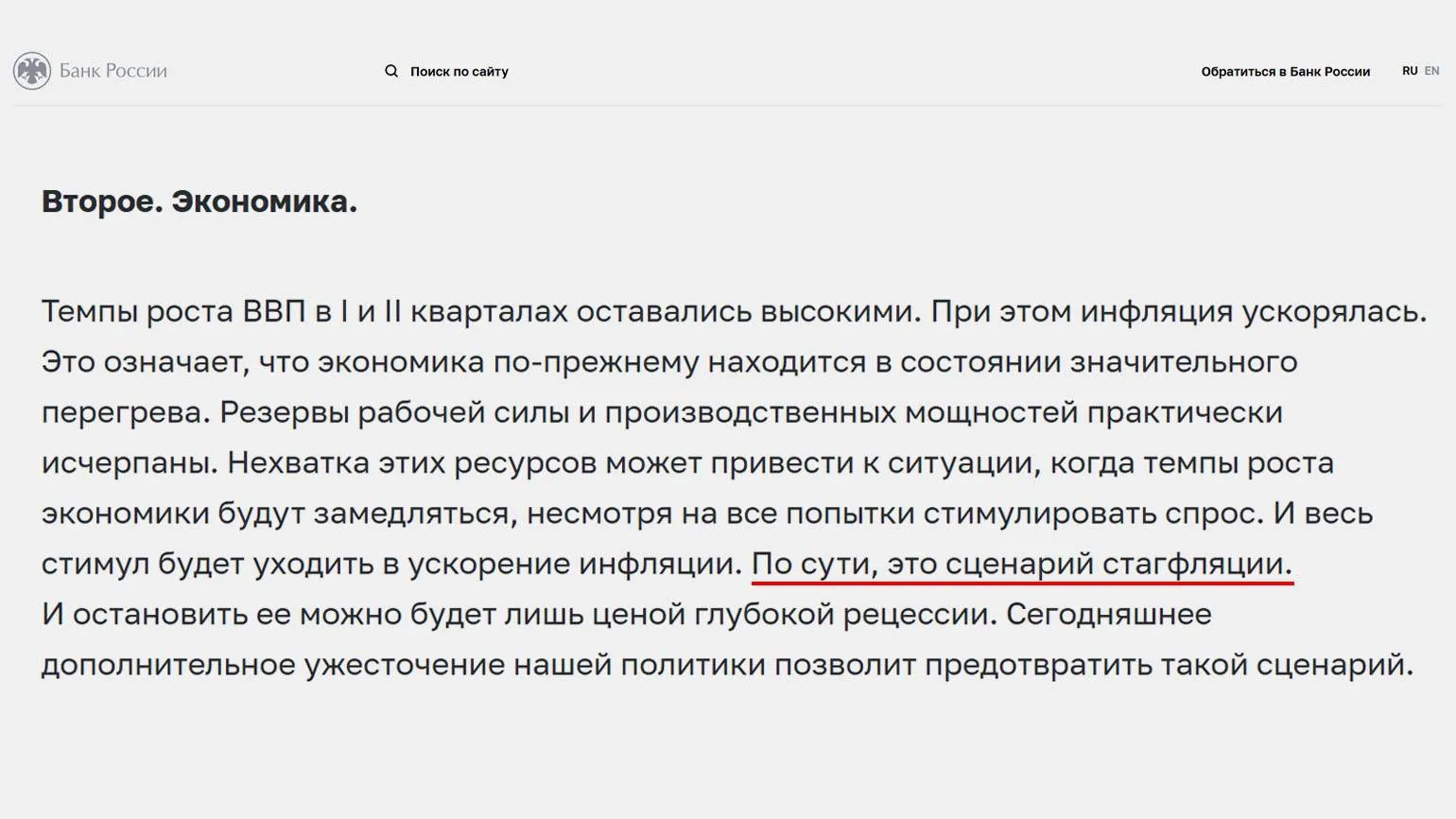
Why does the concept of stagflation arise? It all began on July 26, 2024, when Elvira Nabiullina, Governor of the Bank of Russia, made a statement following a meeting of the Board of Directors. The statement noted that the economy is in a state of overheating, characterized by high inflation and low unemployment. These factors could negatively impact gross domestic product (GDP) growth and lead to stagflation. Stagflation is a complex economic situation where there are simultaneous signs of stagnation and inflation, which complicates the development of effective economic policy measures.
The recent publication of the Central Bank's macroeconomic survey has increased tension in financial markets. Analysts predict that gross domestic product (GDP) growth will slow to 1.5% in 2025. Meanwhile, the consumer price index is expected to continue to rise, increasing by 8.2% compared to 2024. These data point to potential economic difficulties and high inflation, which could impact consumer behavior and investment decisions in the country.
The Central Bank of Russia makes forecasts regarding the economic situation in the country. In November 2024, Central Bank Governor Elvira Nabiullina announced a possible turning point in the fight against inflation, which could have a positive impact on the economy. She also noted that the risk of stagflation is currently minimal, which creates optimistic expectations for the future development of the financial system and economic stability.
Assessing the risk of stagflation is an important task for economists and analysts. In my opinion, there is currently no such risk, provided that we implement a timely and sound monetary policy. The right measures aimed at stabilizing the economy will help minimize potential risks of stagflation. It is important to note that current policy is already aimed at preventing such economic problems.
Elvira Nabiullina is a Russian economist and Governor of the Central Bank of the Russian Federation. She was born on March 29, 1963, in Ufa. Nabiullina studied economics at Moscow State University. Throughout her career, she has held various positions in government and financial institutions, gaining significant experience in macroeconomics and monetary policy.
Since 2013, Elvira Nabiullina has headed the Central Bank of Russia, where she has been actively working to stabilize the economy, control inflation, and develop the country's financial system. Her approach to monetary policy is characterized by a commitment to a flexible ruble exchange rate and transparency in decision-making. Under her leadership, the Central Bank has implemented a number of reforms aimed at strengthening financial stability and increasing trust in the Russian banking system.
Nabullina also participates in international forums and conferences where key issues in the global economy and financial markets are discussed. Her efforts to curb inflation and maintain financial stability have been praised both in Russia and abroad. Elvira Nabiullina continues to actively influence the country's economic policy and inspire a new generation of economists.
In December 2024, after another increase in the key rate, Elvira Nabiullina made a statement on the state of the economy. She noted that the rise in inflation in recent months is due to overheated domestic demand. However, in her opinion, with the intensification of strict monetary conditions, inflationary pressure will begin to gradually decrease. This statement emphasizes the importance of monitoring the economic situation and the impact of monetary policy on inflation.
She noted that a full assessment of the impact of tight monetary conditions will take time. In February 2025, if the level of demand overheating does not decrease, the Central Bank of Russia will again consider raising the key rate.
According to the Central Bank's forecasts published in October 2024, in the baseline scenario, the global economy will continue to develop within the framework of existing trends, and no new economic shocks are expected. Central banks will maintain tight monetary conditions. Under this scenario, the Central Bank forecasts inflation at 4.5-5% and gross domestic product (GDP) growth in the range of 0.5-1.5%. Thus, inflation will slightly exceed the target level, but stagflation will not occur.
In the negative scenario, designated in the Central Bank's forecast as "Risk (Global Crisis)," inflation is expected to rise to 13-15% and gross domestic product (GDP) to decline. In this situation, the Central Bank will be forced to significantly tighten its monetary policy, which will lead to an increase in the key rate to 22-25% in 2025. If unemployment also rises during this time, and monetary policy tightening measures fail to effectively curb inflation, this could lead to stagflation, which will negatively impact the country's economic situation.
The Main Points about Stagflation in 3 Points
- Stagflation is an economic downturn in conditions of low unemployment and high inflation.
- Stagflation is bad for the economy, but it has happened before in the history of countries. For example, stagflation occurred in the United States in the 1970s and in Russia in the 1990s.
- There are no clear mechanisms for combating stagflation. But there are combinations of tools that can help. For example, controlling inflation and stimulating production growth.
How to learn more about the economy
- If you want to better understand how the economy works, read the article on macroeconomics. The material explains who shapes it and how it affects life and business.
- Skillbox Media also has articles about the key rate, inflation, and the ruble exchange rate. After reading the materials, you will learn what happens when these indicators change and what to do in such cases.
- If you want to invest, read the article about why stocks rise and fall. You will understand when it is worth buying shares and when not.
- Those who want to learn how to preserve and increase capital may benefit from the Skillbox course "Financial Literacy: Learning to Manage a Budget, Save, and Invest." It teaches you how to set financial goals and achieve them. Experts explain how to control expenses and income, use loans and government support programs, and invest.
Financial literacy: learning to manage a budget, save, and invest
You will learn how to control expenses and income, use loans and government support profitably, and invest wisely. Set personal financial goals and develop a strategy to achieve them.
Find out more