Contents:
Learn: Personal finance: investments and Trading
Learn moreWhat is Crowdlending
Crowdlending is a collective investment mechanism based on loan agreements. In this process, investors provide funds to companies as loans, and the companies, in turn, undertake to repay the loans with interest. All transactions are carried out on specialized investment platforms, where both potential borrowers and investors are registered. Crowdlending provides access to financing for businesses and gives investors the opportunity to generate income from their investments.
Companies are increasingly turning to crowdlending as an alternative to traditional bank loans. Loans on specialized platforms are provided faster and with more flexible terms, which attracts many entrepreneurs. Investors, in turn, get the opportunity to earn money from crowdlending, receiving income in the form of interest on the loans issued. This process not only facilitates business development but also allows investors to participate in the financing of promising projects.
Participation in crowdlending is not available to everyone. Platforms thoroughly check the creditworthiness of potential borrowers and analyze the business's lifespan, which must be at least 12 months. Furthermore, the company's profitability is an important criterion. For example, the JetLend platform sets a minimum revenue threshold for borrowers of 600,000 rubles per month. These requirements help ensure investment security and minimize risks for all participants.
Investors can easily access crowdlending platforms, as the reliability requirements are relaxed. However, there are certain investment limits, which we will discuss in more detail in the next section.
Crowdlending is often confused with such instruments as crowdfunding and crowdinvesting. Despite the similarities in concept, there are significant differences between them. Crowdlending involves raising funds from a group of people to finance projects with subsequent repayment, while crowdfunding is focused on raising money without any obligation to repay, and crowdinvesting involves receiving a stake in a company. Understanding these differences will help you choose the most appropriate financing method for your needs.
Crowdfunding is a unique financing model that combines elements of charity and barter. Investors can contribute funds to projects as donations or receive various rewards in return, including company products. This practice is actively used for book publishing, building playgrounds, and supporting local brands. Crowdfunding not only allows you to realize your ideas but also creates a community of like-minded people interested in the project's success.
Crowdinvesting is an investment method in which funds are allocated in exchange for a stake in a business, company shares, or dividends from participation in a project. This mechanism allows legal entities and individual entrepreneurs to raise capital to develop their businesses. Most often, borrowers are small and medium-sized business owners seeking alternative sources of financing. Crowdfunding provides an opportunity not only to raise the necessary funds to implement ideas, but also to attract interested investors, which helps strengthen a business and create a community around it.
How Crowdlending Works
Crowdlending involves three key parties: the borrower, the investor, and the platform. The borrower is an individual or company in need of financing who approaches the platform to raise funds. The investor, in turn, provides capital through the platform, expecting to receive income in the form of interest or a stake in the project. The platform acts as an intermediary, ensuring a secure transaction environment and providing information and tools for effective interaction between the borrower and investor. Thus, crowdlending creates a mutually beneficial relationship, allowing borrowers to receive the necessary financing, and investors to diversify their investments.
Borrowers are representatives of small and medium-sized businesses seeking financing for the development of their projects. They turn to the platform to quickly obtain the necessary amount, bypassing traditional banks. To receive a loan, a business must register on the platform and go through the moderation process. This ensures transparency and security for both borrowers and investors.
Moderation criteria vary on each platform, but several key factors are typically reviewed. First and foremost, the borrower's credit history is analyzed to assess their financial reliability. Bank and Federal Tax Service debts are also considered, helping to identify potential risks. Equally important is the company's registration period, as this helps distinguish reputable organizations from shell companies. This approach provides a higher degree of protection for both borrowers and lenders.
In the application, the borrower specifies the required loan amount and desired term. The interest rate for borrowers ranges from 10% to 30% per annum. Once the required amount has been collected, the borrower receives the funds, uses them, and begins making monthly payments to the platform. This allows you to effectively manage your finances and plan your budget.
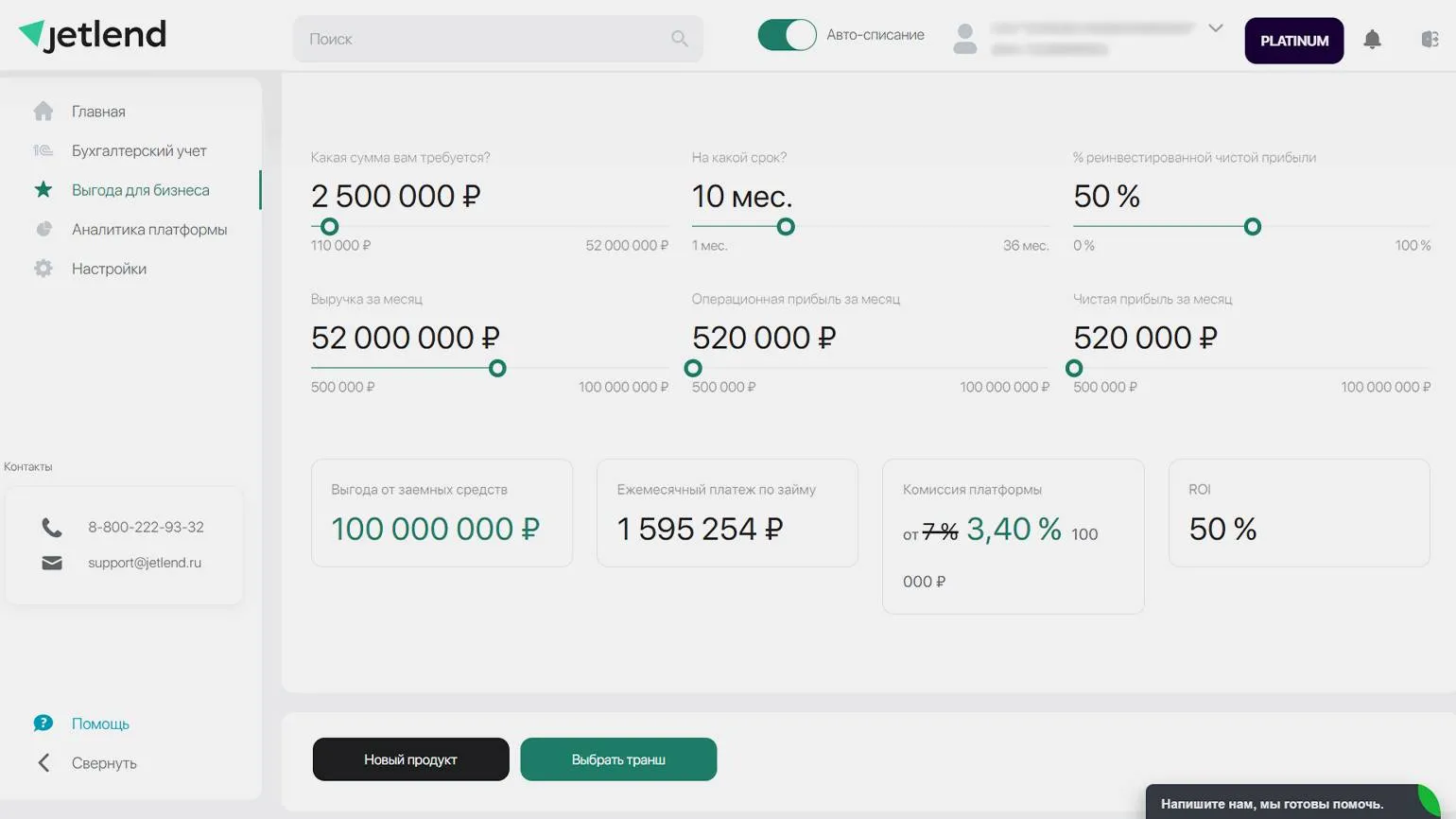
Investors, or lenders, are individuals seeking to preserve and increase their capital. Any citizen of the Russian Federation who has reached the age of 18 can become an investor. To register on the crowdlending platform, you must provide a phone number, full name, and upload a photo or scanned passport. The registration process is simple and intuitive, making it accessible to a wide range of users interested in investing and generating income from their funds.
Investors are divided into qualified and non-qualified. Non-qualified investors face certain restrictions: they can invest no more than 600,000 rubles per year on crowdlending platforms. Exceeding this limit will result in restricted access to such platforms. Qualified investors, in turn, have no such restrictions and are free to manage their investments.
Investors can register on the platform to access an extensive list of borrower applications. On this platform, they independently decide who to grant a loan to and who to refuse. Investors have the option of investing the entire amount in one project or distributing it among several different projects, allowing them to effectively manage their investments and minimize risks.
If you plan to invest 100,000 rubles, you have several options. You can invest the entire amount in one company or spread the funds out by investing 25,000 rubles each in four different projects. Asset diversification reduces risks and increases the chances of successful profitability. By investing in multiple areas, you protect your investments from potential losses in one project, making your strategy more resilient to market fluctuations.
The platform is a crowdfunding platform that acts as an intermediary between entrepreneurs and investors. It checks the creditworthiness of borrowers, moderates applications, and accumulates investor funds in its accounts. The platform then transfers the funds to the business and distributes payments from the borrower among the investors. The platform charges borrowers a fee for its services, starting at 1% for each tranche. This ensures reliability and transparency in the investment process, making it a convenient tool for both parties.
Only platforms registered with the Central Bank of the Russian Federation are allowed to engage in crowdfunding. Their activities are strictly regulated by Federal Law No. 259-FZ of August 2, 2019. This legislation establishes rules and requirements to ensure investment security and protect the rights of crowdfunding participants.
How Much Can You Earn on Crowdfunding?
In 2023, the average return on crowdfunding was 18%, according to the Central Bank. However, this figure may vary, both up and down, across different crowdfunding platforms. Investors should consider these differences when choosing an investment platform to optimize their returns.
If you are considering investing through a crowdfunding platform and want to estimate your potential profit, it is useful to refer to the statistics provided by the Central Bank. With an investment of 200,000 rubles, you can expect an income of around 36,000 rubles per year. This gives you an idea of the potential profitability of crowdlending and allows you to better plan your investments.
Investing on crowdlending platforms offers higher returns compared to banking products and low-risk investments. At the end of 2023, the interest rate on short-term bank deposits reached 12.78%, and the average yield on federal loan bonds (OFZ) with a maturity of up to one year was 11.9%. At the same time, the average return on crowdlending in 2023 was 18%, making it an attractive instrument for investors seeking higher returns. Investing in crowdlending not only allows you to diversify your portfolio but also gain access to new opportunities in the financial market.
Some investment platforms claim to offer returns in the range of 60–80% per annum. However, in practice, achieving such high returns is unlikely, as companies will not borrow at such high interest rates. Real investment risks and market conditions make such promises dubious. Investors should exercise caution and critically evaluate such proposals to avoid financial losses.
Income from crowdlending is subject to taxation, just like income from other investment vehicles. Investors are required to pay a 13% tax. If the total annual investment income exceeds 5 million rubles, the tax rate increases to 15%. It is important to consider these tax obligations when planning your investments in crowdlending to avoid potential penalties and tax disputes. Understanding tax considerations will allow you to manage your finances more effectively and make informed investment decisions.
If the investor is an individual, they are exempt from paying taxes themselves. In this case, the borrower acts as the tax agent, independently submitting information to the Federal Tax Service (FTS) and paying the appropriate tax amount. However, investors registered as individual entrepreneurs (IE) or legal entities (LLC) are required to pay taxes themselves in accordance with the terms of their tax regime. This approach ensures transparency of tax accounting and simplifies the process for individuals, allowing them to focus on investing.
What are the risks for investors in crowdlending?
The main risk is that the borrower may default. This can lead to financial losses for the lender and a deterioration in the borrower's credit history. Therefore, it is important to carefully assess the solvency and reliability of potential borrowers before providing them with funds. Understanding the risks associated with lending contributes to more informed financial decisions and minimizes potential losses.
Platforms strive to minimize the risks associated with lending. To this end, they carefully vet projects before publishing applications and apply a system of fines and penalties for late payments. In the event of a borrower's default, the platform reserves the right to file a lawsuit and, for example, initiate the sale of assets belonging to the debtor. These measures protect the interests of investors and ensure the stability of financial transactions on the platform.
However, even this does not guarantee the return of funds. The borrower has the option of filing for bankruptcy, and in the event of financial insolvency, they may not have the funds or assets to repay their debts. In such a situation, the investor risks losing their investment, either partially or in full.
Withdrawing funds from crowdfunding platforms has its own peculiarities. Typically, to receive funds, you must complete all current investment transactions. This means that if you have invested in three different projects, you will have to wait until all borrowers have fully repaid their debts. Otherwise, you will not be able to withdraw funds to your bank account until all transactions are closed. This is worth considering when planning your investments in crowdfunding.
What are the pros and cons of crowdfunding for investors?
Crowdfunding has several advantages that make it attractive to investors and borrowers. Firstly, it is accessible to a wide range of participants. Investors can start with small amounts, allowing everyone to participate. Secondly, crowdfunding offers high returns compared to traditional bank deposits. Borrowers, in turn, get the opportunity to attract financing on more favorable terms, bypassing the complex procedures typical of banks.
Another advantage is the rapid approval of applications. Crowdlending platforms typically make decisions much faster than traditional financial institutions, allowing borrowers to quickly receive the necessary funds. It is also worth noting the variety of projects available for investment, which allows investors to diversify their investments.
Don't forget about the transparency of platforms, which provide complete information about borrowers and lending terms. This builds trust and allows investors to better assess risks. Overall, crowdlending opens up new opportunities for both investors and borrowers, making financial transactions more accessible and efficient.
- Potentially high returns. Crowdlending brings in more than other investment instruments.
- Low entry threshold. You can invest from 100 rubles.
- Ease of use. Crowdlending is suitable for beginning investors: the platforms have a clear interface that's easy to navigate.
- No sanctions restrictions. While the exchange suspended trading in 2022, crowdlending platforms operated without restrictions.
The main disadvantage of crowdlending is the high risk. The borrower may not repay the funds. Even if the crowdlending platform wins the lawsuit, the investor will face a delay—the funds will not be transferred until the legal proceedings and collection process are completed. If the borrower has no funds or assets left, the investor will lose their investment. This highlights the importance of carefully assessing risks and selecting reliable projects for investing in crowdlending.
The Main Thing About Crowdlending in 3 Points
- Crowdlending is a mechanism for collective investment under a loan agreement. Investors lend money to a business, which repays it with interest.
- Three parties participate in crowdlending: the borrower, the investor, and the platform. The borrower registers on the platform and completes an application, indicating the required amount and the rate they are willing to pay. The investor selects projects and invests in them. The platform acts as an intermediary between borrowers and investors: it verifies borrowers and transfers money from one party to the other and vice versa.
- You can earn more on crowdlending than on deposits and OFZs. The average return on the instrument in 2023 was 18%. But this is a risky type of investment: the borrower may not repay the money. Then the investor will lose the investment - partially or in full.
Personal Finance: Investments and Trading
You will understand how to allocate a budget for investments and profitably trade securities. Learn how to make money and not lose money on investments. Begin your journey to financial freedom. The course speaker is Yulia Afanasyeva, a stock market investor with a personal trading account of over $1 million.
Find out more