Contents:
- What was the admissions campaign in universities?
- What are the highest places Russian universities took in world rankings?
- A major reform of secondary vocational education has been announced.
- The central topics of the year include students’ psycho-emotional problems.
- A competitive selection of universities for grants from the Priority program took place.
- How many university teachers do we have?
- Everything is moving toward a blended learning format.
- It turned out that most teachers in Russia are not sufficiently prepared
- How much do teachers get paid and do they consider their salaries worthy?
- The idea of life-long learning turned out to be not so popular
- The micro-learning format in corporate training seems to be overrated
Learn: The Profession of Project Manager in Online Education
Learn moreWhat was the admissions campaign at universities?
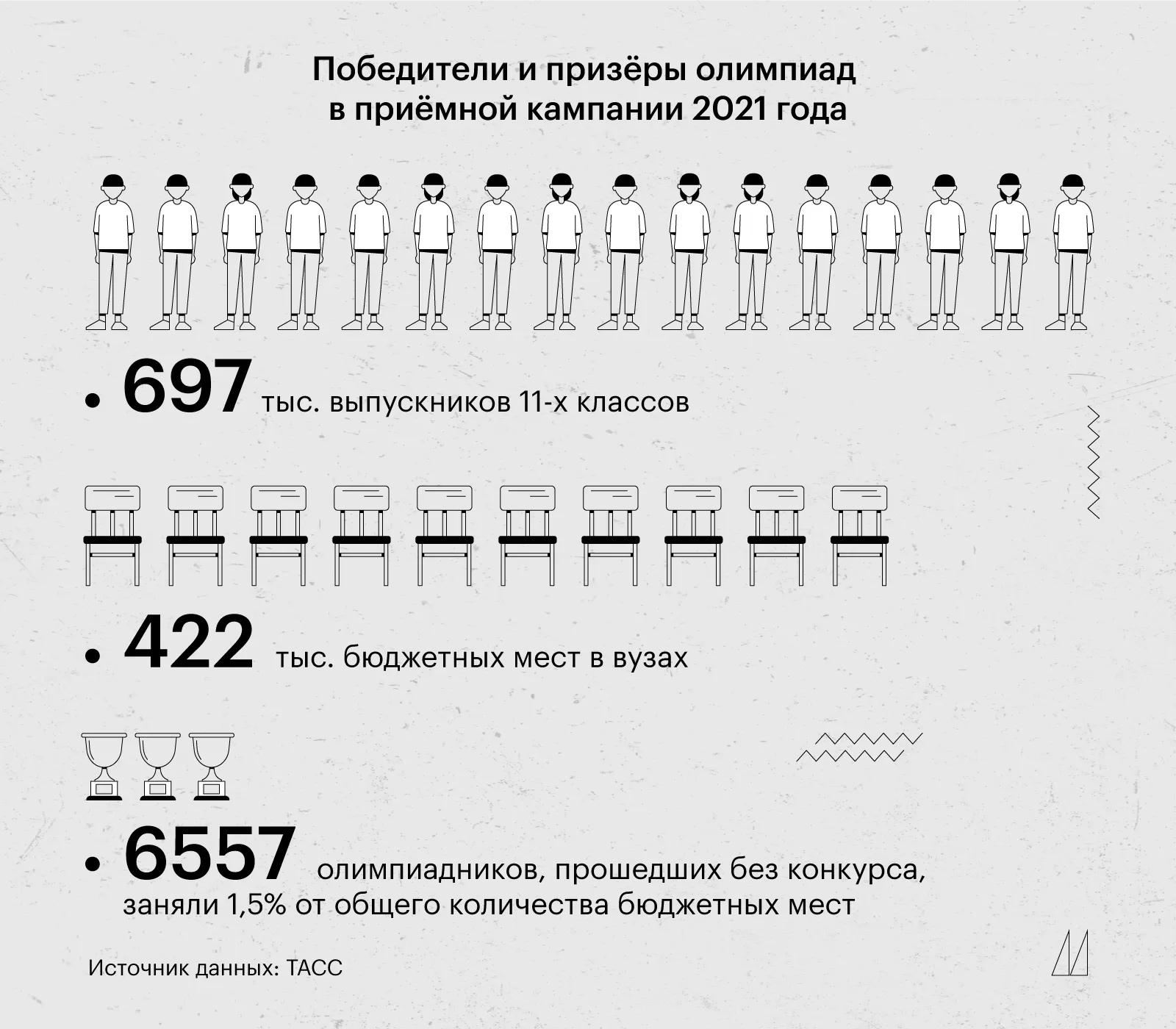
In 2021, the admissions campaign was highly competitive, as it was conducted Under the new rules, admissions took place in a single wave, not two. State-funded places in the most sought-after programs at prestigious universities were primarily occupied by Olympiad winners. At some universities, this led to a shortage of places even for applicants with high Unified State Exam scores. In response, the head of the Ministry of Education and Science, Valery Falkov, proposed tightening the requirements for applicants. As a result, according to the updated admissions rules, the benefits for Olympiad winners have become less significant. However, it is worth asking: how large a share of Olympiad winners is among the total number of high school graduates? Statistics show that the main reason is the high concentration of Olympiad winners among applicants to top universities, as well as the limited number of state-funded places in the most popular fields of study. In March, the Minister of Science and Higher Education, Valery Falkov, announced the number of state-funded places for eleventh-graders, stating that every second high school graduate will be able to secure a place at a university. Details of the issues surrounding this year's admissions campaign can be found in our analysis. We also covered information on the number of budget places allocated to universities for the next academic year, 2022/23.
What are the highest places Russian universities took in world rankings
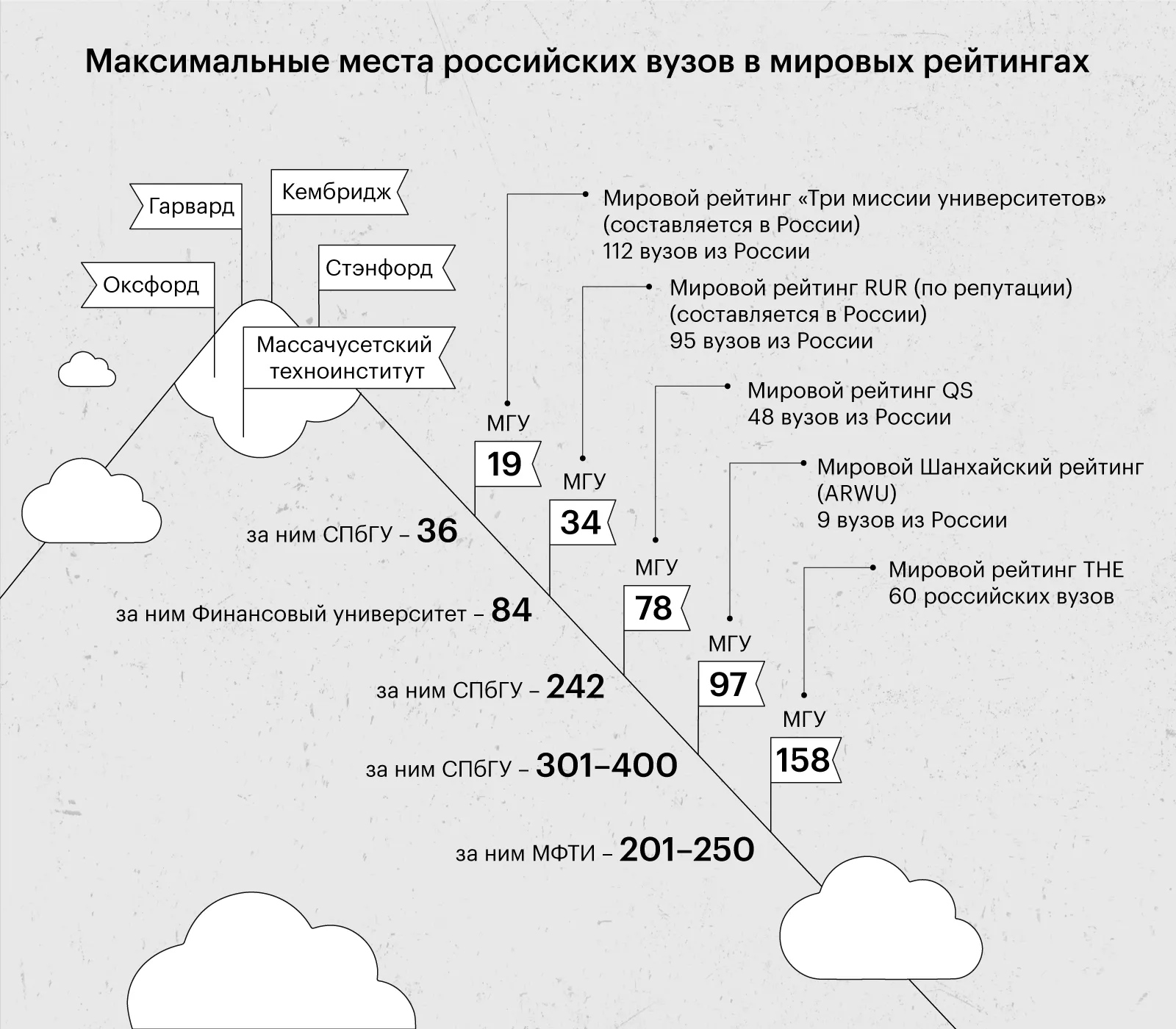
This year, Russian universities have made significant progress in international rankings, showing better results than in previous years. Forty-eight Russian universities were represented in the latest QS World University Rankings, 16 more than last year. Russia ranked fourth in the number of universities in the ranking, ahead of the United States, where 177 universities are represented, the United Kingdom with 90 universities, and China with 58. This demonstrates the growing influence of Russian educational institutions on the global stage and their ability to compete with leading universities in other countries.
Sixty Russian universities were included in the THE ranking of the best universities in the world. The previous list included 48 participants from Russia, while the year before there were 39. Despite this increase, Russian universities do not yet occupy places in the top 10, with the exception of the Three University Missions rankings and the RUR reputation ranking. However, it is worth noting that these two lists are compiled in Russia, which may affect their results.
This year, the number of Russian universities in the Shanghai Ranking of World Universities (ARWU) has decreased compared to last year.
Among Russian universities, Moscow State University (MSU) consistently occupies leading positions in the rankings.
In subject rankings, which evaluate the success of universities in specific fields, Russian universities occupy higher positions. For example, in the THE ranking, Moscow State University (MSU) is ranked 44th in Arts and Humanities, and the Moscow Institute of Physics and Technology (MIPT) ranks 71st and 72nd in Physical Science and Computer Science, respectively. Furthermore, Moscow State University and Moscow Institute of Physics and Technology (MIPT) were ranked among the top 10 best universities in developing countries by THE. These results highlight the strengths of Russian universities in their specialized fields.
For information on Russian university rankings, we recommend reading our previous article. It contains useful links and recommendations for choosing educational institutions, as well as information about the various criteria used to evaluate educational institutions in Russia.
It became known about the major reform of the open source software
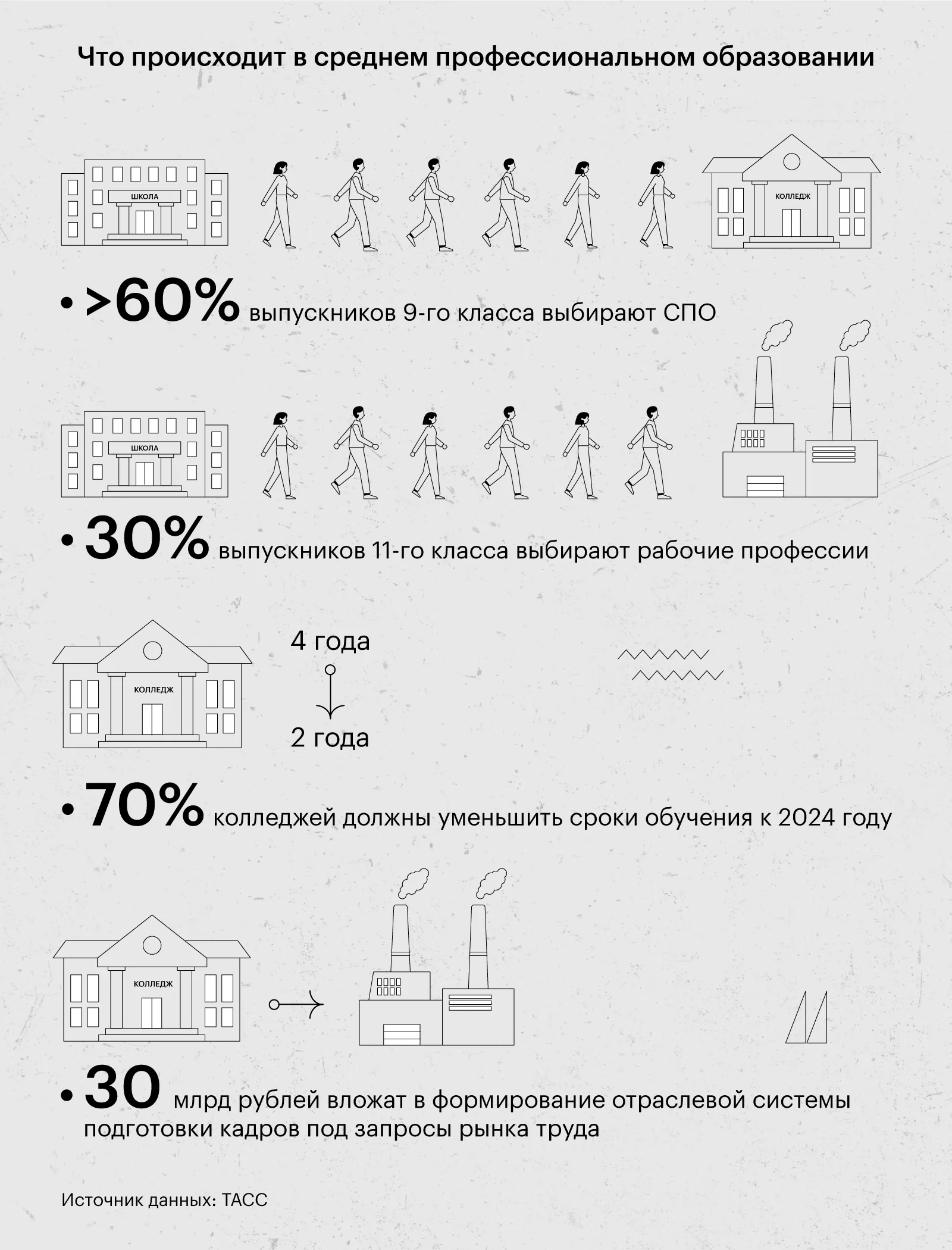
In 2023, the authorities announced plans to reform the secondary vocational education (SVE) system. The main changes concern shortening the length of training and introducing a new level of education—professionalism. Emphasis will also be placed on adapting educational programs to the needs of employers, which will improve the quality of specialist training and their competitiveness in the labor market. These measures are aimed at improving vocational education and aligning it with modern requirements.
Deputy Prime Minister Tatyana Golikova presented numerical data regarding the state of education and the labor market in Russia. We examined this topic in detail in a recent article. Furthermore, plans to develop the college-factory model in the country were announced. In our report, we also discussed how we plan to address the gap between the education system and the demands of the labor market.
The central topics of the year include the psycho-emotional problems of students.
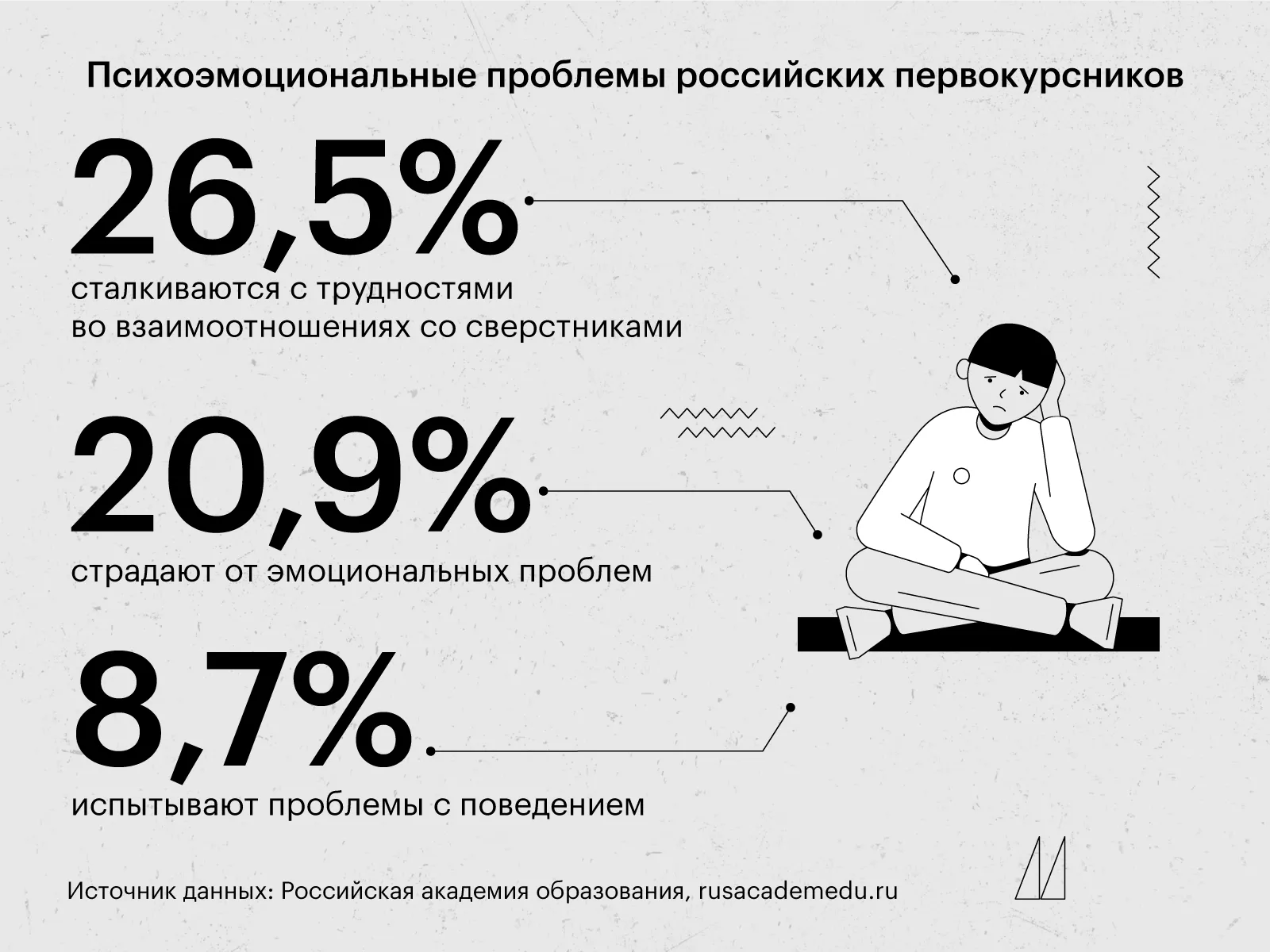
The past year will be remembered for two tragedies involving shootings at educational institutions – in Kazan and Perm. These events once again raised questions about safety in schools and universities, as well as the psychological and emotional problems faced by schoolchildren and students. A study conducted by scientists at the Russian Academy of Education (RAE) revealed serious emotional and behavioral problems among first-year students, which is alarming and requires the attention of society and educational institutions.
RAE President Olga Vasilyeva emphasized the importance of actively developing psychological services in educational institutions, including schools, colleges, and universities. This statement became especially relevant following the tragic incident in which a first-year student at Perm State University committed a mass murder on the university campus. In response to such situations, it is necessary to implement effective preventive measures, including psychological support for students, to prevent similar tragedies in the future and create a safe educational environment.
A competitive selection of universities for grants under the Priority program took place
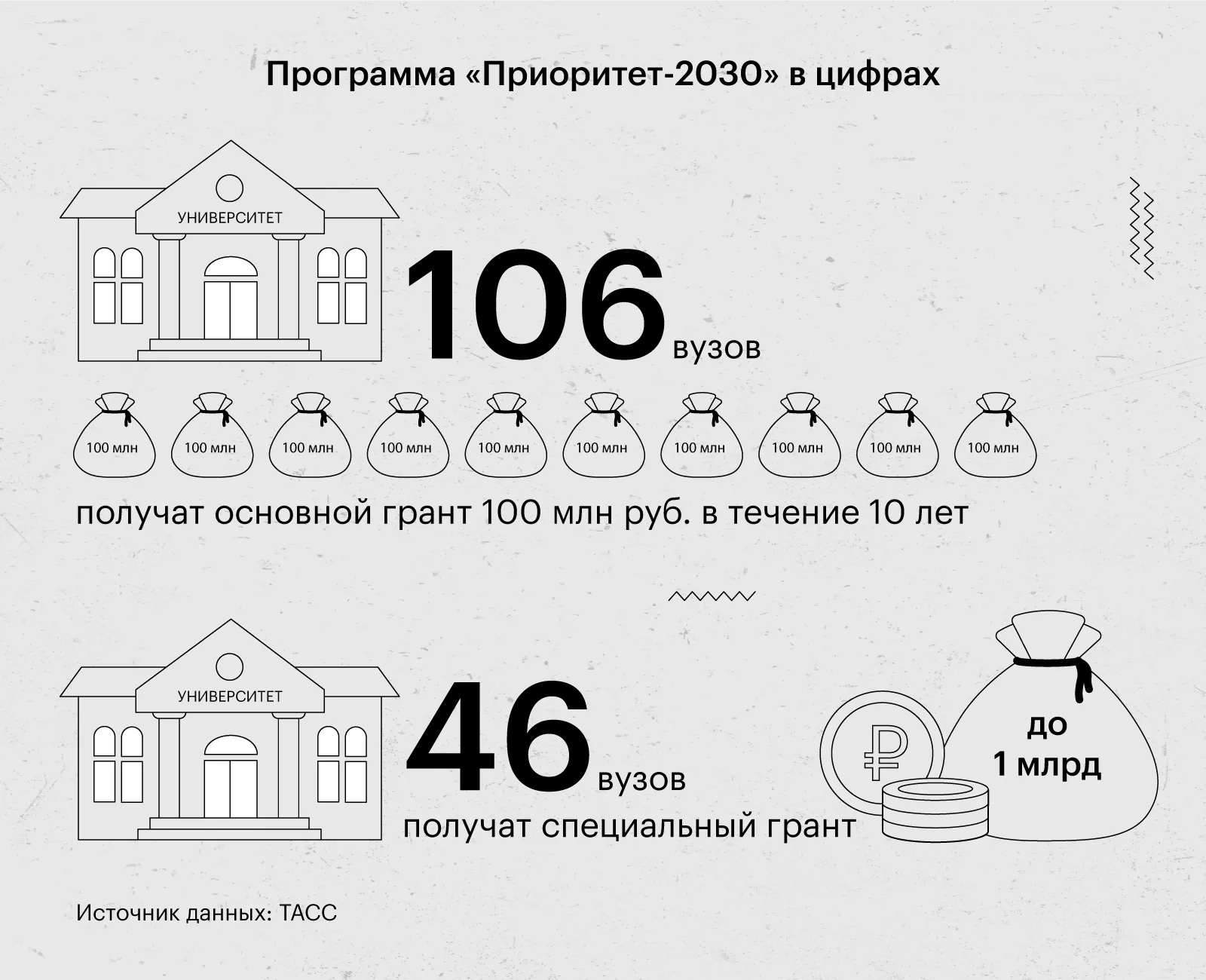
This year, a key event for many universities was participation in the Priority 2030 program, which is the largest Russian project for state support of universities. Strict criteria were established for the selection of program participants, requiring universities to develop development strategies that include a contribution to regional development and an increase in the production of knowledge-intensive products. It was expected that about 240 universities would submit applications, but in the end, only 191 were submitted. This may indicate that many educational institutions do not meet the established requirements.
At the end of September, a list of universities selected to participate in the Priority 2030 program, which will receive the main grant, was published. In early October, 46 universities that received special grants were also named. However, some believe that grants are not fully contributing to the improvement of Russian higher education. The effectiveness of these grants and their impact on the quality of education continues to be debated, and many experts emphasize the need for a comprehensive approach to reforming the education system.
The "Priority 2030" project envisions the introduction of over 300 new specializations at higher education institutions. This will allow students to acquire relevant knowledge and skills that meet the demands of the modern labor market. These new specializations will help increase graduates' competitiveness and ensure their successful careers in various industries. The implementation of such programs will be an important step towards modernizing the educational system and training specialists capable of coping with the challenges of the future.
How many university teachers do we have?
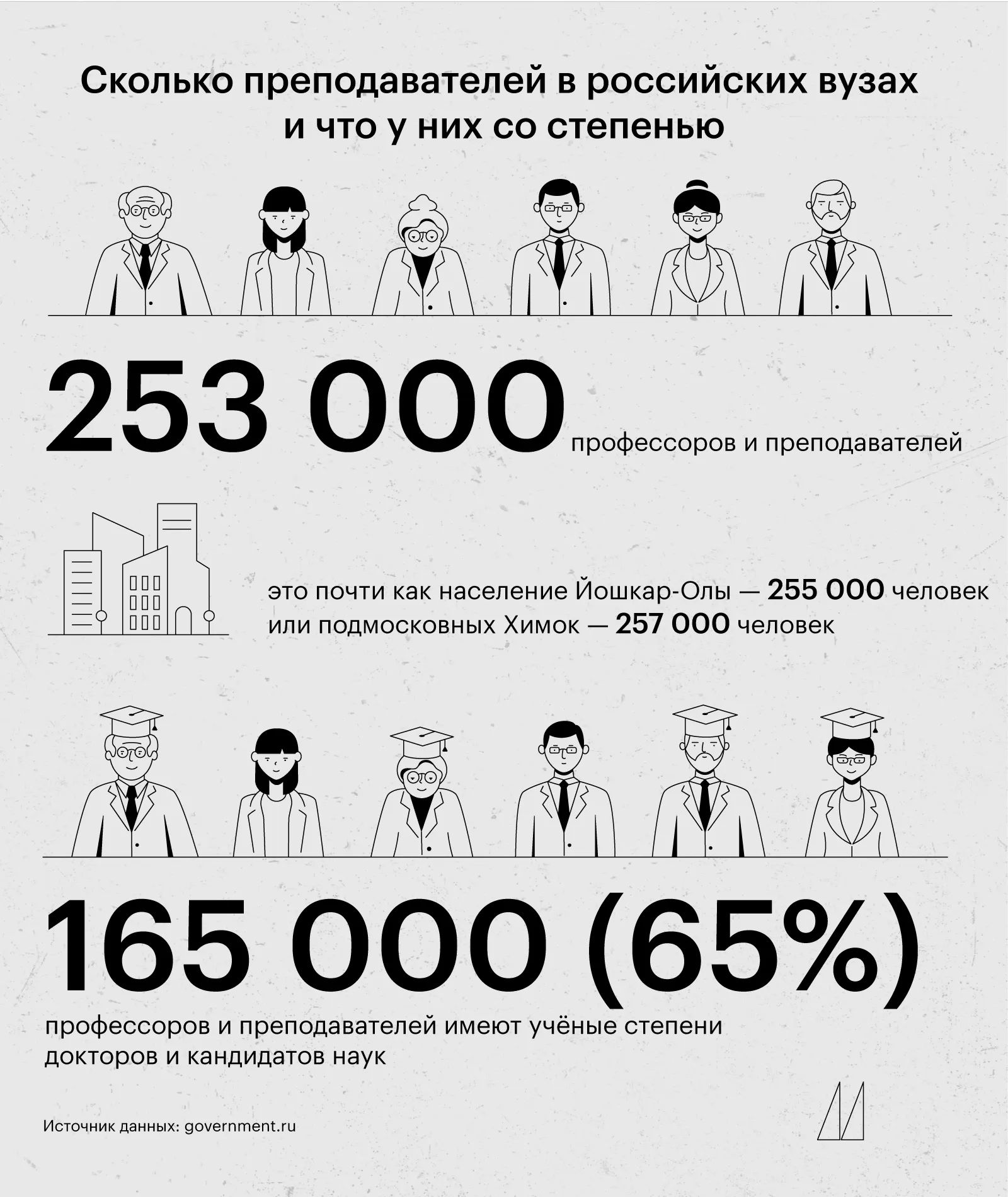
In 2021, a new professional holiday was established for higher education teachers, which was celebrated for the first time on November 19. In honor of this event, Deputy Prime Minister of the Russian Federation Dmitry Chernyshenko presented statistics on the teaching profession. According to the HSE data collection "Russian Education in Figures" for 2020/2021, the number of faculty members was 223,100. However, the government may have more recent and accurate data on the number of teachers in higher education institutions in Russia.
Everything is moving towards a blended learning format
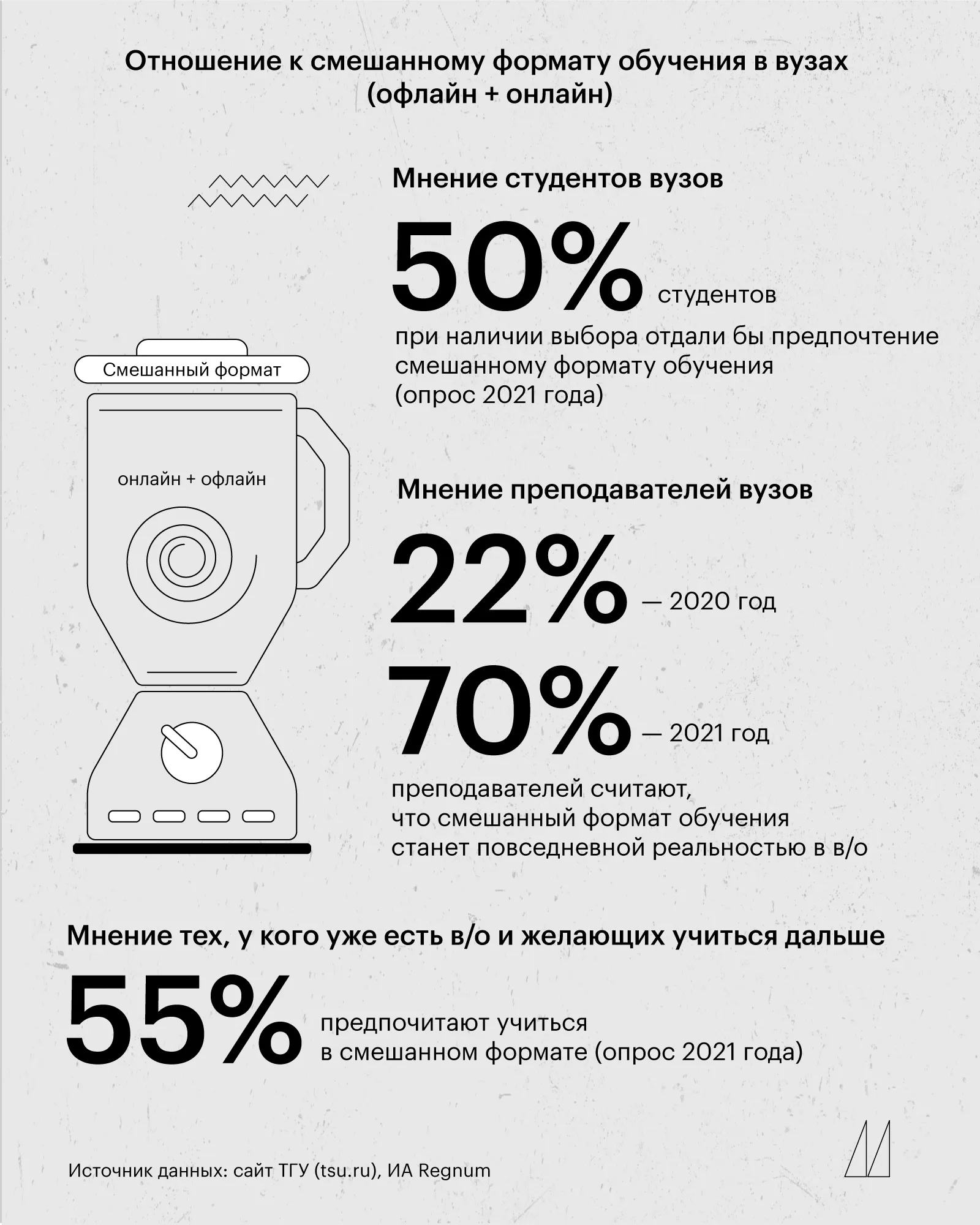
2020 was a year of abrupt transition to online learning, accompanied by numerous negative consequences. In 2021, we are seeing a desire for a more balanced approach to the online format. We are beginning to realize that even after the pandemic ends, online learning will remain relevant as it is convenient and in demand among students. This is especially true for adult learners. A blended format that combines online lessons with traditional offline classes appears to be the most effective solution. This approach allows for flexibility and variety in the educational process, which contributes to better learning and increased student motivation.
The analytical report "Quality of Education in Russian Universities: What We Learned During the Pandemic," presented by the Ministry of Education and Science, has become an important indicator for higher education. It provides an in-depth analysis of changes in the educational process during the pandemic. In the area of continuing professional education, the results of a survey conducted by Netology and the Russia – Land of Opportunities platform among Russians with higher education are significant. These studies highlight current trends and needs in the educational sector, which are important for improving the quality and accessibility of education in Russia.
In 2021, Chinese researchers conducted a study that demonstrated that the traditional offline learning format remains the most effective. A blended format combining online and offline elements ranks second in effectiveness. These results highlight the importance of personal interaction in the educational process and point to the advantages of the traditional approach.
It turned out that most teachers in Russia are not sufficiently trained
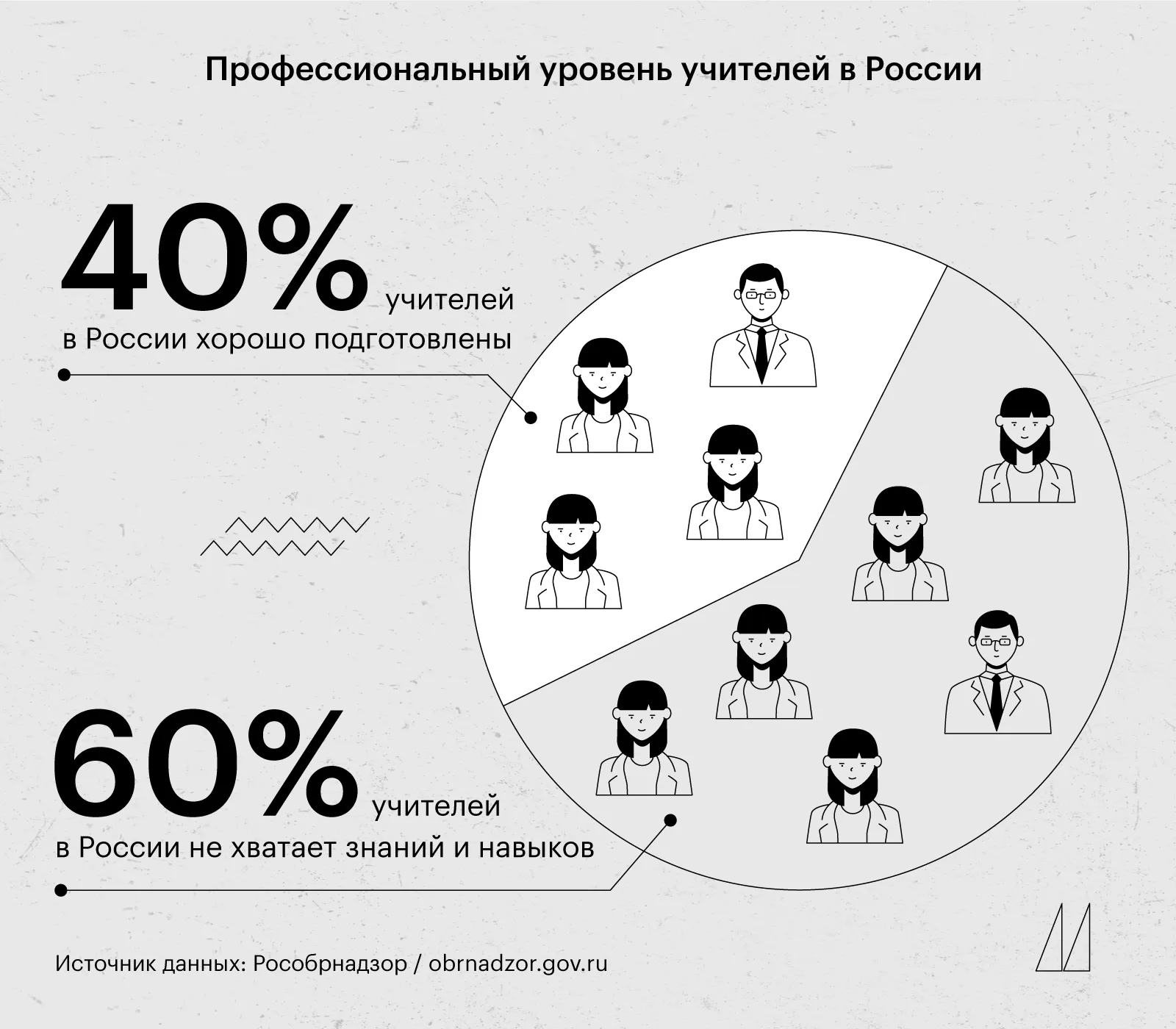
In June, the head of Rosobrnadzor, Anzor Muzaev, presented the results of a three-year analysis of school teachers' competency assessments. It turned out that only a small proportion of teachers are well trained, while the majority lack subject and methodological preparation. This demonstrates the need to pay attention to those teachers who lack knowledge and skills. It is important that pedagogical universities and regional institutes for advanced training focus their efforts on improving the training of these specialists.
A reform of teacher training is planned in Russia. Education Minister Sergei Kravtsov announced this at the St. Petersburg International Economic Forum. Valentina Matviyenko, Speaker of the Federation Council, noted the importance of changing the teacher training system in her congratulatory article for Rossiyskaya Gazeta. She emphasized that future teachers should graduate from universities not with outdated knowledge, but with modern skills that meet the demands of the times. This will ensure high-quality education and prepare specialists capable of working effectively in a rapidly changing world.
The Moscow State University of Psychology and Education (MSUPE) has developed a project to modernize the methodological training of future teachers, which has received approval from the Russian Academy of Education (RAO), the Ministry of Education, and the Ministry of Science and Higher Education. Additionally, the HSE Institute of Education, with the support of the Segalovich Foundation, conducted a study proposing new approaches to teaching teachers digital skills. In Russia, there are also plans to introduce a procedure for independent assessment of teachers' qualifications, which will raise the standards of pedagogical education and improve the quality of teaching in educational institutions.
How much are teachers paid and do they consider their salaries decent?
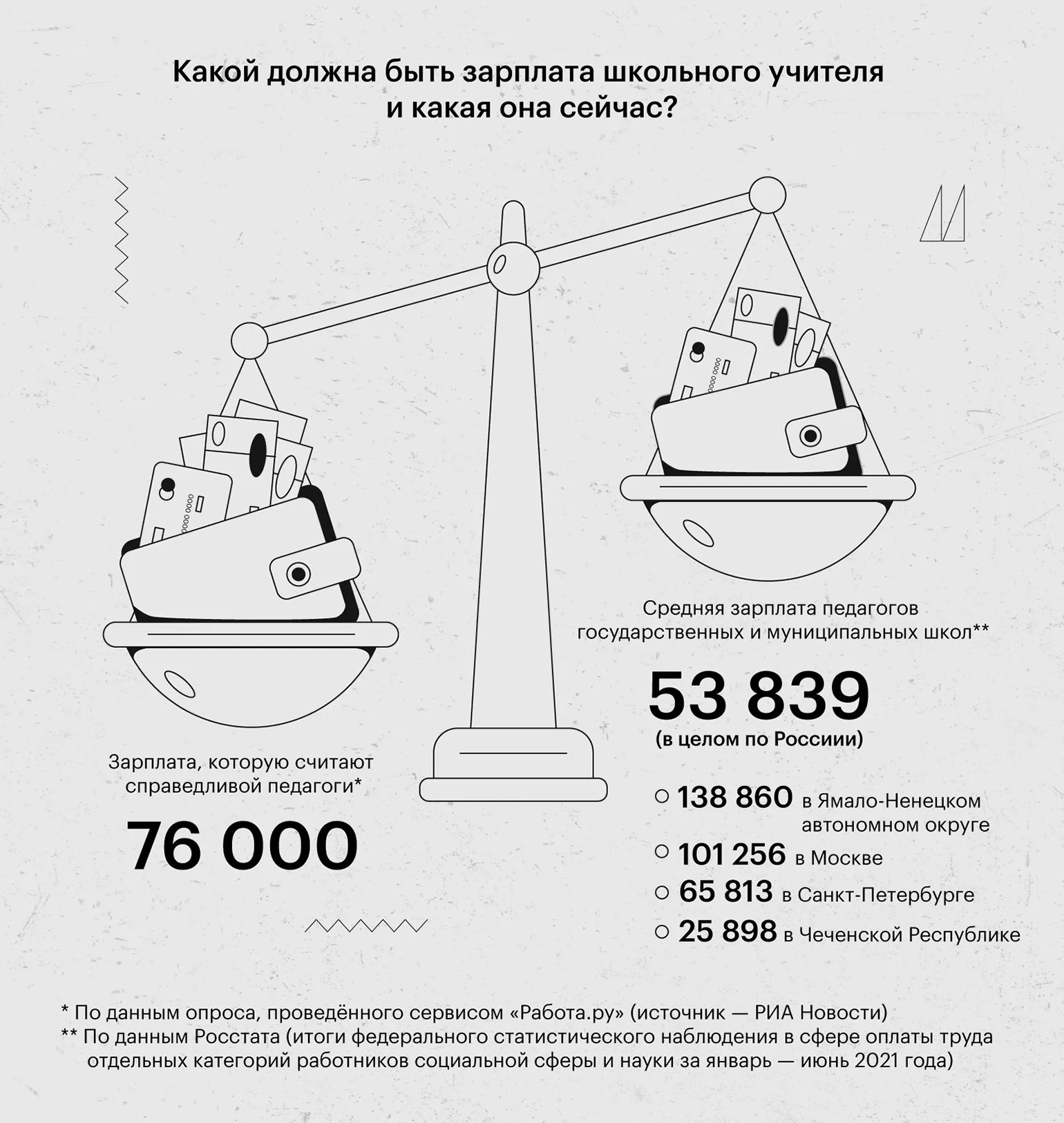
In 2021, the topic of teachers' salaries became a subject of active discussion. The Russian President set the task of developing proposals to improve the teacher remuneration system. In response, the Ministry of Education prepared a draft resolution on the implementation of a unified salary calculation model that takes into account teachers' qualifications. The existing problem is the significant gap in teacher salaries across the country. For example, in Moscow, the average teacher salary reaches 101,000 rubles per month, while in the Tambov region this figure is only 35,000 rubles. In some regions, teacher salaries are even lower, highlighting the need to reform the remuneration system in the education sector.
The Rabota.ru service conducted a study to determine what teachers consider a fair salary. The data was obtained from a source, RIA Novosti. We also compared this figure with the average salary of school teachers across Russia as a whole and in specific regions. For this study, we used Rosstat data based on the results of a federal statistical survey of salaries in the social sector and science for January–June 2021.
In December, at a conference dedicated to the memory of A.A. Pinsky, Tatyana Klyachko, Director of the Center for Continuous Education Economics at the Institute of Economics and Social Research at RANEPA, presented the latest results of a monitoring study on the effectiveness of educational institutions. According to a survey conducted among nearly 2,100 teachers, 53% of respondents reported that their salary in 2021 was less than 25,000 rubles. These data highlight the challenges teachers face and draw attention to the need to raise salaries in the education sector to improve the quality of teaching.
The idea of life-long learning has not turned out to be so popular
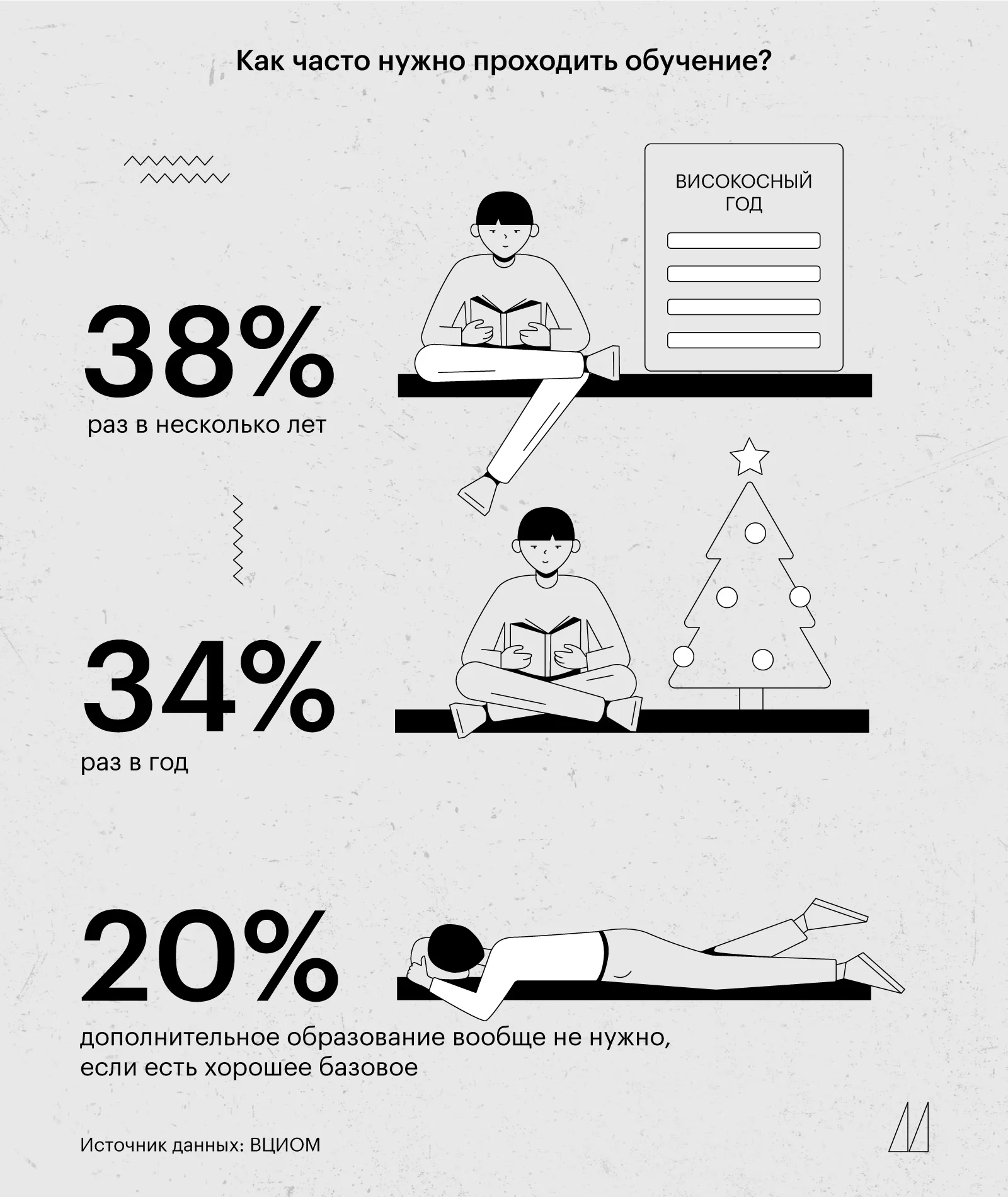
VCIOM conducted a survey of 1,600 Russians about their experiences with and attitudes toward supplementary education. The survey results showed that the majority of respondents believe that learning is necessary periodically, every few years. However, 20% of respondents see no point in continuing education, believing that they already have sufficient basic education. More than half of respondents (51%) do not plan to continue their education in the future. Only 28% of survey participants have completed any courses or training in the past year. These data highlight the importance of discussing the role of supplementary education in modern society and the need to raise awareness of its benefits.
At the YaC/e and eSTARS conferences held at the end of the year, Alexander Laryanovsky, Managing Partner and Director of Business Development at Skyeng, noted that the share of the population interested in supplementary education is indeed small. This indicates that all those involved in adult education face competition for a limited audience. In this situation, it is crucial to find effective approaches and strategies to attract new clients and retain existing ones. The development of unique educational programs and the use of modern technologies can become key factors for success in this segment.
The micro-learning format in corporate training seems to be overestimated.
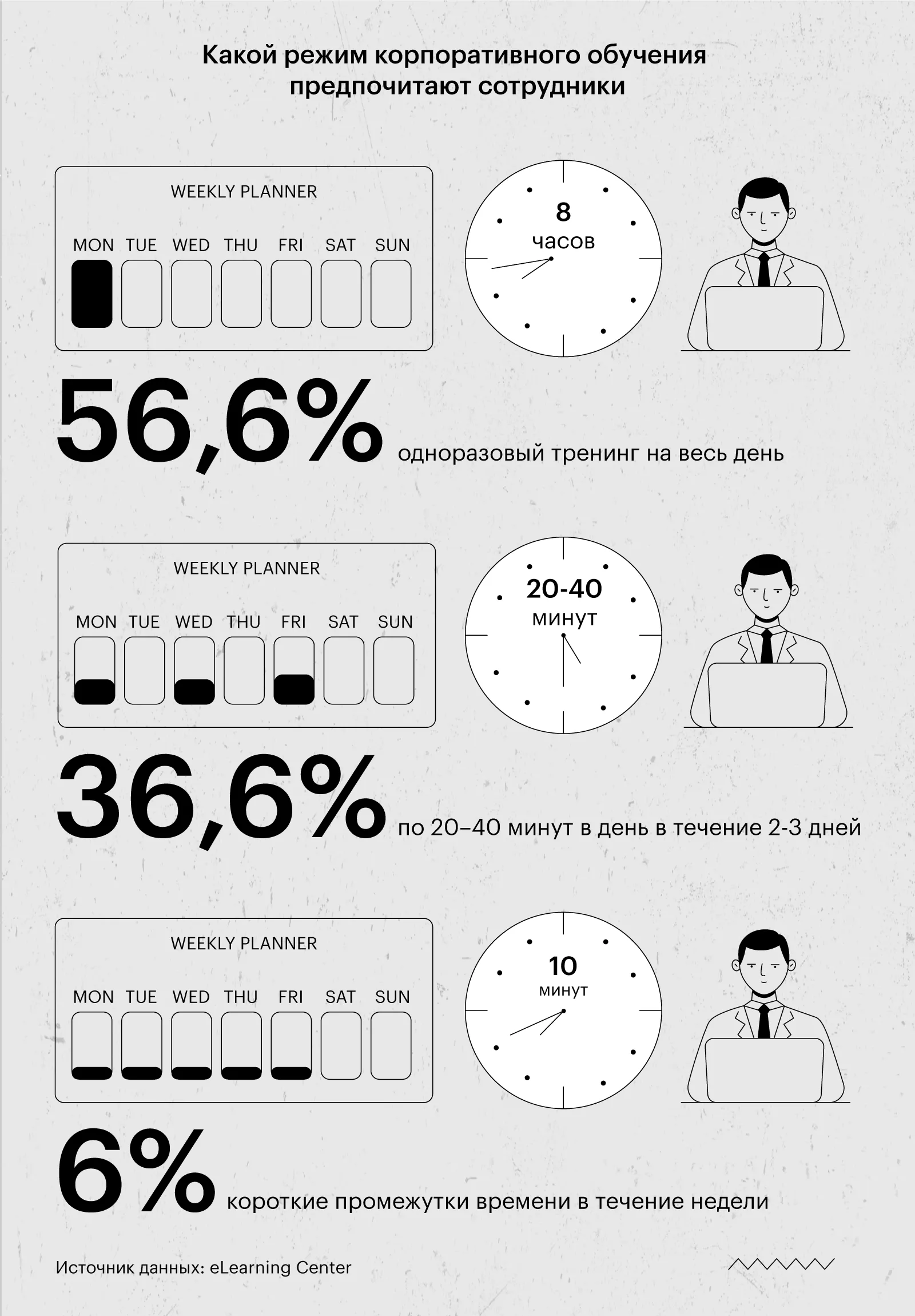
In 2023, two significant studies were published on trends in corporate training. The first was published by SberUniversity with the support of the HSE Institute of Education. We have prepared a detailed analysis of the key findings. The second study, conducted by eLearning Center, was titled "Research on the Preferences of E-Learning Learners - 2021." It identified employee expectations for corporate training, as well as their preferences and criticisms of existing programs. One of the most surprising findings of this study was that many employees do not support the idea of spreading training out into small chunks over a long period of time. This calls into question the relevance of the microlearning trend in corporate training, which has been popular in recent years.
Employees often face overload from work, training, and life circumstances. Learning doesn't exist in isolation and doesn't provide additional time; 30 minutes aren't added to the day. This creates a significant challenge for educational program design in the new year: how to effectively educate busy and overwhelmed people without alienating them from educational initiatives? Elena Tikhomirova, CEO of the eLearning Center, wrote about this in her Telegram channel, “Live Learning.”
Read also:
- 10 online education trends named by EdTech leaders
- How psychological factors influence the effectiveness of online learning
Project Manager in Online Education
You'll learn how to manage projects, assemble a team, produce courses, and build a financial model. You'll be able to find a high-paying job or open your own online school.
Find out more