Table of Contents:
- Balance: A State That Requires Constant Attention
- Effective Game Design: The Basics on Paper
- The Importance of Player Roles in Shooters
- Emotional Response in Game Design
- Intuition and Mental Models in Game Design
- The Concept of Yomi in Game Interaction
- Immersion in Flow: How to Create the Perfect Feeling of Shooting
- The Art of Game Design: Lessons from Ketchup Heinz
Game Designer from Zero to PRO: 7 Steps to Success in the Industry
Learn MoreBalance: A State That Requires Constant Attention
According to expert Jamie Griesemer, balance in games is not only a process, but also a stable state that can be both achieved and maintained. He emphasizes that this state remains unchanged, even when other aspects of the game are subject to change. The key is the ability to recognize the moment when balance is achieved and making the decision to maintain it. This allows developers to create more harmonious game mechanics and provide players with a high-quality experience.
An example of balance problems in games is the situation with Halo 2 after its release. Bungie developers discovered that when testing multiplayer with real players, the game was perceived completely differently than during development and internal testing. This highlights the importance of testing with audiences to achieve optimal game balance. A professional approach to testing and analyzing player feedback can significantly improve gameplay and user satisfaction.
Bungie was initially unable to determine the nature of the issue, but it soon became apparent that it was a balance issue. To address this, the studio released a major patch that changed the characteristics of several game elements. It is noteworthy that the sniper rifle remained unchanged, as it was initially well balanced.
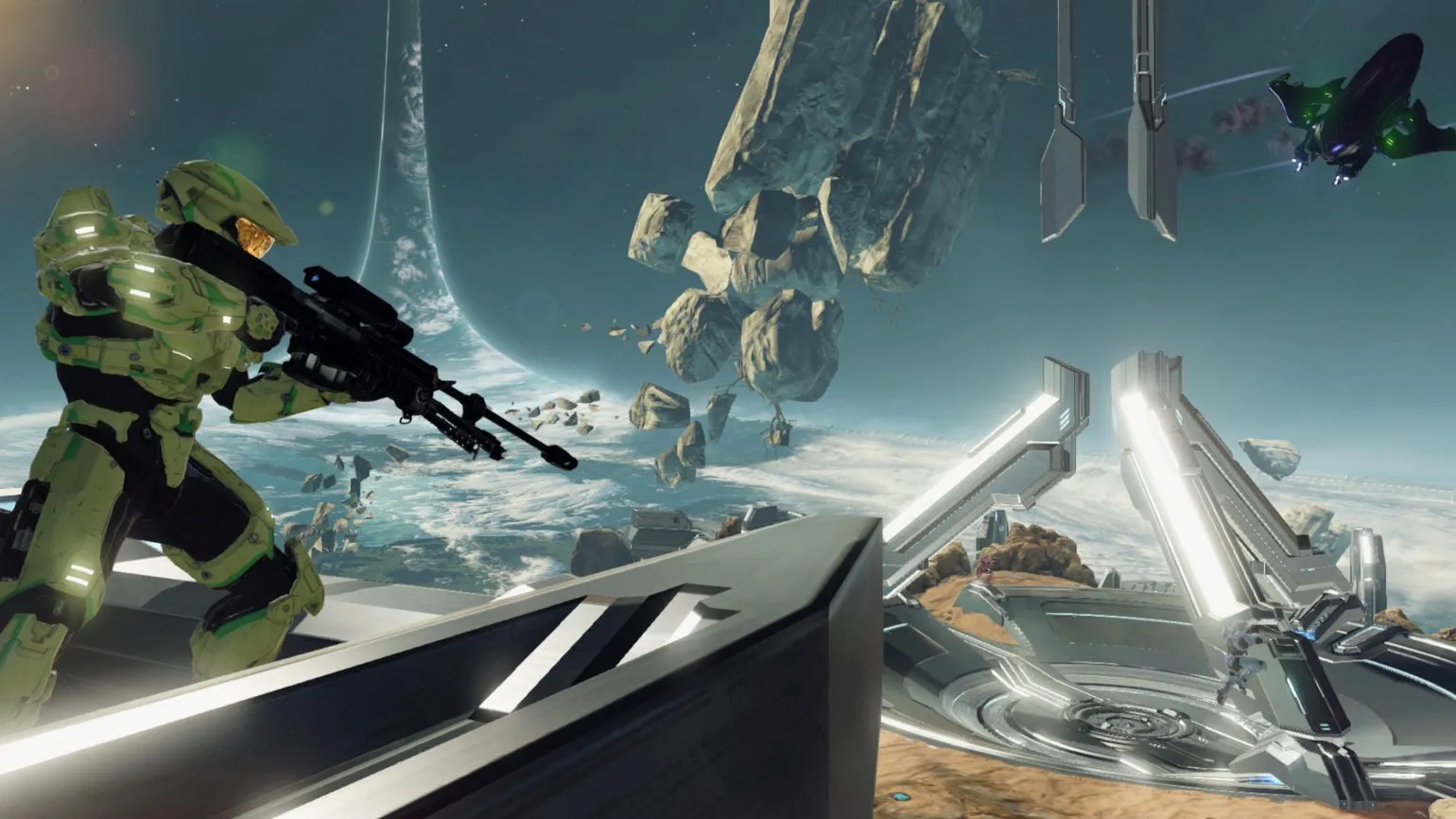
Halo 2 Halo 2 became a cultural phenomenon in the video game industry, grossing a record-breaking $125 million in its first 24 hours of release. It remained the most popular online game on the Xbox console for a long time, attracting millions of players worldwide. The success of Halo 2 not only cemented the franchise's standing, but also had a significant impact on the development of multiplayer games and online communities, securing its status as one of the most important games of its generation.
Achieving sustainable balance like that achieved with the sniper rifle in Halo 2 is a complex task. Often, this aspect of development is postponed until later, leading to a vicious cycle: early balance work is necessary, but it can be difficult to begin until the project has reached a playable state. It is important to focus on balancing early in development to avoid future problems and ensure the best possible gaming experience.
Constant rework and crunch during Halo 2's development exacerbated existing problems. To avoid repeating these mistakes in the development of Halo 3, Griesemer implemented a unique methodology called "block balancing." This methodology streamlined workflows and improved time and resource management, ultimately contributing to the successful completion of the project without significant rework. The "block balancing" methodology incorporates key aspects that the Halo 3 developers applied to weapon optimization. This approach creates a harmonious interaction between various weapon types, ensuring their effectiveness in gameplay. Important elements of this methodology include analyzing the characteristics of each weapon, its interaction with game mechanics, and balancing based on player feedback. All of these factors contribute to creating a fun and fair gaming experience that allows players to choose weapons based on their playstyle and preferences.
- Weapon Role: clearly defining the scenarios for using each unit in combat.
- Flow: creating a weapon that allows the player to feel in the flow and avoid running into problems caused by design decisions.
- Power: analyzing quantitative metrics, including damage.
- Constraints: identifying factors that will prevent a weapon from exceeding its role.
- Exceptions: identifying unique characteristics that make each weapon special.
- Feel: understanding the emotions the player experiences when using a particular weapon in combat.
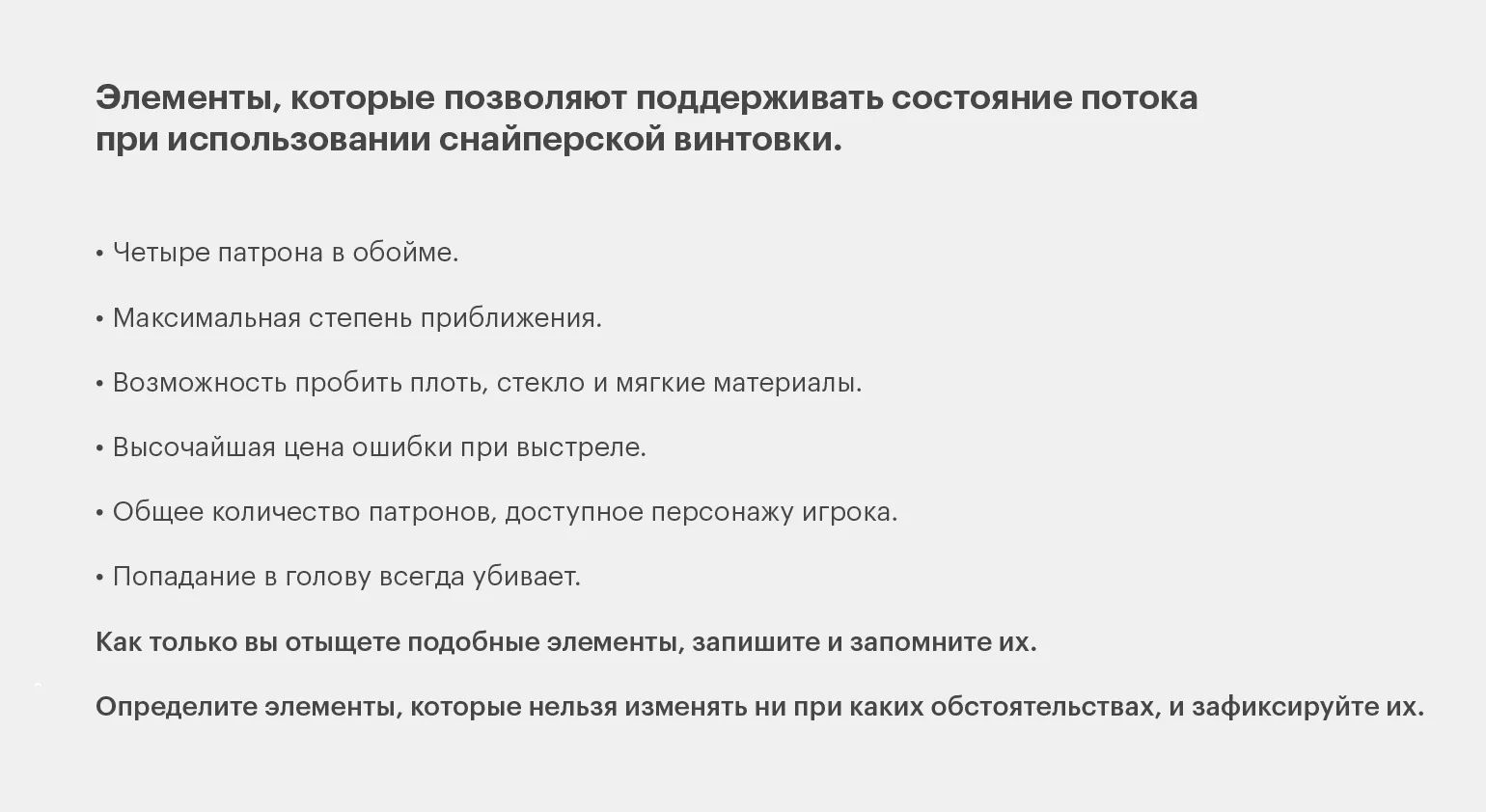
Developers following the Griesemer Method are required to adhere to a strict rule: once one of the blocks is selected, it is impossible to go back to the previous one. The main idea of this method is to fix the state of each element at each stage of development. This helps to avoid imbalances and provides structure to the process. This makes development more predictable and efficient, which in turn contributes to the creation of a high-quality product.
Despite the completion of all weapon change blocks, this does not preclude the possibility of further adjustments. Designers can make changes, but they must adhere to the pre-established blocks. This ensures consistency and balance in the game, allowing for improvements without disrupting the overall structure.
If the developers have concluded that a shotgun is effective at short ranges, all changes should adhere to this principle. Rather than reducing damage or increasing spread, it makes more sense to focus on mechanisms that maintain balance and improve gameplay. This could include improving reload speed, increasing accuracy at close range, or introducing unique features that highlight the shotgun's strength in its primary role. This approach will preserve its uniqueness and effectiveness in gameplay.
Effective Game Design: The Basics on Paper
Game development should begin with the creation of a design document, as emphasized by expert Jamie Griesemer. This stage in game design is key and can significantly save resources such as time, effort, and money. In the initial stage, when ideas are clear, changes and adjustments are made much easier and at a lower cost. This is especially important, since at later stages, when the concept moves into the game environment, making changes becomes complex and requires more resources. Properly developing a design document at the initial stage ensures a clear understanding of all aspects of the game and helps avoid unnecessary costs in the future.
A design document, or design doc, is a standard practice in the gaming industry, starting with almost all development teams. This document serves as an important repository of game information and helps ensure everyone involved in the project is on the same page. Developers can refer to the design doc for clarification on various aspects of gameplay if they have questions. In some cases, these documents can be hundreds of pages long, highlighting their importance and breadth. Effective use of a design document improves communication within the team and enhances the quality of the final product.
During the paper design phase, it's important to clearly define the roles of various game elements, including equipment. Griesemer emphasizes that understanding the weapon's application in various gameplay scenarios is key. For example, sniper rifles are designed specifically for long-range combat, making them indispensable in gameplay. Proper distribution of weapon roles helps improve game balance and increase player engagement.
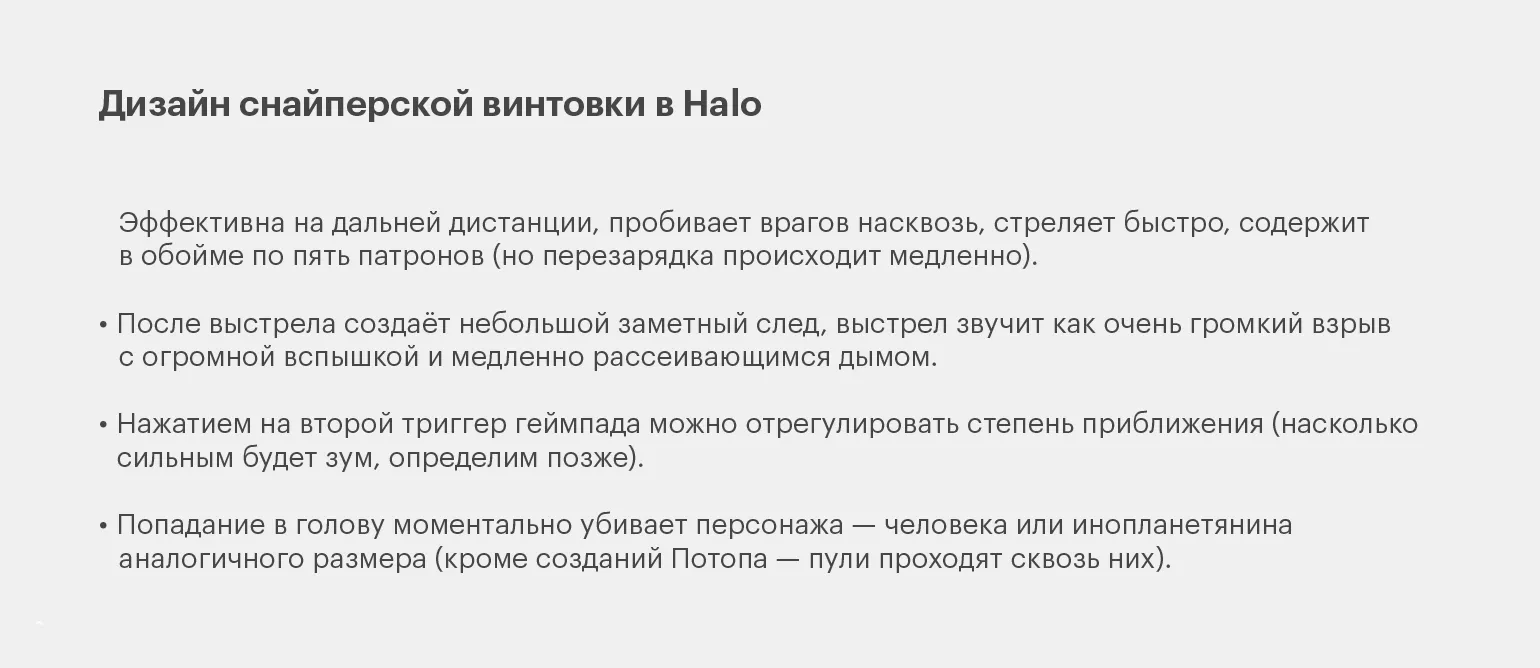
During the development of the first Halo game, the team encountered certain difficulties in detailing the sniper rifle. Some parameters, such as zoom magnification, were left undefined. However, this did not significantly impact the overall balance of the game, as key characteristics, including range, rate of fire, and reload speed, were clearly defined. These elements became the foundation for creating unique gameplay and ensured that players could effectively use the sniper rifle in various gameplay situations.
Paying attention to detail in the documentation is important. In Halo 3, the developers significantly improved the process of describing weapons. The design documents clearly indicate the roles of various weapons and the level of scope scaling. These changes play a key role in balancing the gameplay, which in turn improves the overall gaming experience.
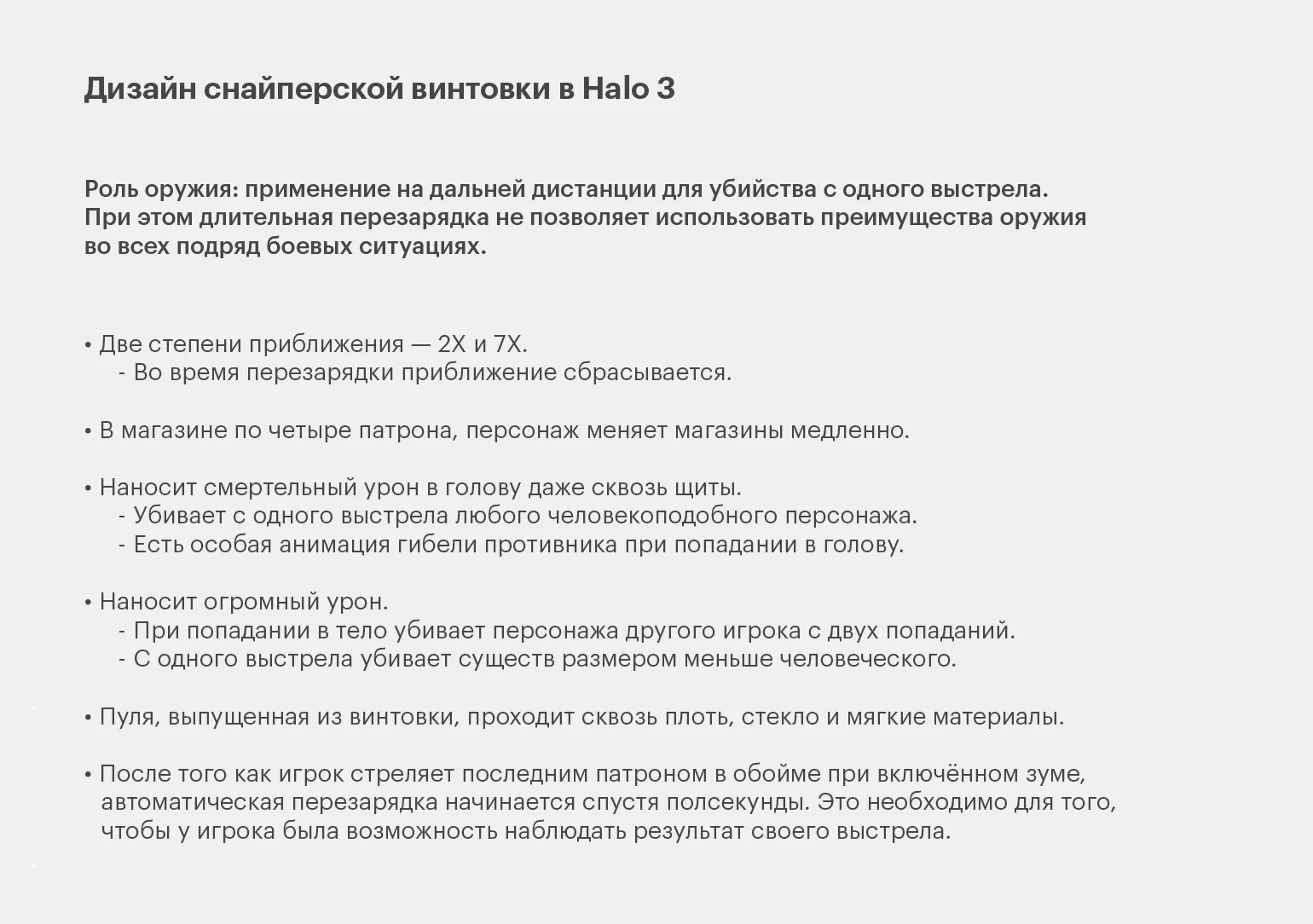
Bungie carefully considered the tactile sensations of weapon use. For example, the half-second delay when exiting aiming mode after reloading plays a key role. This delay helps players comprehend the impact of their shot, significantly improving the overall perception of gameplay. This attention to detail creates a deeper and more immersive gaming experience, which makes players more engaged in the action and increases their satisfaction with the game.
Jamie Griesemer emphasizes the importance of including only the necessary information in the document, avoiding redundancy. Clarity and conciseness are key aspects in creating a design document. This not only improves the perception of information but also makes the document easier to work with. Focusing on the core elements helps effectively communicate the project's ideas and goals, which facilitates successful communication between all stakeholders.
The Importance of Player Roles in Shooters
Creating player roles requires careful design, starting with paper prototypes. This stage allows developers to evaluate different roles and compare weapons to find the balance between simplicity and complexity. If a weapon's role is too simplistic, players may quickly lose interest, while excessive complexity can lead to fatigue and reduce the effectiveness of the item. Finding a happy medium is important to ensure players enjoy the gameplay and are able to use their abilities effectively. Properly designing player roles contributes to a fun and balanced gaming experience.
Role variety is key to giving weapons value and enhancing gameplay. Players should have a clear understanding of which equipment is best suited for specific situations. However, many developers make the mistake of creating multiple drawbacks for different weapons, which leads to a dilution of their uniqueness. Griesemer emphasizes that this practice is risky, as it complicates meaningful choices for players. It's important to balance advantages and disadvantages so that each weapon category retains its own identity and allows players to make strategically informed decisions.
Different roles between weapons create an important asymmetry necessary for achieving successful gameplay balance. Players are required to adapt to changing conditions, which, according to developers, is the basis for deep and engaging gameplay. For example, in Halo, the sniper rifle serves as the only long-range weapon, which distinguishes it from many other shooters that feature a variety of similar weapons. This approach is justified by the need to provide unique roles for each weapon type, which makes the gameplay more complex and engaging. Diversity in weapon use not only enhances the strategic elements of the game, but also helps create unique tactics and playstyles for each player.
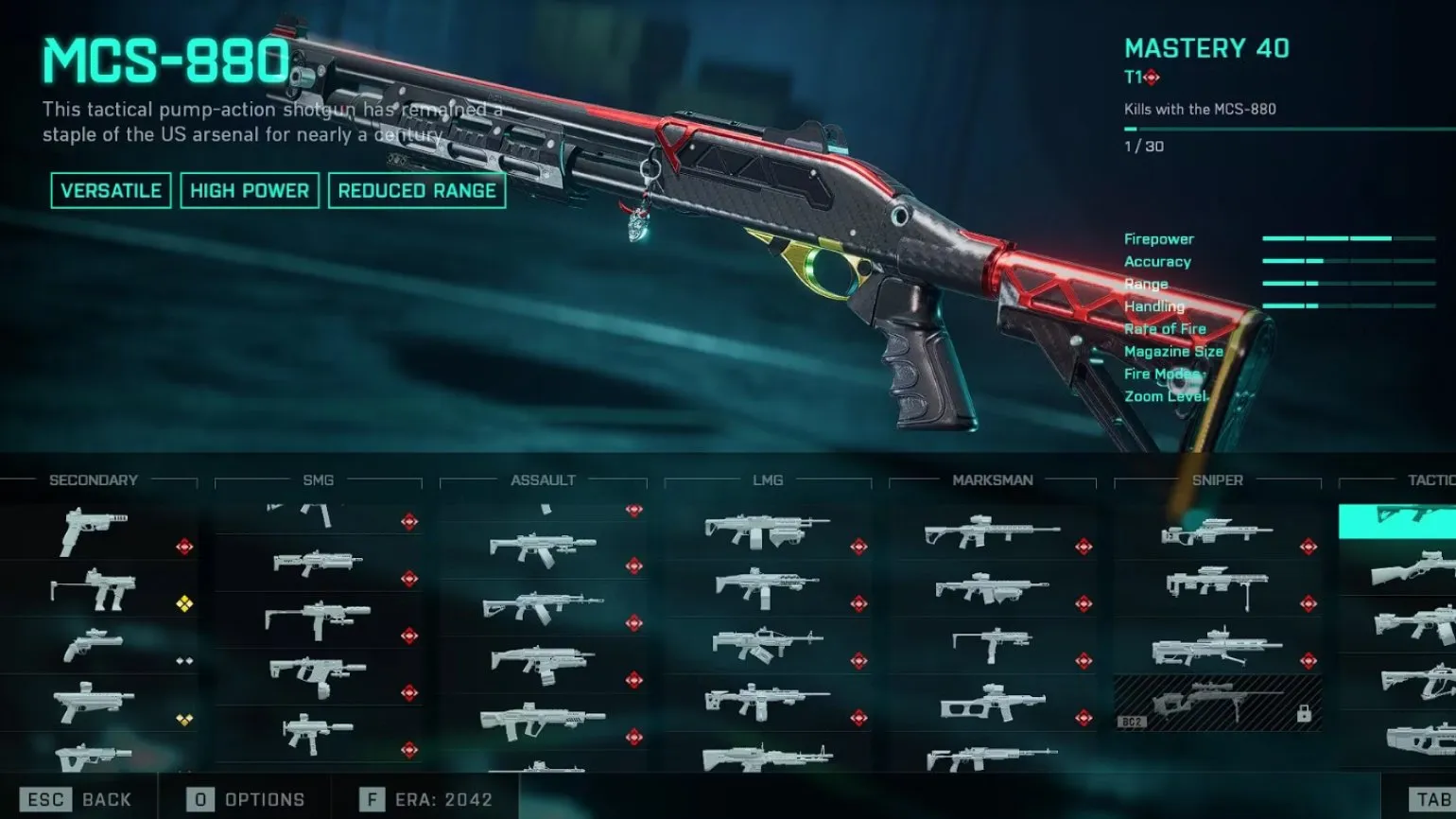
The oversaturation of similar weapons leads to a decrease in the value of roles in games. This makes weapon selection chaotic and reduces the depth of gameplay. Bungie aims to avoid this problem by introducing new weapons with clearly defined, unique roles. This approach not only diversifies the gameplay experience but also allows players to more consciously choose weapons based on their individual characteristics. The unique roles of each weapon contribute to more engaging and strategic gameplay, which in turn retains player interest and promotes long-term engagement.
Shotguns were absent from the original Halo, which is surprising given their status as a powerful close-combat weapon. Bungie believed that other weapons already filled this niche. However, the shotgun was added shortly before release, highlighting the importance of diversity in the arsenal for a complete gaming experience. This decision reflects the developers' commitment to creating a balanced and engaging gaming environment where each weapon fulfills a unique role.
When developing shooters, it's important to remember that key roles shouldn't be left unfilled. Players must be able to effectively engage at various ranges. This explains the similarity of arsenals in most games in the genre, which isn't a result of laziness on the part of the developers, but rather a necessity for maintaining gameplay balance. Balancing weapons and roles creates a dynamic and engaging gameplay experience where every player can demonstrate their skills, regardless of their chosen strategy.
Griezmer emphasizes the importance of not interfering with game designers' work in the early stages of development. Feedback is important, but at the beginning of a project, it's best to give developers maximum creative freedom. They are often able to identify the flaws in their ideas themselves, and unnecessary comments can distract them from their primary work.
A minimalist approach to the design and balancing of game elements helps prevent the dominance of one specific element, be it a strategy or a weapon, which may become the preferred choice of most players. This undesirable phenomenon negatively impacts gameplay and atmosphere, which developers like Grizmer strive to avoid. Creating a harmonious and varied game environment allows players to explore various tactics and choices, which in turn increases interest and retention. Balancing game elements is key to a successful gaming experience that not only attracts new players but also retains existing ones.
Emotional Response in Game Design
Good game design is based on a deep understanding of the emotional response of players. Designers must be able to form correct expectations from the gameplay, which allows them to assess in advance the impact of various items and mechanics on the overall atmosphere of the game. For example, some weapons can cause chaos, while others provide predictability and order. Expert Jamie Griesemer notes that the emotional coloring of a game is not always an indicator of its quality - different audiences seek different gaming experiences. This aspect is important for creating an engaging and memorable gaming experience that will satisfy the needs of various categories of players.
A key aspect of a successful project is a deep understanding of the target audience. If the project is focused on esports, all game mechanics must be predictable and balanced. Developers need to clearly understand the preferences of players in order to create a relevant and attractive gaming experience. This will help not only with user retention but also with attracting new audiences. Clear interaction with players and analysis of their feedback allow us to improve the project and adapt it to current trends in esports.
Intuition and Mental Models in Game Design
Griesmer emphasizes that designers should actively use their intuition, based on experience and scientific principles. The development process contributes to the formation of mental models that facilitate informed decision-making. The more time a designer devotes to work, the more accurately they can predict player reactions. This allows them not only to improve the quality of projects but also to create more engaging game mechanics that meet the expectations and needs of the audience. Developing intuitive perception, combined with analytical data, is becoming a key factor in success in game design.
An intuitive game interface is key to successful gameplay. Players should be able to easily grasp the system and clearly understand how the various game mechanics function. Well-defined roles facilitate the prediction of opponents' actions, which enhances the strategic component of the game. At the same time, unclear mechanics can cause confusion and negatively impact the gaming experience. Therefore, it is important to pay attention to the design and clarity of game elements to ensure a comfortable and engaging experience for players.
The Concept of Yomi in Game Interaction
In Japanese, there is a term "yomi", which translates as "reading the opponent's mind". This concept is a multi-layered strategy in which players must anticipate the opponent's actions. A player first understands their own capabilities, then analyzes the opponent's potential actions, and ultimately assumes that the opponent is aware of their plans. This strategy is especially relevant in games like Street Fighter, where combat psychology and understanding the enemy are crucial. However, in fast-paced shooters like Halo, the need for such in-depth calculations may be unnecessary, as reaction speed and accuracy often play a more crucial role. Nevertheless, knowing about yomi can improve strategic thinking and assist players in various gameplay situations.
Griesmer recommends focusing on the second level of yomi, which contributes to a more accessible and engaging gaming experience. Delving into this aspect allows players to better understand opponent strategies and develop their skills. This not only improves interaction between players but also makes the gameplay more intense and interesting. By focusing on the second level of yomi, you can significantly improve your performance and enjoyment of the game.
Successful game design is based on a harmonious combination of an intuitive approach, a deep understanding of game mechanics, and consideration of player expectations. This requires designers not only to think creatively but also to analyze what attracts the audience. Ensuring this balance allows for the creation of engaging and memorable gaming experiences that will retain players' interest and encourage them to return. Understanding player psychology and their preferences also plays a key role in developing effective game mechanics and interaction elements.
Immersive Flow: How to Create the Perfect Shooting Feel
Creating the perfect gaming experience requires careful consideration of weapon mechanics. It's important to consider how players perceive shooting and interacting with enemies. Every shot should evoke a state of flow, which is key to engagement. For example, Bungie realized that the rate of fire of a sniper rifle needs to be balanced: too slow firing can cause boredom, while too fast results in the loss of the uniqueness of each shot. Proper weapon mechanics not only enhance gameplay but also create an emotional connection between the player and the game, creating a memorable gaming experience.
The emotional perception of shooting in video games significantly depends on visual and sound effects. In the early stages of development, such elements may not exist, so game designers need to use their imagination. Griesemer advises actively pursuing creative approaches, for example, imagining how the impact of a target hit could be enhanced with a dramatic hit marker or a subtle explosion animation. Experimentation and the introduction of new elements play a key role in creating engaging gameplay, making shooting more exciting for players. It's important to not be afraid to innovate to increase the level of engagement and emotion during gameplay.

Creating a rhythm of fire is an important aspect of weapon development in video games. It should not only be satisfying, but also evoke positive emotions in the player. Developers must consider that every detail, including sound and visuals, significantly affects the overall perception of the gameplay. Applying creative approaches, such as unique sound design and memorable visuals, will help make each shooting memorable. This, in turn, can increase player engagement and improve their overall experience in the game.
The Art of Game Design: Lessons from Heinz Ketchup
Game design includes not only the distribution of roles and the pleasure of using a weapon, but also many other aspects. Even under optimal conditions, game balance can be questionable. Therefore, testing should begin early in development, rather than wait until final polish. It's crucial to continually remind the team of the need to create a playable build early on to identify and address balance and gameplay issues early. Timely testing improves the quality of the project and increases player satisfaction.
During weapon testing, it may become apparent that some weapons aren't performing as expected. Expert Jamie Griesemer recommends tailoring each weapon to its intended purpose, likening it to Heinz ketchup, which was designed to maximize flavor. This means each weapon should demonstrate its strength in a specific situation: a shotgun should be effective at close range, while a sniper rifle excels at longer ranges. Avoiding the dominance of one weapon type is crucial to maintaining balance and ensuring a variety of strategies. It's important that each weapon has its own unique characteristics and capabilities, allowing players to use them according to the situation, creating an engaging and harmonious gameplay experience.
During playtesting, it's important to adjust weapon parameters without changing existing balance blocks. Griesemer notes that the fear of worsening existing balance can lead to poor decisions. Failure to optimize balance before release can lead to a negative reaction from players, especially if they've become accustomed to the effectiveness of a particular weapon. Therefore, careful tuning and testing of weapons at this stage is essential to ensure a positive player experience and maintain interest in the game.

Development Halo 3 illustrates the importance of weapon balancing. The sniper rifle in the game proved to be too powerful, allowing players to effectively use it not only at long range but also in close combat. This disrupted the game's balance and negatively impacted gameplay. To improve the quality of the game, the developers should conduct regular playtests, which would allow them to quickly make changes to weapon characteristics without prior notification to testers. This approach could significantly improve gameplay and player satisfaction.
The main issue was the identified high effectiveness of the sniper rifle. The developers considered various solutions, including reducing the ammo count and slowing down the reload time. However, such changes often did not produce the expected results. For example, reducing the ammo count had no noticeable effect on players, while significantly slowing down the reload time was perceived as a serious drawback, degrading gameplay.
The optimal solution was a slight increase in the delay between shots from 500 to 700 milliseconds. This change reduced the sniper rifle's effectiveness at close range while maintaining its unique characteristics and overall gameplay rhythm. This approach balanced gameplay and increased player engagement by allowing for more strategic use of the weapon. The methods Bungie employed in the 2000s may seem outdated given current game design trends, which emphasize equipment usage statistics. However, Griesemer emphasizes that rather than focusing on raw numbers, it's important to consider the player experience and the weapon's role. This approach helps create a sustainable balance throughout the game's lifecycle, improving player engagement and enriching the gameplay experience.
Game Designer from Scratch: 7 Steps to a Career in the Gaming Industry
Want to become a game designer? Learn 7 key steps for a successful start! Read the article.
Find out more