Contents:
- Understanding Hard-Surface Modeling: Basics and Applications
- Key Aspects of Hard-Surface Modeling
- Frequently Asked Questions about Hard-Surface Modeling
- An Innovative Method in Hard Surface Modeling
- Creating a Military Aircraft in Blender: A Step-by-Step Guide
- The Impact of Available Software on 3D Modeling
- Subscribe to our Telegram Channel
3D artist: 7 steps to a successful career
Learn moreUnderstanding Hard-Surface Modeling: Basics and Applications
Hard surface modeling, also known as hard surface, is a technique for creating objects with well-defined geometric shapes. This method provides visual strength and rigidity to objects, making it particularly suitable for the design of various structures. Hard surface modeling is actively used in architecture, industrial design, and the gaming industry, allowing the creation of realistic and detailed models that effectively convey the intended concept.
This approach is actively used in the design of technical objects, including weapons, armor, vehicles, and interior elements in the science fiction genre. Unlike organic modeling, which focuses on creating the forms of people, animals, and plants, Hard Surface focuses on geometric shapes and clear lines, eliminating smooth outlines and deformations of the polygonal mesh. This method allows for the creation of detailed and realistic models, making it indispensable in the development of visual effects and computer graphics. Animation of objects created using the Hard Surface method can be both static and dynamic. With limited mobility, animation includes mechanized movements, such as rotating gears, opening a cockpit, or precise rotations of planes. These elements add realism and visual interest, making Hard Surface animation in demand in a variety of projects. Hard Surface modeling is widely used in video games, the film industry, and architectural design. This approach allows for the creation of detailed and realistic models of solid objects, which is especially important for modern digital products. An example of the successful application of hard-surface modeling is the game "Cyberpunk 2077", where the high quality of the models emphasizes the level of elaboration and visual aesthetics. The use of this method in gaming and film projects helps to create an engaging and believable visual experience for users.
Key aspects of hard-surface modeling
- Clear geometric shapes and lines
- Absence of smooth outlines and deformations
- Use in the design of equipment and interiors
- Mechanized animations
Frequently asked questions about hard-surface modeling
The main difference between hard-surface and organic modeling is their approaches to object creation. Hard-surface modeling focuses on solid, clearly defined forms, such as machines, buildings, and other man-made structures. Organic modeling, meanwhile, focuses on creating fluid and natural forms, such as characters, animals, and natural elements. These two approaches require different techniques and tools, making them unique in the field of 3D modeling. Hard-surface and organic modeling play important roles in creating visual content for games, film, and animation, each with its own characteristics and applications. Hard-surface modeling is an important aspect of 3D design, used in modern video games and films to create realistic objects. You can find impressive examples of hard-surface models in films such as Blade Runner 2049 and Star Wars. These films showcase high-quality modeling that helps create an immersive visual experience. If you're interested in learning hard-surface modeling, check out these pieces for inspiration and insight.
An Innovative Method in Hard Surface Modeling
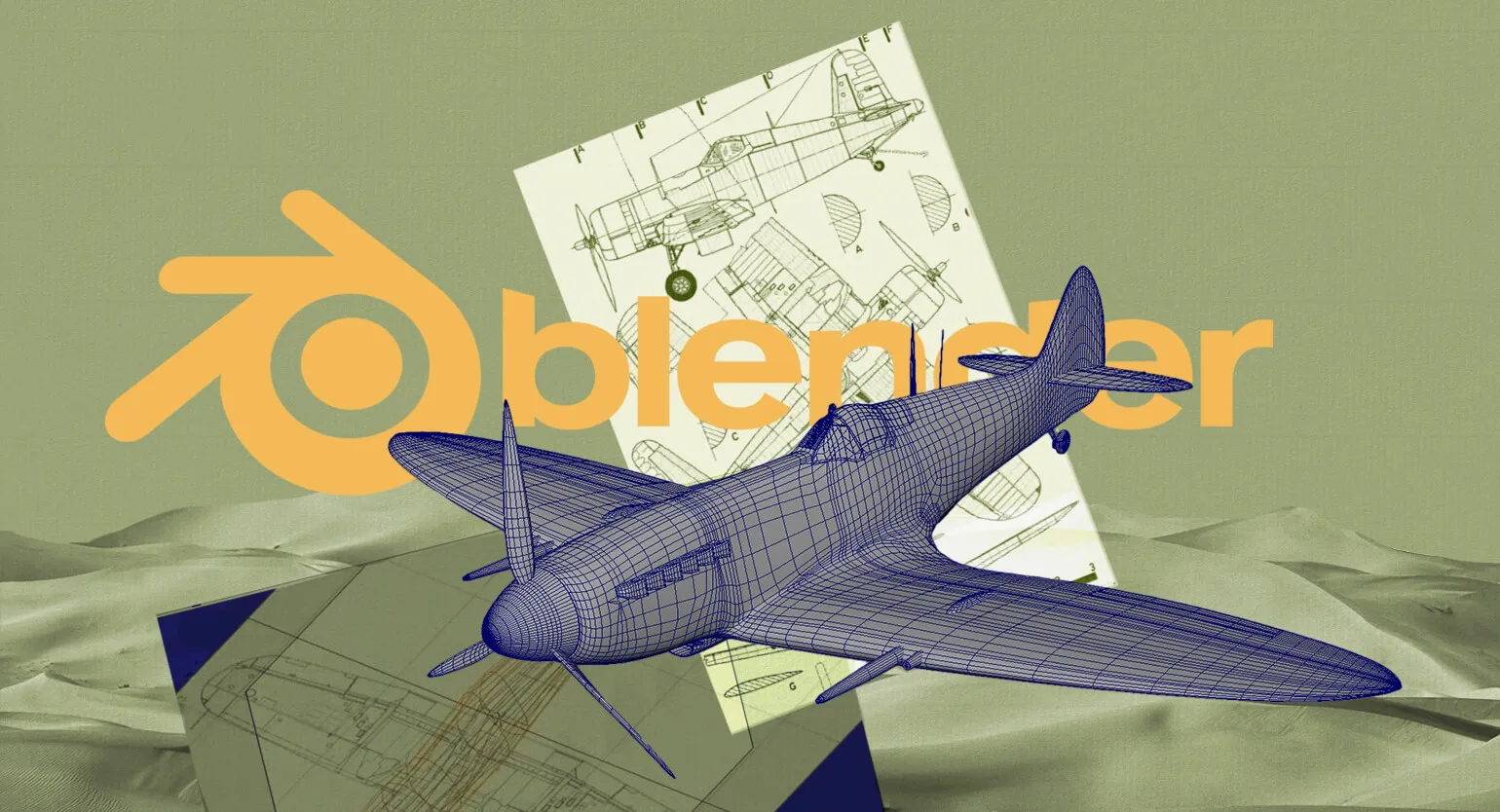
Pedro Augusto, a 3D artist, conducted an interesting experiment by creating a fighter jet model entirely in Blender. His work demonstrated that this powerful tool can achieve high detail and quality in a short time, without the need for third-party software. This approach highlights Blender's potential as a versatile 3D modeling solution and opens up new horizons for artists seeking to create realistic and complex models.
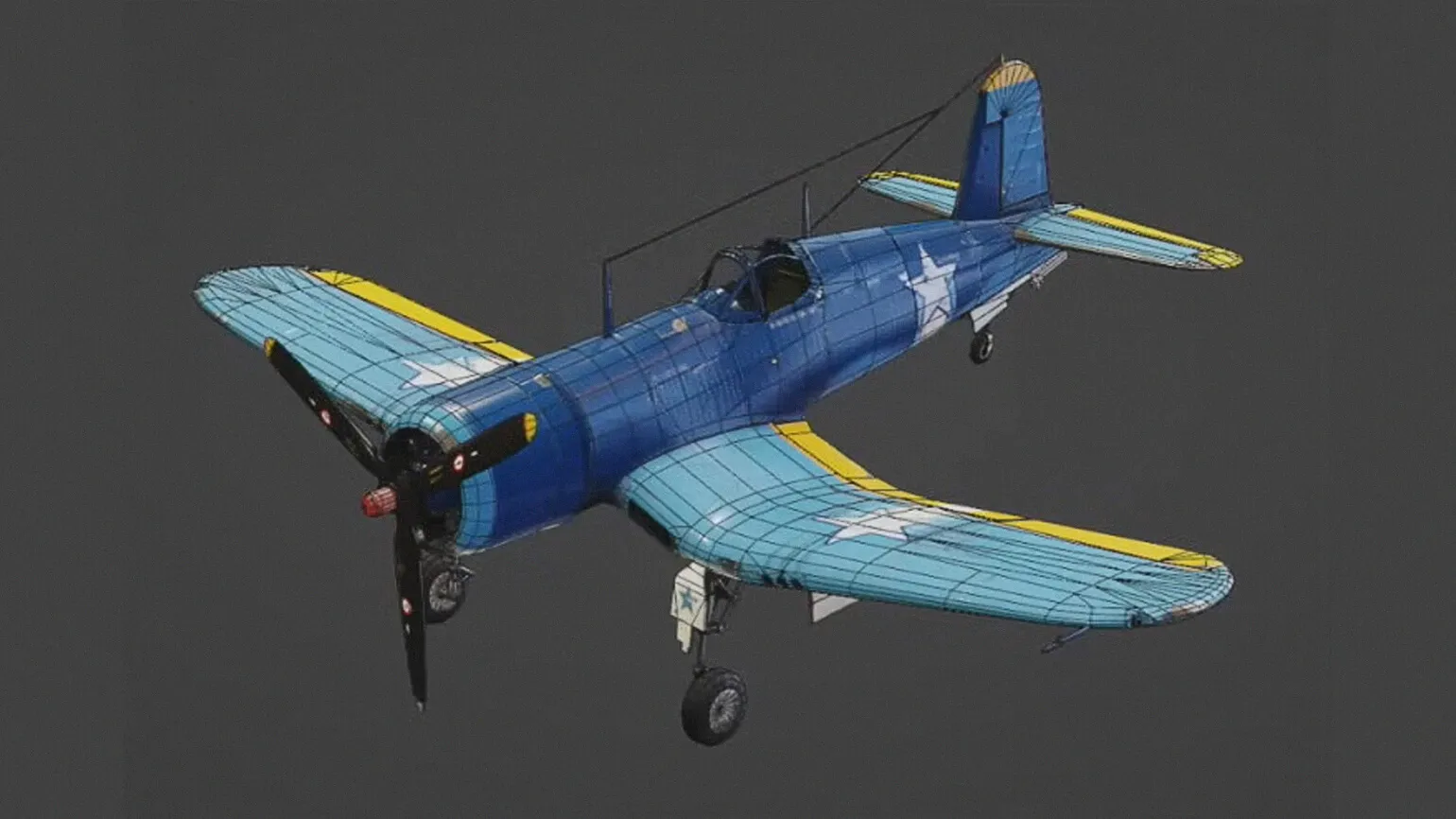
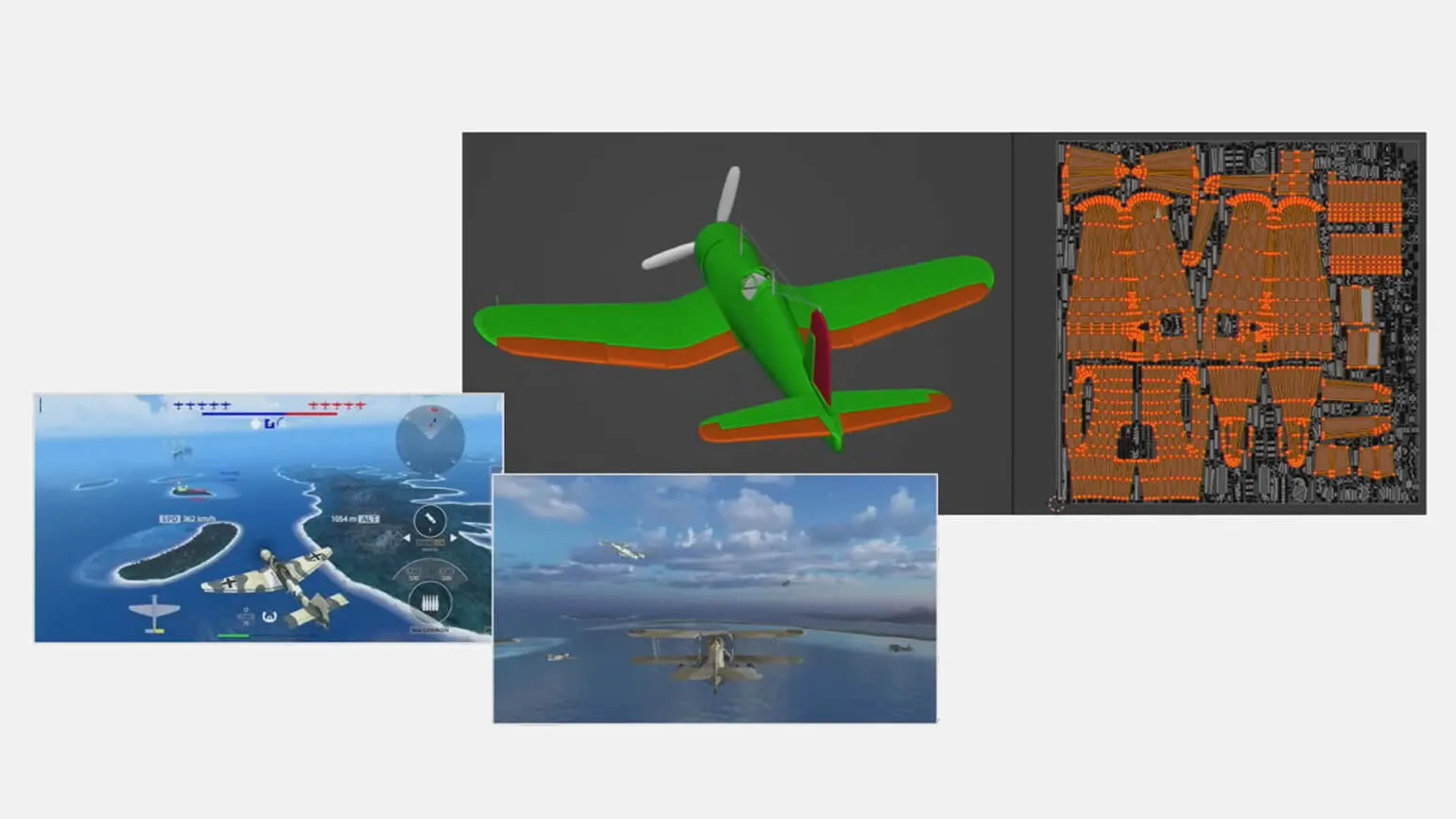
The image shows one of the military aircraft designed by Pedro. The artist emphasizes that it takes him only 8-10 days to create a model ready for integration into the game engine. He also eliminates the normal baking step from the high-poly model, making his work method unique. This approach speeds up the development process and increases the efficiency of game asset creation.
3D artists typically follow a standard workflow, which includes creating concept art, developing high-poly models, subsequent polygon reduction, UV unwrapping, and texture baking. However, Pedro's approach stands out for its uniqueness and innovation. He offers alternative working methods that can significantly simplify and speed up the process of creating 3D models while ensuring high quality and detail. This unconventional approach allows 3D artists to explore new creative horizons and create unique visual solutions.
Pedro skips the concepting and high-poly modeling stages, which is due to the specific nature of online game development. In such projects, speed of asset creation is crucial. Game designers discuss the necessary elements in advance, and Pedro begins modeling without preliminary concept art. This approach allows him to quickly respond to changes in gameplay and effectively integrate new ideas into the project.
To create a high-quality low-poly model, Pedro follows several important steps. First, it is necessary to define the concept of the model, which will help in the further process. Then, it is important to choose suitable modeling tools, such as Blender or 3ds Max, which are optimal for working with low-poly models.
The next step is to create the basic shape of the model, focusing on the main geometric characteristics. After this, it is important to optimize the polygon count while maintaining proportions and detail. Using textures and materials also plays a key role in creating a visually appealing model.
Attention must be paid to UV unwrapping so that textures are correctly applied to the model. Once all the steps are completed, it is recommended to test the model in different lighting conditions and on various backgrounds to ensure its quality and appeal. Proper lighting and rendering can also significantly improve the final result.
By following these steps, Pedro will be able to create a high-quality low-poly model that meets modern standards and requirements.
- Choosing the right references;
- Organizing references with tools such as PureRef;
- Using modern modeling methods to speed up the process;
- Rational distribution of polygons to preserve texture detail;
- Taking into account the polygon specification.
At the beginning of his work, Pedro searches for images of military aircraft and saves them in the PureRef application. This software allows you to upload images directly via links, significantly speeding up the process of collecting visual content. Using PureRef helps organize your work and makes it easier to find the necessary materials for further analysis and project creation.
For effective modeling of military equipment, drawings with legends, which clearly indicate the location of parts, are the optimal choice. Pedro prefers these drawings because they contain more complete information than standard projections. Using detailed drawings allows for a better understanding of the design and functionality of models, which is especially important in the field of military equipment.
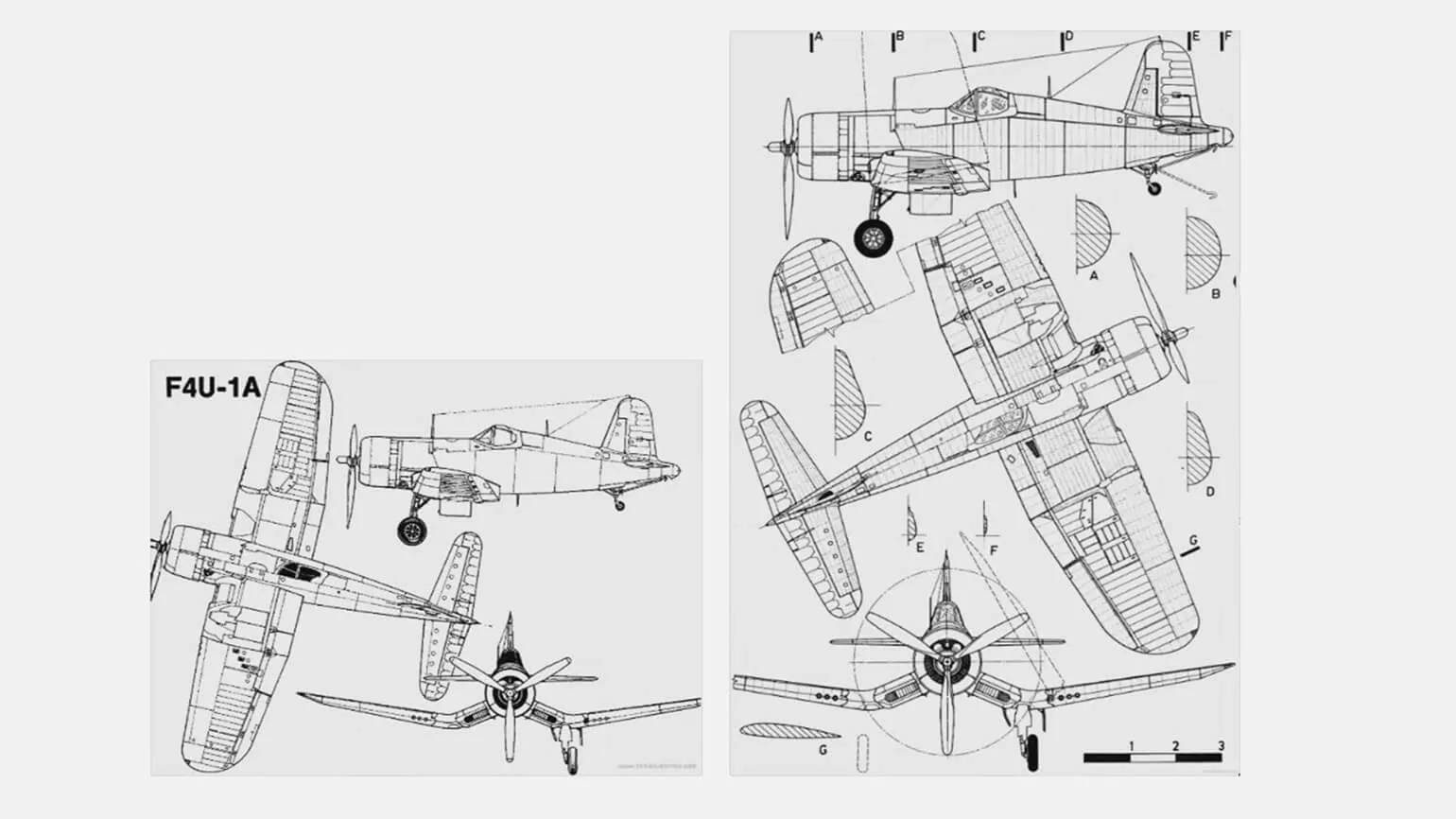
During the assembly phase, Pedro aligns the axes with the drawing using Edit Mode. He applies the "Bridge Edge Loops" function, which allows him to efficiently form the wing's polygonal mesh. This ensures accuracy and quality of assembly and improves the aerodynamic performance of the model.
The modeling process in 3D design includes three main methods: traditional modeling, sculpting with retopology, and NURBS modeling. Pedro favors Boolean operations, as they help avoid creating complex topology and simplify the process of working with geometry. Using Boolean operations allows for quick combination and modification of shapes, making them an essential tool in a 3D artist's arsenal. Each of the listed methods has its advantages and disadvantages, and the choice of approach depends on the specific tasks and goals of the project.
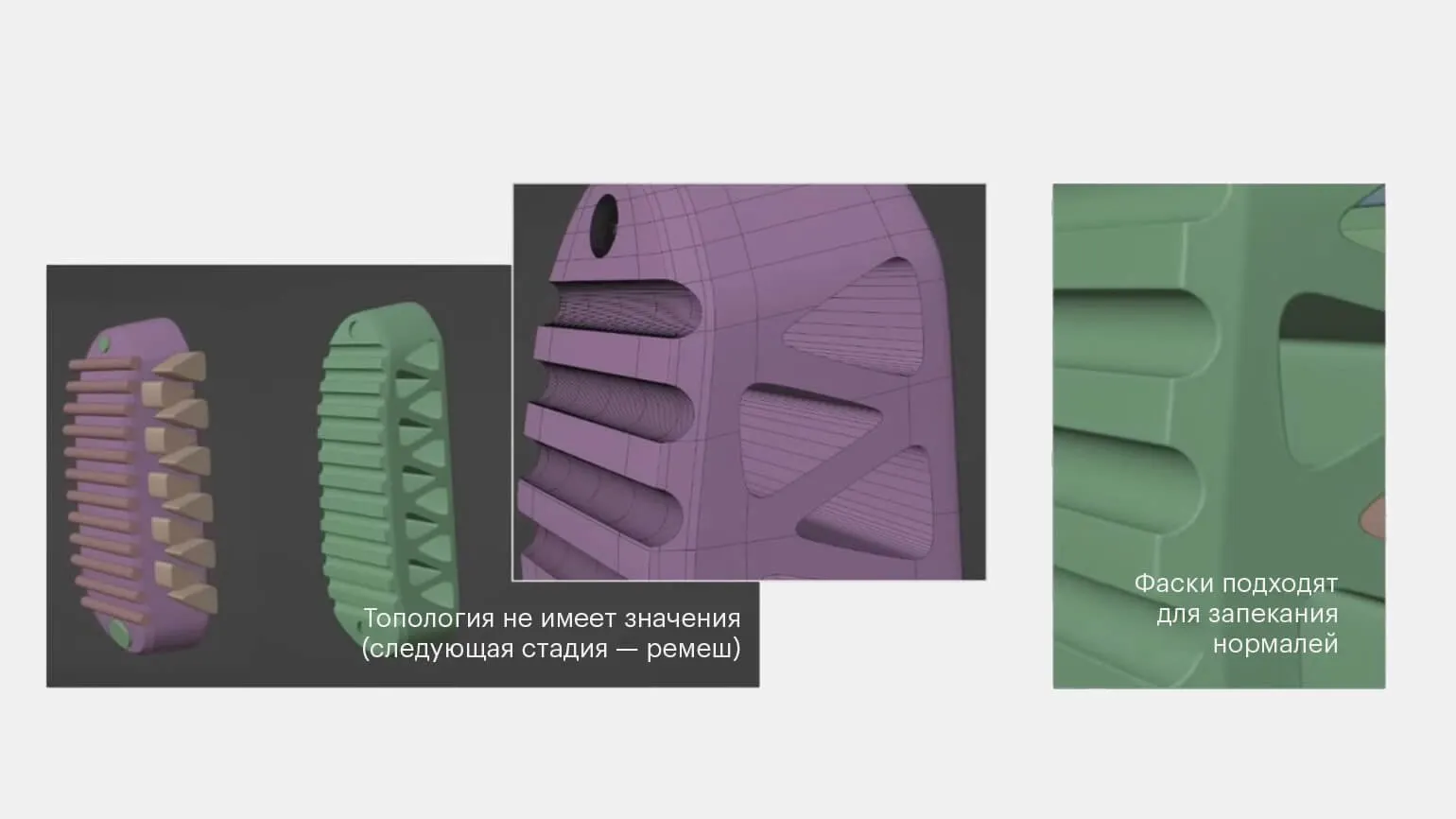
Pedro has now completely abandoned the use of third-party software, as Blender offers all the necessary tools for his work. His polygonal modeling method allows him to create highly detailed models without the need for a high-poly stage, which significantly simplifies the process and increases work efficiency. Blender has become a universal solution for him, providing the necessary functions to achieve a professional level in 3D modeling.
Once the modeling is complete, Pedro cleans up the mesh and moves on to the UV unwrapping and baking stage. As a result, he creates low-poly models with a high level of elaboration and detail. This process is important for optimizing visual quality and performance, which is especially relevant in modern video games and 3D animation. Correct UV unwrapping allows for the effective use of textures, and baking provides realistic lighting and shadows, which ultimately increases the overall level of realism of the models.
To create a detailed object, it is necessary to correctly determine where to add details. Pedro demonstrates the complete fighter modeling process, illustrating how his methods are applied in practice. This allows you to better understand how to achieve a high degree of detail in fighter modeling, as well as master key techniques for working with 3D models.
Creating a Military Aircraft in Blender: A Step-by-Step Guide
Learn the process of creating a military aircraft model in Blender, from an in-depth analysis of its technical specifications to the intricacies of rendering in Cycles. Delving into this process will allow you to master key aspects of 3D modeling, including modeling, texturing, and lighting, which will significantly improve the quality of your work and enhance your skills in Blender.
Every project begins with detailed technical specifications. For example, for fighter jets, important key parameters are defined, such as speed, maneuverability, range, and weapons system. These characteristics play a critical role in the development and evaluation of combat aircraft performance. Proper understanding and adherence to these parameters allows you to create a fighter jet that will meet the modern requirements and challenges facing the armed forces. Thus, a high-quality technical specification is the foundation for successful aircraft development.
- Number of triangles: 10,000–15,000;
- Texture resolution: 2048×2048 (2K);
- The use of the UDIM method is prohibited, which implies placing all textures in a single UV space.
The next stage involves selecting references that will help the artist analyze the drawings and highlight moving elements. These components are modeled separately, since they may be animated or damaged during gameplay. This approach provides higher detail and realism of object interaction in the game, which has a positive effect on the overall perception of the game world.
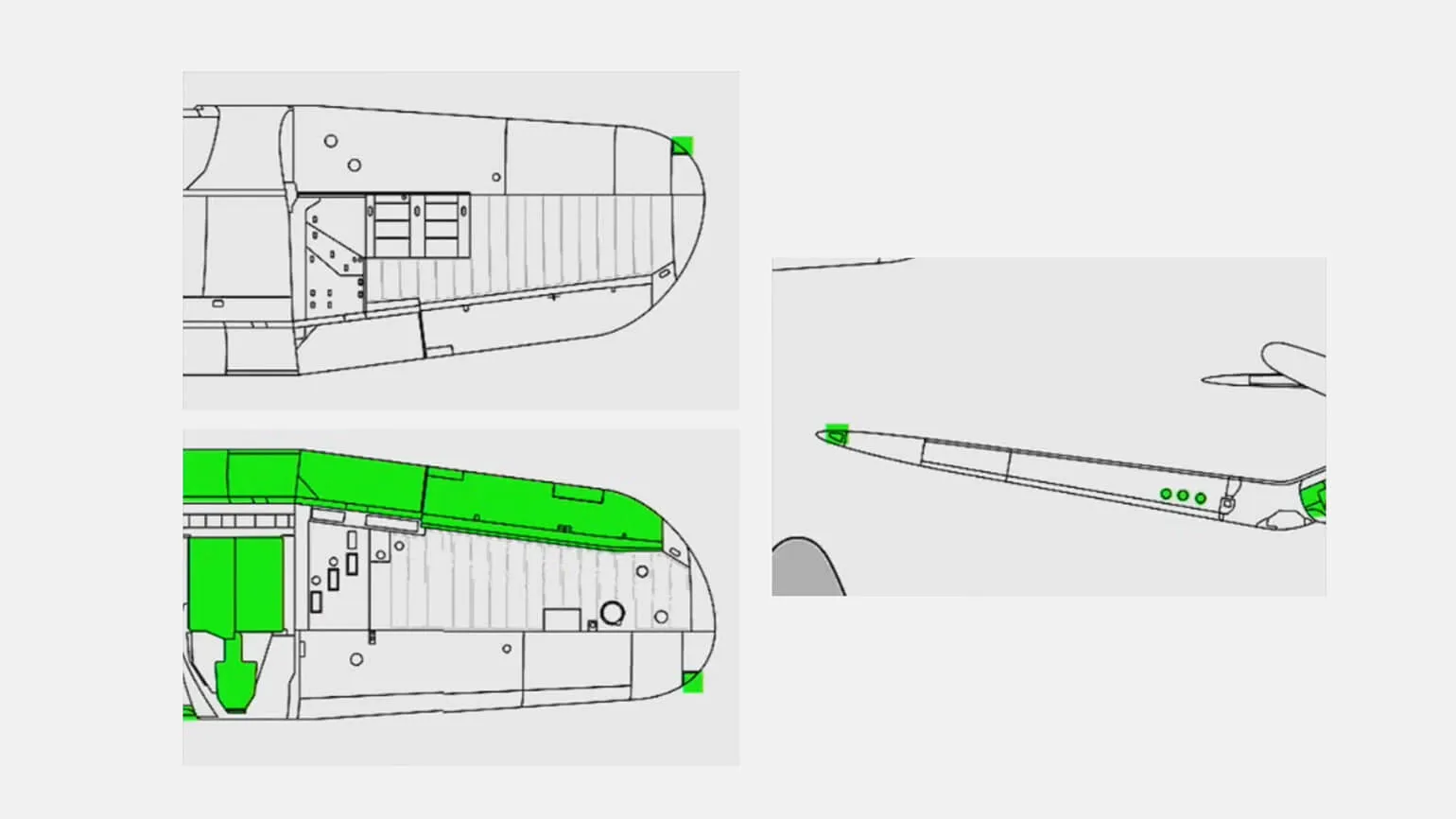
The object was created using the previously described technique. Pedro forms a polygonal mesh based on the drawing and adds details using Boolean operations. This approach allows for high accuracy and detail in modeling.
When unwrapping a model, it's important to consider its specific features and functionality within the project. Proper UV unwrapping ensures optimal texturing and rendering, which contributes to the quality of the final product. It is important to carefully consider how the model will be used in the context of the project to achieve maximum efficiency and aesthetics.
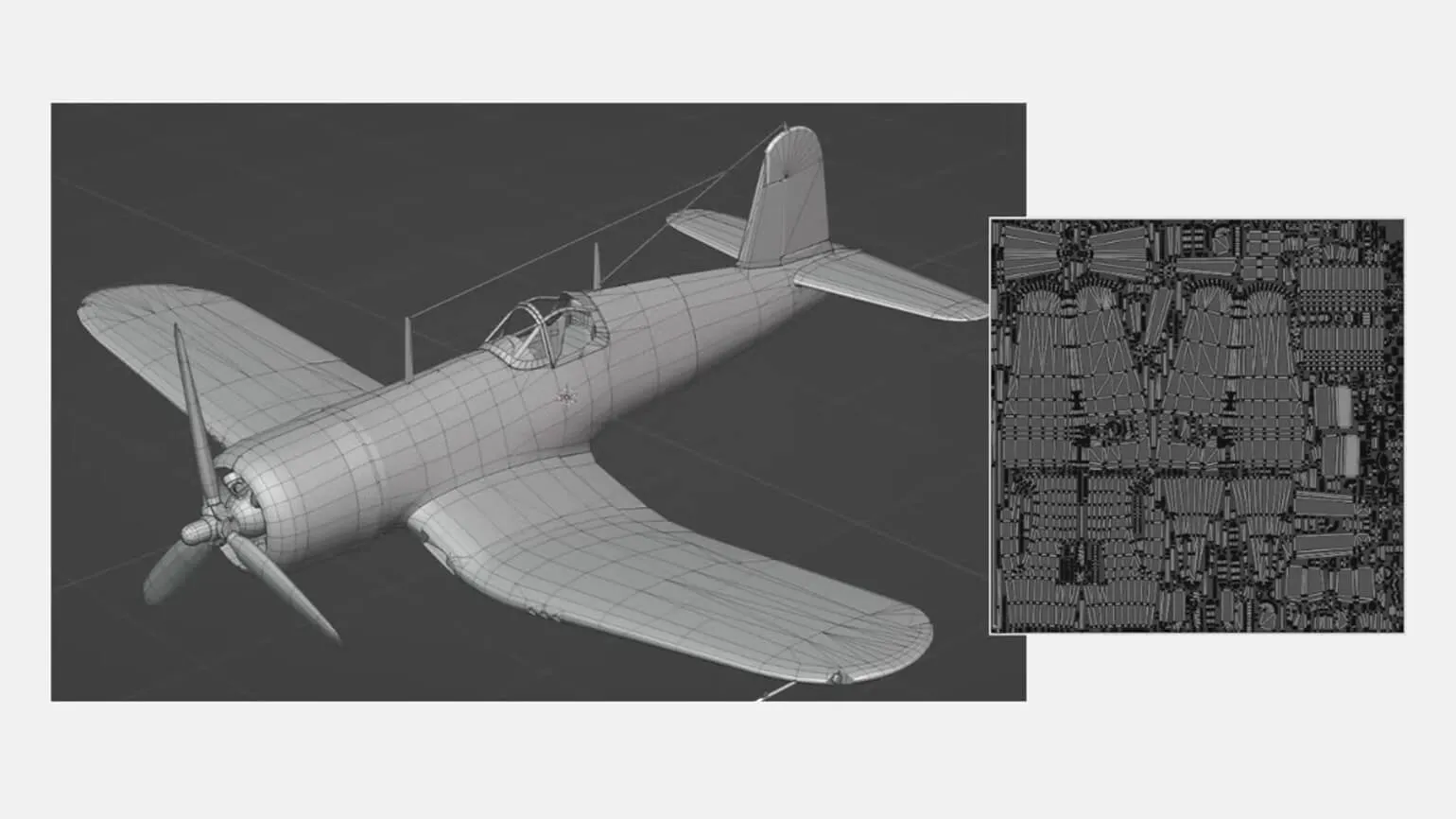
The image shows that the UV islands are closely spaced, significantly improving graphics optimization for mobile games. The size of the UV islands is determined based on player perception, allowing for higher-quality texture and detail rendering in the game.
In Wings of Heroes, players primarily focus on the rear of the plane, making the tail UV islands more visible. This allows for the use of high-resolution textures in this area, significantly improving the game's visual appeal. High-quality tail textures add realism and detail to the models, which in turn increases overall immersion. Optimizing UV mapping for key parts of models like the tail is an important aspect of development to achieve the best graphical results.
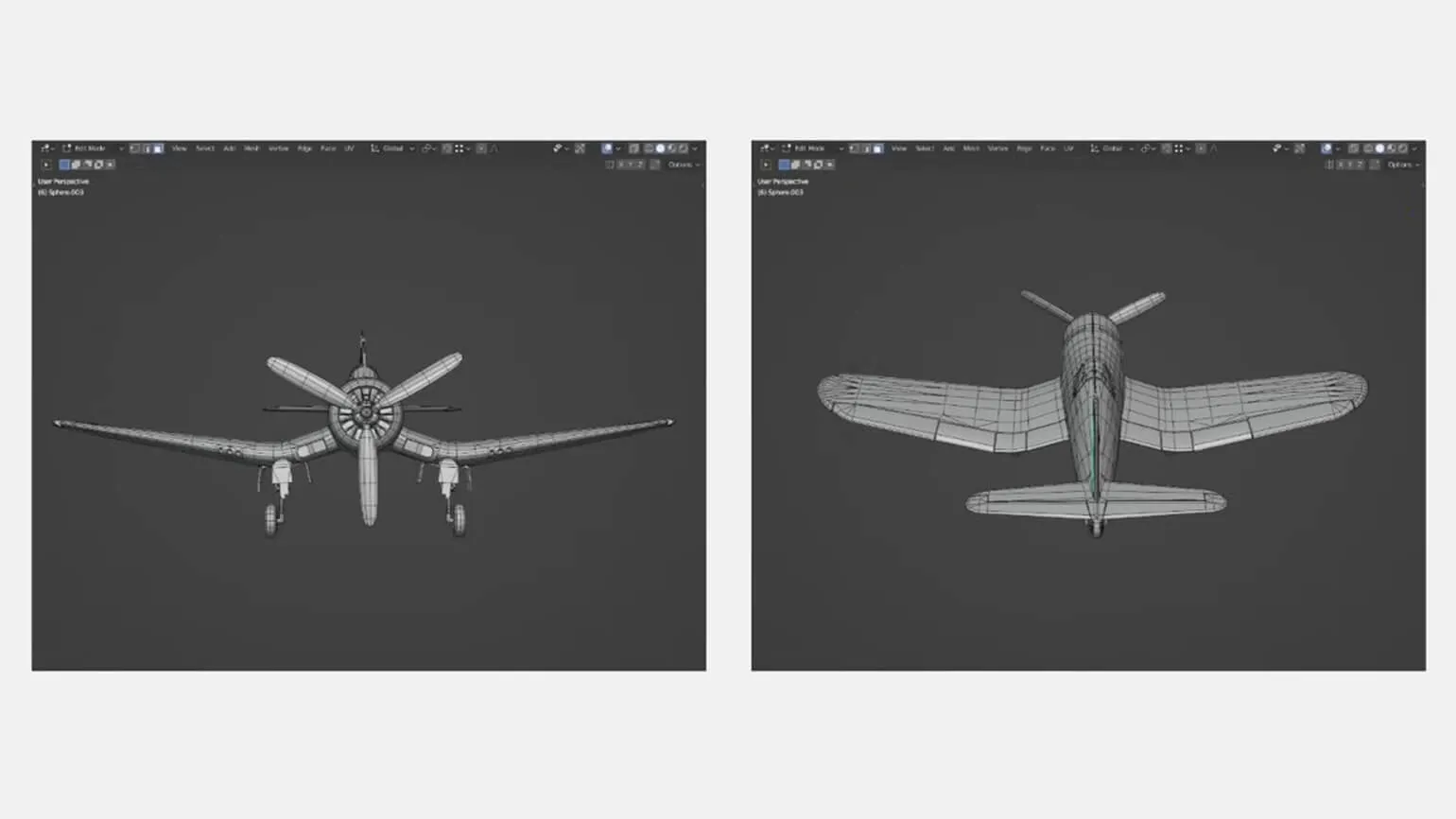
Once the model is completed, Pedro sends it to the lead artist in Italy for review. The lead artist evaluates the work based on renders and the polygon mesh. This is an important step, as a quality assessment helps identify flaws and improve the final result. The specialist pays attention to details, textures, and the overall aesthetics of the model, which ultimately contributes to the creation of a high-quality product.
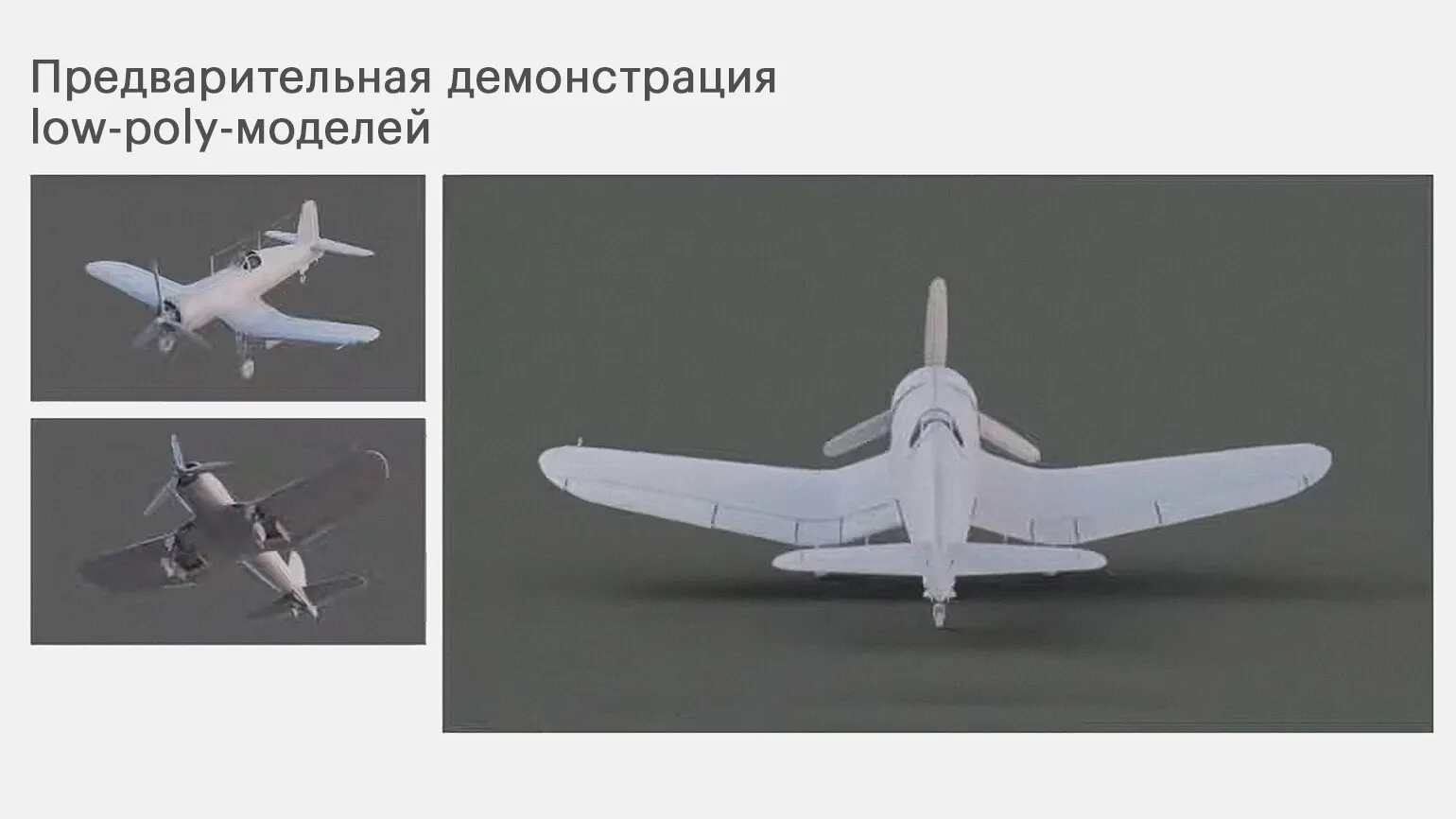
Once the project is approved, the normal baking process begins. When using a low-poly model, smooth chamfers are not provided, but they can be imitated using shaders. This method allows you to create visually appealing details, giving the model a more complex and realistic look without increasing the polygon count. Correct use of shaders helps improve graphics quality and performance in games and other applications.

Pedro creates realistic wings by applying segments to a height map in real time. He uses two brushes to achieve different effects, resulting in a detailed and believable image. This approach ensures a high degree of realism in the modeling process, which is especially important for animation and visualization.
The process of creating textures in Blender is similar to using Substance Painter, but has its own unique features. The key point is the need to use a 32-bit black and white height map. Pedro spent about half a day rendering the entire surface. Proper use of height mapping in Blender allows you to achieve high-quality visuals and realistic details in your models.
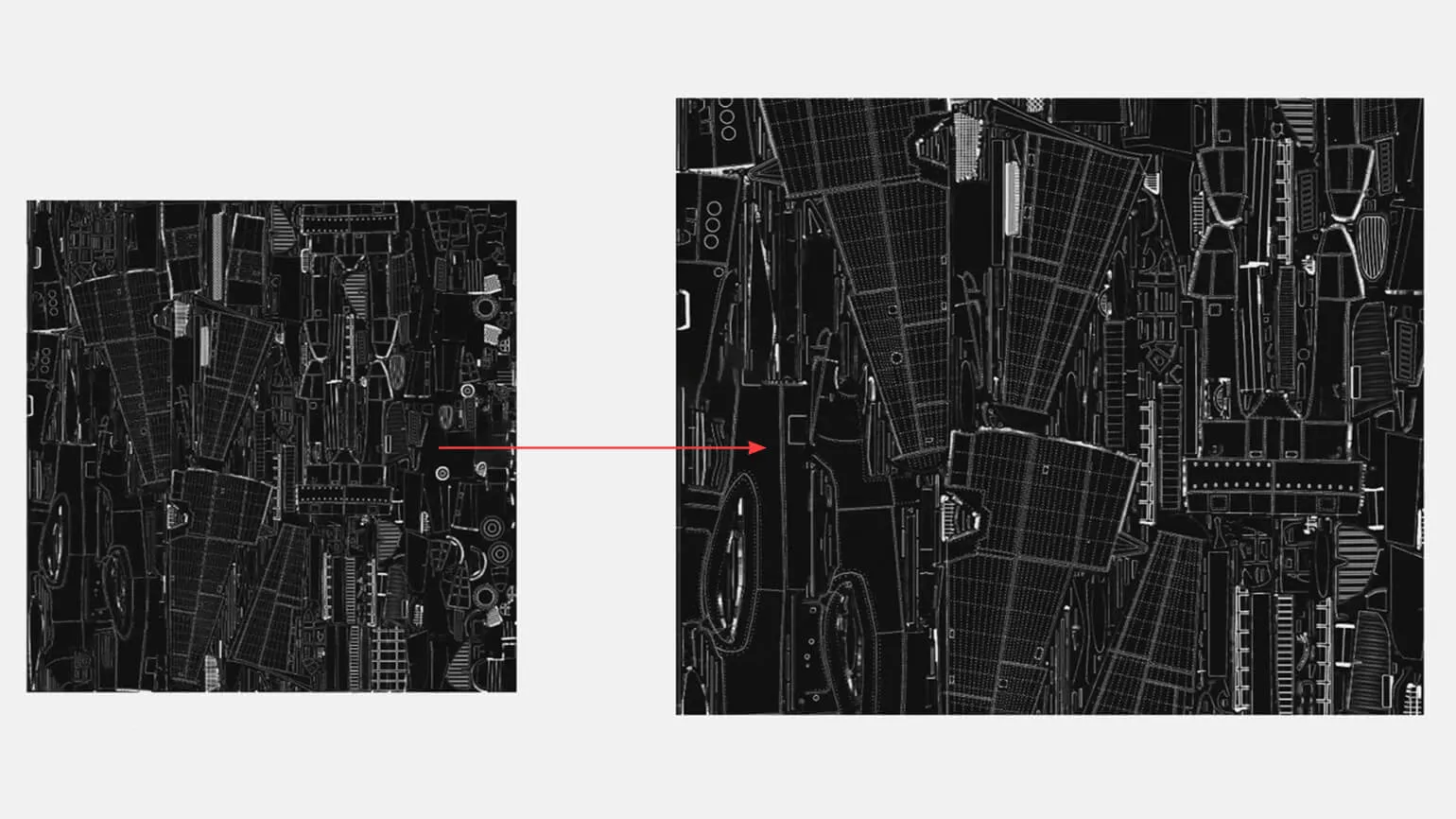
Pedro combines the height map and the previously baked normal map using the Bump Map node, creating a single normal map. This process improves the details and textures of the model, providing a more realistic display of the surface.
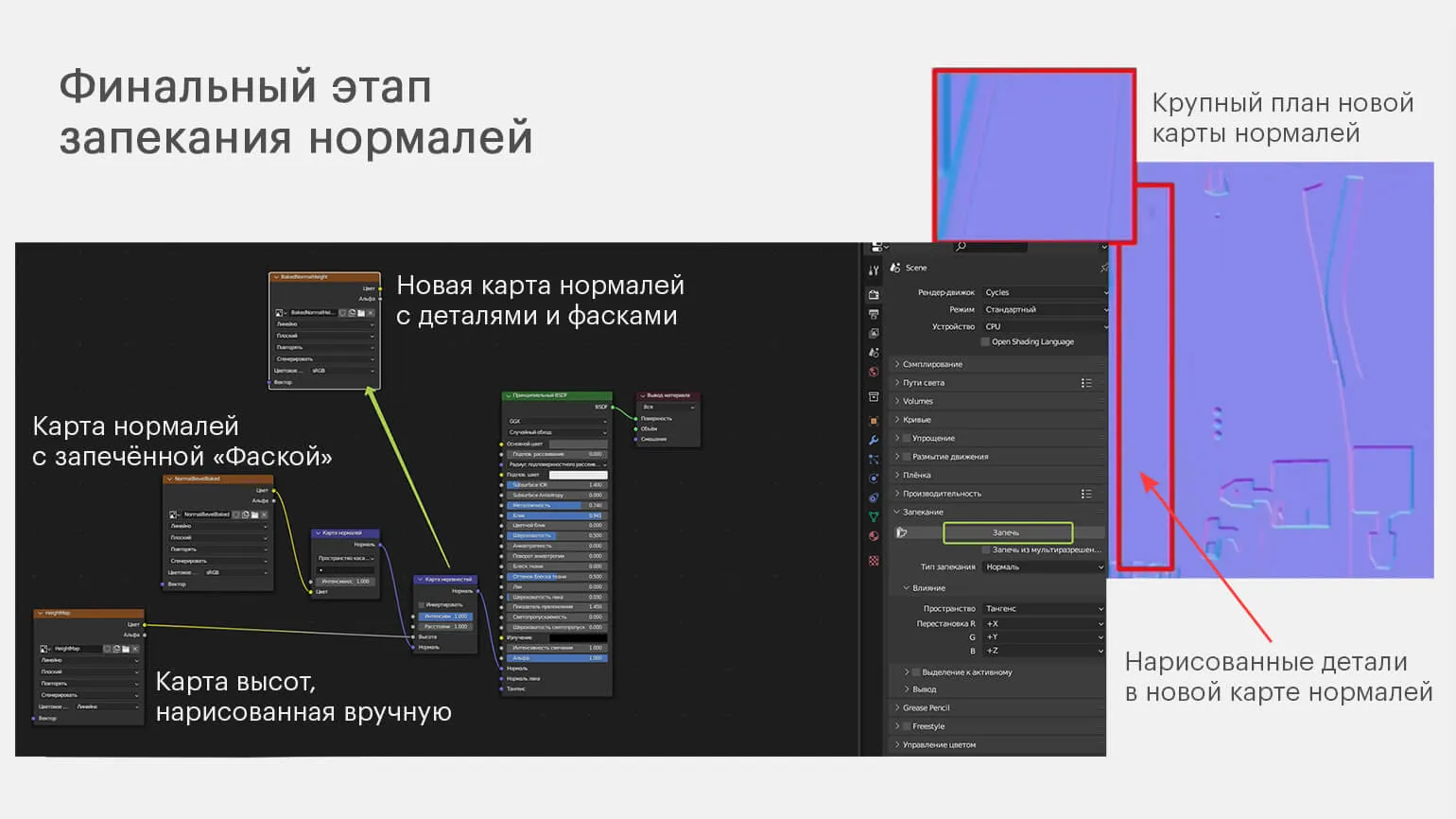
The normal map looks great, but to increase realism, you can add distortions using node combinations. This will create a more detailed and believable image, which is especially important in 3D modeling and visualization. Using additional effects and textures will help enhance the perception of depth and volume, making the final result more impressive.
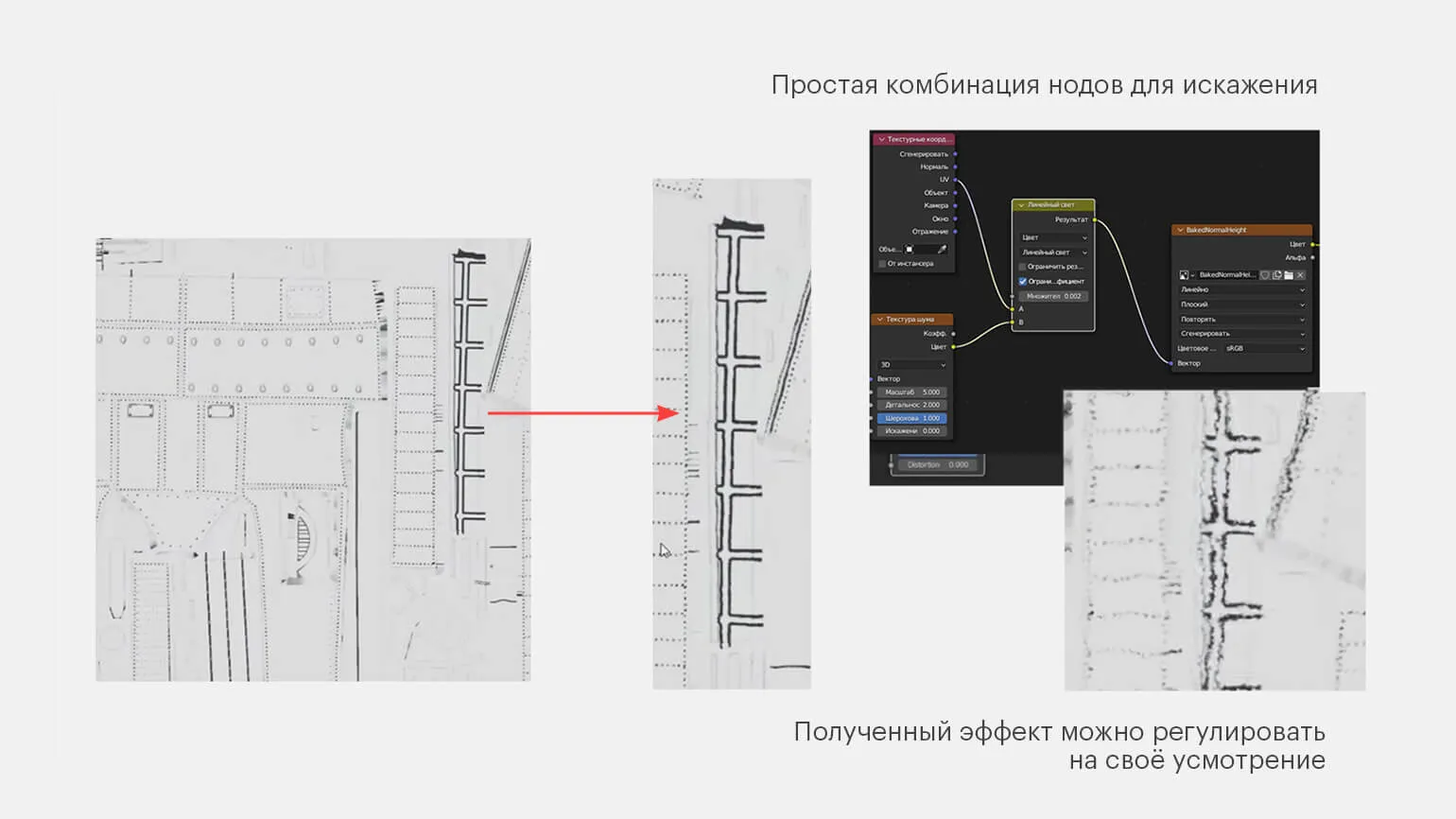
Linear light Linear Light can be found in the Mix Color node tab. This blending mode allows you to effectively combine colors and lighting in your projects. Using linear light ensures a smooth and natural interaction between layers, improving the visual perception of the final result.
While the changes in a mobile game may seem minor, they significantly increase the level of realism of the model. Moreover, the updated model will be actively used in marketing materials, which will attract more attention to the game.
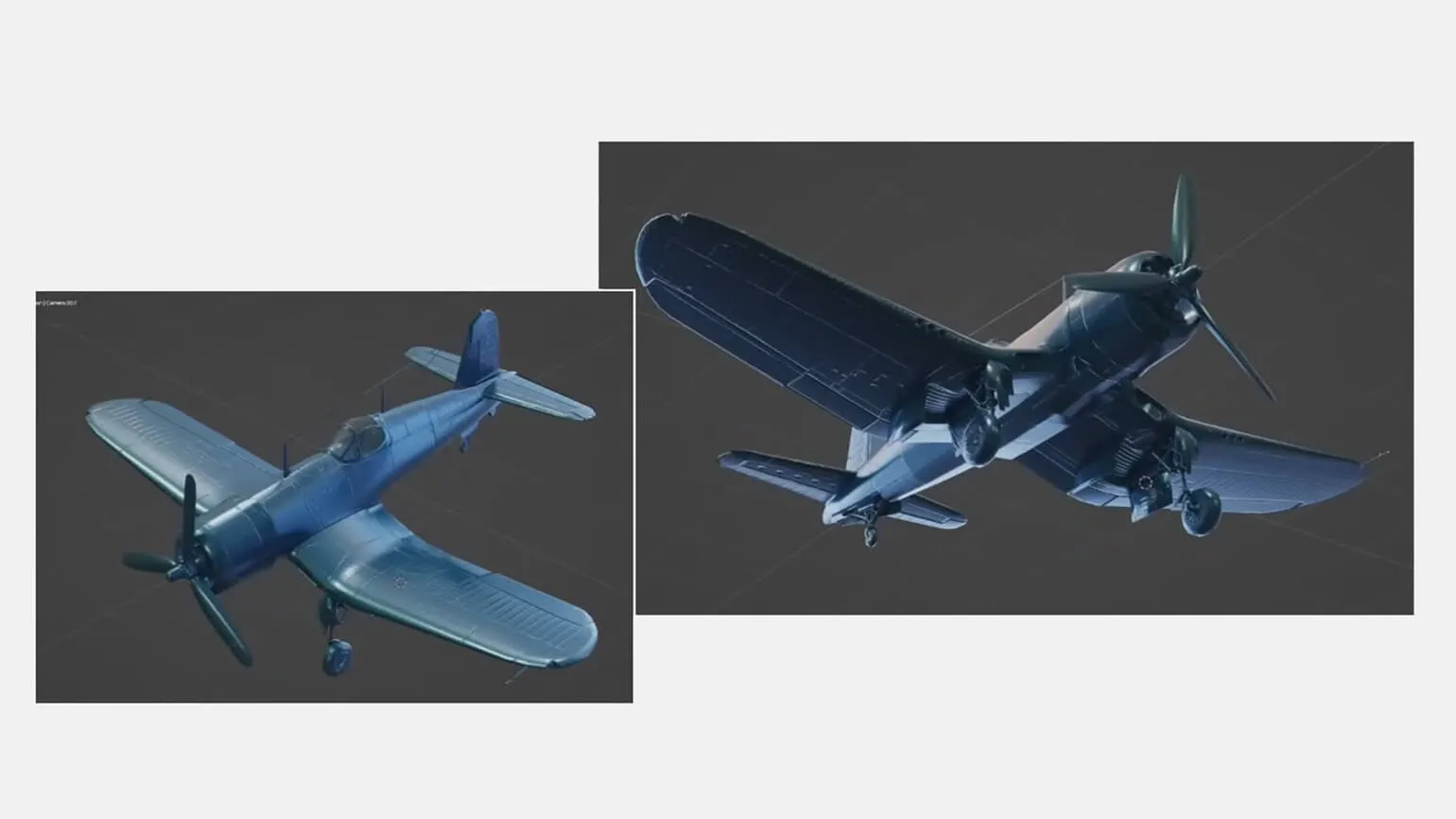
Pedro spends approximately 1.5 days creating a high-poly fighter jet model, while larger aircraft take approximately 2.5 days. The quality and detail of the models directly depend on the time spent on their development, which allows for a high level of realism and accuracy in the depiction of aircraft.
Pedro emphasizes that his method significantly reduces modeling time compared to traditional approaches. For example, the development of a heavy-lift aircraft took only 10 days, while his colleague spent four weeks on the process. The use of innovative technologies and optimization of workflows make modeling more efficient and faster, which significantly increases competitiveness in the aviation industry.
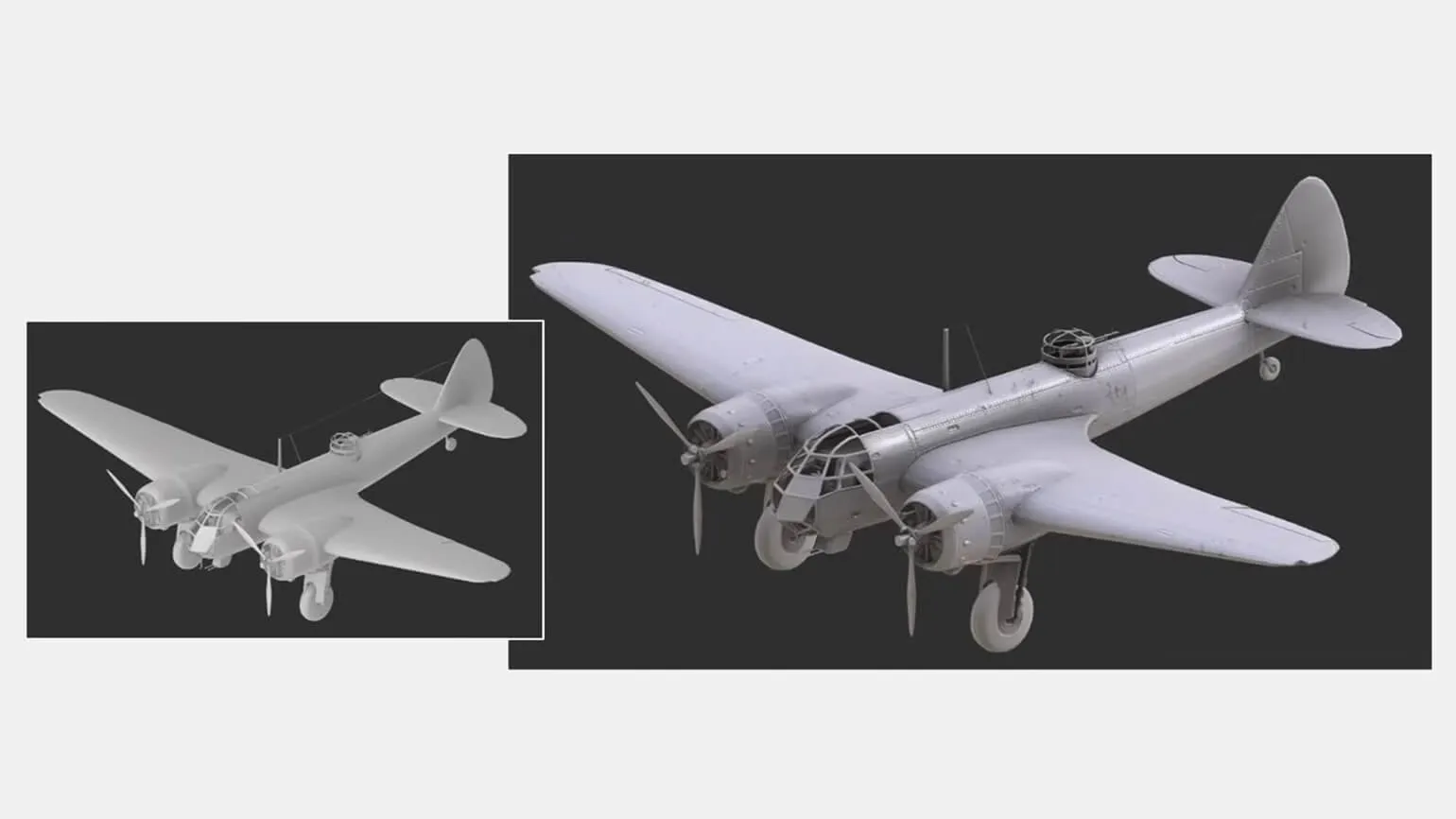
Method Pedro provides the ability to efficiently model complex objects in a hard surface style without the need to first create a high-poly model. This approach streamlines the development process, allowing you to focus on detailing and texturing, significantly speeding up the workflow and improving the quality of the final product.
After baking the normals, it's important to create additional textures such as albedo, ambient occlusion, and roughness. In Blender, you can use the Kit Ops add-on, which provides ready-made shaders. This tool significantly simplifies the creation of high-quality textures and improves the visual quality of 3D models. Proper use of albedo, ambient occlusion, and roughness allows for a more realistic display of materials and increases the overall level of detail in the project.
Pedro discovered that by combining nodes, it is possible to combine different materials on a single surface. This allows you to add an alpha layer as a texture, making the process of painting details in real time more efficient and flexible. Using these nodes significantly improves rendering quality and opens up new possibilities for creating complex materials and effects.
In this video, Pedro demonstrates how to work with two materials from the Kit Ops library: unpolished metal and blue auto enamel. He uses alpha brushes to achieve a distressed effect, giving the models a realistic look. This video will be a useful resource for anyone looking to improve their texture and material creation skills in 3D design.
Fighters have machine guns built into their wings, and it is important to detail the places where the bullets exit to create the effect of burnt paint. This adds realism to the model and makes it more impressive. Correct detailing of such elements helps convey the atmosphere of air battles and enhances visual perception. Using textures and paint application techniques in these areas allows for maximum verisimilitude, which is especially important for collectors and modelers.
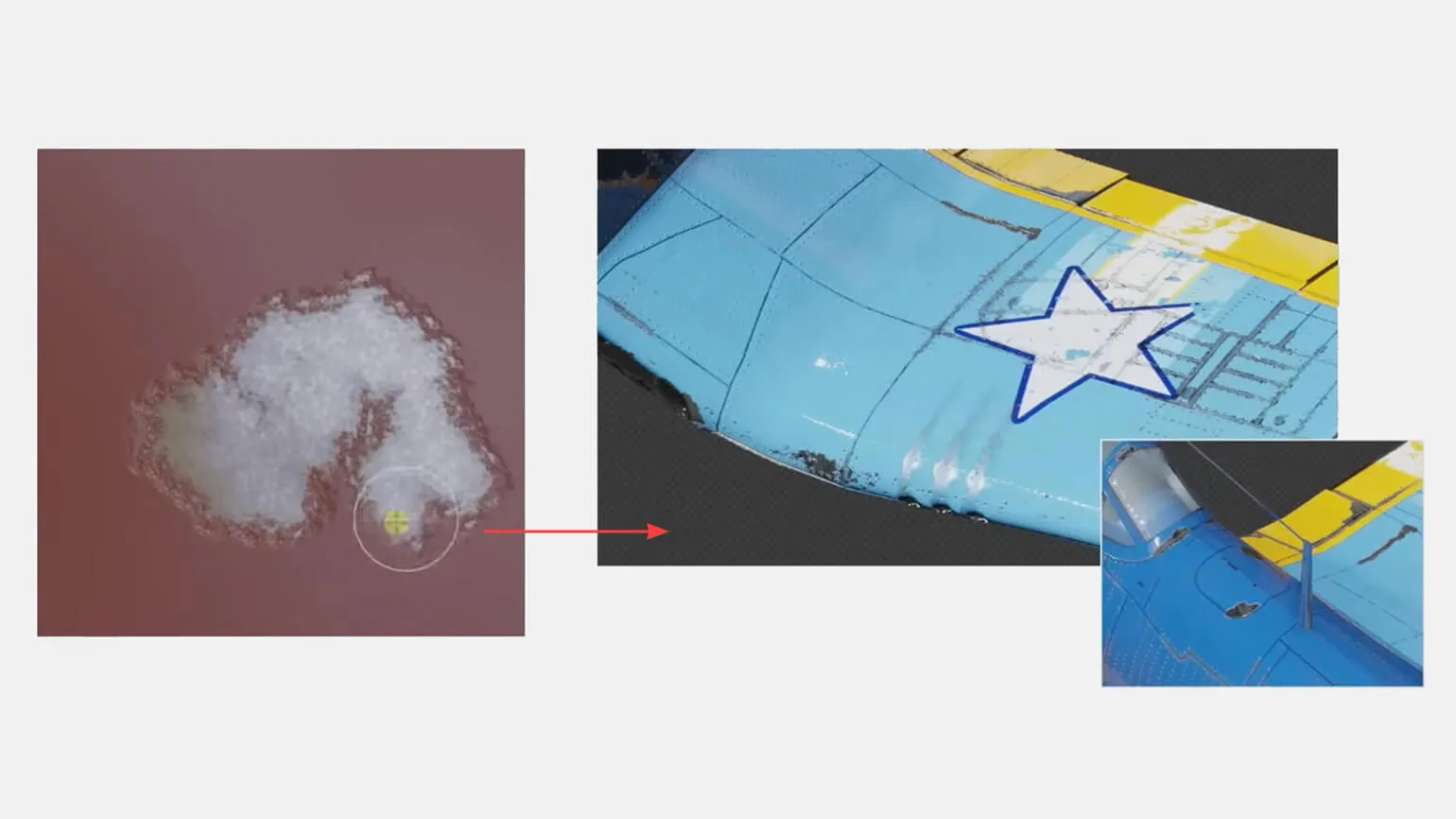
Pedro's model is unique thanks to the addition of textures with identifying marks and inscriptions. Users can easily change the primary colors in the shader settings, allowing them to tailor the model to individual preferences and project requirements.
The result is a complete set of textures ready for integration into the game engine. These textures are optimized for use in a variety of projects and provide high-quality graphics. Import them into your game engine and create unique visual effects for your games.

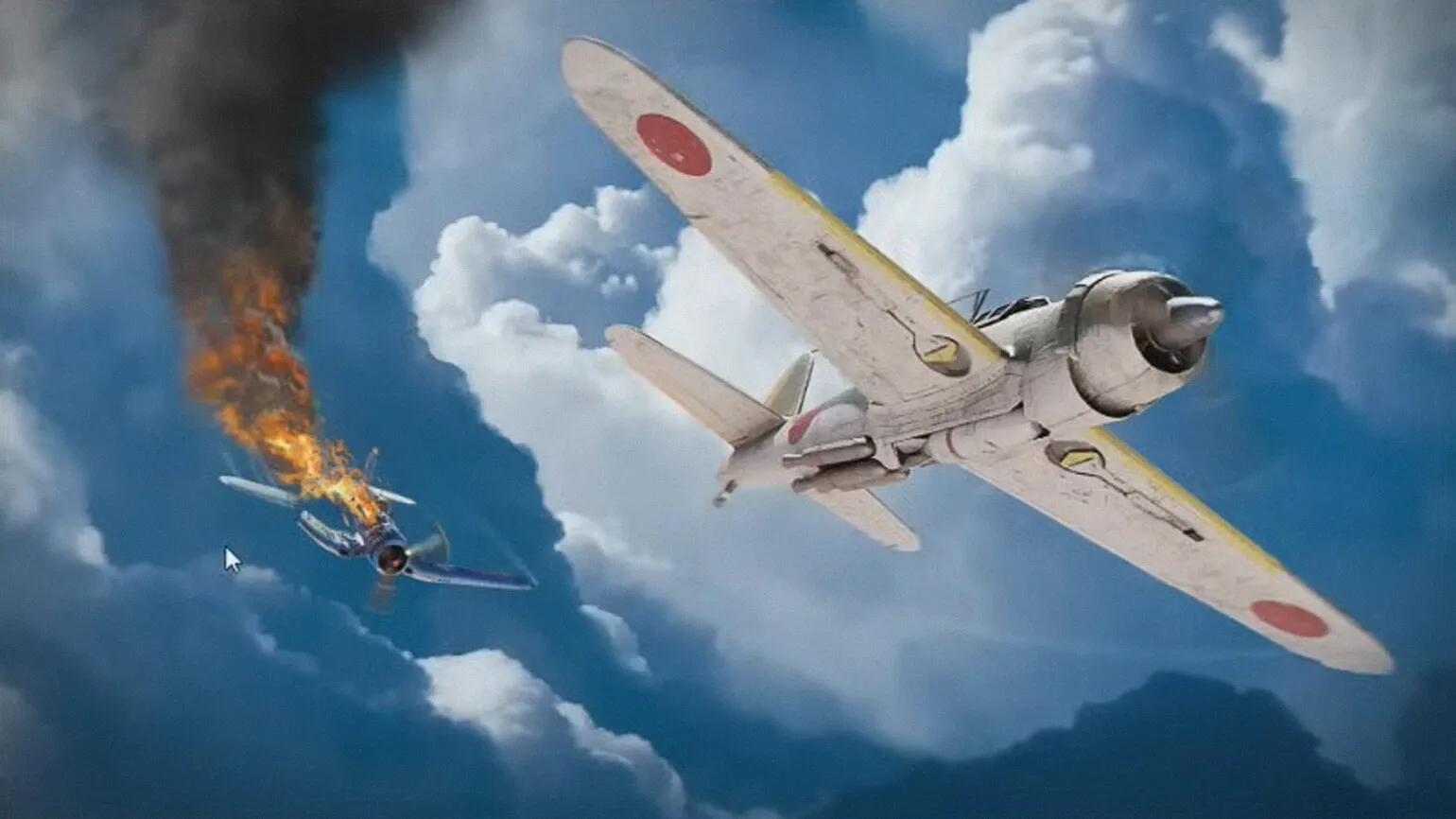
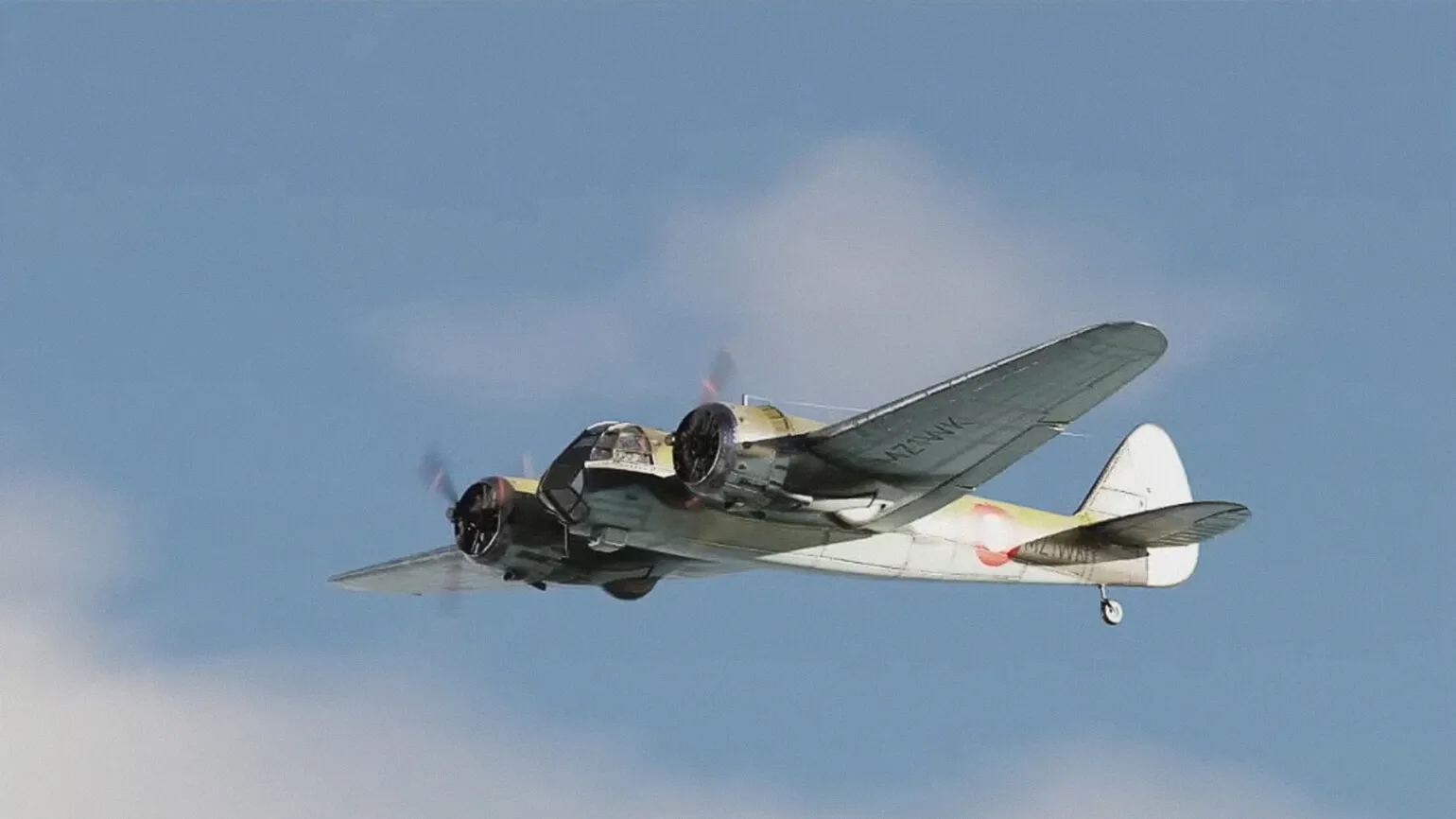
Pedro's fighters are featured in promotional materials for Wings of Heroes. Archival wartime photographs are used to create static renders, lending historical authenticity and visual appeal to the materials. These images effectively showcase the fighters' unique design and characteristics, helping players better understand their role in gameplay.
To achieve high levels of realism in his work, Pedro uses photo textures of the sky, available on various marketplaces. These textures are typically inexpensive, making them accessible to most users. Using high-quality sky photo textures can significantly improve the visual effect and atmosphere in projects.
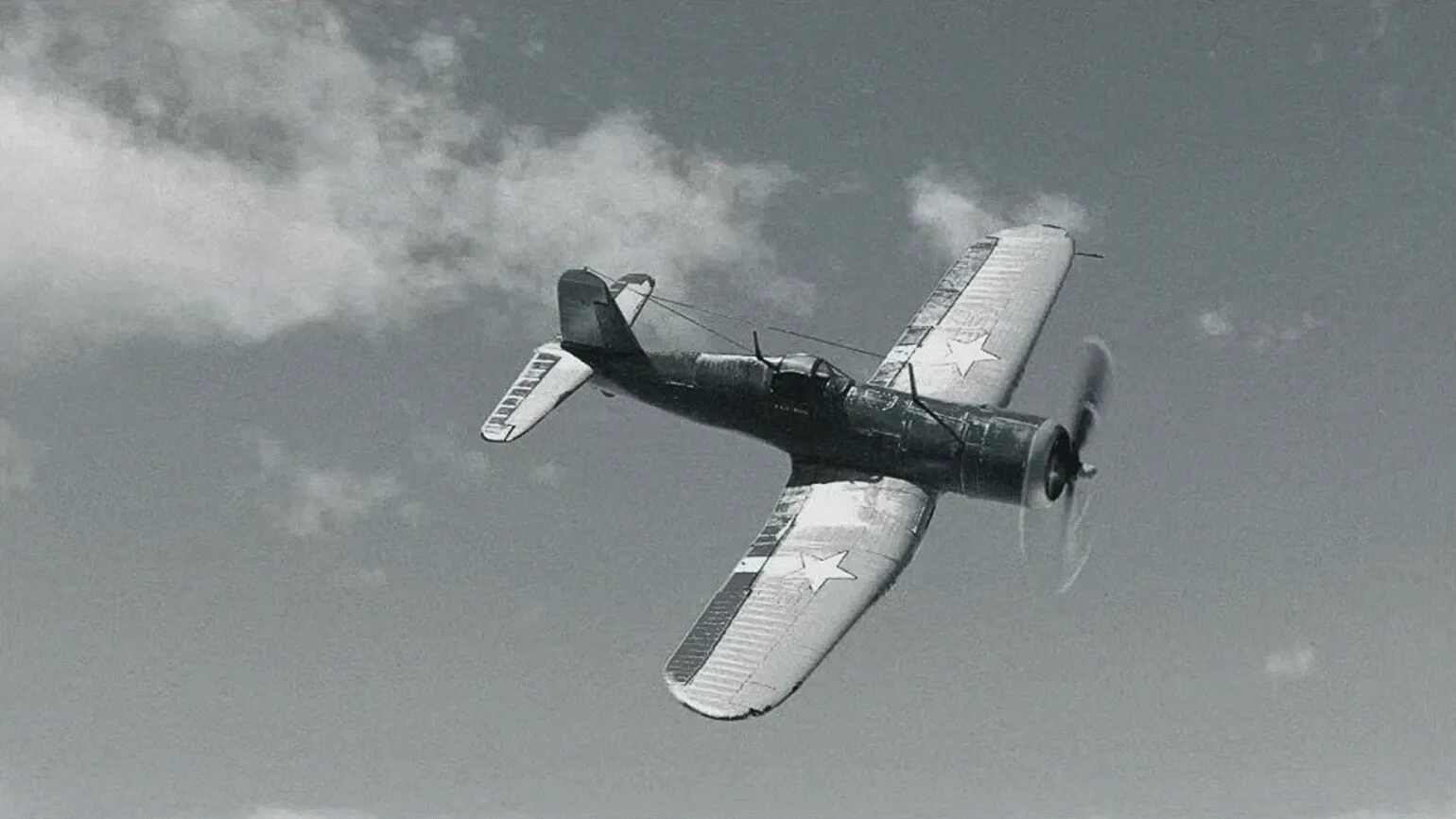
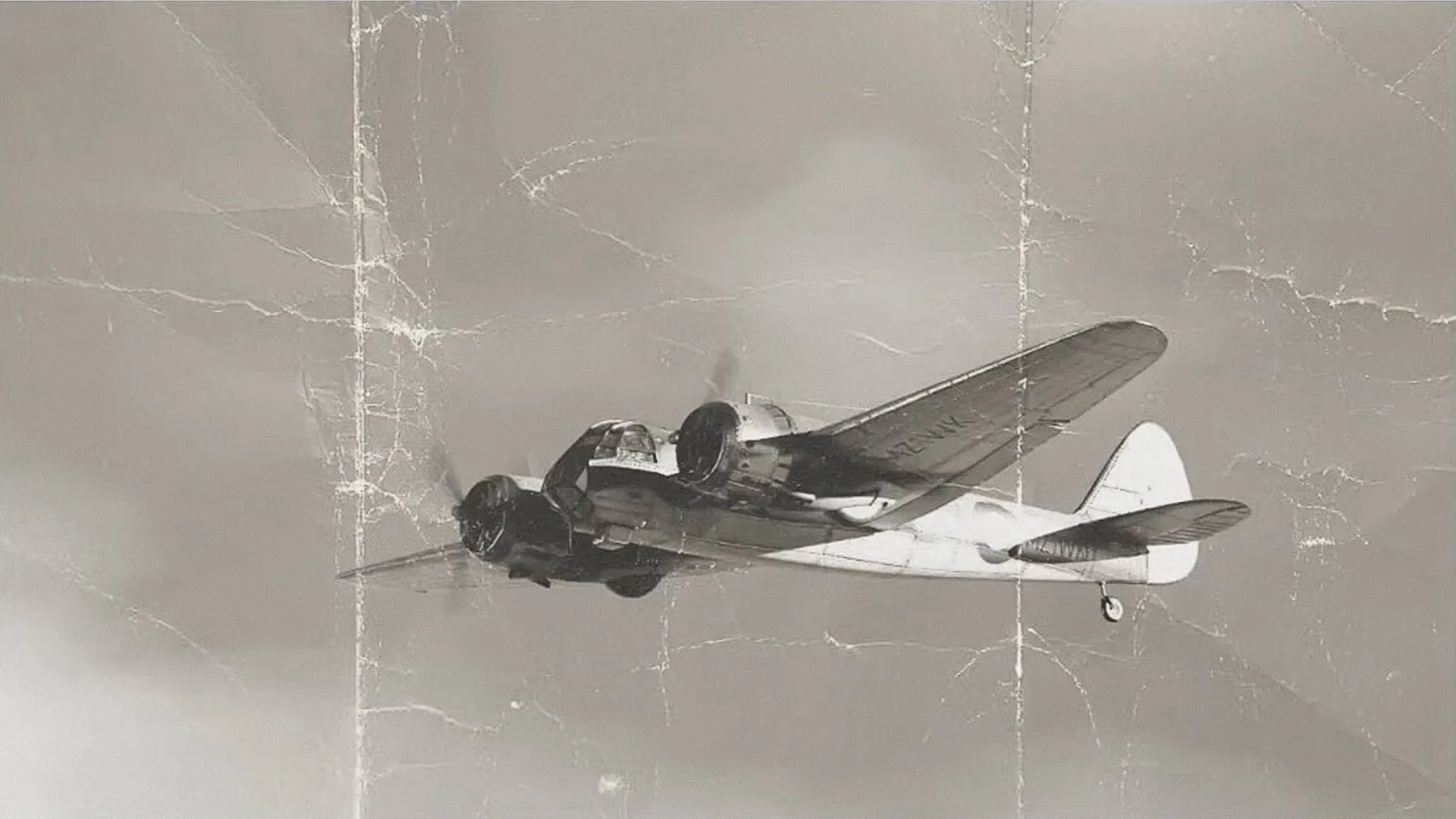
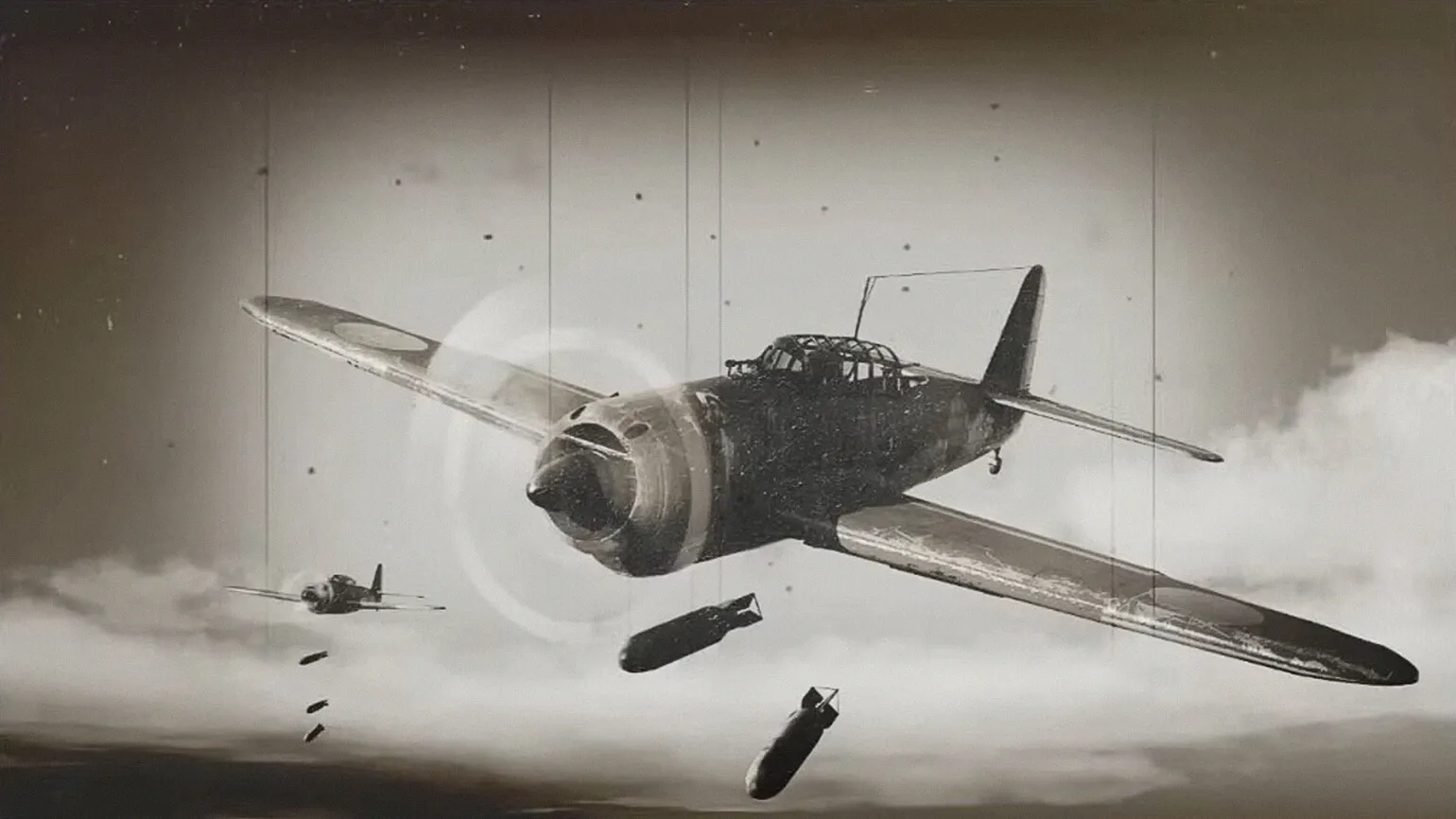
In the artist's portfolio, you will find renders made in modern styles. These works demonstrate uniqueness and creativity, reflecting current trends in art. Each rendering is meticulously crafted and showcases the artist's skill, making their portfolio attractive to viewers and potential clients.
The impact of available software on 3D Modeling
In the 3D modeling industry, software accessibility plays a key role for developers. Pedro demonstrates that free applications can achieve impressive results. This is especially important for indie studios and independent developers, who often face limited financial resources that prevent them from purchasing expensive subscriptions to tools like Zbrush or Substance 3D Painter. According to Statista, the number of indie developers continues to grow, making affordable solutions even more relevant in the modern world of 3D modeling. Innovative free tools can significantly simplify the process of creating high-quality 3D models, opening up new opportunities for creative professionals.
It's important to note that access to paid tools may be limited in some regions. Using affordable software like Blender allows you to significantly reduce costs while achieving high-quality results. In 2023, Blender continues to actively develop, introducing new features and improvements that meet modern requirements and industry trends. This tool is ideal for both professionals and beginners looking to create high-quality content without significant financial investment.
3D modeling software is updated annually, allowing artists to use the latest tools and technologies. Pedro emphasizes that even if a program does not fully meet established industry standards, it can still be effective when used by an experienced specialist. The key aspect is the ability to quickly achieve the desired results, which is especially important in the competitive 3D design environment.
Subscribe to our Telegram channel
Subscribe to our Telegram channel "Checkpoint", where we discuss everything related to games and their development. Here you will find valuable advice from professionals, the latest news on updates to popular games, and important aspects of game development. We value your ideas and opinions, invite you to leave comments and join the discussions about the future of the gaming industry. Join us and stay up to date with the hottest topics in the world of gaming.
3D Artist: Master the profession in a year with 20+ projects
Want to become a 3D artist? Learn how to master the profession in a year with our course! Read the article.
Find out more