Who are you in gamedev world? Learn more with this free course ➞ You'll experience three professions in action: game designer, 2D artist, and Unity developer. Create your first Mario-style game. Click here for details.
Learn moreLevel designer Steve Lee has over 13 years of experience in the gaming industry. During this time, he has worked on such renowned projects as Bulletstorm, BioShock Infinite, and Dishonored 2. In 2017, Steve presented his talk at the GDC conference, dedicated to his unique approach to level design, in which various game elements are harmoniously integrated into a single gaming experience. In this text, we highlight the key points of his talk.
- Part 1. Possibility + Intentionality
- Part 2. Worldbuilding
- Part 3. Interactive Narrative
Part 1. Possibility + Intentionality
Thinking holistically in design involves analyzing each element for its impact on the overall composition. It is an approach that recognizes that the final result may be greater than the simple sum of all the parts. Steve Lee emphasizes the importance of this understanding, as it contributes to the creation of harmonious and functional design solutions. By considering all elements as interconnected, designers can achieve deeper impact and create more effective and engaging visual concepts.
This lecture examines the elements that unite three key aspects of a game: gameplay, presentation, and narrative. These relationships are illustrated in the diagram below.

A game designer primarily analyzes gameplay capabilities, which is a key element of game development. The English term "affordability" came to the world of game development from industrial design. Lee draws an analogy with door handles, which have "push" and "pull" directions. The problem is that both sides of the handles look like they should be pulled, which can confuse the user. This highlights the importance of intuitive design in games that helps players easily perceive and interact with game mechanics.

The game designer notes that The "gameplay feature" of the door handles on the left side is poorly designed because it creates confusion. To address this, he suggests removing the handle from the inside of the door. This would eliminate the need for the label, as users would intuitively understand that the door needs to be pushed.
The term "gameplay feature" encompasses all aspects that help the player intuitively understand how the various elements of the game function. These features are key to creating a usable and understandable gameplay experience, allowing the user to quickly adapt and enjoy the game. Understanding gameplay features contributes to a better gaming experience and engagement by providing players with the necessary tools and knowledge to effectively interact with game mechanics.
Steve demonstrates how this principle is implemented in video games, using levels from Dishonored as an example. This analysis allows for a better understanding of the game's mechanics and design, highlighting the importance of player interaction with the environment and elements of the game world.
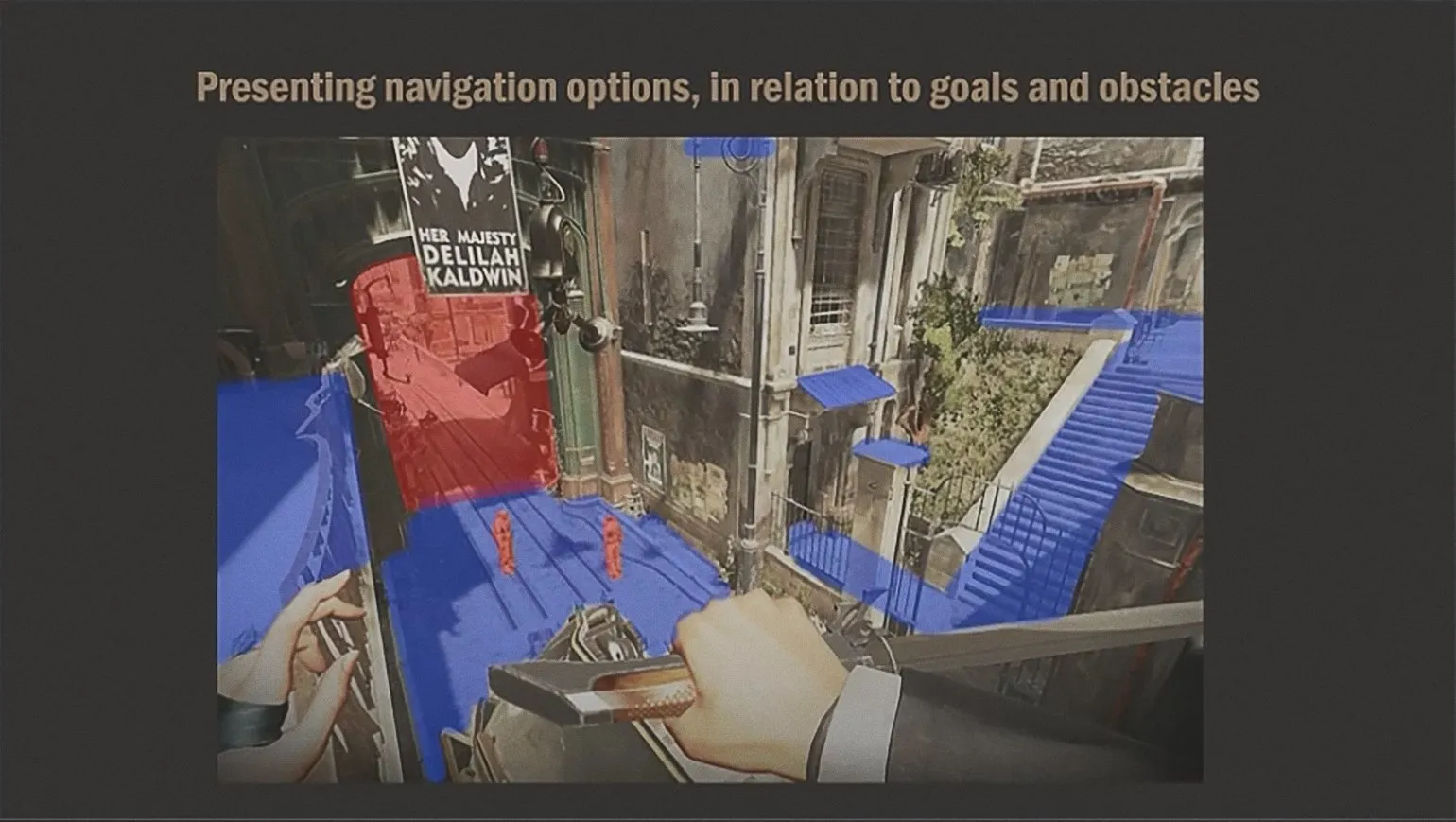
In immersive 3D games, key aspects of gameplay features are the elements of their presentation. These elements are conveyed to players through carefully considered level layouts, lighting, and other visuals that create a unique atmosphere. There are many ways to demonstrate these features, using different approaches to the design of game scenes. Effective presentation not only improves the user experience but also allows players to more deeply immerse themselves in the gameplay, which significantly increases the appeal of the game.
- Showcase possible paths for movement through the location, taking into account the goals facing the hero and the obstacles they may encounter. In Dishonored, the player can almost always climb higher to survey the location and understand which path to take to achieve the goal.
- Add interactive objects with constant gameplay features. If there's a loudspeaker hanging over the street, and you've previously given the player the option to drop it on guards, you need to make that option available at all times. If a "wall of light" (an electrical field that damages the player by default) is blocking the player's path, and the player has the option to disable or reconfigure it using the dashboard, you need to make that option available at all times.
- Introduce clear and consistent low-level options. For example, interactive and non-interactive doors should be marked with distinct but recognizable textures.
It's important not only to provide low-level options to the player, but also to demonstrate a wide range of choices. Steve emphasizes, "Creating a large, complex level with a lot of elements is pointless if the player doesn't understand that the level is non-linear." Therefore, it's important to emphasize that the player must understand their options and free choice; otherwise, even the most complex levels may prove ineffective.

The Dust District mission in Dishonored 2, designed by Lee, centers on the confrontation between two warring factions – the Overseers and the Howlers. To ensure that players feel they can choose one side or the other, the designer employed two key approaches. The first approach involves organizing the gameplay in such a way that players can observe the interactions between the factions, creating a sense of dynamic conflict. The second approach involves introducing elements that encourage the player to make decisions that influence the development of events and the outcome of the mission. These mechanics not only enhance engagement but also emphasize the importance of personal choice in the world of Dishonored 2.
- Level layout. The location is divided into separate territories, captured by either the Overseers or the Howlers.
- Briefing. Before the mission, the player is given the basic details of the mission and is hinted that their choice will change the future of Karnaca.
In the game, the player can complete the mission without taking sides if they open Jindosh's lock. However, to solve the mystery, they must either obtain information from other characters or discover clues on their own. This creates a unique atmosphere of exploration and interaction with the game world. The player must use their analytical and communication skills to achieve their goal.
Opportunities play a key role as they contribute to the player's awareness of their actions. Steve Lee describes this term as an important aspect of gameplay that helps shape intentional actions and strategies. Awareness of available opportunities allows players to make more informed decisions, which in turn increases their engagement with the game.
Intentionality is the process of making conscious decisions based on clearly defined goals and expectations. This approach allows people to more effectively achieve their desired results, as it involves situational analysis and proactive planning. By applying the principle of intentionality, you can improve your productivity and the quality of your decisions, which will ultimately lead to successful completion of your tasks.
The game designer notes that players often take certain actions for granted during the game. However, this is not always true. He gives several examples of a lack of intentionality in player actions, which can negatively impact the gaming experience. Understanding this aspect is important for game development, as it allows you to create more intuitive mechanics and improve user interaction.
- The feeling of being lost when the player does not know what to do.
- The player does something only because:
The game interface prompts the player to perform this action.
In this situation, this is the only possible step.
The player believes that the designer expects him to perform this action.
In video games, an important element of gameplay is the lever. Players must constantly interact with levers to progress through the game, unlock new levels, and solve puzzles. Proper use of levers can significantly enhance the experience and help achieve goals. Don't miss the opportunity to pull levers to unlock secrets and unlock bonuses, which adds dynamism and interest to the gameplay.
- When the player only reacts to the unexpected (for example, a jump scare).
Creating intentional gameplay situations is a key element of the gameplay, level design, and systems of immersive sims like Dishonored. These elements not only increase player engagement but also shape the unique gaming experience, allowing everyone to make conscious decisions that impact the story and their interactions with the world around them. Dishonored vividly illustrates how carefully thought-out level design and game mechanics can create an atmosphere in which every player's move matters.
The concept of intentionality plays a key role in the development of Arkane games. If a level designer proposes a task or bonus puzzle that lacks intentionality at any point, the idea will be rejected. This approach emphasizes the importance of detailing every element of gameplay, which helps create immersive and engaging game worlds. Arkane strives to ensure that every part of the game is carefully thought out and serves a common purpose, making their projects unique and memorable.
It offers a number of methods for encouraging intentionality. These techniques are aimed at helping people approach their actions and decisions mindfully. Using these techniques, you can develop skills that contribute to more effective time and resource management, which in turn helps you achieve your goals. Implementing intentionality into your daily practice can help improve your personal and professional life, increase productivity, and reduce stress.
- Clear, ongoing opportunities.
- Long-term goals. In most missions in Dishonored, the player is tasked with reaching the other side of the map and killing/abducting a person located there. The player comes to the solution to this problem themselves.
- The player sets the pace of gameplay. Players need time to digest information and develop a plan of action.
The core gameplay loop of immersive simulators is built on several key techniques. The player begins by surveying the level, which allows them to assess the situation and identify possible paths to achieving goals. Next, they formulate a strategic plan based on the information gathered. This is followed by the implementation of the plan, during which the player actively interacts with the game world. If something goes wrong or new opportunities arise, the player changes tactics, adapting to the changing conditions. This dynamic process creates a unique experience, allowing each player to find their own approach to solving the game's problems.
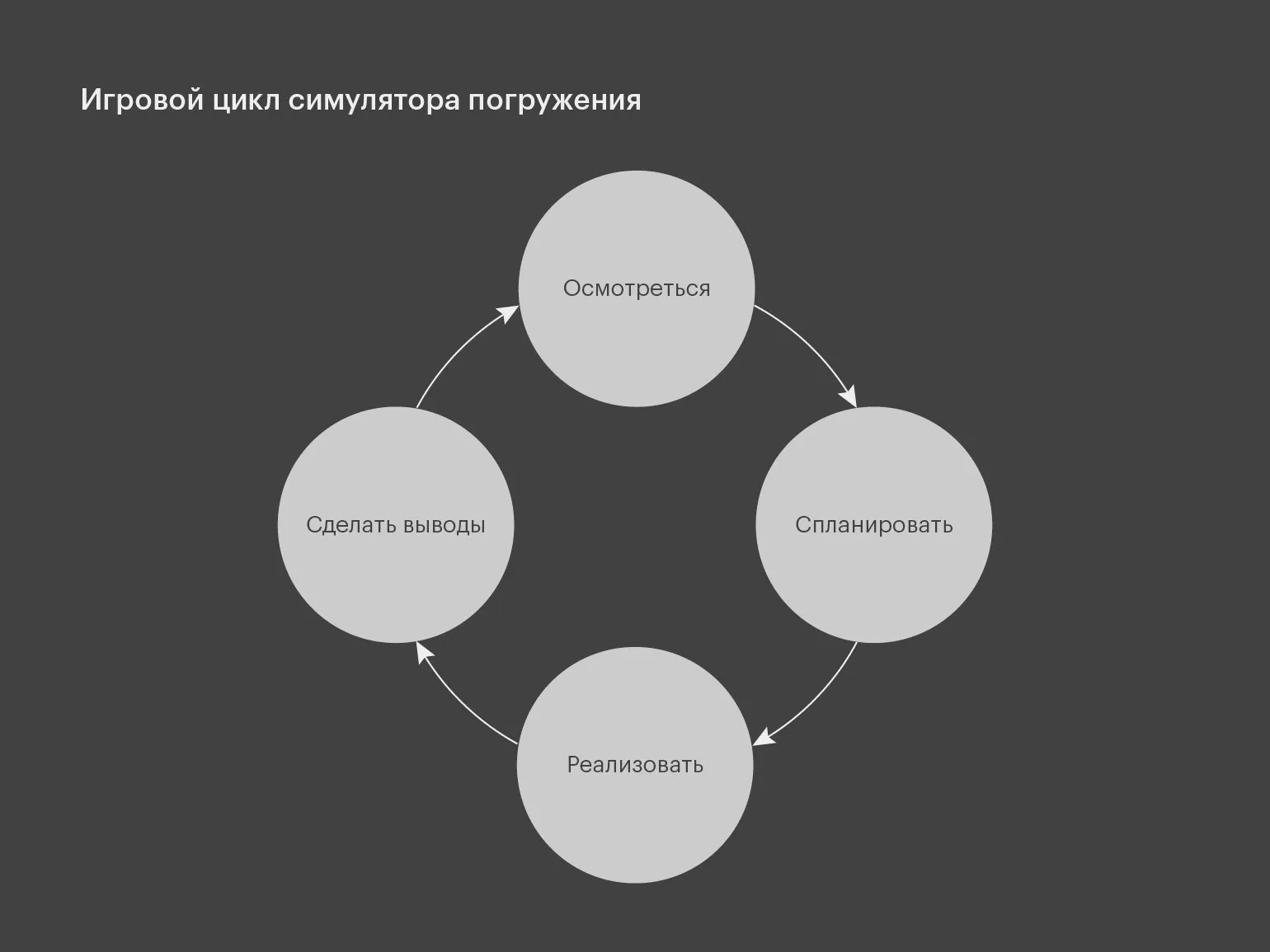
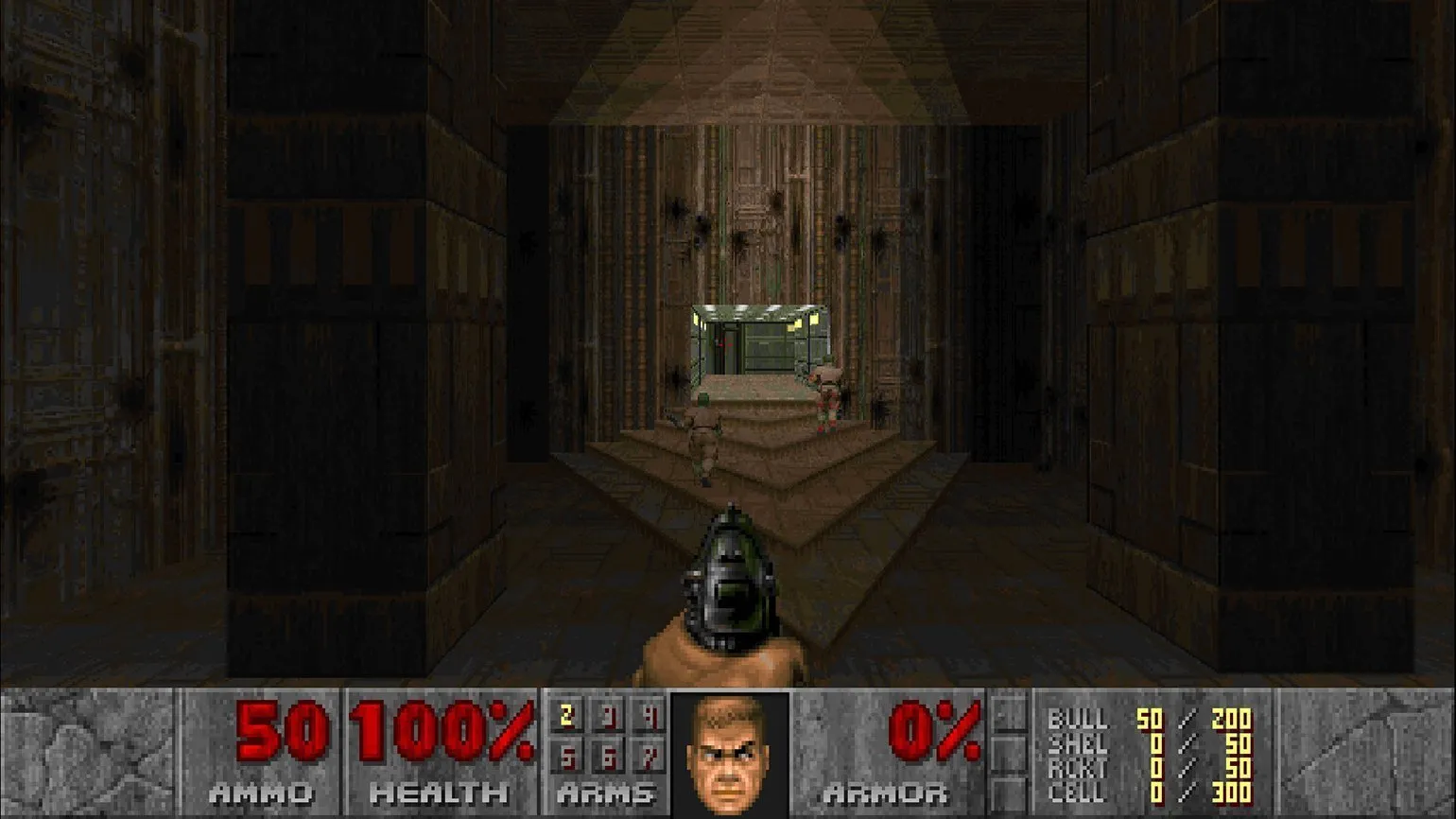
Games with stealth mechanics perfectly illustrate this scheme, as they require the player to begin the level hiding from enemies. This provides an opportunity to carefully observe the environment and plan their actions. A similar gameplay loop can also be found in traditional shooters. For example, in Doom and Doom II, monsters didn't notice the player until they launched an attack. This created an opportunity to assess the situation and strategize. Such mechanics make the gameplay more engaging and strategically rich.
The developer emphasizes that intentionality plays a key role in the perception of linear games. Steve Lee argues that the negative attitude towards linearity is largely due to the lack of intentionality in the player's actions. To illustrate how this quality can enrich the gaming experience, he cites the cult game from Valve - Portal.
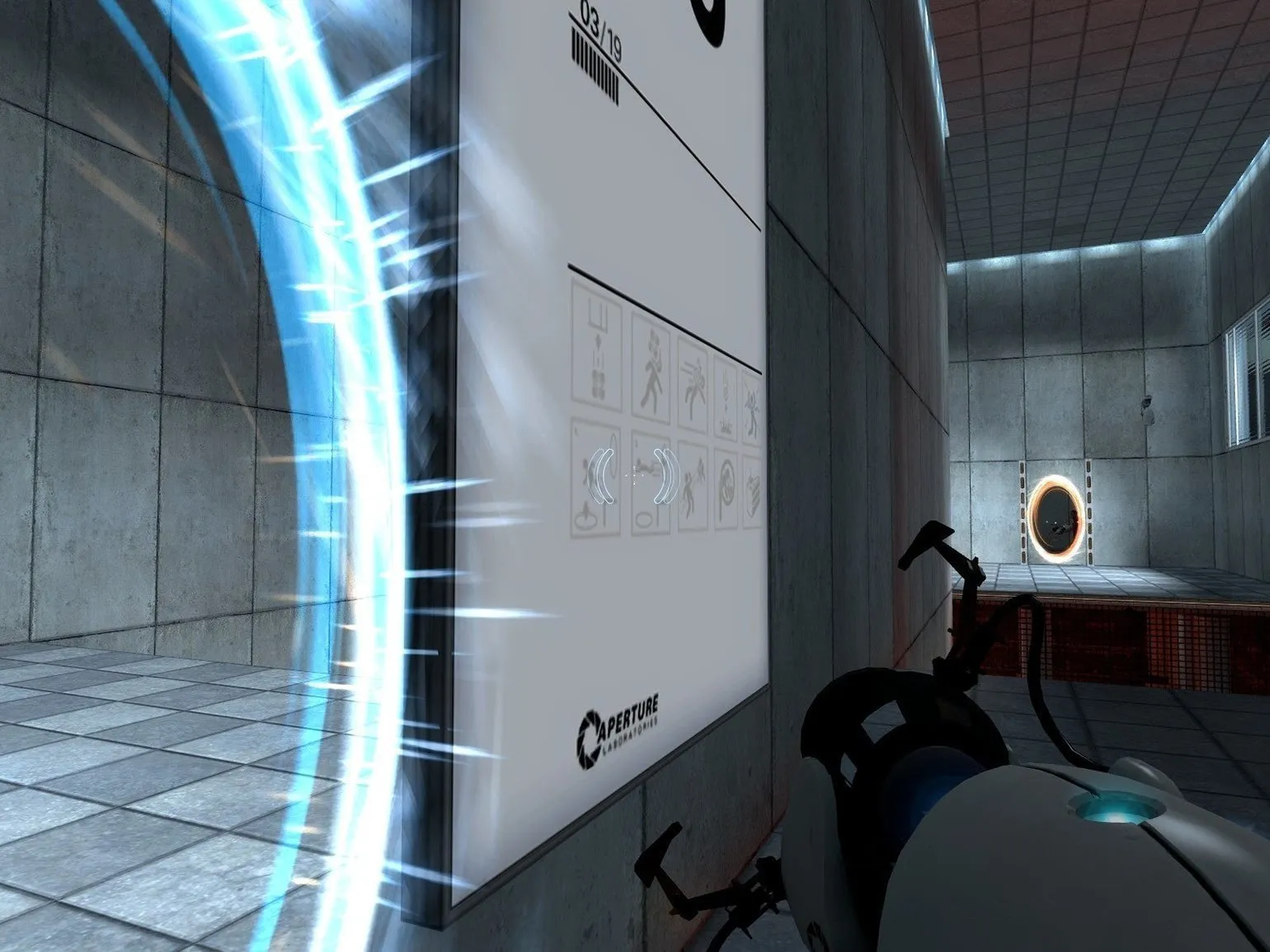
In the game Portal, although there is usually only one way to solve each problem, players are given the opportunity to experiment. The developer emphasizes that players are given time, freedom of action, and enough information to consciously use the portal gun and find various solutions. This creates a unique gameplay experience where exploration and creativity are key to success.
Part 2. World Development
Level designers play a vital role in creating the game world, along with artists, animators, and writers. Steve Lee emphasizes that for a successful gaming experience, the world must meet three main criteria: uniqueness, integrity, and meaningfulness. Uniqueness allows players to immerse themselves in an original atmosphere, integrity ensures a harmonious perception of all elements, and meaningfulness adds depth and motivation to explore the game space.
The game designer identifies three main ways to meet the established criteria. First, it is important to carefully analyze the target audience and their preferences in order to create content that will be of interest to them. Secondly, it's essential to consider current trends in the gaming industry, which will make the product more relevant and in-demand. Thirdly, regular testing and player feedback will help identify weaknesses in the game and address them promptly. These approaches not only improve the quality of the game but also enhance its competitiveness in the marketplace.
Create unique features for your world, including both small details and key aspects of the game universe. For example, in the Dusty Quarter, players may encounter interesting scenes: for example, bandits demanding protection money from the owners of a magic goods shop, while in another, a caretaker ends the suffering of a mortally wounded friend. These elements make the world more alive and immersive, creating an atmosphere that attracts and holds players' attention.
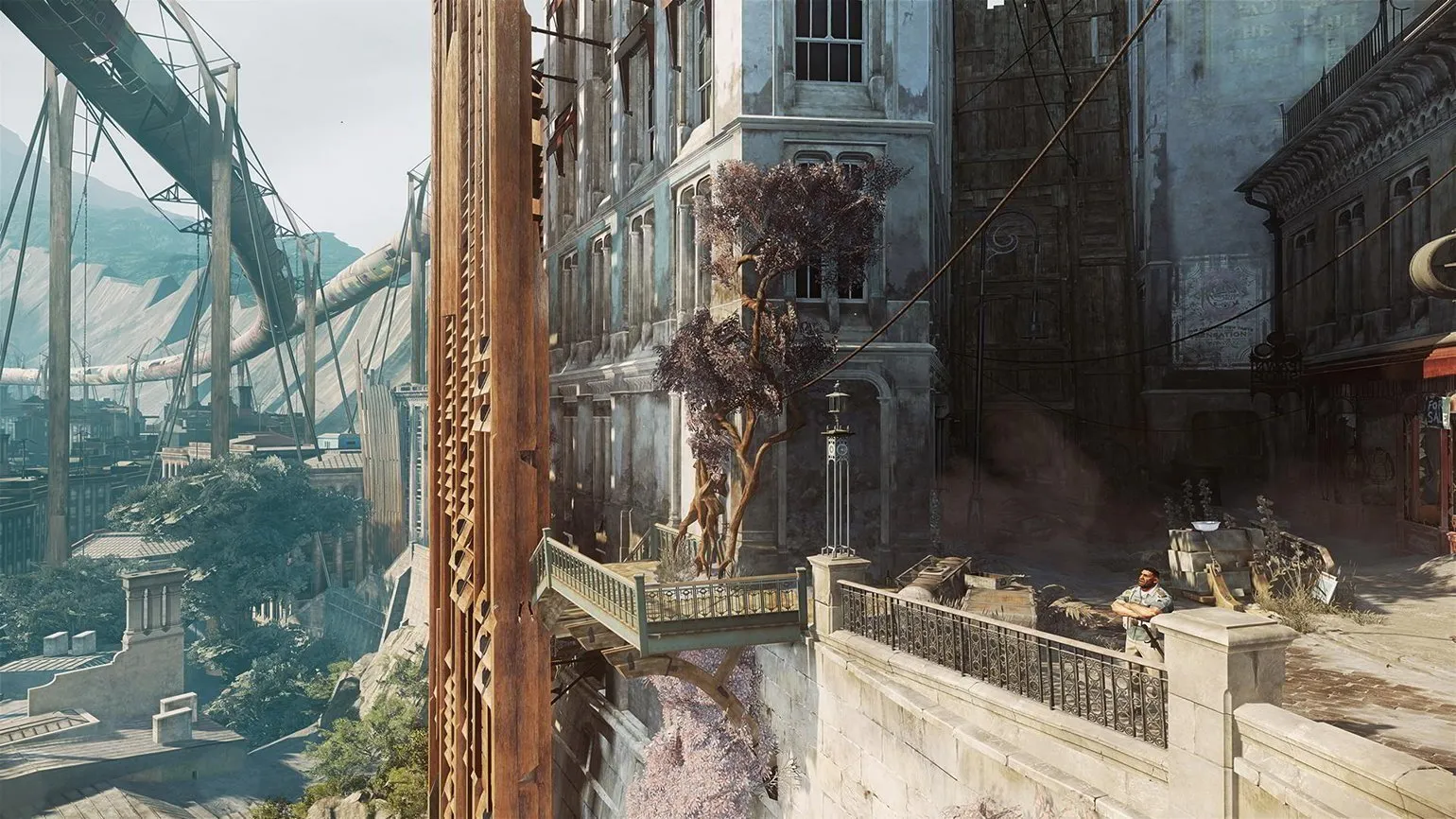
Use every opportunity to reveal the game world. Every location, character (NPC), dialogue, objective, side quest, and loot location can enrich the narrative of your game's universe. For example, Lee recalls how in Dishonored 2, an alternate route through an abandoned house was added that could have become just another empty room. To avoid this, the team included a note detailing how the previous owners had been evicted by the city guard. Such details not only deepen the plot, but also make the world more alive and realistic for players.
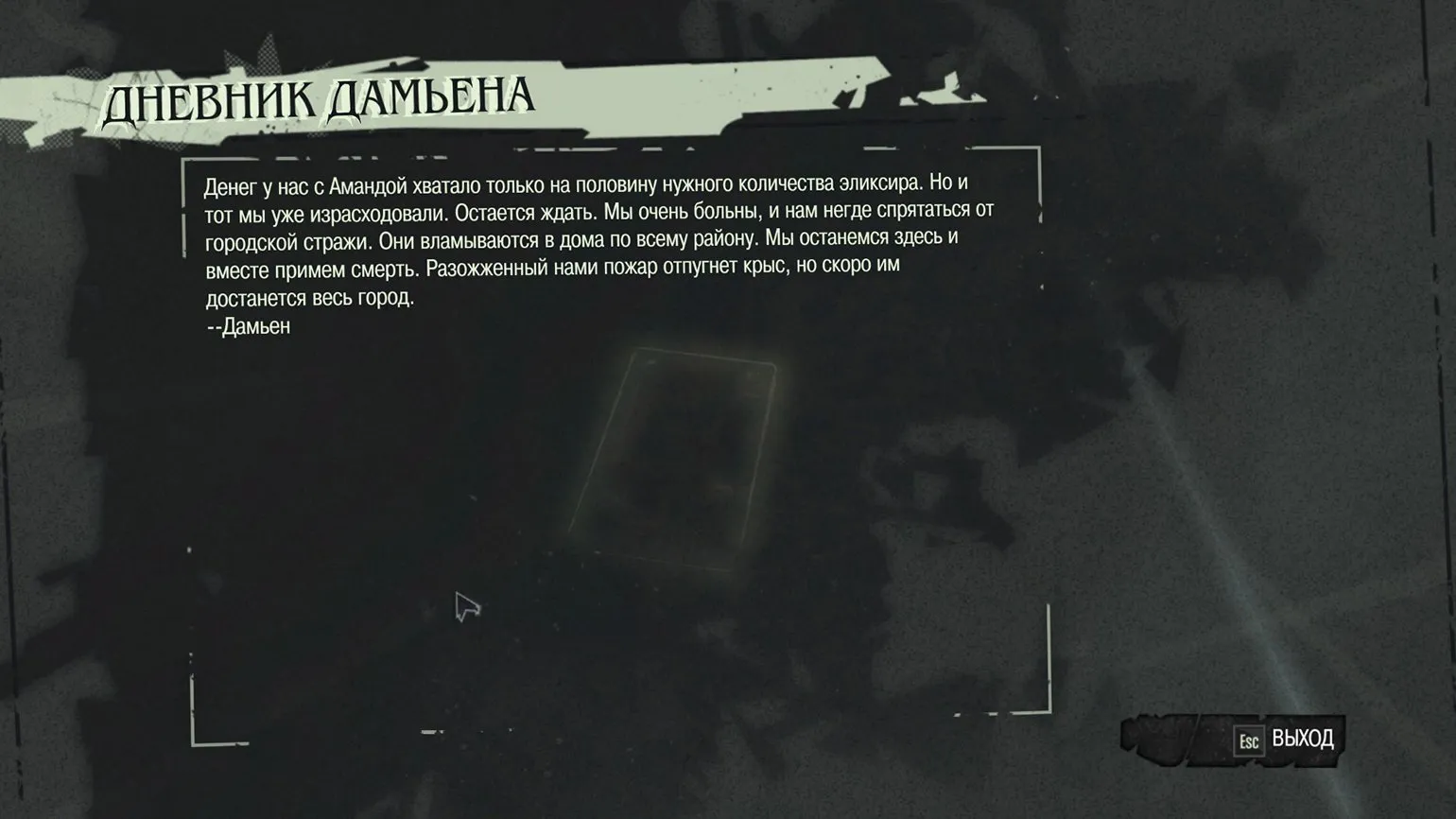
Say your thoughts about the characters. The game universe is an important part of the narrative, and stories always focus on people. For example, the Dusty District in the game symbolizes environmental disasters and social inequality. This area is regularly plagued by dust clouds brought by winds from nearby mines. The residents, the miners of Karnaca, are forced to build massive wooden structures to protect themselves from the wind. These details help create a vivid and memorable image, emphasizing the importance of human stories in the context of the game world.
Part 3. Interactive Narrative
In literature and cinema, there is a popular technique called "Show, don't tell." However, according to game designer Steve Lee, this approach is not enough for video games. He argues that games should maximize the unique capabilities of their format. This means that developers should emphasize interactivity, allowing players to actively engage with the story and make decisions that impact how events unfold. Video games have the potential to create emotional connections and immersion that are difficult to achieve in other media. Therefore, it is important for game designers not only to tell stories but also to enable players to experience them.
Games should inspire players to take action based on a predetermined narrative. This creates a deep connection between the player and the story, allowing them to make conscious decisions that influence the story's development. This approach promotes immersion and increases the level of interaction with characters and the environment. Games that successfully implement this concept become more engaging and memorable for players.
The game offers the opportunity to interact with each character in a variety of ways: you can sneak past, stun, or eliminate an enemy. Each of these choices significantly impacts the game world, the plot, and the story's ending.
Steve Lee emphasizes that this transforms ordinary gameplay choices into chances to act and convey narrative intentionality every time you interact with an NPC. This approach allows players not only to make decisions but also to shape unique stories through their interactions with characters. Each decision becomes an important element of the narrative, which increases immersion in the game world and creates a deeper connection with its plot.
In The Dusty District, narrative intentionality is a key element, shaping the main mission. The player must make a decision between two factions, each representing their own unique ideology. The scenes Lee mentioned are not isolated moments; they allow for player action, opening up new avenues for the story to unfold. This interaction makes the gameplay deeper and more engaging, allowing every choice to have a significant impact on the final story.
Game designers emphasize the importance of minimizing moments when the player loses control. This helps maintain engagement and interest in the game, ensuring a smoother gameplay experience. Keeping the player in control creates a sense of freedom and responsibility for their actions, which in turn improves the overall gaming experience and increases user satisfaction.
Dramatic events unfolding on-screen involving the game character lose their emotional significance for the player when the game deprives them of the ability to control actions. It is important that the player remains engaged in the process, otherwise plot twists may not have the intended effect. Effective interaction between the player and the game world allows for a deeper understanding of the developments and a stronger emotional response to what is happening.
The character experiences fear, realizing that they are in danger. While the player perceives the situation differently, thinking, "It's a cutscene, I can relax." These different reactions highlight the difference between the character's inner world and the player's perception.
As an example, consider the famous scene from the beginning of Half-Life 2, where a soldier drops a soda can on the floor and orders the player to pick it up. This moment not only teaches the player how to interact with objects but also demonstrates the developers' narrative intentionality. They used a simple situation to deepen the interaction between the player and the game world, which increases immersion in the story.
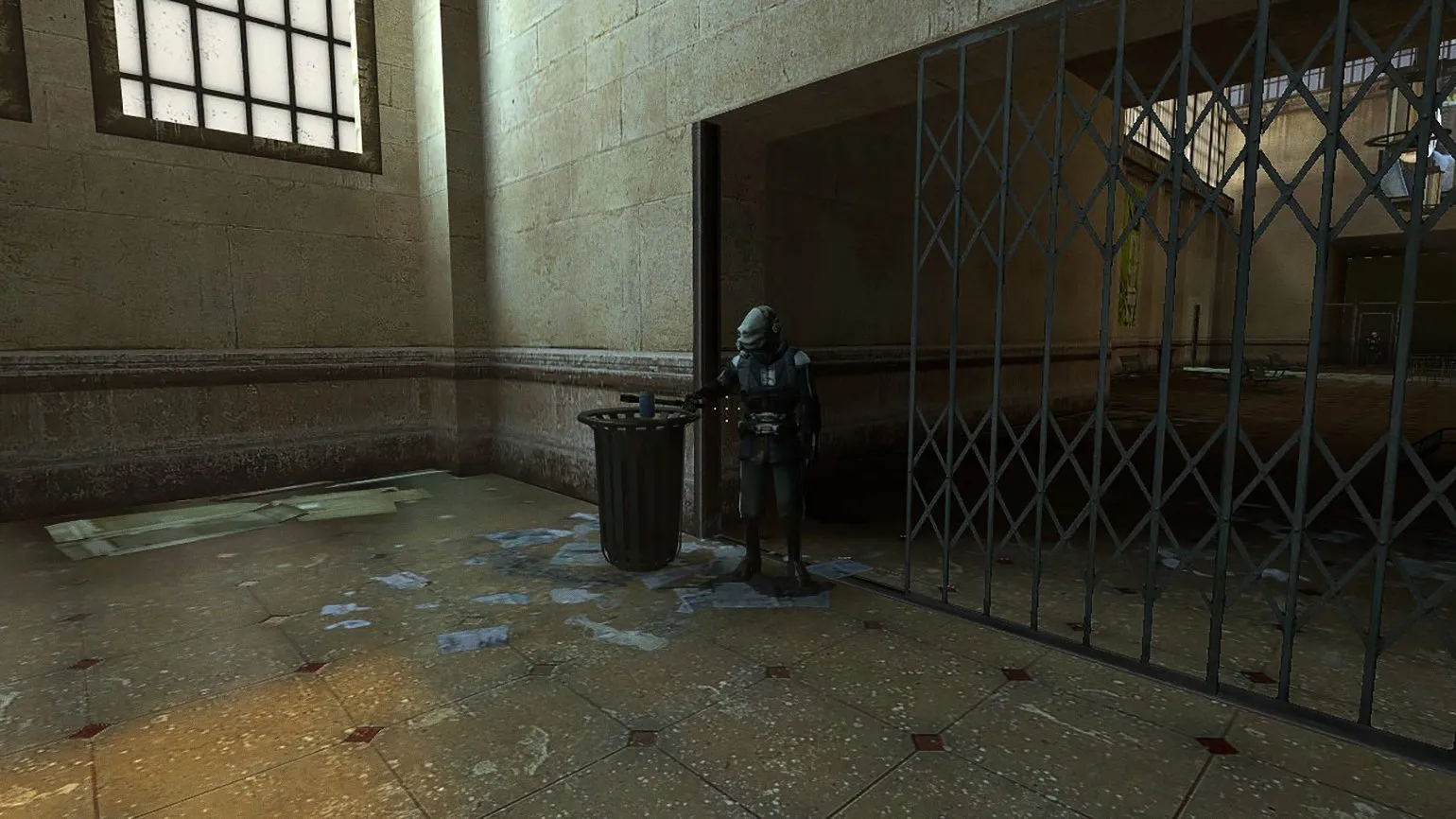
At this moment, every resident of City 17 faces two paths: submit to the totalitarian The government or rebel against it by throwing a can in a Combine's face and risking a baton strike. This choice symbolizes the internal struggle of the citizens, who must decide whether to follow the unconditional orders of the authorities or join the resistance movement.
The next time you encounter the Combine, you will shoot them not because they act as antagonists in a video game, but because you have experienced their oppression firsthand. This will naturally move you to protect the civilians. Steve Lee emphasizes the importance of this connection between personal experience and in-game actions. Understanding the oppression experienced by the characters shapes your position and promotes deeper engagement with the story.
A game designer shared helpful tips for creating an interactive narrative. Effectively developing an interactive narrative requires a deep understanding of the player's interaction with the game world. It is important to create compelling characters and well-developed storylines that will maintain user interest throughout the game. Use varied choices and consequences to ensure players feel the impact of their decisions on the story. This not only fosters engagement but also encourages replayability, as players will be encouraged to explore different scenarios. It's also important to consider that visual and audiovisual elements should harmonize with the narrative, enhancing the overall experience of the game.
"Games and level design reach their peak when gameplay, presentation, and story interact harmoniously," notes Lee. "These aspects aren't just peripheral details that complement gameplay. They are the essence of the experience, and they are what the player reflects on throughout the game."
During his lecture, Steve Lee recommends several books and academic papers for further study. We've collected all these recommendations in one place for your convenience.
- Donald Norman, "The Design of Everyday Things": a classic work on industrial design.
- Doug Church, "Formal Abstract Design Tools": an analysis of the term "gameplay intentionality" from its author, one of the pioneers of the immersive simulation genre.
- Janet Murray, "Hamlet on the Holodeck: The Future of Narrative in Cyberspace": a story about how digital technologies are changing our understanding of the nature of narrative.
- Scott McCloud, "Understanding Comics": an American comics artist examines what makes comics a unique format and what makes them so exciting to read.
We recommend checking out Steve Lee's YouTube channel, "Talking about Level Design". On this channel, the developer shares tutorial videos aimed at aspiring level designers. You can learn useful tips and techniques to improve your game level creation skills.
Who are you in the game development world? A mini-course for those who want to make games.
In this free mini-course, you'll try yourself as a game designer, 2D artist, or Unity game developer and choose the profession that's right for you.
Find out more.