Learn: Profession 3D Animator
Learn MorePrincess Mononoke (1997)
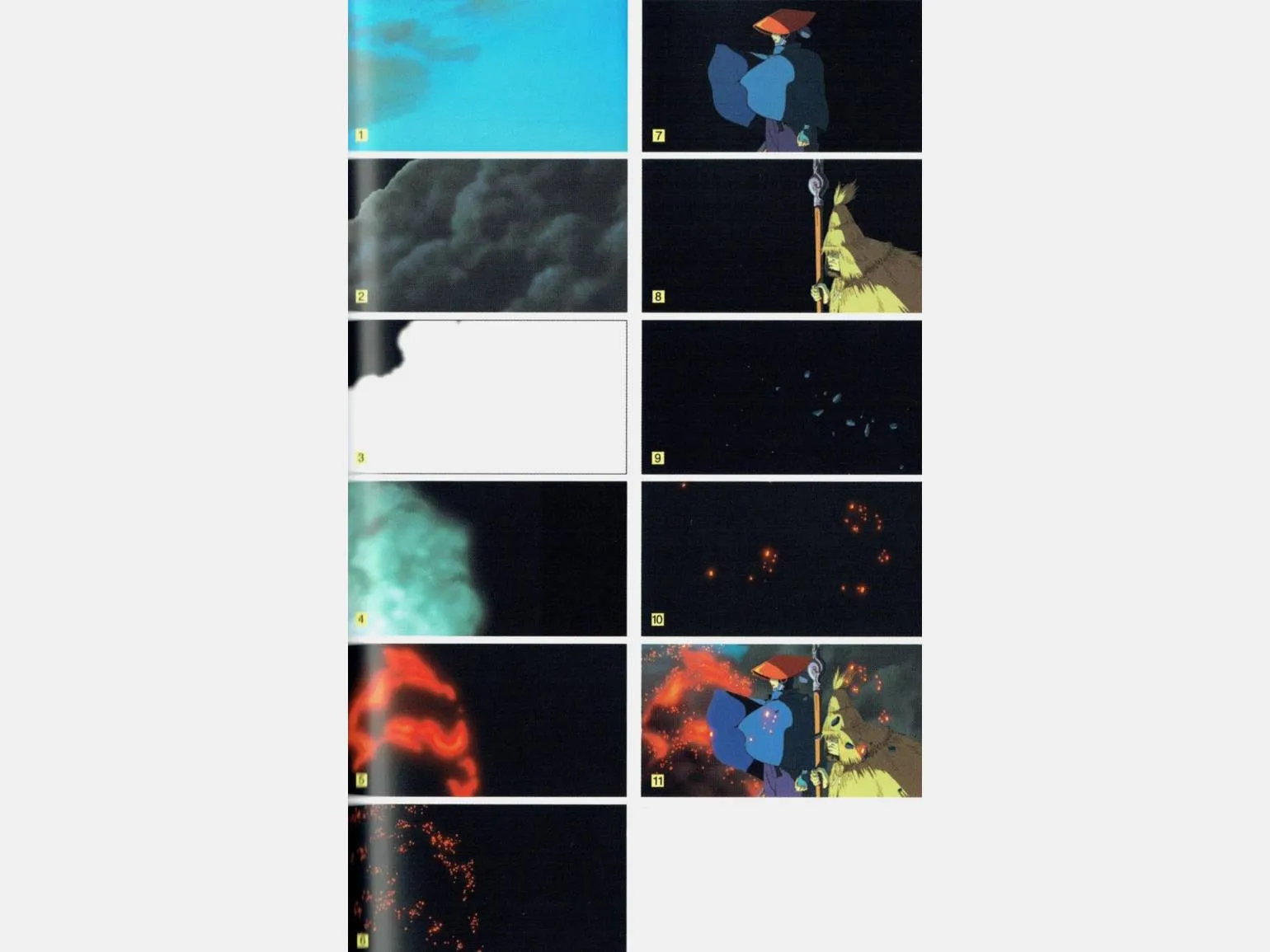
The studio pioneered digital animation with the 1994 film Pom Poko: The Tanooki Wars, featuring a panoramic camera sweep along library shelves. Animating such scenes by hand is time-consuming and can be tedious for animators, as it does not provide much scope for creative expression. Their follow-up film, Whisper of the Heart (1995), employed digital compositing techniques. This made it possible to create complex fantasy scenes by combining hand-drawn elements into a single frame. For example, the famous sequence featuring Shizuku and Baron the Cat flying used approximately 20 individual elements, including the background, clouds, and characters. These innovations have significantly enriched the visual range of animated films and opened up new horizons for the creativity of animators.
The first animated film to actively use computer graphics was Princess Mononoke. This studio opened a computer graphics department consisting of three animators and developed its own software solutions to improve the quality of animation. This was a significant step in the history of animated film and opened new horizons for the future use of CG.
Hayao Miyazaki strove to harmoniously combine digital elements with 2D animation so that they do not stand out from the general background. At that time, there was no software capable of rendering 3D models using the cel-shading technique, which makes images look like drawings with an outline and simple shadows. As a result, a unique program was developed. In collaboration with the studio, developer Michael Arias created the Toon Shader, which was subsequently used not only at Ghibli, but also at other animation studios. This innovation significantly expanded the capabilities of animators and gave new projects a unique visual style that became characteristic of many films.
In the cartoon "Princess Mononoke" about 15 minutes of content was created using computer graphics. Of this time, ten minutes are scenes entirely drawn in a graphics editor. All digital technologies used in the creation of the cartoon can be roughly divided into three main categories: computer graphics, digital compositing, and digital painting. These methods made it possible to achieve a unique visual style and expressiveness, which makes "Princess Mononoke" one of the most iconic works in animation.
CG was used to develop 3D models, mapping, particle systems, and morphing. This technology enables the creation of realistic visualizations and animations, making it indispensable in various fields, such as film, video games, and architectural visualization. The use of CG in these processes significantly improves graphics quality and allows for the recreation of complex scenarios and effects.
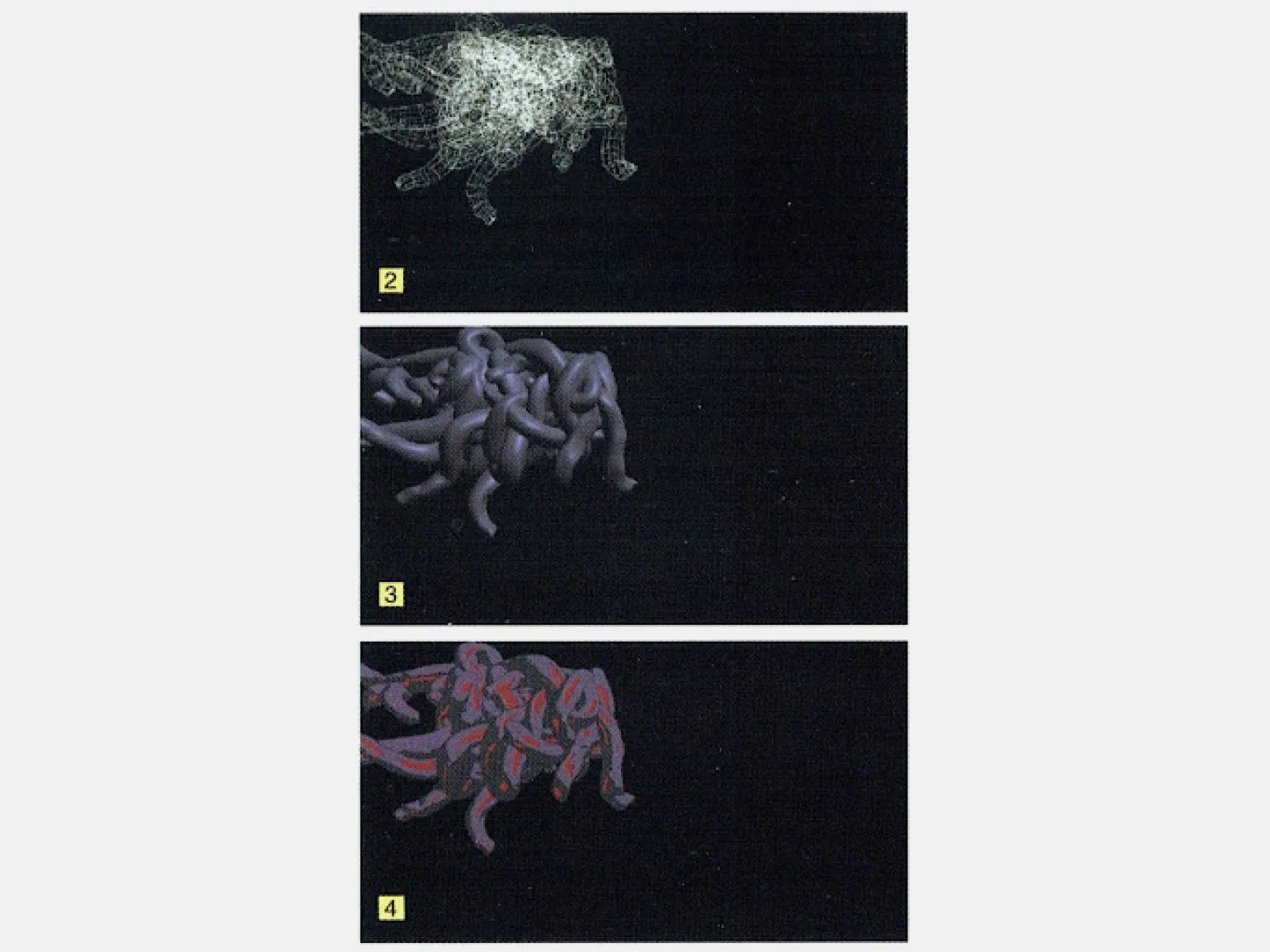
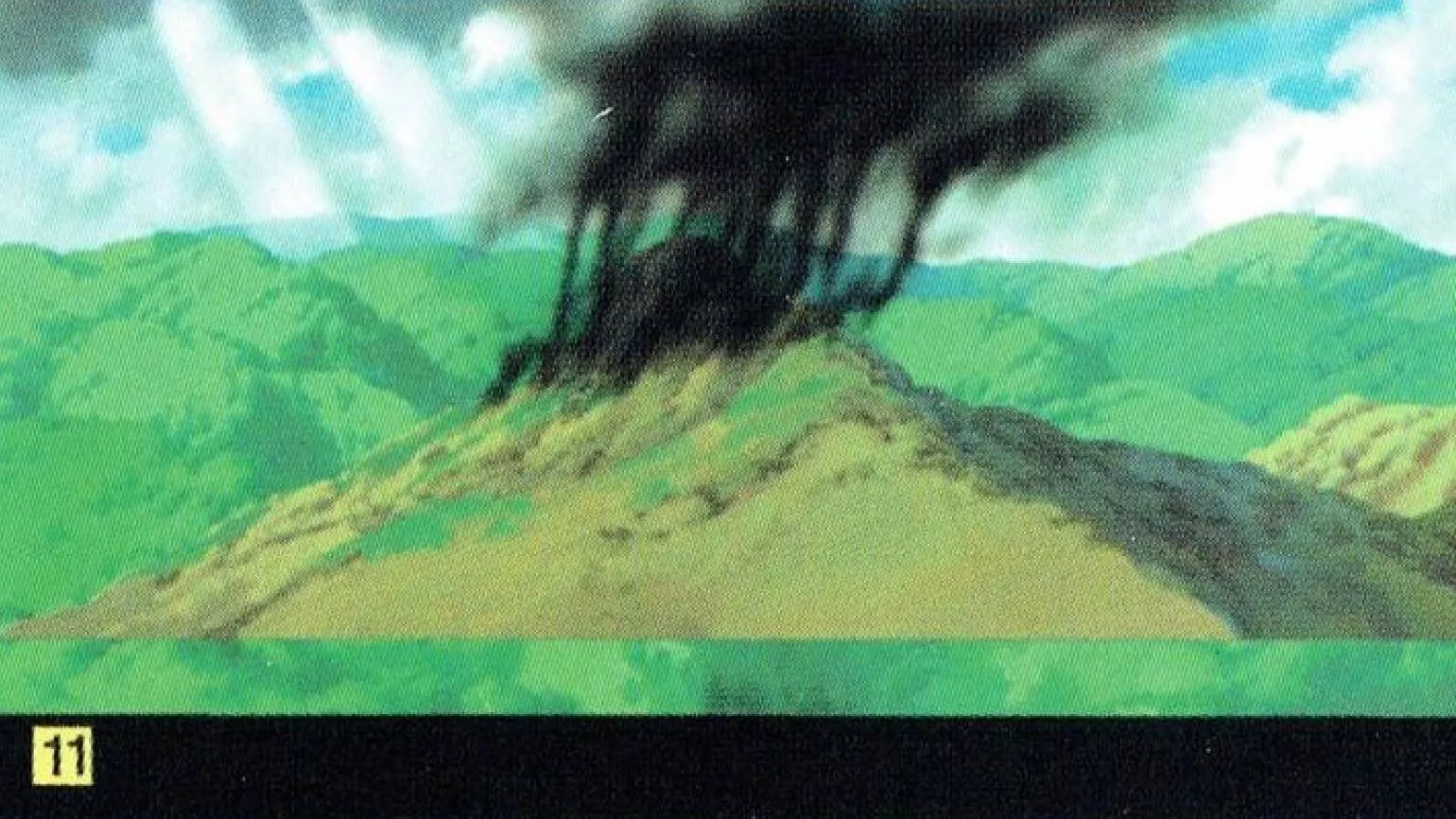
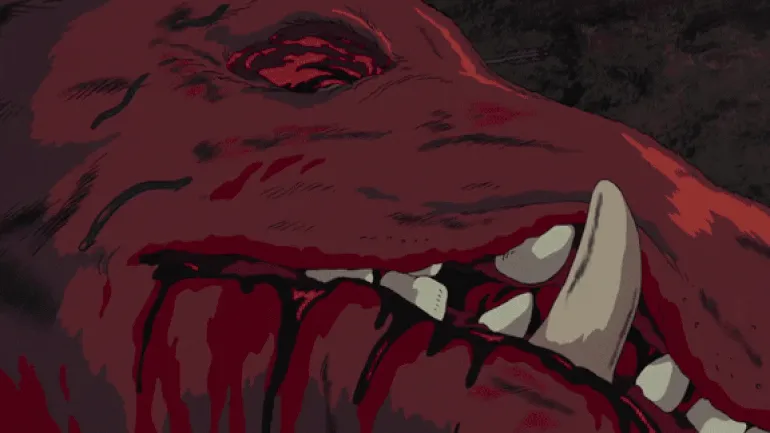
3D. It all began with a scene in which an enraged Tatarigami—a boar god—launches a dynamic attack. Driven by hatred, he transformed into something terrifying: a shapeless mass of writhing black worms. This scene sets the tone for the entire work, immersing viewers in a world filled with myths and legends, where the struggle between good and evil takes unpredictable forms.

The scene consisted of approximately 20 shots, but after six months of work, not a single one was successfully completed. Miyazaki, who was initially opposed to computer graphics, began to lose patience with the slow progress and turned to CG director Yoshinori Sugano to see if he could create a 3D model of the monster. This proved to be the most difficult challenge in the CG process, but the result convinced Miyazaki that 3D technology could play a significant role in the studio's work.
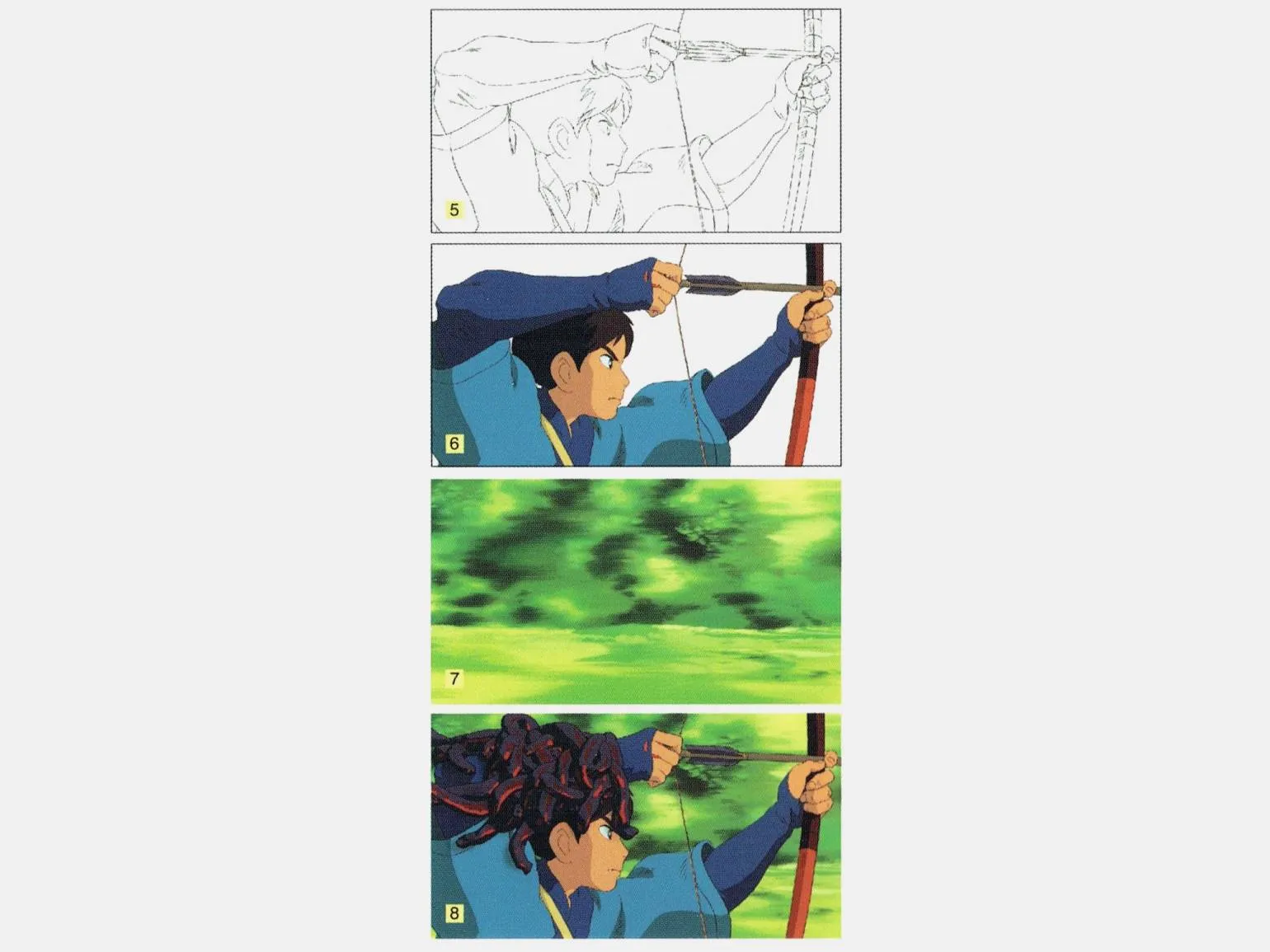
The 3D models were created primarily to visualize the demonic worms and their possessed hosts, the Tatarig. A striking example of this is the scene in which the protagonist Ashitaka shoots a bow and worms wrap around his arm. The use of 3D graphics allows for a more profound conveyance of the atmosphere and emotional state of the characters, enhancing the viewer's immersion in the plot.
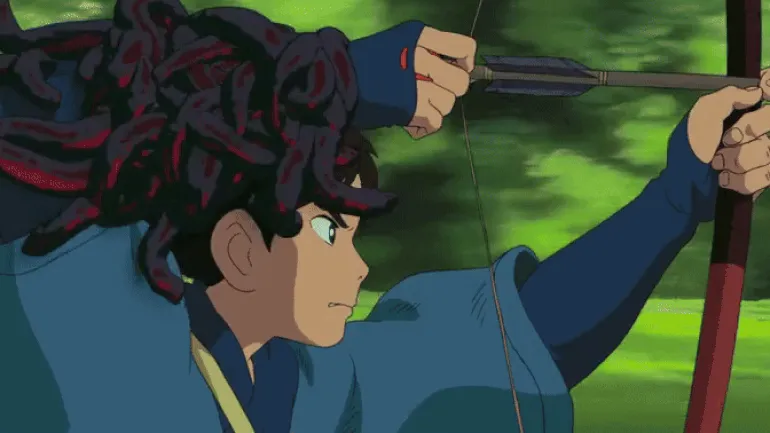
First, a 3D model was developed, which was then rendered to make it visually similar to the drawing. To create the final image, a digital character was superimposed on a traditionally painted background, and the 3D model was placed on top of it. This process allows for a harmonious combination of various techniques and styles, giving the image a unique look.
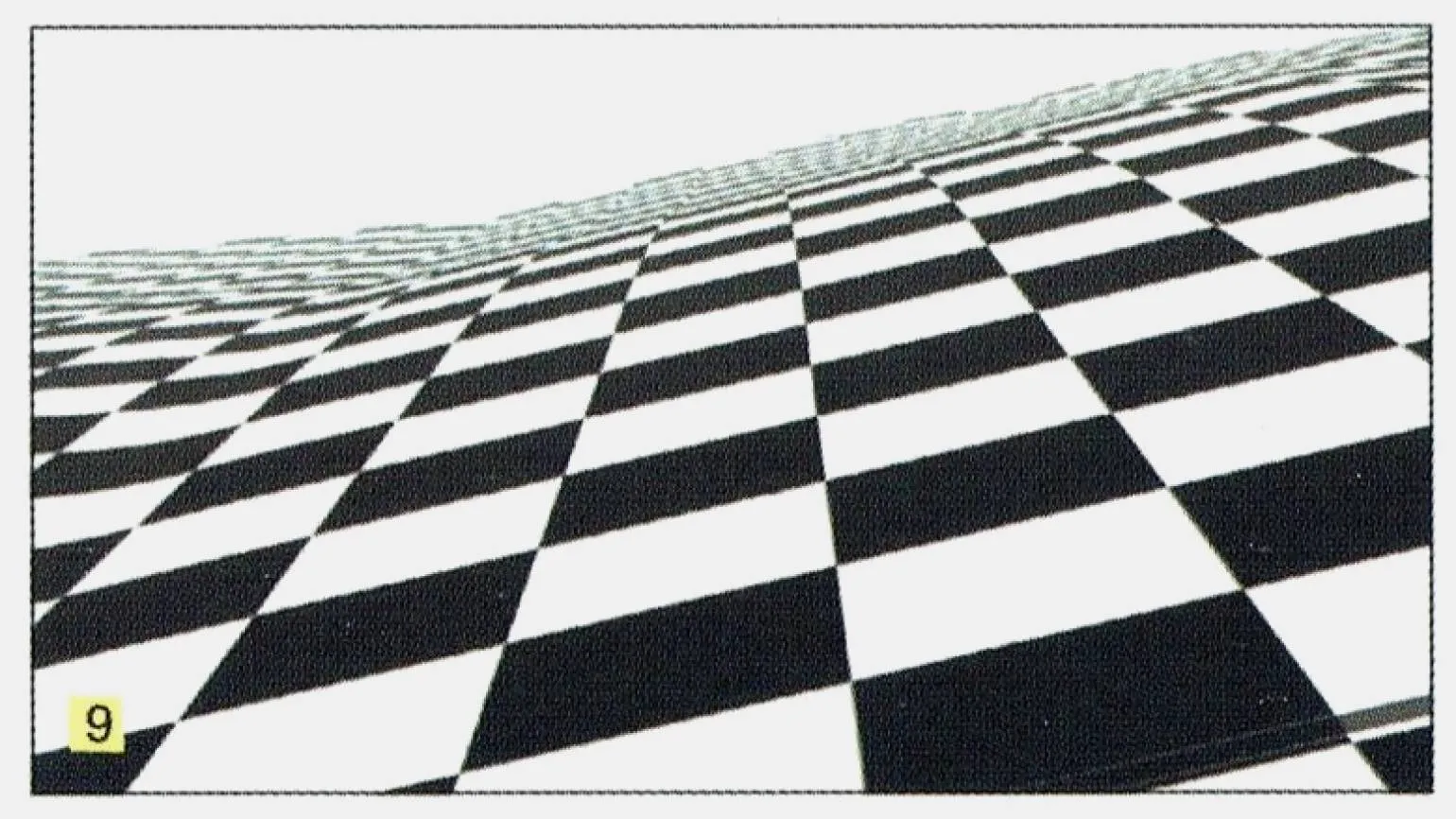
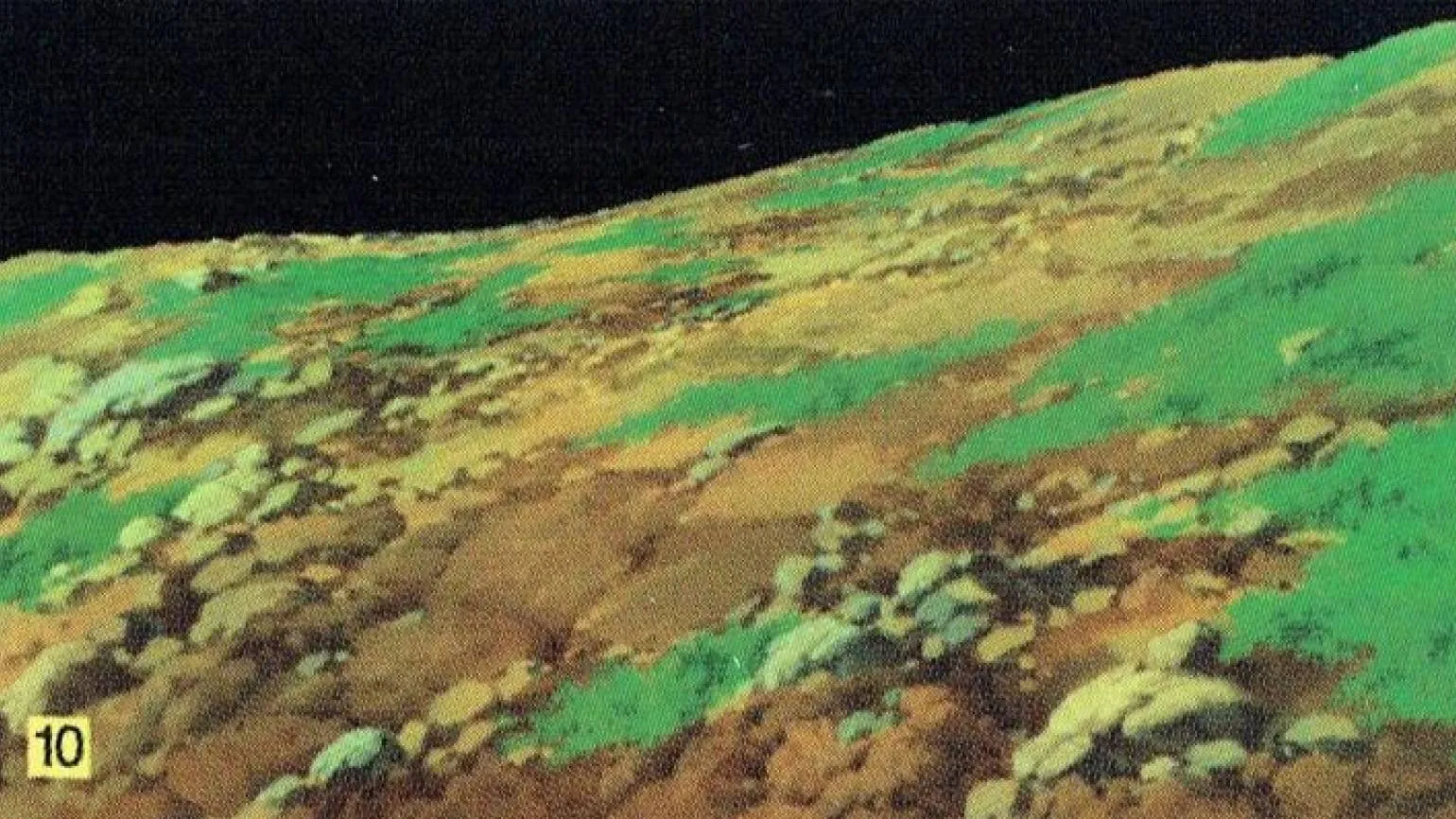
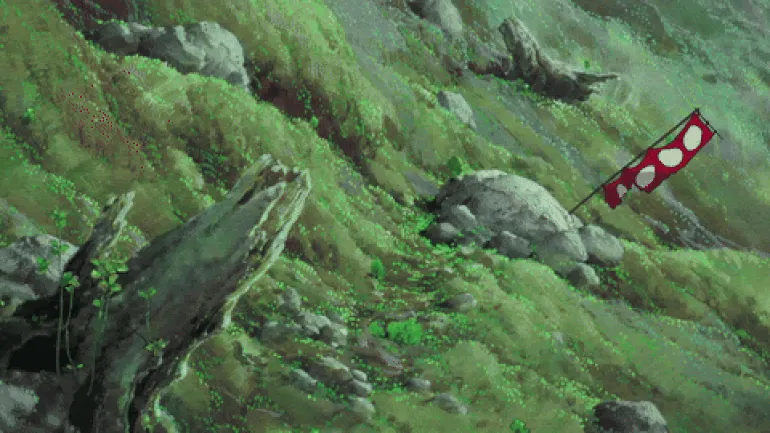
Mapping is an important tool in animation, especially in scenes where the background must be synchronized with the camera movement. In stop-motion animation, creating a background can be challenging, as it requires hand animation, which significantly increases the time and effort of production. However, mapping allows for the use of aesthetically pleasing static backgrounds while still allowing for smooth camera movement. This creates a sense of depth and space, enhancing the visual perception of the scene and increasing its emotional intensity. Using mapping in animation not only simplifies the process, but also opens up new possibilities for creative expression.
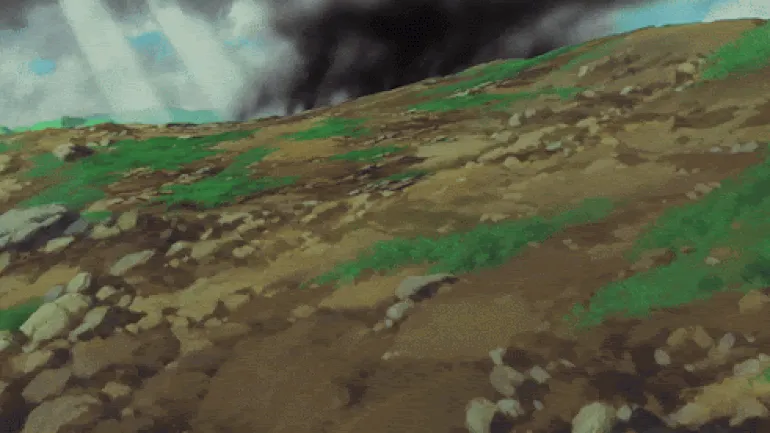
Mapping was used twice in the scenes where Ashitaka rides his trusty beast Yakul, allowing the viewer to see the world through his eyes for a few seconds. This technology created a sense of realistic speed and depth, giving scenes a special expressiveness. Although each scene remains hand-drawn, the use of computer graphics made it possible to achieve frame compositions that would not have been possible using traditional animation methods.
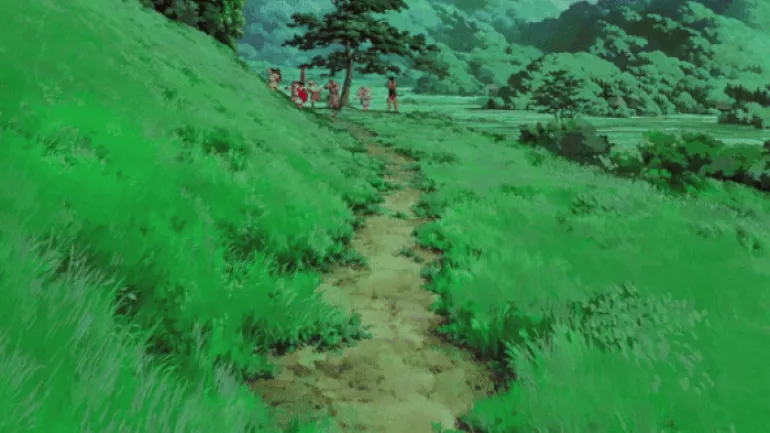
The process of creating a 3D environment begins with the creation of a mesh that takes into account the landscape's curves, camera position, and speed. A hand-painted background is overlaid on this mesh, serving as a visual reference. A transparent plane is then placed between the background and the camera, onto which hand-painted trees and characters, if included in the scene, are added. The camera movement in this process creates a dynamic effect, enhancing the impression of 3D space.
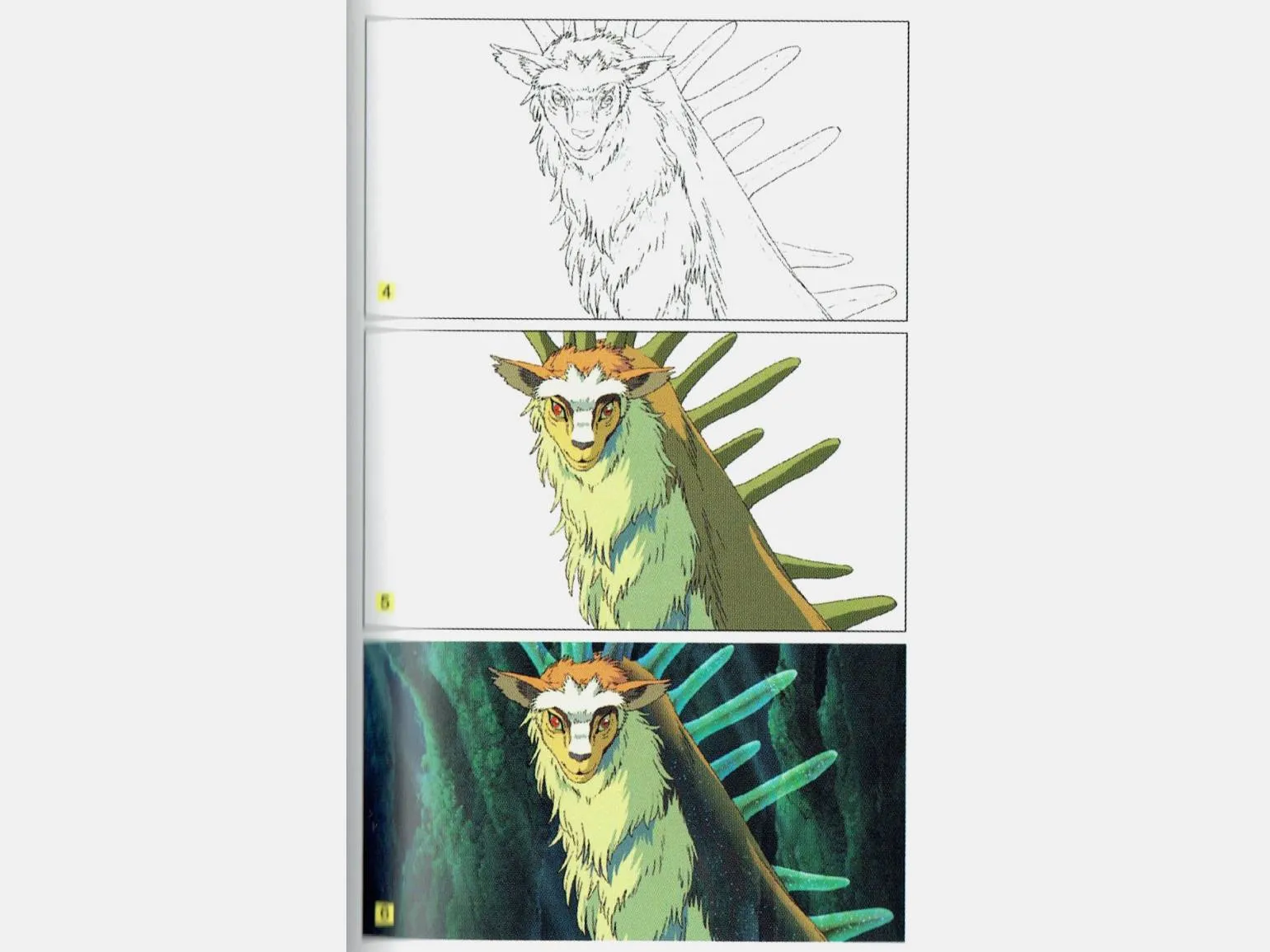
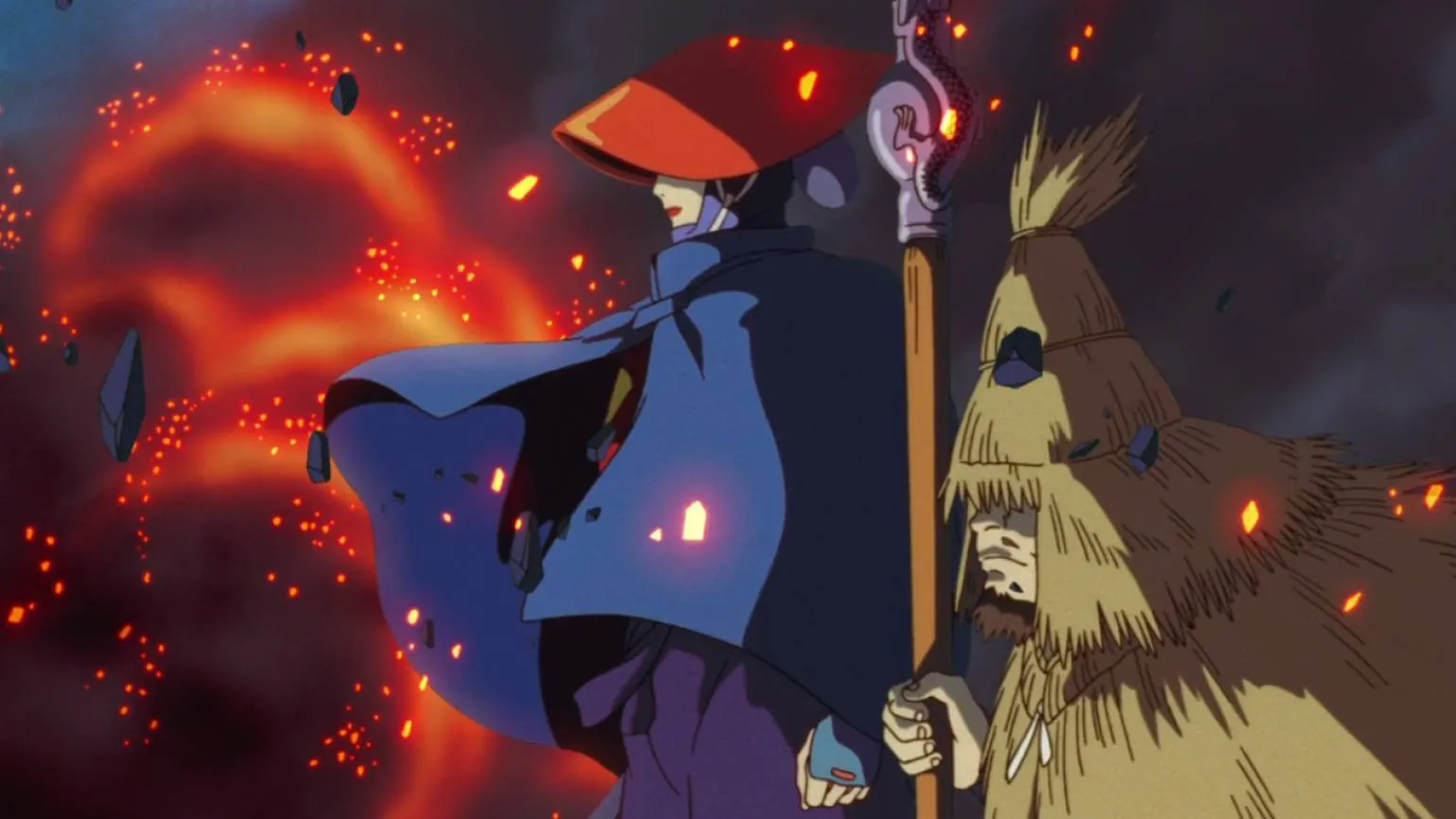
A particle system allows for the creation and animation of thousands of small sprites, creating the effect of wind. At a time when computers couldn't handle rendering complex 3D models, they could efficiently process large numbers of particles. This opened up the possibility of animating numerous small bubbles of light that could move within and emerge from the body of the Night Walker—a creature that transforms into the Spirit of the Forest at night. Using particle systems to create such effects not only improves visual perception, but also adds depth and atmosphere to animations, making them more appealing to viewers.
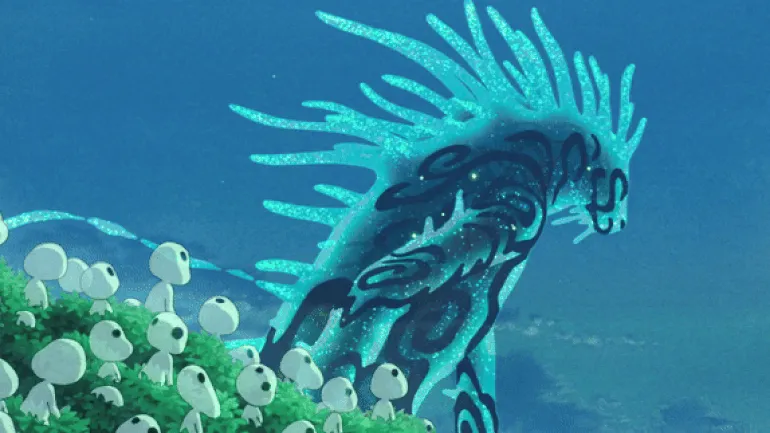
Creating the Wanderer's 3D frame began with modeling and filling it with special particles. After that, the frame was manually replaced with an animated character figure, which was then seamlessly integrated into the background. This approach allows for realistic animation and visual interaction between the character and the environment.
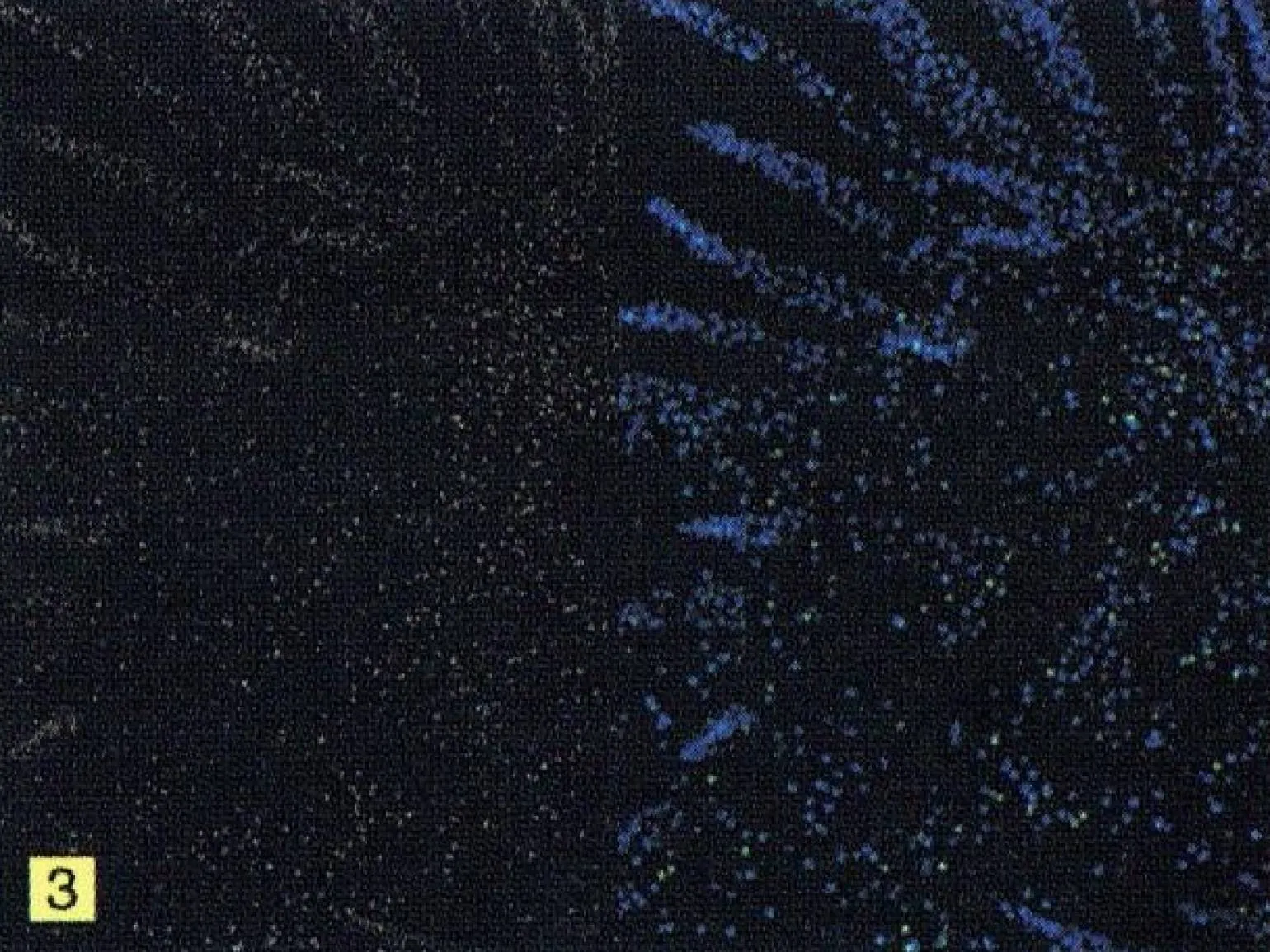
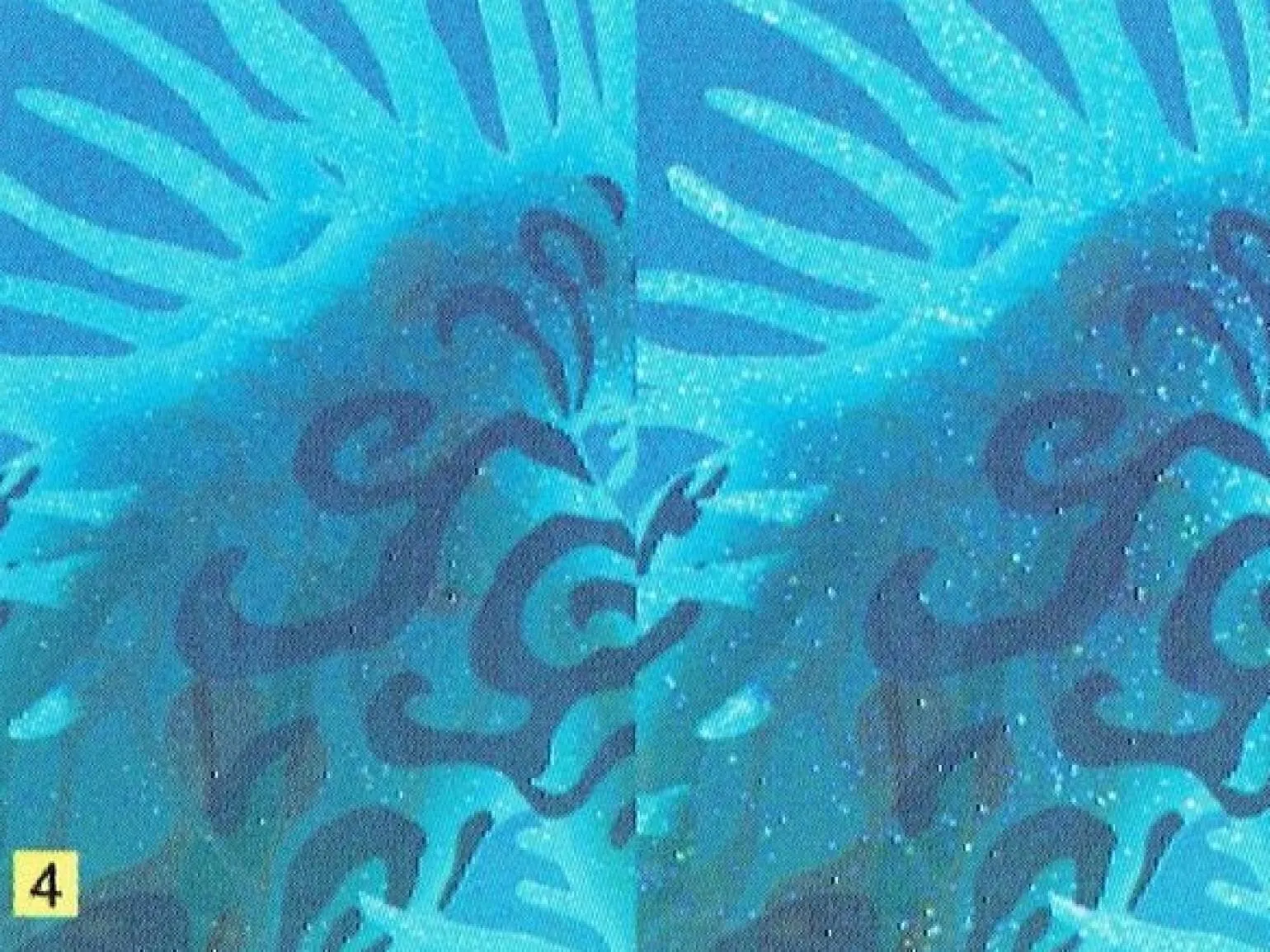
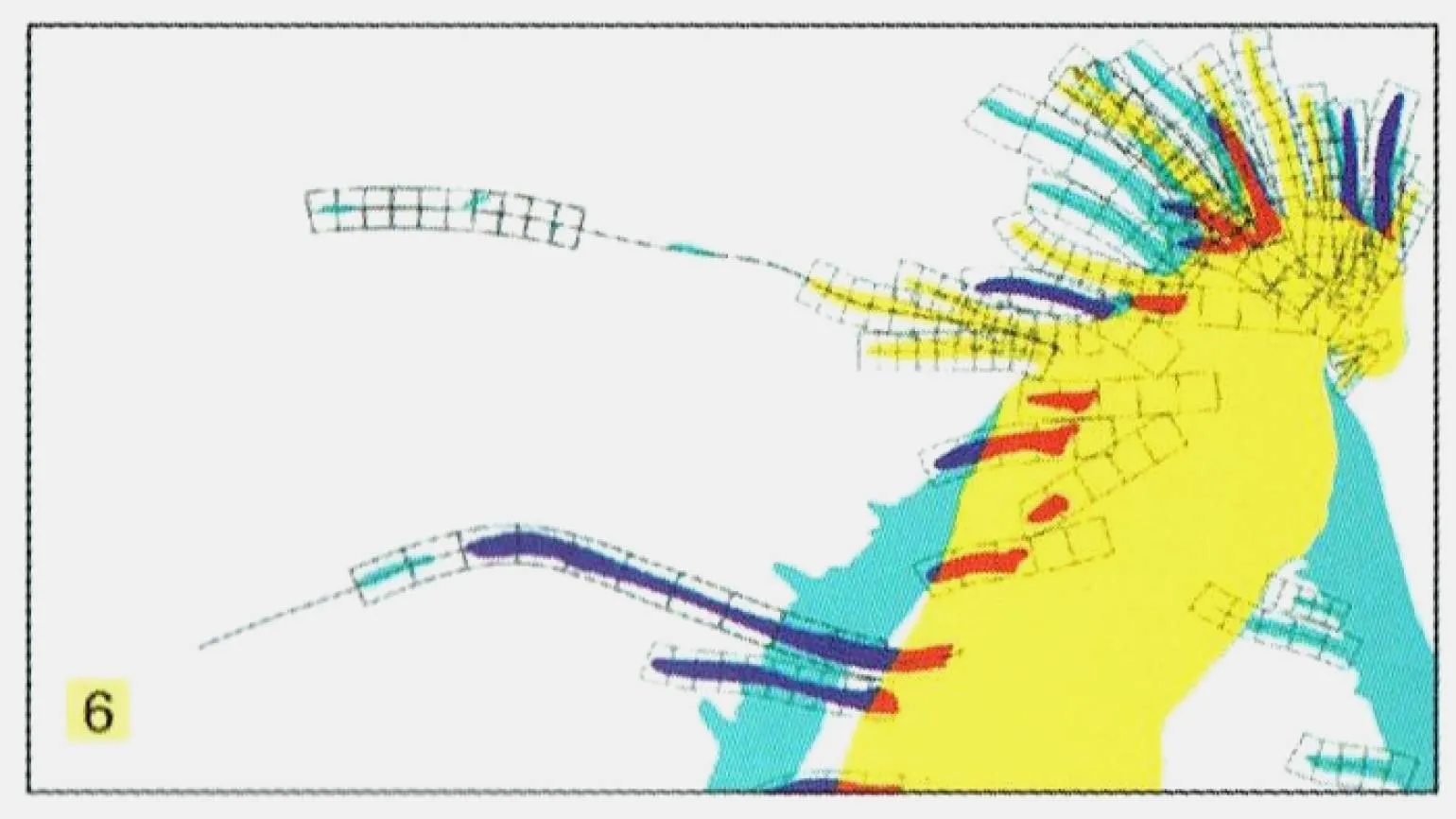
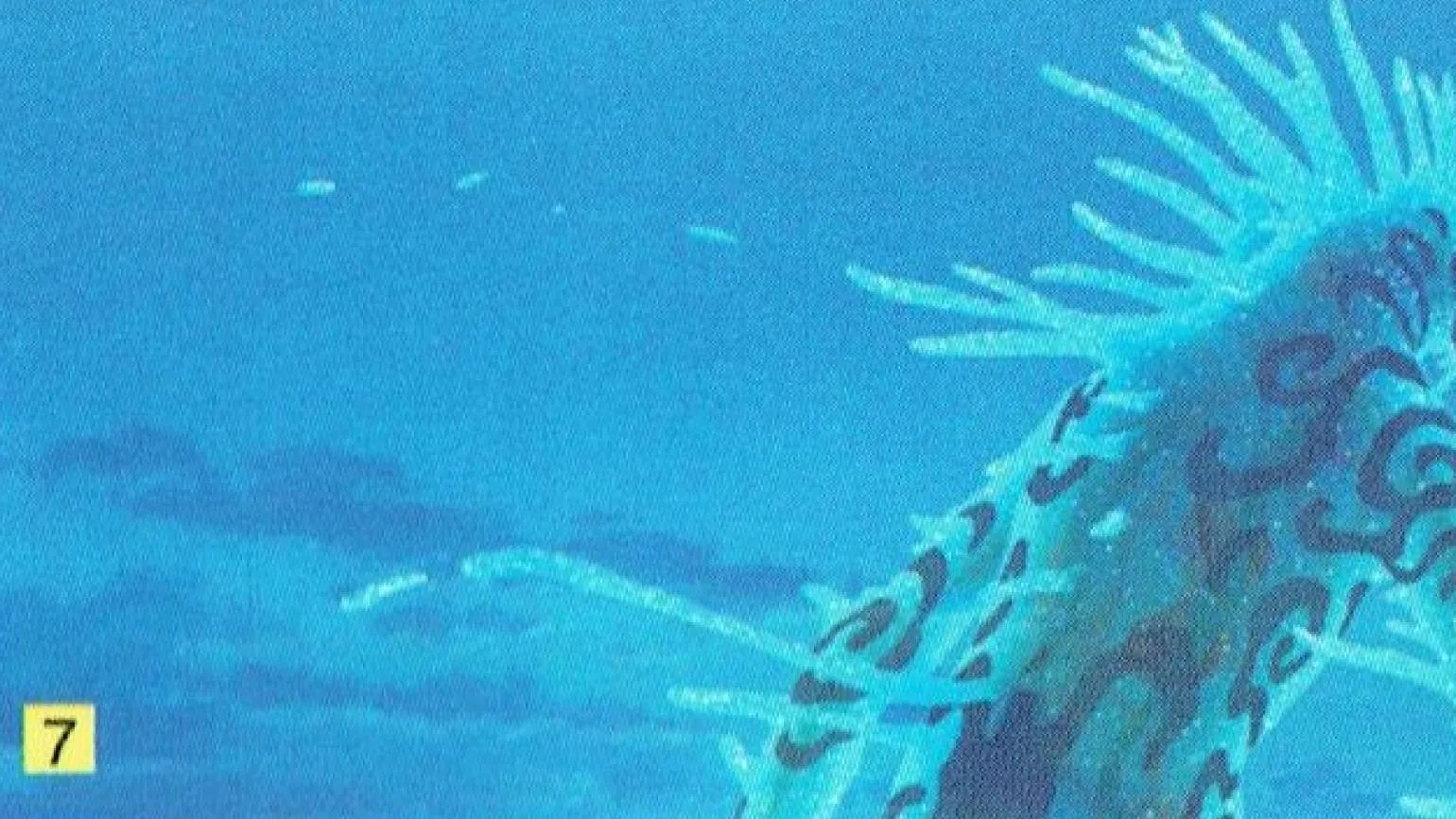
Morphing is a technology that allows for smooth transitions between images. With morphing, only keyframes are drawn, and the program automatically generates intermediate frames by superimposing the images and gradually changing their shapes. This technique finds application in various fields, including animation and visual effects. For example, morphing was used to create a scene depicting the rapid decomposition of a boar's body, demonstrating the potential of this technology in the film industry. Morphing can significantly simplify the animation process and achieve more realistic visual effects.
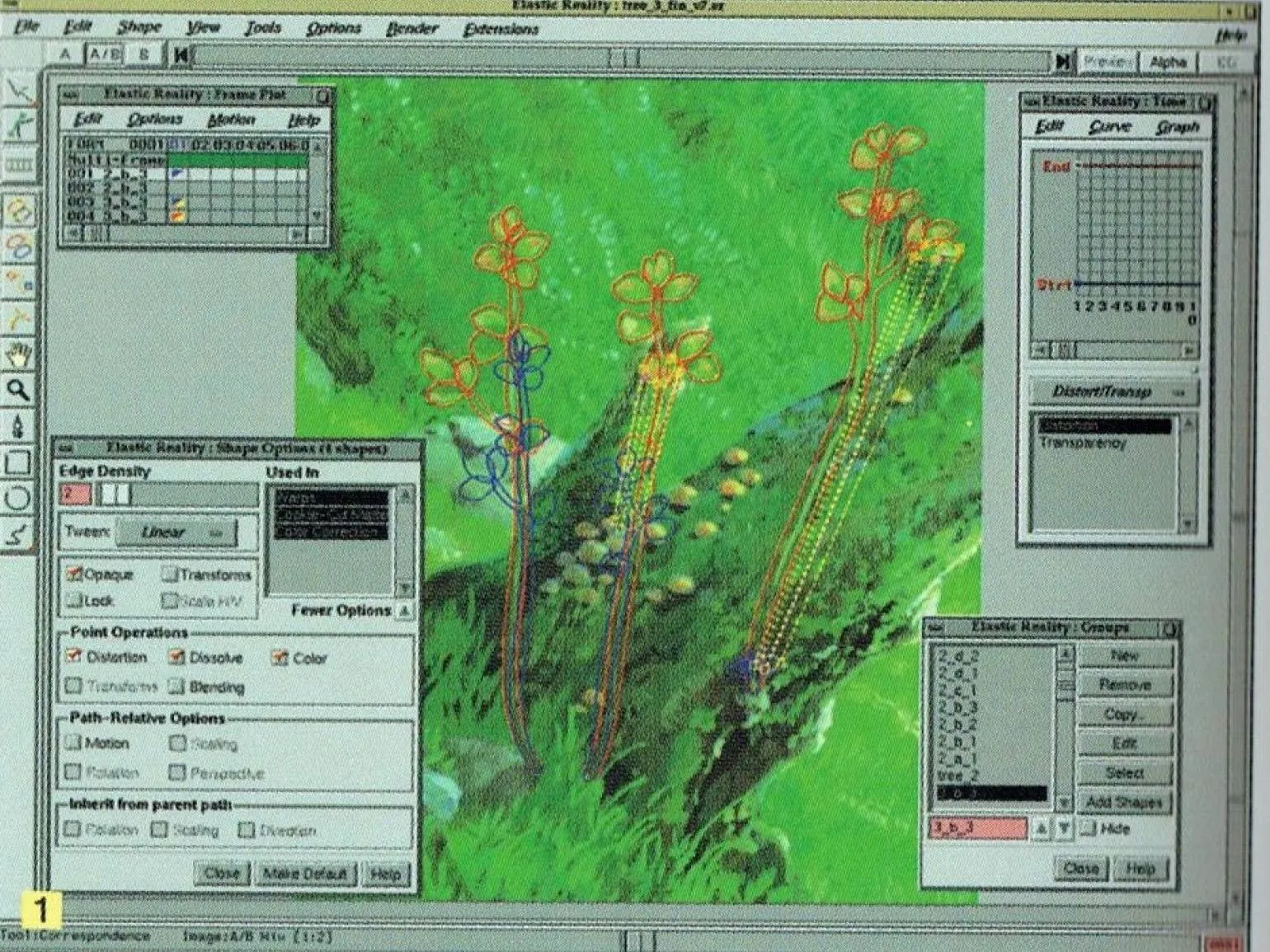
The scene at the end of the film, where the plants begin to grow and bloom again, symbolizes rebirth and hope. This moment emphasizes the importance of nature and its ability to recover even after the most difficult times. The return of greenery and flowers to the world of cinema creates a sense of renewal and optimism, reminding viewers of the cyclical nature of life and the power of nature.
"Princess Mononoke" is the studio's first animated film in which the use of digital technology to add lines and color was a key step. This decision was made to ensure the film's timely release.
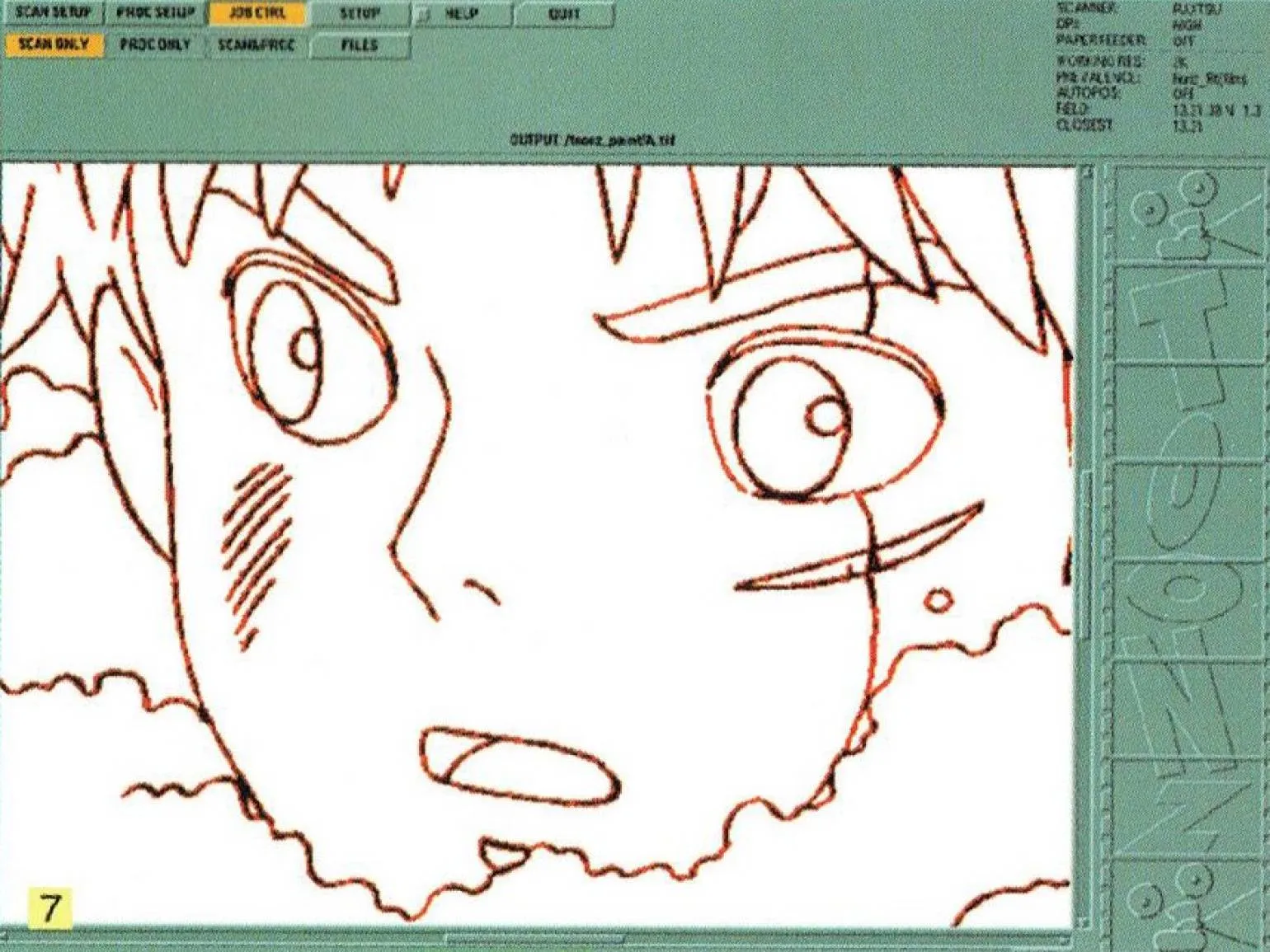
Digital drawings often look unnatural. When only a character's face and hands move in a scene, the rest of the figure remains static. In hand-animated films, a static figure is drawn for each frame, ensuring the uniqueness of each final image. In digital animation, it is sufficient to create a single frame with a static figure that maintains its pose throughout the entire scene. This leads to a feeling of artificiality, and the characters lose their life and dynamism. To improve perception, it is important to pay attention to the movements of the entire body and the interactions of the characters with the environment.
To avoid this, the studio retouched the digital line art, giving it a look more similar to traditional drawing. Special effects were used to soften the rigidity and static nature of digital images. This made it possible to create a more lively and natural atmosphere in the works, while preserving the advantages of digital technology.
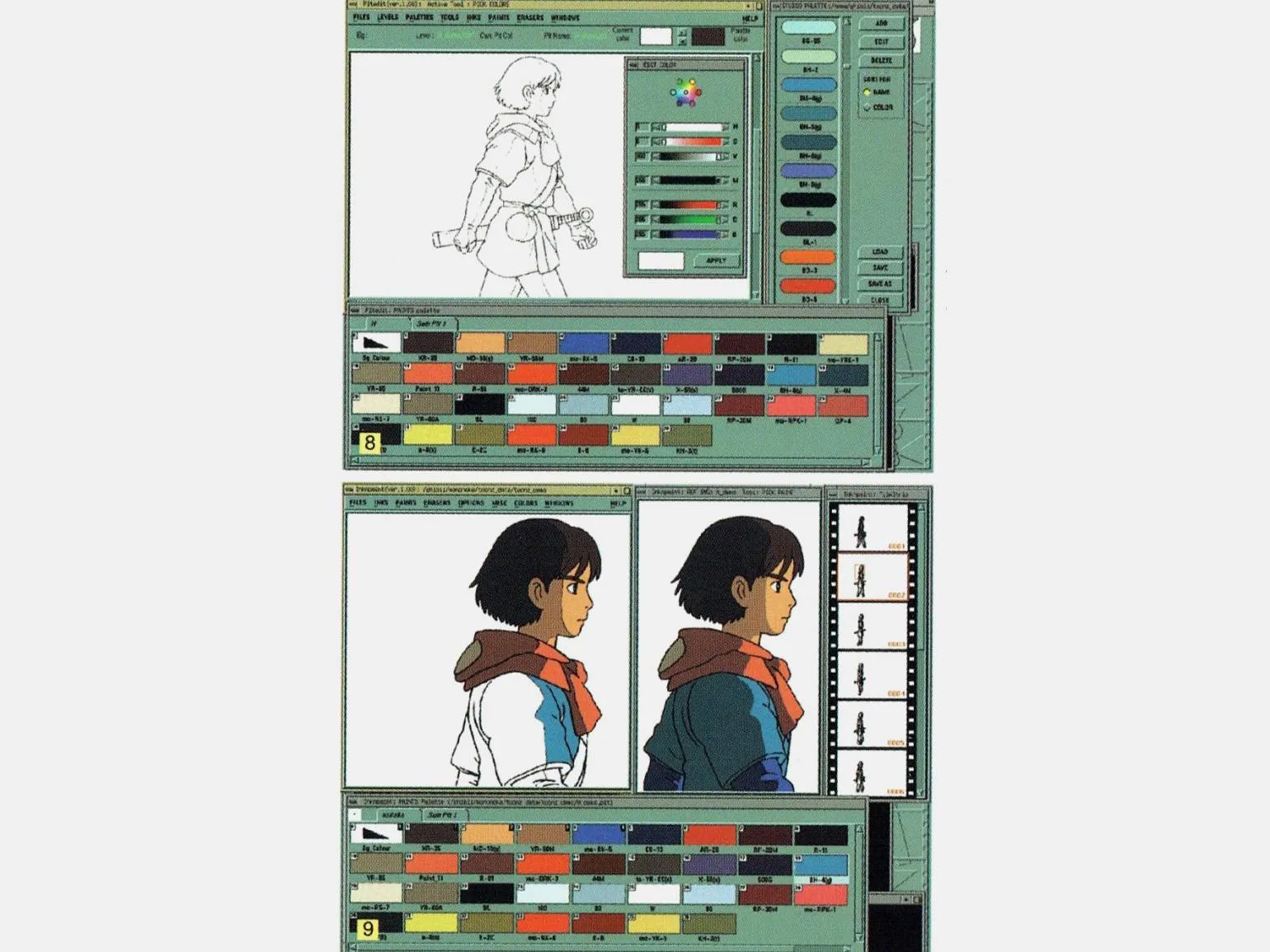
The studio developed a program that adds subtle noise to colors to improve the quality of digital paintings. Unlike digital formats, color on paper always has some non-uniformity, which gives the work depth and texture. Without this nuance, digital images can appear flat and featureless. Using the program helps avoid this effect, introducing slight variability in color shades and making them more natural. This solution significantly improves the visual perception of digital paintings, bringing them closer to traditional art.
Despite the wide capabilities of digital editors, the studio approached their use with caution and imposed certain limitations. Digital technology gives artists access to more than 16,000 colors, which significantly exceeds the capabilities of acrylic paints. However, for animators, such diversity is not always necessary. Each film of the studio has its own fixed color palette, including "Princess Mononoke." This helps maintain harmony and integrity of the visuals, which is an important aspect in animation.
Digital technology offers many advantages, but its extensive use can lead to a departure from traditional animation methods. Setting certain limits will help maintain balance. Although we have access to an infinite number of colors, it is important to follow the classical principles of their selection. Without these principles, a wide range of choices can be distracting and hinder the creative process. The main challenge is to correctly apply digital tools so that they support, rather than replace, the traditional art of animation.
Digital Painting Supervisor Hiroaki Ishii is an outstanding specialist in the field of digital art. In his work, he combines traditional painting techniques with modern digital tools, which makes his style unique and recognizable. Hiroaki Ishii is actively involved in various projects aimed at developing digital art and training new artists. His expertise covers a wide range of techniques and technologies, allowing him to inspire and guide creative people on their artistic journey. Collaborating with various galleries and educational institutions, he promotes digital painting as an important trend in contemporary art.
A unified palette ensures color consistency throughout the film, creating a harmonious blend of digital and traditional colors. Grass might be depicted digitally in one shot, and with painted materials in another. This palette allows the backgrounds to blend naturally, eliminating the need for color tests. This makes the process of creating visual content more efficient and simplifies work on the project.
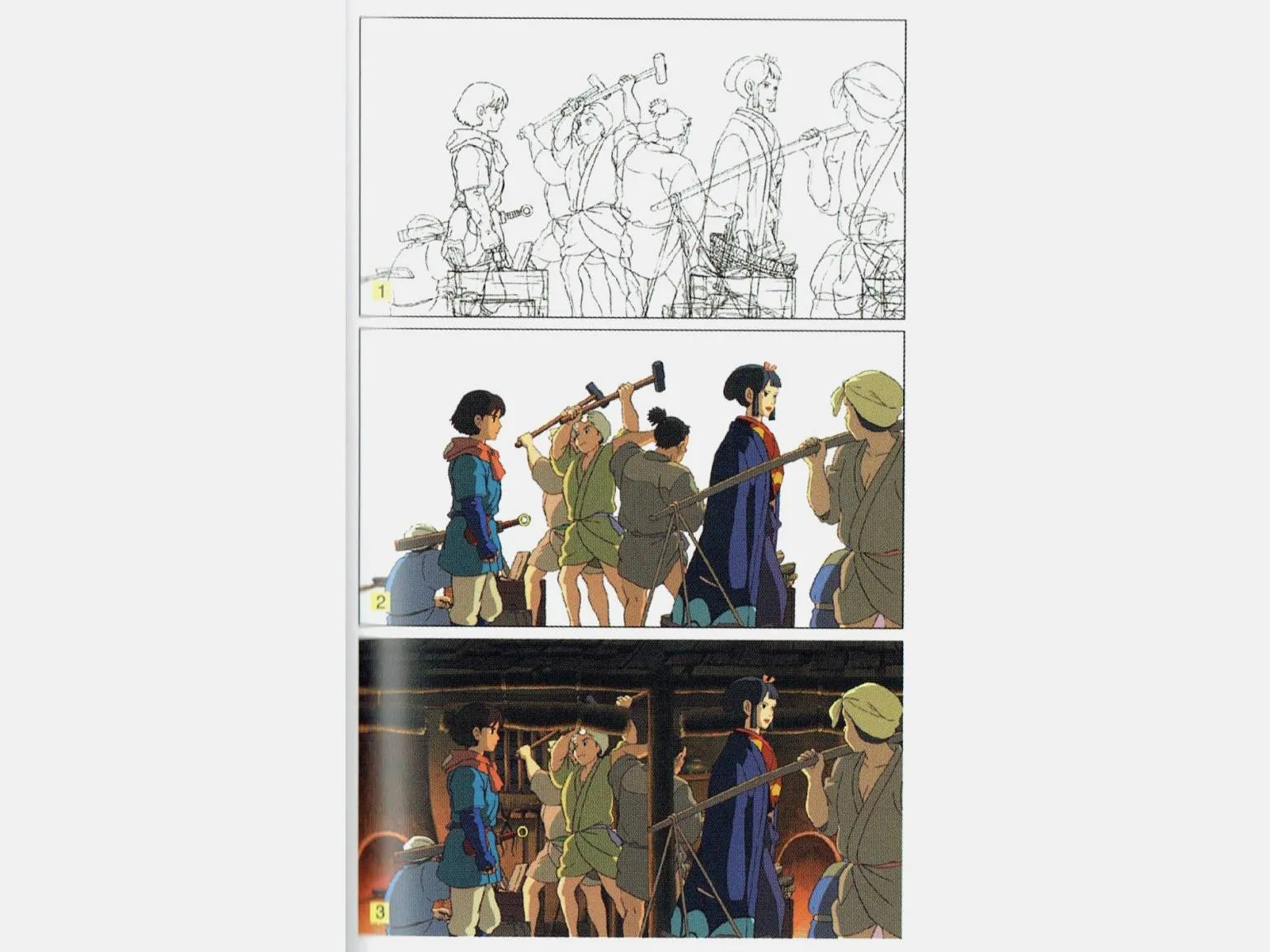
Compositing allows you to combine many different elements into one harmonious picture. Digital compositing ensures the high quality of individual fragments is preserved and simplifies the process of applying various effects. Thanks to this, artists and designers can create impressive visual compositions without losing the clarity and detail of each element.
To create this scene, it was necessary to combine ten different layers with individual elements. This allows for a deeper elaboration of details and creates a unique visual composition. Each layer adds its own characteristics, helping to achieve harmony and dynamism in the overall image. This approach to working with elements can significantly improve the quality and expressiveness of the scene.
After the cartoon "Princess Mononoke" was released the animated film "Our Neighbors the Yamadas", which became the first fully computer-generated work of Studio Ghibli. The film was directed by the studio's co-founder, Isao Takahata. Although Hayao Miyazaki did not participate in the creation of this cartoon, the team's experience in digital animation proved useful when developing Miyazaki's next masterpiece, Spirited Away. This film became a landmark in the history of animation and confirmed the high standards of Studio Ghibli, combining a unique visual style with a deep story.
Spirited Away (2001)
The cartoon's backgrounds and concept art are created by hand on paper, while the animation is completely digital. Nevertheless, when creating Spirited Away, the studio maintained its commitment to the principles of using computer technology: the use of computer graphics should be unnoticeable and should not affect the artistic style of the work. This allows for the film's unique aesthetic and atmosphere to be preserved while blending traditional and modern animation techniques.
Initially, Miyazaki stated that no digital changes would be made to the backgrounds. However, as work progressed, he began requesting edits such as "add some purple here" or "add a shadow here." Along the way, he realized that digital intervention had become unavoidable.
Miyazaki overhauled the entire production system, introducing the concept of "product meetings." These meetings became key to defining the constraints and approach to creating computer graphics (CG). This approach streamlined the development process and improved the quality of the final product.
Once the storyboards are complete, meetings are usually held only by the animators and artists. The digital specialists interact individually with the various departments. This time, however, Miyazaki gathered all the department heads to discuss the processing of each frame. While we couldn't achieve maximum precision with just storyboards, these meetings helped clarify Miyazaki's approach and define the tasks for each department. This contributed to a more efficient and coordinated workflow.
Animation Supervisor Mitsunori Kataama is a distinguished specialist in animation and visual effects. His work spans numerous projects in which he has demonstrated his skill and creativity. Mitsunori Kataama is known for his attention to detail and ability to create lively and captivating animations that engage audiences. Thanks to his experience and creativity, he makes a significant contribution to the development of the animation industry, setting high standards of quality and innovation. Kataama's work is acclaimed not only by audiences but also by critics, underscoring his status as one of the leading professionals in his field.
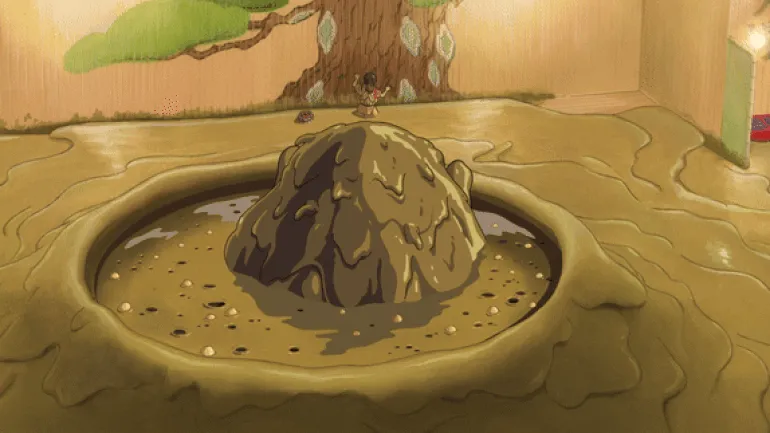
The animation system at Studio Ghibli has evolved, but the developers' philosophy remains unchanged. Each project at the studio is aimed at creating a beautiful and unique visual experience. Spirited Away features numerous elements, such as mud and debris, but even these are created with an emphasis on visual appeal. Studio Ghibli continues to pursue its mission to create works of art that delight and inspire audiences.
We believe in creating compelling images that convey a natural quality. Achieving this requires considerable effort, but it is important that the final product appear effortless and natural.
Animation Supervisor Mitsunori Kataama is a distinguished animation specialist. He possesses significant experience and professional skills that allow him to successfully oversee the creation of animated projects. With his talent and attention to detail, Kataama is able to create high-quality animation that engages viewers and leaves a lasting impression. His contribution to the animation industry is remarkable, and he continues to inspire a new generation of animators.
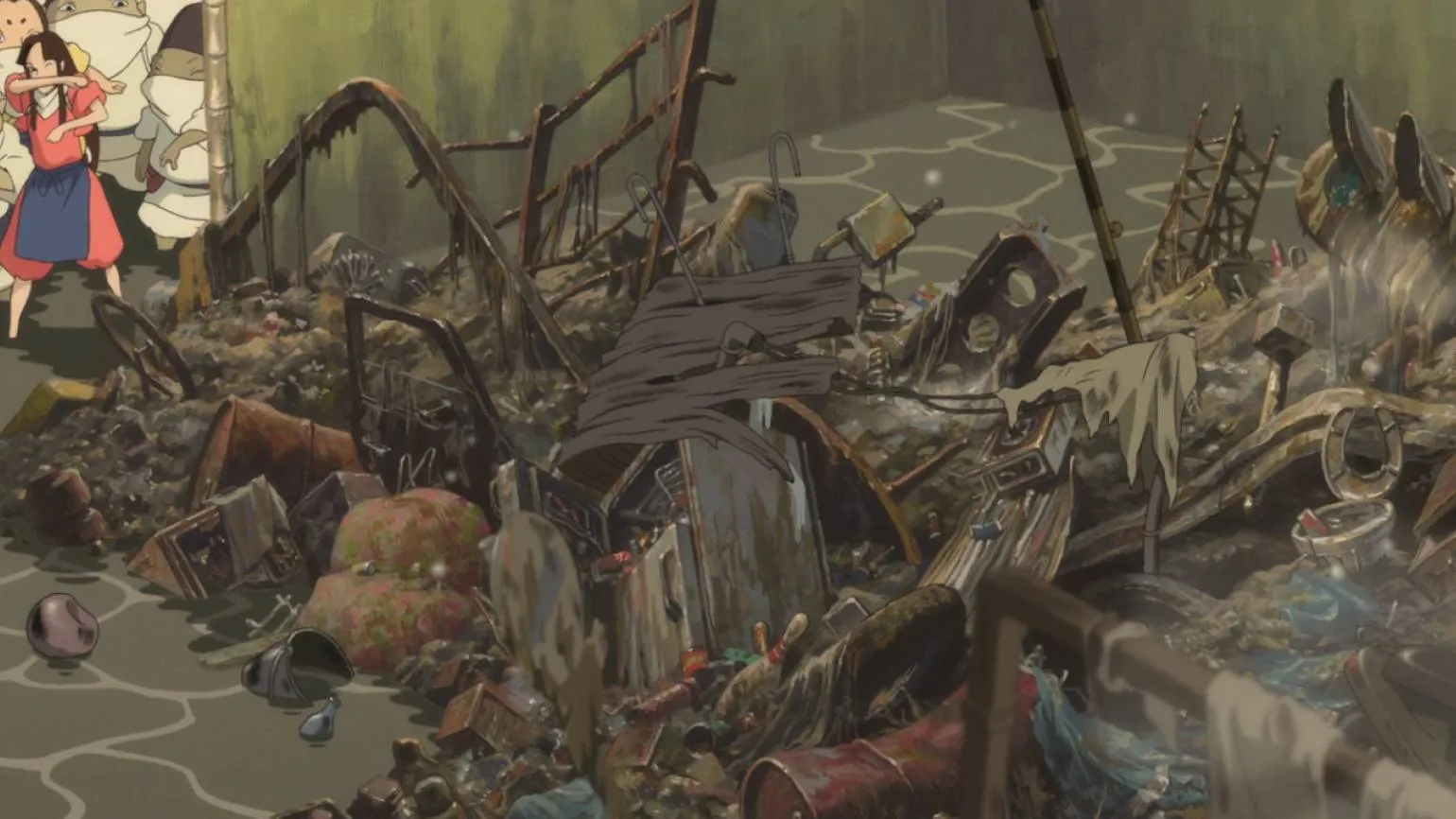
Spirited Away, like Princess Mononoke, utilizes cutting-edge CG technologies. 3D modeling, compositing, morphing, mapping, and particle systems are employed, lending the animation uniqueness and depth. These technologies allow for the creation of visually captivating scenes and characters, making the animation more realistic and engaging for viewers.
CG technologies were used to model the sea surface. They allow for realistic depictions of water, accounting for light reflections, wave movement, and texture. This approach is used in the film and video game industries to create breathtaking visual effects, making scenes with the sea more convincing and atmospheric.
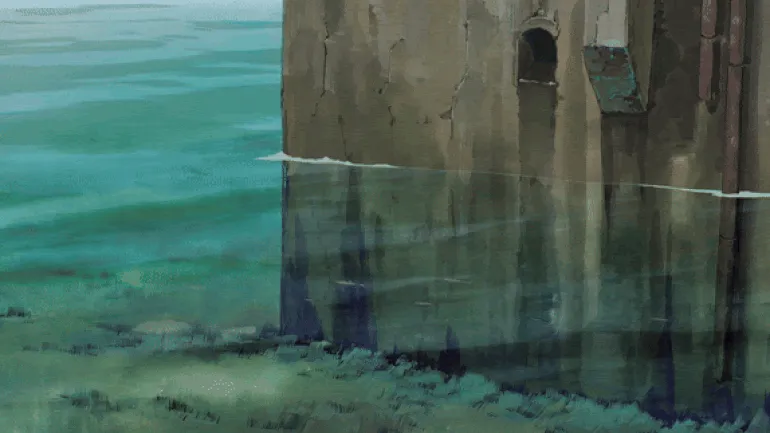
First, the artists developed the background, then the waves were modeled in 3D using Softimage, for which additional shaders were created. Effects such as light falling on the water and seabed, wall reflections, glare, and a thin white line of foam were developed separately. Finally, all the elements were combined into a single composition using compositing.
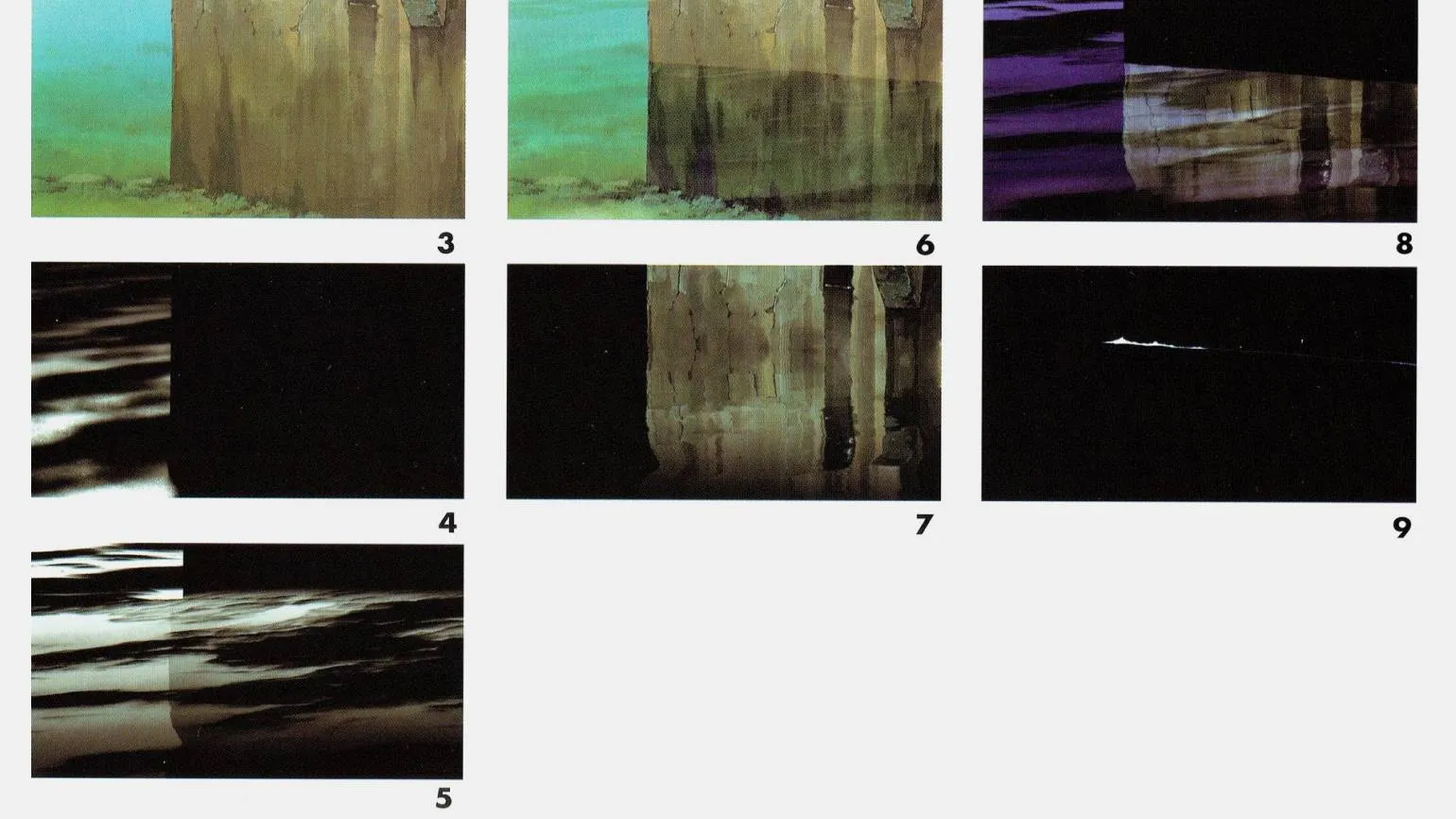
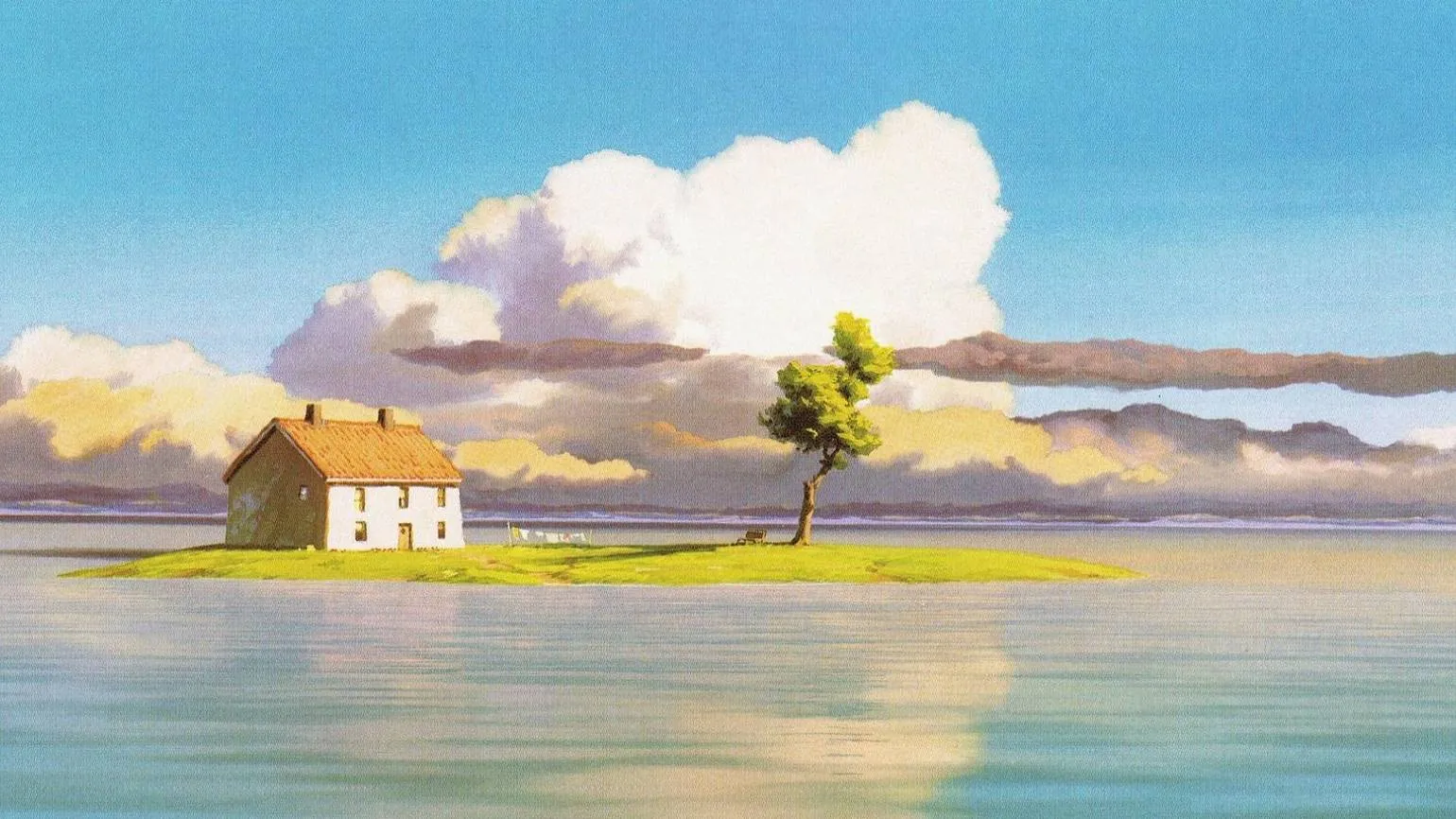
The scene where the main character, Chihiro, travels by train uses 3D graphics combined with compositing. Outside the train window, she notices a small island with a house. Clouds slowly move in the background, creating an atmosphere of flight, and the island itself smoothly changes its orientation due to Chihiro's changing perspective. This effect adds depth and realism to the scene, allowing viewers to experience the magic and beauty of the surrounding world.
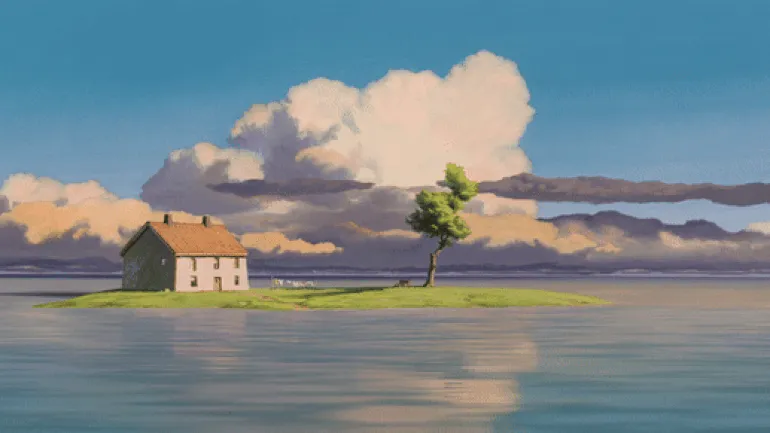
The art department created a unique background, while the CG department removed the island and improved the clarity of the clouds and water. These changes contributed to the creation of a more expressive and harmonious visual image.
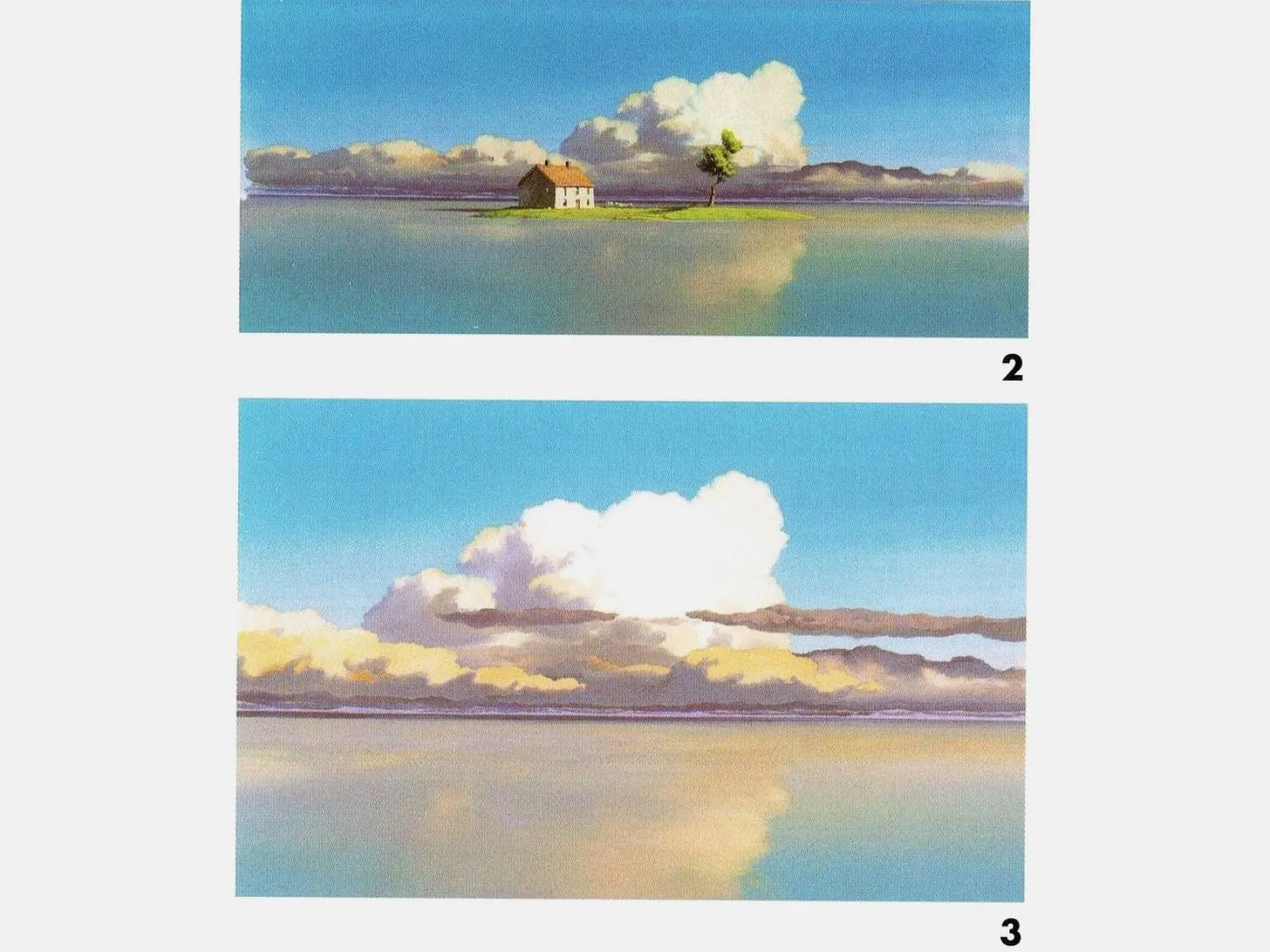
The cut-out island was returned to the project as a 3D object, and a digital reflection in the water was created for it. This enhancement adds realism and depth to the visual composition, making the scene more engaging for viewers. The use of 3D technologies allows us to achieve the effect of presence, which is especially important for modern multimedia projects.
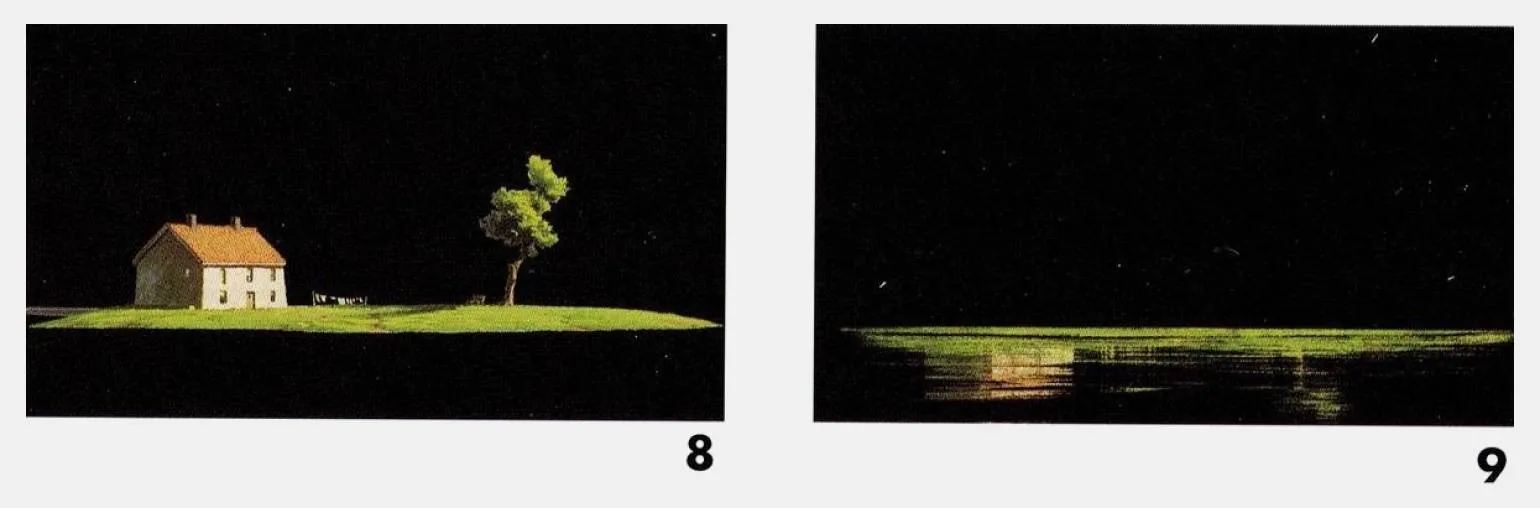
The CG department developed realistic waves, while the art department added artistic elements simulating the surface of the water.
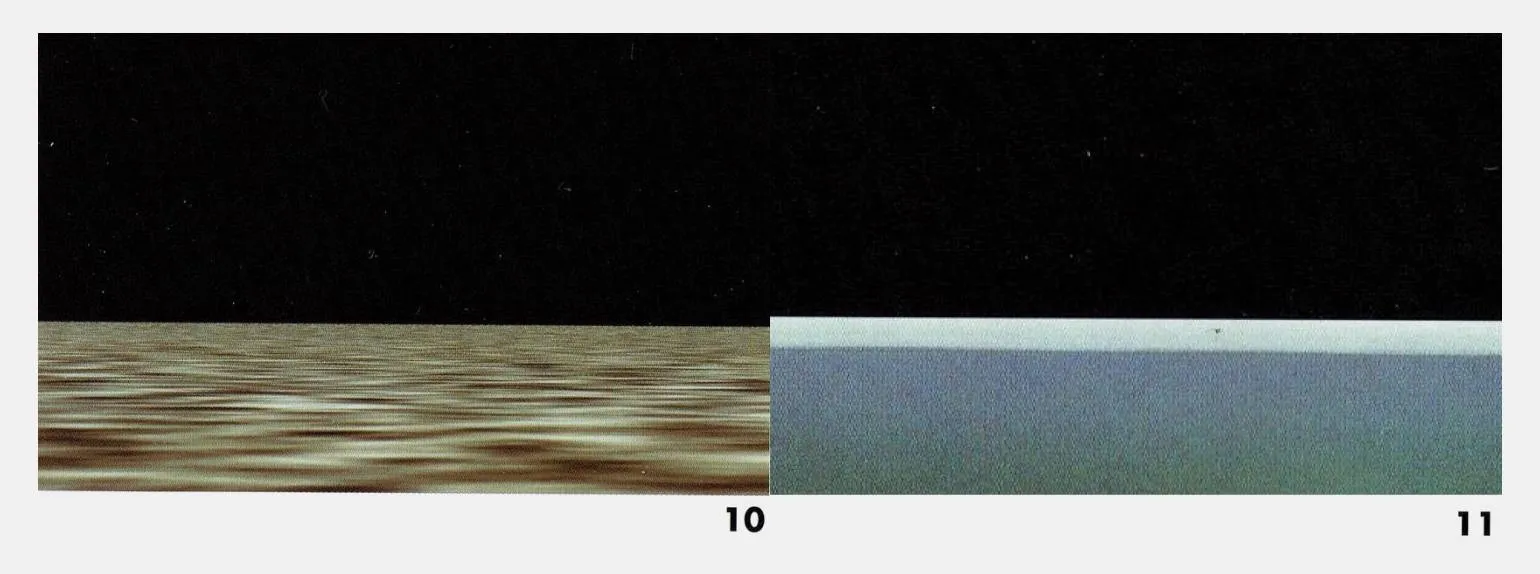
Then compositing work was carried out, as a result of which the entire scene was combined into a single whole.
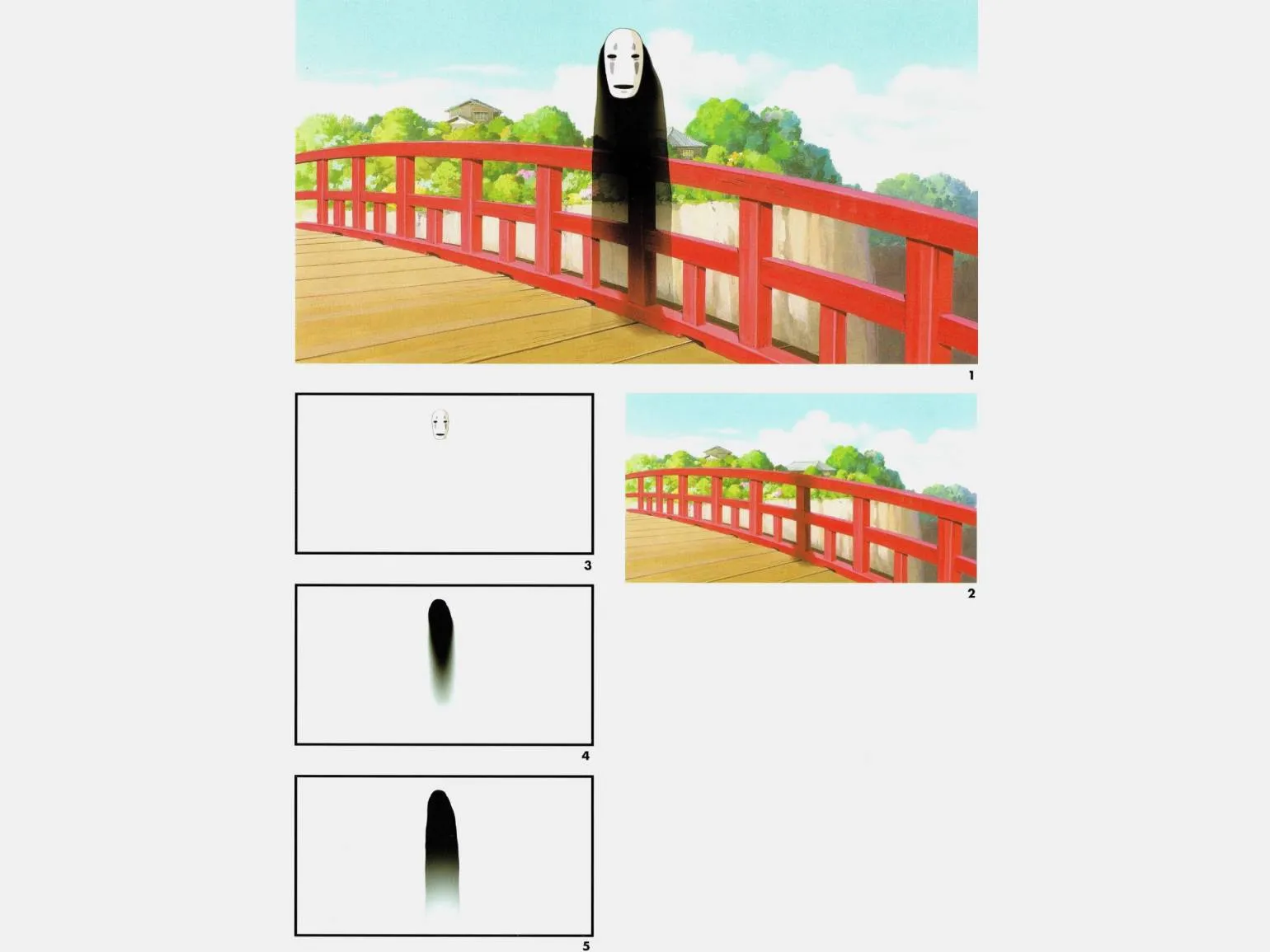
Compositing was a key tool in creating the scene with the disappearing Faceless Man. The artists first depicted the rogue god's body, then divided it into elements and processed it digitally. The art department traditionally created a background against which the Faceless One's shadow is clearly visible. This approach allows for a high degree of detail and expressiveness in visual content.
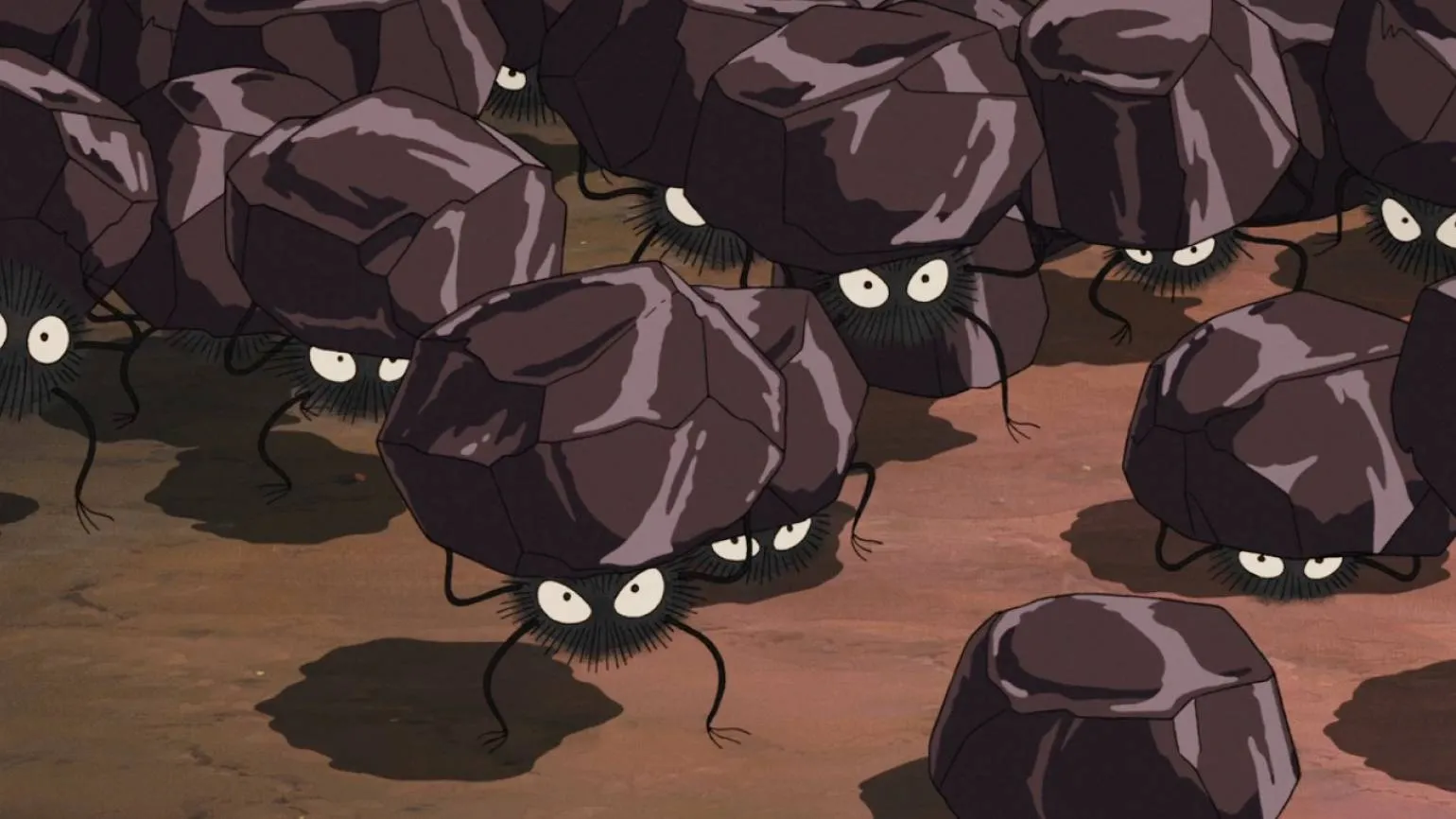
Compositing plays a significant role in the animation of susuwatari, or black-eyed owls, which first appeared in My Neighbor Totoro. In the animated film Spirited Away, these adorable creatures work in Grandpa Kamaji's boiler room, carrying coal. Susuwatari are distinguished by their adorable squeaks, the ability to grow limbs, and their love of Japanese candies shaped like bright stars. Their unique designs and behavior make them memorable characters, proving the importance of compositing in creating animated masterpieces.
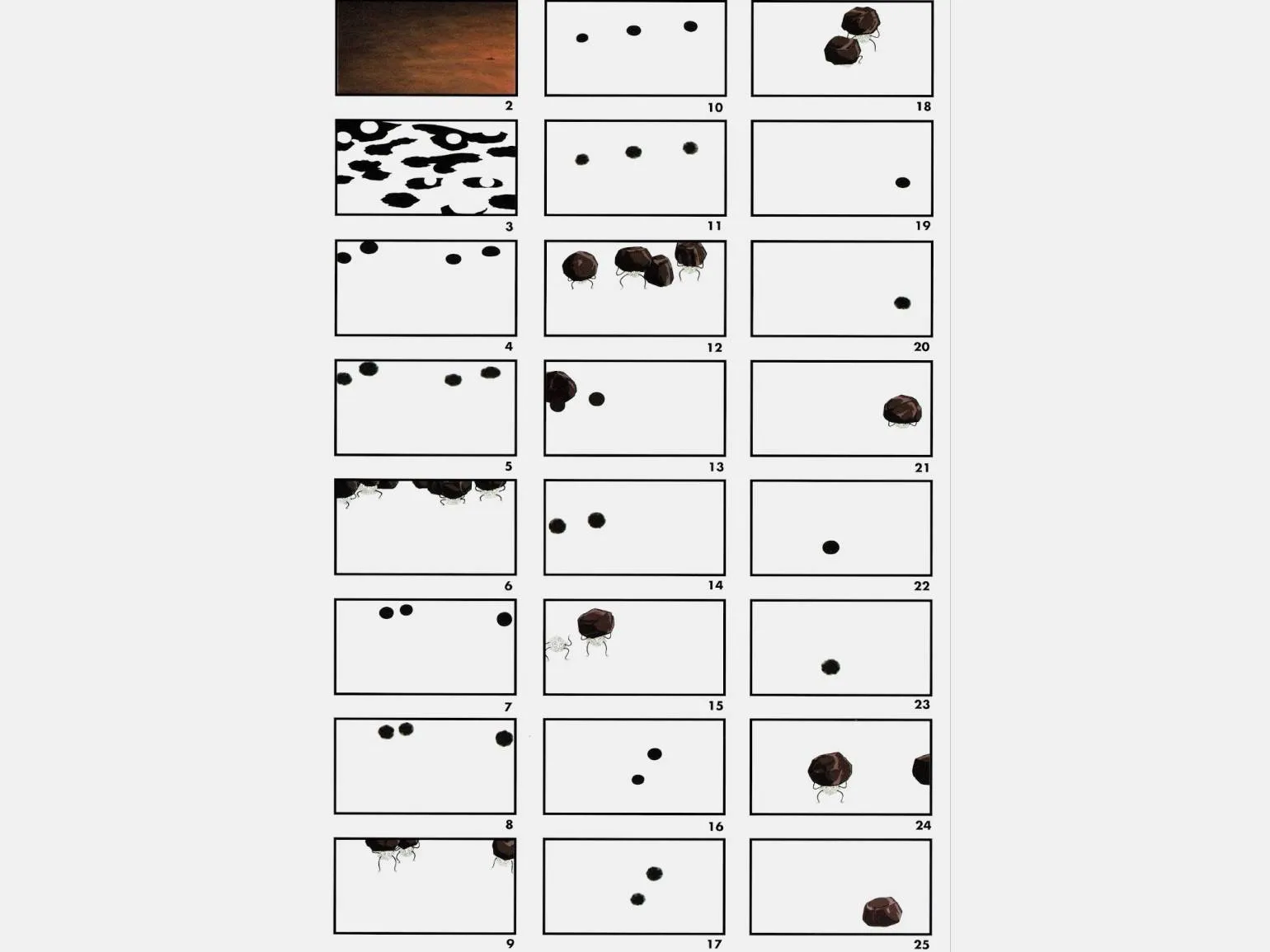
For animation, each susuwatari was divided into separate elements by layers: body, eyes, arms and legs, as well as the ember they carry. This division, along with additional special effects, significantly increased the number of layers needed to animate the black-haired characters. As a result, the number of layers became so great that there weren't enough letters of the alphabet to denote them.
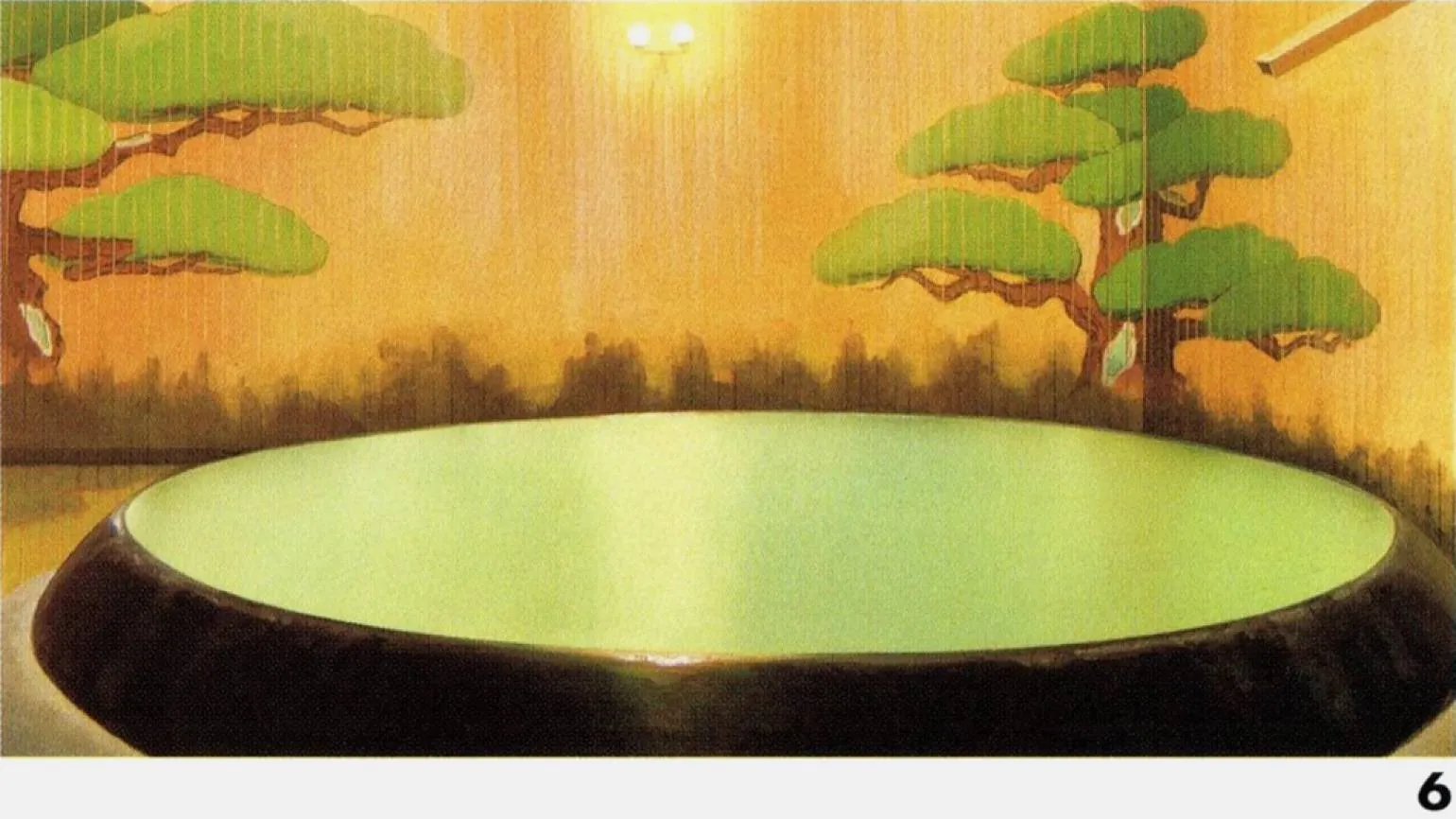
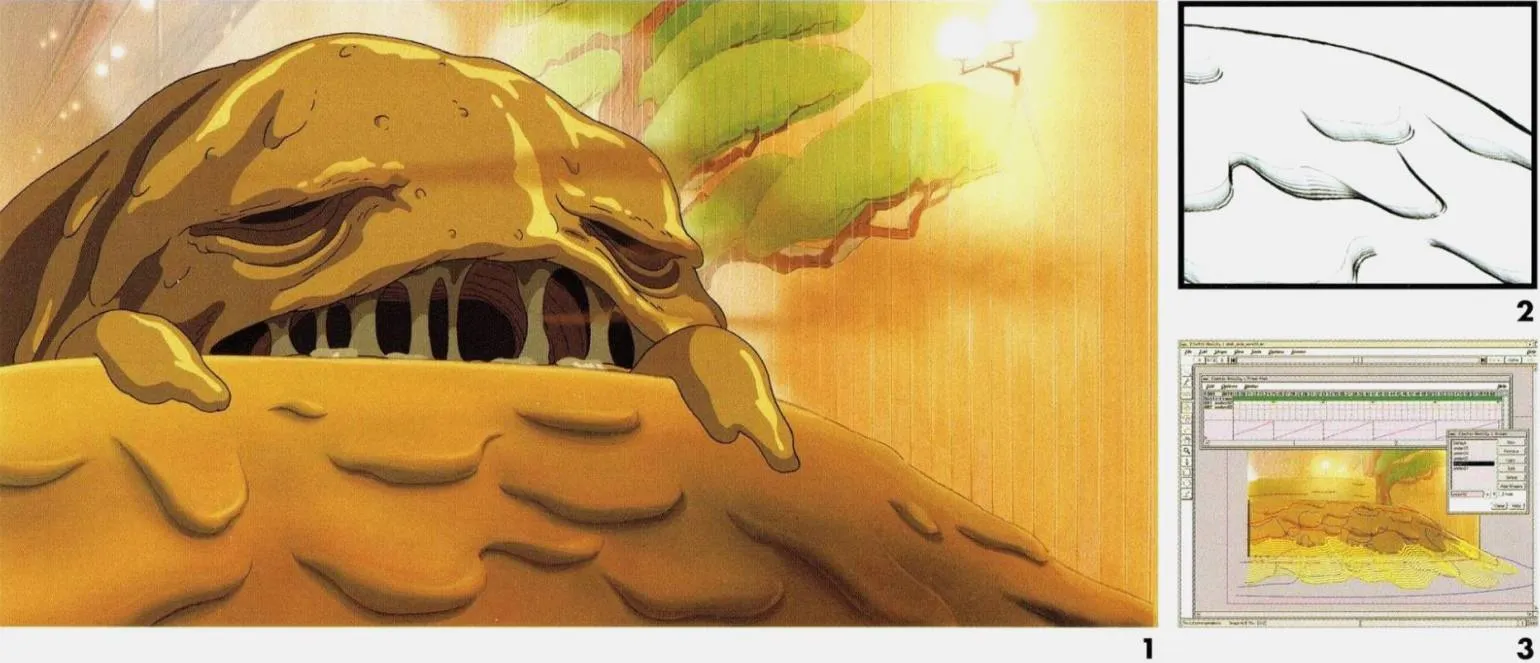
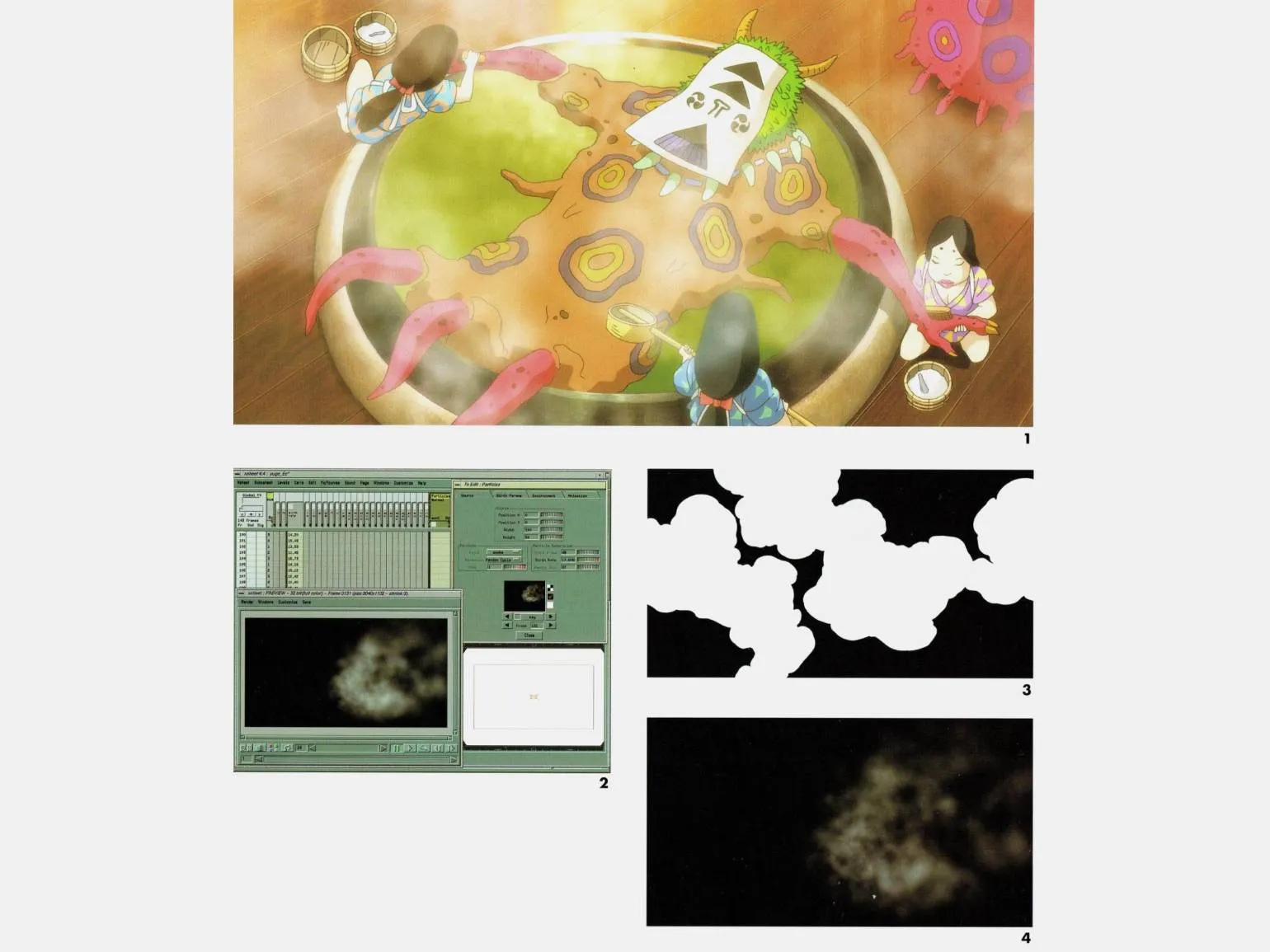
The scene where the purified River Spirit bursts out of the bath makes extensive use of 3D and compositing technologies. These tools made it possible to create a spectacular splash of water, emphasizing the dynamics and emotional tension of the moment.
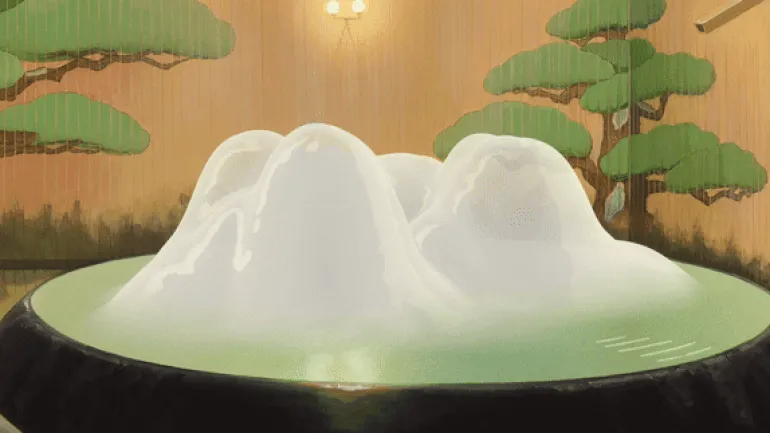
The artists began their work by creating the background for the stage.
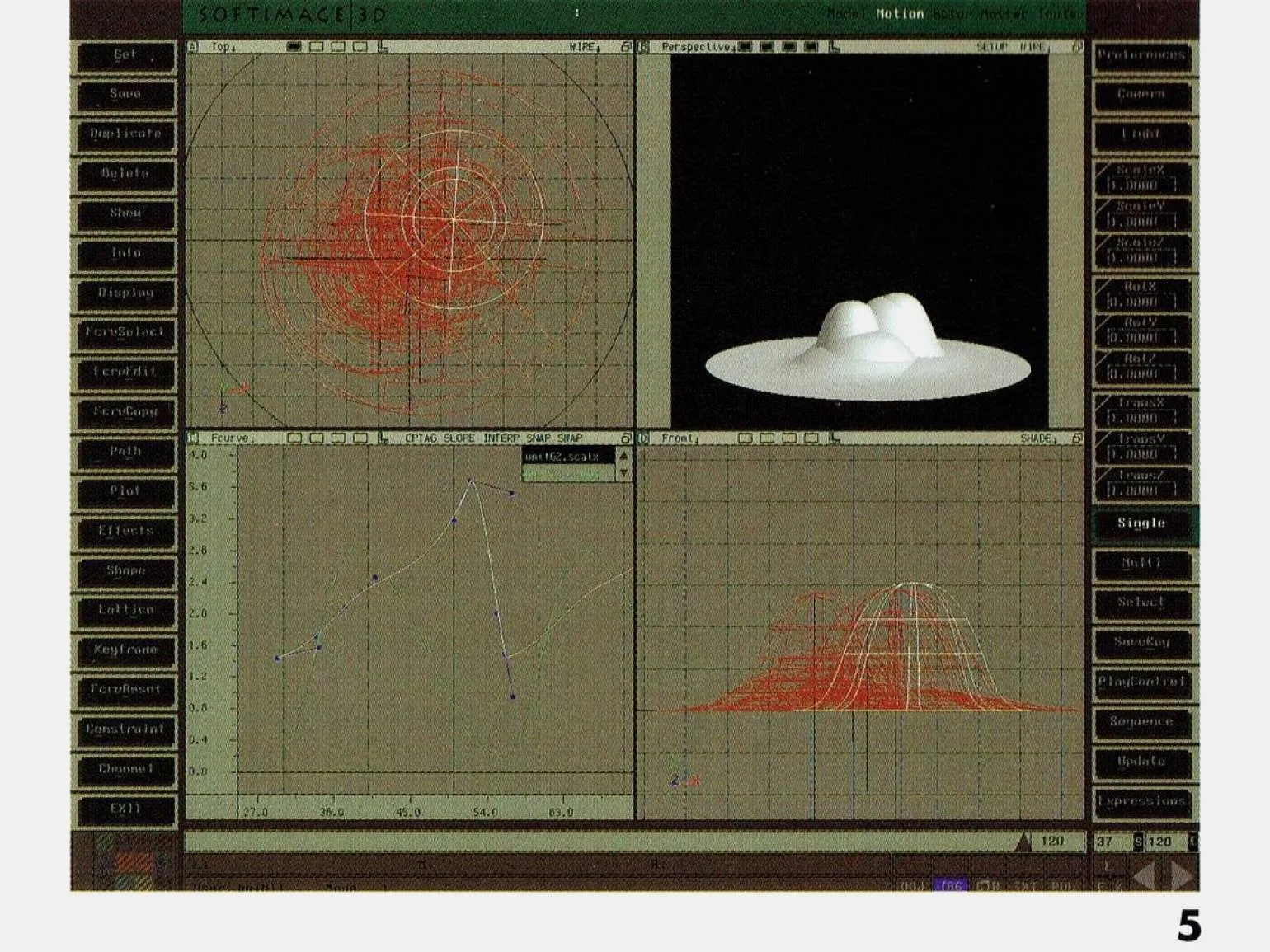
The program SoftImage created a 3D model depicting the process of water drilling and the resulting splashes. This model allows for a more visual representation of the dynamics of water interaction with its surrounding environment and demonstrates realistic fluid behavior. Using such 3D models in visualization helps to better understand the mechanisms of drilling and their impact on water resources.
Using paint, layers were created with reflections, bright highlights, and individual color accents. A black-and-white gradient was applied as an additional layer to emphasize the density of the soap suds. All layers were then combined into one, and the finished rendered 3D object was overlaid onto the background. This approach allows us to create depth and realism of the image, improving visual perception.
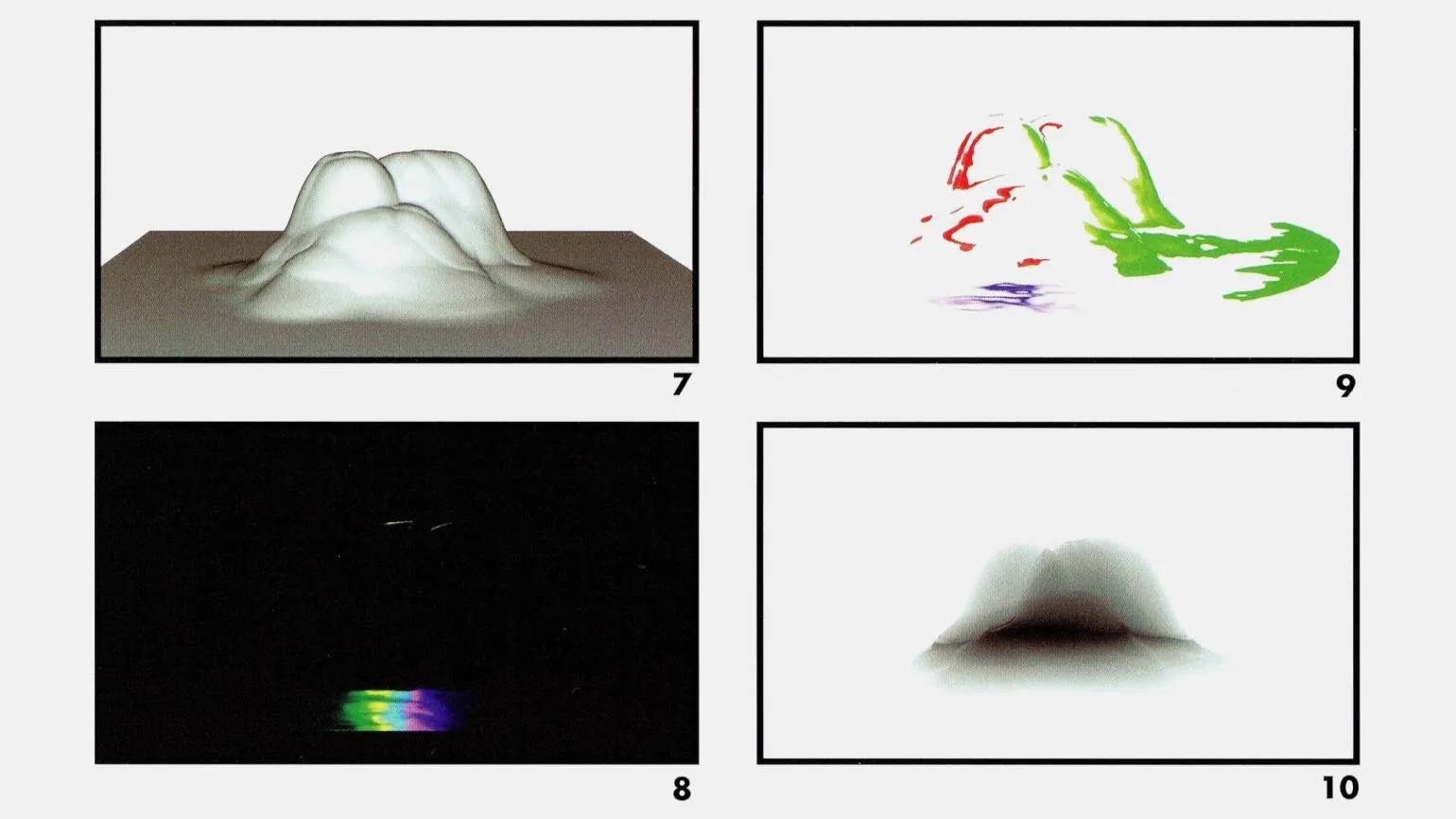
In Morphing was used in the animation of the River Spirit, which was used for scenes where silt flows in layers from the deity. Lines representing the silt were highlighted in keyframes, allowing one line drawing to seamlessly transition into another. This technique creates the effect of dynamic and organic movement, emphasizing the connection between nature and the divine.
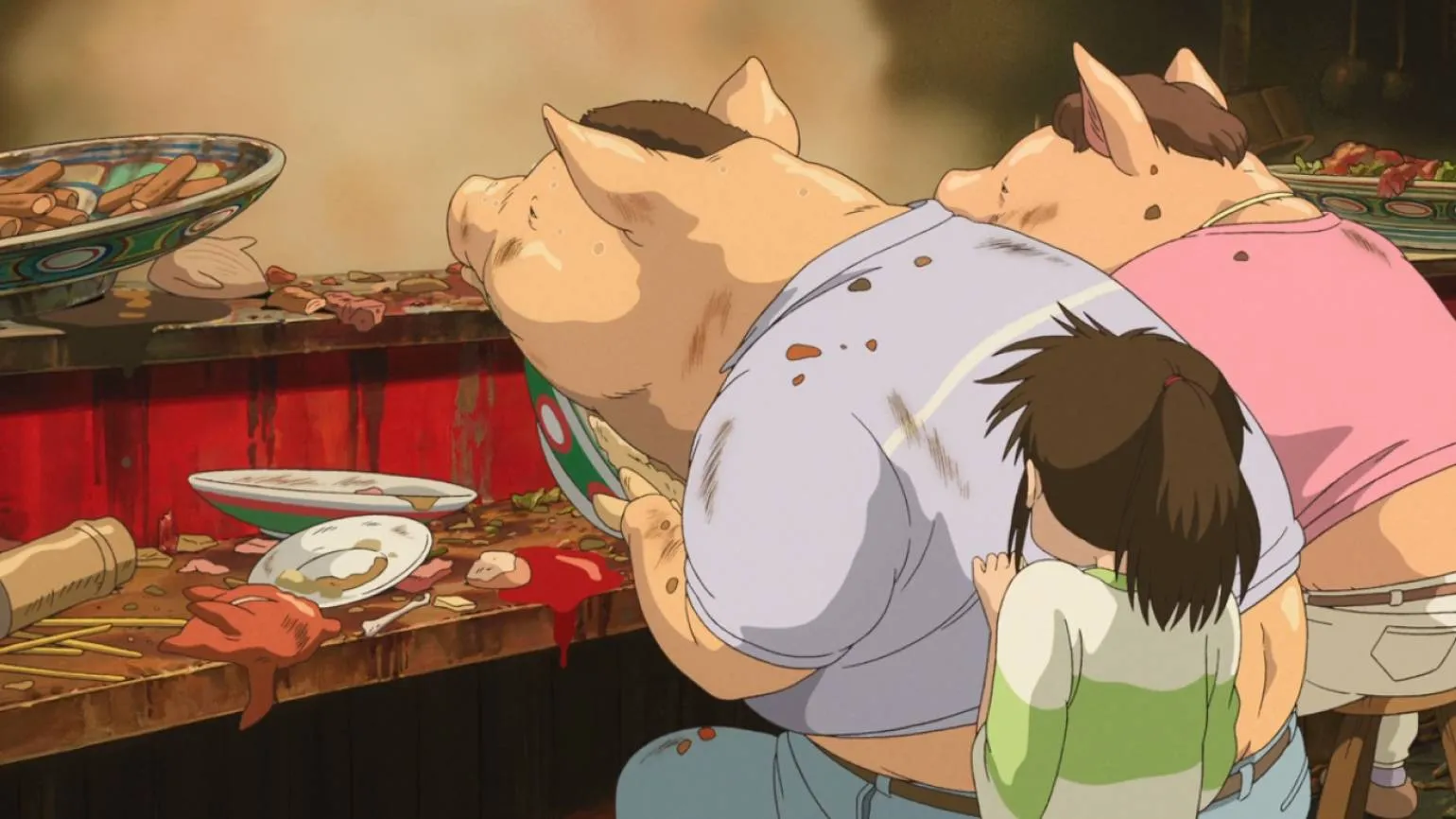
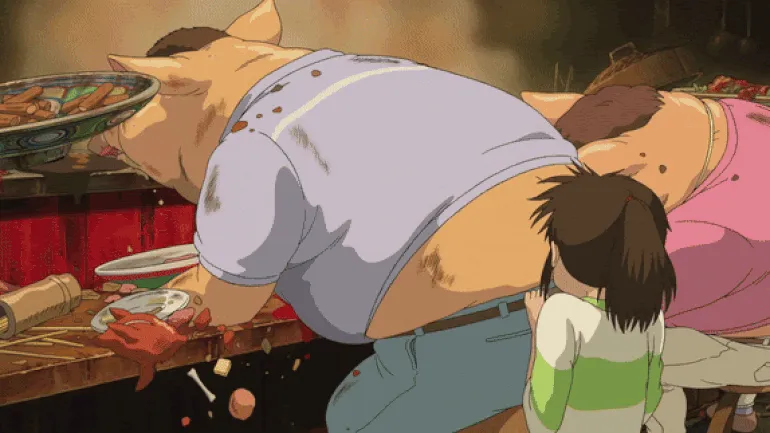
Chihiro and her parents find themselves in a magical world where they stop at an empty Chinese restaurant. The restaurant tables are filled with delicious dishes, and the girl's parents begin to devour the food greedily. However, Chihiro soon realizes with horror that her parents have transformed into pigs, who continue to eat chaotically and knock dishes off the tables. This transformation comes as a shock to Chihiro and sets off a series of events that will change her life forever.
In this scene, the plate is located in the upper left corner and has the same amount of detail as the still background. This creates visual harmony and contributes to a better perception of the composition.
The plate should The plate falls because the father, transformed into a pig, accidentally touches it with his nose. Animators draw the plate frame by frame by hand so that the viewer can anticipate its movement before it happens. Typically, such elements are highlighted with a simplified design against a more detailed scene, which helps draw attention to the anticipated action. Miyazaki was dissatisfied with the current method and proposed an alternative approach: he created a detailed design for the plate using mapping, which was superimposed on the 3D model. The result was a moving plate that blended harmoniously with the still background, creating the impression of a unified whole. This approach allowed us to achieve a high degree of realism and improved the visual perception of the scene.
Creating realistic steam and smoke with Digital technology became available, but studios weren't striving for maximum realism. For the scene with God in the bathtub, artists first developed a line for the steam, following the principles of hand animation so that it wouldn't obscure the characters. Smoke was added within this line, created using a particle system. This made it possible to achieve the desired visual effect while maintaining the artistic style.
Hayao Miyazaki continued his policy of limited use of computer graphics in animation in his next work, Howl's Moving Castle, based on the novel by Diana Wynne Jones. Miyazaki focuses on hand-animated films, which gives the film a unique visual style and atmosphere. The plot of Howl's Moving Castle explores themes of love, war, and inner strength, making it not only spectacular but also a profound work of art. This film continues the tradition of Studio Ghibli, emphasizing the importance of an emotional connection between the characters and the audience.
Howl's Moving Castle (2004)
The creation of Howl's Moving Castle is reminiscent of the process of working on Spirited Away. This project utilized a combination of computer graphics and hand-animated animation: backgrounds and characters were drawn by hand and then digitally processed for further processing. At the time, the CG department remained small, with only 10 of its 150 animators specializing in digital animation. This approach allowed for the preservation of the unique artistic style that has become the studio's hallmark. CG is ideal for creating objects that cannot be drawn by hand. We create everything that can be depicted using traditional drawing methods. However, 3D graphics are our choice when it is justified and convenient. Animation Supervisor Mitsunori Kataama is a distinguished specialist in animation and visual effects. His work spans a wide range of projects, where he applies his unique skills and creative approach. With a deep knowledge of the animation process and his ability to manage teams of artists, Kataama achieves impressive results that impress audiences worldwide. His contribution to the animation industry is noticeable and highly regarded, making him a key figure in the field.
The animated film Howl's Moving Castle uses 198 CGI shots, twice the number in Spirited Away. This underscores the high level of visual effects and innovative technologies employed in the production of Howl's Moving Castle.
The studio adheres to a strict policy: creating 3D characters is unacceptable. However, in this film, the animators made an exception when working on the castle. This element is not just a background detail, but also an important character, just like the main characters. Hayao Miyazaki strongly encouraged the team to consider the castle as a protagonist. Therefore, the studio approached its creation with the same care as it did with human characters, imbuing it with personality and conveying its characteristics visually.
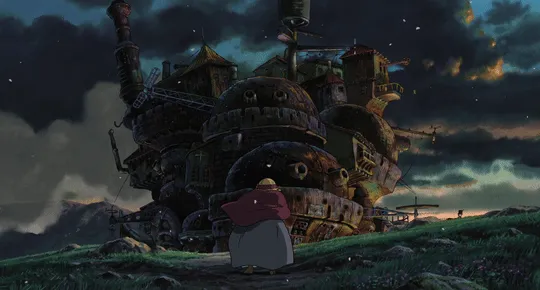
When Sophie first encounters the castle, its grandeur and gloom inspire awe.
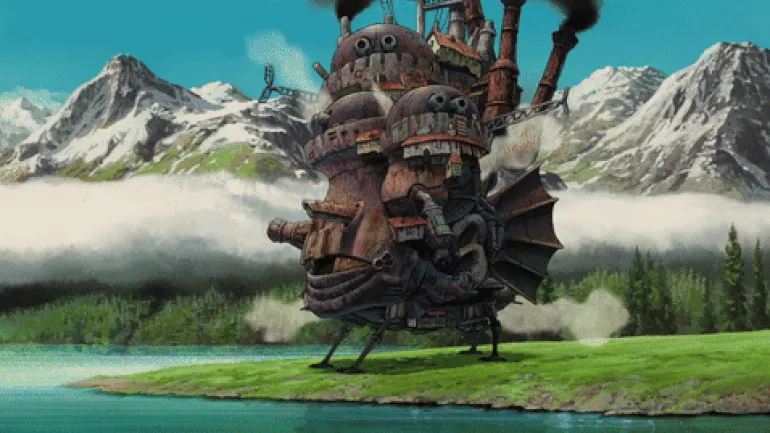
When the castle stops moving, its appearance becomes relaxed and even somewhat welcoming. This feeling creates an atmosphere of calm and tranquility, making the castle especially appealing during moments of silence. Such moments allow you to take a fresh look at its architectural details and the surrounding landscape, emphasizing the grandeur and beauty of this historic building.
The castle concept inspired Mitsunori Kataama to create an animation reminiscent of a climber's backpack with suspended equipment that sways as he moves. This principle was applied to the castle's animation, where the movements of the main body trigger the movements of its smaller elements. However, hand-animation would have been too challenging, so it was decided to use digital technology to create the castle. This solution allowed us to achieve more realistic and smooth movements, while maintaining the overall concept and aesthetics of the project.
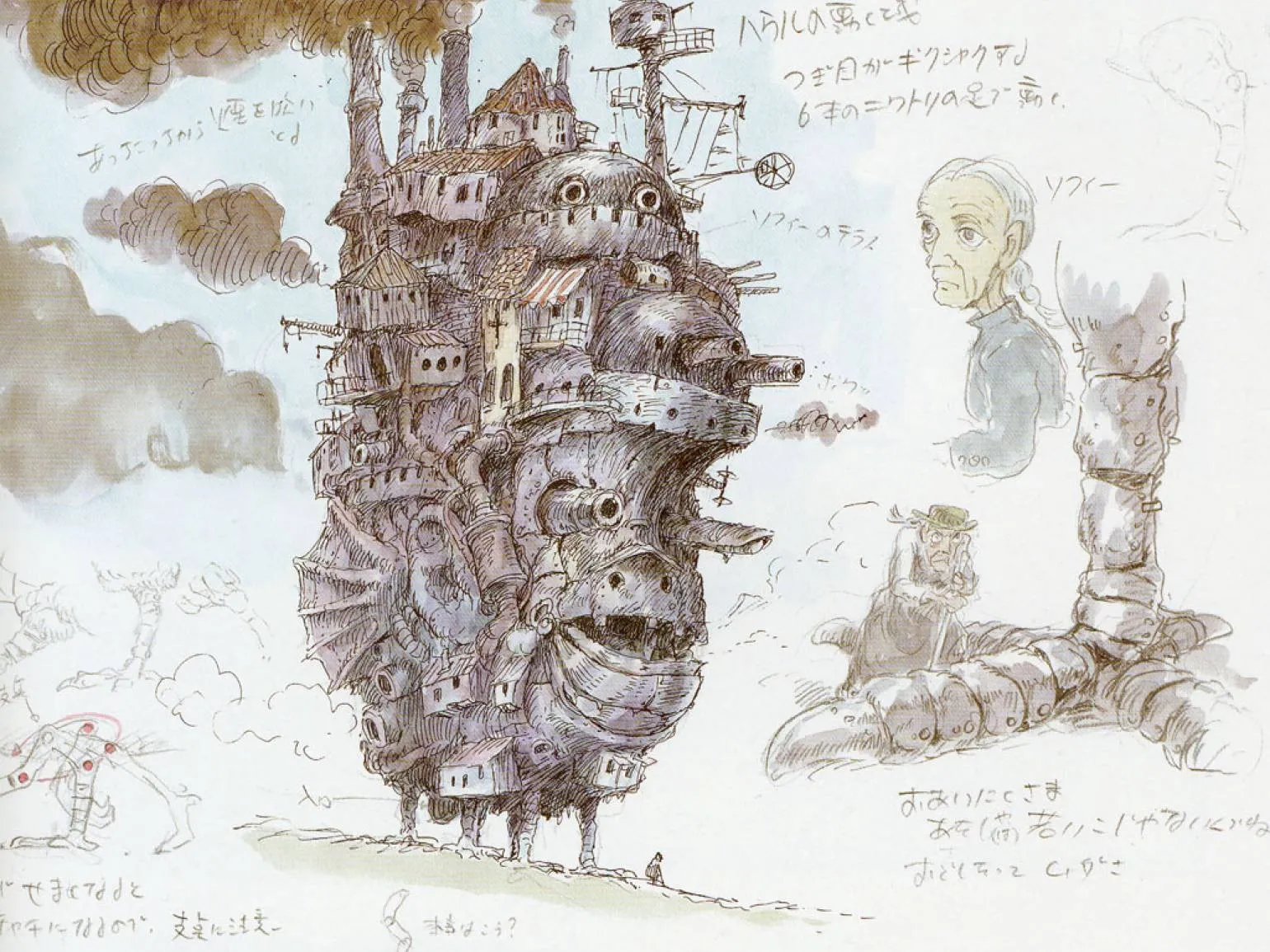
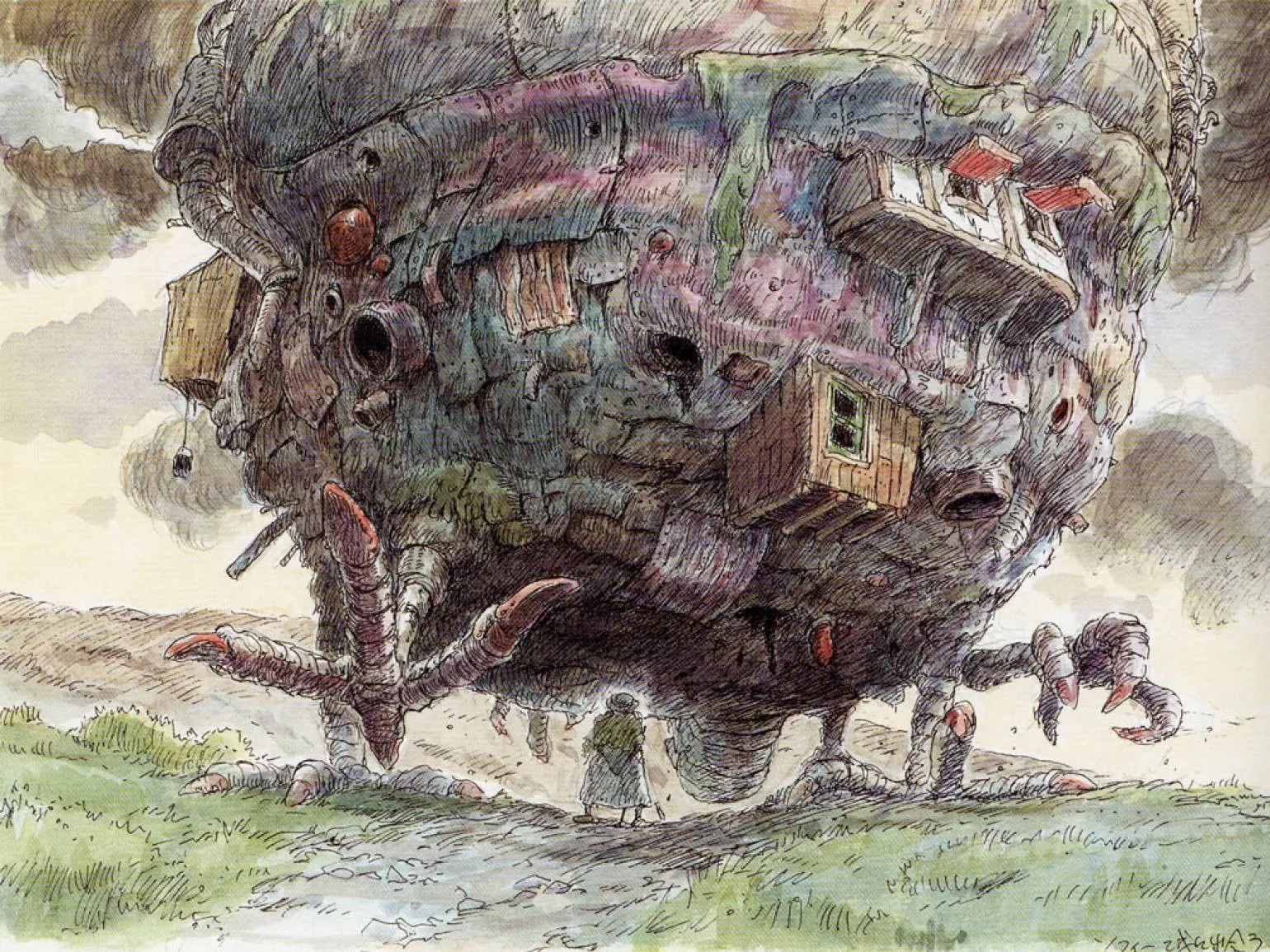
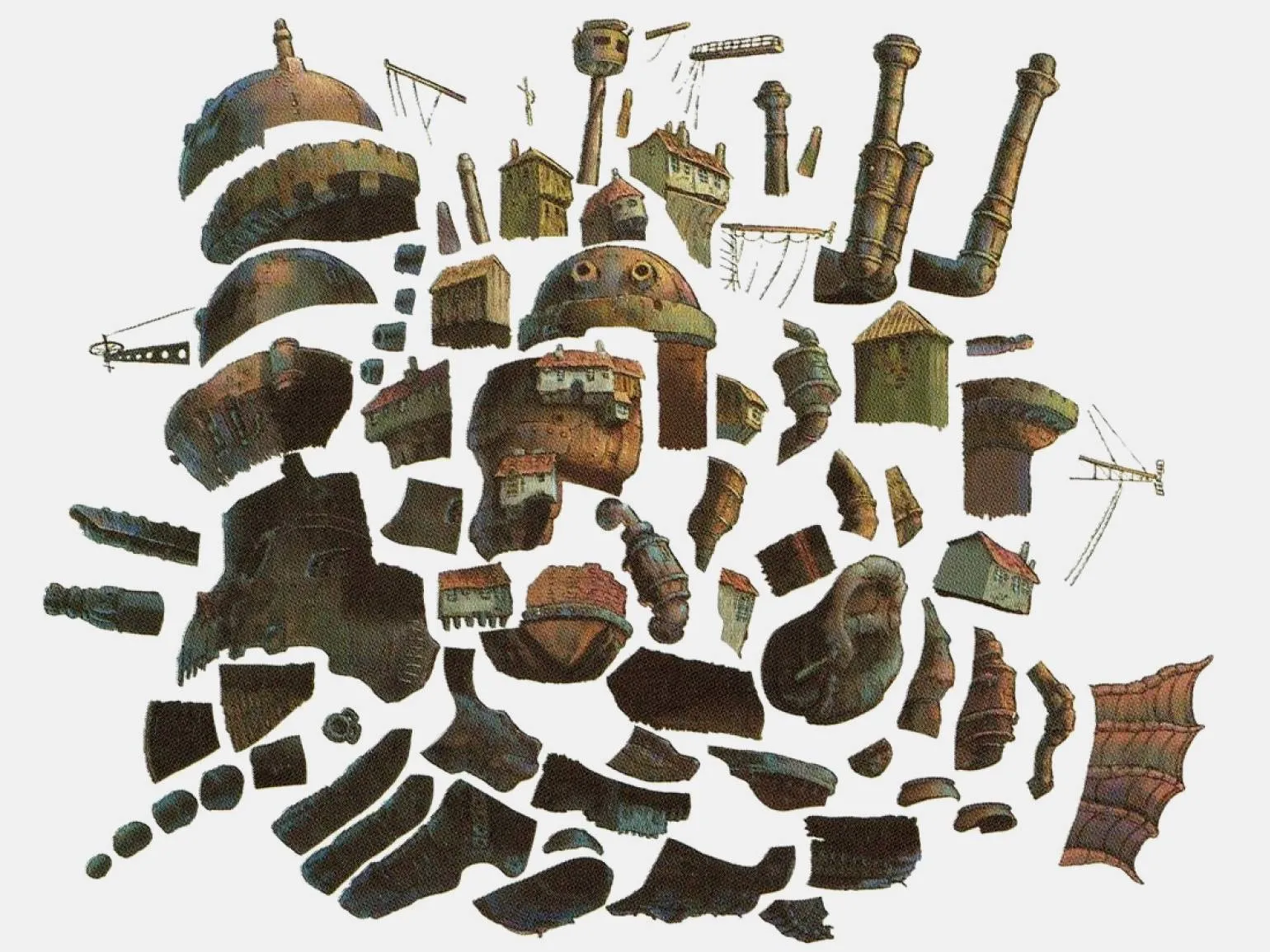
The base of the castle is made using 3D technology. Instead of creating a single, large 3D model, the studio developed 30 different models for different perspectives. Each model was divided into sections, the number of which varied from 30 to 80 depending on the specific version. Thus, the castle was created using the origami principle, with numerous overlapping elements.
The entire surface of the castle was created by hand, using meticulous detailing. Each drawing was divided into multiple elements, which were then processed in Photoshop. The images were then superimposed onto the 3D models. During the work, it was necessary to carefully monitor the correct overlap of all the parts in order to maintain the integrity and accuracy of the visual representation.
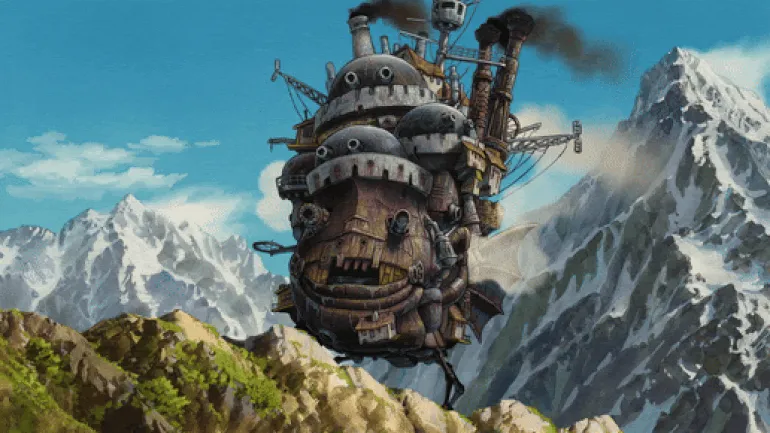
Miyazaki originally planned to create a castle with ten legs. However, this proved too difficult to implement, so it was decided to settle on four. When creating the animation of the legs, which were shown in close-up, attention was paid to every detail, which added visual expressiveness to the character.

For distant shots, pure 3D animation was used, stripping away detail. This allows the focus to be on the main elements of the scene without distracting the viewer with minor nuances. This approach ensures visual clarity and helps create the necessary atmosphere while maintaining high image quality. Pure 3D animation in distant shots also improves performance by reducing the load on graphics resources.
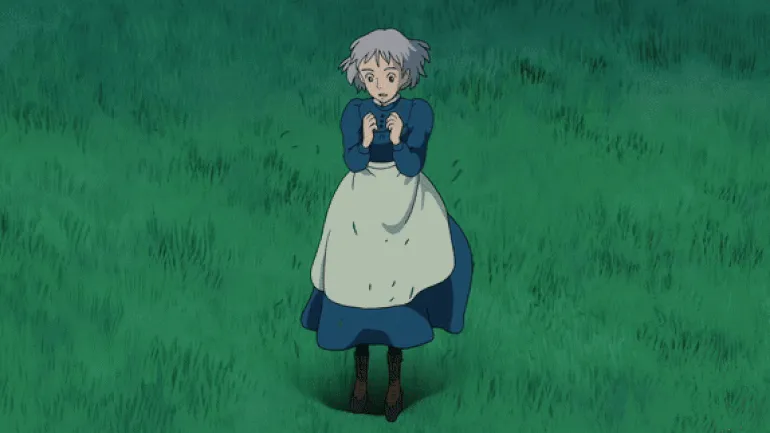
The steam and smoke above the castle were created using compositing. The studio achieved an optimal balance, with smoke mostly added in computer graphics, but hand-painted in large, significant shots of the castle. This approach achieved a realistic effect and emphasized the atmosphere of the scene, making the visuals more convincing.
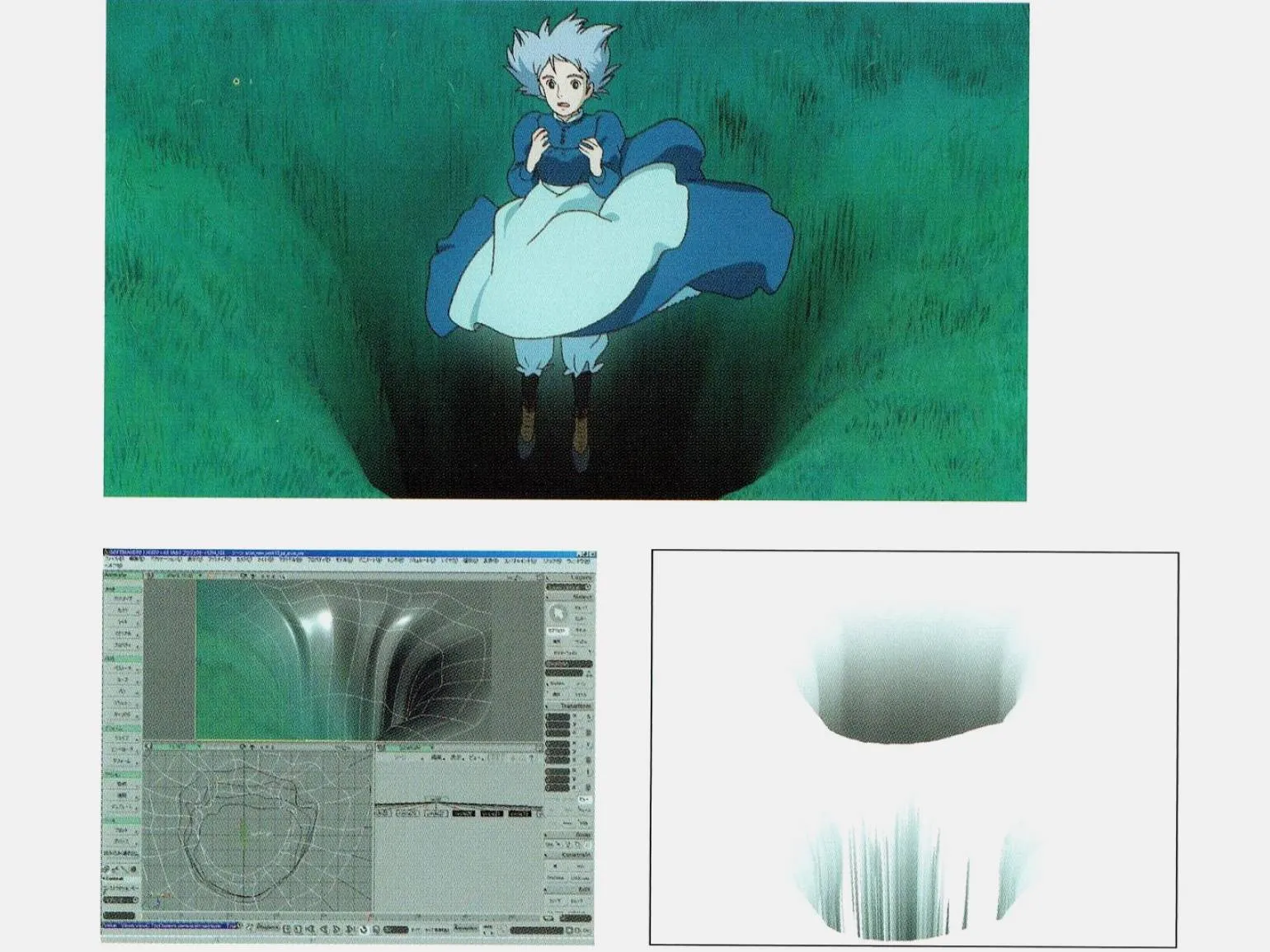
In the wormhole scene, 3D technology and compositing play a significant role. Sophie returns to the past and witnesses Howl make a deal with a demon. Tensions mount, and the magic ring on Sophie's finger disintegrates, causing her to fall into the wormhole. This scene illustrates the complex interactions between magic and reality, highlighting the importance of visual effects in creating a tense atmosphere.
Miyazaki strove to make the black hole appear to be tearing apart the background image. Initially, a prototype of the hole was created, with an image superimposed on its surface, gradually disappearing into the abyss. The first version was subtle, reminiscent of a thin veil flowing into the hole. However, Miyazaki requested a more aggressive image, emphasizing the point of no return. As a result, the team enhanced the wormhole's motion to better convey its strength and dynamism.
The military parade scene at the beginning of the film was created using 3D technology. All the flags fluttering in the wind were digitally modeled. While single-color fabrics can be animated by hand, creating numerous flags with different patterns in stop-motion animation would have been too labor-intensive and complex. Using a 3D approach made it possible to significantly simplify this task and achieve a high-quality visual effect.
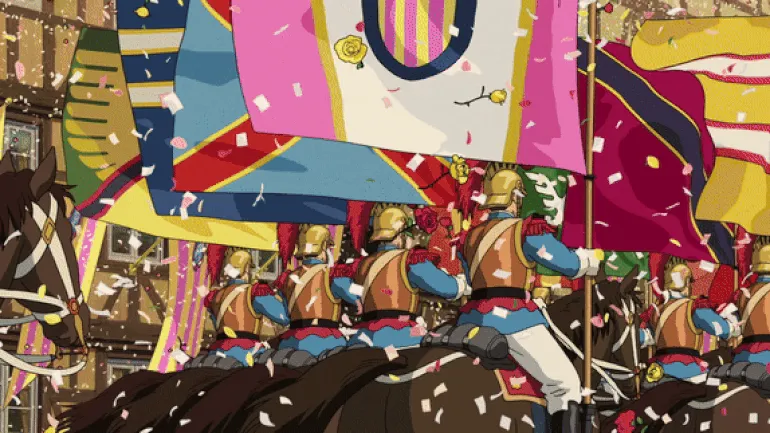
Created 3D flag models animated to appear fluttering in the wind. The light and shadow pattern was designed to take into account the curves of the fabric surface, adding a touch of realism. To achieve the 2D visualization of the flags, a Toon Shader was used, which gives them a flat, yet expressive look.
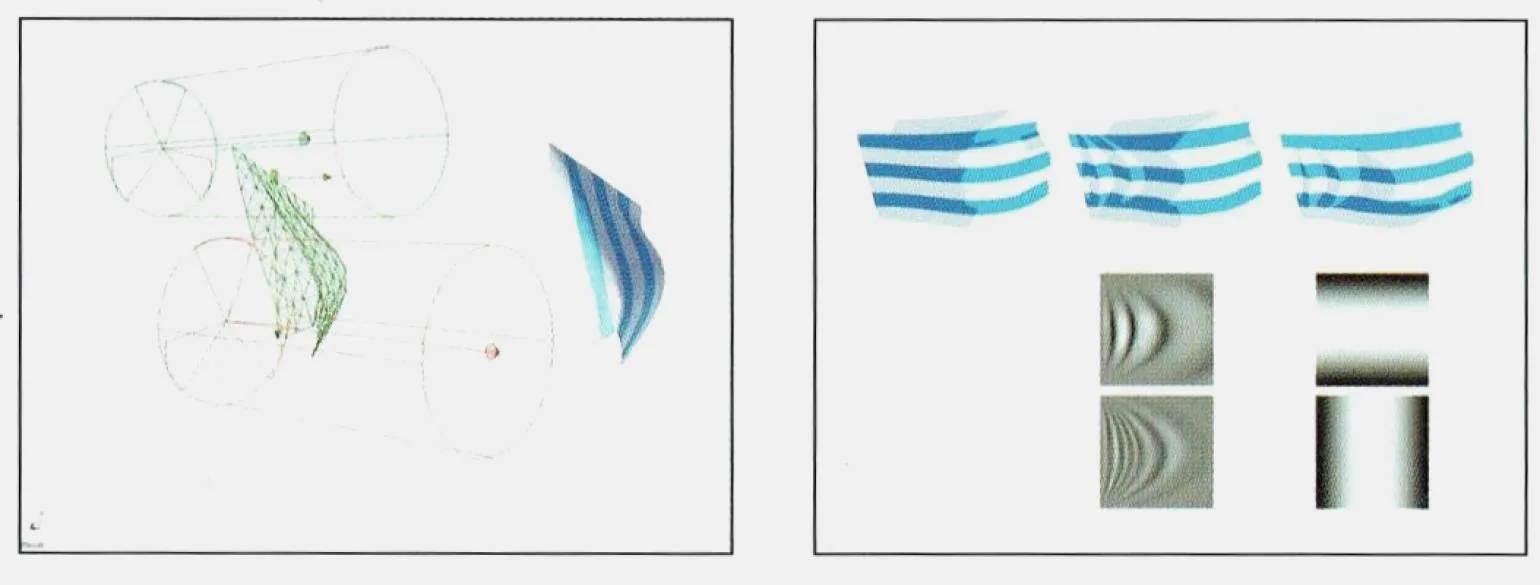
Creating the shadows on the flags posed certain challenges. The rendering software accurately captured every small detail, resulting in a chaotic and fragmented image. This contrasted sharply with the simple hand-drawn shadows. As a result, the animators had to manually simplify the shadows on the 3D flags. To do this, they used Adobe After Effects to soften the edges and generalize the complex and fragmented areas.
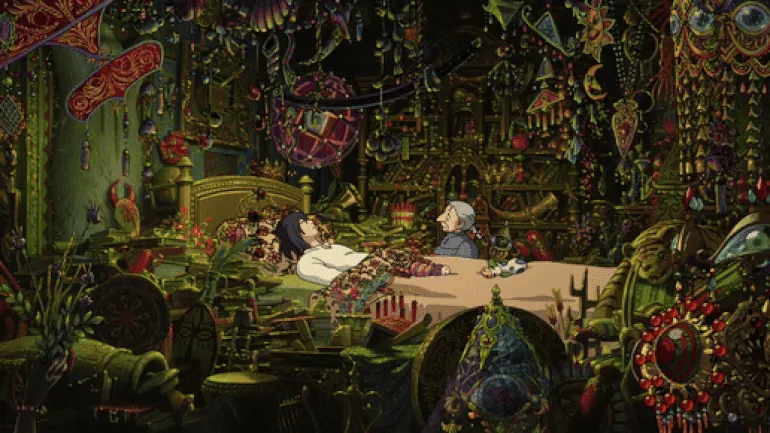
The rotating decorations in Howl's room were created using 3D modeling. The models were hand-textured, giving them a unique and original look.
The wings of military aircraft also attract attention. The model was given special designs while the outer contours were created using digital technology. This combination of traditional approach and modern methods allows to achieve high precision and expressiveness in design.
This film does not Innovative technologies were presented, as most of the methods used had already been used in the studio's previous work. However, two aspects stand out as relatively new:
- The process of image softening. Previously, digitally, they simply blurred or slightly fogged the background. In Howl's Moving Castle, they used a tool that imitated the softening of the focus of a real camera. Thanks to this, the backgrounds look more natural and elegant.
- The work on special effects. In the past, these were added using traditional retouching - for example, spots on the characters' skin were painted over the frame with a dry brush. This time, the retouching was done digitally.
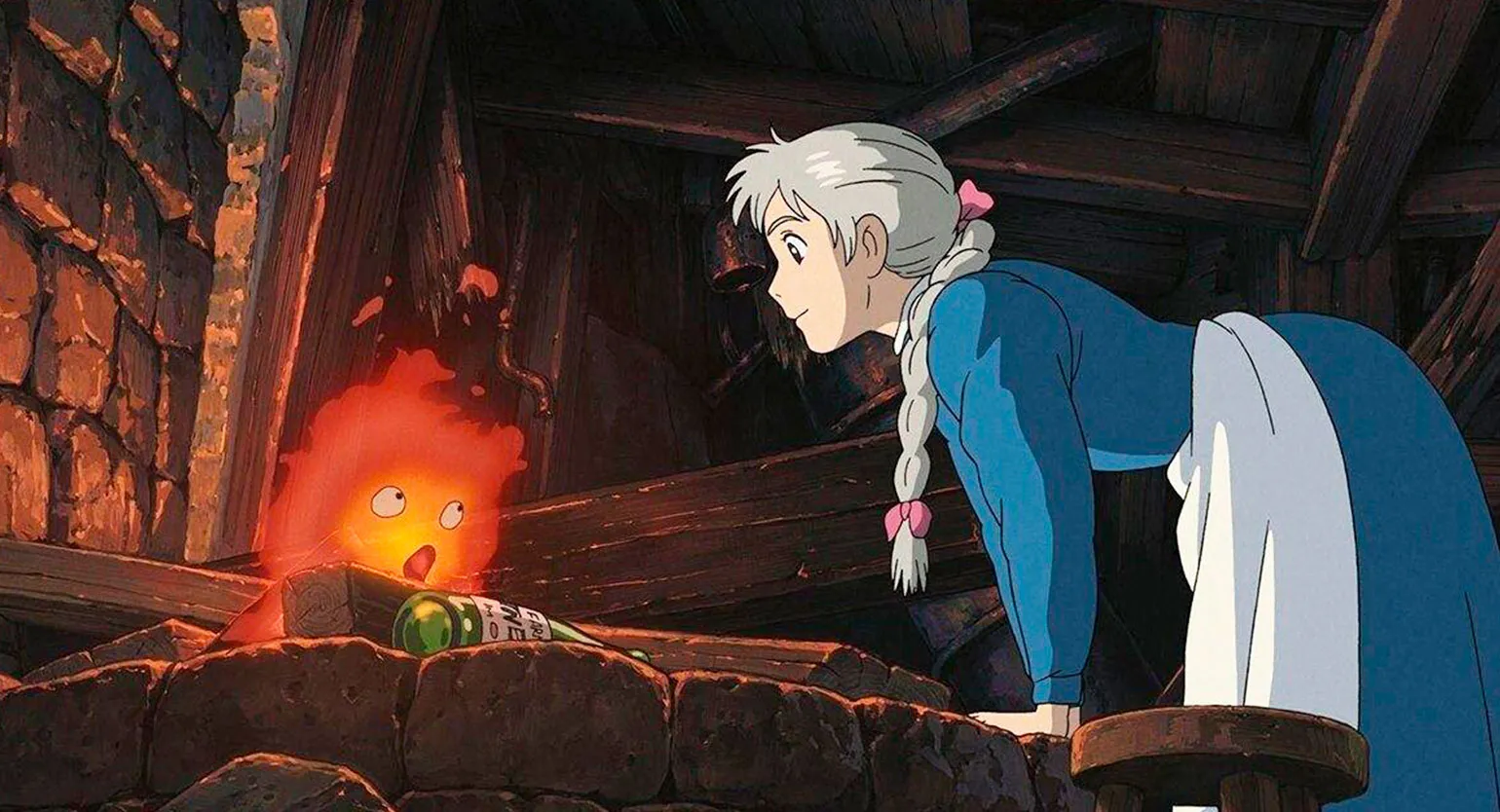
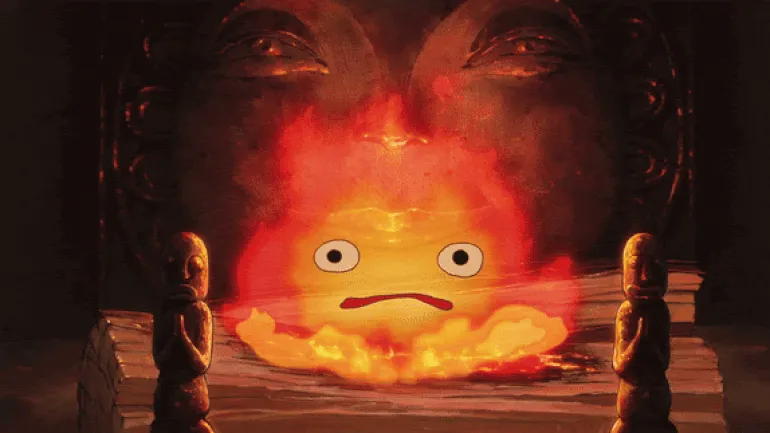
In some scenes with Calcifer, the fire demon who brings the castle to life, image softening techniques and special effects were used. When processing these moments digitally, it was necessary to take into account three key aspects: edge softening, the level of transparency, and the diffusion of light emanating from the demon. Calcifer was originally planned to be more bright and dazzling, but it was later decided to change his appearance to fit in with the family atmosphere present in the film. As a result, the light became less bright and more muted, which helped create the desired mood.
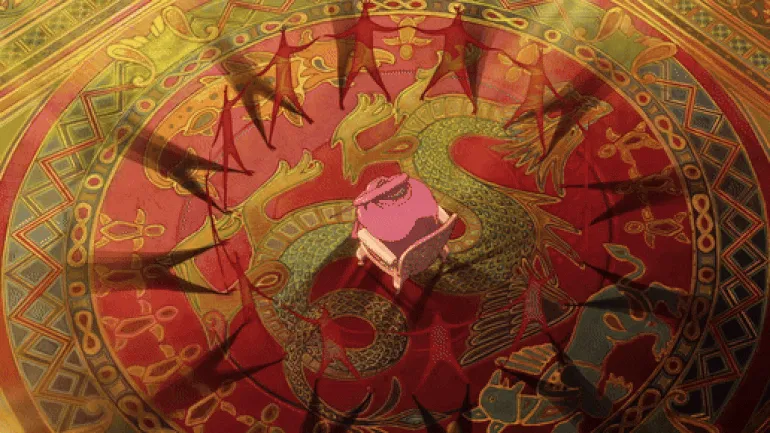
In The scene where the Witch of the Waste is trapped by the Royal Sorceress Saliman makes extensive use of CGI. In the bright, blinding light, black silhouettes begin to swirl around the Witch, creating a tense atmosphere and emphasizing the magic of the moment. This combination of visual effects and plot allows you to dive deeper into the world of a fairy tale and a sense of danger.
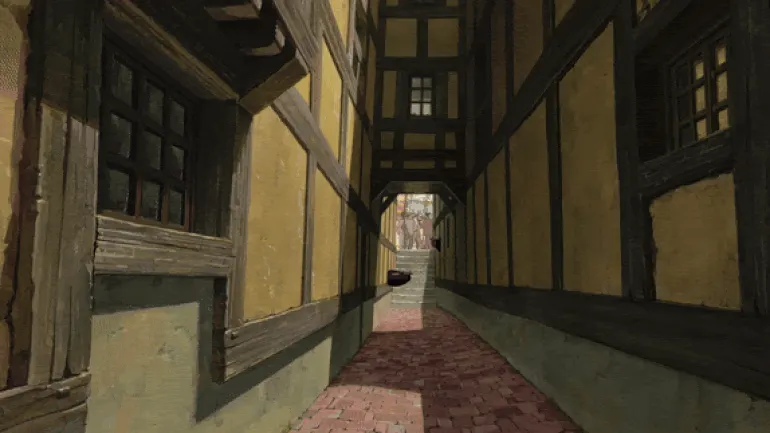
In the film Castle mapping is used in a similar way to Princess Mononoke to create scenes with complex camera movements and dynamic backgrounds. For example, at the beginning of "The Castle," when Sophie and Howl are under attack, mapping helps create a sense of depth and realism, heightening the impact of what's happening on screen.
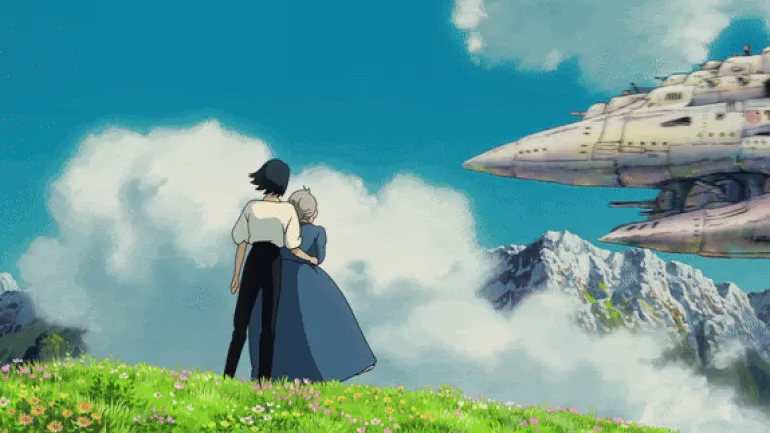
The scene in which Howl and Sophie rise into the air is one of the most memorable moments in the film. This magical moment symbolizes their connection and freedom, and also reveals the magic inherent in the world Howl created. Their rise into the air serves as a metaphor for their inner growth and the changes occurring in their lives. This sequence not only showcases the visual beauty of animation but also deepens our understanding of the characters, their feelings, and aspirations. It is important to note that such moments make the plot more rich and multi-layered, giving it a special emotional coloring.
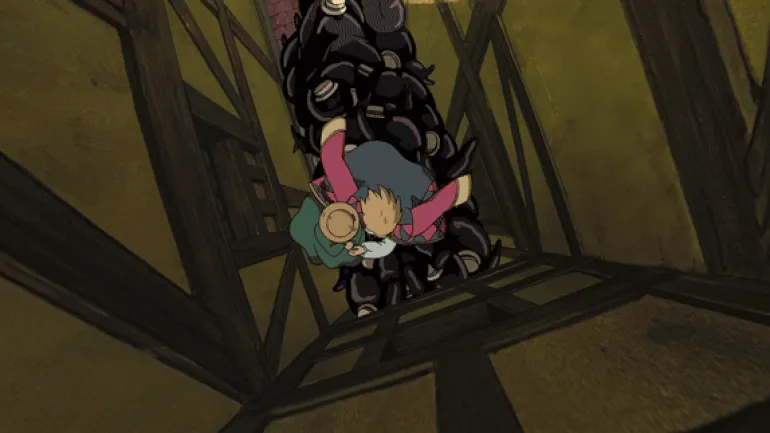
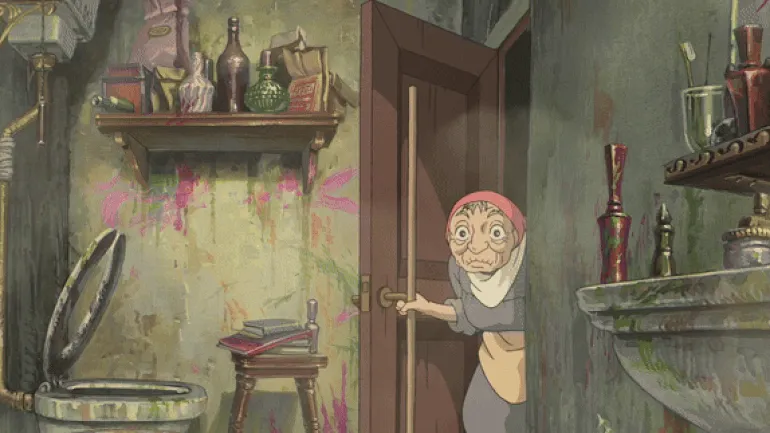
Sophie enters a dingy bathroom and the camera slowly pulls back, allowing the audience to see the whole picture. This creates a sense of immersion and emphasizes the atmosphere of abandonment.
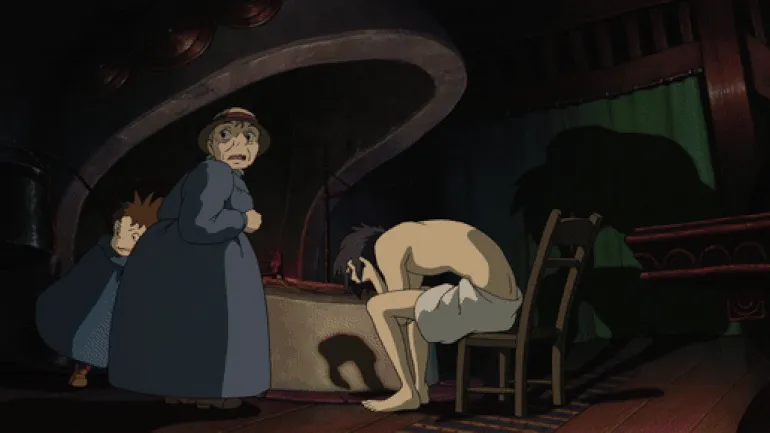
In "Howl's Moving Castle" morphing is used more Subtle compared to "Princess." In the scene where Howl panics and summons a dark spirit due to his unexpectedly dyed hair, the team uses a technique to subtly warp space. This creates the effect of the viewer looking through slightly curved glass, heightening the atmosphere and emotional weight of the moment. This approach to visual effects highlights the uniqueness of the animation and the skill of the creators, making the film more memorable and attractive to viewers.
Morphing is also used in a more complex technique known as fitting. This technique seamlessly blends the desired element with animated frames, allowing it to blend harmoniously with the contours of the drawing. In the film "Castle," this technique was applied, for example, to the front door, demonstrating a high degree of integration between animation and static objects. The use of fitting significantly improves visual perception, creating smooth transitions and enhancing the overall atmosphere of the work.
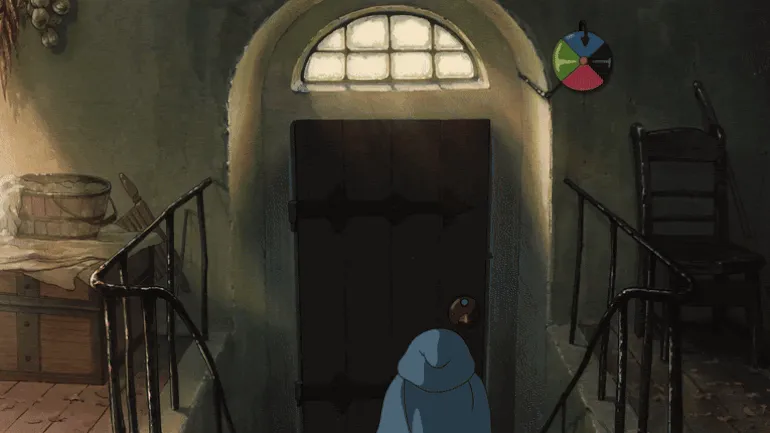
The problem associated with The problem with the flags was their excessive precision. Digital animation reproduced perspective so precisely that the movement appeared insufficiently expressive and modest, unlike hand-animated animation. To correct this, the animators changed the shape of the door, making it more trapezoidal, increased its thickness, and intentionally introduced errors into the computer graphics calculations. This allowed us to create a more natural and dynamic movement, closer to live animation.
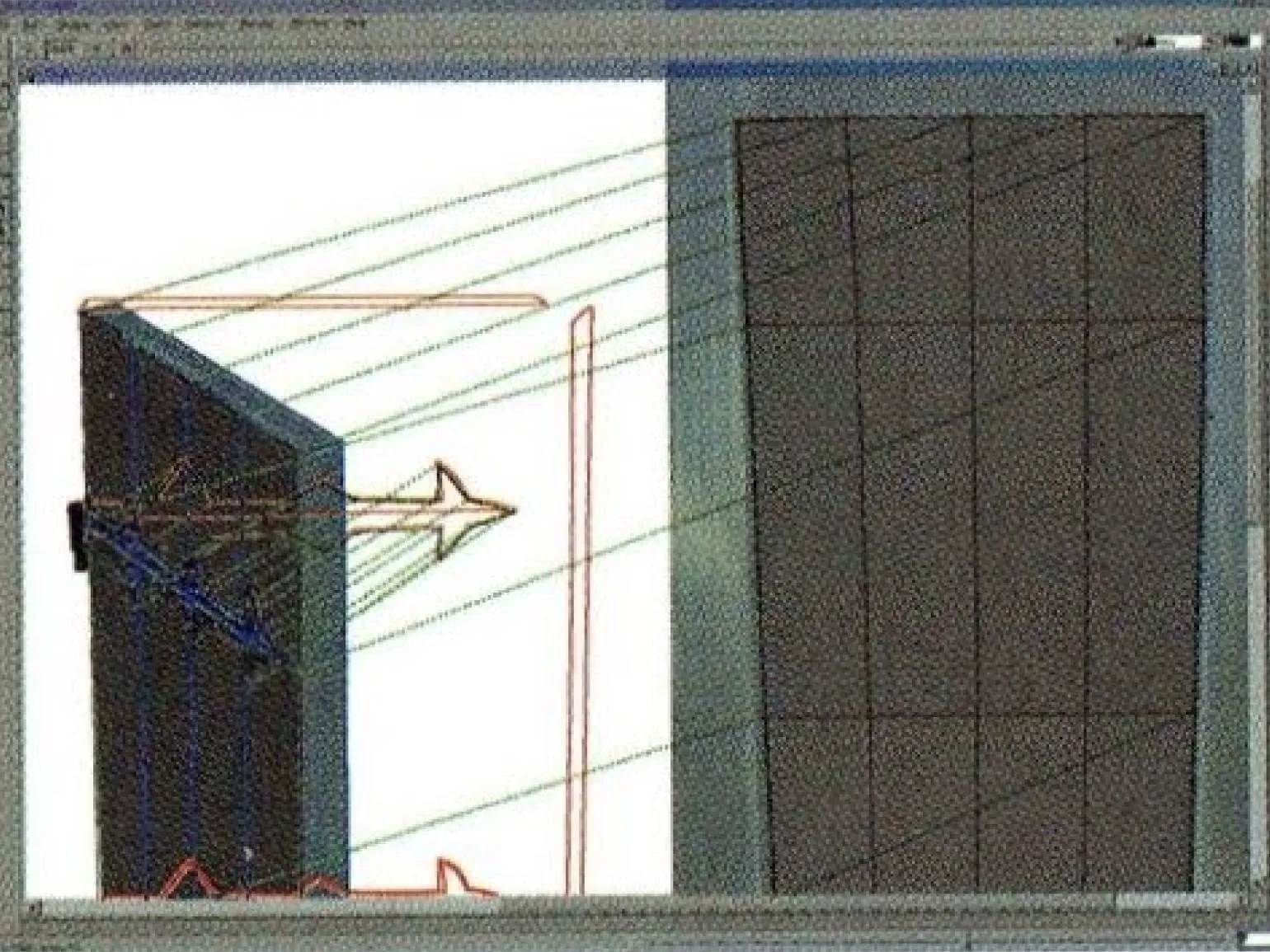
Traditionally, smoke and steam effects were created using specialized technologies that were used in various scenes. These methods were also used to generate confetti at parades and falling leaflets. The program Particle was used to create these effects. The background was not detailed CG animation, and the foreground was filled with hand-drawn keyframes, which gave the scenes a unique and artistic style.
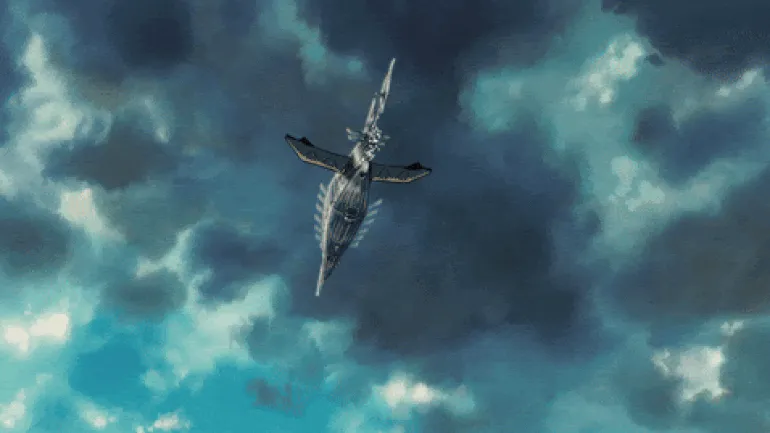
We've only looked at three of Hayao Miyazaki's films, but he maintains a similar approach in his other works, limiting the use of computer graphics to 10% of the total animation. Even in his final film, The Boy and the Bird, Miyazaki opted for hand-animation: backgrounds and keyframes were created by animators using pencils and paints, and then digitally transferred. This approach highlights Miyazaki's unique style and attention to detail, which makes his films truly unforgettable.
CG is a complementary tool in the production process, with the primary focus being on hand-drawn 2D animation. It's important to understand that 3D graphics and computer animation merely serve as support for traditional methods, emphasizing their significance and artistic value. Hand-drawn 2D animation continues to be a key element in creating expressive and emotionally rich works where every movement and detail matter.
Atsushi Okui is the director of photography for the animated film "The Boy and the Birds." His work in this role involves creating a unique visual aesthetic and conveying emotional content through the shots. Okui strives to convey the essence of the story and atmosphere of the work using modern technology and artistic techniques. His contribution to the project not only enhances the overall experience of the film but also highlights the importance of cinematography in animation. "The Boy and the Birds" stands out thanks to his talent, making the film appealing to both audiences and critics.
Hayao Miyazaki's son, Goro Miyazaki, has released a full-fledged 3D film titled "Aya and the Witch" from Studio Ghibli. This project marks an important step in the development of animation, continuing the traditions established by his father, but in a new format. "Aya and the Witch" features modern visuals and a unique style that has captured the attention of animation enthusiasts worldwide.
3D Animator Profession
You will learn how to create and animate 3D models of any complexity. Master popular animation programs and principles, and we'll help you find work in a studio or freelance assignments.
Find out more