Contents:

Learn: The Profession of Game Designer from Scratch to PRO
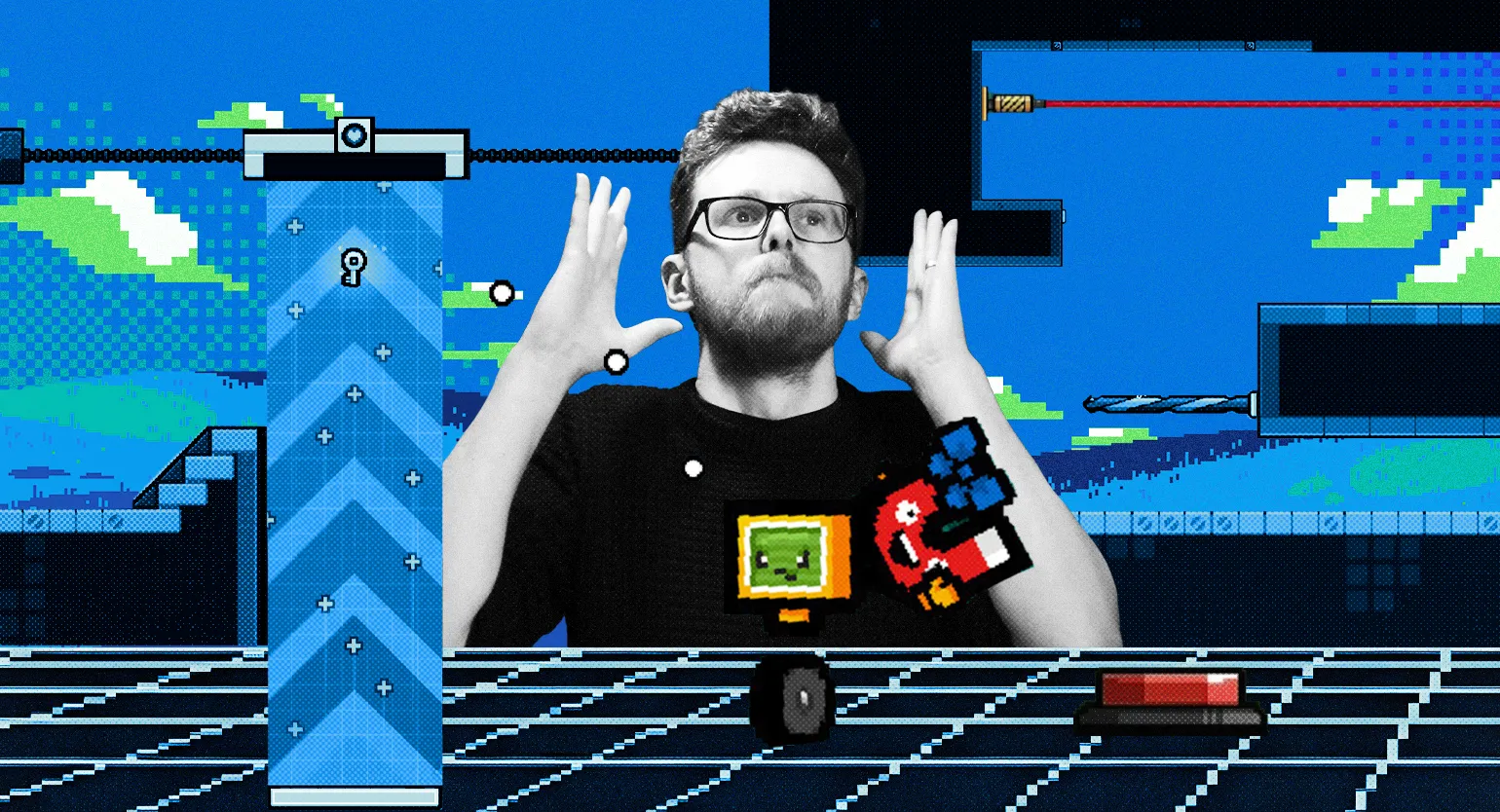
Learn MoreMark Brown is the creator and host of Game Maker’s Toolkit, a channel that has become one of the most popular game design resources on YouTube. For nine years, he has been creating videos analyzing various aspects of video games and their mechanics. He also organizes the annual GMTK Game Jam, giving developers the opportunity to showcase their ideas and skills. Over two years ago, Mark also began developing his own game using the Unity engine, allowing him to apply his acquired knowledge in practice and share his experience with an audience.
Brown’s motivation was clear: by running a channel about game development, he sought not only to deepen his theoretical knowledge but also to demonstrate that anyone can create their own video game. Hands-on experience has become an important complement to his education, allowing him to share valuable tips and techniques with his subscribers. Brown inspires audiences to take real steps in game development by emphasizing the process's accessibility to everyone.
Mark Brown shared his thoughts on developing a video game, describing it as very small and perhaps not particularly high-quality. However, he emphasizes the importance of the process as an opportunity for personal growth. Brown wants to share his experience, starting from scratch and ending with the creation of his first game, which he plans to release on the itch.io platform. This journey from beginner to game developer illustrates how one can overcome difficulties and grow in the game development field, even if the project initially seems modest and imperfect.
The puzzle platformer in which solutions depend on the use of magnets has expanded beyond a small game on itch.io. It is now officially titled Mind Over Magnet and has its own Steam page. The project developer, a blogger, has already released 13 diary installments about the game's creation process.

In In previous articles in this video series, we detailed how Brown mastered the Unity engine, developed the game's first public demo, and refined the gameplay based on user feedback. These steps were crucial in the game's development process and allowed us to incorporate player feedback to enhance the player experience. We will continue to cover further development steps to show the journey from idea to finished product.
In this article, we will discuss the puzzle development process and polishing the game to prepare it for release on the Steam platform. Creating high-quality puzzle games requires a careful approach to design, mechanics, and player interaction. We will cover key stages, including testing, optimization, and UI improvements, to ensure an engaging gameplay experience. Preparing for a Steam release involves not only technical aspects but also marketing, which will help attract attention to the game and increase its visibility on the platform.
Content is an important aspect of any content. It allows readers to quickly navigate the material and find the information they need. Properly structured content improves user experience and contributes to SEO, as search engines take navigation and user experience into account.
Creating high-quality content requires careful consideration of topics, headings, and keywords. This will not only attract readers' attention but also increase your chances of ranking high in search engines. Using headings and subheadings helps break the text into logical blocks, making it more accessible and readable.
Furthermore, regularly updating content helps keep information current and improves page indexing. Therefore, it's important to monitor trends and update your content to stay competitive in your niche.
Content therefore plays a key role in successful promotion and user perception.
- How to Design Puzzles
- The Dangers of Overly Complex Puzzles
- How to Turn a Demo into a Finished Game
- The Final Stage: Polishing the Game
How Brown Designed Puzzles for His Game
Almost a year after the release of the first public demo, Mark Brown focused on refining key aspects of the gameplay. In January 2023, attention was turned to content, including puzzle rooms that will be included in the final version of Untitled Magnet Game. These new elements are designed to enrich the gameplay and make it more engaging for players. A variety of puzzles will add depth and interactivity, allowing players to better immerse themselves in the game world and experience unique interaction mechanics.
Brown decided to start a second 30-day challenge, this time setting a goal of completing 30 puzzles in a month. As with his previous attempts, he encountered difficulties at the initial stage. The blogger admitted that generating puzzle ideas is not an easy task.

Despite successfully creating several high-quality puzzles for the previous demo, their creation was largely accidental. Mark developed them primarily to test new mechanics and level creation tools. However, creating a custom puzzle proved to be a significantly more challenging task. For some time, Brown struggled and even considered stopping development of the game, until one day, he had a revelation.
Every time Brown needed a new object for a level, his fatigue seemed to disappear. Mark could spend long hours creating assets and writing code, but as soon as he returned to level design, the process became slow and tedious again. The blogger soon realized that the problem lay in the incorrect formulation of the problem. Having realized this, he began to approach the process more deliberately, which significantly improved his productivity and the quality of his work.
When developing game mechanics, I always set clear goals for myself, such as creating a block that a robot can push left and right. I strived to achieve these goals. However, when I'm creating levels, my primary goal becomes more abstract: "To create a fun puzzle." This definition may seem vague, but it guides my creative process and inspires me to find original solutions.
Mark needed an effective way to generate ideas, and he discovered this method on the blog of Patrick Trainor, creator of the puzzle game Patrick's Parabox. One strategy Patrick suggested is to create a table with all the game mechanics listed in the top row and the leftmost column. Then, you need to look at each pair at their intersections and come up with a unique idea for them. This approach not only helps to structure thoughts, but also inspires the creation of original game concepts.

The spreadsheet method significantly sped up the development process. Now, instead of agonizing over an empty project, Brown can select a few game mechanics, place them in a level, and experiment. This allows him to quickly identify interesting situations and interactions, significantly simplifying the process of creating engaging gameplay experiences.
In one room, Mark installed a magnetic panel on the ceiling. Below it, closer to the floor, he placed a drill that could be extended and retracted with the press of a button, blocking the magnet. When the magnet approached the tip of the drill, it could be quickly moved to the panel by pressing the button again. However, if the magnet got stuck at the base of the drill, the process slowed down, as it took time for the drill to fully retract. This mechanism demonstrates an interesting solution for controlling magnetic objects and can be useful in various fields, such as automation and mechanics.


Brown realized that this small revelation and simple trick could be the key to solving the puzzle. He placed a laser next to a magnetic plate and installed two doors that opened and closed when the laser beam was interrupted. The result was a fascinating challenge: position the magnet so that the robot had time to pass through the first door before it closed and then reach the second door when it opened. This approach demonstrates how simple ideas can lead to interesting and complex games, developing logical thinking and creativity.


Inspired by the results achieved, Braun began experimenting with new combinations of technologies. He combined an electromagnet with a laser, a magnetic block with a drill, and a laser mechanism with a magnetic block on wheels. While not all experiments were successful, this approach significantly simplified the puzzle design process, opening up new horizons for creativity and innovation in the field.
Mark Brown noted that with each new puzzle, the process became increasingly easier. He identified three key factors that contributed to this simplification.
The blogger gained significant experience mastering new tricks and techniques, which can be compared to building muscle mass. For example, Brown mastered the method of misleading players by offering obvious but incorrect solutions. This forces people to think outside the box in search of the correct answer. The blogger discussed this technique in detail in his video on puzzle design.
Secondly, he developed new mechanics for a number of puzzles, such as a laser beam that destroys a magnet but leaves the robot untouched. These innovations provided Brown with additional elements that could be useful in the future.
Mark continued to improve the tools to simplify content creation. He reworked the button's script, allowing it to be changed with a single click. This significantly speeds up the level editing process and makes work more efficient.
To optimize the workflow, Brown took screenshots of each level with descriptions of its elements and compiled them into a "puzzle bible" in Keynote. This allowed him to analyze which rooms should be rearranged to improve the difficulty progression. This approach contributed to a clearer structure of the game and increased player interest.


"Puzzle Bible" The Puzzle Bible identified moments where the game introduced too many new elements at once. These episodes became the basis for creating simpler levels that help soften the sharp fluctuations in difficulty and teach players new game mechanics. This approach improves the gameplay, making it more intuitive and accessible to users.
Mark Brown noted that with each new gap in the Puzzle Bible, the total number of levels continues to increase. This emphasizes the game's dynamics and development, drawing attention to the possibilities that open up to players. Increasing the number of levels in the Puzzle Bible makes the gameplay even more engaging and varied, allowing players to discover new solutions and strategies.
Brown fell short of his goal of 30 puzzles, stopping at 26. Nevertheless, he made significant progress and saw the finish line of his project for the first time. This experience highlights his tenacity and drive to complete his plans.
“Up until that point, I felt like I was climbing a steep mountain with a foggy peak. However, in January, I finally saw it. I was able to understand the roadmap I needed to follow to successfully complete the game,” Brown said.
The blogger had to test the puzzles he had created. To do this, he put together a third demo, which he initially planned to show to friends and family, and then present to a wider audience. However, the process did not go as expected.
Why You Shouldn’t Overcomplicate Puzzles
The original plan was to create a demo that would be loaded onto a Steam Deck and taken to San Francisco for GDC. The goal was to give conference attendees the opportunity to play Untitled Magnet Game. However, the plans were almost ruined when a key playtester pointed out to Mark a serious mistake: the game's excessive difficulty.
Brown had an opportunity to avoid his blunder. A few weeks before the conference, he received advice from Patrick Trainor, who had played Untitled Magnet Game. Trainor, known for his methods that helped Brown overcome difficulties in puzzle design, praised the game and suggested several improvements. One of his recommendations was to simplify the puzzles, even if this reduced the game's difficulty. These recommendations could significantly affect the final result and perception of the game.

Brown expressed gratitude to Traynor for his help, but largely ignored the recommendation, focusing on other important aspects of the project. For a week, he worked on optimizing levels, removing redundant elements and adding new ones. In addition, Brown created a prototype of the dialogue system and made many other small changes aimed at improving the overall quality of the work.
Shortly before the conference, Brown handed over a Steam Deck with the game to an important playtester, who, unfortunately, did not show much enthusiasm.
He was frustrated and irritated by the game. The levels seemed overcomplicated and tedious to complete. At numerous points, he handed me the controller, asking: "Could you play this for me?" the blogger shared his impressions.
The playtester who conducted the test turned out to be Mark's father, which made the situation especially unpleasant. Nevertheless, this test became a key moment in the development process.
Mark Brown described a unique moment when he was able to "see through the Matrix." He understood the reasons and mechanisms that led to his mistakes. This experience became an important stage in his self-discovery and understanding of his own shortcomings.
Every time Brown created a new level, he created a simple puzzle requiring the player to perform a simple action. However, Mark worried that players would quickly solve all the puzzles, making the game easy and boring. This thought prompted him to add unnecessary mechanics to the levels, which only complicated the process and could distract from the game's core idea.
To successfully complete one of the rooms, the player must simultaneously use two magnets to pull two levers. This action will raise two drills, thereby clearing the way for a laser. The laser activates a ball, which opens the door to the level's exit. It sounds complicated, but it's a key element of the gameplay.

According to Braun, he was so focused on creating complex puzzles that that he had overlooked their entertainment value. This highlights the importance of balancing challenge and interest in puzzle design, which is key to attracting and retaining audiences.
Trainor later explained to Mark that he was not the only one who had fallen into this trap. Many beginning game designers mistakenly assume that players possess the same level of knowledge and skill as themselves. As a result, they assume that players will be able to quickly solve the puzzles presented to them. This common mistake can lead to games that are too difficult or confusing for the audience, which reduces the overall enjoyment of the gameplay. Developers should consider the diversity of player skills and experience to ensure their games are accessible and engaging.
Experience has shown that this assumption is incorrect. So, for the rest of the week, Brown focused his efforts on reworking the puzzles, aiming to make them clearer and more concise.
The developer reduced the level to a small room containing only one magnet, one magnetic panel, one lever, and one drill. This limited space creates unique conditions for solving puzzles and interacting with game elements, which increases players' interest in mechanics and strategy.

After After quickly reworking the demo, Brown loaded it back onto the console and headed to San Francisco. Now everything depended on the opinions of the developers and other industry professionals gathered at GDC. Fortunately for Brown, Untitled Magnet Game received positive reviews.
The game wasn't too easy—in fact, its difficulty was just right. In the same room with the lever, players would sometimes get stuck for a minute or two, only to have a revelation and successfully solve the puzzle. This balance between difficulty and the satisfaction of solving problems makes the gameplay engaging and exciting.
The blogger shared his opinion that no one felt a sense of loss or disappointment. According to him, participants simply enjoyed a fun game that brought joy from solving puzzles.
Brown, learning from his mistakes, offers valuable advice for future developers: "Always question your assumptions about your players." This approach will help build a deeper understanding of the audience and improve engagement. Developers must recognize that assumptions can be incorrect and lead to undesirable results. Continuously testing your ideas will allow you to adapt your games to player expectations and preferences, which in turn will increase engagement and satisfaction.
At the end of the video, Brown presented several methods that can be useful for solving this problem. These approaches will help you effectively cope with emerging difficulties and improve your work results.
- Watch other people play your game. It is best to do this in the same room with the player. “Nothing teaches humility more than sitting [during a test] next to a player who has absolutely no idea what your game is about,” Brown assured.
- Give the game to testers of different skill levels. Observe how different types of players handle the challenges you have created.
- Keep the target audience of the project in mind. Brown's problems stemmed in part from his desire to please fans of hardcore puzzlers like Stephen's Sausage Roll or Baba is You. His project, however, was designed for those who enjoyed more accessible puzzlers like Portal or Inside—and once Mark realized this, it became much easier for him to focus the game's design on their needs.
- Don't be afraid to start over. When you first create a level, it most likely resembles a rough sketch with a lot of unnecessary details and mechanics. So, it doesn't hurt to make another draft, but this time cleared of the junk that hinders perception.
Mark returned from GDC with a lot of fresh ideas and a decision to create a new demo that would effectively teach players the game's core concepts. However, after that, the blogger did not work on Untitled Magnet Game for six months.
What needs to be done to put the game together
Long pauses in the development of Untitled Magnet Game have been observed before. In September 2023, Mark, looking at the calendar, realized that out of the two years that had passed since the project's inception, he had only allocated nine months to creating the game. This confirms the complexity and labor-intensive nature of the development process, as well as the importance of constant attention to the project to achieve its goals.
Brown's periods of creative stagnation had two main reasons. The first was the need to balance game development and running his YouTube channel. He wanted to keep Game Maker's Toolkit active even while developing the game, as essays on game design helped fund the development of Untitled Magnet Game.
The solution to this obstacle was simple: he needed to reprioritize, focusing on development and postponing video creation until the main work was completed. This approach allowed him to optimize his time and resources, which in turn improved the quality of the completed tasks.
The second problem turned out to be much more serious: Mark didn't understand what steps to take to complete his project.
Mark Brown notes that even during the game's development, he doesn't feel like he's making significant progress. He describes the process as aimless interaction with game mechanics, hoping that over time they will come together to form a full-fledged project. This approach to game development emphasizes the importance of research and experimentation, which can lead to the creation of a unique gaming experience.
The blogger had long since moved beyond the prototype stage, when he could experiment with the concept and mechanics without restrictions. Now it was time to integrate disparate ideas into a harmonious whole.
Brown thought: "Mark, you need to develop a clear plan."
Mark created a Trello table to organize his game development tasks. In this list, he highlighted key stages, such as choosing a name for the game, creating levels, and writing the story. He then detailed each task, breaking them down into smaller steps, which allowed him to systematize the process and manage his time effectively. This approach helped Mark maintain focus on each task and ensure the project's consistent development.
Let's take level design as an example. Initially, the blogger intended to create several levels, but this approach did not contribute to a clear definition of the amount of content in the final version of the game. As a result, Brown developed a more detailed plan that allowed for better structure of the gameplay and improved user experience. This new approach ensured a harmonious combination of levels and content, which positively impacted the overall game and its perception by players.
He decided to create 50 puzzle rooms, distributing them 10 in each of the five game worlds. Brown emphasized: "Given my schedule and productivity level, it is important to stay realistic in order to ultimately complete this game."
The puzzles in the different worlds are dedicated to different types of magnets. In his video, Mark discussed the first three of them in detail. The first world includes only magnetic blocks. The second world introduces Max, a basic magnet who serves as the foundation for understanding the game's mechanics. The third world introduces Maggie, or Meg, a magnet with a unique trait—a split personality that allows her to switch polarities. The developer planned to dedicate four levels to introducing each of these characters in each world, allowing players to gain a deeper understanding of their abilities and interactions in gameplay.
Next, they moved on to other mechanics, such as the drill, the wheeled pulley, the levers, and the laser. Each of these mechanics requires a separate tutorial level, followed by several more challenging puzzles that allow for a deeper understanding of the game's mechanics. This approach allows players to gradually get used to new elements and develop their skills through a variety of tasks.
Brown noted: "I've designed the content for the entire game, now I need to create the levels."

The game's development plan underwent some changes during development. Brown decided not to delay introducing the magnet to players until the second world, as this would have resulted in the first stage of the game being without one of the key mechanics. Introducing the magnet early on allowed players to quickly become familiar with the game's mechanics and improved the overall experience.
Magnus became the first magnet to replace Max, and he proved to be mechanically simpler. Due to his large size and weight, Magnus cannot be thrown, but he does act as a center of gravity, capable of moving magnetic blocks. At this time, Max moved to the third world.

The level development plan was changed based on feedback from players, who made their comments and suggested new ones. Level ideas. Having a clear plan significantly simplified the level design process, as each puzzle now had a specific place in the overall structure of the project. This significantly sped up level creation: sometimes Brown would create four or five rooms in a single day. As a result, in just a month, he had 40 completed puzzles suitable for the release version of the game. This approach to level development not only improved the quality of the content but also accelerated its release.
Planning significantly simplified the process of switching between different aspects of development. Now Mark was clearly aware of his tasks and knew what to do when starting a new task. This increased his productivity and work efficiency. Proper planning helps not only organize the workflow but also minimize the time spent searching for a solution.
He finally named his game: thanks to a suggestion from YouTuber The Gaming Brit, Untitled Magnet Game was renamed Mind Over Magnet. With the official name in place, a logo was needed, so Mark designed the title in Adobe Photoshop, trying to convey the concept of magnetism. He showed the result to the members of the GMTK server on Discord and refined the logo, taking into account their feedback and recommendations.

Now that Brown had a name, logo, and a set of screenshots, as well as a clear vision of the game, he decided to add it to Steam. To do so, he needed to fill out an extensive form, pay $100, provide a certificate of registration as a business owner, and, of course, design a game page. As a result, his project, Mind Over Magnet, successfully appeared on Steam's digital shelf, an important step in promoting the game and attracting players.
Conventional wisdom recommends starting the process as early as possible so that users can add the game to their wishlists. However, as Mark noted, better late than never. It's important to understand that even a late start can lead to success if you approach promotion and audience engagement correctly.
Now he had to bring the Mind Over Magnet project to the release stage, which is what he did.
How to polish the game
By November 2023, Brown had completed work on a rough draft of the release version, which included all the game's puzzles and mechanics. This stage of development is key to finalizing the project's preparation for market release.
The process of finishing the game had only just begun. The levels, according to Brown, resembled blueprints, and the game still lacked a clear storyline. However, he saw the project in its almost finished form and realized that he really liked what he saw. Now he was faced with the task of transforming this rough draft into a full-fledged game.
Brown completed the level designs. Usually, improving the perception of space was simply a matter of moving or replacing a few elements in a room. However, in some cases, more significant changes were required to achieve the desired effect.
Take a look at one of these challenging puzzles and try to find the solution yourself.

The solution is as follows: after the robot picks up the key, you need to deactivate the beam with the button, then move Magnus to the right, activate the beam again, enter it with the magnet, and climb to the level exit. However, playtesters couldn't figure out this solution.
The level turned out to be truly amazing. At first glance, it seems simple, and Brown himself did not expect to encounter difficulties. This incident once again confirmed Patrick Trainor's words that even the simplest tasks at first glance can have their pitfalls.

The problem became clear when I explored the next level. To solve the problem, I had to press the button that activated the beam, then walk into it with the magnet in hand. This would allow me to retrieve the key and exit the room.
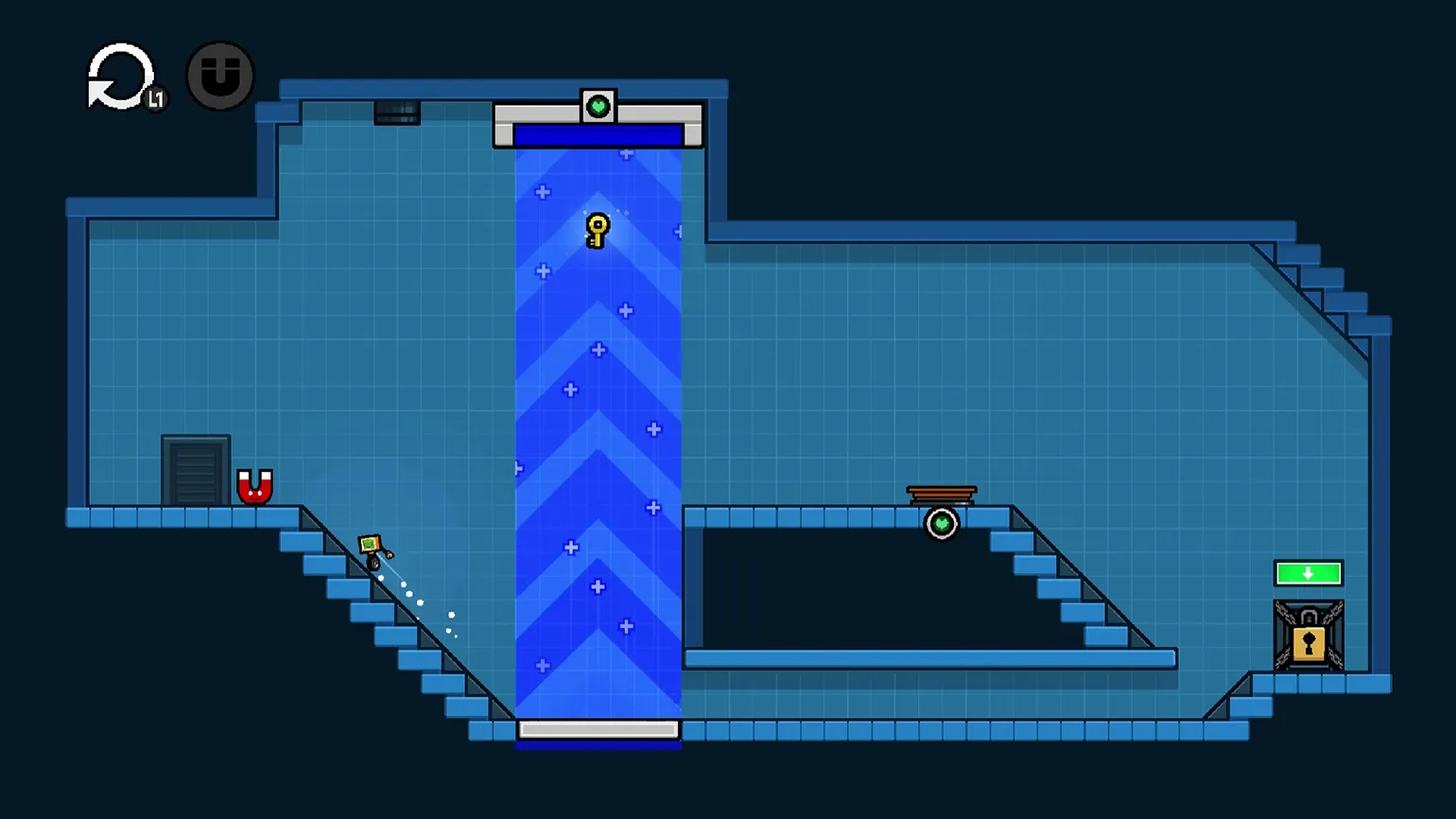

The second puzzle turned out to be significantly easier than the first, which made it an ideal start for teaching the mechanics. Braun decided to rearrange the levels, adding an extra section between them where players had to climb a beam with a magnet twice. This provided preparation for a similar task in the next room. After making corrections, Mark conducted another playtest, and this time the players successfully solved the puzzle.
After completing the overall level design, Brown began working on their visual design. The rough puzzles, which were easily edited and rearranged, now required more careful and aesthetically pleasing processing. The design process consisted of several key stages, which Mark Brown demonstrates using the first world as an example. He emphasizes the importance of each step to create a harmonious and appealing visual space that promotes player immersion.
- Develop a theme for the gameplay stage. The theme for the first world was the sewers. First, as Mark jokingly said, "What kind of video game is it if it doesn't have a sewer level?" Secondly, the blogger had already been thinking about a possible plot and imagined a robot escaping the factory, making its way from its lower levels to the very top—the sewers fit perfectly.
- Replace tiles with a hand-crafted background. Brown painted the level's base grid and added details that matched the theme: a brick wall with drain grates, an aqueduct arch, chains, grates, lamps, and barrels. He then applied a gradient to the result so that the image would be slightly muted and would not draw the player's attention away from the interactive elements in the level.
- Add particle effects. Simple white dots that float and disappear, simulating dust particles, but they brought the image to life nicely.
- Create water effects. Using a texture and a pixel-displacing shader, Brown "flooded" the lower part of the level.
- Add brick wall textures. Besides making the backdrops less monotonous, the brick walls also highlighted important elements like the level exits.
- Add small decorations to the room, such as barrels or signs, to create a lived-in feel.
Mark carefully crafted each level in the first world, adding unique details that gave the space life and personality. He placed pipes along the walls, installed stairs and waterfalls, and scattered nails across the floor to add atmosphere. These elements not only enriched the visual perception, but also created interactive opportunities for players, making the gameplay more engaging and memorable.


The next task was sound design. In the video, Mark noted that he wasn't too keen on this part of the development process, as working with sound effects in Unity is quite inconvenient and time-consuming. Therefore, he developed a new method that simplifies the sound design process. This approach significantly speeds up the workflow and improves the quality of the project's sound effects.
Brown first recorded an animation, such as a door opening and closing. He then imported it into Adobe Premiere, where he added sound effects downloaded from the Epidemic Sound website. This resulted in finished, processed content in Unity. This approach significantly simplifies the process of integrating animation and sound into game projects, ensuring high-quality final material.


The game featured a storyline that significantly enriched the gameplay. First and foremost, developer Brown added a captivating cutscene in which the main robot finds itself in the sewers. A scene introducing a character named Magnus was also added, allowing players to delve deeper into the story and interact with the world around them.
Magnus has changed. Previously, he always looked directly at the camera, but now, after extensive work with the animation state machine in Unity, Magnus's gaze constantly follows the robot. This new approach adds dynamism and realism to the character's interaction with the environment, improving the overall perception of the animation.
Brown noted that the result was quite appealing.

Brown also drew inspiration from the talking flowers in Super Mario Bros. Wonder, which allowed him to give the character Magnus lines outside of cutscenes. In newer versions of the game, the magnet can joyfully exclaim "Weeee!" when launched or make sounds when colliding with walls. This adds interactivity and livens up the gameplay, making it more engaging for players.
Mark Brown distinguishes between two types of improvements in game development: multiplicative and additive. Multiplicative improvements, such as the magnet's lines and animations, have an impact on the entire game, as they can be applied to every puzzle level. In contrast, additive improvements, such as the pipe waterfall, only improve a specific level. Brown recommends that solo developers and small teams focus on multiplicative elements and systems, as they allow for significant results with minimal investment. This approach helps optimize time and resources while ensuring high-quality gameplay.
Brown also spent a full week refining important meta-elements, such as saving, the options menu, and the hint system. These elements, while less engaging, play a key role in the gameplay, helping players better navigate the world and simplifying complex puzzles. The hint system clearly displays silhouettes of significant details needed to successfully solve puzzles, significantly improving the user experience.

Brown chose not to create the soundtrack, as he lacks the skills to write music. Instead, he decided to hire a professional musician for this task. This approach allows him to ensure the high quality of the project's musical accompaniment and focus on other aspects of his work.
Mark Brown is confident that the Mind Over Magnet game will be released in 2024. Although he has not yet revealed the exact release date, fans will soon be able to try the full version of the game. A trailer was recently released, which fuels interest in the project. With each new update, information about Mind Over Magnet becomes more and more encouraging, and fans are eagerly awaiting the opportunity to immerse themselves in the gameplay.
Developer diaries are now available, containing a wealth of useful tips for those who, like Mark, are looking to move from theoretical knowledge to practical experience. These materials will help you better understand the inner workings of game design and master its fundamental principles. Delving into the practical aspects of game development will open new horizons and deepen your knowledge in this fascinating field.
Our series of articles is coming to an end, but diary issues continue to be published. Just three days before writing this text, Brown released a new video in which he spoke in detail about editing a game trailer and preparing a demo version for the Steam festival "Games Will Be", which will take place in June. In this video, the blogger shared how he re-rendered all assets for 4K resolution and organized his creative process based on the pipeline used by the Valve team during the development of the game Portal. Stay tuned for more updates!
Check out other materials in our series.
- Part 1. How to Master the Game Engine on Your Own
- Part 2. How to Make Your First Game Demo
- Part 3. How to Make a Platformer Character
Game Designer Profession from Scratch to Pro
A game designer creates the structure of a game. They develop the concept, rules, and gameplay, and decide what emotions the story will evoke in players. You'll master the principles of game design from scratch and learn how to work with popular engines like Unity and Unreal Engine. You'll learn how to keep players engaged and monetize games. And we will help you start a career in the gaming industry.
Find out more