Contents:

Learn: Profession Writer
Learn MoreGames with non-linear storytelling offer players the opportunity to influence the story through their decisions. It's important that every player action impacts the narrative, creating a deep interaction with the game. However, developers must consider how to implement multiple meaningful story options without overcomplicating the project. Effective planning and the use of tools for managing story branching can help maintain a balance between variety and ease of development.
At GDC 2022, game designer Tony Howard-Arias discussed his experience creating non-linear story structures, using the visual novel Scarlet Hollow as an example. This game, like many others in its genre, is developed using the Ren'Py engine. In his talk, the author shared several technical recommendations for developers working with this engine. Skillbox Media's GameDev editorial team presents the key ideas and conclusions from his presentation.
Warning: This report contains spoilers.
Brief information about the speaker

Tony Howard-Erias is the founder of the indie studio Black Tabby Games, which he created with webcomic artist Abby Howard, now his wife. The couple is currently working on the script for the visual horror novel Scarlet Hollow. This project draws inspiration from such iconic works as the TV series Twin Peaks, the animated series Gravity Falls, and the video game Life is Strange. Tony also handles game design and programming duties on Scarlet Hollow. The game was released in Early Access on the Steam platform in 2021, and four of the seven planned episodes are currently available. Scarlet Hollow promises a captivating storyline and a unique art style, making it one of the most anticipated projects in the visual novel genre.
Characteristics of Working on a Game with a Nonlinear Storyline
Tony highlights several key features that are important to consider. These aspects can significantly impact the outcome of your work and help you achieve your goals. A detailed understanding of these features will allow you to plan and implement your tasks more effectively. Pay attention to these points to improve the quality and effectiveness of your work.
- Developing such a project is, first and foremost, a balance between three equally important components.
- First, the narrative must always be coherent, and any branching must fit into the plot.
- Second, the scope of your tasks must remain manageable, otherwise the project simply won't be completed. Keep in mind that with each new game choice that fundamentally changes the course of the story, this volume grows exponentially.
- Thirdly, all decisions must be powerful and have an impact on the player, which is measured by the conditional indicator of the player's belief that their choice matters.
- No matter how branching the story is, in a video game it is always noticeably limited - unlike, for example, tabletop role-playing games, where the GM can instantly react to the players' actions and adapt to their decisions. Therefore, use every choice to the maximum.
- Influence on the player can and should be achieved not only through key decisions that directly expand the plot, but also through the illusion of choice or false paths that help reduce the volume of tasks and maintain a sense of nonlinearity.
- The developer knows how the game's plot is constructed, but the players do not. This is both good and bad at the same time. Players may have their own expectations, sometimes high ones, and if the narrative doesn't meet them, they're unlikely to be satisfied. The developer, in turn, has all the aces up their sleeve to surprise the audience and maintain intrigue.
- Ultimately, it all comes down to the player's emotions. Even if you've done a colossal amount of work and written a script that branches into hundreds of different events and dialogues, if the player doesn't feel the changes, that work is in vain. Therefore, it's important to pay attention to player emotions, analyze what people feel during the game, understand your audience, and listen to feedback.
Three Ways Narrative Influences the Player
Tony identifies three key techniques used in Scarlet Hollow. These techniques play an important role in creating a unique gaming experience and immersing players in the atmosphere. They include narrative elements, environmental interactions, and decisions that influence the course of events. Each of these techniques helps shape the plot and develop characters, providing a deep emotional connection with players. Scarlet Hollow offers an innovative approach to gameplay, making it appealing to a wide audience.
- Cascades;
- References;
- Heuristics.
Cascades represent key choices that significantly impact the game's plot and world. These critical moments form major narrative branches and become the subject of heated debate among players. They not only determine the course of events, but can also radically change the perception of characters and their motivations, which makes them important to the gaming experience.
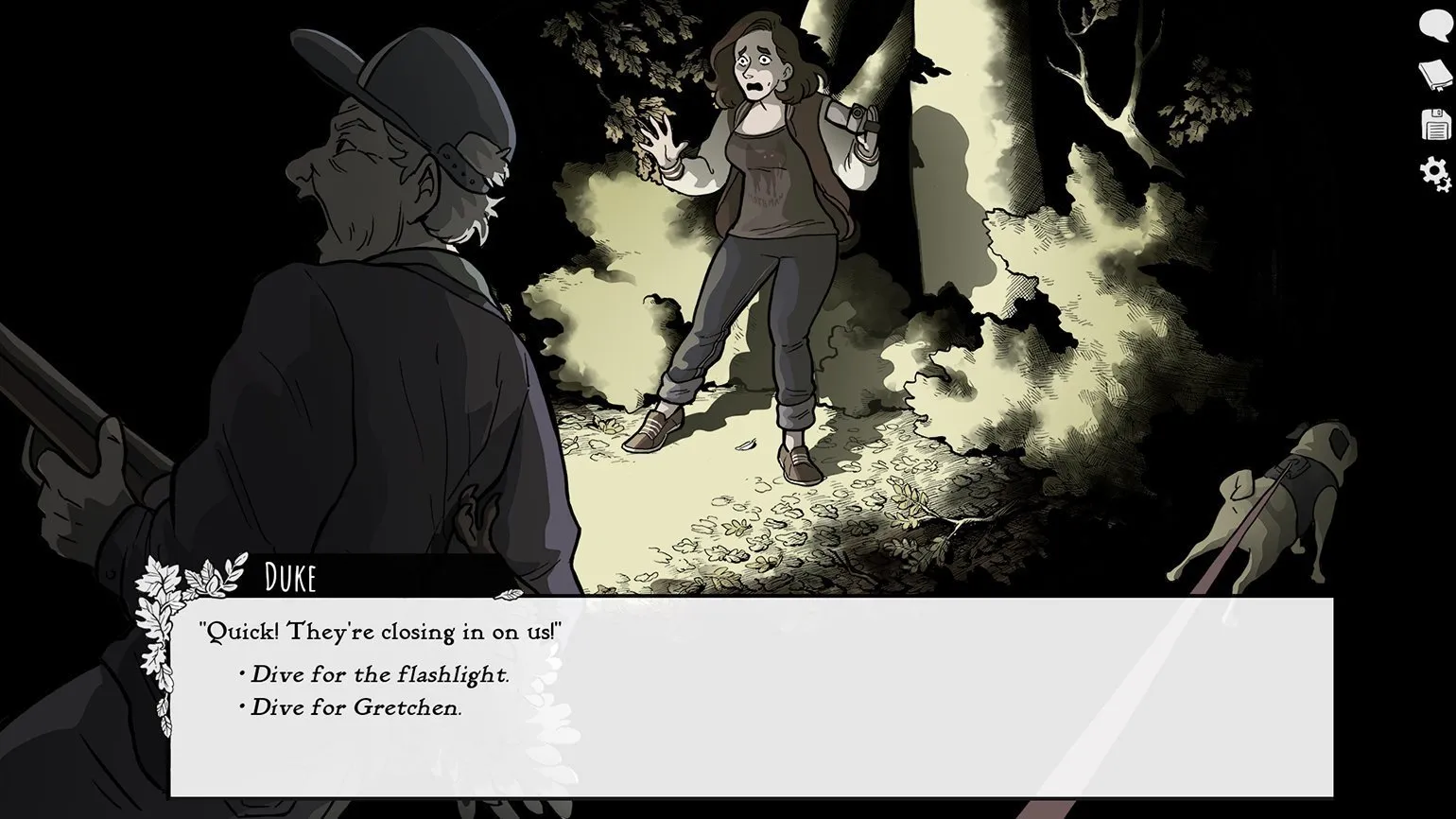
In the first scene of Scarlet Hollow, the protagonist and his friends find themselves surrounded by monsters in the forest. In this critical situation, the player faces a crucial choice: save Farmer Duke or Gretchen, the pug. Interestingly, if the player chose to understand animal language during character creation, they will be able to interact with the dog throughout the game. This adds depth to the gameplay and allows them to better understand the world of Scarlet Hollow.
A key choice arises in the story. If the player chooses to save the pug, Duke will die before their eyes. This decision will lead to police suspicion and, subsequently, a meeting with the dead farmer's son, to whom the player will have to explain themselves. Gretchen will continue to accompany her owner Stella until the end of the game.
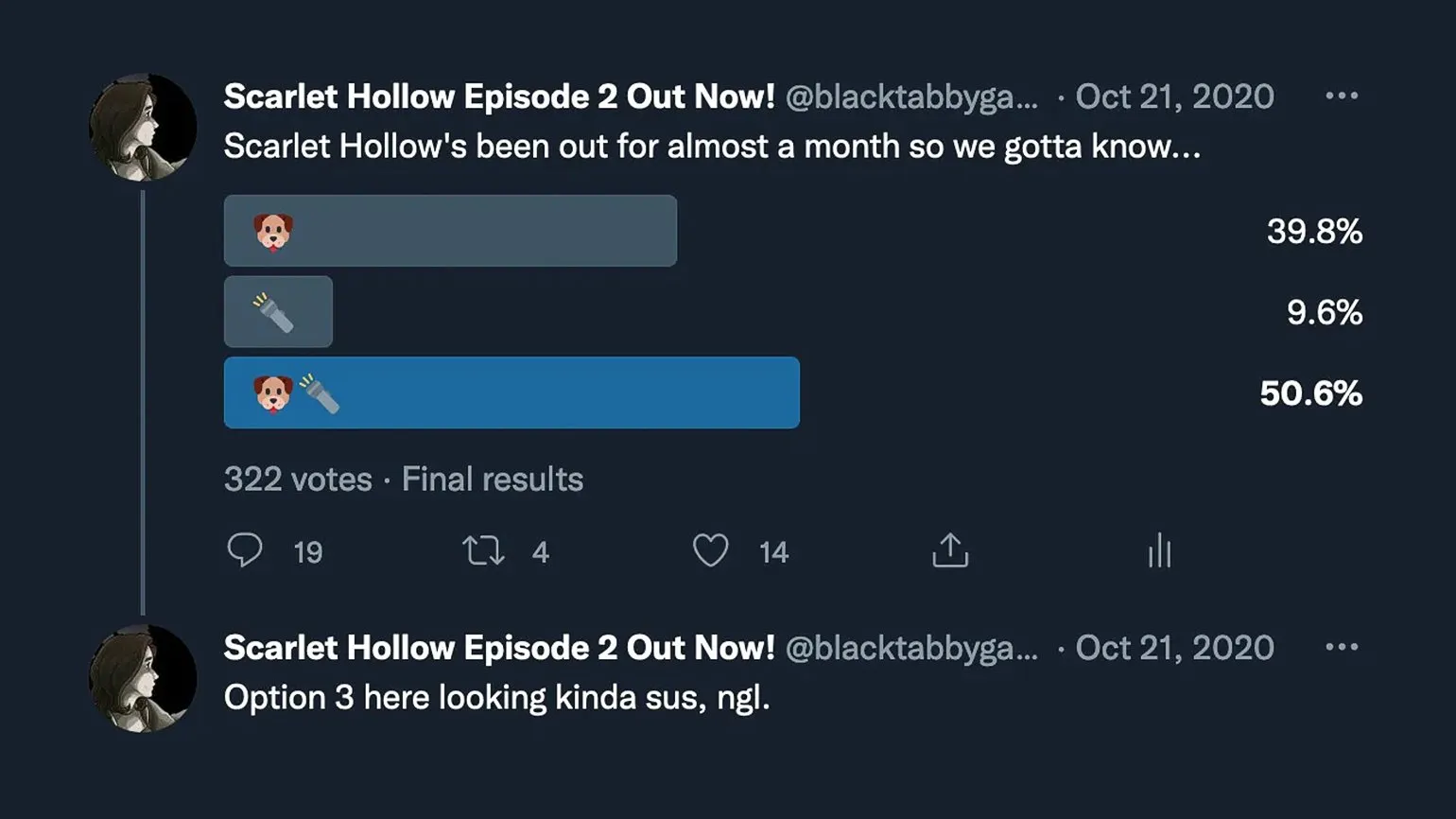
If Gretchen falls into the hands of the monsters, Stella will have a difficult conversation about the grief of losing a loyal friend. However, the player will not have to explain the situation to the farmer's son.
The storylines differ not only in the content of the dialogue but also visually, thanks to the use of different art assets. Each visual element plays an important role in creating a unique atmosphere and maintaining interest in the story. The choice of artistic resources also influences the perception of characters and the development of the plot, which makes each narrative line unique and memorable.

CSS cascades are a powerful tool for web developers, offering many benefits. First, they allow you to effectively manage the style and design of web pages, ensuring a consistent appearance across all devices. This is achieved by being able to apply the same styles to different elements, greatly simplifying the process of developing and maintaining a website.
Second, CSS cascades improve performance. Using external style sheets allows you to load styles once, reducing the amount of duplicate code and speeding up page load times. Cascades also provide flexibility in design, allowing you to easily modify and adapt styles depending on the context or device.
Another significant advantage of cascades is the ability to override styles. Using specificity and inheritance, you can control which styles are applied to elements, making customization more intuitive and manageable. This is especially important for creating adaptive and responsive web designs.
In conclusion, using CSS cascades not only simplifies the development process but also improves the performance and flexibility of websites, making them an indispensable tool for modern web developers.
- Relatively easy to add to the game. In cascade scenes, the number of solutions is very limited, making it easier for the developer to come up with a general outline and track performance goals. The only caveat is that they can take a long time to develop until the solutions are truly meaningful and effective.
- Efficiency. Due to their scope, cascades are the most memorable, and if a cascade is designed well, it will give players a lot of emotion. At the same time, they always become a subject of debate: people will not soon stop discussing their own and others' decisions and condemning others for killing Gretchen's pug.
- Understandability. Cascades offer obvious choices and usually do not cause misunderstandings. Players clearly understand the consequences that await them.
Disadvantages of Cascades
Cascades in web design and development have their drawbacks that can affect the effectiveness of the project. One of the main disadvantages is the difficulty in managing styles. When using cascades, confusion can arise due to the specifics of style application. This complicates the process of debugging and making changes to the code.
Another important disadvantage is an increase in page load time. Incorrect organization of cascades can lead to an excessive number of requests to the server, which negatively affects the loading speed. This, in turn, can worsen the user experience and lower the site's ranking in search engines.
It's also worth noting that cascades can complicate adaptation for various devices. Without sufficient flexibility in styles, the site may display incorrectly on mobile devices, limiting the accessibility of content for users.
In conclusion, despite the advantages, cascades have significant disadvantages that should be considered when developing and optimizing websites. Proper style management and code optimization will help minimize these drawbacks.
- Difficult to develop. Plot branches that differ too much from each other expand the story and the amount of work exponentially - especially if several cascading decisions are made in a row early in the game. Each choice requires careful consideration to ensure that all events are important to the narrative, have an impact on the player, and do not interfere with the plot's resolution. The more cascades you add, the higher the risk that work on the project will never be completed.
- High expectations and mistrust. People are fed up with games that offer only the illusion of choice, while in reality, their decisions have almost no impact. Their trust is shattered, and it's very difficult to regain. So no matter how well you've thought through nonlinearity, someone will always find something to criticize you for.
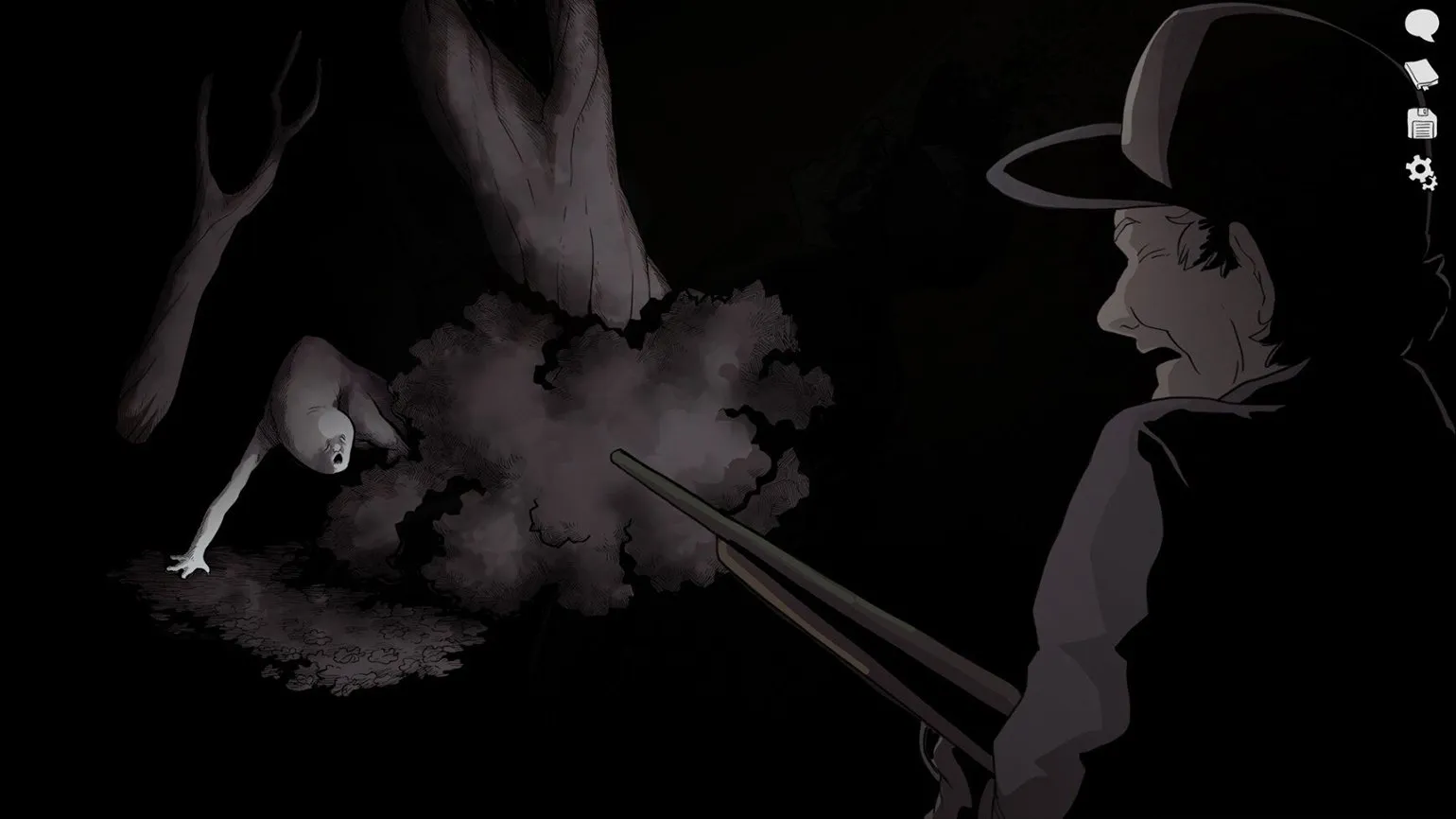
- Emotional intensity. Some waterfall solutions can be too radical and emotional, especially during tragic turns. Yes, they will be impressive, but they will provoke a wave of criticism, because part of the audience will become upset or angry.
- It is easy to overestimate your abilities and fail to deliver on your promises. This again is related to the high expectations of players: connoisseurs of the genre will compare your creation to the benchmark and demand high quality. Of course, any developer wants to meet and even exceed these expectations, but if you aim too high and fail, the audience will remember it.
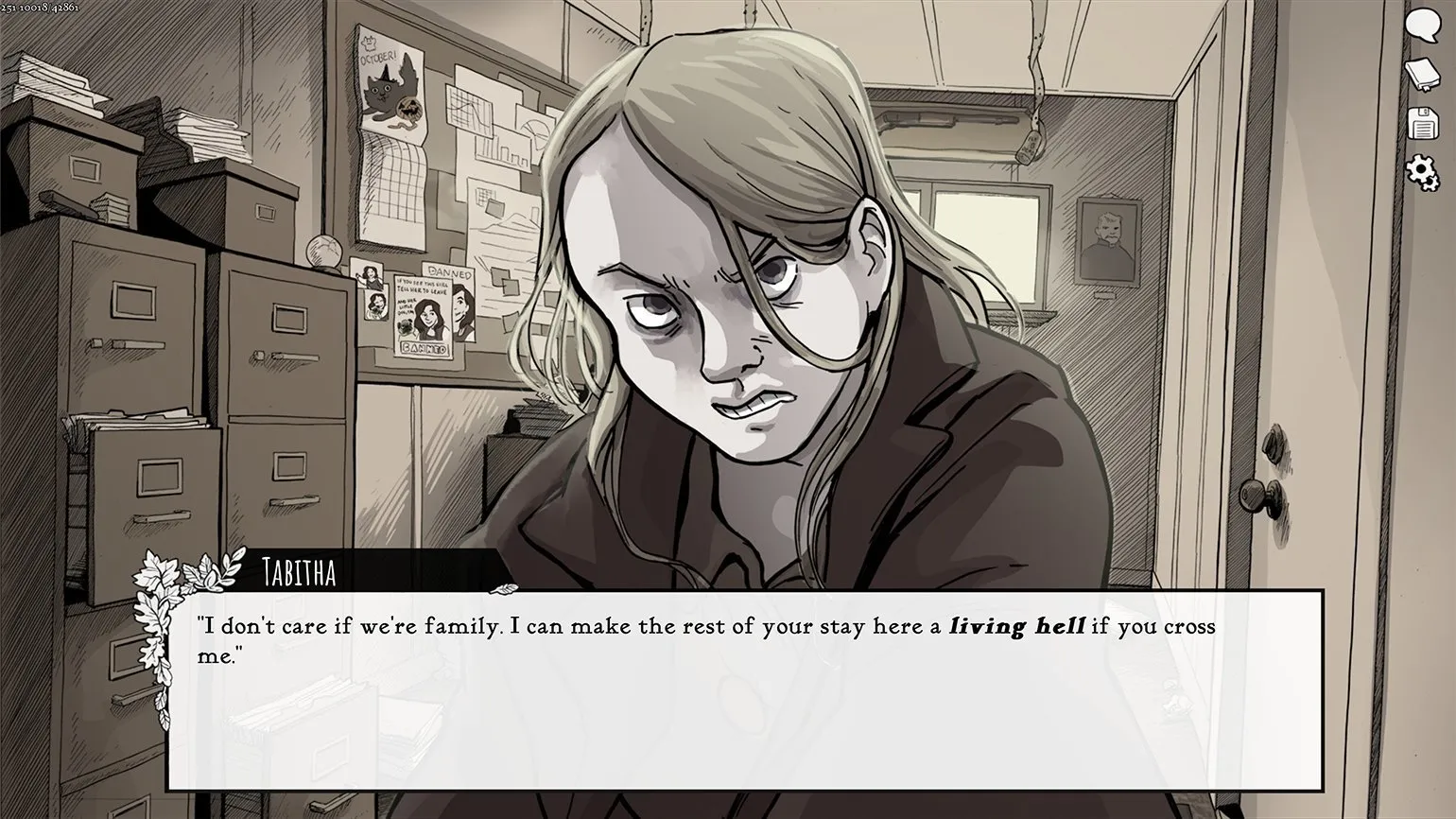
Recommendations are an important tool for achieving success in various fields. They help optimize processes, improve the quality of work, and increase efficiency. Depending on the context, recommendations can relate to project management, personal skill development, or productivity enhancement. To be as useful as possible, recommendations should be formulated clearly and specifically, based on factual data and practical experience. Additionally, it's important to regularly review and update guidelines to ensure they're relevant to current conditions and needs. Using guidelines in your practice helps improve results and achieve your goals. Work with modular episodes. Design new content not as an endlessly branching tree, but as a chain whose links split into several storylines, then come together at a common point, split again, and repeat the cycle. The return paths of these lines to the common point can be made more unique and meaningful to avoid a sense of linearity. Such modules are easier to track and fit into the main narrative, which is important if you want to finish the project on time (or at all). Define the goals of cascading decisions. Consider in what direction they advance the narrative and what tangible new things they add to the plot. For example, one of the central themes of Scarlet Hollow is the protagonist's relationship with her cousin Tabitha. Tabitha is not the most positive character, and interacting with her at the beginning of the story is unpleasant. In the third episode of the novella, dedicated to the ghost hunt, the player can invite Tabitha along, and then the character will have a chance to get closer to her. If he doesn't want her company, the main character will be accompanied by a creepy guy, Wayne.
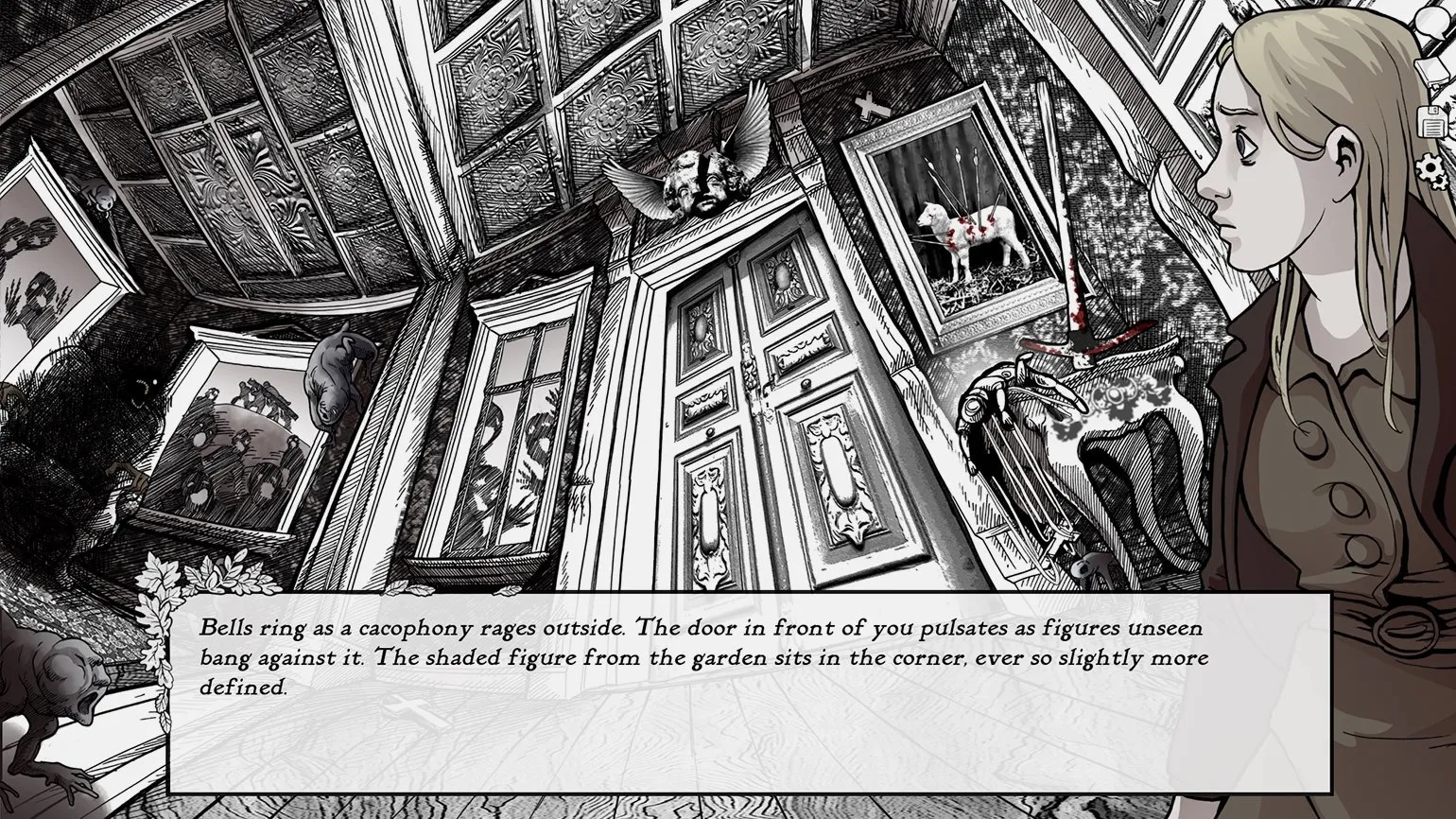
- Don't cut content in alternative routes. The most radical outcome of a cascade is the death of the hero, which inevitably ends one of the plot threads. In this case, add more content related to the character's death, otherwise players will feel unfairly treated: they lose an important piece of the story simply by making the wrong choice. This, in turn, will lead to a more linear progression: many will begin to avoid the character's death, knowing the consequences in advance.
- Combine cascades with other methods of influence, which will be discussed below.
Tony uses references to events that occurred earlier and are directly related to the player's choices. These references can be significant, referring to cascades of events, or minor. In any case, they should not disrupt the flow of the narrative or introduce new scenes. Such references are most often found in dialogue between characters. Using references helps create a deeper connection between events and the player's choices, increasing engagement and immersion in the game.
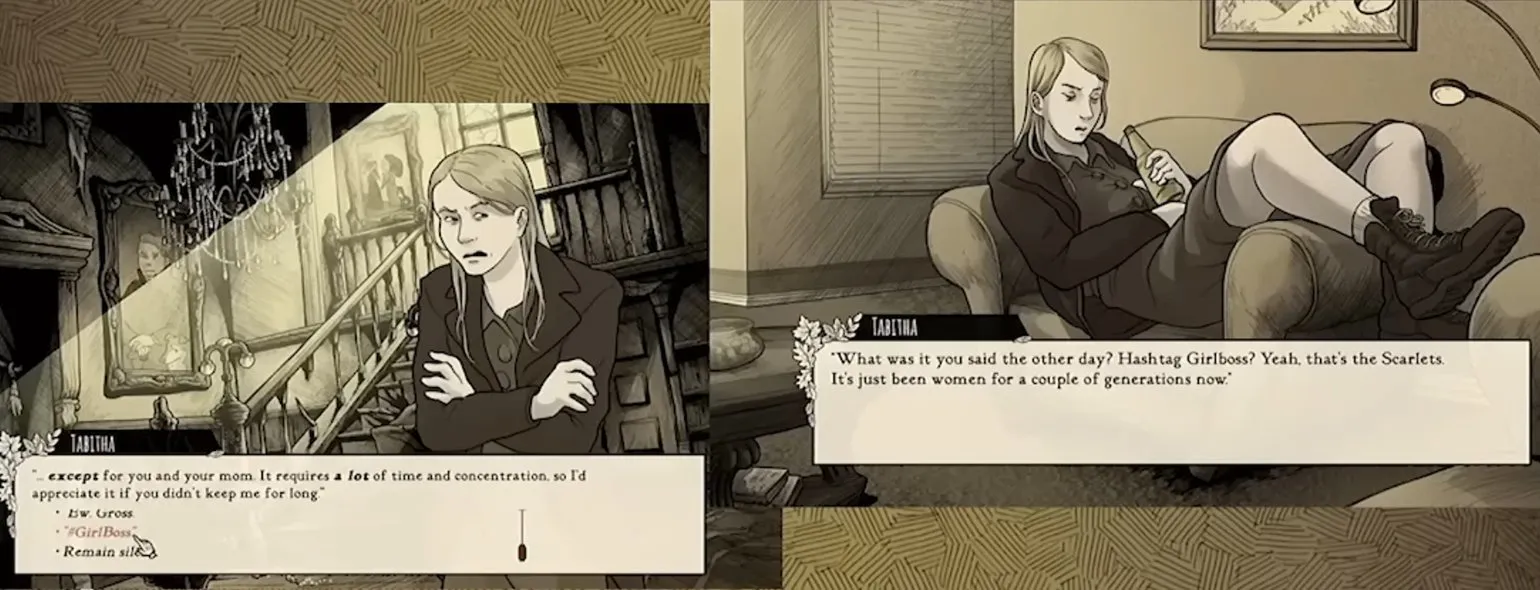
In the first episode of Scarlet In Hollow, Tabitha shares with the protagonist that she owns an industrial plant, and the player can choose to respond with the phrase "#GirlBoss." If the player chooses this option, Tabitha will mention him in Episode 3. These moments can be tracked using a Boolean Flag, adding depth to the interaction and influencing the plot. Links have many benefits that can significantly improve the quality of content and its perception. They enhance the authority and credibility of the material by citing reliable sources. This helps readers deepen their knowledge of the topic and provides an opportunity for further research. Using linking also improves SEO, as search engines take high-quality links into account when ranking. Furthermore, linking can increase audience engagement by encouraging users to explore additional resources. Including linking in the text makes it more informative and useful to readers, which ultimately contributes to increased traffic and higher search engine rankings. It's very easy to add to the game. Unlike cascades, allusions don't multiply workloads: in practice, they're simply the replacement of a couple of lines of dialogue. Five allusions won't require much more resources than one, so they can be added more generously.
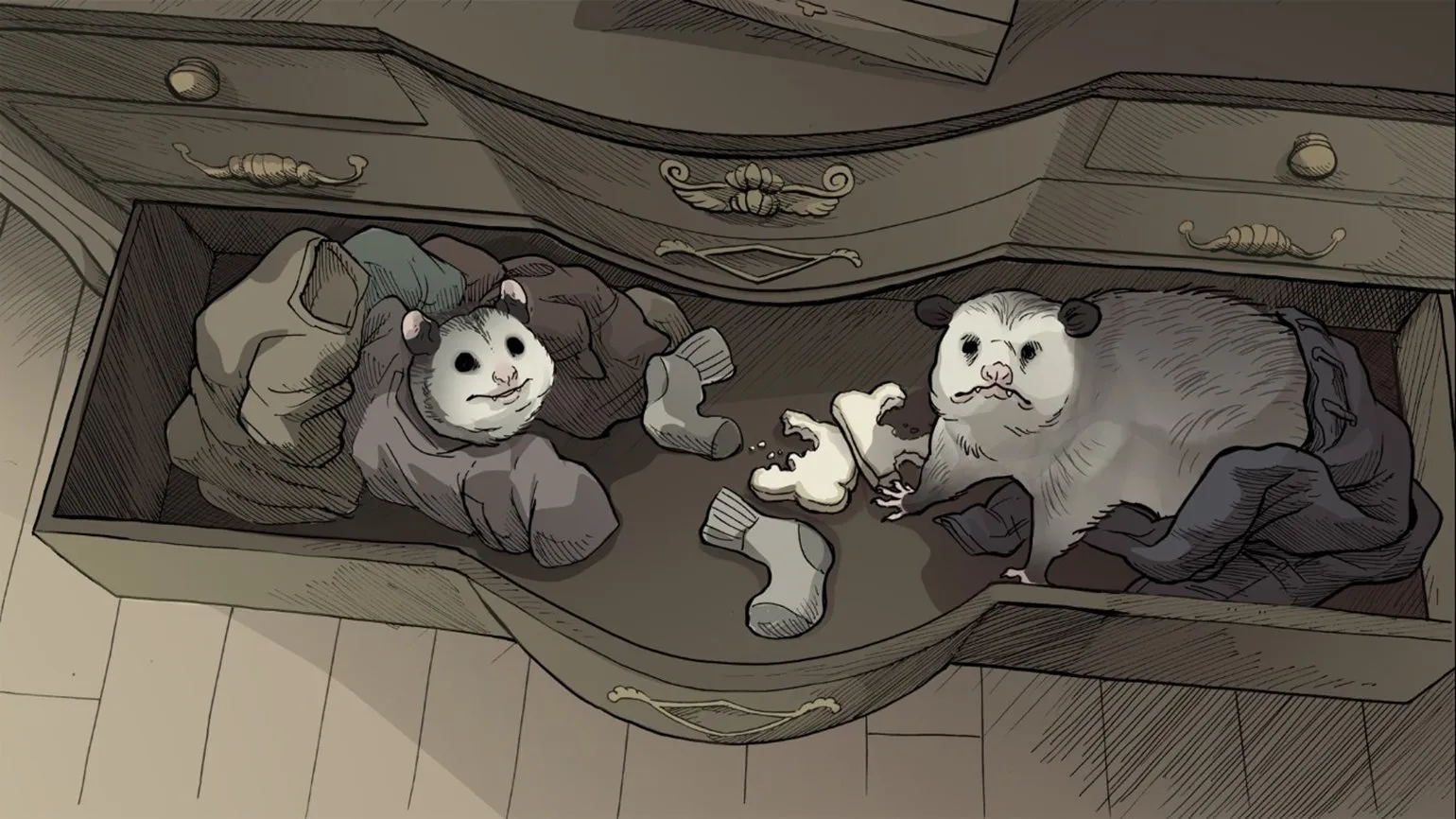
The downsides of in-content links can significantly impact how information is perceived and its effectiveness. Firstly, over-reliance on external sources can distract the reader from the main topic, creating the risk of losing interest. Secondly, if links lead to outdated or unreliable resources, this can undermine the credibility of your content. It's also worth considering that not all users will be willing to click links, which can reduce the time spent on the page. Finally, too many links can lead to information overload, making it difficult to read the text. Therefore, it is important to use links wisely and competently so that they complement the main content rather than clutter it.
- Ineffective without other methods of influence. You can't rely solely on references, otherwise the player won't feel the significance of their choice.
- A significant effect requires a lot of references. The first two episodes of Scarlet Hollow have approximately 500-1000 of them. From a technical standpoint, they will require a large number of variable flags and logical values in the code.
- You need to thoroughly know the plot of your game. We're talking about encyclopedic knowledge: you need to keep even the smallest details in mind, and if you get too carried away with references, you can drown in them.
Recommendations for improving the quality of content are an important aspect for achieving high positions in search engines. It is important to create unique and useful materials that answer user queries. Optimizing text for SEO includes using keywords that users frequently enter, as well as ensuring readability and a logical structure. It's important to consider both the semantic core and technical aspects, such as meta tags and titles. Regularly updating your content helps keep it relevant and appealing to your audience. Pay attention to internal and external links to build trust in your resource. Creating high-quality content that's genuinely interesting and useful to readers ultimately helps improve search engine rankings and attract your target audience. Use references to create more organic conversations. Characters' reactions to your lines and actions will add depth to the dialogue. Assign a logical meaning to each dialogue option, even if you haven't yet planned to use it in a reference. This may come in handy later. Give variables names that are easy to find and decipher. For example, Tony uses a single template that lists the episode number, scene title, character name, and descriptor in the format: episode_scene_character_flag.
Heuristics is a term familiar to many, especially those interested in psychology. It is a problem-solving technique that helps find quick answers by simplifying complex situations. Although heuristics may reduce accuracy, they allow you to effectively solve problems under limited time and resources.
In a lifetime, many people have heard of only a few cases of lightning strike deaths. While exact annual accident statistics may not be known, it is safe to say that the chances of being struck by lightning are extremely low. This suggests that lightning doesn't pose a serious threat to most people, as such incidents occur with surprisingly low frequency.
In games, particularly visual novels and dating sims, heuristics play a significant role in affection and love systems. However, the main problem is that such systems are often based on a single scale, which fails to effectively prevent flattery and sycophancy. As a result, instead of building a full relationship with a character, similar to interacting with a real person, players often choose only those lines they think will appeal to the other person. This can lead to a superficial perception of characters and a decrease in the depth of interaction, which ultimately impacts the overall game experience. Improving interaction mechanics and implementing multi-level evaluation systems would allow players to more realistically reflect their desires and preferences, creating deeper and more engaging relationships within the gameplay.
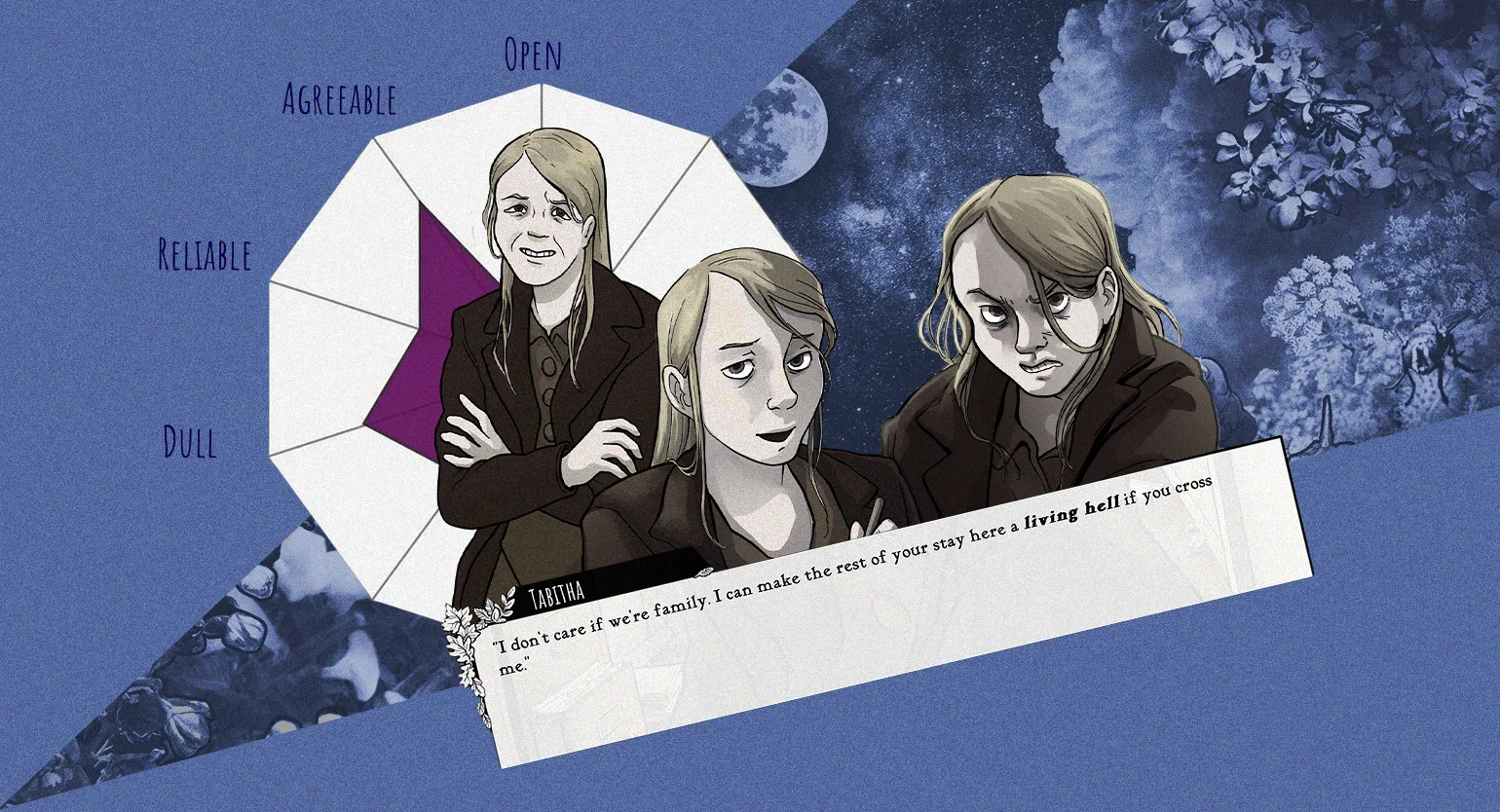
To address this issue, Scarlet Hollow developed a heuristic system consisting of five axes and ten variables. These elements influence how the game's characters perceive the protagonist. This approach allows for deeper and more multifaceted interactions, which enriches the gameplay and increases its replayability.
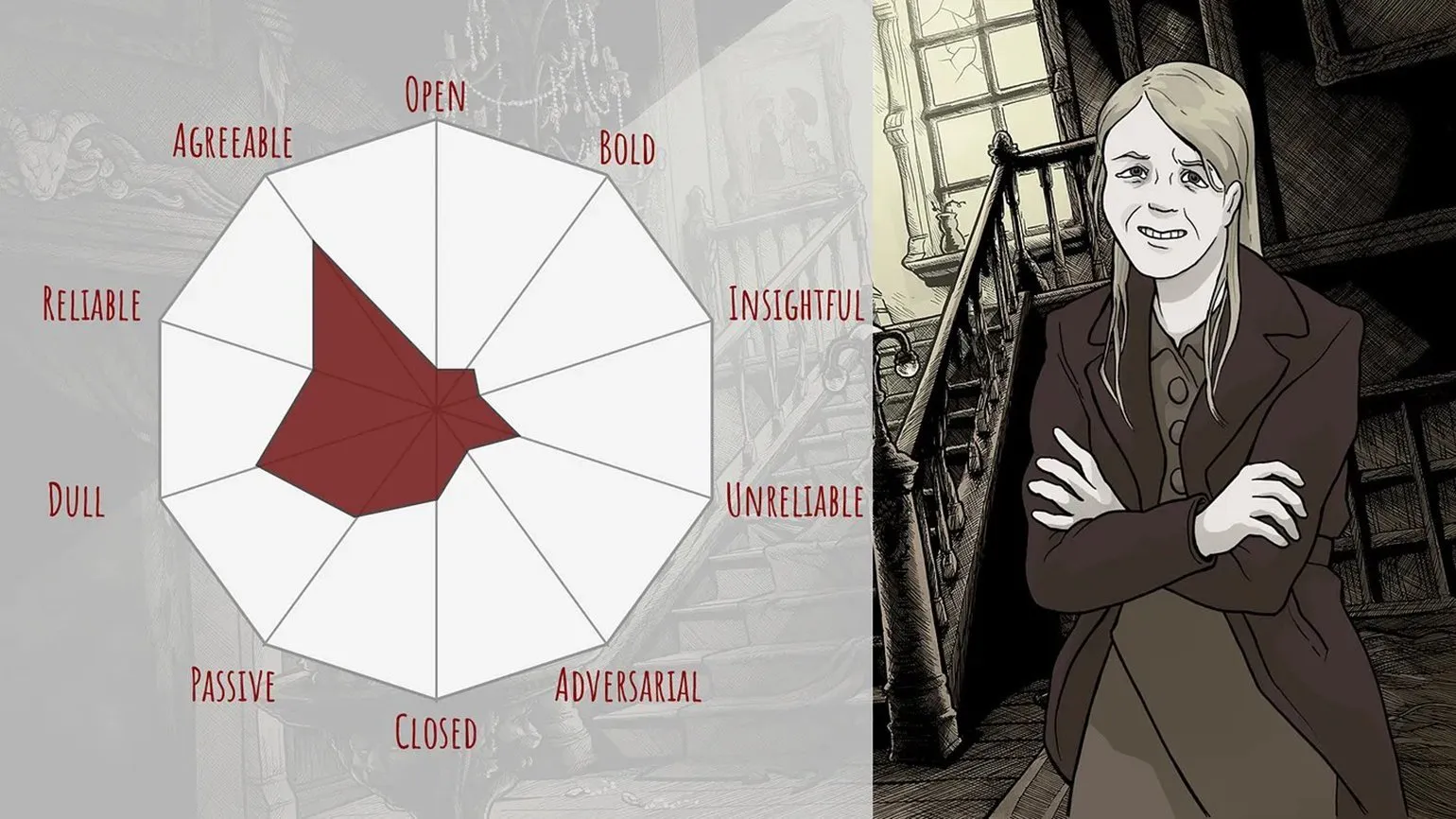
- Agreeable — Adversarial. Does the player agree with the character, compromise, or fight back when the character goes too far?
- Open — Closed. Is the player willing to share personal experiences with the character? And is the character willing to share them with the player?
- Bold — Passive. Does the player take initiative or rely on the opinions of others? Are they confident in stressful situations? How straightforward are they?
- Reliable — Unreliable. Does the player keep their promises and deserve trust? Are they willing to help the character if asked?
- Insightful — Dull. Does the character perceive the player as observant and intelligent? Or, conversely, simple-minded and unintelligent?
A note is an important element in a variety of fields, including academic papers, technical documentation, and legal documents. It serves to clarify, supplement, or explain information contained in the main text. Proper use of notes helps the reader better understand the context and avoid misunderstandings. Notes can cite sources, clarify terms, or provide additional information not included in the main text. Effective note formatting improves the comprehension of the material and makes it more accessible to the audience.
In Scarlet Hollow, the heuristic system is implemented covertly for several reasons. First, the developers sought to avoid overanalyzing players, so that they do not focus on the numbers and mechanical aspects of the game. Second, the system is designed to minimize player attempts to "hack" it to achieve high scores, which could disrupt the immersion of the gameplay. All plot threads and relationship dynamics are built on the principle of no clear-cut good or bad decisions.
Dialogue choices have a limited impact on the values of one or more scales. However, cascading decisions can significantly alter the final outcome. For example, if monsters capture Gretchen, this will cause Stella to withdraw, making interactions with her more difficult for the player. Importantly, this does not necessarily lead to Stella becoming hostile toward the protagonist, as this aspect relates to a different scale. Thus, player choices and actions in the game significantly influence the development of the plot and the dynamics of relationships between characters.
When developing the system for Scarlet Hollow, it was important for the developers to consider two variables for each axis. This solution allowed the character's attitude toward the protagonist to be considered as a single scale, rather than a set of individual indicators. For example, the ratio of openness to closedness can now be analyzed within the framework of a single value. This approach simplified the process of standardizing the system and avoided complex calculations and unnecessary planning.
Tony emphasizes that to achieve successful results in a game, it is not necessary to introduce 10 variables, as in Scarlet Hollow, but their number should be more than 1-2. This allows for a deeper and more engaging gameplay experience that will interest players and increase engagement. It is important to find a balance between the number of variables and their significance for the game plot, which will make the interaction more rich and interesting.
- Heuristics are familiar and intuitive to us. We use this method in real life without even thinking about it. For example, we don’t judge friends by a complete list of our interactions with them, but focus on the general feelings that develop over time from conversations and actions. Character behavior in a game with such a system appears more organic.
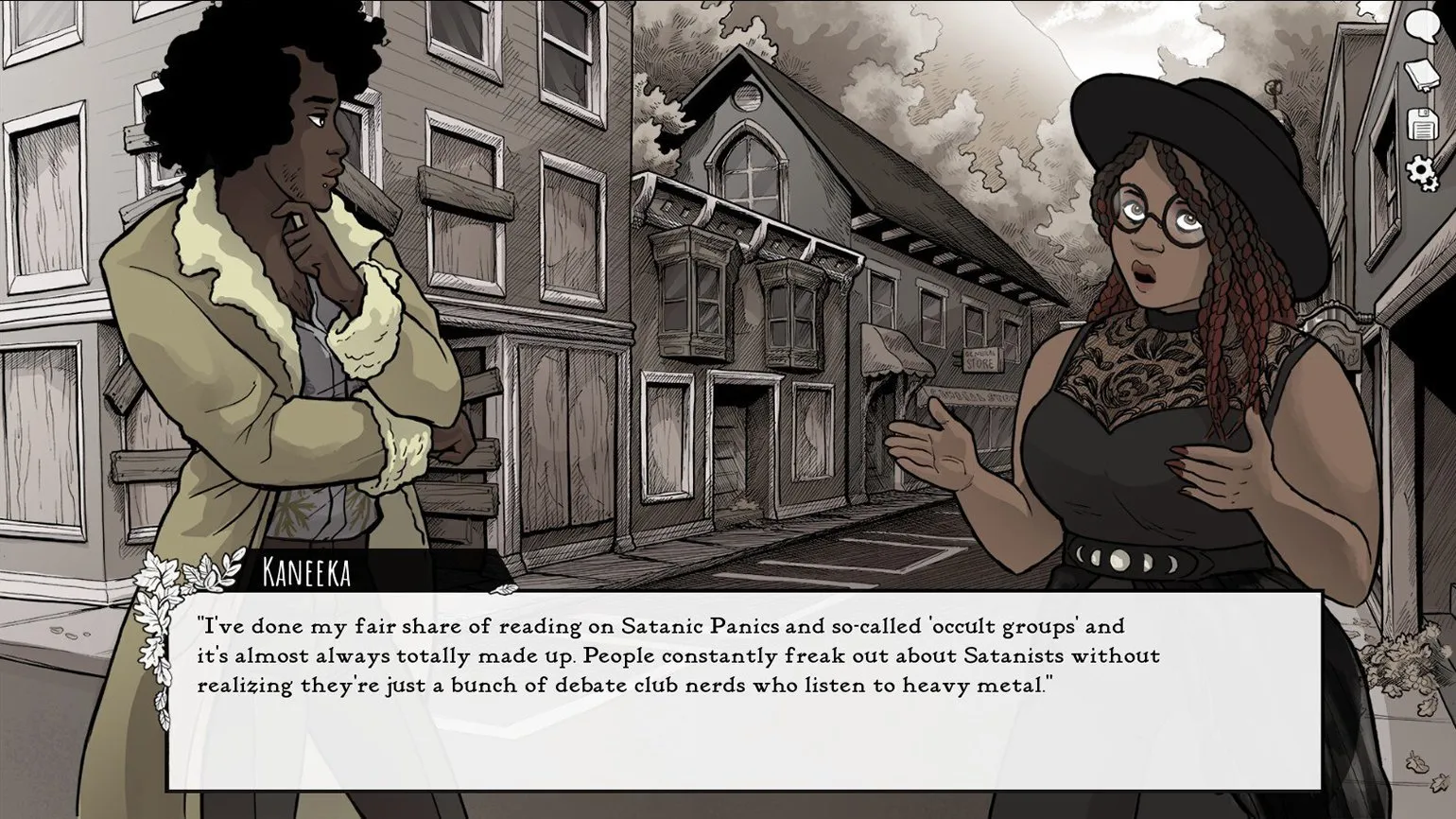
- You don’t need to keep hundreds of details in your head, as is the case with references. Heuristics, on the contrary, work to simplify. To change a character's attitude toward the protagonist, you don't need to ensure that the protagonist only gives them their favorite flowers or remembers the name of their favorite band—their overall behavior is more important. For example, Kanika from Scarlet Hollow views all talk of paranormal phenomena with a strong dose of skepticism, even though she's always dreamed of believing in the mystical. Her worldview can change depending on how brave she considers the player, how much she trusts them, and what thoughts specific situations, in particular the possible incident with Gretchen, prompt her to.
- Enhanced cascade and reference effects. Nuances in character behavior, dictated by the heuristic system, create even more variability and individualize the gaming experience.
- Modular approach. The heuristic itself is quite modular, allowing it to be used in any scene without deviating from the main plot.
- Wide range of character reactions. The heuristic system consists of scales whose values are constantly changing. Because there are several scales, the values form a large number of combinations, and the characters' behavior adapts to each of them. For example, if a character considers the protagonist very brave and has romantic feelings for him, then he himself may act bolder and more decisively to impress. And if the hero is not so brave in his eyes, then the character will be more willing to share his problems, without fear of appearing weak.
Despite their advantages, heuristics have several drawbacks. First, they can lead to erroneous conclusions, as they rely on intuitive judgments and personal experience. Second, heuristic methods can ignore important data, reducing the accuracy of assessments. Third, the use of heuristics can create biases, as people tend to rely on familiar thinking patterns. Another drawback is that heuristic approaches do not always ensure consistency in decision making, especially in complex situations. Therefore, it is important to consider these shortcomings when using heuristics for analysis and decision making.
- It's difficult to add to a game. In a project with hundreds of dialogue options, you'll have to carefully analyze how each choice affects the character and changes their attitude toward the protagonist. Such a system will benefit the narrative, but it will significantly complicate the work.
- It's not effective enough without cascades and references.
- A good heuristics system requires a good screenwriter. Of course, this also applies to cascades with references (especially in text-heavy games), but heuristics require much more skill. Imagine that in the same scene, a character can be angry, upset, and happy. The screenwriter must not only accommodate all possible emotional states, but also understand how they can flow into each other and influence the course of events.
- The system must not be oversimplified. If you do this, the interaction with the characters will become too artificial, like in dating simulators, where it's easy to generate sympathy with flattering answers.
Content Optimization Recommendations
To achieve the best results in promoting your website, it's important to follow certain recommendations. First, make sure your content is unique and relevant to the interests of your target audience. Use keywords that are most relevant to your topic to improve search engine visibility.
It's also important to structure the text so it's easy to read. Use subheadings, lists, and highlights to emphasize key points. Don't forget about meta tags and descriptions, which help search engines better index your site.
Regular content updating is also important. This not only maintains user interest but also has a positive effect on SEO. Include links to authoritative sources to build trust in your content.
Finally, analyze the results of your efforts. Use analytics tools to track traffic and user behavior on your site. This will help you adjust your strategy and improve the quality of your content.
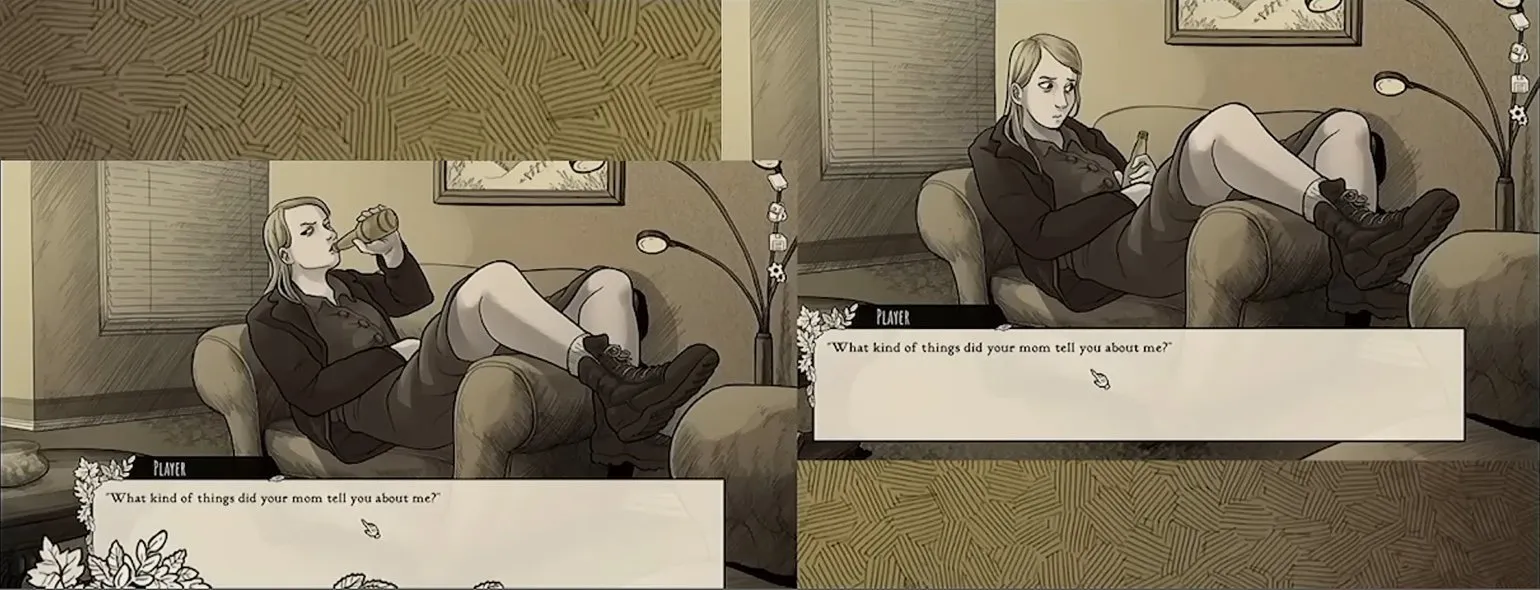
- Heuristics are the most flexible tool; use them to their fullest. By setting up a system correctly, you can use it to control other content—for example, linking different soundtracks and sprites to different character states. Below is the same scene with Tabitha, in which the protagonist asks his cousin a personal question. In the first version, the relationship with her leaves much to be desired, and tense music plays in the background. If Tabitha begins to trust the protagonist, a touching guitar melody plays in the scene, inviting a heart-to-heart conversation. Sprites also influence perception and enhance the effect, especially if the game has no voiceover. In the first case, Tabitha looks aggressive, in the second - more vulnerable and open.
- Combine heuristics with player choices. If Stella lost her pet, will she be able to trust the protagonist? How will this affect the further development of their relationship? This is where your efforts will come in handy if you follow the advice from the previous chapter and begin assigning logical values to all the player-responsible dialogue in advance—all the necessary variables will already be in the system; all that remains is to find them and link them to the intended moments.
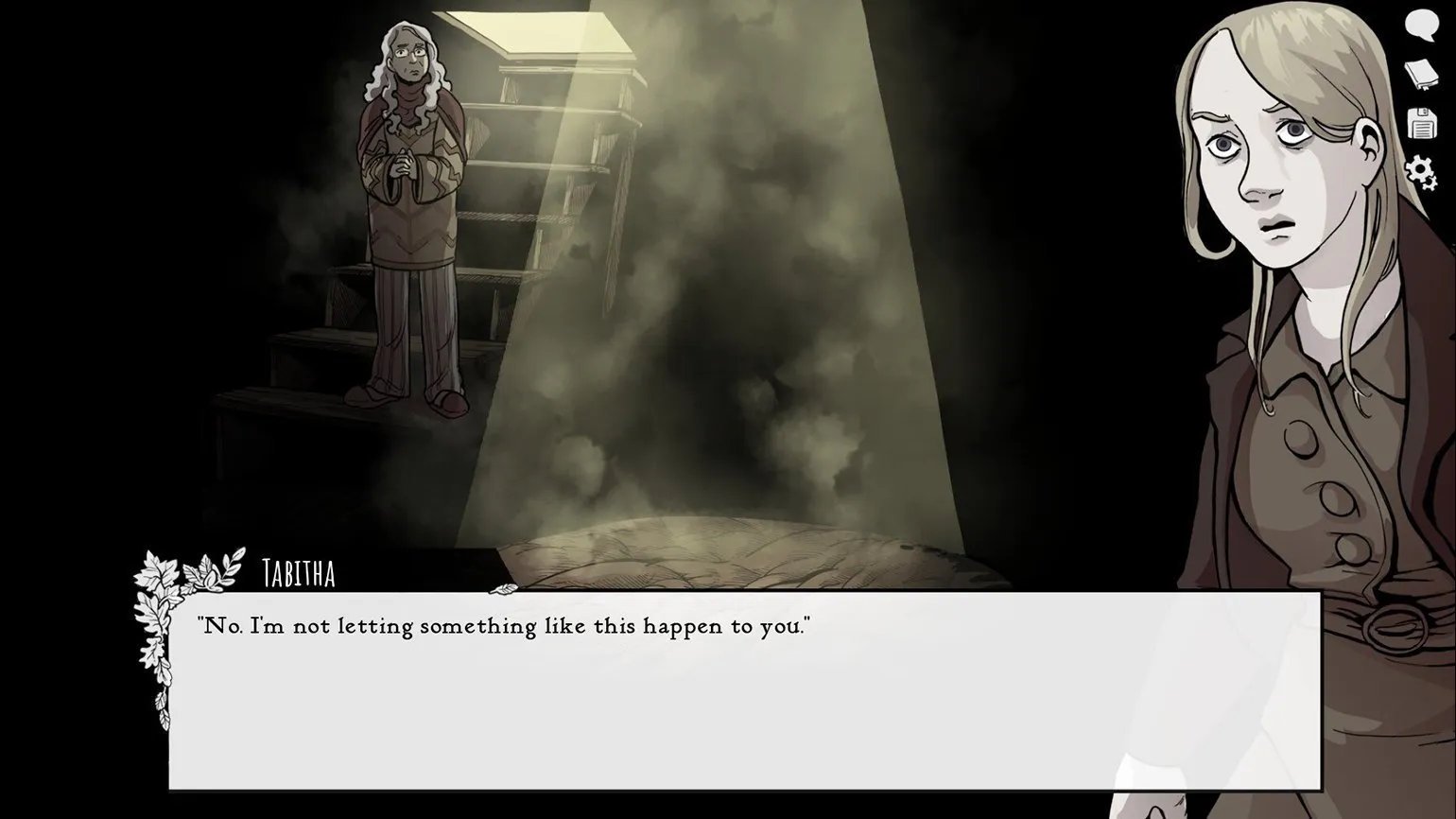
- The heuristic system is a good aid in forming cascading decisions. At the end of the third episode of Scarlet Hollow, the protagonist comes face to face with the ghost of a man whose death Scarlet's family is responsible for. The restless soul demands several years of life in exchange as atonement. Typically, there are two decisions in this scene: abandon the ghost and thereby endanger the other characters, or accept the sacrifice. However, if the protagonist is accompanied by Tabitha and they have managed to mend their relationship, she will intervene and take on this burden. Thus, thanks to the heuristic method, hundreds of decisions made by the player in previous episodes are summed up and give the plot a new unique development.
- Combine multiple heuristics systems. As mentioned above, Scarlet Hollow tracks multiple scales that interact with each other to generate variations in character behavior. If the protagonist is persistent and honest, how will this affect their relationship with someone they like? What about someone who is hostile? For example, Tabitha might become more emotionally open at some point, but due to her nasty personality, she will still behave defiantly. In this case, the game takes into account not only the information Tabitha is willing to share, but also the tone in which she delivers it.
- The initial values of the scales can influence the dynamics of their values in the future. These heuristics systems can be used to change not only the reactions of characters, but also how the system itself operates during the game. By nature, Tabitha does not tolerate sycophantic and overly friendly people. If the protagonist is overly friendly with her, it doesn't help, but rather harms their relationship. But as soon as they become closer, Tabitha changes her attitude: she begins to see the protagonist's good nature as sincere, not feigned flattery, and stops reacting negatively to him. Thus, depending on the intimacy scale, the same actions may or may not affect the overall relationship between the characters. This method helps simulate real life: after all, a person will perceive the same joke or criticism from a best friend differently than from an enemy.
Results
During the development of Scarlet Hollow, the authors used all three methods of influencing the plot, which is a complex task. For players to truly understand the importance of their choices, many factors must be taken into account. A simple sequence of cascading effects will not produce the desired result. The key is to continually surprise the player through references and character reactions to avoid the feeling that all decisions and their consequences follow the same logic. This creates a deeper immersion and makes the gameplay more engaging and multi-layered.
When creating an interactive story, it is important to remember, You're developing not just text, but a fully-fledged story-driven game. Interactivity offers many benefits, such as the ability to deeply immerse yourself in the story and actively involve the player in decision-making. This not only enhances the narrative but also creates a unique experience for each participant. When designing your gameplay, it's important not only to generate multiple decision options but also to ensure they are truly interesting and meaningful to players. High-quality interaction with the story contributes to increased user engagement and satisfaction, which is a key factor in a successful game.
No matter the scale of your ambitious plans, it's crucial not only to create a game concept but also to successfully complete it. When developing nonlinear stories, it's especially easy to get lost in ideas and not notice how the workload significantly increases. Maintaining control over the development process at every stage is key to achieving results. Set clear goals and deadlines to prevent the project from dragging on. This will help you maintain focus and manage resources effectively as you create your game.
Screenwriter Profession
You'll go from learning the basics to creating great scripts you can be proud of. Learn how to create compelling stories for TV series, films, and games, and start a career in film, gaming, or video production.
Learn more