Contents:
Learn: Profession 3D Characters from scratch to PRO
Learn moreIn February 2021, Epic Games introduced MetaHuman Creator, an innovative tool for creating high-quality 3D characters. The first teaser demonstrated the impressive capabilities of this editor. Previously, it was believed that creating hyper-realistic 3D human models without the uncanny valley effect was only possible using expensive software, 3D scanning, and motion capture technologies, and also required significant refinement by experienced 3D artists. On April 14, 2021, MetaHuman Creator became available to a wide range of users in open early access, allowing everyone to evaluate its functionality. In this article, we'll cover the basic principles of MetaHuman Creator, its capabilities, and potential challenges users may encounter when creating their own characters.
This material will introduce you to the main aspects of the topic that interests you. We will cover key points, important facts, and tips that will help you gain a deeper understanding and effectively apply your acquired knowledge. This information will be useful for both beginners and those with experience in this field. We strive to provide you with quality content that is relevant and useful.
- how Epic Games became interested in the developments of the Serbian studio and supported the development of their technology;
- how to work with the tool, and why only the online version is available;
- can a user create their own double or a copy of a celebrity;
- will the widespread use of this technology affect the field of 3D art in the future;
- what do representatives of the gaming industry think of MetaHuman Creator;
- the pros and cons of the tool.
Background for the creation of MetaHuman Creator
The tool was developed based on the achievements of the Serbian studio 3Lateral, which has been specializing in 3D scanning and motion design since 2012. The studio has accumulated experience scanning and animating character faces for popular video games such as Devil May Cry 5, Until Dawn, GTA 5, Horizon: Zero Dawn, and Hellblade: Senua's Sacrifice. 3Lateral has also collaborated extensively with Epic Games on projects such as Unreal Engine Demo: The Kid and Troll Project. This partnership has laid the foundation for the development of new technology that promises to improve the quality of animation and visualization in games. The story of MetaHuman Creator begins at GDC 2017, where Vladimir Mastilovic, founder of 3Lateral, and Epic Games presented an early prototype of the character editor. This innovative technology, called "Gene Splicer," procedurally generates unique faces based on scanned data from real people. During the scanning process, sensors track skin surface areas with high precision, down to the pore level, and store this data in an extensive database. This approach allows users to create high-quality digital characters with realistic facial features. MetaHuman Creator greatly simplifies the development of characters for video games and animation, providing a tool for rapid creation and customization.
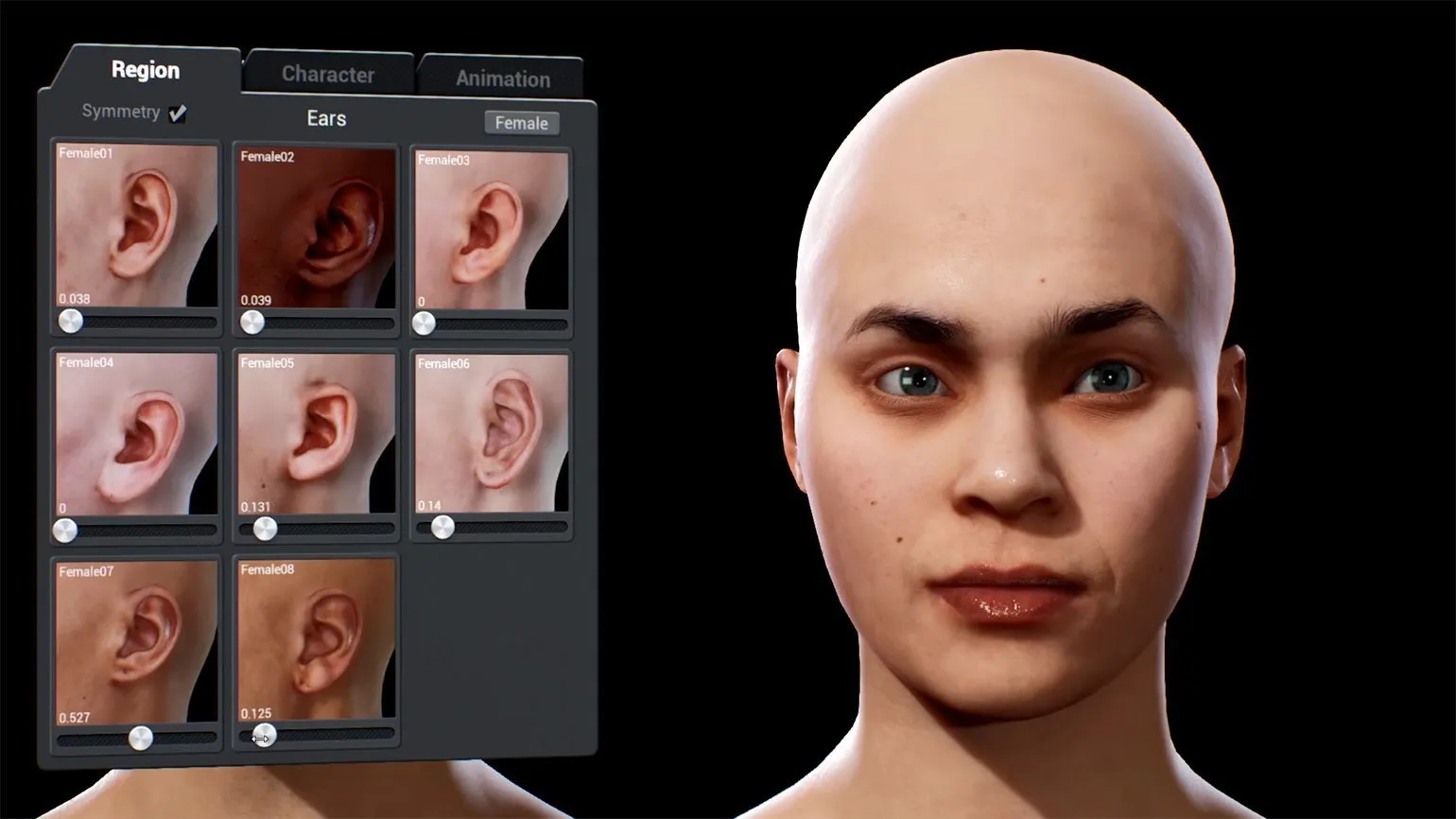
I collaborated with Vladimir Mastilovich on a demo for GDC 2017, which featured an initial version of technology for blending different areas of human faces. At the time, the number of available presets was limited, and there was no way to edit the results. Vladimir's program required more refinement than our engine could handle. Working with a UI designer from the Epic Games team, we adapted the prototype, adding the necessary functionality to make the interface appealing. The concept was still in its early stages, and that's when we came up with the idea of creating unique faces and their animations using even a small database of scanned data. We used the blending technology developed by 3Lateral.
James Golding, CTO at Epic Games, presented the capabilities of MetaHuman Creator during an Inside Unreal stream. During the broadcast, he detailed the potential of this tool for creating high-quality digital characters. MetaHuman Creator allows developers and artists to easily create realistic 3D avatars, significantly simplifying the process of game development and animation. Using cutting-edge technologies such as photorealistic graphics and advanced algorithms, MetaHuman Creator opens up new horizons in digital content and animation, making it an indispensable tool for professionals in this field. With the support of Epic Games, the concept of "digital humans" has continued to rapidly evolve. At GDC 2018, as part of the State of Unreal keynote, Epic Games CTO Kim Libreri presented a demo of Siren, in which the virtual woman delivered a monologue emphasizing that she is more than just a collection of pretty pixels. This event marked an important step in the evolution of digital characters, opening up new horizons in graphics and animation. Virtual characters are beginning to be perceived not only as visual objects, but also as full-fledged entities with emotions and personality, significantly changing the approach to content creation in the gaming industry and beyond.
This visualization was the result of a collaboration between Epic Games employees, as well as specialists from Tencent, 3Lateral, Cubic Motion, and Vicon. Following the presentation, Vladimir Mastilovich demonstrated how the studio was able to create a digital version of actor Andy Serkis using the Unreal Engine. This was achieved through 3D and 4D scanning, as well as transferring his facial animation data to a fictional representative of an alien race. This technology opens up new horizons in the field of digital modeling and animation, making it possible to create realistic characters and improve the quality of visual effects in film and games.
Technological advancements have prompted Epic Games to seriously consider creating a tool for developing high-quality 3D characters, accessible to every user. In January 2019, the company acquired 3Lateral, a major step in this direction. In November of the same year, Epic Games announced a partnership with Quixel, known for its unique asset library and two applications that simplify content import. In 2020, Epic Games also acquired Qubic Motion, a studio specializing in facial animation technology. These moves confirm the company's commitment to making the process of creating 3D characters more accessible and efficient for all developers.
3Lateral and Qubic Motion joined forces to develop highly realistic 3D models by collecting scan data from real people into a single database. These models were integrated into the Quixel Bridge application, designed for viewing, downloading, and importing Quixel Megascans assets. Thus, the three companies, led by Epic Games, began to create a new "digital" race within the Unreal Engine, which opens up new horizons for game and visualization developers.
The main functionality of the tool
Users with an Epic Games account can now request early access to MetaHuman Creator on the company's official website. This tool is an online editor, which requires a stable internet connection for full use. MetaHuman Creator allows you to create high-quality digital characters, simplifying the process of developing game and animation projects.
When starting a project, the user selects a basic preset, which serves as the basis for creating a new "digital human". Currently, the system offers more than 50 face templates representing different genders, ages, and races, each with unique characteristics. These diverse templates allow users to create high-quality, realistic digital characters that suit their needs and requirements.
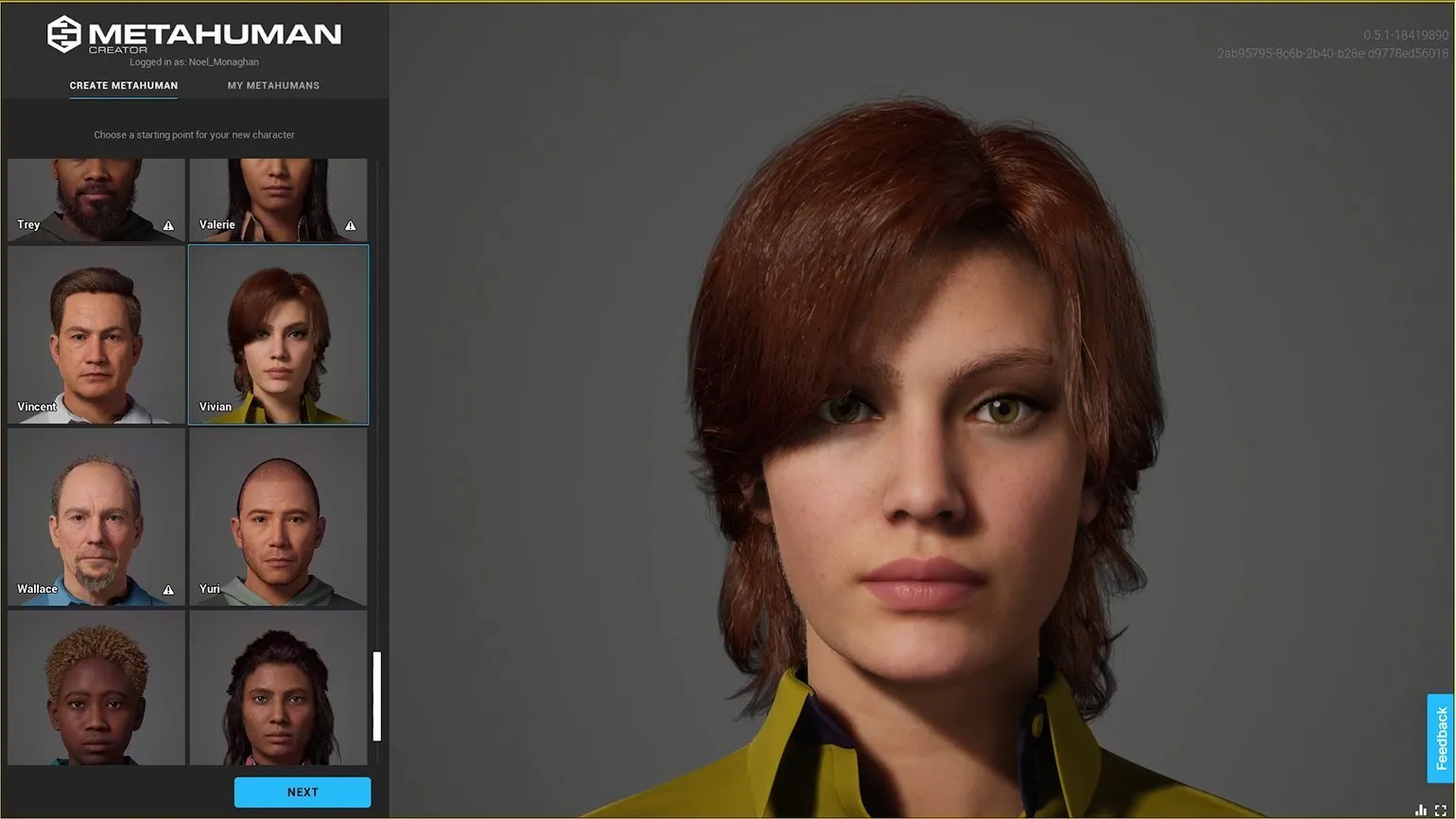
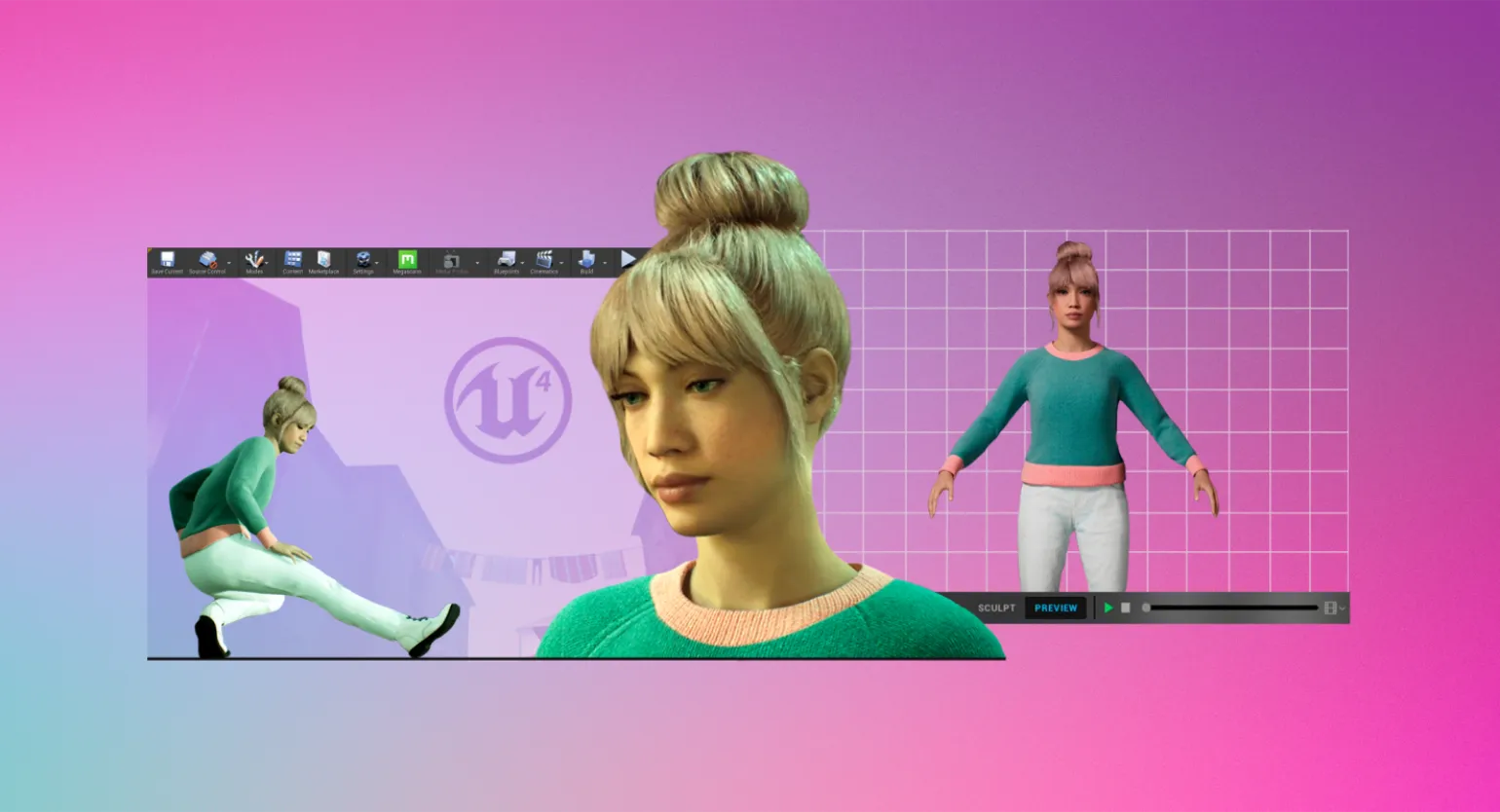
At the bottom of the workspace are three key options for creating the facial shape of the future 3D model: Blend, Move, and Sculpt. These tools allow you to detail and adapt facial features, ensuring high accuracy and realism. Blend is responsible for blending various shapes, Move allows you to move elements, and Sculpt is designed for detailed elaboration and texture modeling. Using these functions will help you achieve high-quality results in creating a 3D model.
The Blend tool allows you to combine different areas of the face, creating unique images. On the left side of the editor, users can add additional templates to the original preset by simply dragging the desired avatars from the Presets section into the Blend window. In the workspace, you can modify specific areas of the face by moving the markers towards the selected template. If you leave the marker in the center, the editor will automatically generate a blended result. This process provides quick and intuitive customization of a new appearance, making it an ideal tool for creating original images.
Move is designed for editing large areas, while Sculpt allows you to make changes to specific points that form the contours of the face. This feature allows users to customize facial features. It's also possible to disable symmetry, which opens up additional editing options: you can intentionally introduce subtle distortions, such as shifting an eyelid, enlarging a nostril, or raising an eyebrow. These tools give the user complete control over the shape and expression of the face, providing precision and individuality in editing.
When adding asymmetry to facial designs, it's important to consider that asymmetry is a natural feature of the human face. This means it's also present in faces created using MetaHuman templates, as these templates are "digital doubles" of real people. By taking this fact into account, you can achieve more realistic and appealing results in your digital characters.
The Preview tab allows you to see how the face or body of your new 3D model changes dynamically, depending on the selected tab. This feature allows you to evaluate animation and model details in real time, which is especially important for developers and designers working with 3D graphics.
To the left of the working window is a panel for editing various aspects of the character, such as hair color, clothing, makeup, body proportions, and mouth features, including the color and shape of the teeth. Pay special attention to the Skin tab in the Face section. The facial skin texture isn't simply applied to the model; it creates a new skin texture based on the selected texture. For example, if you select the texture of an elderly person, wrinkles will be generated on the surface of the face, which adds realism and depth to the character.
The top panel of MetaHuman Creator houses all the visualization tools. The Studio tab allows you to view the character in various environments and experiment with light sources such as daylight, interior lighting, and effects like fireplace light. This allows you to customize the character's appearance and interaction with the environment as precisely as possible, creating realistic scenes for future projects.
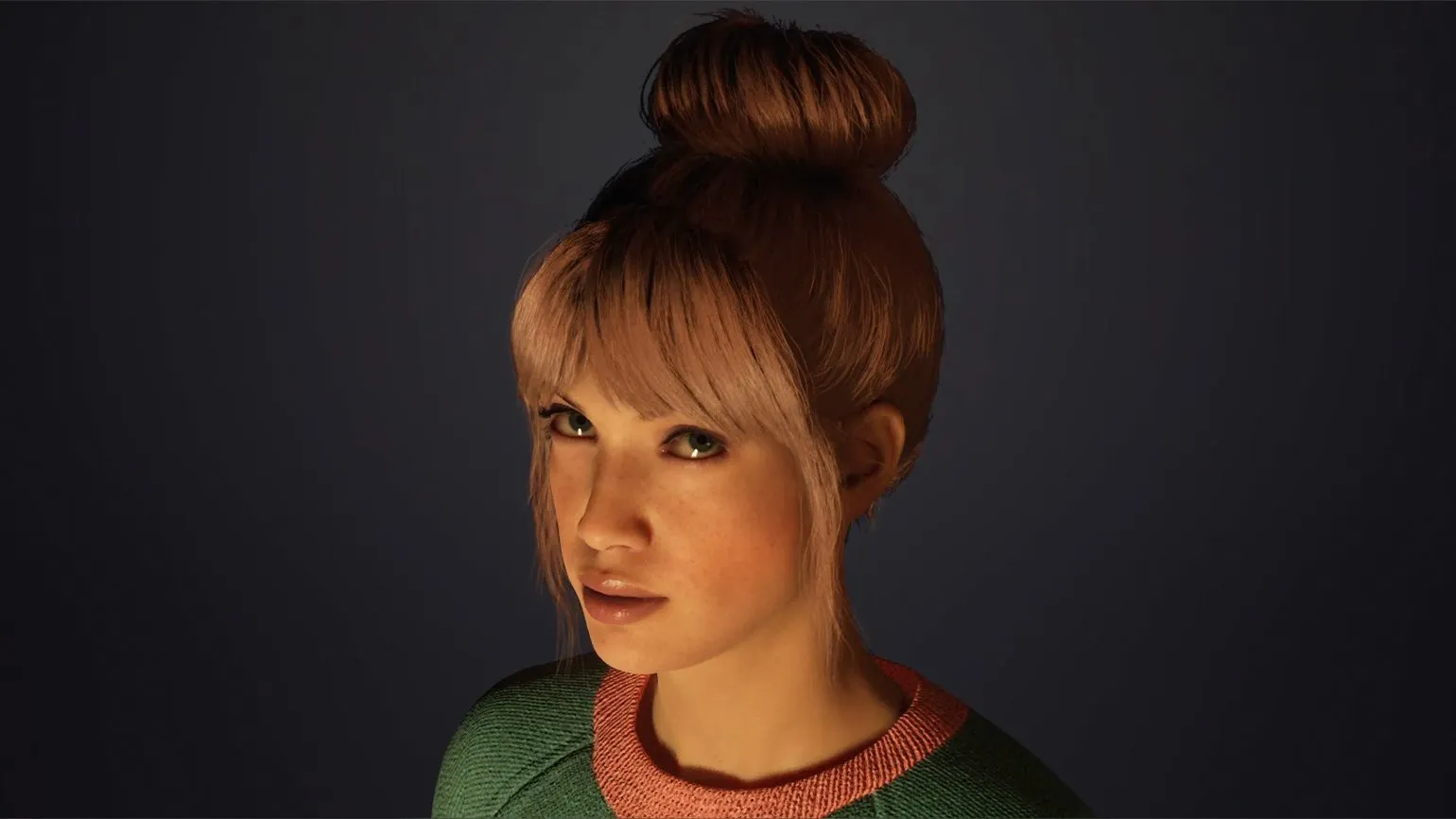
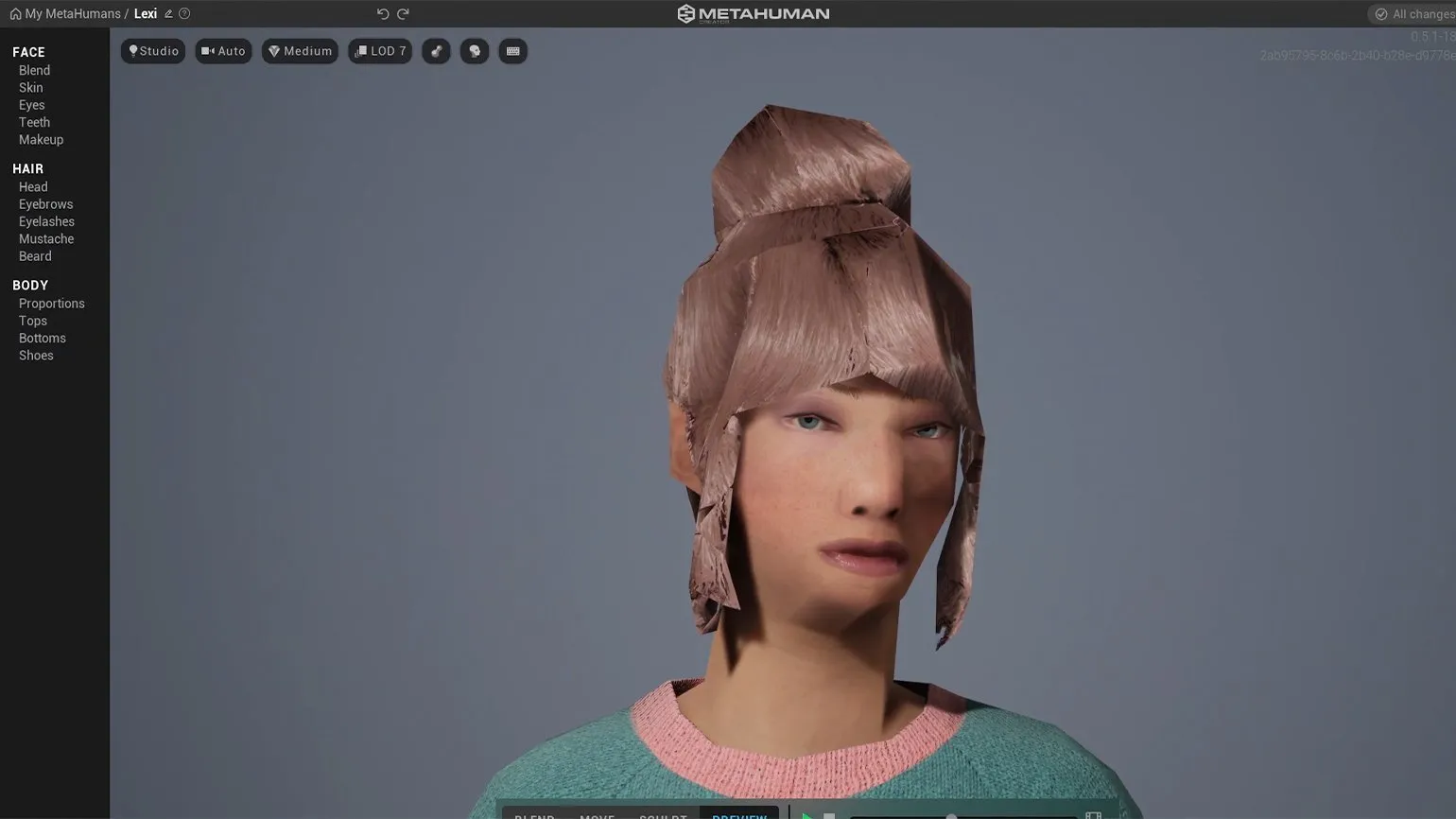
The second and third control buttons are used to change the camera angle and adjust the rendering quality. The LOD (Level of Detail) parameter presents different levels of detail. They range from ultra-high, allowing you to discern the smallest details, such as the vellus hair on the character's face, to low-poly graphics in the style of the PlayStation 1. The choice of detail level affects visual perception and performance, allowing the user to tailor the gameplay to their preferences and device capabilities.
Please note that some assets for 3D models, such as hairstyles and beards, are still in development. Because of this, they are only displayed at LOD 1 and LOD 0 detail levels.
The created character is automatically saved to your account. The model can later be transferred to Unreal Engine using Quixel Bridge. During the export process, you must specify the target platform (models from MetaHuman Creator can only be transferred to Unreal Engine or Autodesk Maya), select the asset export path, set the texture quality, and select levels of detail (LOD) options. This allows the model to be optimized for various usage conditions and ensures high-quality visualization in the game engine.
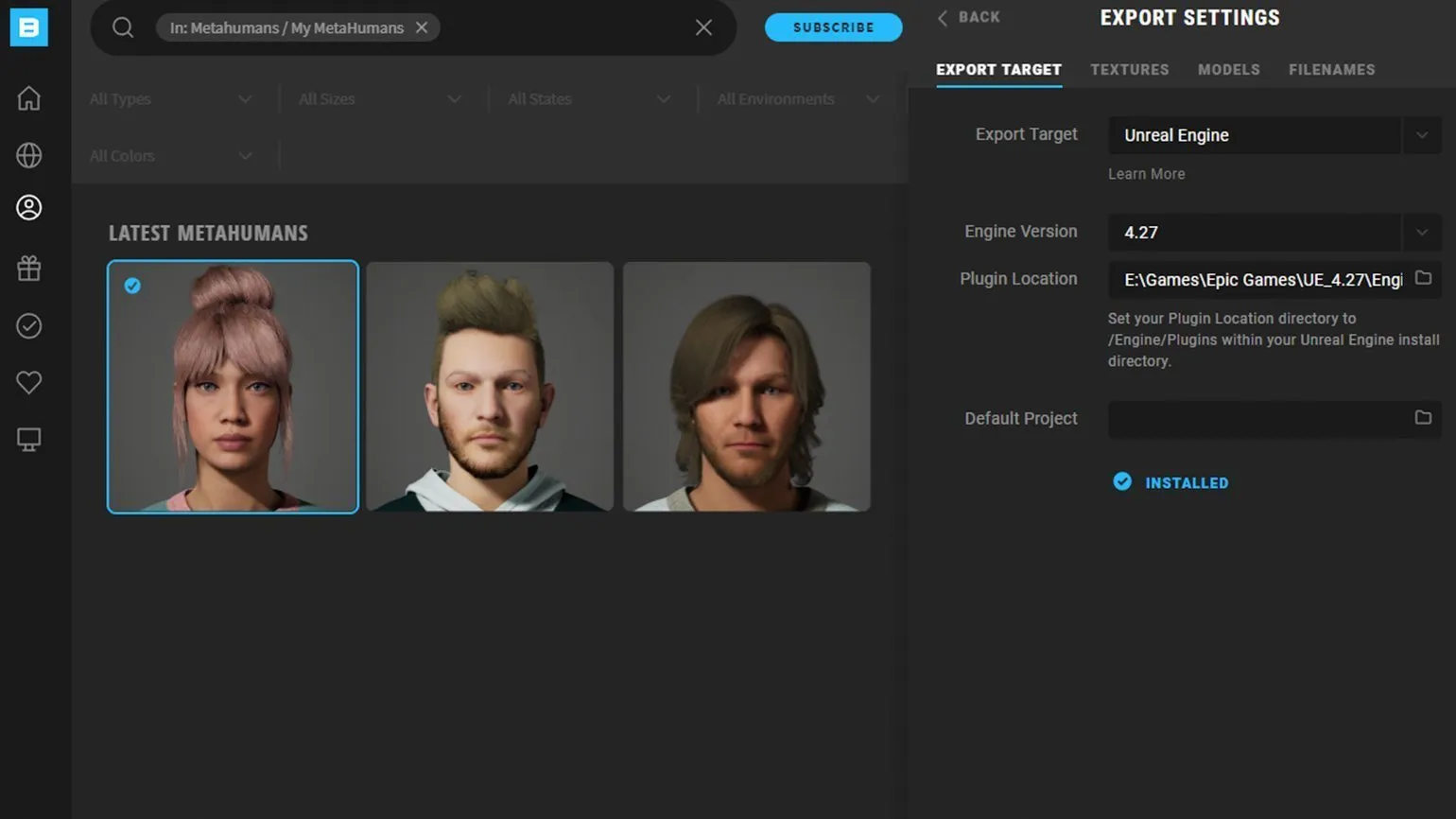
MetaHuman Creator
The basic principles of working in MetaHuman Creator include key aspects that are important to understand. Since this tool is in the Early Access stage, there are several features that should be taken into account for those wishing to delve deeper into the editor's capabilities. Understanding these nuances will help users effectively use MetaHuman Creator to create high-quality digital characters.
List of MetaHuman Creator Limitations
MetaHuman Creator operates on a principle that is fundamentally different from traditional character editors in video games. It is a powerful platform based on an extensive database of textures and high-resolution 3D face scans, the number of which is constantly growing. The developers have not yet found an effective way to integrate this technology into standard offline programs, so the cloud format is considered the most optimal solution. Because of this, there is currently no option to integrate MetaHuman Creator into Unreal Engine games to serve as the basis for a character editor.
MetaHuman Creator is designed exclusively for creating realistic human characters. It does not include the ability to create fantasy creatures such as orcs, elves, or dwarves, as they do not exist in real life and cannot be scanned to create 3D models. The team understands the high interest among users in the ability to create characters of various races and may consider this aspect in the future. The current focus is on collecting data to increase the diversity of human faces, which will allow users to create more realistic and unique characters.
Of course, I am ready to help with text editing. Please provide the text itself that you would like to rework.
There is a significant gap in the modeling of different character groups. People generally have similar topology; differences may only appear in details, such as the shape of the ears or other minor features. However, creatures like orcs have a completely different topology. This aspect is of interest to users, but successful implementation will require solving many complex problems.
James Golding, Technical Director at Epic Games, presented the new features of MetaHuman Creator during the Inside Unreal stream. During the event, he detailed the functionality of this tool for creating high-quality digital characters. MetaHuman Creator offers users an intuitive interface and a wide range of settings, allowing developers to easily create realistic characters for games and other digital projects. James Golding emphasized how MetaHuman Creator simplifies the development process, allowing developers to focus on creative aspects rather than technical details. This tool opens new horizons for artists and developers striving for innovation in visual content.
Creating characters that resemble real-life figures is theoretically possible. Art Director Aleksandar Popov demonstrated a model during the stream that strongly resembled Abraham Lincoln. However, in practice, the process of creating an exact double in MetaHuman Creator becomes challenging. This is due to limitations in the selection of hairstyles, facial hair, and makeup. Furthermore, the program's database still lacks the types and editing tools necessary to create a complete clone. Further technological advancements and expanded software functionality are required to more accurately reproduce real people.
The Epic Games team believes that the primary goal of MetaHuman Creator is not to create exact doubles, but to develop unique and realistic characters based on an extensive database. Users can create characters using photographs as reference. To do this, they need to prepare two photographs of the person—one frontal and one profile. It is recommended to use a reference program such as PureRef, which allows you to adjust the transparency of images and overlay them on other windows. Then, carefully overlay the photo on the character's face in the viewport, ensuring the overall shape of the face matches, and adjust the facial features to the photo by moving markers. This process allows us to achieve a high degree of individuality and realism in the characters we create.
Despite the careful approach, as shown in the video, it is impossible to achieve 100% similarity to the original. Only individual facial features can be captured. As a result, the user will not be able to create an exact replica of a real person, including celebrities. This limitation is important to consider when using technology to recreate images or models, as they can only convey certain aspects of appearance.

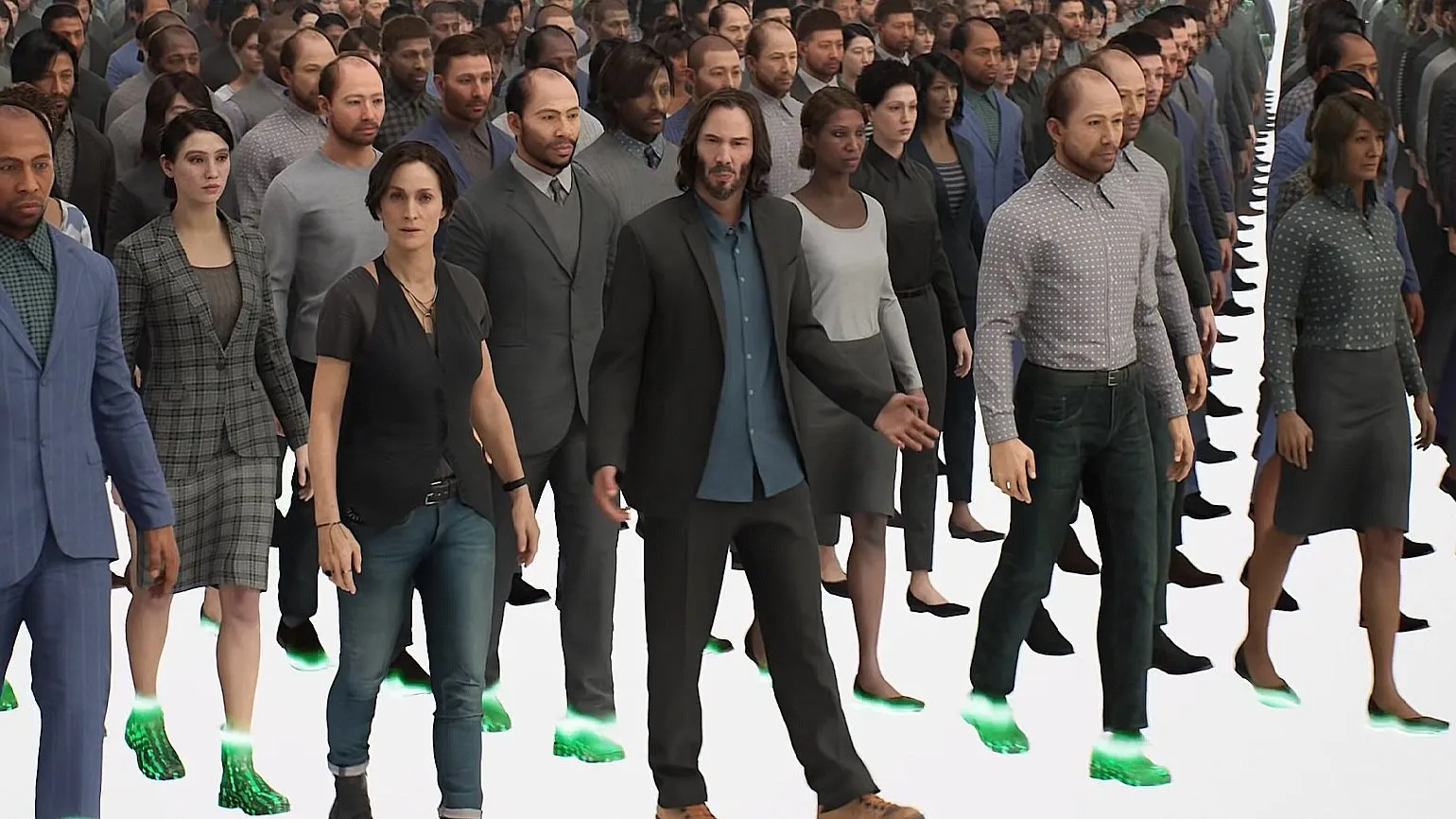
In the trailer for The Matrix Awakens, the 3D versions of Keanu Reeves and Carrie-Anne Moss look like templates from MetaHuman Creator. This is because the actors' faces were digitized using 3Lateral technology, and the finished models were created based on MetaHuman frameworks. This technology allows for a high degree of character realism, which makes their visual representation in the game particularly impressive.
This problem could be solved by uploading facial photos and superimposing them onto a 3D model, similar to the Face Builder add-on for Blender. However, this method is not applicable when working with models from MetaHuman Creator due to the specifics of texture synthesis and 3D/4D scanning technologies. These technologies require specific approaches to data processing, which limits the ability to integrate custom images.
Scanning people to create a database presents a unique technological challenge. I had the opportunity to visit the studio in Serbia where this database was developed, and I was impressed. The scanning process requires a significant number of cameras and a high computing power. The main goal is to obtain a 3D model of the face from various angles and in such a quality that all details, including skin pores, are visible when zoomed in. It is important to note that 2D images cannot provide the necessary detail and shapes to accurately recreate a face. This makes 3D scanning an indispensable tool in modern facial recognition technologies and the creation of digital avatars.
James Golding, CTO of Epic Games, spoke live during a stream dedicated to MetaHuman Creator on the Inside Unreal program. During the broadcast, he shared details about the technology for creating highly realistic digital characters and discussed the opportunities opening up for video game and animation developers. MetaHuman Creator significantly accelerates the character creation process, providing users with powerful tools for customizing appearances and animation. Golding emphasized the importance of this technology for the industry, emphasizing how it changes the approach to game and visual content development. There are restrictions regarding the Epic Games user agreement. According to section 1.1, users have the right to modify models created in MetaHuman Creator, but their use is permitted only in Unreal Engine. Using this content in third-party applications, as well as publishing renders created outside of UE4, violates the license terms and may lead to negative consequences. Currently, the only 3D modeling program that officially supports this type of content is Autodesk Maya. This powerful platform offers a wide range of tools for creating and editing 3D objects, making it a popular choice among computer graphics and animation professionals. With regular updates and an active user community, Autodesk Maya remains a leader in 3D design.
Our company actively uses Maya at all stages of back-end development. This doesn't mean we abandon working with other programs, but our Maya plug-in has many nuances. Creating a universal port for other software is a significant challenge. If you're familiar with rigging and animation in Blender, 3ds Max, or Maya, you may notice the differences. In Maya, the bone system (joints) is built on a coordinate system. 3ds Max lacks this principle, and the workflow is structured differently. Blender, on the other hand, emphasizes bone length, which is not the case in Maya. Therefore, when working with different platforms, it's important to consider their specific features and differences to achieve optimal results in animation and rigging.
Each software has its own unique features and workflows. As a result, we would have spent a significant amount of time searching for universal export solutions instead of focusing on improving the tool itself.
Chris Evans, Principal Technical Animator at Epic Games, participated in a MetaHuman Creator stream as part of the Inside Unreal program. In this stream, he shared his knowledge and experience with MetaHuman, a tool that allows you to create highly realistic digital characters for video games and other media. Chris discussed the key features and capabilities of MetaHuman Creator and shared tips for optimizing animation and creating unique characters for game projects. Chris's participation in the stream highlights the importance of innovative technologies in game development and their impact on creating immersive experiences for users.
Exporting models to other software is done as follows: first, the model is imported into Unreal Editor, then exported in FBX format, after which the FBX file is loaded into a third-party 3D program. However, it should be noted that this process can introduce certain issues, particularly related to rigging, which can lead to incorrect model performance. It is recommended to carefully check all aspects of the model after export to avoid potential errors later.
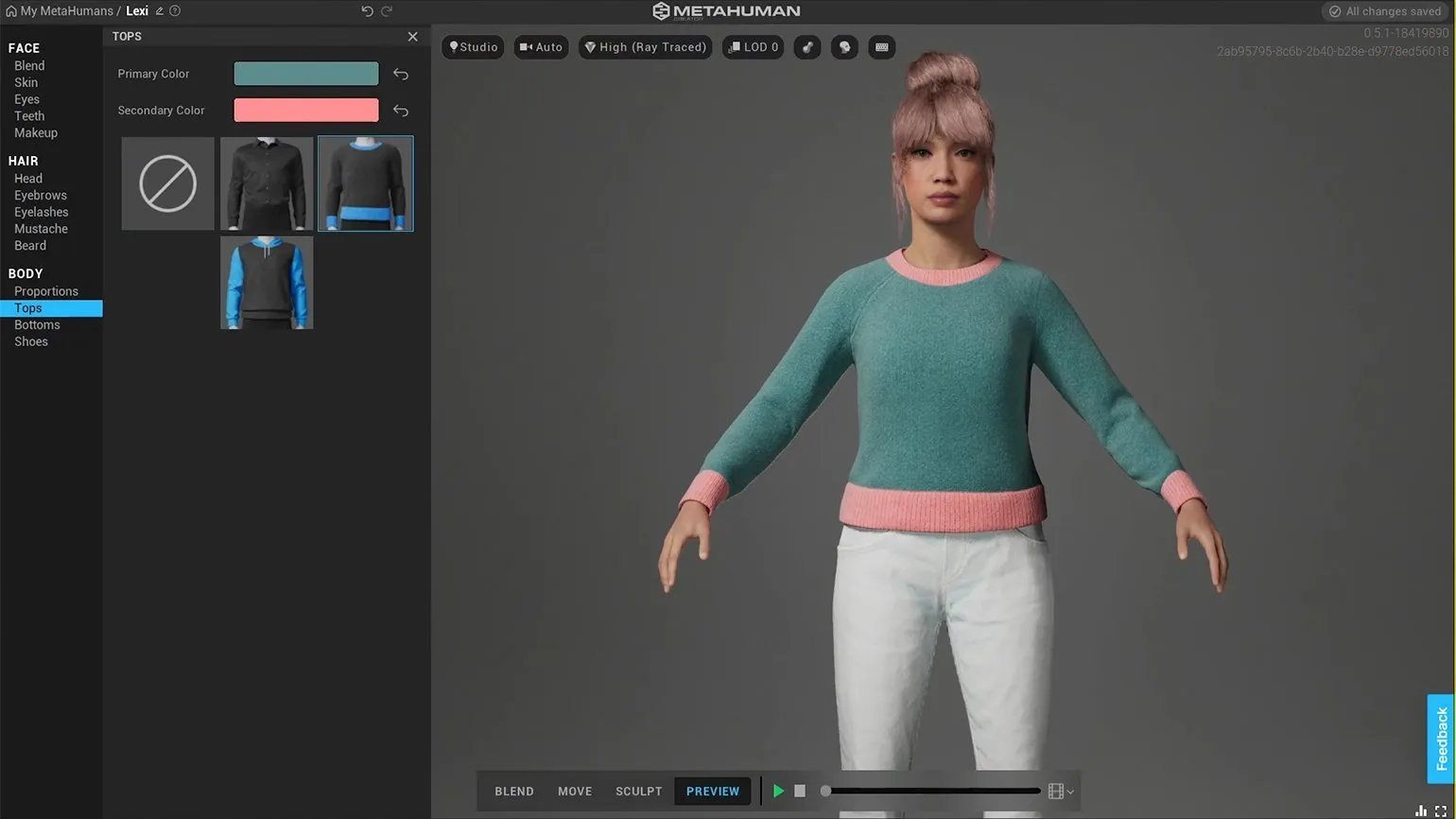
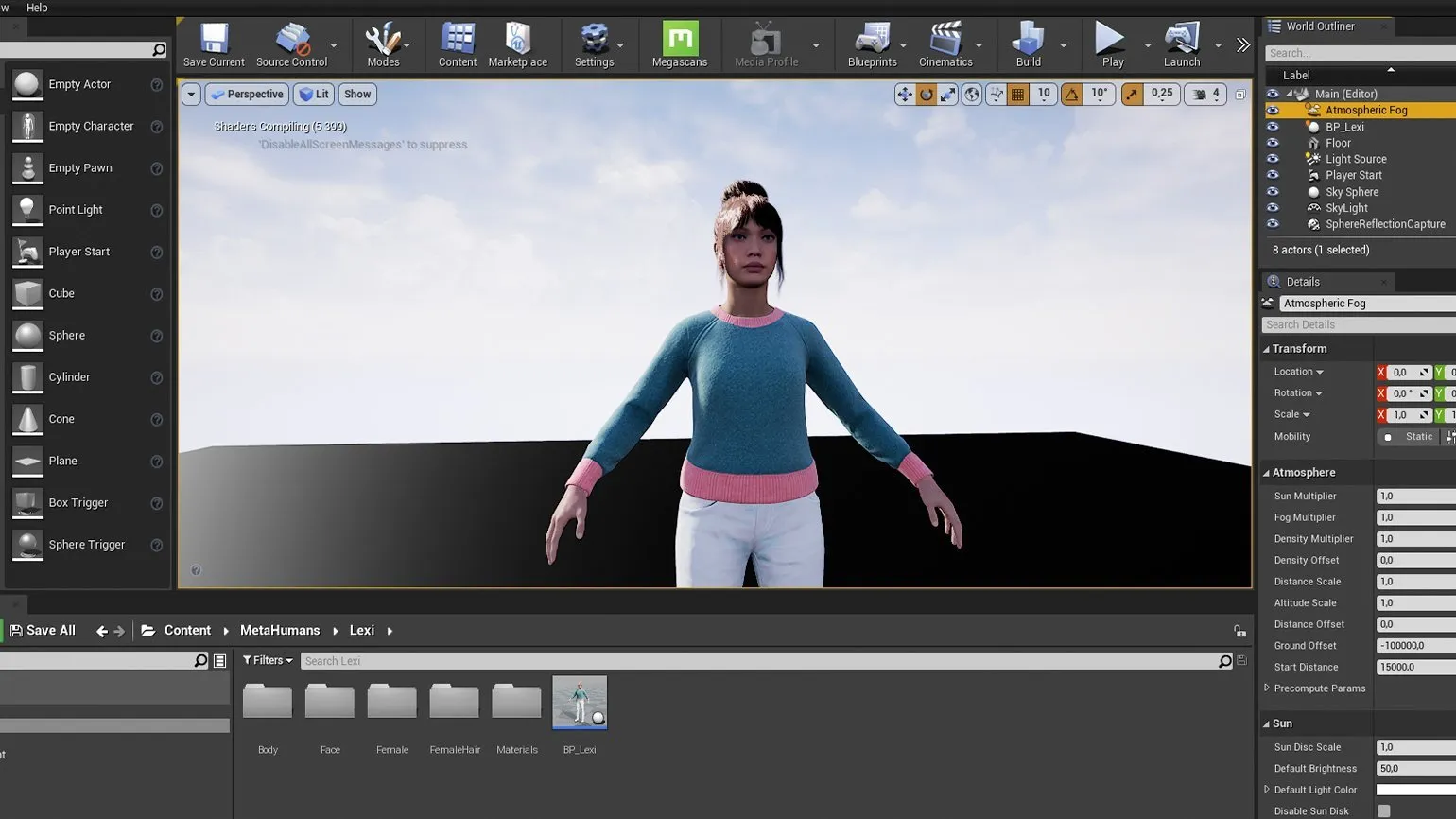
The clothing in MetaHuman Creator is primarily presented to demonstrate the platform's capabilities, as the developers focused on creating realistic faces. However, additional character wardrobes can be easily found on the Unreal Marketplace or imported from other programs. The official forum also features a section where users share their experiences creating clothing for MetaHuman models, allowing them to then import these elements into Unreal Engine. This makes the character customization process more flexible and accessible for developers and artists.
Digital Humans vs. 3D Art
Given today's limitations, MetaHuman Creator is a powerful tool for Unreal Engine developers. Previously, only large AAA studios with impressive budgets and highly skilled freelancers could create photorealistic characters. However, this does not mean that with the development of technology, 3D artists will lose their importance. The MetaHuman Creator team emphasizes that such opinions are wrong. Creativity and artistic skills remain important, even with the advent of new technologies.

As an experienced character artist with many years of experience in the industry, I'm accustomed to many of the routine processes involved in character creation, from topology to importing into Unreal Engine. Using MetaHuman Creator significantly speeds up these processes, allowing you to create characters faster and more efficiently. The resulting 3D model can serve as both a foundation for further work and a finished character. Artists will use this tool differently: some will be better than others. However, I'm confident this won't lead to radical changes in the industry. The introduction of the new tool will only expand artists' arsenal, making tasks easier and faster. Ultimately, MetaHuman Creator will be a useful addition, not a threat to character creation professionals.
Alexander Popov, Art Director at Epic Games, presented MetaHuman Creator during the Inside Unreal stream. During the event, he detailed the capabilities and functionality of the new tool for creating realistic digital characters. MetaHuman Creator allows developers and artists to easily create high-quality 3D characters for games and other media, significantly simplifying the development process and saving time. The platform offers a wide range of settings, enabling the creation of unique characters with detailed visuals. During the stream, Popov also discussed MetaHuman Creator's impact on the video game industry and opportunities for future projects.
Epic Games is confident that MetaHuman Creator will significantly simplify the character creation process, allowing developers to focus on the artistic aspect, which is especially important for AAA games. Creating the final character image requires an emphasis on detail and refinement—the very job of 3D artists. Even when leading roles are performed by real actors, technical processes such as 3D scanning and motion capture require the involvement of specialists. Meanwhile, the creation of standard NPCs can be efficiently delegated to MetaHuman Creator, saving developers time and resources. Thus, using this tool allows us to speed up game development and improve the quality of content.
Our studio hasn't yet used MetaHuman Creator in our projects. However, if we consider the 3D art market as a whole, we can assume that such technologies will significantly reduce the cost of 3D artist services in the future. Previously, creating textures for models in Photoshop, taking into account UV coordinates, took a lot of time, but with the advent of Substance Painter, the work speed has increased fivefold. Today, there are many tools and services that significantly simplify 3D art workflows.
In the next 10-15 years, we can expect 3D art to follow a similar path to web mastering. Remember the demand for website creation services before the advent of various builders like WordPress. Of course, there will still be a niche for highly qualified specialists who will always be in demand. However, most clients will likely value 3D artist services lower than they currently do. This highlights the importance of adapting to new technologies and market changes to remain competitive.
Kirill Reznicenko is the CEO of Rainstyle Games. Under his leadership, the company actively develops innovative solutions in game design and technology. He strives to create unique game projects that attract the attention of players and critics. Rainstyle Games focuses on high-quality content and user experience, which allows the company to occupy a leading position in the market. Kirill Reznicenko is actively involved in shaping development strategies and implementing new ideas, which contributes to the company's success in the competitive environment of the video game industry.
Examples of MetaHuman Creator Use in Games and Visualizations
Not enough time has passed since MetaHuman Creator's release in Early Access to draw definitive conclusions about its popularity among Unreal Engine developers. Nevertheless, many studios have already begun exploring the capabilities of this tool and experimenting with MetaHuman models. However, the results of such experiments are not always successful. Developers continue to adapt to new technologies, reflecting the growing interest in creating high-quality digital characters. MetaHuman Creator opens up new perspectives in the field of game design and animation, offering more realistic and detailed models for projects.
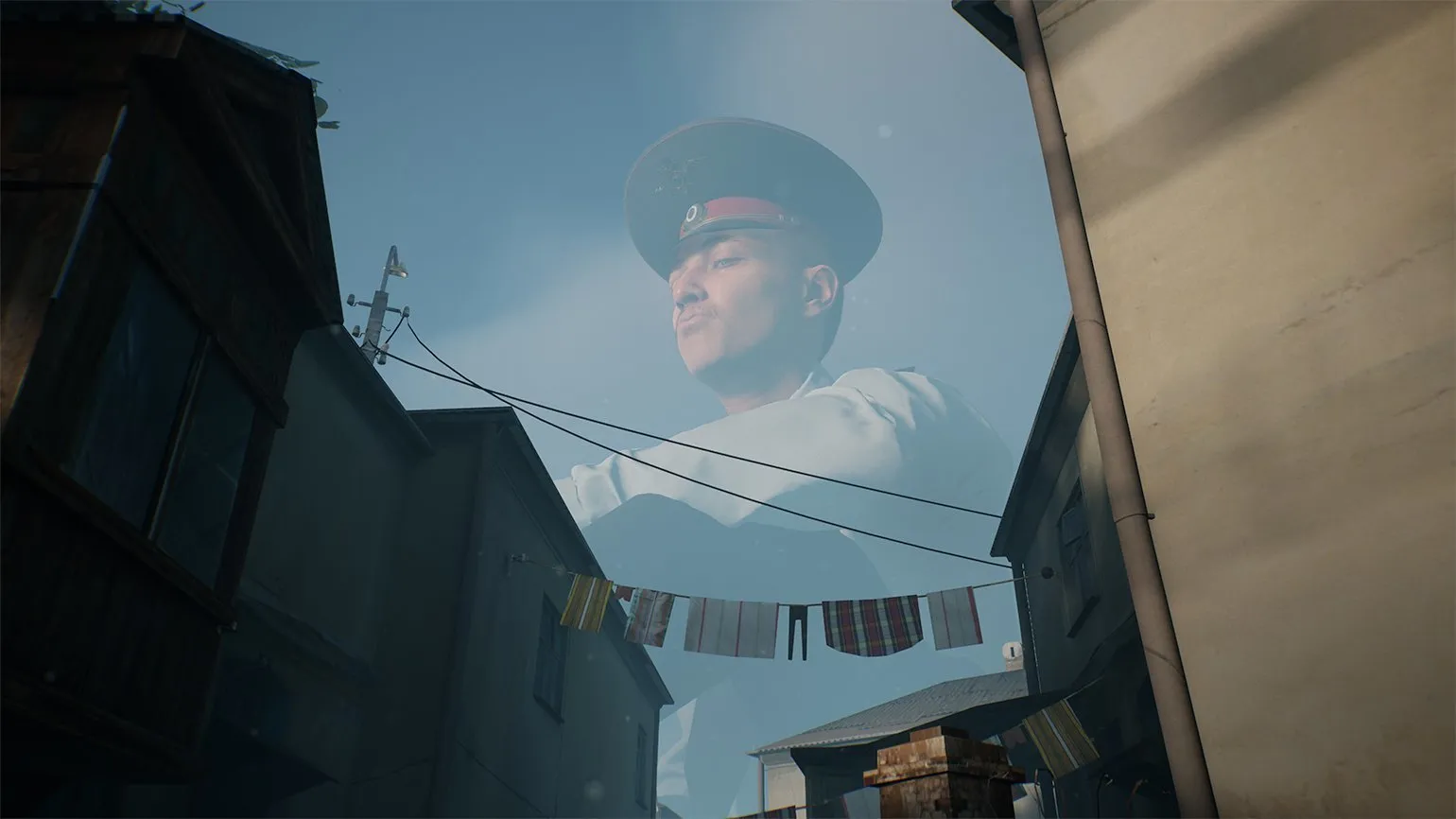
The Russian studio TALLBOYS has been actively developing the immersive simulator Militsioner for several years, the trailer of which attracted considerable attention online. After replacing the original model of the giant Militsioner with a "digital human" from MetaHuman Creator, the developers faced criticism from the gaming community. The new, more realistic character design lost the uncanny valley effect and no longer evoked fear in players, as the previous version did. In response to the negative feedback, the developers intend to again modify the current model, giving it grotesque features to restore an atmosphere of anxiety and tension to the game.
MetaHuman Creator is designed for a wide range of tasks, including Cinematic creation and adaptation for mobile platforms. However, performance issues can arise during the process. Every developer must constantly analyze and optimize project elements to achieve the required efficiency. Regarding detailed facial feature customization, the Unreal Engine 4 developer community has already found numerous workarounds, and this isn't a significant obstacle at this point. However, having built-in tools for such customization in the editor would significantly simplify the workflow and streamline the production process, saving time for small teams like ours. Importantly, the model import function is implemented at a high level: as promised by Epic Games, you only need to click a single button for successful import.
Dmitry Shevchenko is a game designer and director at TALLBOYS, known for projects such as Pandemic Express and Militsioner. His experience in game development and project management allows him to create unique and engaging gaming content. Under his leadership, TALLBOYS continues to develop interesting ideas and bring them to life, bringing innovation to the gameplay.
Dmitry emphasizes that the main drawback of the tool is not only the limited customization of models but also the lack of detailed documentation. MetaHuman Creator is a complex module for the game engine, and the studio spends a lot of time reverse engineering it. This leads to difficulties in understanding the functionality: it is difficult to determine which features are temporary due to early access and which were originally intended by the developers.
MetaHuman Creator is currently in early access, which makes it difficult to perceive as a full-fledged tool. Updates often introduce changes that can cause problems; for example, the recent addition of new bones for rigging led to many animations breaking during post-processing. These nuances complicate the development of in-house animation tools. Currently, only Control Rig, a built-in functionality for body rigging, is available in Unreal Engine. There are no other ready-made solutions. The engine was not initially optimized for character animation, making its interface less user-friendly. This significantly slows down the workflow compared to popular 3D programs such as Maya and Blender. As a result, small teams struggle to create custom tools, as they require constant updates and adaptation to engine changes.
Currently, one of the tool's most significant drawbacks is the lack of documentation and practical examples of its use. We are looking forward to publishing a new demo project, The Matrix Awakens, which will present at least basic examples of active use of this technology. This will help users better understand the tool's functionality and capabilities.
Dmitry Shevchenko is a game designer and director of TALLBOYS, known for projects such as Pandemic Express and Militsioner. His experience and creative approach to game development make him a prominent figure in the industry. With a deep understanding of gameplay and player needs, Dmitry successfully leads the team, creating unique and engaging game worlds. TALLBOYS continues to evolve, implementing innovative ideas and technologies, which contributes to the growing popularity of their games in the market.
MetaHuman Creator has significantly improved the visualization capabilities of digital content. Anvil Frame Studio actively uses content created in MetaHuman Creator both in their projects and in training courses on Virtual Production and cinematic development in Unreal Engine 4. The studio's founder, Viktor Manin, notes that MetaHuman Creator is one of the best free alternatives for creating "digital humans." However, he also acknowledges certain drawbacks associated with the early access to the tool.
Optimization in MetaHuman Creator is a complex process that requires powerful hardware. A significant issue is the level of detail of models. Low LOD levels, which can function on less powerful systems, look unnatural and are reminiscent of characters from early versions of The Sims. Furthermore, there are physical limitations regarding hair, such as hairstyles and facial hair. These elements are not reflected on surfaces, which reduces realism. The visual effects in The Matrix Awakens tech demo also demonstrate that the shots were staged in a way that avoids showing reflections of the MetaHuman models, which highlights the existing limitations of the technology.
The lack of a high-quality mocap database is an important aspect to consider. The MetaHuman models have their own rig, which is quite functional. However, using standard skeletal animations from ready-made asset packs requires a retargeting process, which can be challenging for many users. It's worth noting that this tool is still in development, and its capabilities will continue to expand. Its free availability and native integration with Unreal Engine make some shortcomings forgivable.
Viktor Manin is the CEO of Anvil Frame Studio, a company specializing in the development and creation of high-quality visual solutions. Under his leadership, Anvil Frame Studio has achieved significant success in design and animation, offering clients innovative approaches and creative ideas. Victor has deep industry knowledge and a commitment to continuous process improvement, allowing the studio to remain competitive in the market. Thanks to his leadership, Anvil Frame Studio has established itself as a trusted partner for many companies seeking to improve their visual communications.
Summary
MetaHuman Creator is ideal not only for developers looking to integrate realistic 3D human models into video games and film projects, but also for hobbyists who want to create the 3D avatars of their dreams using various character editors. This tool opens new horizons for creativity, allowing users to easily customize and personalize their models. With its high level of detail and user-friendly interface, MetaHuman Creator is an indispensable resource for anyone interested in creating 3D content.

- The tool is free, unlike similar tools like Character Creator.
- Easy to learn: an intuitive interface that is understandable to every user.
- Ensures a quick process for creating unique, high-quality human characters in 3D.
- Facial rigging of models created in MetaHuman Creator is compatible with the Live Link App, which allows for convenient recording of your own animations from the iPhone camera.
- Doesn't require hard drive space. All work is instantly saved to the cloud. Quick export.
- A wide range of levels of detail for the finished character—from hyperrealism to low-poly. This way, the developer can export a ready-made solution for a project with next-generation graphics or for portable devices with less powerful hardware, such as the Nintendo Switch.

- The tool is still in early access.
- Current functionality is very limited.
- Ready-made characters can only be used in Unreal Engine projects.
- Lack of documentation.
What's next?
The release of MetaHuman Creator became an impetus for other companies to develop alternative software in this area. In January 2022, Unity acquired Ziva Dynamics to develop its own tool for creating "digital humans" and integrating them into its game engine. At the same time, Reallusion, a renowned developer of 2D/3D art and animation software, teased the fourth version of Character Creator. This activity underscores the growing interest in technologies for creating realistic digital characters and their application in various fields, including games, animation, and virtual reality. The widespread adoption of ready-made solutions for creating 3D characters will significantly accelerate the development of games and computer animation, as well as increase the level of realism in these projects. It is important to monitor the development of new metaverses and the evolution of "digital humanity." The key aspect remains the need to preserve the uniqueness and value of real people, so that virtual technologies complement, and do not replace, human interaction.
Profession 3D Characters from scratch to PRO
You will master 3D modeling software, learn how to create lively and memorable Game characters. Build a portfolio and become a sought-after specialist in the creative industry.
Learn more