Contents:
Learn: The Psychology of Video Games
Learn moreThe pandemic, which began several years ago, significantly changed the usual way of life and work. Business owners were looking for ways to restore their previous audience reach. These efforts have revealed that livestreams can be just as effective as in-person events, which also applies to the gaming industry. Even though COVID-19 restrictions have been lifted in most countries, publishers continue to host online shows, and developers regularly stream their games live on various platforms, including Steam. This trend confirms that livestreams remain an essential tool for audience engagement and game promotion in today's digital environment. The question of how to create a welcoming environment during streams and minimize toxicity and threats is becoming increasingly important. Awkward situations in chats can arise even during streams with large audiences, highlighting the need for standardization in this area. At GDC 2023, Kat Lowe and Victoria Tran presented valuable recommendations for companies and organizers to help prepare online events, ensuring a comfortable and safe environment for viewers in chat. This is also important for maintaining interest from sponsors and advertisers. The editorial team of Skillbox Media's Gamedev team shares key findings from this presentation, which will help improve audience engagement and create a positive broadcast image.
The recommendations in this report will be useful for brands, studios, companies, organizations, and thematic communities seeking to promote their projects through live streams. This material will help understand the intricacies of this area and optimize the streaming process. Streamers will also find useful tips and ideas for improving their broadcasts.
Briefly about the speakers

Leading specialist Content moderation at the nonprofit Meedan, which develops software to improve digital literacy. He actively collaborates with the Center for Trustworthy, Ethical, and Accessible Technology at the University of California, Irvine, researching community moderation and the negative phenomena that arise in this area. He also produces for the well-known YouTuber Hbomberguy and other bloggers. His responsibilities include managing the moderation team for politician and public figure Alexandria Ocasio-Cortez's Twitch account. His total experience in online moderation is about 15 years, which underlines his professionalism and high qualifications in this important area.

Community Development Director at Innersloth, a studio known for developing the game Among Us is actively involved in promoting indie gaming culture. He is also a founding member of the Wholesome Games community, which focuses on supporting and developing positive and kind games. His responsibilities include organizing the annual Wholesome Direct event, which showcases current indie games, helping to popularize them and attract new audiences.
Why Moderation?
You are the owner of a company with an interesting project, be it a game, a service, or a charity event. You strive to stay on top of current trends and connect with a younger audience, recognizing that live streams can attract a significant number of viewers. You develop a program that includes a presentation of your projects, invite popular hosts and sponsors, and invest in special effects and animation for intros. Your goal is to prepare a high-quality broadcast that can interest a wide audience.
The long-awaited moment to launch the broadcast has arrived. Thousands of viewers tune in to the broadcast, and everything is going well. However, the situation changes when an inappropriate message appears in the chat in the form of a text image. While it can be quickly deleted and further consequences prevented, another user soon appears with a provocative phrase that provokes a negative reaction from viewers. As a result, the chat is filled with text images featuring troll memes, insults, and other unwanted comments that you, as the organizer, did not expect. It is important to prepare for such situations in advance to maintain a positive atmosphere and ensure comfortable communication for all participants. Despite careful planning and the availability of modern technical equipment, you were unprepared for negative reactions—a common occurrence online. When users gain the ability to instantly interact with each other from anywhere in the world, this can lead to chaos, which is not uncommon even at large events. For example, earlier this year, at the Spanish Streamer Awards, an image of text with obscene content appeared on the screen, which clearly demonstrated the risks associated with public events in the digital age.
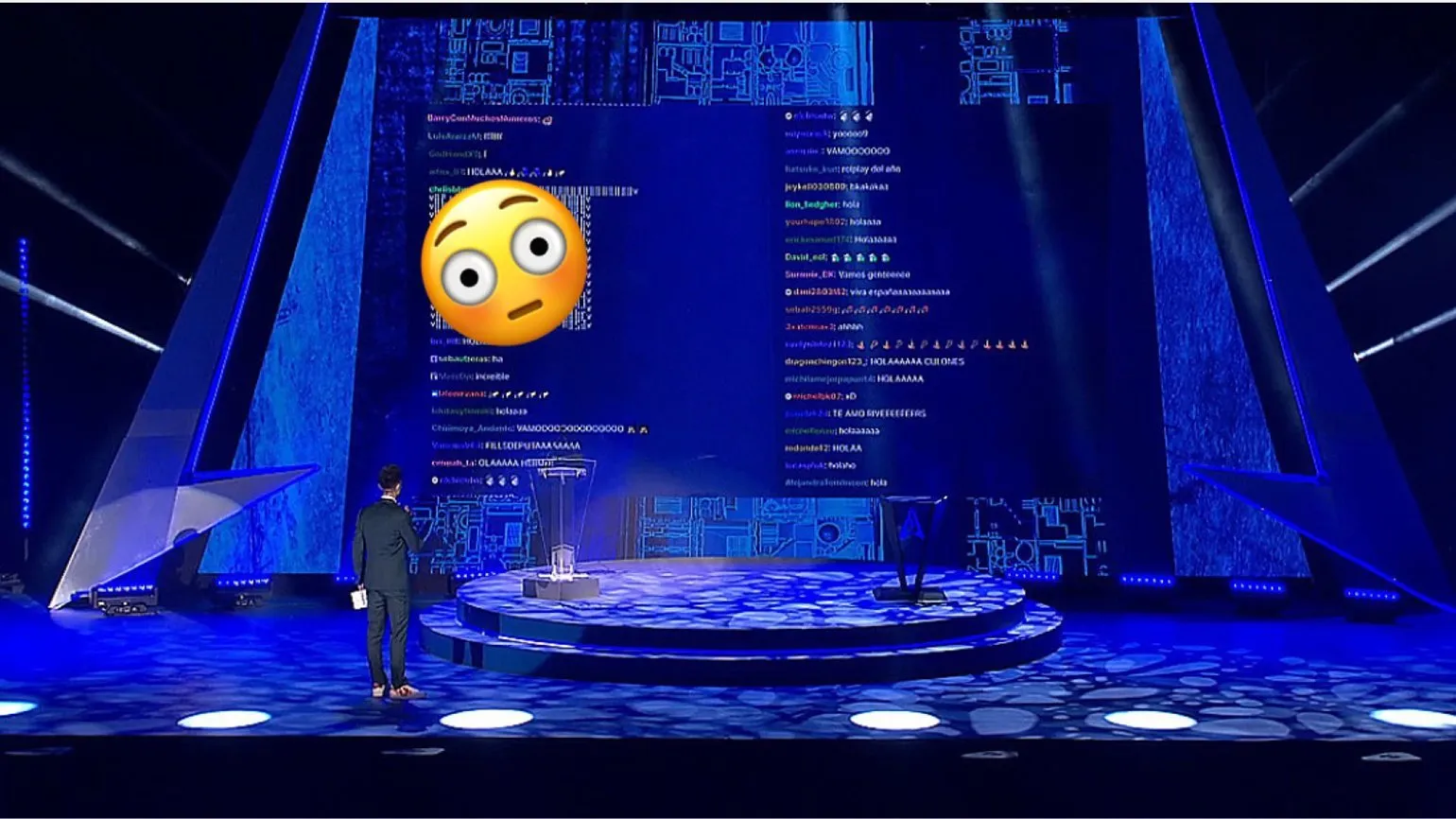
Event organizers must take measures to prevent situations that could jeopardize the safety of underage users. Such incidents negatively impact the experience for audiences, staff, advertisers, and sponsors. Kat and Victoria closely followed the media's reaction to the E3 2021 conference moderation and were baffled by the lack of action by the organizers during the broadcast. As a result, media articles focused not on the conference itself, but on the toxic atmosphere in the chat and the ineffectiveness of the moderators. It's important that organizers take these aspects into account to ensure a positive experience for all participants and spectators.
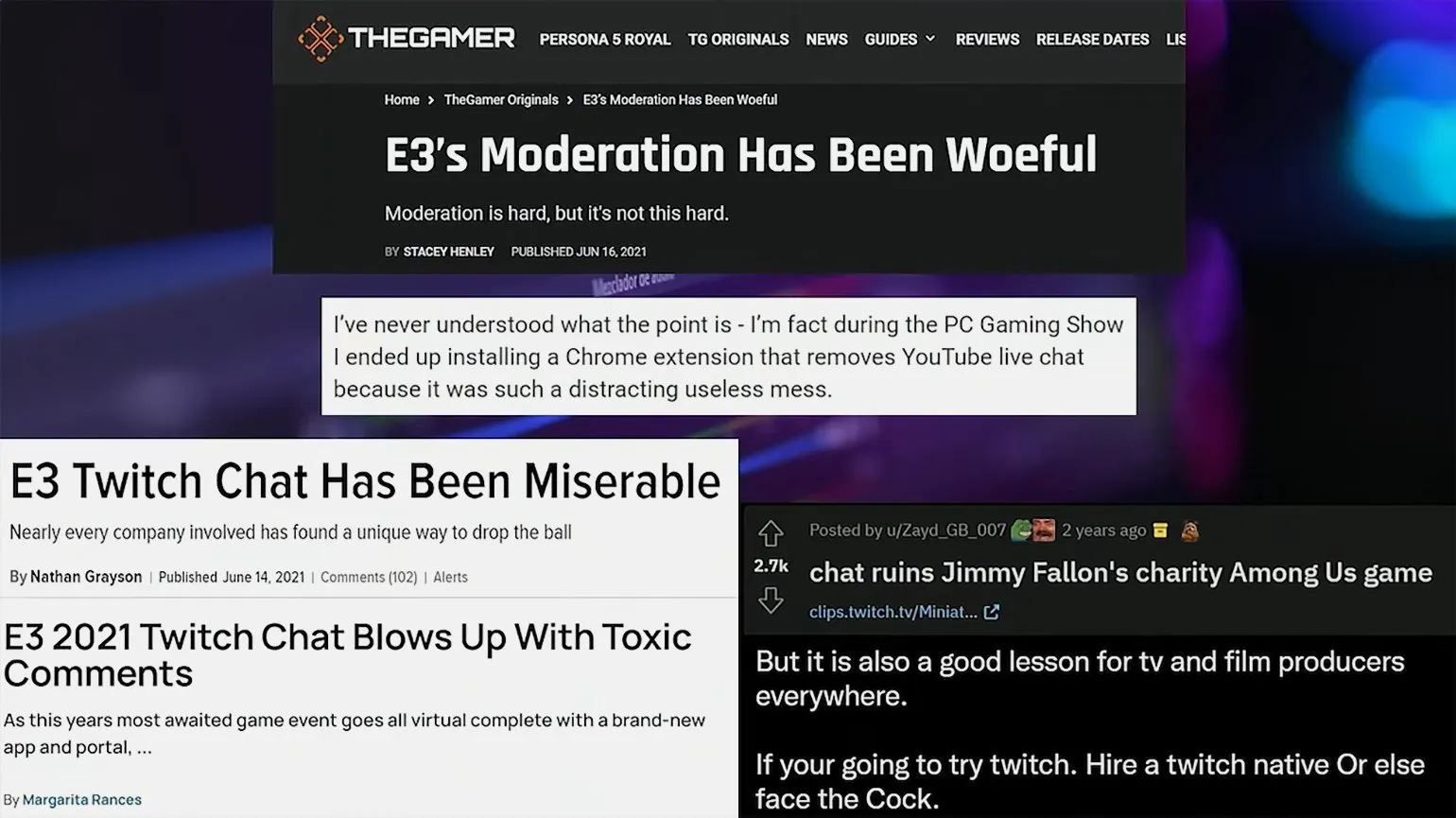
To ensure your project receives positive reviews and the press focuses on the events themselves, rather than chat incidents, it is important to create a comfortable and friendly atmosphere for viewers. This helps create a favorable environment for potential advertisers. Effective moderation plays a key role in this process. It allows viewers to exchange relevant information about what is happening in real time, focusing on events on the screen, rather than discussions in the chat. Thus, high-quality moderation helps maintain interest in the event and enhances its reputation.
What problems arise during broadcasts
- Large volume of messages. This is typical for large-scale online events, when many viewers write in the chat.
- Spam. This includes copypasta and sending repeated or meaningless messages.
- Raid. The chat is attacked by a group of users or bots.
- Bots. Posting links and offers that imitate communication for the purpose of advertising.
- Harassment. Messages with aggression, harassment, threats towards the organizers and other chat participants.
- Toxicity. Arguments for the sake of arguments, passive aggression, insults - anything that causes negative emotions and discomfort in a person.
Consequences of poor moderation
- Many users may leave the broadcast. Perhaps they will watch the recording of the broadcast on another resource - or not watch your broadcast at all.
- Viewers will minimize the chat window. At first glance, this doesn't seem like a big deal, since they're still watching the stream. But if the chat is ignored en masse, social interaction will disappear. If viewers don't gather, communicate, or discuss what's happening, they'll fall into a kind of vacuum and cease to be part of the community. It's highly likely that they'll stop following your project altogether and miss future broadcasts. Stream viewers can be compared to attendees at a sporting event, having a good time together and rooting for their favorite team.
- There are people for whom a negative atmosphere is unacceptable. If such a viewer is offended by a toxic message in chat, and the moderators do nothing, they'll become your detractors and a vocal critic on social media. As an organizer, you'll only learn how your show really went when you discover such posts online.
- Worst-case scenario: people may form a negative impression of the values of your company or studio. They will perceive you as attracting a toxic audience. This will not only reflect on your reputation but also leave a negative impression of your community.
A successful live stream requires careful preparation and certain steps. Let's look at the key points that will help you organize a quality live stream. Preparation begins with choosing a topic that will interest your audience. Then, you need to create a detailed broadcast plan, including key points and a time frame. Don't forget about your technical equipment, which must be in good working order—this includes recording equipment and a stable internet connection. It's also important to test all devices and the platform you will be broadcasting on in advance. Engaging with your audience is equally important: be prepared to answer questions and take viewers' opinions into account. These steps will help you host a successful broadcast and attract attention to your content.
How to Choose a Platform
Choosing the right platform is essential for successful streaming. For example, when comparing Twitch and YouTube, both platforms offer moderation tools, but Twitch stands out with its more flexible automated moderation settings and functional structure. This platform also supports the integration of third-party chatbots, significantly simplifying the chat management process. Meanwhile, YouTube's moderation functionality is still under development, requiring the involvement of more moderators to ensure high-quality oversight. The choice of platform affects the overall streaming experience, so it's worth considering all the nuances and capabilities of each service.
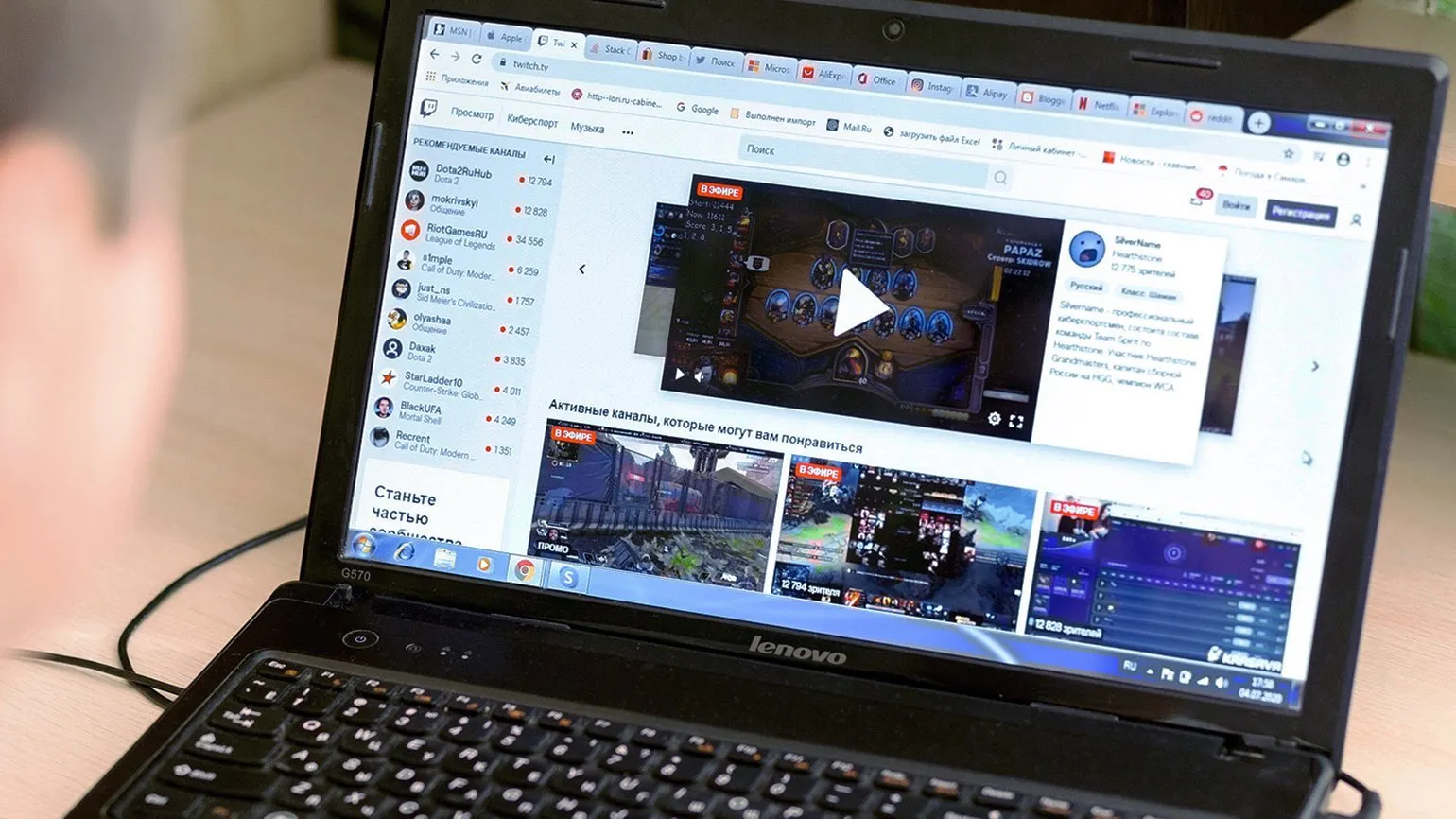
Choosing a streaming platform requires a thorough review of all the moderation tools offered by the service. It's recommended to test these features on a separate account to maintain the privacy of your main profile and avoid unnecessary attention from subscribers during a test broadcast. This will help you ensure all the tools are working properly and prepare high-quality content for your audience.
How to Prepare for a Live Stream
The recommendations below are primarily aimed at large corporations with large audiences, but most of them are also applicable to smaller studios. You will need the following resources:
- Chat rules for chat participants
- Chatbots for automated moderation
- A list of emergency commands, such as the command to enable "Emoji Only" mode
- Moderation guides and worksheet
- A moderation team
Once you have completed the preparation, be sure to test the functionality of your chosen platform as mentioned earlier. Let's take a closer look at the key elements of this list that matter most.
Before sending messages, users are typically asked to review and agree to the chat rules. Although many ignore this condition, these rules set the general atmosphere of the community and can serve as a reference when conflicts arise. Rules allow chat participants to clearly understand what is acceptable and what is not allowed, which greatly simplifies the moderation process in large communities. Proper adherence to the rules helps maintain order and positive interactions between participants.
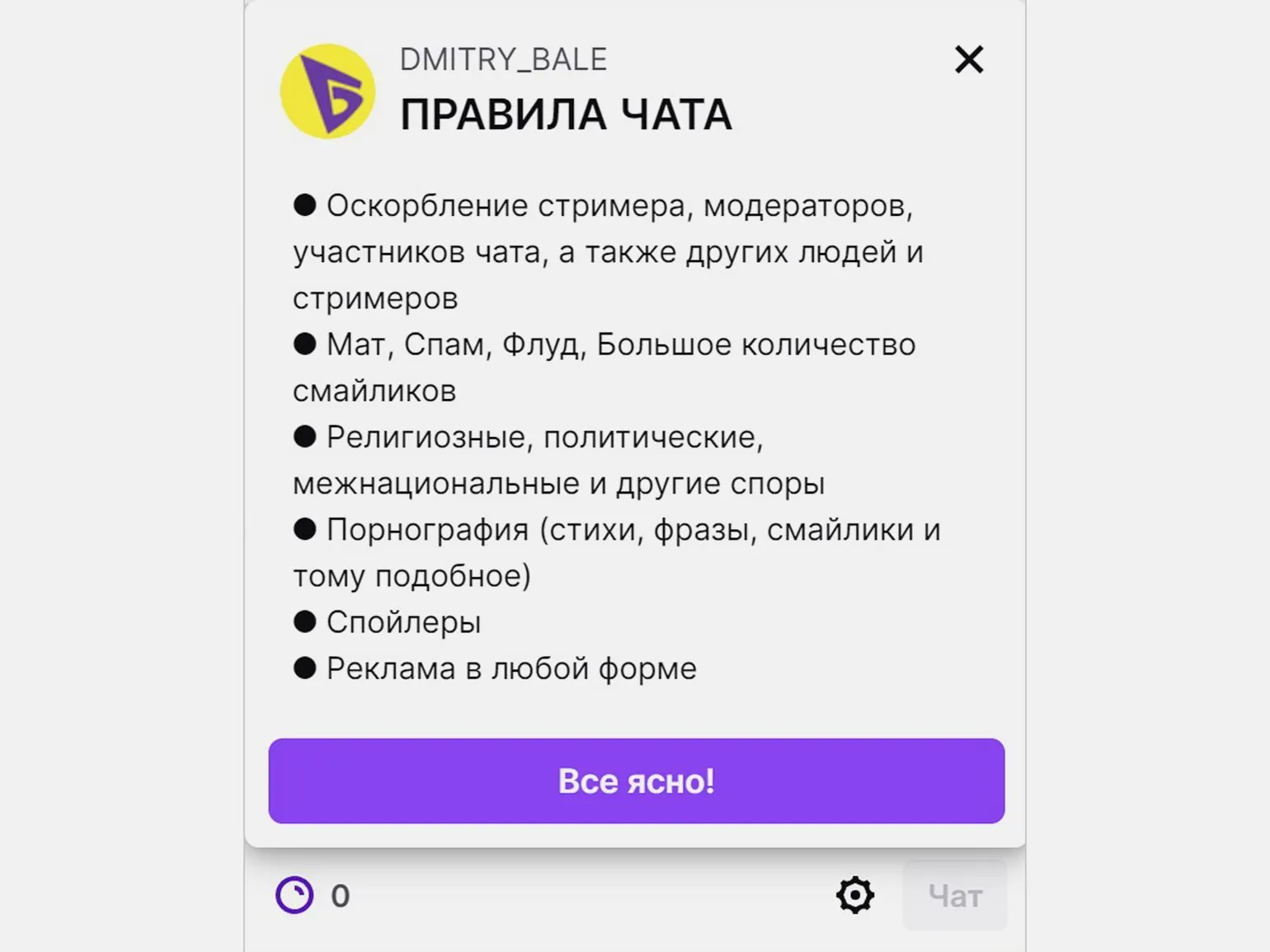
To effectively format a rulebook, several key aspects should be considered. First, it's important to use clear and understandable language to ensure that every reader can easily understand the information. Second, it's recommended to structure the material by highlighting main sections and subheadings. This will help users quickly find the information they need. It's also a good idea to use bulleted and numbered lists to simplify comprehension. Avoid complex terms without explanation to make the text accessible to a wide audience. Additionally, it's helpful to include examples and illustrations, where appropriate, to visually support the rules. Finally, remember to keep the information accurate and up-to-date, which will increase the credibility of your rulebook.
- Specify prohibited things in your chat.
- Add clauses with a positive context, such as "Be polite to each other."
- The rulebook should be concise so that users will read it to the end.
Standard chat rules in streamer channels often contain unclear wording, which makes the work of moderators difficult. In such cases, the question arises: should a viewer be punished for breaking the rules or should the situation be left unchecked? Ambiguity in the interpretation of the rules can lead to ineffective moderation and a negative experience for chat participants. To ensure order and comfort in the community, it is important to clarify and specify the rules so that moderators can make informed decisions. This will create a friendlier atmosphere and avoid misunderstandings among viewers.
Therefore, it is important to ask yourself what exactly you mean by this term.
- toxic;
- too provocative;
- spam;
- off-topic;
- destructive;
- otherwise extremely negative.
Many users filter low-quality content based on the principle of "I know it when I see it." However, this form of moderation is not objective. There is a "gray area" with definitions that may lead to disagreement with moderators. It is important to clearly define what statements are considered prohibited and in what cases exceptions are possible. Properly defining moderation criteria will help create a more transparent environment for all participants and minimize conflict.
Once you've defined what you consider inappropriate content, the question arises of how to evaluate specific examples. Consider the story of Pepe the Frog, who was created in 2005 and quickly became a popular meme. However, ten years later, his image has become associated with negative phenomena. Discussions about the appropriateness of Pepe emotes continue in the Twitch and Discord communities. Some users are categorically opposed to his use, while others consider him an important part of geek culture. Kat also had extensive discussions with her team about the appropriateness of using this meme in her streams. Such nuances can be clarified in a moderator guide, which will help create a more comfortable atmosphere in communities.
This document requires careful review to ensure that moderation rules align with your company's values. When drafting these guidelines, it's important to clearly define how the broadcast chat should function, what content is acceptable, and what actions moderators should take. This will help create a safe and welcoming environment for users and ensure community standards are upheld. Unlike a set of rules, these guidelines require a more detailed explanation of all points, including common examples of words and specific terms frequently used in chats. This is especially relevant for teams, where members may be unfamiliar with certain local expressions. It's important to remember that understanding such terms improves communication and overall team effectiveness. For example, using phrases specific to a particular region or culture can significantly facilitate interaction and avoid misunderstandings. Additionally, updating this list regularly will help keep the information current and all team members engaged.
To effectively manage chat participant behavior, moderators need clear guidelines. In Kat's report, this guide is described as a matrix. This multi-level system details the criteria by which moderators can decide whether to punish certain actions by chat participants, as well as when punishment is not required. This ensures consistency and transparency in moderation and helps maintain a comfortable atmosphere for communication.
Level 0 implies no action on the part of the moderator. At this level, no moderation occurs, and all content remains unchanged. This state can arise for various reasons, including a lack of user complaints or a lack of resources to process content. It's important to note that at level 0, users can continue interacting with content without waiting for moderator intervention.
- constructive criticism of a game or project without insults or threats;
- emojis without text, unless they are intentional spam;
- constructive criticism of the host or the stream itself without insults, threats, intolerant statements, etc.;
- profanity, if acceptable within the stream.
The moderator uses timeouts to manage viewer behavior. The duration of timeouts is determined by the severity of the statements. This category includes statements that may violate communication rules or create a negative atmosphere. Timeouts help maintain order and ensure a comfortable interaction on the platform.
- messages with sexual or fetishistic connotations (if they are addressed to the broadcaster, the timeout should be longer);
- explicit messages hinting at racism, sexism, extremism, etc.
Moderators' prompt response to incidents helps prevent them from becoming visible to the audience. When viewers are not exposed to provocative messages, the likelihood of such comments appearing is significantly reduced. This, in turn, makes the moderators' job easier and helps maintain a positive atmosphere in the community. Effective content moderation plays a key role in creating a safe and comfortable environment for users.
Discussion of controversial messages with other moderators occurs in a special chat, such as Discord or a similar application. This chat is designed to provide additional consultations and an exchange of opinions between moderators, which facilitates more effective resolution of issues. It's important to maintain active communication within this platform to improve the quality of moderation and ensure clarity in the interpretation of messages.
When a moderator encounters uncertainty about whether to ban a user for their comment or apply a timeout, they send a screenshot of the relevant message to the chat. This allows them to receive recommendations from the lead moderator or organizer. The more such controversial cases the team reviews, the faster they will recognize which aspects of the current rules require refinement or additions. Additional consultations are an important part of the discussion, iteration, and moderation process, contributing to more effective community management and improving the quality of interactions.

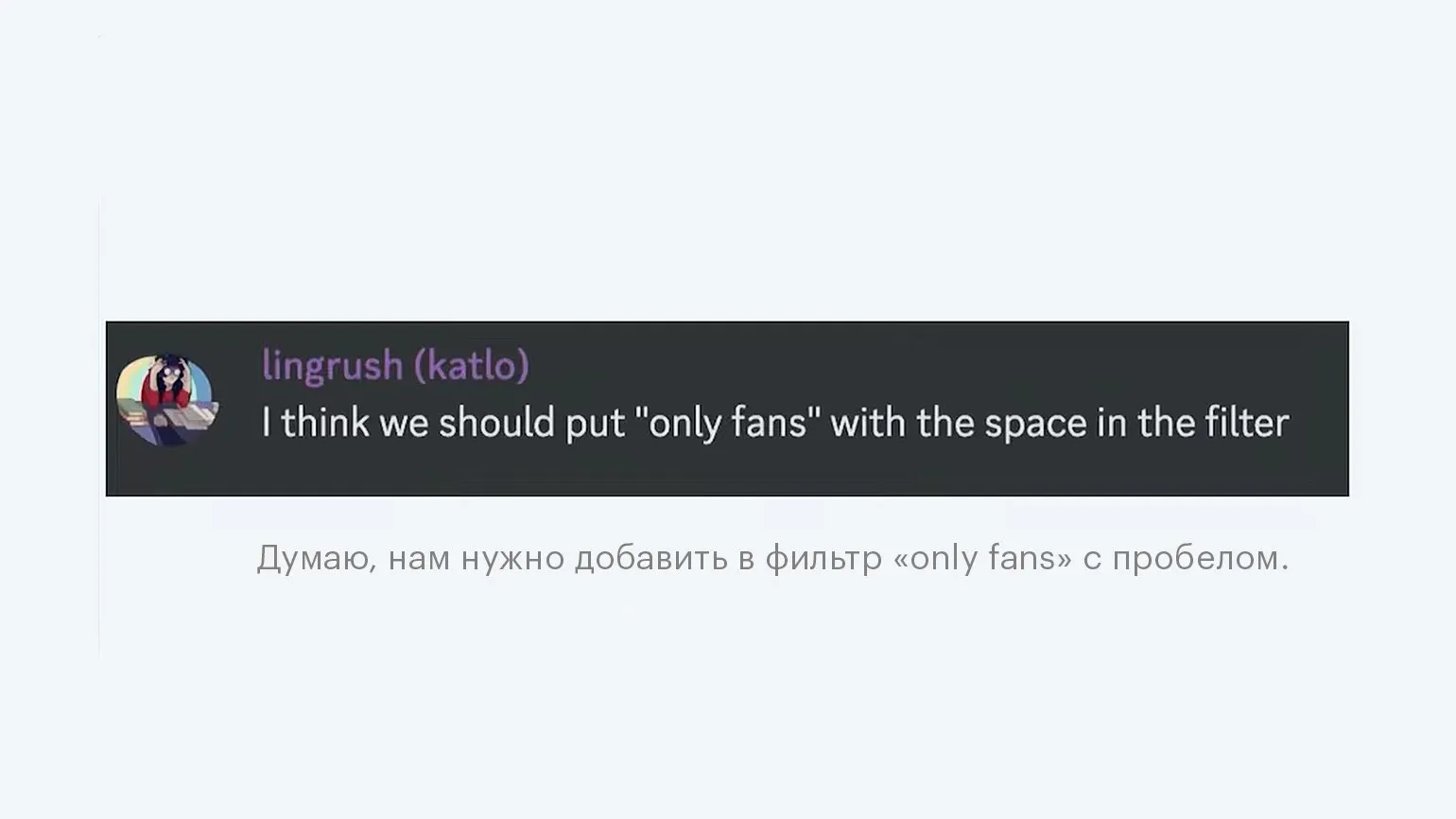
In the chat, which Kat's team moderated the issue, where viewers were unable to mention the name of the OnlyFans portal due to it being blocked in the autofilter. In response, they began using an alternative spelling—separating words and writing "only fans." The moderator noticed this tactic and suggested adding the phrase to the list of banned words to prevent filter bypasses.
It's important to remember that such decisions require a case-by-case approach and cannot be applied indiscriminately to all broadcasts. If an attractive presenter is on air, there will inevitably be viewers inquiring about her page on a particular resource, which is unacceptable. To minimize the number of inappropriate comments, it's important to set up message filtering in advance by adding controversial words and phrases to a stop list in the broadcast settings. This will help create a safer and more comfortable environment for viewers and broadcast participants.
Level 3. Permanent ban for authors of messages with clearly negative content. This applies to toxic comments, insults, harassment, and hate speech. Such actions violate communication standards and create an unfavorable atmosphere, so users who engage in such statements are subject to immediate removal from the community.
Level 4 involves blocking the user and creating a separate channel for moderators to record the threat. This step is taken if the user has violated all acceptable standards of conduct.
Create a worksheet containing key information about the upcoming event. This document should briefly list all the important aspects your team needs to consider. This will help ensure effective planning and ensure the event is organized at a high level.
Key information represents the key data necessary for understanding the topic. It includes important facts, statistics, and context that help the reader quickly understand the material. Properly structuring key information creates a clear and concise presentation of the subject, which facilitates better comprehension and assimilation of the information. Effective use of keywords in this section can improve the visibility of the text in search engines and attract the target audience.
- date, start and end time of the broadcast;
- topic;
- names of the presenters;
- languages allowed in the chat;
- schedule;
- list of moderators;
- which chatbots will be used and for what.
The intended atmosphere of the event, as well as an assessment of the target audience and possible difficulties that may be encountered, play a key role in its organization. It is important to analyze in advance what mood will prevail at the event, what interests and expectations the participants have. This will help create a comfortable and productive environment. In addition, you should consider potential difficulties that may arise during the preparation and holding of the event in order to prepare solutions in advance. This approach will ensure a successful event and a positive audience response.
- Sensitive topics and words in chat that moderators should discourage;
- The role of chat in the broadcast. It is important to indicate whether viewers can only react to what is happening and offer encouragement in the comments, or whether they have the opportunity to communicate directly with the hosts.
A note is an important piece of documentation that contains additional information or clarification on a specific topic. Notes help the reader better understand the context, clarify information, or point out special points requiring attention. They can include references to sources, clarification of terms, or indications of possible errors. Proper use of notes improves the quality of the text and promotes a deeper understanding of the material. Notes can also play a key role in SEO, as they contribute to the creation of unique content and increase its value to users.
When organizing a broadcast, it is important to determine in advance whether non-standard solutions will be used. For example, if you plan to display Twitch chat messages onscreen during a live event, it's recommended to set a chat delay of 15 seconds. This will allow moderators to quickly respond to any issues and prevent awkward situations. This approach contributes to a smoother and more professional broadcast.
Contact information for the coordinator responsible for the broadcast is provided for prompt communication with the moderators in case of questions.

The worksheet allows moderators and the stream coordinator to effectively navigate the stream, minimizing distractions from small details. This ensures a smoother and more organized stream flow, allowing you to focus on the main aspects of the program.
After the stream, Kat recommends organizing a debriefing session, especially if you plan to host other online events in the future. This analysis will help identify strengths and weaknesses and improve the quality of future broadcasts.
A cheat sheet for solving the most common problems on streams
A hater raid is an organized attack by a group of users on a specific resource or person online. Such actions are often accompanied by negative comments, insults, and cyberbullying. Hater raids can target various platforms, including social media, forums, and gaming communities. The main goal of such raids is to inflict emotional damage and undermine the victim's reputation.
Haters typically form groups to coordinate their actions, using anonymous accounts to conceal their identities. This creates an additional problem, as victims of the raids often feel helpless and isolated. It's important to understand that such actions can have serious consequences for both victims and organizers.
To protect yourself from hater raids, we recommend using privacy settings on platforms, actively blocking aggressors, and reporting violations. It's also worth remembering the need for support from friends and the community, which can help cope with psychological pressure. Confronting haters requires a collaborative effort and an awareness of the importance of safe and respectful communication online.
- Preventive measures: set up a bot that will automatically block words used in such raids.
- Real-time solutions: create a positive atmosphere in the chat to suppress negativity → enable "Emoji Only" mode → disable chat → set communication to subscribers only.
Spam is unwanted messages that are sent in bulk via email, instant messaging, or on websites. These messages may contain advertising, fraudulent offers, or malicious links, making them not only annoying but also dangerous. Spam negatively impacts communication efficiency and can lead to wasted time and resources. Various filters and tools have been developed to combat spam, helping users minimize the number of unwanted messages. It's important to understand how to protect your data and avoid spam to maintain the security of your personal information and improve the quality of your online interactions.
- Preventive measures: Disable sending messages containing links in your settings; set up a chat delay.
- Real-time solution: Add spammer keywords to your autofilter → enable "Emoji Only" mode → disable chat → set communication to subscribers only.
Toxic behavior is negative actions and reactions that harm others and create an unfavorable atmosphere in society. It can manifest itself in various forms, including manipulation, aggression, criticism, and ignoring. Toxic people often undermine others' confidence, causing stress and emotional strain. Underlying causes of toxic behavior can include low self-esteem, dissatisfaction with life, or an inability to control one's emotions. To build healthy relationships, it is important to recognize and learn to avoid such manifestations, as well as to develop effective communication skills and empathy. Understanding toxic behavior and its consequences is key to creating a positive environment in any social group.
- Preventive measures: specify in the chat rules what is and is not acceptable; set up a chat delay.
- Real-time solution: temporary or permanent ban.
How to choose the right moderators
The success of a broadcast largely depends on the effective work of the moderators. That's why it's important to carefully select and hire moderators. Qualified moderators ensure high-quality audience interaction, help maintain order in the chat, and foster a positive atmosphere. Take the time to find specialists who have the necessary skills and experience to ensure the success of your streams.
Determine the optimal number of moderators by considering the following factors: the number of users, the volume of content, and the frequency of its updates. It is also important to consider the time required to process complaints and comments, as well as the level of audience interaction. Establish clear criteria for determining the workload of each moderator to ensure effective and high-quality community management. Proper calculation will help create a balanced team capable of maintaining order and providing a high level of service.
- the size of your audience;
- the uniqueness of the streamer or type of event;
- the number of your detractors.
A moderator's responsibilities depend on the specifics of the platform and its target audience. The moderator's primary responsibility is to maintain order on the platform and ensure compliance with community rules and standards. The moderator monitors content, removes inappropriate or offensive material, and responds to user questions. It is also important to monitor user activity to prevent spam and inappropriate behavior. The moderator may interact with users, providing support and clarification on rules. They may also participate in developing new rules and guidelines to improve the quality of content on the platform.
- broadcast duration;
- the presence of parallel broadcasts;
- the presence of shifts;
- chat flow speed.
Kat recommends including more specific information in job postings. It is important to describe responsibilities in detail, indicate the immediate supervisor to whom moderators will report and provide reports, and also indicate who makes the final decisions on work-related matters. Clearly describing these aspects will help attract more suitable candidates and simplify the hiring process.

When recruiting, pay special attention to the moderator's experience, especially their skills in setting up chatbots and managing third-party tools for streaming platforms. These competencies are crucial in this field. If you find such a specialist, try to keep them on the team after the first broadcast. You will likely also need to bring in one or two employees with experience moderating large events for one-off tasks.
Having a large number of moderators on your team is not always a positive factor, especially if most of them are new to the field. However, if your broadcast takes place on platforms with an imperfect moderation system, such as YouTube, you will need more resources to ensure high-quality moderation. It is important to keep in mind that experienced moderators can handle challenges more effectively than newcomers, which will improve audience engagement and content quality.
Before the start of the broadcast, it's important to hold a meeting with the moderators. This will provide an opportunity to discuss the objectives of the upcoming event, brief the team, and answer questions from participants. This approach will ensure teamwork and improve the effectiveness of interactions during the broadcast.
Company chats play a key role in team organization. Experts recommend using Discord, as this tool allows moderators to quickly discuss work-related matters, including interactions with the broadcast producer, who is always available for communication. When the moderation team encounters problems and cannot access management, this leads to misunderstandings and, as a result, chaos in the broadcast chat. Effective communication and quick responses to emerging situations are key to the successful conduct of events and maintaining order during the broadcast.
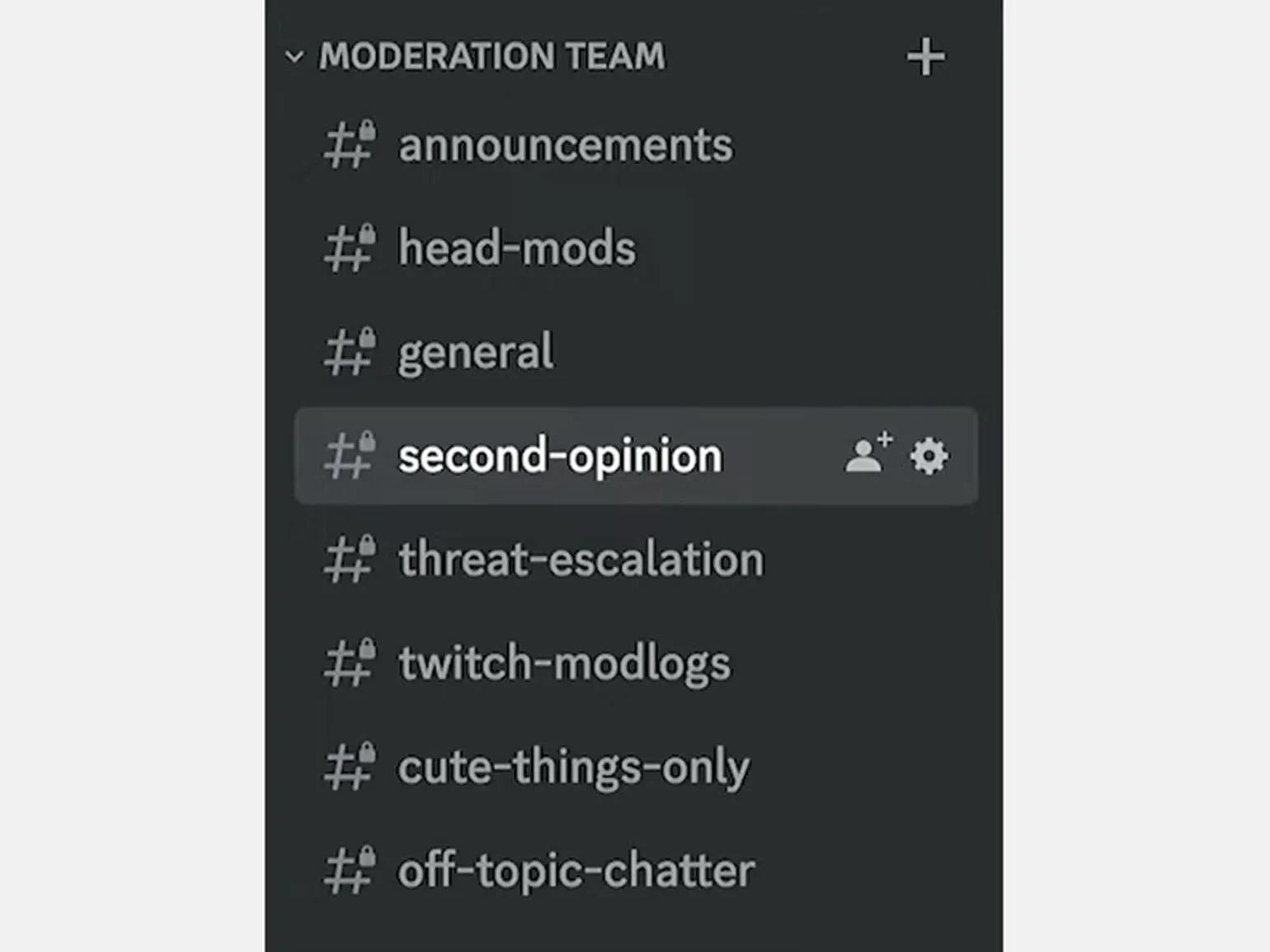
Work chats are an effective tool for increasing productivity and improving team communication. They facilitate the rapid exchange of information, allowing for prompt resolution of emerging issues and decision-making. Work chats allow employees to easily share documents, links, and other resources, facilitating collaboration. These platforms also foster a more open and accessible work environment where everyone can express their opinions and contribute ideas. Work chats also help track the progress of tasks and projects, allowing for better organization. Chat tools are becoming an integral part of modern business, helping to increase efficiency and improve team dynamics. React quickly to unforeseen circumstances; Hand over a shift; Clarify which messages are subject to moderation and what actions should be taken. Work chats play a vital role in minimizing unexpected situations during broadcasts and reducing stress among employees. Examples of such channels in Discord include specialized topics such as company announcements, communication between lead moderators, discussion of controversial messages, and more. The presence of such channels promotes effective team interaction and improves the quality of work.
Pay wages for their work, as all work deserves compensation. It's important to keep in mind that difficulties with payments may arise, especially if employees work remotely from different parts of the world. Furthermore, some people refuse monetary compensation for their work on principle, as they don't want to take on the responsibilities of an employee.
Include the moderators' names in the game credits. During the broadcast, it's important to separately thank the moderator team at the end of the event. This will create a positive image and emphasize the importance of their work in organizing and holding the event.

Give branded merchandise to create a sense of exclusivity. Such gifts become a symbol of closeness to the company and are often perceived by people as more valuable than monetary rewards. Branded souvenirs build loyalty and highlight the brand's uniqueness, creating a positive image and strengthening connections with clients and partners.
Moderators deserve praise for their work. Their role often goes unnoticed, especially when they perform effectively. However, the moment a glitch occurs during a stream, everyone's attention immediately shifts to them. Unfortunately, many people do not realize the importance of moderators' skills and tend to underestimate their contribution to the success of live streams. This is unfair, as they provide order and comfort for viewers, allowing them to focus on the content.
Kat cites a study by the Anti-Defamation League to support the importance of the profession, comparing Alexandra Ocasio-Cortez's Among Us charity stream with a stream of the same game by actor and TV host Jimmy Fallon. This study highlights the influence of streamers on public opinion and their ability to draw attention to important social issues. Thus, the streamer's profession becomes not only entertainment but also a significant platform for discussing current issues.
AOC's stream featured several chatbots and 14 moderators, ensuring a high level of control. While Jimmy Fallon only had three accounts, the lack of moderation on his channel resulted in the chat being overwhelmed with spam, obscene images, and toxic comments. This significantly disrupted the overall format of the event. As a result, Fallon raised $17,000 out of his $25,000 goal for Feeding America, with the actor covering the remainder from his own personal funds. In contrast, Ocasio-Cortez, in a joint broadcast with Canadian politician Jagmeet Singh, raised over $200,000. This highlights the importance of effective moderation and audience engagement during live streams.
This example demonstrates that even with a successful broadcast, the positive atmosphere can be undermined by negative comments in the chat. Such emotions can alienate even the most loyal followers, highlighting the importance of monitoring chat content. Audience engagement management plays a key role in maintaining a positive image and retaining viewers.
The Role of a Young Audience
Streaming primarily attracts Generation Z, people born between 1995 and 2010. Research by the consulting firm McKinsey & Company shows that this generation is shaping new marketing trends. Therefore, it's important to create a chat atmosphere that aligns with their expectations of comfortable communication. Consider the interests and preferences of zoomers to make your streams more attractive and engaging.
Even if your project is engaging, ignoring important audience issues during streams can lead to a loss of trust. In this case, users may switch to competitors. Conversely, by demonstrating a commitment to universal values, you can attract a younger audience and strengthen your market position.
While preparing this material, we reached out to Anton Morozov, Creative Director of BH Studio, for comment on moderation issues.
The Beast Hour community currently numbers approximately 2,000 members. We actively stream the game on various platforms and strive to closely interact with our community on social media to create a cohesive and self-moderated environment. For example, a user recently left an unsubstantiated criticism of the game on one social media platform. However, our community members responded quickly, providing polite and reasonable answers, which allowed us to avoid the intervention of community managers.
Of course, controversial situations do arise. We once encountered a fan who was constantly leaving negative comments about Nosgoth, a game we deeply respect and which inspired us during the development process. After several warnings, we decided to ban this user, as his comments went against the values of our community.
One of the key rules of communication in the chat is to not succumb to the provocations of trolls. If they continue their game without violating the community rules, it is best to simply ignore them. Over time, they will go looking for "food" in other channels on their own. To reduce the number of conflicts and create a friendly atmosphere in the chat, you should prohibit messages containing:
— insults and profanity
— Provocative and controversial topics
- spam and inappropriate advertising
These measures will help maintain constructive dialogue and make chat communication more comfortable for all participants.
- Foul language and anything related to 18+ materials, both in text and visual format (including blocking players with obscene avatars and names). Many will consider the ban on swearing to be hypocritical, but where it is allowed, people lose respect for each other. Moreover, chat is a public space, and there will always be those who will be uncomfortable reading messages with such content;
- conversations about politics, religion, and minorities. Only the developer's project and video games in general can be discussed in the chat;
- offers to buy or sell goods;
- anything that could sow discord in the community - rumors, false information, intrigues towards other members, and so on;
- information about cheats and exploits. If a player finds such a bug, they should report it to support, for which they will receive gratitude and perhaps even a reward from the developers. However, publicly reporting this is not recommended, as this is contrary to the concept of fair play.
First of all, it is important to define rules of conduct for your stream or channel. Create clear conditions so that users understand how these rules apply. Develop a code of conduct of sorts. In addition, the community description should include key information about the project, as well as the contact information of the development team. After that, all that remains is to ensure compliance with the established rules.
Moderation is a responsible and complex process that requires a high degree of attention and objectivity. Moderators often have to make difficult decisions, such as banning active and loyal community members. This can be especially challenging when such actions are necessary to maintain a positive atmosphere and comfortable communication among players. While such measures may certainly help expand the game's audience, maintaining a friendly and safe environment for all participants remains a top priority.
Video Game Psychology
You will learn how to manage gamers' emotions and design game scenarios based on behavioral psychology. You will be able to develop scientific game projects for educational and medical purposes.
Find out more