
Table of Contents:

Learn: Profession Producer
Learn MoreWishlists play a key role in the success of new releases on the Steam platform. They are an important tool for assessing player interest in a project and can significantly increase sales. Placing a game on wishlists helps developers gather audience feedback and adapt their marketing strategy, which in turn contributes to the game's popularity and successful launch.
Valve's platform sends users email notifications when games from their wishlist become available or go on sale. This is especially useful for players planning purchases during seasonal promotions, as wishlists help them track offers they're interested in. Wishlists also help promote games in the "Popular Upcoming Releases" section on Steam, increasing their visibility and attracting the attention of potential buyers. This makes wishlists an important tool for both users and developers, helping to improve the user experience and increase sales.
There is a link between wishlists and sales, but how significant is it? GameDiscoverCo, a data-driven information agency, explored this question by analyzing data and investigating the impact of user preferences on product commercial success. The results of their research will help better understand how wishlists can predict sales and what factors play a key role in this process.
What Happens in the First Week of Release?
In October 2021, Simon Carless, an expert at GameDiscoverCo, presented a study based on an anonymous survey among developers and publishers using the Steam platform to distribute their games. The survey was conducted in August and included respondents whose projects were released between 2019 and 2021. This information provides valuable insights into trends and preferences in the gaming industry, which can help developers better adapt their strategies to market demands.
The purpose of this study was to analyze the relationship between actual sales of new game releases and the number of users who added these games to their wishlists. We wanted to find out how much of an impact wishlists have on sales and whether they are a significant indicator of interest in new gaming products.
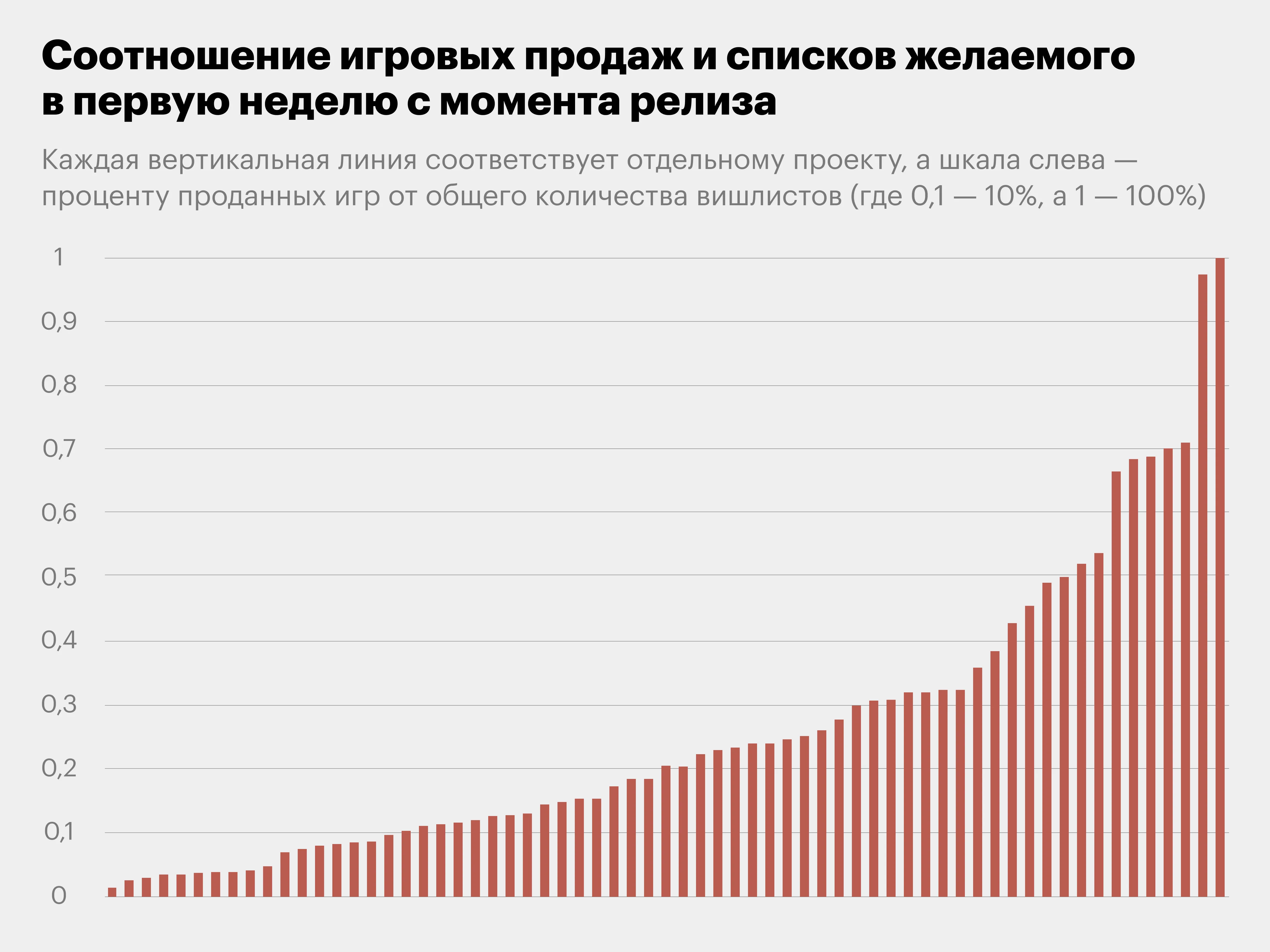
In June 2020, Carless conducted a study on the relationship between sales and wishlist metrics on Steam. The results showed that the median ratio of wishlists to game sales in the first week after release was 0.2, which corresponds to 20%. This study highlights the importance of wishlists as an indicator of a game's potential success on the Steam platform.
The graph above illustrates the results of a recent survey analyzing game sales after their launch. The data shows that in the first week, game sales ranged from 1.5% to 100% of wishlisted games. This means that the least successful titles were virtually unsold, while the most successful games were purchased by every user who wishlisted them. This wide range of sales raises doubts about the accuracy of forecasts based on this data.
A GameDiscoverCo study analyzing the relationship between sales and reviews found that respondents' minimum and maximum sales averaged a 1:3 ratio, meaning that maximum sales were three times greater than minimum sales. In the current study, this ratio has increased significantly to 1:65.
This result suggests that for most games, there is a weak correlation between wishlisting and sales. This may indicate that having a game on a user's wishlist doesn't always lead to purchase, which is important to consider when planning marketing strategies for games. Developing effective promotion methods and analyzing audience preferences can help improve the conversion of wishlists into actual sales.
What is the actual correlation between game sales and Steam wishlists?
Carless conducted a detailed analysis of the survey results, despite the significant variability in the data. During the study, he identified key trends and patterns that help better understand the respondents' opinions and preferences. This in-depth study allows us to draw more accurate conclusions and make informed decisions based on the data.
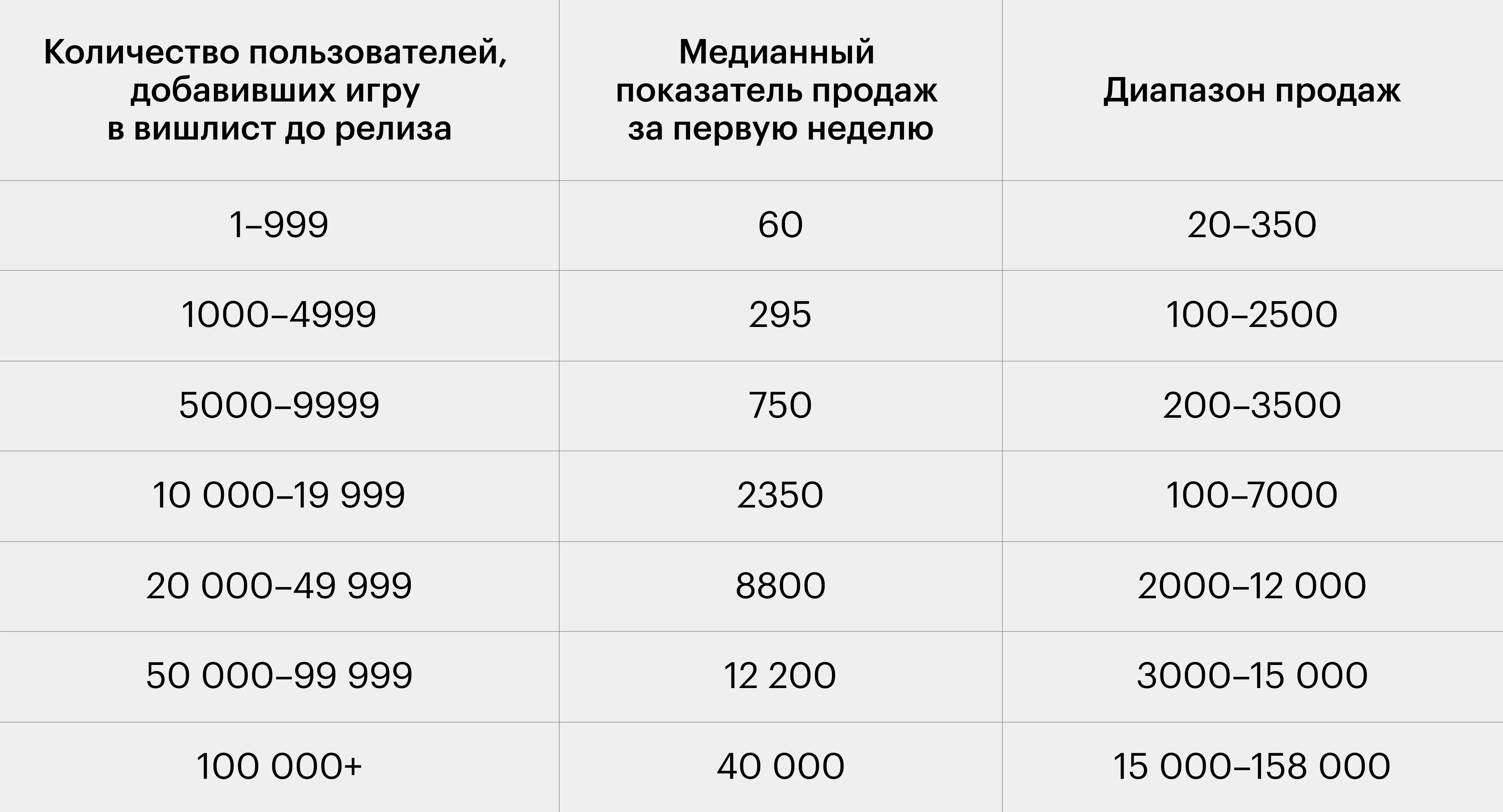
For games wishlisted more than 20,000 times, there is a significant variation in sales volumes. Even excluding outliers, the ratio of minimum to maximum sales is 1:10, and in some cases reaches 1:70. This underscores the importance of analyzing user interest and its impact on the commercial success of games.
The situation is gradually improving. Among games with more than 20,000 wishlists, exceptional cases can still be found. For example, one game, which was included in 85,000 wishlists, sold only 3,000 copies in the first week after release. However, the average ratio of minimum to maximum sales is beginning to level out and now stands at 1:5 or 1:6. This indicates that user interest in games remains high, despite some disappointing releases.
Games with high wishlist scores, ranging from 50,000 to 350,000, demonstrate impressive results. These projects attract significant user attention and demonstrate high interest in gaming content. An increase in the number of people interested in purchasing a game indicates potential for success and popularity among the audience. Analyzing these games can reveal trends and preferences that can be useful for both developers and marketers in the video game industry.

Analysis of the presented statistics shows that wishlists only roughly reflect a game's potential sales at launch. However, no compelling patterns were identified. Carless also emphasizes that other significant factors influence a project's success, such as marketing strategy, game quality, player feedback, and market competition. These elements can significantly alter forecasts and impact final sales results.
- overall review rating (ranging from "Overwhelmingly Positive" to "Overwhelmingly Negative");
- streamer support during launch;
- genre – if a developer is targeting an audience for large projects like Destiny 2, which are played for tens or hundreds of hours, they may face quite a bit of competition; conversely, in the segment of story-driven indie games designed for a couple of evenings, users are motivated to try new releases more often.
Paying attention to wishlists is crucial. At worst, they will have a minimal impact on sales, but at best, they can significantly increase them. To collect the maximum number of wishlists, Carless and other developers recommend following certain guidelines. This may include creating engaging content, actively engaging with the audience, and using social media to promote the product. Proper product page design and optimization will also help attract more users and increase wishlist additions.
- List your project on Steam as early as possible. The game should already be on the platform by the time of announcement, so users can immediately add it to their wishlist.
- Create as much visibility as possible (through PR, engaging streamers, and regular updates on the project's progress). One of the most significant achievements at this stage will be getting featured in the "Popular Upcoming Products" section on Steam.
- Release several demos of the game before release.
- Set at least an approximate release window, even if the chances of hitting the deadline are only 5% – unlike the vague phrase "It will be released when everything is ready," a specific date makes your project more tangible. And if you don't have time, the release can always be postponed.
The GameDiscoverCo team reports a minor data collection error. The developers provided information about the number of notifications sent to users at the time of release, rather than the actual number of wishlists. This number also includes users subscribed to the publisher's Steam page. As a result, launch wishlist metrics for large publishers may be slightly inflated.
How do sales compare to daily organic wishlist additions?
Carless drew attention to organic daily metrics, including the number of people adding a game to a wishlist during quiet periods. This period is characterized by a lack of active promotion of the project on the platform, at exhibitions, and through streamers. From now on, we will refer to these metrics as organic wishlists. Analyzing this data allows us to better understand audience interest and the effectiveness of marketing strategies.
GameDiscoverCo conducted a study, collecting information on 75 games released on Steam between 2019 and 2021. The survey results revealed the following trends and findings:
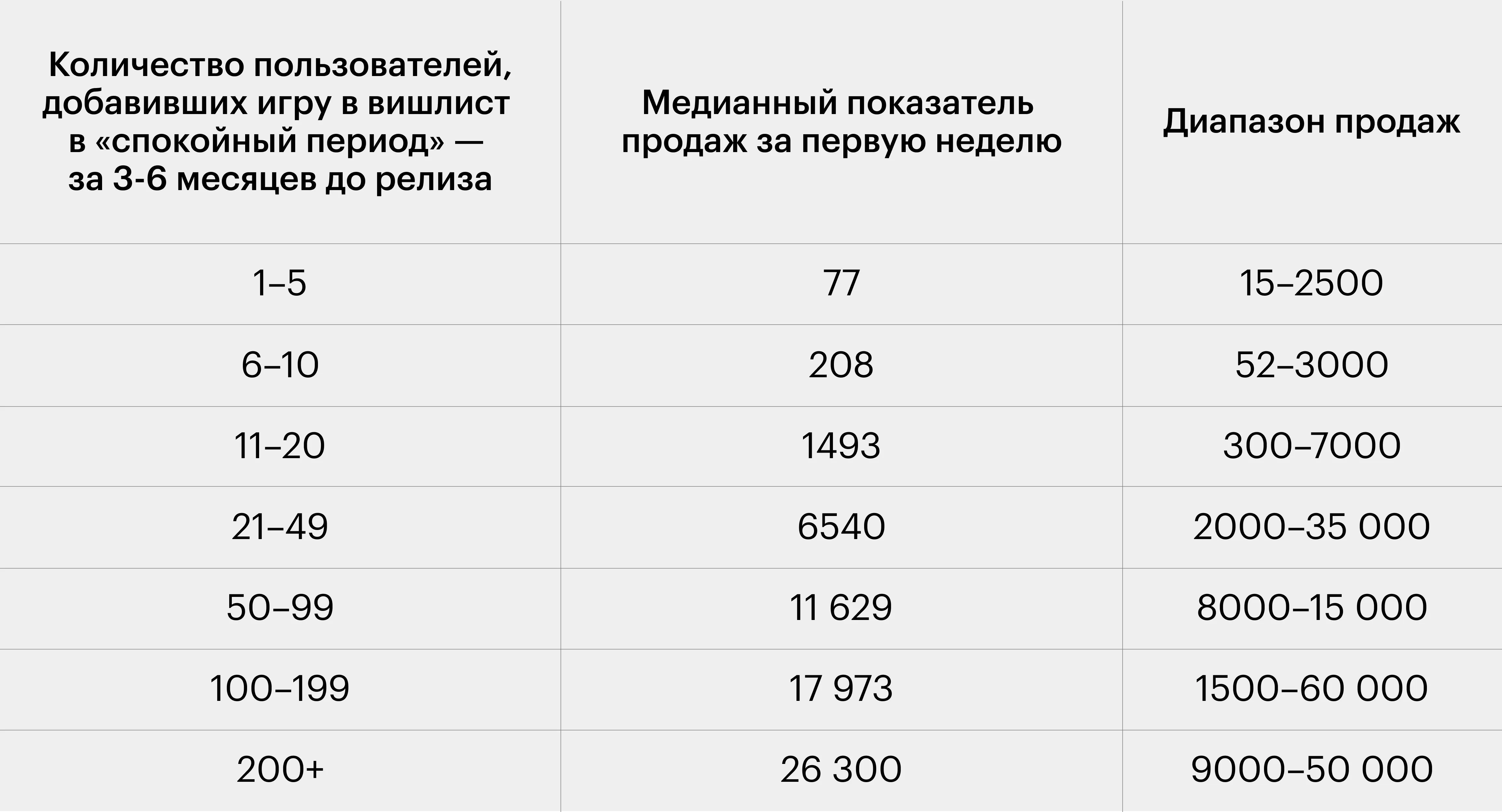
Statistics show that an increase in the number of organic wishlists leads to an increase in average sales. This conclusion is obvious. Carless also noted that no game with fewer than 10 organic wishlists managed to sell more than 3,000 copies in the first week after release. Analysis of this data confirms the importance of creating and promoting wishlists for a successful launch of games. The more desirable games on the lists, the higher the likelihood of their commercial success.
The difference between minimum and maximum sales continues to fluctuate widely. For less popular titles, this ranges from 1:15 to 1:60, while for the mid-range segment (21-49), the ratio is 1:17. After this point, the situation levels out somewhat.
There is not enough data for a full analysis of the situation. However, compared to the total number of users who added a game to their wishlist before release, the organic wishlist indicator (excluding demos, sales, and other factors) appears to be more reliable. This metric can be used to preliminary assess the success of a title on Steam, although our research cannot confirm this with absolute accuracy, Carless noted.
How can you achieve the desired organic reach and attract attention to your game? Carless argues that a project must have attractive features. This could be a unique visual style, an original concept, or a precise match to the genre. Gameplay trailers, demos, and free keys for streamers help generate excitement around a game. However, it's important to remember that there's no one-size-fits-all formula for success. Some projects become true hits, while others, unfortunately, fail to make money, and understanding the reasons can sometimes be quite difficult. Creating high-quality content and actively engaging with your audience can significantly increase your chances of success.
In conclusion, Carless, using aggregated data, clearly demonstrated the diversity of sales metrics. This underscores the importance of analyzing and considering the various factors that influence results. Different methods for assessing and interpreting this data provide a deeper understanding of market dynamics and identify key trends. Actual sales figures can vary based on a variety of variables, making studying them especially relevant for making informed business decisions.
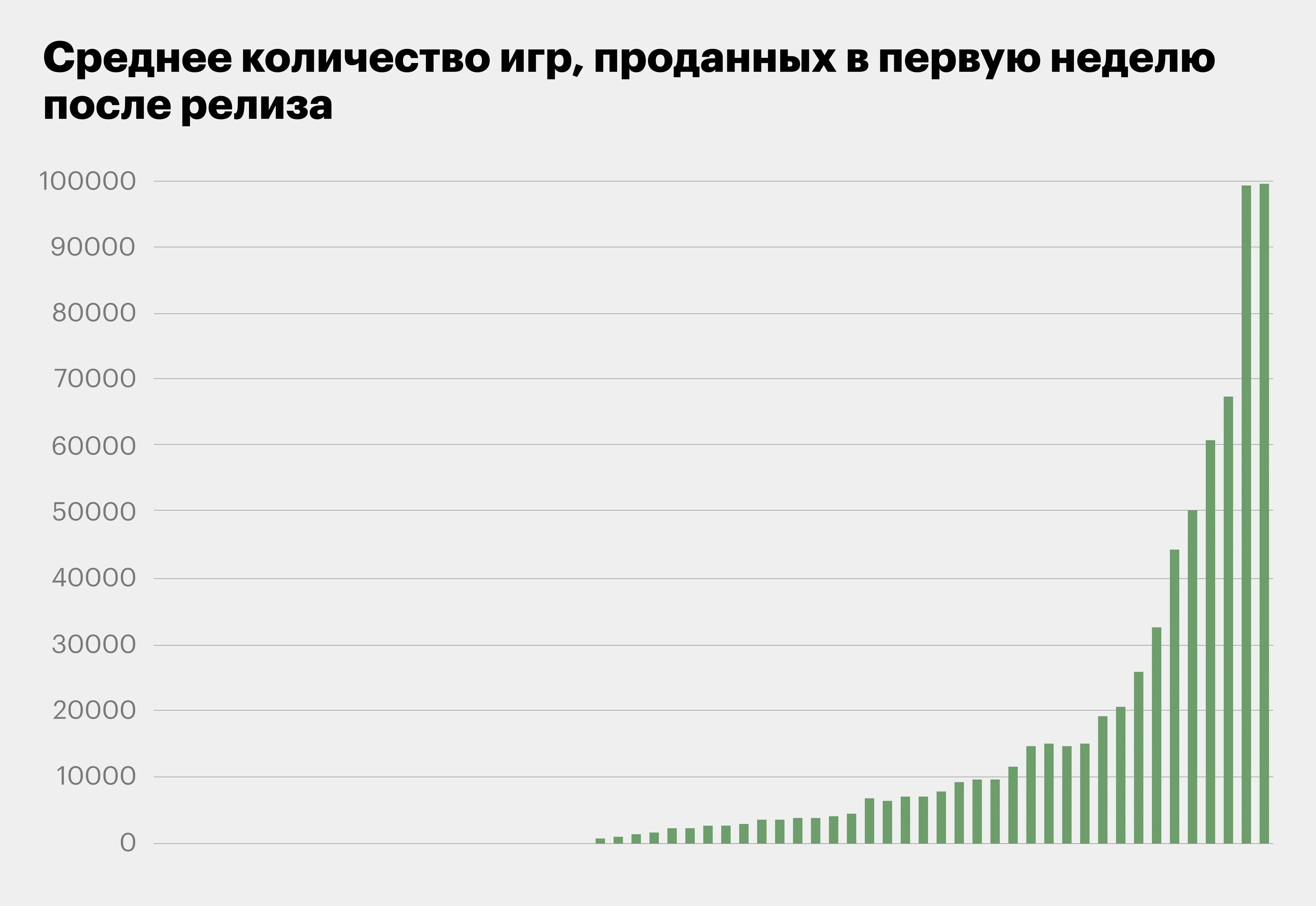
Finally, it's important to note that there is a connection between wishlists and game purchases, although it's not always obvious. Adding a game to a wishlist doesn't guarantee a purchase. However, effective advertising campaigns, demos, trailers, and other promotional materials play a key role in attracting user attention. Adding a game to a wishlist indicates user interest, which in turn increases the chances of a purchase. The right approach to marketing can significantly increase the conversion of interest into actual sales.
Game Producer Profession
You will learn how to turn an idea into a game project - from the first prototypes to release. Learn to develop concepts, lead a development team, and release products that will delight users and generate profits.
Learn more