Contents:
Who are you in the world of game development? Learn more with our free course ➞ You'll experience three careers: game designer, 2D artist, and Unity developer. Create your first Mario-style game. Click here for details.
Learn moreYou've dreamed of a career in the game development industry, and now you've finally received an invitation to an interview. This is already a significant achievement, as your resume has attracted the attention of HR specialists. Now it's important to properly prepare for the interview, which can be nerve-wracking. However, don't worry: your interviewers are just as interested in you as you are in the position. Their goal is to find a highly qualified specialist who can meet the company's needs, not create discomfort for the candidate. Preparing for the interview involves not only researching the company and the position but also building confidence in your skills and experience. This will help you make a positive impression and showcase your strengths. Remember, an interview isn't just a test of your knowledge but also an opportunity to evaluate how the company meets your expectations and career goals.
Marina Lopatina, Development Director at Talents In Games, a recruiting platform and agency in the gaming industry, emphasizes that the game development industry is a unique area of the labor market that is actively open to new talent. This field offers a variety of opportunities for professional growth, making it attractive to both newcomers and experienced professionals. Game development not only attracts creative people, but also creates conditions for their further development and implementation of potential ideas.

The gaming industry is a unique world inhabited by highly qualified specialists who have the ability to multitask. Key skills for success in this field include focus, responsibility, and a rare but essential combination of creativity and discipline. Teams at game development companies are united by shared interests and work in a unique atmosphere that is democratic and friendly, yet still highly productive. This approach fosters the creation of innovative games and strengthens team spirit, ultimately leading to successful projects.
During your HR interview, your preparation will be paramount. The key to a successful interview is detailed preparation and strategic planning. We've compiled essential tips to help you ace your interview in the game development industry. Prepare in advance, research the company and its projects, and think through your answers to common questions. Confidence and clarity in communicating your thoughts will also play a significant role in creating a positive impression. Use these tips to stand out from other candidates and increase your chances of success in the world of game development.
First Step: Resume
Whether you're a fresh graduate or an experienced professional, making a positive first impression is crucial to landing your dream job. Your resume is the first document an HR professional will see. It creates their first impression of you as a candidate, so it's important to approach it with special care. Proper resume formatting and content can significantly increase your chances of success in your job search. Make sure your resume is clearly structured, contains keywords relevant to your industry, and highlights your achievements and experience.
In the highly competitive game development market, it's important to attract recruiters' attention and stand out from other candidates. Following a few simple rules can significantly increase your chances of landing your dream job. Optimizing your resume and portfolio, highlighting unique skills and projects, and actively participating in professional communities will help you stand out. It's also important to continually develop your knowledge and skills to meet industry requirements. These steps will help you create an attractive professional image and increase your chances of success in the world of game development. Tailor your resume to each specific position. Don't submit the same resume to multiple openings. Take the time to create separate documents for each position. This will demonstrate your attention to detail to the recruiter and allow you to highlight the most relevant skills and achievements that match the job requirements. This approach will increase your chances of receiving an interview and help you stand out from other candidates. Avoid creating overly lengthy resumes, such as "War and Peace." Keep your information brief and to the point. Recruiters, including HR specialists, prefer concise and informative texts. Highlight key points: your work experience, professional achievements, completed courses, and links to your portfolio. The optimal resume length is no more than two A4 pages, which will capture attention and quickly convey your value to a potential employer.
David Harper, Managing Director of Skyhook Games, emphasizes that meaningless graphs on a resume demonstrating proficiency in programs like Unity or Photoshop are of no value. These elements only take up space and do not provide real information about the candidate's skills. Instead, it is important to focus on specific achievements and work experience that truly reflect the professional qualities and abilities of the applicant.
Before applying, check whether a cover letter is required. Many employers in the game development industry require not only a resume but also a cover letter. By including one, you demonstrate your interest in this particular company. Max Downton, Senior Brand Manager at Splash Damage, notes that the absence of a cover letter can lead to rejection. So, don't ignore this important detail during the application process. A cover letter allows you to stand out from other applicants and demonstrate your motivation and understanding of the company.
Improve your portfolio so that it effectively showcases your skills and meets the requirements of game development companies. Your portfolio of projects should demonstrate your qualifications for a specific position. If you're applying for a technical role, make sure your most recent work in your portfolio is related to that specific field. Include project examples that illustrate your abilities and experience with current tools and technologies. This will help employers see your competence and meet their requirements.
- Programming portfolios should include personal projects, especially if you're just starting out. It should contain materials from your work on games, show your contribution to the modding community, and/or work on GitHub code—these are signs of your initiative, which can subsequently help in the development of a game development company project.
- The artist's portfolio should be updated and filled with their best work. It's better to focus on quality rather than quantity. Choose the works that you consider most presentable and create a pleasing overall visual—this is critical for artists.
- The portfolio of UI/UX designers should contain not only examples of completed projects but also references, design stages, and the basis from which it was created. This will demonstrate to the recruiter the logic by which you build your work process and your overall vision of the work.
Alesya Zharikova, project manager at GDJob.pro, emphasizes that each vacancy in the game development industry has specific criteria. These criteria vary depending on the skills, experience, and knowledge required to successfully complete the tasks. It's important to keep in mind that game development values both technical and creative abilities, as well as teamwork. Proper assessment of these factors helps candidates better prepare for their job search and employers find the most suitable specialists.

The resume of visual content specialists requires special attention to the portfolio. The candidate's work becomes the primary evaluation criterion, and other details are only of secondary importance. If you're just starting out and don't have a lot of high-quality projects yet, don't post all your work. It's better to choose one or two of your most successful ones and showcase them. It's important to be honest in your description that you have limited experience but are ambitious and eager to develop your skills in this field. This will demonstrate to employers your motivation and willingness to learn.
If you're involved in programming, it's recommended to include a link to your GitHub account with code samples or to cloud storage with your projects. Company leaders and CTOs will appreciate the quality of your code and approach to problem-solving. Even if your project doesn't look particularly impressive, that doesn't mean you don't have potential that a gaming company could develop. The key is to demonstrate your skills and willingness to learn.
Never pass off someone else's work as your own. Lies are easily detected, and restoring a reputation takes a lot of time and effort. It's also important to pay attention to grammar and spelling. There are many online spelling and punctuation checkers that can help improve your text. If you're preparing a resume in English, add a brief description in Russian at the bottom. This will significantly simplify the job for the HR manager, who may not speak English. High-quality presentation of information and honesty about your achievements will help you stand out from other candidates.
After completing your courses, don't forget to save your diplomas and certificates. When selecting an inexperienced employee, companies prefer those who have completed training and received the relevant documents. Having certificates and diplomas significantly increases your chances of employment and demonstrates to the employer your willingness to develop professionally.
According to internal statistics from GDJob.pro, the gaming industry is experiencing high demand for specialists in various fields. The largest number of vacancies are for C# (Unity 3D) programmers—32.1%. A significant number of openings are also for 2D artists, accounting for 19.2%, and game designers, at 18.8%. These data highlight the importance of these professions in game development and indicate a growing need for qualified personnel in game development.
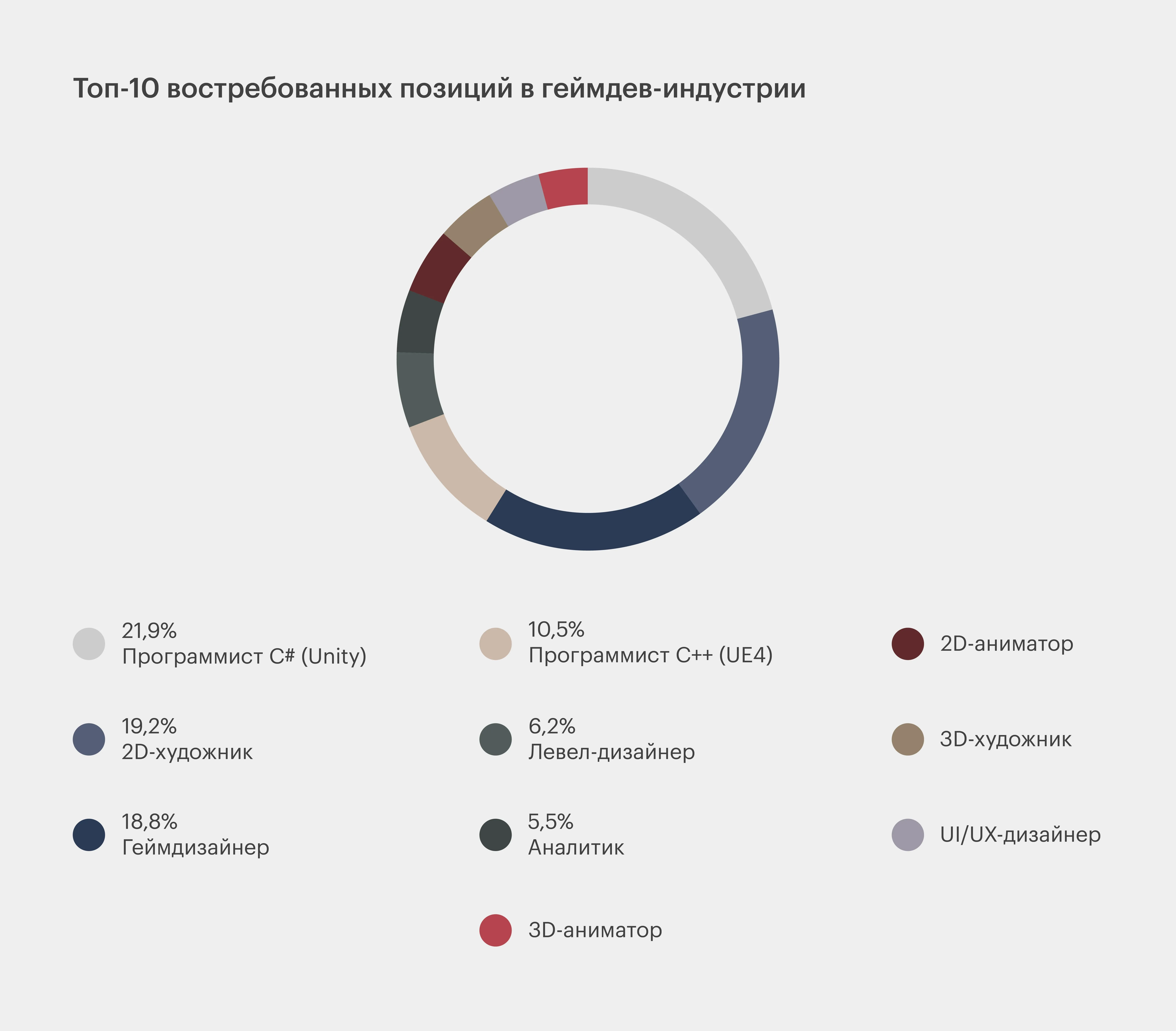
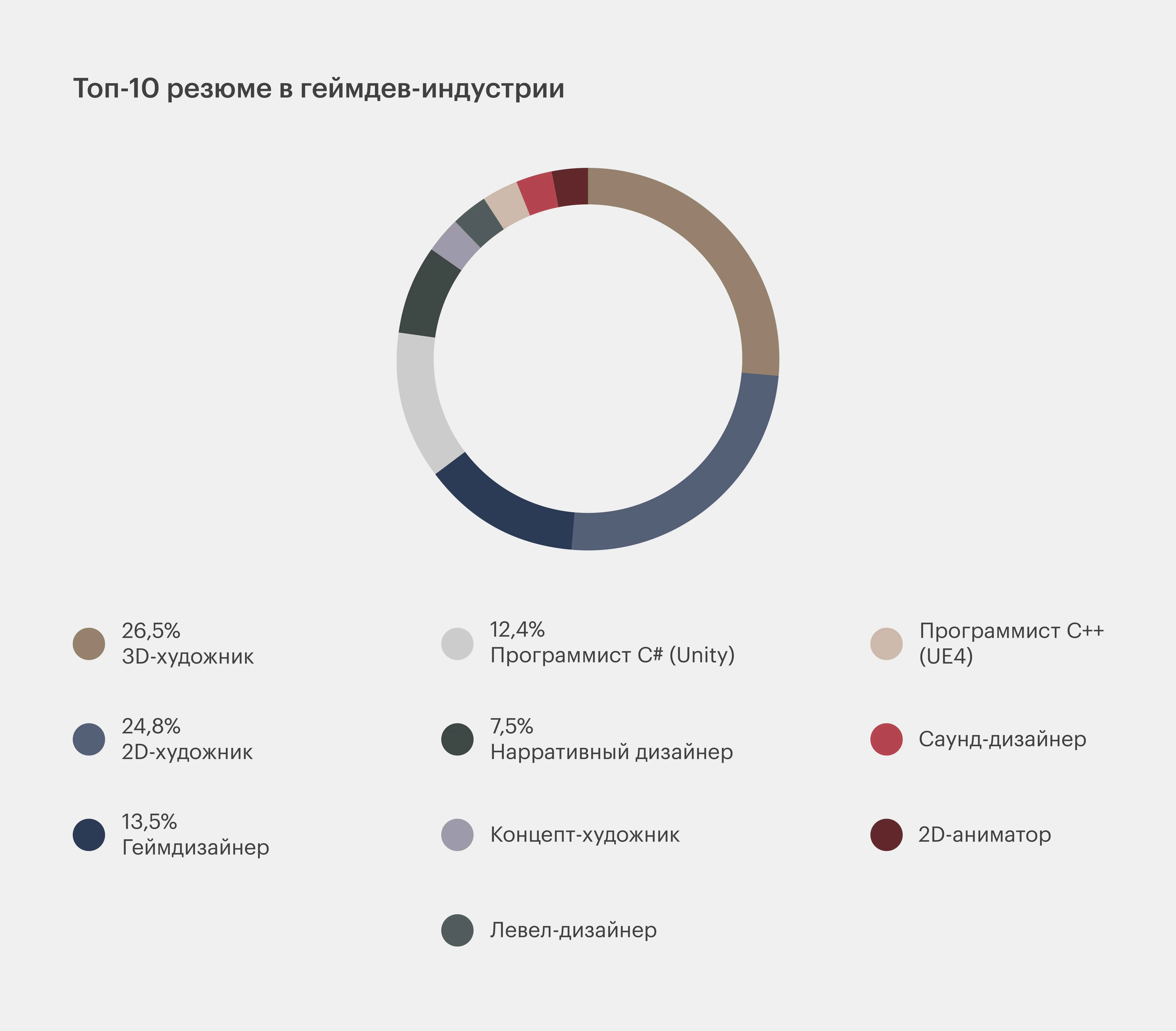
Demand for game development specialists is practically equal to supply. According to GDJob.pro statistics, 2D artists rank second in terms of number of resumes, accounting for 24.8% of the total. Game designers are third with 13.5%. However, the largest number of resumes belong to 3D artists, who account for 26.5% of the market. These data highlight the importance of 3D art in game development and the growing interest in this specialty from employers.
Alesya emphasized that specialists always have the opportunity for professional growth and mastering new areas, which contributes to achieving the desired position. Constantly developing skills and knowledge allows you to not only improve your competitiveness in the labor market, but also opens up new career horizons.
Before the interview
Your resume has attracted the attention of the employer, and you have received an invitation to an interview. This is great news, but don't relax. It is important to thoroughly prepare for the meeting.
Determining the meeting location is key to a successful interview. If the interview is in person, make sure you know the exact address and directions. It is also important to factor in travel time to arrive at the interview on time. Planning your route in advance will help avoid unnecessary stress and create a good first impression.
Tatyana Loktionova, founder of the recruiting company Values Value and co-founder of InGameJob, recommends paying special attention to this aspect. The right approach to selecting candidates can significantly improve the effectiveness of your team and contribute to the successful development of your business.

Often, a delay in an interview can indicate a lack of interest in the job. This can happen if the vacancy seems unsuitable or the candidate has already found a new position. However, it is important to approach your career strategically and constantly develop your professional network. If you are running late, be sure to give advance notice. If you are having internet problems, contact the recruiter via instant messenger; their number is usually listed in the email signature. Maintaining regular communication and actively participating in the job search process will not only help you avoid misunderstandings but also create a positive image in the eyes of potential employers.
This way, you can demonstrate:
- punctuality;
- communication skills;
- minimal literacy;
- interest in the work.
This is especially important for junior specialists, since it is up to you to determine how employers perceive you. Even if you are rejected, you will not be marked negatively in the database, which preserves the possibility of future job offers. Maintaining a positive image and professional connections can open new doors in your career.
Before the interview, it is important to check with HR about the dress code. While it may seem obvious, everyone has their own idea of "casual attire." Preparing for an interview includes choosing appropriate clothing, which will help you make a positive first impression and boost your confidence. Dressing appropriately not only meets the employer's expectations but also demonstrates your seriousness and respect for the company. Find out if you need to prepare any materials for the interview. This will demonstrate your commitment to the process and help avoid any awkward situations during the meeting. Preparing for an interview not only reinforces your image as a responsible candidate but also increases your chances of a successful interview. Recruiter Maria Tarnikova of Black Caviar Games emphasizes the importance of this aspect. This is a key point to consider when selecting candidates. By paying attention to this point, you will be able to more accurately evaluate potential employees and their fit with the company's corporate culture. This will help not only in the hiring process, but also in the further development of the team.
During the initial interview with HR, every candidate strives to demonstrate their best qualities. Interview preparation plays a key role in this process, but many applicants do not pay enough attention to it. First and foremost, we evaluate how thoroughly the candidate has familiarized themselves with the job description, company projects, and corporate culture. Highly qualified professionals typically approach interviews more responsibly, but in practice, we've seen cases where even managers haven't taken the necessary seriousness seriously. Proper interview preparation can significantly increase your chances of success and demonstrate a genuine interest in the company and its values.
At the initial stage of the interview, we identify confident candidates who demonstrate a genuine interest in the job and a clear understanding of their goals. They are able to provide concise and precise answers to questions, avoiding unnecessary distractions and not jumping from one topic to another.
Preparing for an online interview is becoming an important step in the hiring process. Since the COVID-19 pandemic, many companies have switched to remote interview formats. Make sure you have the correct video conferencing link and the necessary software on your computer. It is recommended to register for a Zoom or Skype account in advance to avoid any hiccups and arrive on time for the interview. Proper preparation will help you feel more confident and showcase your skills in the best possible light. Tarnikova emphasizes the importance of safety during a remote interview, urging against driving. This caution applies to all participants, as focusing on the road should be a priority. Participating in an interview requires attention and focus, making it impossible to do both simultaneously. Be mindful of your safety and choose an appropriate location for the interview. Your background and name in the conference call are essential for a successful online interview. Before you begin, be sure to check your background to ensure it looks professional and ensure proper lighting. Position your laptop or webcam at face level to ensure the best angle and visual perception. It is also important to pay attention to the name under which you participate in the conference call; use your real last name and first name. Nicknames you use in games or among friends can negatively impact the employer's impression. Don't forget to charge your laptop before the interview to avoid technical issues during an important meeting. Preparing for an online interview includes not only the content but also the proper design of your virtual space. Before the interview, be sure to test your webcam and microphone. The pandemic and the modern labor market require high-quality video communication. In 2021, more than 60% of game development professionals are working remotely, as confirmed by the results of the annual Big Salary Survey. Don't forget the importance of appearance: be sure to dress appropriately for the interview. Don't hesitate to clarify details. Ask questions about the interview plan and don't be afraid to request changes if something doesn't suit you. You have every right to request a list of interview questions or a floor plan of the studio's building in advance to quickly find the right office. Game development studios care about the well-being of their employees, so don't worry that your curiosity will be a reason for a negative assessment. Discussing details will not only help you better prepare but also demonstrate your interest in the company and the work process.
From the very beginning, I pay attention to key patterns in the candidate's behavior. An important aspect is how they respond to the interview invitation: whether they arrive on time, early, or late. Their communication style and how they process feedback are also significant. These elements allow us to draw conclusions about their professionalism and willingness to collaborate. By analyzing these patterns, we can more accurately assess the candidate's fit with the team and the company's corporate culture.
In any professional field, clear communication, logical thinking, and the ability to provide constructive feedback are important. These skills can be developed and trained. How a candidate evaluates their previous employers and colleagues is also important, as this reveals the level of toxicity in their thinking. According to expert Lopatina, this can be a decisive factor in evaluating a candidate.
Research the HR person who will conduct your interview. Gather as much information as possible about the person using LinkedIn or the "About Us" section of the company website. This will not only increase your comfort during the interview but also help you establish a rapport with the HR person. By learning more about the interviewer, you can avoid the feeling of unfamiliarity and create a more trusting atmosphere.
Don't forget the importance of preparing for an in-person interview. Make sure you thoroughly research the company and its projects. This is critical to forming an answer to the frequently asked question, "Why do you want to work here?" The recruiter will want to be sure you understand where you're heading. Review the requirements listed in the job posting, review your resume and cover letter again - remember that a potential employer already has an idea of you.
Loktionova outlined in detail the principles of work of HR specialists in the gaming industry. In her opinion, the key factor in selecting candidates is creating a positive first impression.
- well-researched information about the company and the vacancy;
- preparing in-depth questions about the functionality and content of the tasks, and not sucked out of thin air (we are talking about questions like "What will be the salary?" or "When should I start work?");
- punctual, and if punctuality is not possible, then at least predictable;
- polite and friendly,
- neat.
The expert advises to familiarize yourself with the company's games and study the genre indicated in the job description. This will help you understand the direction of work in a game development company in advance and demonstrate your competence and interest in the position. Understanding the specifics of the games developed by the company will allow you to better prepare for the interview and stand out from other candidates.
During the interview
You have activated the camera and entered building to land an important interview in the game development industry. What are your next steps?
Smiling during an interview is important. The interviewer can detect your nervousness, and if the interview is not stressful, they will likely try to create a comfortable atmosphere. If you feel insecure or uncomfortable, a smile can help ease the tension and establish a trusting rapport with the interviewer. This will not only improve your perception but may also increase the chances of a successful interview. Smiling helps create a positive impression and demonstrates your openness and friendliness.
The golden mean plays a key role in communication. You don't have to talk excessively, but you shouldn't remain silent either. It's important not to perceive the recruiter as an enemy or someone too close. Treat the interviewer with respect, avoiding negative emotions and excessive familiarity. Business communication should be the center of your interactions. Clearly express your intentions, especially if you are communicating with a recruiter from an agency. We often have several similar vacancies from different employers, and when candidates share their preferences, we can offer them the best options. It's also important to research the company you're interviewing with in advance and ask specific questions instead of being passive. This will help you prepare better and increase your chances of success.
Pay attention to your gestures and facial expressions. When conducting both in-person and remote interviews, it's important to consider body language. Avoid slouching, nervousness, and constantly fiddling with objects. Make sure you sit confidently in your chair, maintain eye contact with the HR representative, and demonstrate interest. This will help create a positive impression and strengthen your position as a candidate.
One common mistake during an interview is being overly tense. It's important to learn to relax. Otherwise, when answering the question "Tell me about yourself," the candidate may have difficulty formulating their thoughts. Instead of simply listing biographical facts, such as your year of birth or where you attended kindergarten, focus on your professional activities. Mention your education and motivations for choosing a particular specialty, talk about the courses you've completed, and your work experience. It's recommended to prepare a short text of 5-7 sentences in advance. This will help you organize the information, expand on your resume, and provide a basis for the interviewer's subsequent questions. This approach will make your answer more meaningful and focused, which will increase your chances of a successful interview. Maintaining proper etiquette in communication remains important, especially in today's environment. Previously, a handshake was traditional at a first meeting, but in light of the COVID-19 pandemic, this practice has become less common. Many people are still feeling the impact of the pandemic and prefer to avoid close contact. In such situations, it is appropriate to limit yourself to a polite greeting, such as a nod or a smile, which allows you to maintain distance while maintaining goodwill and respect. Don't be afraid to reflect on your answers. If you're asked a question you can't answer right away, ask if you can think for a moment. If you lack experience in the field the question pertains to, don't rush to say "I don't know." Consider how you could approach the topic and what you would do in a similar situation. HR will certainly appreciate your willingness to find a solution. If you're certain you don't have the necessary information, it's better to be honest than to remain silent. Your sincerity and willingness to reflect will be positively received.
Candidates who lie about their experience during interviews, use other people's work in their portfolios, or search for answers online not only fail to improve their chances of success but also create a negative impression with the employer. Honesty and transparency play a key role in the hiring process. Employers value sincerity and a desire to develop, so it's best to showcase your real skills and achievements. This approach helps build a trusting relationship with a potential employer and increases your chances of successful employment.
Candidates who are able to adequately assess their skills and needs create a positive impression. It is especially valuable when a candidate actively follows trends in the game development industry and shows interest in new developments, be it a new game, updates to game engines, or advanced training courses, notes Tarnikova. This approach demonstrates not only professionalism but also a willingness to develop in a rapidly changing field.
Maintain a positive attitude. In general, a positive attitude attracts people, and recruiters are no exception. Your interviewers are looking for your enthusiasm and genuine desire to get the position, so demonstrating a positive attitude during the interview can significantly increase your chances of success.
When answering questions about your experience, use the STAR (situation, task, action, result) method. Start by describing a specific situation you found yourself in. Next, talk about the task you were entrusted with. Then, detail the actions you took to solve the problem. Finally, share the results achieved as a result of your efforts. Use real-world examples, emphasize details, and highlight the impact you had on the solution. This approach will not only showcase your experience but also allow the employer to better understand your contribution to achievements.
At the end of the interview
At the end of the interview HR often asks, "Do you have any questions?" This can be one of the most difficult parts of the interview. This is your opportunity to demonstrate your interest in working for the company. Prepare your questions in advance and think about what's really important to know about the studio. This will not only help you obtain the necessary information but also create a positive impression of you as a candidate.
An interview is a process in which both parties have their own interests. Potential employers want to interest the candidate, so they are ready to answer your questions about the company and the vacancy. Don't hesitate to ask questions—this will not only show your interest but also help you better understand whether this job is right for you. Active participation in the dialogue can significantly increase your chances of success.
At the end of the interview, you can ask HR a few important questions to gain more information about the company and your potential role. This will not only show your interest but also help you better understand whether the organization and vacancy are right for you. Here are some sample questions to consider:
What are the key responsibilities and tasks of this position? What skills and qualities are most important for successful teamwork? What are the opportunities for professional development and growth within the company? What are the company's key goals and priorities for the coming years? What does the performance appraisal process look like? What is the corporate climate and culture like on your team? What technologies and tools are used in daily work? What are the next steps in the hiring process?
By asking these questions, you will demonstrate your interest and desire to learn more about the company, which may positively impact your perception by the employer.
- "What will my typical work day look like?" If the interviewer hasn't told you, don't be afraid to ask. It will be helpful to review the job description in advance and understand how your schedule will be organized.
- "What is the ideal candidate for this position?" HR may hint that you are that perfect fit. And if they start listing the skills and qualities you already possess, you can subtly emphasize this.
- "What difficulties might arise?" The answer to this question gives an understanding of the workload you will face in the future. The interviewer will understand that you are ready to accept the challenges the job will throw at you.
- "How will my performance be measured?" This question will demonstrate that you are results-oriented and ready to learn and progress.
- "What courses and professional development programs can I take with you?" The recruiter's main goal is to find a qualified specialist for the vacant position. That's why they are interested in you. Asking this question will demonstrate your commitment to growing and building your career within this studio—this will be another plus. In turn, you will learn whether you can develop within the company.
- "What do you like most about working at this company?" This will help you establish a personal connection with the recruiter and gain insight into the corporate culture and the studio as a whole.
Of course, I am happy to help with editing. Please provide the original text that needs to be revised.
Experienced professionals are advised to visit analytical platforms such as Sensor Tower to study companies' financial indicators. This will help formulate informed interview questions and demonstrate your market awareness. Preparing with analytical data will increase your chances of a successful interview and allow you to better understand the company's business model.
At the end of the interview, it is important to avoid questions that could create a negative impression of you as a candidate. Avoid inquiring about salary during the first interview unless this has been discussed previously. It's also not recommended to ask questions about when you can expect a promotion or bonus, as this can create the impression that you're only interested in the material side of the job. Avoid questions about how much vacation time you'll need or whether you can work remotely unless these were discussed at the outset. Instead, focus on questions that will help you better understand the company culture, the tasks you'll be performing, and the opportunities for professional growth. This will demonstrate your interest and willingness to collaborate.
- "How much annual leave will I get?" Yes, you have every right to know this information. However, if the interviewer hasn't covered this during the main part of your conversation, it's better to ask about benefits in general. And don't ask this question first.
- "How are things structured here?" Chances are, this question has already been answered earlier in the conversation. Avoid asking obvious questions or repeating yourself. This may create the impression that you were not interested in the company or did not listen carefully to the recruiter.
- "I played titles in this genre, they are not very good." You should not devalue this or that game genre. Perhaps, with a rude statement, you will hurt the feelings of the HR, who has played all the games in this segment.
In the gaming industry, one of the most common mistakes is discrimination between genres and platforms. There is an opinion that there is "upper" and "lower" game development, where the upper segment is represented exclusively by AAA projects. It is important to remember that you should not harshly criticize certain games, as your interlocutor's hobbies may differ greatly from your own interests. Another common mistake in game development is trying to independently interpret various project metrics. Instead, you should admit your ignorance in some matters. Do not try to look like a super-active expert; Honesty in your knowledge is always more valuable.
- "Oh, I forgot." Already finished the conference/left the building and suddenly remembered a couple more questions? Don't rush back. Ask HR via email. This will show that you thought about the interview afterwards and are interested in the studio and the position there.

What not to do
It is important to avoid certain topics and Questions that could negatively impact your impression. The wrong words or behavior can make it more difficult to secure a coveted position in the highly competitive game development industry. Therefore, it's important to think ahead about how to introduce yourself and what aspects of your life are best avoided with HR. Proper preparation will help you stand out from other candidates and increase your chances of success. Here are some basic guidelines on what to avoid. Being late for an interview is a situation that's best avoided. If you encounter unforeseen circumstances, such as traffic jams or family problems, be sure to notify the recruiter of the delay and apologize for the inconvenience. However, to minimize the risk of being late, it's recommended to plan your route in advance, account for possible delays, and arrive at the meeting place well in advance. This will help create a positive impression and demonstrate your responsibility. Negative reviews about a previous employer may raise doubts in the interviewer's mind. They may wonder if you'll speak similarly about their company if difficulties arise. Furthermore, the game development industry is characterized by a high degree of professional networking, and it's likely that the interviewer has connections at your previous place of work. Therefore, it's important to maintain a neutral tone and avoid negative comments about past experiences. This will help create a positive impression and demonstrate your professional ethics.
During the interview, you'll likely be asked about the reason for leaving your previous job. It's important to formulate your answer correctly, dividing the blame between you and your former employer. Avoid claiming that the company is solely responsible for your dismissal. Also, avoid negative comments about your previous employer, unless there were serious violations, such as harassment or unpaid wages.
Don't panic. Even experienced professionals can experience anxiety during an interview at their desired company. A professional recruiter will usually try to create a comfortable atmosphere to help you calm down. If you can't control your emotions, communicate this openly to your interviewer. This won't be a sign of unprofessionalism, but rather, it will let HR know that you're under pressure and your thinking may be a bit muddled. Remember that honesty in such a situation can work in your favor and demonstrate your openness. An interview is an important and often stressful stage for candidates. Everyone has their own methods for overcoming anxiety, but it's important to remember that no one will "eat you up" during an interview. Stress interviews, which are designed to assess qualities such as stress tolerance and adaptability, are rare in the gaming industry. At Black Caviar Games, we have completely abandoned stress interviews, as we consider this practice outdated. Our goal is to create an atmosphere in which candidates can feel confident and comfortable from the very beginning. We believe that such conditions foster a more open and productive dialogue, allowing us to truly identify the candidate's skills and potential.
To effectively manage interview stress, it is recommended to prepare in advance. Research common questions recruiters may ask online and practice answering them. Don't hesitate to admit your mistakes in your answers and clarify questions if necessary. If you feel particularly nervous, don't be afraid to ask for a minute to gather your things and drink some water to calm down. To increase your comfort level, choose comfortable clothing, as many companies in the game development industry do not require a strict dress code. Preparation and confidence will help you better handle the stress and make a positive impression on the employer.
After completing all the selection stages, a situation often arises where several candidates apply for the same vacancy, and the employer must make a choice. In such cases, experts advise giving preference to a candidate who meets the following criteria:
- technical experience assessed by the manager;
- personal qualities necessary for fruitful and comfortable collaboration;
- the candidate's level of motivation and self-identification.
Tarnnikova noted that when choosing a candidate, she may give preference to someone with less professional experience but better suited to teamwork. This emphasizes the importance of an individual approach in the recruitment process.
In most cases, experts emphasize the candidate's personal qualities and their honesty towards the employer. The game development industry requires the formation of a close-knit, creative team and effective communication. It is through this interaction that successful projects are created that can attract a wide audience. It is important to remember that not only professional skills, but also the ability to work in a team play a key role in achieving high results in game development.
Who are you in the world of game development? A mini-course for those who want to make games.
In this free mini-course, you'll try your hand at being a game designer, 2D artist, or Unity game developer, and choose the profession that's right for you.
Find out more