Contents:
- What is protein?
- Protein cycle in the human body
- How much protein should you eat per day?
- Who needs to get more protein from food?
- Which foods have the most protein?
- 10 animal foods high in protein
- 10 plant foods high in protein
- Which protein is better - plant or animal?
- What happens if you eat too much protein?

Free test: which digital profession is for you fits? Find out the answer in 15 minutes and try your hand at a new specialty.
Find out moreWhat are proteins?
Proteins are long chains of amino acids that look like strings of beads. Only these strings are also coiled up so as not to take up much space. Scientists have calculated that there are from ten thousand to several billion different types of proteins that support human vital functions.
The human body contains about 10 kg of different proteins.
Another name for protein is protein. It comes from the Greek word proteios, which means "primary" or "basic" and very accurately describes the role of proteins in the body.
What do proteins do in the body? The answer is simple: everything! Here is an incomplete list of substances that are classified as proteins:
- Collagen - is present not only in the skin, but also in bones, ligaments, tendons, and internal organs. Collagen is responsible for the strength and youth of tissues.
- Enzymes - accelerate chemical reactions in the body. For example, amylase breaks down carbohydrates, DNA polymerase is involved in DNA synthesis, and pepsin digests proteins in the stomach.
- Transporters bind and transport substances. The most well-known transporter is hemoglobin. This protein inside red blood cells (erythrocytes) carries oxygen in the blood and takes carbon dioxide from there. Other proteins, albumins, transport fats, hormones, and even medications.
- "Guardians" - for example, ferritin, which is also called the "iron depot." One ferritin molecule can contain up to 4,500 iron atoms.
- Hormones - proteins participate in the regulation of physiological processes, for example, protein hormones, such as insulin, regulate blood glucose levels.
- Antibodies - those that neutralize bacteria, viruses, and allergens.
- Actin and myosin - these proteins provide muscle contraction.
- Receptors perceive chemical signals from hormones and neurotransmitters and then transmit their commands to the desired structure.
And if we talk about the nutritional substrate, proteins cover 10-15% of the energy the body needs. By breaking down one gram of protein, the body receives 4.1 kilocalories. This is approximately the amount of energy needed to provide 20-30 blinks, or 100 keystrokes, or reading a book for 2-3 minutes.

Protein turnover in the human body
On average, proteins in the human body are renewed every 2-8 days. This renewal helps regulate enzyme activity and support the immune system. Regular protein breakdown is necessary to remove substances that the body no longer needs. And new proteins are immediately formed in place of the destroyed proteins.
Every day, the adult body breaks down and processes about 300-400 g of protein, which is then used to synthesize new proteins. Both of these processes form the protein cycle in the body.
How much protein should you eat per day?
A person needs 0.8 grams of protein per 1 kg of body weight. It is easy to calculate that with a weight of 70 kg, the body needs 56 g of protein per day.
Who needs to get more protein from food?
These standards are, of course, approximate. Protein needs depend on many factors, including the type of activity and concomitant diseases. More protein is recommended for the following groups of people.
Physically active people are those who engage in moderate-intensity exercise for at least 30 minutes a day, five days a week, and do strength training twice a week. Nancy Rodriguez, professor in the Department of Nutrition at the College of Agriculture, Health, and Natural Resources at the University of Connecticut (USA), notes that with such activity, you need to get from 1.2 to 2 g of protein per kilogram of body weight. It's all logical: the more muscles contract, the more building protein they need to build mass and cope with the level of stress.
Have you noticed that after eating chicken breast, you feel full longer than after potatoes? According to Dominic Pest and Warman Thomas of the Yale School of Medicine, protein digestion increases energy expenditure and the concentration of hormones that cause a feeling of satiety.
Thomas M. Longland and his colleagues from the Department of Kinesiology at McMaster University (Hamilton, Canada) found that doubling protein intake along with a low-calorie diet and intense exercise can increase muscle mass and also achieve body drying—that is, fat burning.

Researchers gathered 40 young men and divided them into two groups of 20 people. One group received a normal amount of protein - 1.2 grams of protein per kilogram of body weight, the other - 2.4 grams. Both groups performed high-intensity training three times a week and walked at least 10,000 steps per day. Over the four weeks of the experiment, the men who consumed more protein lost 4.8 kg of fat mass and gained 1.2 kg of muscle mass. The control group managed to burn 3.5 kg of fat, but muscle mass remained the same.
After a serious illness, protein-energy malnutrition can occur in the body. Simply put, this is a situation in which the body has insufficient protein and calories. The most extreme form of protein-energy malnutrition is cachexia. It occurs when a person rapidly loses more than 5% of muscle mass over six months. Cachexia can occur due to:
- hepatitis;
- ulcerative colitis;
- gluten intolerance;
- severe injuries;
- burns;
- hormonal imbalances;
- infectious diseases;
- alcohol intoxication.
Lack of appetite after an illness is just one of the symptoms of protein-energy malnutrition. People don't want to eat anything because their bodies have almost no energy left to digest food.
Which foods contain the most protein?
Proteins should make up ¼ of your plate, advise experts from Harvard University. You can fill a quarter of your plate with plant and animal proteins. We've collected 10 products from each group, and also looked into their pros and cons to answer the question, "Where is it better to get protein - from plant or animal products?"
10 Animal Products High in Protein
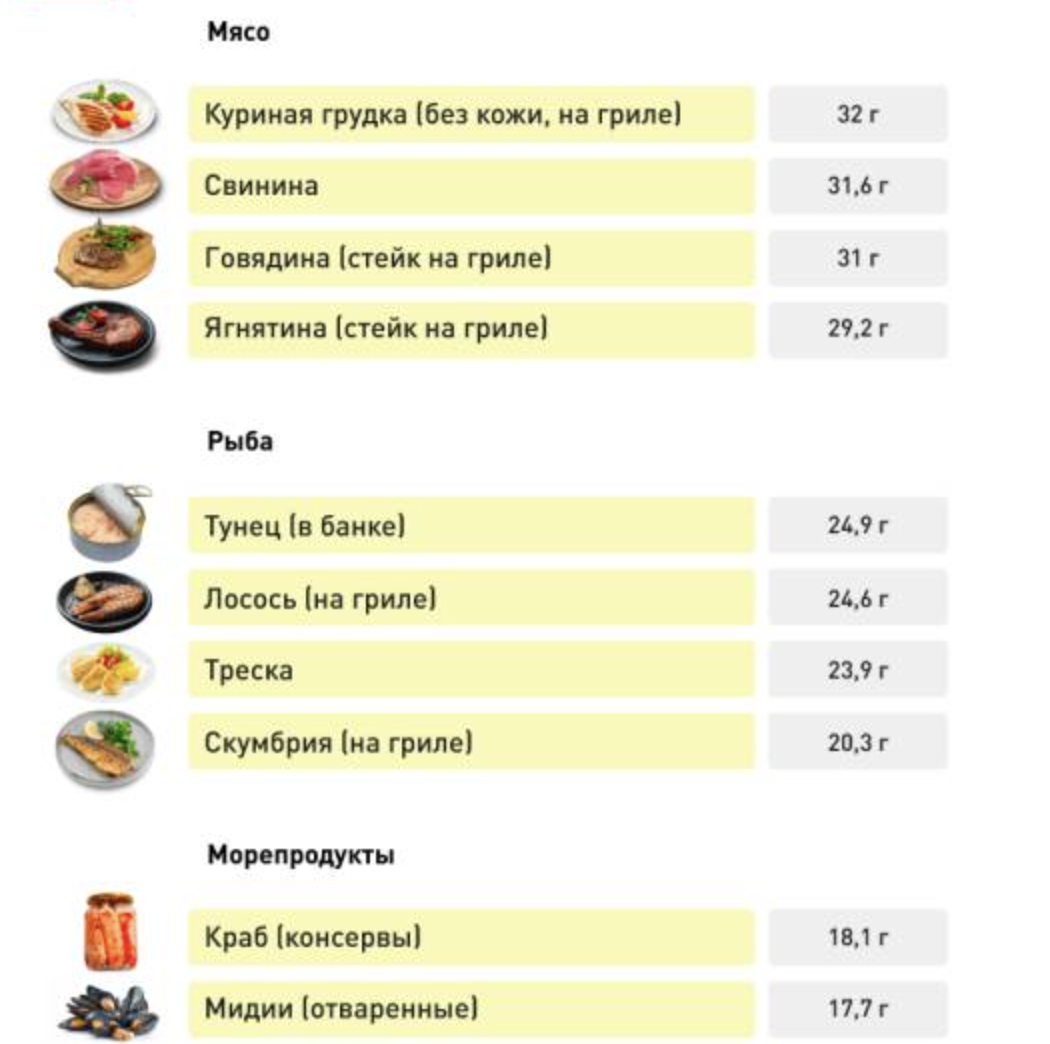
A study by Dutch scientists has shown that after eating beef steak, muscle protein synthesis is 47% more active than after a serving of plant products. Animal proteins also contain a lot of the amino acid leucine, which is necessary for muscle recovery after strength training.
Conclusion: athletes and older people who want to maintain muscle mass and stay fit should not give up animal protein.
But, of course, everything has a downside. Processed meats and fatty cuts can cause problems, for example, increasing the risk of cardiovascular disease.
10 plant foods high in protein
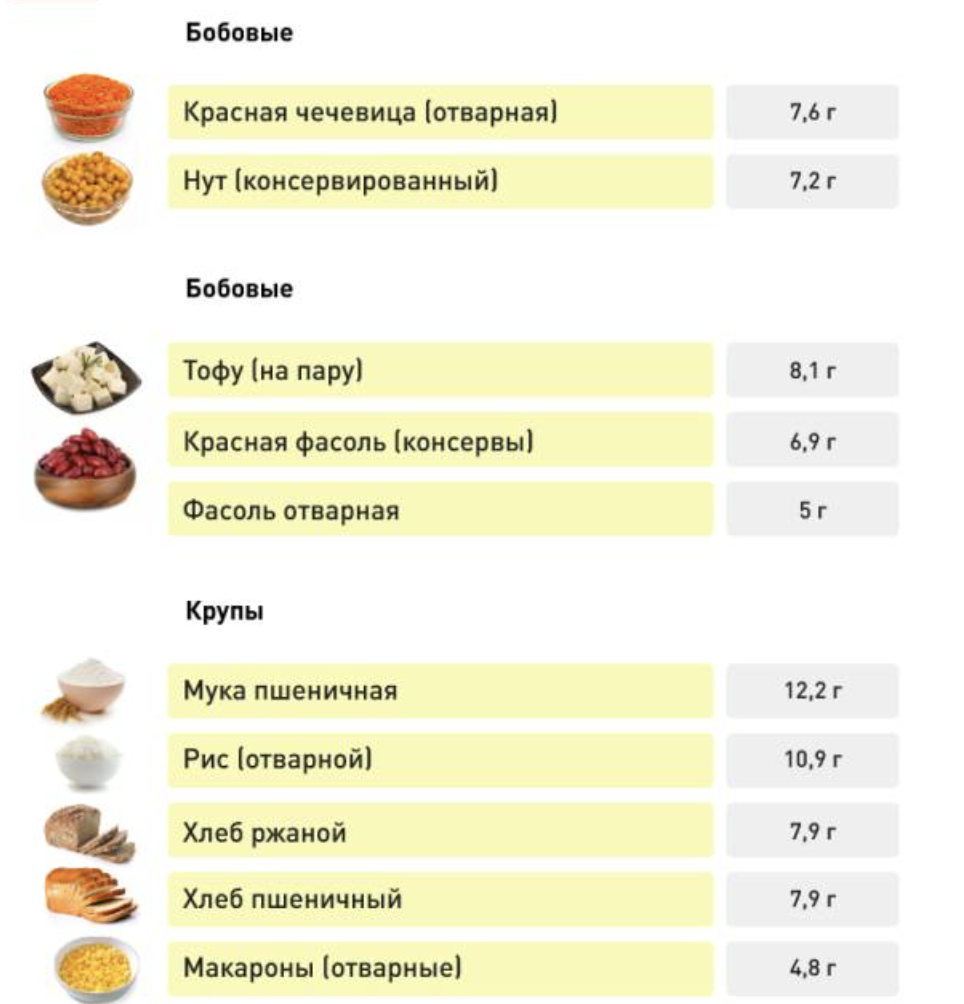
The benefits of plant proteins Experts from the American Heart Association assessed this. According to their data, eating more plant protein can provide additional health benefits, such as helping you manage your blood fat levels, lose weight, and even normalize your blood pressure. This is because plant proteins are low in saturated (unhealthy) fats and high in fiber, which adds to their nutritional value. The main drawback of plant protein is the lack of certain essential amino acids.
Which protein is better - plant or animal?
Experts' opinions on this matter are divided. But if we compare the composition and proportions of essential amino acids, the ideal protein products would be milk and chicken eggs, and after them – meat.

Nevertheless, most experts agree that it is best to stick to healthy variety and include both plant and animal proteins in your diet.
What happens if you eat too much protein?
For healthy people, protein intake of up to 2 g/kg per day does not have a negative impact on health. The human body has a remarkably efficient system that takes as much protein as it needs from all the protein consumed with food. If the cells do not have enough protein, the body begins to absorb it more actively, simultaneously reducing the loss of amino acids in feces and urine. But if there is too much protein in the diet, its absorption slows down. In this way, the body compensates for the lack of protein and protects itself from its excess.
If you constantly eat more protein than you need, unpleasant symptoms may appear over time, such as:
- dry mouth;
- digestive disorders - nausea, vomiting, diarrhea or constipation;
- fatigue;
- headache;
- increased irritability.
Overeating protein does not give us a "supply for the future": the body simply destroys and removes excess amino acids.
Finally, we want to remind you that a healthy diet should be balanced and along with proteins you also need to get carbohydrates and fats. If you limit them, you will have to consume much more protein. The fact is that in the absence of easily accessible energy sources - glucose and fatty acids - the body begins to use protein. As a result, the synthesis of new protein molecules fades into the background and metabolism suffers.
Free test: which digital profession is right for you?
IT, design, marketing or management? Find out the answer in 15 minutes. And then try your hand at a new specialty for free.
Find out more