Contents:

Would you like to work remotely? ➞ Master IT, design, or marketing. Go to Telegram and take 5 online courses to start working in top digital professions.
Learn moreIn this article, we will cover important aspects that will help you better understand the topic. You will receive up-to-date information and useful tips that will help you in the future. We will discuss the key points that influence your choice, and also share practical recommendations for achieving the best results. Read on to delve deeper and master the necessary skills.
- What makes a flat stomach;
- What exercises for a flat stomach are the most effective;
- Who should not do these exercises;
- Is it possible to lose fat from the sides if you do abdominal exercises;
- How to evaluate progress.
We have created a Telegram channel "How are you?", where we share knowledge about self-development, psychology, and effective training methods in a convenient format. Here you will find advice on building a career at any age. Subscribe and develop with us!
What makes a flat stomach
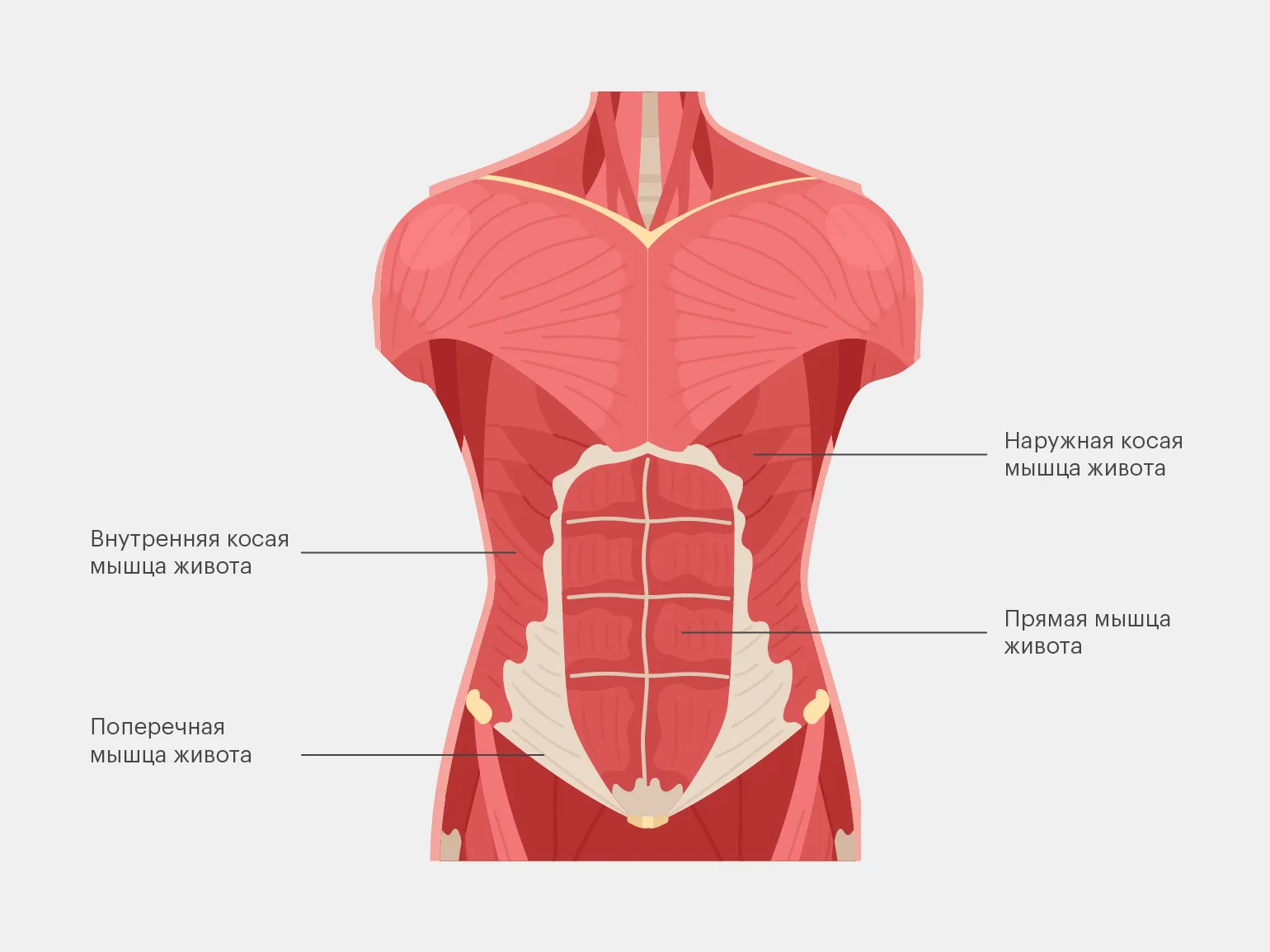
Shaping the abdomen depends on the work of several muscles that make up the abdominal press. When contracted, these muscles pull up the anterior abdominal wall, creating a “corset” effect. The main muscles responsible for this effect include:
- rectus - the most superficial, vertical muscles that form the "cubes";
- internal and external obliques - help visually emphasize the rectus abdominis muscle, creating a clear contour on the sides;
- transverse - located deeper than the rest and girdle the waist.
Which Exercises for a Flat Stomach Are the Most Effective?
A study conducted in the Biomechanics Lab at San Diego State University offered a unique assessment of the effectiveness of popular abdominal exercises. The team was led by Peter Francis, PhD. The study involved 30 healthy men and women aged 20 to 45 years. Participants included both those who engaged in physical activity from time to time and those who trained daily. The results of the study can help choose the most effective exercises for strengthening the abdominal muscles and achieving desired fitness results.
Electromyography (EMG) was used to measure abdominal muscle activity, which allowed us to identify maximum muscle activation during various exercises. Full testing of all exercises took about an hour for each participant. Based on the data obtained, the American Council on Exercise (ACE) identified the most effective exercises for achieving a flat stomach. This research provides valuable information for those seeking to improve their fitness and strengthen their abdominal muscles. Bicycle crunches are a compound exercise that combines torso rotation and forward bending. These movements help strengthen the abdominal muscles, improving overall fitness and coordination. Incorporating bicycle crunches into your workout routine can help you achieve weight loss and endurance goals. Proper technique for performing this exercise is important to prevent injury and achieve maximum effectiveness. Fitness experts emphasize that the traditional bicycle exercise, which involves moving your legs while lying down and attempting to pull your head toward your knees, is ineffective for targeting the abdominal muscles. Instead, this approach can lead to strain in the neck and lower back. To achieve a flat stomach, it is important to perform this exercise correctly. Proper technique emphasizes core stabilization and movement control, which promotes more effective abdominal muscle activation and minimizes the risk of injury.
Technique is key to success in any activity. Proper execution of tasks and procedures increases efficiency and reduces the risk of error. It is important to follow established methods and guidelines to ensure high-quality results. When performing tasks, pay attention to detail, monitor each step of the process, and adjust as necessary. Effective technique not only helps improve results but also develop skills that will be useful in the future. To achieve maximum productivity, it is recommended to regularly analyze your actions and improve your technique.
- Lie on your back, bend your left knee and pull it toward your chest. Straighten your right leg and lift it off the floor. Place your hands behind your head. Keep your elbows out to the sides—they shouldn't pull your neck.
- Bend your left knee, keeping your right leg straight and raised.
- Smoothly lift your right shoulder off the mat and pull your right elbow toward your left knee.
- Then return, simultaneously straightening your left leg from the starting position.
- The lift of your left shoulder is accompanied by the movement of your left elbow toward your right knee.
Synchronized twisting of the torso and lifting of the pelvis effectively activate both the rectus abdominis and oblique abdominal muscles. This training method helps strengthen the muscular corset, improve posture, and increase overall physical endurance. Proper exercise technique ensures maximum load on the target muscle groups, which promotes their development and improves functionality. Regular exercise will help you achieve noticeable results in strengthening your abdominal muscles and creating a slim figure.
When performing the exercises, it is important to move slowly and avoid sudden movements. Raise your shoulder blades off the floor, while gently touching them when lowering them. This approach allows you to maintain constant tension in the abdominal muscles, which promotes an effective workout and improves overall tone.
Leg raises effectively develop the lower part of the rectus abdominis, while its effect on the upper part is less significant. This exercise is an essential element of training for strengthening the abdominal muscles and improving overall fitness. Regularly performing leg raises not only helps develop strength but also improves endurance, making it indispensable in any abdominal training program.
A flat stomach exercise that can be easily done lying in bed is a great way to start the day. This simple approach will help strengthen the abdominal muscles and promote overall health. Regularly performing such exercises does not require much time and effort, making them an ideal choice for those who want to achieve a flat stomach without having to go to the gym. Start with a few repetitions and gradually increase their number to achieve maximum effect.
Technique is a set of methods, techniques, and tools used to perform specific tasks. It covers a wide range of areas, including industry, construction, information technology, and everyday life. In today's world, technology plays a key role in increasing efficiency and productivity. Various technical solutions can optimize processes, improve product quality, and reduce costs. Innovative technologies such as automation and digitalization continue to evolve, opening up new horizons for the use of technology in various fields. It's important to keep up with the latest trends and adapt to changes to remain competitive in the market.
- Lie on your back on a mat or other comfortable surface. Place your hands on your waist or under your buttocks.
- Tighten your abdominal muscles. This will help stabilize your lower back.
- Slowly lift your legs off the floor, keeping them straight and together.
- Raise your legs so they are at a 90-degree angle to your torso.
- Hold for a few seconds at the top.
- Slowly return to the starting position.
It is important to avoid excessive lifting to avoid overloading the lumbar spine. Proper lifting technique and weight control will help maintain back health and prevent injury. When lifting heavy objects, use your legs for support, not your back, which will significantly reduce the risk of injury. Remember that regular exercises to strengthen the back and abdominal muscles also help improve posture and overall body stability. Take care of your health and avoid unnecessary stress on your spine.
This is an advanced version of the hanging exercise. To perform it, you will need a pull-up bar or wall bars if you are training at home or outside. In the gym, you can use a captain's chair. Hanging is an excellent way to strengthen your upper body muscles, improve your grip, and develop strength. Regular training will help improve your physical fitness and achieve new results.
Technique is an important aspect in any activity, which directly affects the quality of the result. Proper technique helps minimize the risk of injury and improves the efficiency of task performance. It is important to pay attention to the basic principles: following the sequence of actions, using the right tools, and paying attention to detail. Regular practice and self-monitoring will help improve your skills and achieve high results. Developing technique requires patience and persistence, but ultimately it will bring significant benefits both professionally and in your personal life.
- Hang from a horizontal bar or wall bars.
- Before starting, slightly raise your legs (10-15 cm) and tighten your lower abdomen. Fix this tension.
- Take a deep breath, gradually raise your legs, bending them at the hips and knees at an angle of 90 degrees.
- Exhale and return to the starting position.
The exercise is effective, but requires a careful approach to technique. It is often performed incorrectly, with the legs lifted using the hip flexors rather than the abdominal muscles. This results in the wrong muscles being trained, which can reduce the effectiveness of the workout and lead to injury. To achieve optimal results, it is important to focus on proper technique and emphasize working the abdominal muscles.
The fitball is an effective tool for training the abdominal muscles. It minimizes stress on the lower back and doubles the effectiveness of traditional crunches. Using a fitball improves core stability and strengthens muscles, making workouts safer and more productive.
Technique is key in any physical activity or exercise. Proper technique minimizes the risk of injury and maximizes training effectiveness. It is important to pay attention to every detail, including body position, breathing, and rhythm of movement.
Whether you are doing strength training, cardio, or stretching, proper technique ensures proper muscle activation and contributes to improved athletic performance. Beginners should learn the basics of technique under the guidance of an experienced trainer to avoid mistakes and develop good habits from the start.
Furthermore, regular practice and self-monitoring will help improve your technique over time. Use mirrors for visual control or videotape your workouts for analysis. Thus, the correct technique will be the key to your success and health in sports.
- Sit on the ball and "walk" your feet forward until the ball is under your shoulder blades and lower back.
- Bend your knees, rest your feet on the floor.
- You can cross your arms over your chest, extend them along your body, or throw them behind your head.
- As you exhale, tighten your abs and smoothly lift your torso, bringing your shoulders toward your hips. Don't go too high.
- Inhale and return to the starting position.
To effectively work your rectus abdominis muscles, you need to keep your lower back pressed against the fitball. This will help ensure proper body position and maximize the results of your workout. Proper technique for performing fitball exercises not only helps strengthen your muscles, but also improves your posture and reduces the risk of injury. Following these recommendations is important to achieve the desired effect and maintain good health.
This exercise involves combining leg lifts and core twists. It's an effective technique for working the abdominal muscles and improving overall fitness. Performing this exercise correctly strengthens the abdominal and back muscles, while also improving flexibility and coordination. Regular practice will help you achieve better fitness results and strengthen your core muscles.
Technique is key to achieving great results in any endeavor. Proper technique not only allows you to complete a task effectively but also minimizes the risk of injury and errors. To achieve optimal results, it's important to focus on the details of execution.
First of all, it's important to learn the basic steps of the process. This includes proper body positioning, using the necessary tools, and following the sequence of actions. It's also important to consider individual characteristics that may affect technique.
Regular practice and self-monitoring will help you improve your skills. Recording your attempts and analyzing your mistakes will help you achieve your desired results faster. Don't forget about the importance of feedback, which can help identify weaknesses in technique.
Following these recommendations, you can significantly improve your efficiency and achieve your goals. Correct technique is the key to success and self-confidence.
- Lie on your back, press your lower back to the floor. Place your hands behind your head for support.
- Stretch your legs up, crossing them at the ankles and slightly bending at the knees.
- Contract your abdominal muscles, lifting your upper body towards your knees.
- When contracting the muscles, do not press your chin to your chest.
When performing exercises, it is recommended to exhale as you rise and inhale as you return to the starting position. This will help improve the effectiveness of your workout and maintain a correct breathing rhythm. Correct breathing technique promotes better oxygenation of the body and increases overall endurance. Monitor your breathing to avoid unnecessary tension and achieve maximum results.
The "Torso Track" exercise is ranked 5th by American trainers. It effectively strengthens the core muscles and develops abdominal strength. To perform the exercise, you need to hold the handles of the machine and slide your body forward, actively tensing your abs. If you don't have access to a machine, you can use a fitball instead, which will also provide a good workout for your abdominal and back muscles. Regular exercise will help improve overall fitness and increase endurance.
The technique involves a number of key aspects that must be considered for optimal results. It is important to properly prepare your workspace and ensure you have all the necessary tools. You should carefully study the main steps of the process, paying particular attention to detail. When performing the technique, it is recommended to maintain concentration and avoid distractions. It is also useful to periodically check your actions to ensure you are performing them correctly. A deeper understanding of the technique will help improve your skills and increase your effectiveness.
- Kneel on the floor, holding the exercise ball in front of you at arm's length.
- Place your palms on the ball. Roll the ball forward with your hands, straightening your arms and torso. This movement should be slow and controlled.
- Extend as far as possible so that your forearms are on the fitball.
- Hold this position for a few seconds.
- Slowly reverse the movement, bending your elbows to return the ball to the starting position.
Straight-arm crunches differ from classic floor crunches in that the arms are straight behind the back. This modification of the exercise increases its difficulty and makes the workout more effective for strengthening the abdominal muscles. Correctly performing straight-arm crunches helps improve posture and develop core strength, and also increases overall physical fitness.
Technique is a key aspect determining success in any activity, be it sports, art, or everyday tasks. Proper technique not only allows you to achieve high-quality results but also minimizes the risk of injury and errors.
To effectively master technique, it is important to focus on the fundamentals. Start by learning the basic principles that underlie your activity. This may include proper posture, weight distribution, or movement sequence. Regular practice and attention to detail will help strengthen your skills and improve your results.
It's also helpful to receive feedback from more experienced professionals or coaches. This will help you identify errors and adjust your technique. Use videos of your workouts to self-monitor and analyze your progress.
Don't forget the importance of warming up before exercising. This will not only prepare your body for the stress but also increase the effectiveness of your workout. Gradually increase the difficulty of the exercises to continue developing and reaching new heights.
In conclusion, proper technique is the foundation of successful activity, which requires constant attention, practice, and training.
- Lie on the mat and extend your arms straight behind your head, clasping them together.
- Tighten your abs and lift your shoulder blades off the floor.
- Keep your arms straight and do not strain your neck.
- Lower your shoulder blades to the floor and repeat several times.
If you experience discomfort or pain in your neck, try relaxing the muscles with a simple exercise. Bend one arm behind your head and extend the other out to the side. This will help improve blood circulation and relieve tension in the neck. Regularly performing such exercises can help improve the flexibility and overall health of the cervical spine.
Crunches actively train the upper abs, and reverse crunches focus on the lower parts of the rectus abdominis. This makes reverse crunches one of the most effective exercises for shaping a flat stomach. In addition, this exercise also involves the external and internal oblique abdominal muscles, since you need to tilt your pelvis back when performing reverse crunches. This promotes comprehensive core muscle development and improves overall physical fitness. Regularly performing reverse crunches will not only help strengthen your abdominal muscles but also improve your posture and maintain a healthy back.
The technique requires consistent and precise adherence to all stages of the process. It is important to start with the preparation of the necessary tools and materials to ensure the effective completion of the task. You should carefully read the instructions and recommendations to avoid mistakes. It is important to maintain concentration during each stage, as this directly affects the final result. It is also necessary to take into account the characteristics of the material and working conditions, which will help optimize the process. Finally, it is recommended to conduct a quality check of the completed work to ensure that all requirements are met. Proper technique will ensure the successful completion of the task and will help avoid additional waste of time and resources.
- Lie on your back, keep your arms along your body, and straighten your legs completely.
- Bend your knees so that your shins are parallel to the floor.
- Raise your pelvis, pulling your knees towards your face. This movement should be performed smoothly, using the abdominal muscles.
- At the top point, hold for 1-2 seconds, inhale and slowly return to the starting position, but do not touch the floor with your feet.
The abdominal roller is an effective tool for training the main muscles responsible for tightening and shaping a flat stomach. It can be used to add variety to your workouts, strengthen your abs, and improve your overall fitness. Regular use of the ab roller not only strengthens your abdominal muscles but also improves coordination, balance, and endurance.
To achieve optimal results when performing the technique, it is important to follow several key aspects. First of all, you need to properly prepare your work area, ensuring sufficient space and free access to all the necessary tools. The next step is a proper warm-up, which will help avoid injuries and prepare your muscles for stress.
When performing the technique, you should focus on proper posture and body position. This will not only improve the effectiveness of the task but also reduce the risk of injury. It is also important to monitor your breathing, as proper breathing helps improve concentration and endurance.
Pay attention to the sequence of movements. Each action should be performed smoothly and deliberately, without sudden movements. This will achieve better results and increase safety.
Don't forget to practice regularly. The more you practice, the better you will get. Analyze your results and adjust your approach based on your progress.
By following these recommendations, you will be able to successfully master the technique and achieve significant success in your chosen area.
- Kneel with your knees hip-width apart and place your hands on the roller. It should be directly under your shoulders.
- Tighten your abs to avoid arching your lower back.
- Gently roll the roller forward, keeping your back and arms straight.
- Stop when you feel a slight tension in your abdomen or your torso is parallel to the floor.
- Return to the starting position.
To activate your oblique muscles, perform exercises with the wheel, rolling it diagonally - left and right. This allows you to effectively engage the lateral abdominal muscles, improving their tone and strength. Regular workouts using the wheel will help strengthen your core and improve your overall fitness.
The plank completes the list of nine exercises for achieving a flat stomach and remains one of the most effective ways to strengthen your core muscles. This exercise not only helps improve posture but also burns calories while strengthening the abdominal, back, and shoulder muscles. Regularly performing the plank helps you achieve your desired results in shaping a flat stomach and improving your overall fitness.
The technique involves a sequence of actions necessary to achieve optimal results. It's important to maintain proper technique to avoid injury and maximize effectiveness. Key aspects of any exercise include proper body positioning, controlled breathing, and concentration on the movement being performed. Individual body characteristics and fitness level must also be taken into account. Proper technique not only improves results but also promotes long-term health.
- Lie face down on the mat, resting on your forearms, palms down.
- Push off the floor, rise up onto your toes and rest on your elbows.
- Keep your back straight, stretching from head to heels.
- Tighten your abdominal muscles and hold for 20-60 seconds, then lower.
Performing the exercise while holding your breath may seem easier, but this is not the correct approach. It is important to maintain a natural breathing rhythm. If you find it difficult, try exhaling in small portions or change your body position, taking a kneeling position. To make the classic plank more challenging, you can use weights by placing a weight on your back. This will increase the effectiveness of the exercise and help develop strength and endurance.
Read also:
Plank: benefits and technique
The plank is one of the most effective exercises for strengthening the core muscles. It actively engages the muscles of the abdomen, back, shoulders and buttocks, helping to improve overall physical condition. Regularly performing a plank helps develop strength, stability, and endurance.
One of the main benefits of the plank is its ability to improve posture and prevent back pain. Proper technique is important to achieve maximum effectiveness and minimize the risk of injury.
To perform a plank correctly, start on the floor, resting on your elbows and toes. Keep your body in a straight line from head to heels. Make sure your elbows are under your shoulders and your stomach is tucked in. Start by holding the position for 20-30 seconds and gradually increase the time as your fitness improves.
Incorporating a plank into your workout routine will not only help strengthen your muscles but also improve your overall endurance, which is especially beneficial for athletes and people who lead an active lifestyle.
It is important to perform the movements slowly and smoothly, avoiding sudden movements. As you perform the exercise, lift your shoulder blades off the floor, while lightly touching them back helps maintain constant tension in the abdominal muscles. This approach allows for maximum muscle engagement and promotes improved muscle tone. Proper exercise technique is essential for achieving desired results and preventing injury.
Avoid excessive lifting to prevent lower back strain. Proper lifting technique is crucial for maintaining back health and preventing injury. Make sure you use proper lifting techniques, such as bending your knees and maintaining a straight back. This will help reduce stress on the lumbar region and improve overall fitness. Take care of your health and avoid sudden movements to maintain back function and mobility for years to come.
To effectively train your rectus abdominis, it's important to keep your lower back pressed against the fitball. This will maximize activation of the target muscles and improve workout results. Proper fitball technique not only strengthens your abs but also improves overall core stability. Focus on proper breathing and movement control to avoid injury and achieve your desired results.
When performing exercises, it's important to breathe correctly. It's recommended to exhale as you rise and inhale as you return to the starting position. This will help improve stability and workout effectiveness, as well as maintain the necessary oxygen levels in the body. Proper breathing helps increase endurance and improve overall fitness.
If you're experiencing discomfort or pain in your neck, try this simple exercise. Place one hand behind your head and leave the other extended. This will help relieve tension and improve blood circulation in the neck. Regularly performing these simple techniques can help reduce pain and improve flexibility. Remember to maintain good posture and take breaks during the workday to prevent neck pain.
Who Shouldn't Do Flat Stomach Exercises?
Pregnant women should be careful when choosing exercises. Many physical activities may not be recommended during this period. However, an experienced trainer can suggest safe and gentle workout options using a fitball. These exercises will help maintain muscle tone and improve the overall well-being of the expectant mother, while ensuring the necessary physical activity. It is important to remember that any exercise should be approved by a doctor.
Crunches can be dangerous in the following situations:
- diastasis (divergence) of the rectus abdominis muscles;
- osteoporosis;
- herniated linea alba;
- herniated disc [6].
Crunches have long been a staple exercise for training the abdominal muscles, but their effectiveness and safety are currently in question. Modern research indicates that crunches can be potentially dangerous because they put stress on the intervertebral discs, which can withstand only a limited number of flexion cycles. Therefore, many experts recommend considering alternative exercises for safe and effective abdominal training.
Not everyone who does abdominal exercises has spinal problems. However, if you have already been diagnosed with a herniated disc or have lower back pain, exercising to achieve a flat stomach may be more harmful than helpful. Exercises that require flexion or significant tension of the abdominal muscles are particularly dangerous, as this significantly increases pressure within the intervertebral discs. For example, performing regular crunches can increase pressure by 108%. The combination of increased pressure and spinal flexion simultaneously increases the risk of injury. Therefore, people with spinal problems should be especially careful when choosing abdominal exercises and consult a doctor or rehabilitation specialist. Do not begin exercising if you experience discomfort in your neck or lower back. Incorrect exercise technique can lead to increased pain and injury. Take care of your health and always consult a doctor before beginning any new physical activity. The right approach to training will help avoid unpleasant consequences and ensure effective results.
Will exercise help me lose belly fat?
Many well-known training methods, fitness influencers, and specialized magazines claim that localized weight loss is possible with certain exercises. However, in practice, metabolism cannot be activated exclusively in one specific area of the body to burn fat. Effective weight loss requires a comprehensive approach, including cardio, strength training, and proper nutrition. This is the only way to achieve the desired weight loss results and improve overall fitness.
Research conducted at Southern Illinois University confirms that muscle training does not lead to localized fat loss. As part of the experiment, overweight people leading a sedentary lifestyle were offered a six-week abdominal training course. The results showed that while exercise did not reduce abdominal fat, it significantly improved the participants' endurance. This underscores the importance of a comprehensive approach to weight loss and fitness improvement, including strength training, cardio, and a healthy diet. Belly fat is often the last to go due to genetic factors. In some cases, a slight abdominal protrusion may be hereditary. Genetics determines 60% of fat distribution, which explains why some people store fat in their chests, others in their hips, and still others in their stomachs. Understanding these genetic factors is important for developing effective weight loss and physique strategies. While it's impossible to specifically reduce abdominal fat, regular abdominal training can help to tone your stomach. Abdominal exercises help strengthen the muscles and reduce excessive lumbar arching, which often leads to a bulging belly, even with minimal fat. Therefore, a comprehensive approach to training not only improves appearance but also has a positive effect on overall posture and health.
How to evaluate progress
Measurements are an important tool for monitoring changes in the body. It is recommended to measure your waist at navel level, as well as your hips and chest, weekly. Even if your weight remains unchanged, a decrease in waist measurement by 1–2 cm is a clear sign of success, indicating that your abdominal muscles are strengthening. Keeping a record of your results will help you track the dynamics of your changes and avoid panicking over periods when your results may slow down. Regular measurements will allow you to better understand your body and its response to training and diet.
Clothing is an important indicator of success and results. For example, your favorite jeans that were previously tight around the waist or a dress that flatters your figure can serve as excellent indicators of your progress. If your clothes have become looser or you notice a more defined abdominal area, this indicates that you are moving in the right direction. Monitor your body's changes, and let your clothes reflect your success and efforts.
Sources play a key role in research, ensuring the reliability and validity of the data presented. It is important to use a variety of sources, including scientific articles, books, official reports, and online resources, to gain a comprehensive understanding of the topic. When selecting sources, consider their relevance, the author's credibility, and peer-review. This will help avoid the dissemination of inaccurate information and improve the quality of the work. Furthermore, proper citation of sources helps maintain copyright compliance and allows readers to delve deeper into the topic being studied. Using reliable and verified sources is an important aspect of any research work.
- Delavier F., & Gundill M. Delavier’s women’s strength training anatomy workouts. Human Kinetics. 2014.
- New study puts the crunch on ineffective AB exercises. American Council on Exercise.
- How to do a bicycle crunch for a strong, stable core. American Council on Exercise.
- Contreras B. Anatomy of strength exercises using bodyweight as resistance; translated from English by S. E. Borich. Minsk: Popurri, 2015. 224 p.
- Sternlicht E., Rugg S., Fujii L. L., Tomomitsu K. F., & Seki, M. M. Electromyographic comparison of a stability ball crunch with a traditional crunch. The Journal of Strength and Conditioning Research. 2007. 21(2). 506. DOI: 10.1519/r-20436.1
- Schoenfeld B. J., & Kolber M. J. Abdominal crunches Are/Are not a safe and effective exercise. Strength and Conditioning Journal. 2016. 38(6). 61–64. DOI: 10.1519/ssc.0000000000000263.
- Vispute S. S., Smith J. D., LeCheminant J. D., & Hurley K. S. The effect of abdominal exercise on abdominal fat. The Journal of Strength and Conditioning Research. 2011. 25(9). 2559–2564. DOI: 10.1519/jsc.0b013e3181fb4a46.
- Schleinitz D., Böttcher Y., Blüher M., & Kovacs P. The genetics of fat distribution. Diabetologia. 2014. 57(7). 1276–1286. DOI: 0.1007/s00125-014-3214-z.
How to make money in IT
Take a simple test to understand which direction in IT suits you best. Master Python and Java, mobile and web development, data analysis, neural networks, testing, and cybersecurity. Write your first programs and create a personal career plan to start in IT.
Learn more