
Contents:

Free test: which Is a digital profession right for you? Find out the answer in 15 minutes and try your hand at a new specialty.
Learn moreHow the skin works
The skin is the largest organ in the human body, covering an average area of 1.5 to 2 square meters and weighing about 3-4 kilograms. It consists of three main layers: the upper epidermis, which provides protection; the dermis, which contains blood vessels, nerve endings, hair follicles, as well as sebaceous and sweat glands; and the deep layer, the hypodermis, or subcutaneous fat, which consists mainly of fat cells. Understanding the structure of the skin is important for understanding its functions, including thermoregulation, protection from external factors, and its role in metabolism. Proper skin care helps maintain its health and improve its appearance.
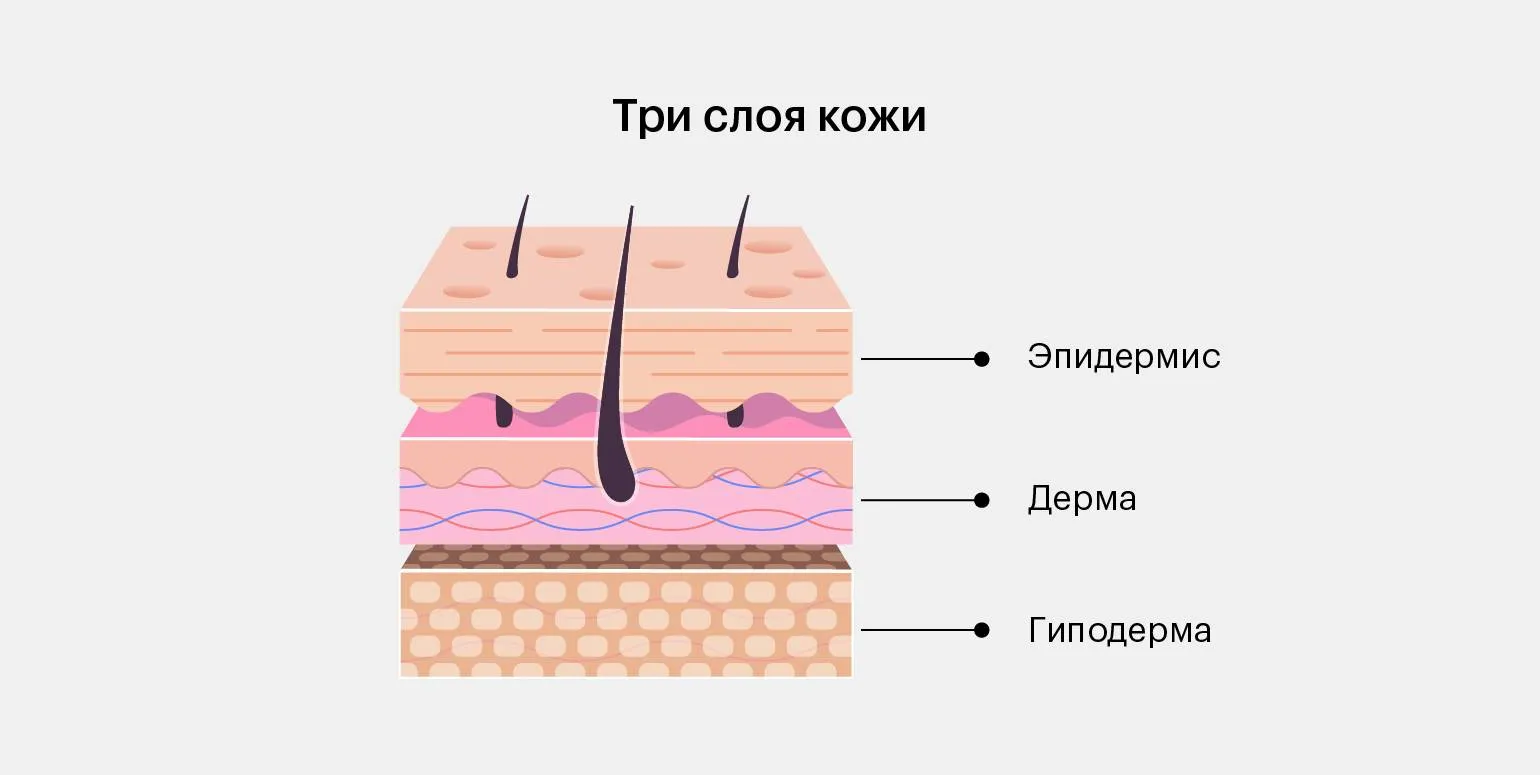
The epidermis, also known as the epidermal barrier, is a complex structure made up of lipids, proteins, and other important components. These elements fill the spaces between cells, ensuring their tight adhesion and forming a protective shell. The epidermis plays a key role in preventing moisture loss from the deeper layers of the skin. This protective film not only maintains water balance but also protects the skin from external aggressors, such as pollution and microorganisms. Maintaining epidermal health is important for the overall protection of the skin and its normal functioning.
The epidermis contains virtually no water; its main function is to protect the moisture located in the dermis and hypodermis. The epidermal barrier plays a vital role in protecting the body from cold, dry air, pollution, and harmful radiation. Thanks to this protection, the skin maintains its hydration and health, which is key to maintaining overall skin health. Efficient epidermis function helps prevent moisture loss and protects against external factors, making it an essential element in maintaining skin health.
The deeper layers of the skin, such as the dermis and hypodermis, contain significant water reserves. These reserves can become depleted for various reasons. The main factors contributing to a decrease in water balance include age-related changes, environmental influences, lack of hydration, and an unhealthy lifestyle. With age, the skin loses its ability to retain moisture, leading to a loss of firmness and elasticity. Exposure to sunlight, air pollution, and sudden temperature changes also negatively impact the skin's condition. Furthermore, a lack of drinking water and an unhealthy diet can exacerbate the problem. Maintaining healthy skin requires a comprehensive approach, including regular hydration and protection from negative environmental factors. The body can lose water if it experiences a deficiency, for example, in hot weather or when a person simply drinks very little for some reason. The amount of lipids—the building blocks of this barrier—decreases in the epidermis. This weakens the protective function of the epidermis: holes appear in the dense "wall" through which water evaporates, resulting in dryness, irritation, inflammation, and increased sensitivity.
The breakdown of lipids in the skin occurs naturally, primarily as a result of aging. However, in young people, lipid deficiency can be congenital or caused by improper skin care, various diseases, aggressive cosmetic procedures, and negative environmental influences. Understanding the causes of lipid deficiency is an important step in skin care, as it can help prevent problems associated with dryness and loss of elasticity. Proper hydration and the use of suitable cosmetics can significantly improve the condition of the skin and restore its natural balance.

Read also:
Facial skin aging: when it starts and how to slow it down
Facial skin aging is a natural process that begins with age. Typically, the first signs of aging, such as fine wrinkles, loss of elasticity, and discoloration, become noticeable after age 25. However, genetics, lifestyle, and environment can significantly influence the speed of this process.
You can slow down skin aging by following a few recommendations. Maintaining a moisturizing regimen, using sunscreen, and maintaining a balanced diet rich in antioxidants are essential. Regularly using high-quality cosmetics with active ingredients such as retinol and hyaluronic acid also helps improve skin condition.
Furthermore, regular exercise and avoiding unhealthy habits such as smoking and excessive alcohol consumption can slow aging. Maintaining psycho-emotional health is equally important, as stress negatively affects the condition of the skin.
Thus, facial skin aging is an inevitable process, but with proper care and a healthy lifestyle, its manifestations can be significantly slowed down.
How moisture deficiency accelerates skin aging
With age, the skin loses its firmness and elasticity due to decreased lipid production. This leads to problems such as dryness, flaking, wrinkles, and creases. In addition, the skin becomes more vulnerable, which makes it difficult to restore and heal after damage. Skin care, including proper care and the use of moisturizers, becomes especially important in old age to maintain its health and beauty.
Sometimes the lipids in the skin are normal, but hydration remains insufficient. This can manifest itself with the following symptoms: dryness, flaking, a feeling of tightness and itching. This is especially noticeable during the cold season or when using harsh cosmetics. To improve the condition of the skin, it is important to use moisturizers containing ingredients that promote moisture retention, such as hyaluronic acid or glycerin.
- The skin loses elasticity and firmness, becomes loose and saggy.
- A lack of fluid makes the skin less dense, so fine lines and wrinkles become more noticeable. Over time, they deepen and become permanent.
- Dehydrated skin loses the ability to effectively defend itself from external aggressors, such as bacteria, pollution and UV radiation. This leads to redness, flaking and inflammation.
- Dehydrated skin loses its smoothness and softness. Flaking and uneven skin occurs due to insufficient exfoliation of dead skin cells that accumulate on the surface.
Skin hydration is a key aspect of skin care that helps maintain its freshness and healthy appearance. The correct level of hydration prevents dryness, flaking, and other problems associated with a lack of moisture. Using high-quality moisturizers helps maintain the skin's natural balance, improves its texture, and makes it more elastic. Regular moisturizing also helps protect against negative environmental factors, such as UV radiation and pollution. By taking care of your skin's hydration, you provide it with the necessary protection and a well-groomed appearance.
What else affects skin health?
Skin hydration is a key aspect for maintaining its health. Various factors affect hydration levels. Chronic stress, illness, certain medications, and unhealthy habits such as smoking and alcohol abuse can accelerate skin aging. Lack of sleep, a sedentary lifestyle, and adverse environmental conditions, including dry air, cold, wind, industrial emissions, and excess ultraviolet radiation, also negatively affect the skin. Taking care of its hydration and protecting it from these factors will help maintain its youthfulness and health for years to come.
Can skin become less hydrated due to improper care?
Insufficient or improper skin care, including the use of aggressive cosmetics, impairs the skin's ability to retain moisture and negatively affects its barrier functions. This can lead to various problems, such as lack of expected results, breakouts, allergic reactions, or the development of skin diseases. A proper approach to skin care is essential for maintaining its health and preventing negative consequences. Using gentle, hypoallergenic products and regular moisturizing will help keep your skin in optimal condition.
Highly acidic products, such as soap, negatively affect the skin's natural lipids, damaging them. Over-cleansing, even with gentle products, and excessive friction can weaken the protective barrier responsible for retaining moisture. As a result, skin becomes more susceptible to dryness and flaking. To maintain healthy skin, it's important to choose products with a neutral pH and maintain a moderate cleansing regimen to help maintain the skin's natural balance and protective functions.
Using products that are not suitable for your skin type can negatively affect its condition. For example, light gel formulas do not provide enough hydration for dry skin, while too dense textures can clog pores in oily skin. It's important to choose cosmetics based on your skin's individual needs to avoid problems and maintain its health. Choosing the right products will help maintain balance and improve the appearance of your skin. Ignoring skin hydration is one of the factors contributing to dry skin. Many people mistakenly believe that oily skin doesn't need hydration. In fact, even oily skin can experience dehydration, and a lack of moisturizers only worsens the condition, causing increased shine. Proper skin care, including the use of moisturizers, is important for maintaining balance and health. Experts recommend not expecting instant results from moisturizers. However, proper skin care, tailored to your individual needs, is the foundation for maintaining skin health and normal functioning. Regular use of moisturizing products helps maintain moisture balance, improve skin texture, and prevent premature aging. It is important to choose products that suit your skin type and needs to achieve optimal results and preserve your natural beauty.
Ekaterina Kandinskaya is an outstanding figure, known for her contributions to art and culture. She was not only the wife of the famous artist Wassily Kandinsky, but also an artist in her own right, whose works are distinguished by their originality and depth. Ekaterina played a significant role in the development of avant-garde art and actively participated in the artistic movements of her time. Her creative work encompasses painting, graphics, and design, which confirms the wide range of her talents. It is important to note that she was also involved in teaching, training a younger generation of artists. Ekaterina Kandinskaya's works continue to inspire and attract the attention of collectors and art connoisseurs around the world.
How Moisturizers Work
Moisturizers are oil-in-water emulsions. These products vary in their oil-to-water ratios, but their basic function remains the same: they create a protective barrier on the skin's surface that prevents moisture evaporation. Furthermore, moisturizers attract moisture from the environment and the skin's inner layers, helping to keep it soft and hydrated. They also protect the skin from environmental stressors, including cold, wind, and dry air, making them essential in your daily skincare routine. Choosing the right moisturizer can significantly improve the skin's condition by providing it with the necessary hydration and protection. Moisturizers play a key role in skincare, ensuring optimal moisture levels are maintained. They help prevent dehydration, protect the skin from environmental stress, and promote the restoration of its natural barrier. Furthermore, moisturizers can improve skin texture, leaving it soft and supple. Choosing the right moisturizer not only helps maintain healthy skin but also effectively combats the signs of aging. Using these products helps maintain the youth and radiance of your skin, providing it with the care and protection it needs.
- reduce inflammation;
- reduce itching;
- heal damaged areas;
- restore the epidermal barrier.
Moisturizing products can be classified into three main categories: occlusives, emollients, and humectants. Occlusives create a protective barrier on the skin's surface, preventing moisture loss. Emollients soften and smooth the skin, improving its texture. Humectants attract moisture from the environment, helping to maintain optimal hydration levels. Choosing the right moisturizer based on your skin type and needs can significantly improve the condition and appearance of your skin.
Occlusives form a physical barrier on the skin that effectively prevents moisture loss. These ingredients help retain water in the skin, minimizing its evaporation. The use of occlusives in cosmetics significantly improves hydration, creating a protective layer that retains natural moisture and maintains skin health. Occlusives include various types of objects and phenomena characterized by unique properties and characteristics. Occlusives can be found in various fields, such as art, science, and technology. In art, occlusives can be rare works distinguished by their uniqueness and historical value. In science, occlusives can be associated with unique experiments or discoveries that have no analogues. In technology, occlusives can manifest themselves as innovative solutions or products that stand out from the competition. Looking at examples of occlusives allows us to better understand their importance and impact on various areas of life.
- Vaseline,
- natural oils,
- lanolin,
- plant and animal waxes.
Occlusive products are most effective for dry skin and in low humidity conditions, as they reliably "seal" moisture. However, after using them, a feeling of stickiness and greasiness may occur. These products provide a quick effect, but do not solve the underlying problems of skin dehydration. Occlusives include not only creams, but also sheet masks and patches, which also help retain moisture. However, it is important to remember that for complete hydration, it is necessary to consider the causes of dehydration and use products that help restore the skin's water balance.
Advertising slogans such as "does not create a film" can be misleading. In fact, the formation of a protective film on the skin after applying cream is not only expected but also necessary. This film plays a key role in retaining moisture and protecting the skin from external factors. Therefore, it is important to choose creams that provide reliable protection and hydration, promoting healthy and youthful skin.
Ekaterina Kandinskaya is a significant figure in the art world, known for her unique approaches and creative achievements. She is one of the first representatives of avant-garde art in Russia and made a significant contribution to the development of abstraction. Ekaterina's works are distinguished by bold colors and original forms, allowing her to stand out among contemporaries. Her work inspires many artists and art lovers and continues to attract the attention of researchers and art historians. Ekaterina Kandinsky left behind a legacy that continues to influence contemporary art and culture. Humectants are essential components that attract moisture from both the environment and the deeper layers of the skin, directing it to the epidermis. These substances effectively bind water and retain it on the skin's surface, which helps increase hydration levels and improve the overall condition of the dermis. The use of humectants in cosmetic products allows for long-lasting hydration, making them indispensable for maintaining healthy and beautiful skin. Humectants are substances that retain moisture and improve the physical properties of the soil. These compounds are widely used in agriculture and horticulture to increase crop yields and improve plant health. Humectants help increase the water-holding capacity of the soil, which is especially important in conditions of moisture deficiency. Effective humectants include substances such as hydrogel, humic acid, and polyvinyl alcohol. Their use helps optimize water balance and improve soil structure, which in turn has a positive effect on plant growth and development. The use of humectants can significantly reduce water consumption and increase plant resistance to drought.
- hyaluronic acid,
- urea,
- lactic acid.
Humectants play an important role in the care of dehydrated skin, as they effectively saturate it with moisture. However, in low-humidity conditions, such as cold and dry air, humectants can begin to draw moisture from the deeper layers of the skin, exacerbating the problem of dehydration. To avoid this negative effect, it is recommended to use humectants in combination with occlusives. For example, you can first apply a serum with humectants and then "seal" its action with a cream with occlusives. This approach will help maximally hydrate the skin and protect it from moisture loss. Emollients effectively fill microscopic cracks and spaces between skin cells with lipids, which helps improve its condition. They make the skin softer, smoother, and more elastic, and also help eliminate the discomfort associated with dryness and tightness. Using emollients significantly improves the skin's texture, restoring its protective functions and providing long-lasting hydration. Emollients are specialized products that help moisturize and soften the skin, providing protection and creating a barrier to moisture loss. These products are ideal for people with dry and sensitive skin, as well as for those suffering from various dermatological conditions such as eczema or psoriasis. Emollients come in a variety of forms, including creams, ointments, lotions, and oils. They contain active ingredients that help restore the skin barrier and improve the overall condition of the skin. Using emollients not only improves the appearance of the skin but also prevents further drying, leaving it smoother and more elastic. Choosing the right emollient depends on individual skin needs, as well as climate and environmental conditions. Proper use of emollients involves applying them to cleansed skin, which allows the active ingredients to be better absorbed and act.
- squalane,
- ceramides,
- polyunsaturated fatty acids.
Emollients act effectively both alone and in combination with occlusives and humectants. They help soften the skin and improve its appearance. Using emollients in your daily care routine helps maintain optimal moisture levels, preventing dryness and flaking. Incorporating these products into your skincare routine will help achieve healthy and well-groomed skin.
Moisturizers are available in a variety of forms, including gels, gel-creams, and balms. Choosing the right moisturizer depends on several factors, such as the severity of your skin's dryness, your overall health, any medications you're taking, and your climate. Choosing the right moisturizer will help effectively maintain your skin's moisture balance and improve its condition.
Ekaterina Kandinsky is a preeminent figure in the art world, renowned for her innovative approaches and unique style. She left a significant mark on the history of painting, combining elements of abstraction and expressionism. Kandinsky's works are distinguished by deep emotionality and a vibrant color palette, making them particularly appealing to viewers. Her work draws on influences from various cultures and artistic movements, highlighting her versatility as an artist. Ekaterina Kandinsky inspires a new generation of artists, and her legacy continues to influence contemporary art.
Moisturizers are most effective when applied to slightly damp skin, for example, after cleansing or using toner and thermal water. This is because humectants attract moisture from the environment, while occlusive ingredients help retain it securely within the skin. Proper use of moisturizers provides deep hydration and improves the skin's condition, which is especially important for maintaining its health and youthfulness. Use moisturizing products as the final step in your skincare routine to achieve the best results and maintain optimal moisture levels.
How Collagen-Containing Cosmetics Affect Moisturizing
Collagen-containing cosmetics are often marketed as a solution for dehydrated skin. Collagen has become a popular ingredient in cosmetics due to its moisturizing, regenerating, and film-forming properties. However, it should be noted that the effect of collagen in cosmetics differs from its natural function in the skin. It is important to remember that when collagen is applied externally, it cannot fully compensate for the body's deficiency of this protein. This is because collagen molecules are too large to penetrate the deeper layers of the skin. Therefore, for best results, collagen should be considered as an addition to overall skin care, not as a sole treatment.

Read also:
A cosmetologist-esthetician is a specialist who improves the appearance and health of the skin. His main task is to carry out various procedures aimed at maintaining and restoring the aesthetic characteristics of the skin. Such procedures may include cleansing, moisturizing, massage, and the use of specialized cosmetic products.
Cosmetologists-estheticians have a thorough knowledge of anatomy, skin physiology, and dermatology, which allows them to accurately assess a client's skin condition and select individualized care methods. An important part of a cosmetologist's work is also consulting on skin care and the selection of cosmetic products.
Specialists in this field often use modern technologies and techniques, such as laser therapy, chemical peels, and mesotherapy. A cosmetologist-esthetician can work in both beauty salons and clinics, providing services to both women and men.
The importance of a cosmetologist-esthetician's work is difficult to overestimate, as healthy and well-groomed skin helps increase self-confidence and improves quality of life. Choosing a qualified specialist is key to achieving desired results and maintaining healthy skin.
Collagen is the body's primary structural protein, located in the dermis. It plays a key role in maintaining skin strength, elasticity, and firmness. Thanks to its unique ability to form a "mesh," collagen effectively retains moisture, helping to maintain optimal skin hydration. Maintaining collagen levels in the body is essential for maintaining youthful and healthy skin.
Collagen used in cosmetics has unique properties due to the large size of its molecules, which prevents it from penetrating deep into the dermis. Instead, it acts on the skin's surface, acting as a humectant—a substance that attracts and retains moisture. This property significantly contributes to skin hydration, making it smoother and softer to the touch, which in turn improves the overall appearance and health of the epidermis. Using collagen in cosmetics helps maintain optimal hydration levels, which is especially important for preventing premature aging and preserving the skin's youthful appearance. Although collagen does not penetrate deeply into the skin, it promotes a firmer, smoother appearance and reduces fine wrinkles caused by dryness. It forms a thin protective film on the skin's surface, preventing moisture loss. This barrier effectively retains water in the upper layers of the epidermis, which helps improve the overall condition of the skin and its hydration. Using collagen can become an important part of skincare, promoting a healthy and youthful appearance. The moisturizing effect of cosmetic collagen is temporary, so regular use of products containing it is necessary to achieve a lasting effect. Without additional moisturizing ingredients, the skin may return to its original state after rinsing off. To maintain optimal hydration and skin health, it is recommended to combine collagen products with other moisturizing ingredients, which will help prolong the effect and improve the overall appearance of the skin.
Basic Rules of Skin Moisturizing
To maintain elasticity and health of the skin, it is necessary to provide it with proper hydration. This helps prevent dryness, flaking, premature aging and increased sensitivity. Regular moisturizing helps maintain the natural moisture balance, improves the skin's texture and gives it a fresh appearance. Using high-quality moisturizers suitable for your skin type is a key step in its care.
Choosing moisturizers depending on your skin type is an important step in facial care. The right choice will help maintain optimal moisture levels, improve skin texture and prevent various problems, such as dryness or oily shine.
For normal skin, light moisturizers with a non-greasy texture are suitable, which will help maintain the moisture balance. For dry skin, it's recommended to choose richer products with a high content of oils and nourishing ingredients. Oily skin requires lightweight gels or lotions that won't clog pores and regulate sebum production. Combination skin requires versatile moisturizers that will simultaneously hydrate and control oiliness in the T-zone.
When choosing a moisturizer, it's important to consider seasonal changes and use additional protective products, such as sunscreens or serums. Choosing the right moisturizer will help maintain the health and beauty of your skin for years to come.
- Dry skin: Thick creams containing fatty acids, oils, glycerin, ceramides, and hyaluronic acid are suitable for moisturizing. These ingredients help restore the lipid barrier and retain moisture.
- Oily and combination skin. People with this type of skin should choose light moisturizing gels or lotions with aloe, hyaluronic acid, or non-comedogenic oils (jojoba, grape seed, argan). They prevent dehydration without clogging pores.
- Sensitive skin. In this case, it is important to avoid products with fragrances and aggressive ingredients. Preference should be given to hypoallergenic products with soothing components (for example, panthenol, allantoin).
When choosing skin care products, you should not focus only on price. Expensive creams do not always guarantee high effectiveness. It is much more important that the product meets the individual needs of your skin. It is recommended to discuss suitable care products with a dermatologist, who will be able to suggest which ingredients in the composition you should pay attention to. The right choice will help achieve the desired result and improve the condition of the skin.
Ekaterina Kandinskaya - A prominent artist and a key figure in the world of avant-garde art. Her creative path began in the early 20th century, when she became part of a movement that sought to break with traditional artistic canons. Kandinsky is known for her vibrant abstract compositions in which color and form become the primary means of expression.
Her works reflect deep philosophical ideas and emotional experiences, which makes them unique and significant in the context of contemporary art. Ekaterina Kandinsky was also active in teaching and sharing her knowledge with future generations of artists, which contributed to the development of the avant-garde movement.
Her legacy continues to inspire artists and art researchers, and exhibitions of her work attract the attention of viewers around the world. Kandinsky left an indelible mark on art history and continues to be an object of study and admiration.
Moisturizing the skin immediately after cleansing is an important step in skin care. After washing or using cleansers, the skin becomes more receptive to the active ingredients of moisturizers. Applying a moisturizer or serum to damp skin helps retain moisture, which contributes to overall skin health. This approach not only maintains optimal hydration levels but also enhances the effectiveness of subsequent skincare steps. Regular moisturizing after cleansing helps maintain skin firmness and elasticity, preventing dryness and irritation. It's important to choose the right moisturizer for your skin type to achieve the best results.
For maximum effectiveness, it's recommended to apply a moisturizer to slightly damp skin, which can be done immediately after cleansing, toner, or thermal water. This approach helps retain moisture as it penetrates the skin and enhances the action of active moisturizing ingredients, significantly improving skin condition and helping maintain its health.
For effective skin cleansing, it's recommended to use gentle products that don't disrupt the lipid barrier. Suitable options include hydrophilic oils, as well as foams and gels that don't contain harsh sulfates. To achieve long-lasting results, skincare should be regular. It is recommended to perform the procedure daily, morning and evening. This will help maintain healthy skin and preserve its natural defenses.
Skin care is a complex process that must be followed consistently. Moisturizing uncleansed skin will not produce the desired results. However, using harsh cleansers can also negatively impact the skin's condition. This can lead to damage and inflammation, making moisturizer ineffective. Proper skin care includes gentle cleansing, which prepares the skin for hydration and nourishment, ensuring a healthy, radiant appearance.
Ekaterina Kandinskaya is a prominent figure in the world of art and culture. She is known as an artist, designer, and one of the first representatives of abstract art. In her works, Ekaterina combined geometric shapes and vibrant colors, creating unique compositions that continue to inspire many contemporary artists. Her work had a significant influence on the development of 20th-century art, as well as movements such as Suprematism and Constructivism. Ekaterina Kandinskaya actively participated in art exhibitions and organizations, which contributed to the popularization of abstract art as an independent movement. Her legacy lives on, and her works are held in the world's largest museums, underscoring the significance of her contribution to world culture.
Excessive use of scrubs, enzyme powders, and other exfoliants can negatively affect the condition of the skin. These products are designed to remove dead cells and improve skin texture, but frequent use can lead to irritation, dryness, and damage to the protective barrier. It is recommended to use exfoliants with caution and in accordance with your skin type. The optimal frequency of use depends on your individual needs and skin characteristics, so it is important to listen to your skin's reactions. Proper use of exfoliants will help keep your skin healthy and radiant. Frequent or aggressive exfoliation can damage the epidermal barrier, leading to moisture loss. To maintain healthy skin, it is recommended to use gentle scrubs, enzyme powders, or peeling gels no more than once or twice a week. This will help maintain optimal hydration levels and avoid irritation. Proper exfoliation improves skin texture and appearance without compromising the protective functions of the epidermis. Choosing the right skincare products depending on the season is essential for the health and beauty of your skin. Each season brings its own unique conditions that require a special approach to care. In the spring, when the skin begins to recover from the winter cold, it is important to use moisturizers that will help restore moisture balance. Light textures and antioxidant-rich products will help prepare your skin for the summer heat.
In summer, skin requires protection from the sun and a high level of hydration. Use sunscreens with a high SPF, as well as lightweight gels and fluids that don't weigh down the skin and provide it with essential moisture.
In autumn, skin can become more sensitive due to temperature fluctuations. During this time, consider products with nourishing ingredients that will help restore the protective barrier and prevent dryness.
In winter, skin needs additional protection from cold and wind. Use nourishing creams and oils that moisturize and protect the skin from negative external factors. Consider products containing vitamins and natural oils to help keep your skin soft and nourished. Adapting your skincare routine to the seasons is therefore crucial for maintaining its health and beauty all year round. In winter, the air both indoors and outdoors becomes drier, leading to accelerated moisture loss from the skin's surface. During the cold season, it is recommended to moisturize more frequently, based on how you feel, and to use products with a thicker texture. This will help maintain the necessary hydration level and protect the skin from the negative effects of cold and dry air. Proper skincare in winter is especially important to prevent dryness and irritation. Summer is characterized by increased humidity, making the use of light textures such as gels or fluids especially relevant. These formulas provide hydration and lightness, helping to maintain freshness and comfort on hot days. Gels and fluids are quickly absorbed without leaving a greasy shine, making them ideal for summer skincare. Choosing lightweight textures will help you maintain optimal hydration without feeling heavy.
Be sure to consider SPF protection. SPF (Sender Policy Framework) is an important element of email security. It helps prevent sender address spoofing and protects your domain from spam and phishing. Setting up an SPF record in DNS allows you to specify which servers are authorized to send emails on behalf of your domain. This not only improves your email reputation but also improves message deliverability. Regularly check and update SPF records to maintain a high level of security for your email system.
UV radiation negatively affects the condition of the skin, destroying collagen and causing dryness. To protect against these harmful effects, it is recommended to use moisturizers with an SPF of at least 30. Such products help maintain healthy skin, preventing premature aging and helping to maintain its hydration.
Moisturizing the skin from within is an important aspect of skincare that is often underestimated. Proper hydration helps maintain healthy and youthful-looking skin, preventing premature aging. One of the key factors for achieving this effect is adequate water consumption. Water helps maintain skin elasticity and its protective functions, and also improves its overall appearance.
In addition, it is important to include foods rich in omega-3 fatty acids, vitamins, and antioxidants in your diet. They help improve skin condition and help keep it hydrated from the inside out. It is also worth paying attention to the use of moisturizers and creams, which help create a protective barrier on the skin's surface and minimize moisture loss.
Regular hydration of the skin from the inside and outside is the key to its health and beauty. Take care of your body, and your skin will look radiant and fresh.
Lack of fluid in the body negatively affects the condition of the skin, leaving it dry, dehydrated, and dull. To maintain optimal water balance, it is important to listen to your thirst, but it is recommended to drink at least 1.5 liters of water per day. This will help prevent dehydration and maintain healthy skin. Proper hydration not only improves appearance but also promotes overall well-being. Maintaining hydration will help you achieve radiant and firm skin. Regular consumption of foods containing omega-3 fatty acids, such as fish, nuts, flaxseed, and unrefined vegetable oils, plays a key role in maintaining healthy skin. These beneficial lipids help maintain youthfulness and elasticity by providing essential nourishment and hydration. It is important not to forget about a balanced diet to provide the body with all the necessary elements to maintain its functioning and beautiful skin.

How to Properly Moisturize Your Body Skin
Skin care is usually associated with the face, but the skin of the body also requires careful care and hydration. Proper body skin hydration helps maintain its health, prevents dryness, and makes it more elastic. Using high-quality moisturizers not only improves the appearance of the skin but also promotes its regeneration. Don't forget that regular skin care for the entire body is just as important as for your face.
- Use a gentle shower gel, gel cream, or bath oil that does not contain aggressive sulfates (SLS, SLES) and does not disrupt the lipid barrier.
- Wash with warm, not hot, water to avoid damaging the natural lipid film and increasing dryness.
- After showering, do not rub the skin, but pat it dry with a soft towel. Ideally, it should remain slightly damp.
- Apply moisturizers to damp skin to "seal" the moisture. This helps enhance the effect of moisturizers.
- Once a week, you can do a gentle exfoliation or scrub to remove dead skin cells and allow moisturizers to penetrate deeper.
Emollients are effective body skin care products. They moisturize, soften, and protect the skin, restoring its lipid barrier and preventing moisture loss. These products form a protective film on the skin's surface that protects it from adverse external factors such as cold, wind, and dry air. Using emollients helps maintain healthy skin, making it smoother and more hydrated.
Ekaterina Kandinsky is a prominent figure in the art world, known for her unique works that combined elements of abstraction and expressionism. She was not only a talented artist but also an important part of the cultural life of the early 20th century. Her works reflect deep emotional experiences and a desire for self-expression. Kandinsky actively experimented with form and color, creating works that inspire and engage viewers worldwide. Her contribution to art and influence on subsequent generations of artists remain significant, making her a key figure in the history of modern art. Protecting your skin from the sun is paramount, as ultraviolet radiation can lead to dehydration and accelerate skin aging. In summer, it is recommended to use sunscreen with an SPF of at least 30 and cover exposed skin with clothing. It is important not to forget accessories such as sunglasses, caps, sun hats, or hats, which will provide additional protection from the harmful effects of the sun. Proper skin care and precautions will help keep it healthy and young for a long time.
Free test: which digital profession is right for you?
IT, design, marketing or management? Find out the answer in 15 minutes. And then try your hand at a new specialty for free.
Find out more